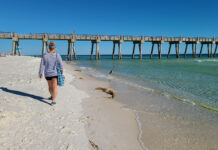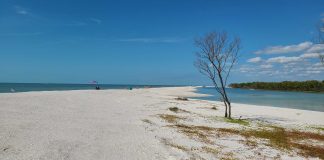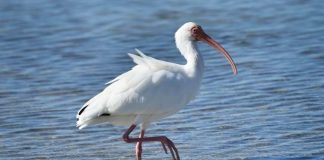




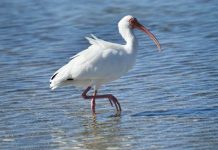
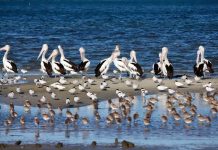
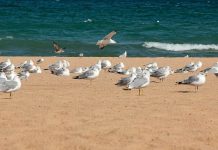


Shorebirds are an integral part of the beach environment, their lively movements and distinctive calls adding vibrancy to coastal landscapes.
The term “shorebird” generally refers to birds in the order Charadriiformes, which includes sandpipers, plovers, and oystercatchers—birds that are smaller, more specialized for wading, and primarily forage along the shorelines, mudflats, and tidal zones.
Here’s a guide to 10 fascinating shorebirds, their features, and where you can find them.
1. Sanderling

The Sanderling is a small, plump bird that showcases pale gray and white plumage in winter, which shifts to a reddish-brown tone during the breeding season. You can often spot Sanderlings chasing retreating waves to feed on tiny invertebrates.
Where to find them: Found on sandy beaches worldwide; common along the Atlantic and Pacific coasts of North America during migration.
2. Ruddy Turnstone

Another frequent beach visitor is the Ruddy Turnstone, a medium-sized bird recognized by its striking black-and-white head and chest patterns, complemented by its reddish-orange legs. True to its name, it uses its sturdy, slightly upturned bill to flip over stones and debris in search of food.
Where to find them: Found along coastal areas worldwide; seen in the Americas, Europe, Africa, and Asia during migration and winter.
3. American Oystercatcher
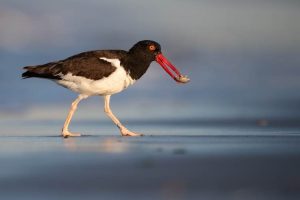
The American Oystercatcher is a striking bird with black and white plumage, a vivid orange beak, and bright yellow eyes. These birds are specialists at feeding on shellfish, prying open clams and oysters with their powerful beaks.
Where to find them: Atlantic and Gulf coasts of the U.S.; also found in parts of Central and South America.
4. Willet
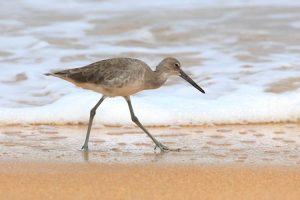
The Willet, a grayish-brown bird, reveals stunning black-and-white wing patterns when in flight. Known for its loud, piercing call, it feeds on insects, small crustaceans, and mollusks in salt marshes and along beaches.
Where to find them: Found along both coasts of North America, particularly in salt marshes and beaches during breeding and migration.
5. Snowy Plover
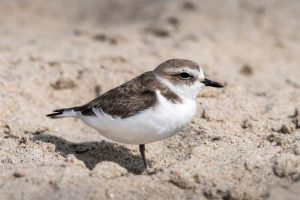
The diminutive Snowy Plover is easily recognized by its pale gray plumage, white underside, and black forehead and eye-stripe. These birds nest in shallow scrapes on sandy beaches and forage for insects and crustaceans.
Where to find them: Found along the Pacific coast of North America, from California to Mexico; also present in parts of the Gulf Coast and Florida.
6. Black Skimmer

The Black Skimmer is a sleek and distinctive bird, characterized by its black-and-white coloring and long, thin bill. Its lower mandible is longer than the upper, allowing it to skim the water’s surface to catch small fish.
Where to find them: These birds frequent the Atlantic, Gulf, and Pacific coasts of the Americas, where they can often be seen in flight just above the waves.
7. Western Sandpiper
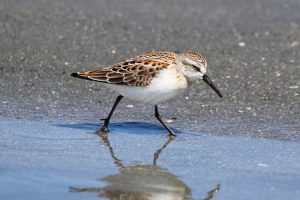
The Western Sandpiper is a small, brownish-gray bird with a short, slightly drooping bill. It feeds in flocks on mudflats and sandy shores, probing for invertebrates.
Where to find them: These birds breed in Alaska and migrate to coasts in South America, Central America, the Gulf of Mexico, and eastern and western United States.
8. Greater Yellowlegs

The Greater Yellowlegs is a tall, slender bird with long yellow legs and a slightly upturned bill. Its plumage is a striking mix of grayish-brown and white streaks. Wading in shallow waters, it feeds on insects, small fish, and crustaceans.
Where to find them: Greater Yellowlegs are found along coasts and inland wetlands throughout North and South America during migration.
9. Killdeer
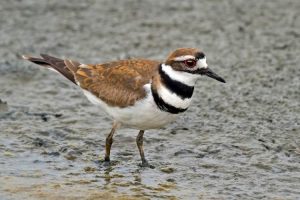
The Killdeer, a small plover, has brown and white plumage and is easily identified by two black bands across its chest. This bird is famous for its “broken wing” display, a clever tactic to distract predators from its nest.
Where to find them: Killdeer can be found throughout North and Central America, frequenting sandy beaches, open fields, and areas near freshwater.
10. Marbled Godwit

The Marbled Godwit is a large shorebird with cinnamon-brown plumage, long legs, and a slightly upturned bill with a pink base. It often feeds in small flocks, probing mud and sand for insects and worms.
Where to find them: This bird is commonly found along North American coasts during migration and winter.
Tips for Observing Shorebirds
- Bring Binoculars: Many shorebirds are small and quick, so binoculars help in observing their details.
- Check Tides: Low tide is the best time for spotting birds as they forage along the exposed shore.
- Respect Wildlife: Keep a safe distance to avoid disturbing the birds, especially during nesting season.
Observing shorebirds is a rewarding experience. With a pair of binoculars and a little patience, you can marvel at their intricate behaviors and stunning adaptations. Low tide is often the best time to watch as they forage along the exposed shore. Remember to keep a respectful distance to avoid disturbing these incredible creatures, especially during nesting season. These birds not only bring beauty to coastal landscapes but also play an essential role in maintaining the balance of beach ecosystems.