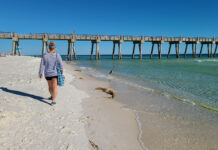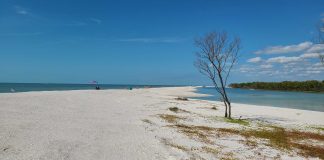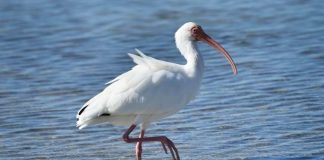




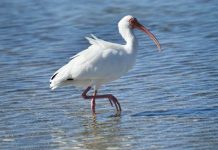
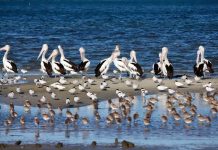
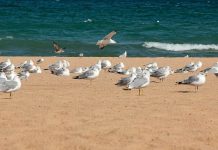


The coasts are vibrant ecosystems where land, sea, and sky meet, attracting a diverse array of bird species. Coastal birds, ranging from agile shorebirds to majestic seabirds, thrive in these dynamic environments, each uniquely adapted to their habitat. One of the most exciting things for me when walking along the shoreline is watching these amazing birds! Here’s my list of birds to look for in your walks on the beach.
1. Pelican

The Pelican is an iconic coastal bird known for its graceful flight and dramatic dives into the water to catch fish. With its large body, long bill, and distinctive throat pouch, this bird is hard to miss. Brown Pelicans are commonly found along the Atlantic, Gulf, and Pacific coasts of the Americas, often perched on piers or gliding low over the waves.
Learn more about the Pelican: Why the Pelican is my Favorite Coastal Bird
2. Great Blue Heron

The Great Blue Heron is a tall, elegant bird with bluish-gray plumage, a long neck, and a sharp bill. It is often seen wading in shallow waters, patiently stalking fish and other aquatic prey. Found across North America, this heron inhabits coastal wetlands, estuaries, and marshes, as well as inland waterways.
Those Beautiful Long-legged Wading Birds that frequent the Worlds Beaches
3. Osprey

Known as the “fish hawk,” the Osprey is a raptor often seen soaring above coastal waters, scanning for fish with its keen eyesight. With its white underside and dark back, this bird is easily identifiable. Ospreys are found near coasts, rivers, and lakes worldwide and often nest on man-made structures like telephone poles and buoys.
4. Cormorant

Double-Crested Cormorants are sleek, dark waterbirds with long necks and hooked bills. I love to spot them perched with their wings outstretched to dry, but they are also very cool when they are in the water as these expert divers hunt fish underwater. They inhabit coastal waters, estuaries, and freshwater lakes across North America. Not very common on the beaches, but found just off the beaches in nearby waterways, lakes and estuaries.
5. Black Skimmer

With its black-and-white plumage and unique bill, where the lower mandible is longer than the upper, the Black Skimmer is a distinctive presence along sandy beaches and lagoons. These birds use their specialized bills to skim the water’s surface for fish. Black Skimmers are common along the Atlantic, Gulf, and Pacific coasts of the Americas.
6. Gull

Perhaps the most iconic beach birds, seagulls are adaptable and found on almost every shoreline. Medium-sized with gray and white plumage and sharp, curved beaks. These birds inhabit coastal areas of the Americas, particularly the Gulf of Mexico and the eastern U.S.
7. Royal Tern

The Royal Tern is a seabird with a bright orange bill and a black crest that stands out against its white body. These terns are often seen diving into the water to catch fish or resting in large groups on sandy beaches. They are found along the Atlantic and Gulf coasts, as well as in parts of the Pacific.
8. Oystercatchers

The Oystercatcher is a striking shorebird with black and white plumage, a bright orange bill, and yellow eyes. It uses its strong bill to pry open shellfish, making it a common sight on rocky and sandy beaches. These birds inhabit the Atlantic and Gulf coasts of the U.S., as well as parts of Central and South America.
9. Willet

The Willet is a medium-sized shorebird with grayish-brown plumage that reveals black-and-white wing patterns in flight. It feeds on insects, small crustaceans, and mollusks, often foraging along the water’s edge. Willets are found along both coasts of North America, particularly in salt marshes and sandy beaches during migration.
10. Sandpipers
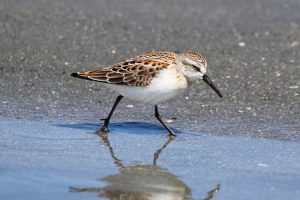
These small, agile birds can often be seen darting along the water’s edge, pecking at the sand for small invertebrates. They are common on the beaches with their long, slender beaks and quick, scurrying movements.
Appreciating Coastal Birds
Coastal birds are integral to the shorelines they inhabit, playing crucial roles in their ecosystems. When exploring coastal areas, take time to observe these remarkable species and their behaviors. Remember to observe responsibly, maintaining a safe distance to avoid disturbing these incredible creatures.