


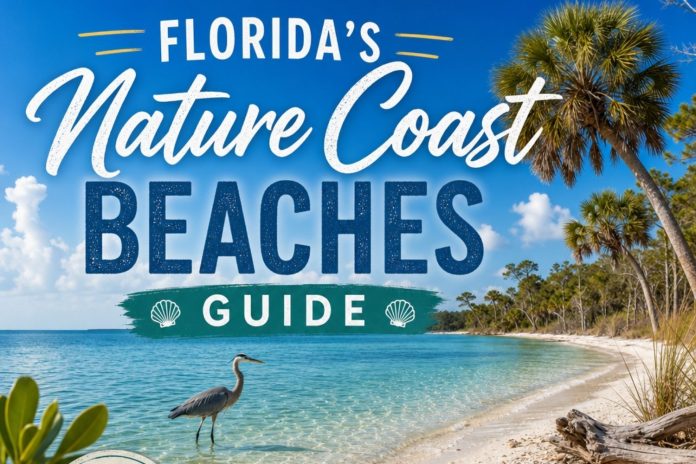
Florida’s Nature (and Springs) Coast Beaches
South of Cedar Key, the coastline makes a quiet shift. The water is still mostly murky Gulf. The natural sand is still mostly mucky bottom. But the spring systems start to take over the story here, and a handful of parks on this stretch have done something honest and practical: they brought in white sand and built a beach experience worth having. You just need to know which stop gives you what.
This stretch of coast runs from Citrus County in the north through Hernando and Pasco counties before the Suncoast begins at the Pasco-Pinellas line. The Crystal River National Wildlife Refuge and Homosassa Springs Wildlife State Park anchor the north end of the region. The spring-fed rivers that characterize this coast flow from the Floridan Aquifer through limestone terrain and empty into the Gulf with water that runs crystal clear at the headwaters and darkens as it mixes with the coastal system. That spring water is the defining feature of everything in Citrus County, and it draws people who know where to find it.
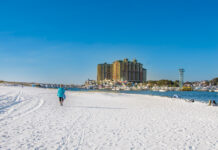
The parks between Citrus and Pasco Counties represent a practical response to a coastline that doesn’t naturally produce white sandy beaches: bring in the sand and build the infrastructure anyway. Hunter Springs Park, Pine Island Beach Park, and SunWest Park are all examples of this approach, and they all do it well enough that the experience competes favorably with many natural beaches further south. None of them pretend to be something they’re not. They’re parks on a nature coast that happen to have good beaches, and that honesty is part of what makes them work.
If you’re driving this coast from north to south, you’re transitioning out of the remote Big Bend toward the beginning of the Tampa Bay area’s gravity. The stops here are more park than wilderness, more maintained than wild, and more populated than anything between St. Marks and Cedar Key. That shift is real and worth understanding before you arrive.
The Vibe and Culture of the Nature and Springs Coast
Spring Water, Manatees, and Parks Built for Locals
This stretch of coast serves its own residents more than it serves tourists, and you can feel that in the parking lots, the concession stands, and the families who park in the same spot every Saturday. That local ownership is the thing most worth preserving about it.
The Citrus-Hernando-Pasco coast has a different relationship with its own coastline than the Big Bend does. The Big Bend communities grew up around the water economically and culturally. These communities grew up around springs, retirement living, and suburban growth, with the Gulf playing a supporting role rather than a central one. Crystal River is the exception: the manatees and the springs have made it a genuine destination, drawing snorkelers, kayakers, and wildlife photographers from across the country. Everywhere else on this stretch, the beach parks are public amenities for local residents rather than attractions pulling outside visitors.
The springs themselves carry a specific culture that doesn’t exist anywhere else in Florida. Manatee season at Crystal River, from roughly November through March, draws a quiet but consistent crowd of underwater wildlife watchers who come specifically for the experience of snorkeling in 72-degree spring water alongside the largest concentration of West Indian manatees in the world. This is the kind of crowd that wakes up early, respects the passive observation rules around manatees, and leaves without needing a souvenir shop. They know exactly why they came.
SunWest Park in Pasco County represents something different again: a former limestone quarry that became a recreational beach and water sports park, with a mile of white sand along a spring-fed lake and the kind of cable wakeboarding and aqua park infrastructure that draws a younger, more activity-oriented crowd. It’s the most developed and commercially oriented stop on this entire coast, and it’s popular for exactly that reason. Every stop on this coast has its own logic, and understanding that logic before you arrive makes the difference between being disappointed and being exactly where you wanted to be.
Florida’s Nature and Springs Coast: Every Beach Stop, North to South
These parks and access points are spread across three counties over roughly 80 miles of coastline. Here’s what each one actually is, what the water is doing, and who goes there.
Hunter Springs Park, Crystal River
Citrus County · Kings Bay · $5 Parking · No Dogs
Hunter Springs Park sits on Kings Bay in the city of Crystal River, a few hundred yards from the spring boils that make this town the manatee capital of the world. The spring water here is cold, clear, and blue in a way that takes you by surprise after everything else on the Nature Coast. You’ll notice the color shift before you step in: the water at the swim area runs clear to the bottom, over white sand and aquatic vegetation, with none of the murky tannin color that defines the Gulf coast on either side of Crystal River. This is freshwater spring water, maintained at a constant 72 degrees by the Floridan Aquifer, and it’s the finest swimming experience available on this entire stretch of coast.
The park has been redesigned in recent years and the current version is well-run and worth the parking fee. You’ll find a small beach area, a roped swimming zone, a kayak launch (additional fee, bring your own kayak or rent from nearby outfitters), a boardwalk for manatee viewing, a playground, picnic areas with BBQ grills, and outdoor showers and changing rooms. In winter, the manatees come directly into the spring run and the swim area, which means you can be in the water at the same time as one of the world’s largest marine mammals without going anywhere except this city park. No dogs or alcohol are permitted.
Park opens at 8am daily, with hours varying by season: 8am to 8pm from April through Labor Day, 8am to 7pm through October, and 8am to 5:30pm November through March. Parking is paid by credit card at self-pay stations, roughly $5 for a full day, and spots fill fast on weekends and during manatee season. The city trolley system provides an alternative to driving in. One honest note on current conditions: some recent visitors have observed that boat traffic on Kings Bay affects water clarity in parts of the swim area, particularly in summer when tour boat activity is highest. The spring boil itself stays clear. Early morning arrivals generally find the best conditions.
Fort Island Gulf Beach, Crystal River
Citrus County · Free Parking · Hurricane Recovery Underway
Fort Island Gulf Beach is the only sandy beach in Citrus County actually on the open Gulf of Mexico, reached by a 9.5-mile drive west from downtown Crystal River along Fort Island Trail through a corridor of mangrove marsh that gives you a preview of what the coast here actually looks like without a park. The drive is scenic in the particular way that dead-end roads through wild Florida tend to be: the tree canopy closes in, the road narrows, the development disappears, and then the bay opens up in front of you.
The beach itself runs a gentle arc of white-to-tan sand along Crystal Bay, which is where the Crystal River system meets the Gulf. The sand has been described as “white powdery” by the county, though honest conditions vary. The water is Gulf-coastal murky, darker than the spring runs, and the bottom transitions from sand to seagrass and soft sediment quickly offshore. It is a real beach with real sand in a county that doesn’t have many of those, and on a clear, calm weekday it’s genuinely pleasant.
An important current note: Hurricane Helene (2024) caused significant damage to the park infrastructure. As of early 2025, the beach has reopened, but the boardwalk, the pier, and the boat ramp remain closed while repairs continue. Temporary restrooms are on-site. Parking remains free and ample. Confirm current facility status before planning around the pier or boat ramp by calling Citrus County Parks at 352-527-7540. Pets are not allowed on the beach. No lifeguards.
Homosassa Springs and the Manatee Wildlife Experience
Citrus County · Springs State Park · Year-Round Manatee Viewing
Homosassa Springs Wildlife State Park is not a beach. There is no sand, no swimming area, and no Gulf access directly from the park. What it has is a spring-fed wildlife park built around an authentic Florida spring, where manatees are visible year-round from an underwater observatory and injured native wildlife, including Florida black bears, alligators, whooping cranes, and flamingos, live in naturalistic habitats. It’s one of the most engaging wildlife parks in the state and worth knowing about even though it doesn’t belong in the beach guide proper.
The Homosassa River that flows from these springs to the Gulf is one of the best kayaking corridors on the Nature Coast, particularly for manatee encounters in winter. Several outfitters in the Homosassa area rent kayaks and run guided river tours that put you on the water alongside the manatees rather than viewing them from above. This is the right complement to a Fort Island Gulf Beach visit: manatees on the river in the morning, the Gulf beach in the afternoon.
I’m covering Homosassa Springs more fully in the hike and birding guides for this stretch of coast, where the spring-to-Gulf river system and the wildlife park deserve the depth they earn. For the purposes of this beach guide, it belongs in any itinerary through Citrus County as the anchor of the morning before you drive to the Gulf beach or Hunter Springs in the afternoon.
Bayport Park, Hernando County
Hernando County · Boat Ramp and Gulf Access · Very Local
Bayport is a small community at the end of another dead-end road in Hernando County, where the Bayport Park provides a boat ramp, a small beach area, and Gulf access at a scale that serves the fishing community rather than the beach vacation crowd. The drive in takes you through the Weekiwachee Preserve on roads that thin out progressively and put you in genuinely wild coastal territory before the park opens up. That drive is half the point.
The beach here is modest, a narrow strip of mixed sand and shell along a protected bay edge with the seagrass flats running offshore. The water is Gulf-coastal murky, consistent with the rest of this coast, and there’s no swimming beach in the organized sense: no roped area, no lifeguards, no concessions. What there is: a boat ramp used by locals who fish the Hernando County flats, a picnic area, and the particular quiet of a county park that most people drive past on their way to Pine Island.
Where Bayport earns its place in this guide is the birding and the kayaking access to the Weekiwachee Preserve. The mangrove-lined coast to the north of the boat ramp, paddled at low tide with a kayak, is one of the more quietly rewarding experiences on this coast. Roseate spoonbills work the shallow flats here. Ospreys nest in the snags along the preserve edge. If you’re combining Bayport with a Weeki Wachee River paddle, start at Bayport and work your way inland rather than the reverse.
Alfred McKethan Pine Island Beach Park
Hernando County’s Only Public Beach · $5/Car Credit Card Only · 8:30am to Sunset
Alfred McKethan Pine Island Beach Park is Hernando County’s only public Gulf beach, and the people who live here treat it accordingly. The park sits on three acres at the tip of Pine Island, surrounded on three sides by water with the Gulf of Mexico in front and salt marsh on either side. The drive out Pine Island Drive, off County Road 495 west of Weeki Wachee, winds through tree canopy and coastal scrub before opening onto the park’s small but complete setup: white sand beach (imported, and good), picnic shelters, BBQ grills, a playground, a volleyball court, a concession stand, and an observation tower overlooking the Gulf.
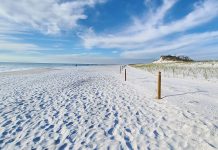
The sand here is the thing. It’s imported, brought in to create a beach experience that the natural coastline wouldn’t provide, and it’s done well enough that on a clear day the white sand, the calm Gulf water, and the palm tree shade produce a genuine beach afternoon. The water is Nature Coast shallow and murky, better for wading and floating than for visibility swimming, but the beach setup is comfortable enough that the water character matters less than it might elsewhere. Families from Spring Hill and Brooksville have been coming out here for decades, and the level of local attachment to this park is real: it was closed for nearly two years combined due to damage from Hurricane Idalia (2023) and Hurricanes Helene and Milton (2024), and the community’s frustration during those closures made local news repeatedly.
The park reopened in September 2025 after the most recent hurricane repairs. Parking is $5 per vehicle, credit card only, and the rule is enforced. No RVs, buses, or trailers. No dogs. No alcohol. Hours are 8:30am to sunset. The tides matter here: low tide exposes more beach and changes the wading character significantly, so check tides before you come. Storms move in fast on Pine Island due to the exposed position, and the park has a lightning detection system that triggers automatic closures.
SunWest Park, Hudson
Pasco County · Former Limestone Quarry · $5 Parking · Lifeguards in Season
SunWest Park is the most unexpected beach stop on the entire Nature and Springs Coast, and possibly the most fun. The park was built around a former limestone quarry, locally called SunWest Mines, and the result is a 70-acre spring-fed lake with crystal clear water and a mile-long white sand beach that has almost nothing in common with the murky Gulf water a short drive away. The water is clear because it’s spring-fed lake water, not Gulf water. The sand is white because it was placed there. Neither of those things makes the experience less real while you’re in it.
You’ll find beach volleyball courts (12 of them), beach soccer courts, a cable wakeboarding system, an inflatable aqua park obstacle course over the water, kayak and paddleboard rentals, and a concession stand. Lifeguards are on duty from 10am to 6pm during the summer season. Parking is $5 per day. No pets, no alcohol, no grills or campfires. Open sunrise to sunset, seven days a week. This is an activity park in the spirit of a beach park, and it draws a crowd that comes for the activities as much as for sitting in the sun.
I’ll be direct about what SunWest is and isn’t: this is not a Gulf of Mexico beach experience. It’s a very good freshwater lake beach park that happens to sit on a county that also borders the Gulf. The water clarity here is better than anything you’ll find on the actual Gulf coast between Cedar Key and Tarpon Springs, and the beach setup is the most developed on this stretch by a significant margin. If you’re traveling with teenagers who want to wakeboard, families who want an aqua park, or anyone who wants clear water and white sand without paying resort prices, this stop delivers something the natural coastline around it simply cannot.
Robert K. Rees Memorial Park, New Port Richey
Pasco County · Green Key Beach · Free Parking · Gulf-Facing
Robert K. Rees Memorial Park, also called Green Key Beach, sits at the end of Green Key Road in New Port Richey, on a small peninsula that juts into the estuary with views west across the Gulf. The park is free to enter, with wheelchair-accessible parking and a 650-foot boardwalk that leads to an observation tower overlooking the water. Dolphins, herons, egrets, and the occasional roseate spoonbill work the bay edges visible from the tower.
The beach area here is modest, more shell-and-sand mixed than the white sand you’d find at Pine Island or SunWest, and the Gulf-facing water is the characteristic shallow, murky Nature Coast estuary rather than open Gulf clarity. That said, the setting is genuinely pleasant for what it is: a free waterfront park with a functional boardwalk, a peaceful observation tower, and the kind of local attendance that means you’ll share the space with people who live five minutes away and value it accordingly. Picnic areas are available.
This is the most appropriate stop on the coast for anyone who wants a genuine Gulf-facing waterfront experience at no cost, with wildlife watching as the primary activity rather than swimming or sunbathing. The sunsets from the observation tower are consistently good, which is why this park fills up at the end of the day with locals who have figured that out. It’s also directly accessible from New Port Richey’s downtown, which has a growing restaurant scene that makes it a reasonable evening stop after a day on this coast.
Florida’s Nature and Springs Coast Rankings
These scores cover the coast as a whole, from Hunter Springs in Citrus County through Robert K. Rees in Pasco County. The spring parks (Hunter Springs, SunWest) pull the water and sand scores up compared to the Big Bend. The family park infrastructure pulls the family friendliness score up significantly. Everything else reflects the same Nature Coast character.
Sand Quality
5/10
The average is pulled up by the imported sand at Pine Island Beach Park and SunWest’s lake beach, both of which are genuinely good. Hunter Springs has a sandy bottom in the spring swim area. Fort Island Gulf Beach has natural beach sand. Robert K. Rees and Bayport run shell-mixed and organic. The coast as a whole remains a low-sand-quality Nature Coast, with several well-executed exceptions.
Hiking and Coastal Walking
4/10
The Weekiwachee Preserve provides genuine coastal trail access adjacent to Bayport Park. The Weeki Wachee River paddle is the standout walking-adjacent experience. The parks themselves are small by trail standards. The Florida National Scenic Trail has sections through this region, but the beach walking at most of the parks is measured in hundreds of feet rather than miles.
Shelling
3/10
Not a shelling coast. Fort Island Gulf Beach occasionally produces shells after a north wind, and the Bayport area has some shell material on the shore edges. The spring parks are freshwater and produce no marine shells. This is not a region to prioritize for shelling compared to Alligator Point or even Cedar Key to the north.
Water Conditions
6/10
Hunter Springs’ crystal-clear 72-degree freshwater earns a 10/10 on clarity. SunWest’s spring-fed lake is similarly clear. Fort Island Gulf Beach is murky Gulf water at a 3/10. Bayport and Robert K. Rees are estuary murky. The average of 6/10 reflects a coast with two genuinely excellent water experiences and everything else running Nature Coast murky.
Scenery and Natural Beauty
6/10
The spring-fed rivers and the coastal estuary system produce genuinely beautiful scenery that the park settings can’t always fully convey. The drive to Fort Island Gulf Beach through mangrove corridors, the Bayport approach through preserve land, and the Pine Island tip surrounded by water on three sides all offer scenery worth the stop even without a top-tier beach at the end.
Birding and Wildlife
9.5/10
Crystal River’s manatees in winter are the anchor, but the coast sustains this score year-round. Roseate spoonbills at Bayport. Eagles at Pine Island. Dolphins at Robert K. Rees. The spring rivers throughout Citrus County support extraordinary wildlife densities. The birding in the Weekiwachee Preserve adjacent to Bayport rivals anything on the Big Bend coast to the north.
Family Friendliness
8/10
Hunter Springs has calm clear water, a playground, and manatee viewing that genuinely enthralls children. Pine Island Beach Park has a full playground, volleyball, and a concession stand. SunWest has the aqua park and activities for teens and older children. The parks on this coast are more deliberately family-built than anything on the Big Bend, and the experience shows.
Dog Friendliness
4/10
Most of the organized parks on this coast explicitly prohibit dogs: Hunter Springs (Crystal River city park policy), Pine Island Beach Park (Hernando County park policy), SunWest (Pasco County park policy), and Fort Island Gulf Beach (Citrus County policy). Bayport Park allows leashed dogs in the parking and picnic areas. The coast scores low for dog owners and there’s no easy workaround at the main parks.
Solitude and Peace
5/10
These parks serve a large local population and show it on weekends. Hunter Springs on a summer Saturday is genuinely busy. SunWest is designed for crowd activity. Pine Island Beach Park fills up on hot weekends. Fort Island Gulf Beach and Bayport are quieter. Weekday visits are consistently better. The solitude score is sharply lower than the Big Bend to the north.
Entertainment and Nightlife
5/10
Crystal River has a growing restaurant and bar scene concentrated in the downtown area, with several waterfront options. New Port Richey’s downtown has expanded its dining and entertainment options significantly in recent years. Hernando County options are limited. SunWest itself has a concession stand. It’s not the Panhandle, but it’s several steps above the Big Bend’s near-zero evening options.
Parking and Beach Access
7/10
Fort Island Gulf Beach and Robert K. Rees are free. Hunter Springs, Pine Island, and SunWest charge $5 per vehicle, all paid by credit card (no cash). Most parks are well-signed and easy to find compared to the informal Big Bend access points. The parks accept credit cards only, so leave the cash in the car.
Sand & Water on Florida’s Nature and Springs Coast
Sand on this coast depends entirely on which stop you’re standing at, and that’s worth knowing before you pick one for the day. At Pine Island Beach Park and SunWest Park, crews brought in fine, pale sand that’s flat, wide enough for a real beach day, and soft enough to hold a sandcastle shape once you’ve worked a little water into it. The walk down to the water is short and easy at both. Everywhere else, at Fort Island Gulf Beach, Bayport, and Robert K. Rees, you’re standing on this coast’s own natural mix of sand, shell, and organic material, narrower, a little coarser, and firmer at the waterline than it is up on the dry beach. None of the seven stops on this coast gives you a long stretch to walk. This is a place built for short visits at several spots rather than one long beach day.
Water tells two completely different stories here depending on where you go. At Hunter Springs Park and SunWest Park, you’re in spring-fed water, startlingly clear and a constant 72 degrees, with a gradual, easy entry that’s genuinely one of the best swims on this whole coast. At Fort Island Gulf Beach, Pine Island Beach Park, Bayport, and Robert K. Rees, you’re in shallow, murky Gulf and estuary water instead, gentle and easy to wade into but not the kind you can see your feet through much past your knees. There’s no real surf and no rip current risk anywhere on this coast, the water here is simply too shallow and sheltered for that, but keep in mind that lifeguards are only on duty at SunWest, and only in summer. Everywhere else, you’re swimming at your own judgment.
-
Walkability. Short at every stop, none of them add up to a long beach walk. Pine Island and SunWest are the easiest on your feet, Bayport and Robert K. Rees are more about the boardwalk or kayak launch than the sand itself.
-
Softness & Playability. Genuinely good at Pine Island and SunWest, both hold a sandcastle shape and play well for kids once the sand’s had some water worked in. The natural stops are coarser and shell-flecked, better for wading and exploring than for building.
-
Barefoot Comfort. Easy at Pine Island, SunWest, and the Hunter Springs swim area. Bring water shoes for Bayport and Robert K. Rees, where shell and soft mud show up quickly near the waterline.
-
Swimmability. Excellent at the spring parks, wading-only at most of the rest. No surf and no rip currents anywhere on this coast, but no lifeguards either, except at SunWest during summer hours.
Want the full geology, grain composition, and the complete sand and water condition ratings? I broke it all down separately in Sand & Shore: Florida’s Nature Coast.
Dogs & Pet Accessibility
Are Dogs Allowed on the Sand? MOSTLY NO.
Four of the seven stops on this coast have explicit no-dog policies, and this is genuinely one of the tougher stretches in this whole series if you’re traveling with a dog.
Where Dogs Are Allowed
- ✓Bayport Park allows leashed dogs in the parking and picnic areas, though not at the waterline itself.
- ✓Robert K. Rees Memorial Park allows leashed dogs on the boardwalk and observation tower area.
- ✓The Weekiwachee Preserve trail network, adjacent to Bayport, welcomes leashed dogs on its dirt trails, the best real walking option for a dog on this whole coast.
Where Dogs Are NOT Allowed
- ✗Hunter Springs Park, a Crystal River city park policy, no exceptions beyond service animals.
- ✗Fort Island Gulf Beach, Citrus County parks policy.
- ✗Alfred McKethan Pine Island Beach Park, Hernando County parks policy.
- ✗SunWest Park, Pasco County parks policy.
Paws on the Ground Reality
If you’re traveling with a dog and this coast is on your itinerary, plan your day around the Weekiwachee Preserve trails and Bayport Park rather than trying to work a dog into the organized beach parks. The preserve gives you real mileage, shade, and genuine wildlife watching on a leash, and Robert K. Rees gives you a free evening boardwalk walk with a sunset at the end of it. Everywhere else on this coast, your dog is staying in the car or staying home.
Crowd Levels and the Overall Feel of the Nature and Springs Coast
This coast sees more people than the Big Bend but fewer than the Suncoast beaches to the south, and the crowd character is distinctly local. The parks here serve Citrus, Hernando, and Pasco county residents who don’t have convenient access to the quartz beaches at Clearwater and St. Pete Beach. Pine Island Beach Park fills on hot summer weekends with Hernando County families who drove 30 minutes because this is the closest beach they have. SunWest draws a younger, more activity-oriented crowd from Pasco County. Hunter Springs and Fort Island Gulf Beach serve a mix of Crystal River locals and wildlife-focused visitors who came for the manatees and added the beach to the day.
The manatee season at Crystal River, November through March, is the one time the northern end of this coast sees genuine visitor traffic from outside the region. The tour operators, outfitters, and restaurants in Crystal River build their winter season around this influx. Outside of those months, Crystal River runs at its own quiet pace.
- Spring: Water warming, spring snorkeling in its best window before summer boat traffic builds, manatees dispersing to the Gulf. Pine Island Park at its least crowded. Good conditions across every stop.
- Summer: Peak local use at Pine Island Beach Park and SunWest. Hunter Springs most crowded. Fort Island Gulf Beach busy on weekends. Water quality at Hunter Springs can drop with increased boat traffic. Early morning visits are consistently better than midday.
- Fall: Manatees beginning to return to Crystal River as Gulf temperatures drop. Pine Island quieting down after Labor Day. Best overall conditions at most stops for comfortable visits with lighter crowds.
- Winter: Manatee season at Crystal River and Homosassa, November through March. Hunter Springs at its most rewarding: cold and clear spring water, manatees in the swim area, manageable crowds outside of holidays. Pine Island quiet. SunWest activity-dependent on temperature. Robert K. Rees and Bayport available year-round with minimal crowds.
Who Is the Nature and Springs Coast Really For?
✓ Who Will Love This Coast
-
Families who want a complete, manageable beach park day within an hour of the Tampa Bay area, without driving to Clearwater or paying resort prices. Pine Island Beach Park and SunWest both deliver this specifically.
-
Wildlife seekers who want the manatee snorkeling experience at Crystal River, the most accessible wild manatee encounter available anywhere in the world, paired with a beach afternoon at Hunter Springs or Fort Island.
-
Active families and groups who want cable wakeboarding, an aqua park, beach volleyball, and clear spring water all in one location. SunWest is built specifically for this crowd.
-
Birders working the Weekiwachee Preserve from Bayport, or the estuary edges at Robert K. Rees, where the combination of Gulf-facing exposure and mangrove habitat produces roseate spoonbills, eagles, and dolphins with regularity.
-
Anyone who specifically wants the spring water swimming experience and doesn’t want to drive all the way to a natural spring park. Hunter Springs puts spring-quality swimming in a city park accessible without a long backroads drive.
✗ Consider Another Coast If…
-
You need quartz sand and clear Gulf water. Head to Fred Howard Park in Tarpon Springs for the best Gulf beach option north of Clearwater, or drive south to Pinellas County for the real thing.
-
You’re traveling with a dog. Nearly every organized park on this stretch prohibits dogs: Hunter Springs, Pine Island, SunWest, and Fort Island Gulf Beach all have explicit no-dog policies. Bayport Park allows leashed dogs in parking and picnic areas only.
-
You want the wild solitude of the Big Bend experience. These parks are more organized and more populated than anything to the north, and the wilderness character of the Big Bend doesn’t extend here.
-
You want to snorkel in the Gulf with good underwater visibility. The Gulf water on this coast is murky Nature Coast water from Fort Island south. For clear Gulf snorkeling, you need to go significantly further south on the Suncoast or further north to a spring run.
Things to Do on Florida’s Nature and Springs Coast
-
Manatee Snorkeling and Kayaking, Crystal River. The Crystal River NWR and Kings Bay are the only places in the United States where legal, regulated in-water interaction with wild West Indian manatees is possible. Multiple outfitters in Crystal River offer guided kayak and snorkel tours. Peak season is November through March. Passive observation rules apply: no chasing, cornering, or separating manatees from calves.
-
Swimming at Hunter Springs Park. The spring-fed swim area is the best freshwater swimming experience on the Gulf coast side of North Florida. 72-degree water year-round, clear to the bottom, and manatees visible in the adjacent spring run in winter. Arrive before 9am on weekends for the best conditions before the boat traffic builds on Kings Bay.
-
Weeki Wachee River Kayak or Paddle. One of the finest short paddling trips in Florida. The river runs crystal clear spring water from the Weeki Wachee Springs State Park headwaters toward the Gulf, with manatee encounters common in winter and abundant bird life year-round. Several outfitters offer kayak rentals and shuttle service from the springs to the Gulf or between points along the river.
-
Gulf Beach at Pine Island or Fort Island. For a traditional Gulf-facing beach day on this coast, Pine Island Beach Park (Hernando County) is the most organized option and SunWest is the most active. Fort Island Gulf Beach gives you the most genuinely Gulf-front experience in Citrus County. All three are day-use parks without overnight facilities.
-
Cable Wakeboarding and Aqua Park at SunWest. The Lift Adventure Park at SunWest offers a full cable wakeboarding system (beginner-friendly and intermediate level), a large Wibit inflatable aqua obstacle course over the lake, and kayak and paddleboard rentals. Activities require separate fees beyond the parking fee. The clearest water on the Pasco County coast.
-
Birding at Bayport Preserve and Robert K. Rees. The Weekiwachee Preserve adjacent to Bayport Park is one of the better shorebird and wading bird habitats in Hernando County. Robert K. Rees’ observation tower overlooks the estuary edge where dolphins work feeding stations and roseate spoonbills appear in season. Both are free to access.
-
Homosassa Springs Wildlife State Park. Not a beach, but the right way to spend a morning in Citrus County before heading to a beach park. Year-round manatee viewing from the underwater observatory, native Florida wildlife including black bears and whooping cranes, and the spring-fed wildlife habitat that gives this area its ecological identity. Entrance fee applies.
-
Sunset at Robert K. Rees Memorial Park. The observation tower at Green Key Beach faces west over the Gulf, and the sunset from the top is consistently good enough to bring locals out specifically for it. Free to access. Arrive by 7pm to claim a spot on the tower before the reliable evening crowd shows up.
Local Knowledge and Practical Advice
A few things about this coast that aren’t obvious until you’ve been here:
-
Every organized park on this coast is credit card only for parking. Hunter Springs, Pine Island Beach Park, and SunWest all use automated pay stations that do not accept cash. All are $5 per vehicle. Leave the cash in the car, have a credit or debit card ready, and know your license plate number before you approach the pay station.
-
Pine Island Beach Park has an automatic lightning detection system. When it triggers, the park clears immediately and stays closed until the all-clear sounds. Summer afternoon thunderstorms can trigger this multiple times in a single afternoon. If you’re planning a beach day at Pine Island in summer, arrive by 10am and plan to leave by 2pm to avoid the afternoon storm window.
-
Fort Island Gulf Beach has ongoing hurricane recovery. As of early 2025, the beach itself is open but the pier, boardwalk, and boat ramp remain closed from Hurricane Helene (2024) damage. Call Citrus County Parks at 352-527-7540 before planning around any facility other than the beach itself, as repair timelines are subject to change.
-
Manatee passive observation rules are strictly enforced at Crystal River. FWC officers patrol the Kings Bay area, particularly during peak manatee season. You may not pursue, chase, corner, or separate manatees from their calves. Swimming near a resting manatee means staying still and letting it approach you, not approaching it. Violations carry significant fines.
-
Weekday visits are significantly better at every park on this coast. Hunter Springs, Pine Island, and SunWest all see their heaviest use on Saturday and Sunday from Memorial Day through Labor Day. A Wednesday morning visit to any of these parks delivers the same experience with a fraction of the crowd and much easier parking.
-
If you’re traveling with a dog, Robert K. Rees Memorial Park and Bayport Park are your best options. Every other major park on this coast has explicit no-dog policies in the beach and swimming areas. Robert K. Rees allows dogs on the boardwalk and observation tower area with a leash. Bayport allows leashed dogs in the park and picnic areas but not at the waterline.
-
Check tides at Pine Island Beach Park. The beach changes significantly between high and low tide. Low tide exposes more sandy area and makes for better walking and wading. A tide chart for the Crystal River area works for Pine Island and the surrounding parks. Florida’s Nature Coast operates on small tidal ranges but the difference at these shallow parks is noticeable.
-
New Port Richey’s downtown is worth a dinner stop if you’re at Robert K. Rees or SunWest. The downtown area has expanded significantly in recent years with independent restaurants, bars, and live music venues along the river. It’s the most walkable evening destination on the Pasco County coast and a genuine improvement over what was there five years ago.
Where to Stay on the Nature and Springs Coast
Crystal River Lodging
Crystal River has the widest range of lodging options on the northern end of this coast, built around the manatee season visitor market. The Plantation Adventure Resort on Kings Bay is the flagship, offering direct water access and on-site kayak and manatee tour packages. Several waterfront hotels and motels line Kings Bay Drive, with views of the spring run and easy access to Hunter Springs Park. Book well ahead for November through March when manatee season fills the town’s inventory consistently.
Homosassa Area Rentals
Vacation rental cottages and small inns line the Homosassa River corridor, offering a quieter and often more affordable alternative to Crystal River’s hotel strip. Staying on the river puts you within easy paddling distance of both the wildlife park and the spring system. The Homosassa River camp and cabin options draw a fishing and nature crowd that values river access over resort amenities.
Hernando County Options
Spring Hill and Brooksville, the larger inland communities in Hernando County, offer chain hotels and budget motels for visitors day-tripping to Pine Island Beach Park or Bayport. There are no resort-scale accommodations directly on the Hernando County coast. Hernando Beach, the small coastal community near Bayport, has a handful of waterfront vacation rental homes but minimal hotel infrastructure.
Hudson and New Port Richey Area
Pasco County’s coastal communities have limited lodging directly on the water, with most visitors staying in the US 19 corridor at budget and mid-range chain hotels within 15 to 20 minutes of SunWest Park and Robert K. Rees Memorial Park. New Port Richey’s downtown area has a few boutique lodging options that position you well for both the waterfront park and the evening restaurant scene.
Camping Near This Coast
Weeki Wachee Springs State Park has campground facilities adjacent to the springs. The state park campground provides the closest full-facilities camping to Pine Island Beach Park and Bayport, and puts you on the spring-fed river for early morning paddling before the parks open. Reserve through the Florida State Parks reservation system.
What Makes the Nature and Springs Coast Different from Nearby Coasts
The Only Place on the Gulf with Year-Round Wild Manatee Swimming
Crystal River and the Crystal River National Wildlife Refuge are the single location in the United States where regulated in-water interaction with wild West Indian manatees is permitted and reliably available. Nothing else on the Florida coast, Atlantic or Gulf, offers this experience at this scale. It defines what Crystal River is and shapes everything else on the northern end of this coast.
Imported Sand Done Well
Pine Island Beach Park and SunWest Park represent two genuinely successful examples of taking a coastline that doesn’t naturally produce beaches and engineering a good beach experience anyway. Neither park pretends to be something it isn’t: Pine Island is a county park on an estuary, SunWest is a former quarry with a spring-fed lake. Both deliver real sand, organized beach infrastructure, and experiences worth having on their own terms.
The Spring-to-Gulf Continuum
The spring-fed rivers of Citrus and Hernando Counties create a water experience continuum that doesn’t exist anywhere else on the Gulf coast. You can swim in 72-degree crystal-clear aquifer water at Hunter Springs in the morning, paddle a spring-fed river to the Gulf through the Weeki Wachee Preserve in the afternoon, and watch the sunset from a Gulf-facing park in the evening. The temperature, clarity, and character of the water change completely along that route, and experiencing the whole sequence in a day is worth understanding as a single coherent Nature Coast story.
A Coast That Gets More Accessible Going South
As you move south through Citrus, Hernando, and Pasco Counties, the parks get progressively more developed and organized. Crystal River feels like a genuine small town. Hernando County’s Pine Island Beach Park is a maintained county facility. SunWest in Hudson is a fully programmed recreation park. That progression reflects the shift from the remote Big Bend character to the north toward the Suncoast’s tourist infrastructure to the south.
The Nature and Springs Coast vs. Nearby Coasts
Nature and Springs Coast vs. The Big Bend (North)
The Big Bend has more wild solitude, better fishing, and a more intact coastal ecosystem character. The Nature and Springs Coast has better family park infrastructure, the spring water swimming experience at Hunter Springs, the manatee access at Crystal River, and the activity options at SunWest. Both are Nature Coast in spirit; the difference is in amenity level and organized access.
Nature and Springs Coast vs. Tarpon Springs and North Pinellas (South)
Fred Howard Park in Tarpon Springs is a significantly better Gulf beach experience, with maintained white sand, a scenic causeway approach, and Gulf of Mexico water rather than spring or estuary water. The Nature and Springs Coast wins on spring water clarity at Hunter Springs and SunWest, and on the manatee experience that Tarpon Springs cannot offer. Most visitors to this region who want a genuine Gulf beach should continue south to Fred Howard Park if that’s their primary goal.
Nature and Springs Coast vs. Clearwater and St. Pete Beach
There is no comparison on beach quality. Clearwater and St. Pete Beach have some of the finest quartz sand and clearest Gulf water in Florida, with full resort infrastructure. The Nature and Springs Coast has spring water, manatees, and imported sand parks. These coasts serve completely different purposes and the choice between them is not a quality question.
Bottom line: The Nature and Springs Coast earns its place in a Florida beach guide by doing something the quartz beaches to the south don’t do: it combines freshwater spring swimming, wild manatee encounters, and a series of well-built public beach parks into a coastal experience that works for families and wildlife seekers on a budget. It’s not the Gulf coast you picture when you think of Florida. It’s a different version of that coast, built on different geological and ecological foundations, and it’s worth understanding on those terms.
Florida’s Nature and Springs Coast: Frequently Asked Questions
What is the best beach on Florida’s Nature and Springs Coast?
For organized family beach experience: Alfred McKethan Pine Island Beach Park (Hernando County) or SunWest Park (Pasco County). For spring water swimming: Hunter Springs Park (Crystal River). For a genuine Gulf beach: Fort Island Gulf Beach (Crystal River), subject to current hurricane recovery status. Each is best in category rather than competing against each other.
Where can I swim with manatees on the Nature Coast?
Crystal River is the primary location. The Crystal River National Wildlife Refuge protects Kings Bay, where manatees gather from November through March in the spring boils. Multiple outfitters offer guided kayak and snorkel tours. Passive observation rules are strictly enforced. Hunter Springs Park on Kings Bay also sees manatees in the swim area in winter.
Is there a fee to visit Pine Island Beach Park?
Yes. $5 per vehicle, credit card only, no cash accepted. Hours are 8:30am to sunset. No RVs, buses, or trailers. No dogs or alcohol. The park is Hernando County’s only public beach and serves a large local population, so expect it to be busy on summer weekends.
What happened to Fort Island Gulf Beach after the hurricanes?
Hurricane Helene (2024) caused significant damage to Fort Island Gulf Beach. As of early 2025, the beach has reopened but the pier, boardwalk, and boat ramp remain closed while repairs continue. Temporary restrooms are on-site. Parking is free. Call Citrus County Parks at 352-527-7540 for current facility status before visiting.
Is SunWest Park a real beach?
SunWest is a former limestone quarry that has been developed into a spring-fed lake beach park, with mile-long white sand beach, clear water, and full recreational infrastructure including cable wakeboarding and an aqua park. It is not a Gulf of Mexico beach, but it delivers a significantly better beach experience than the actual Gulf coast at this latitude. $5 parking, no dogs, no alcohol.
Are dogs allowed at Hunter Springs Park?
No. Hunter Springs is a Crystal River city park, and the city’s parks prohibit dogs (except service animals). Most of the organized beach parks on this coast have no-dog policies. Your best options with a dog are Robert K. Rees Memorial Park (boardwalk and observation tower) and Bayport Park (parking and picnic areas), both in Pasco and Hernando Counties respectively.
When is the best time to visit Crystal River for manatees?
November through March, when Gulf water temperatures drop and manatees concentrate in the spring boils of Kings Bay to stay warm. Peak manatee season is typically December through February. The spring water stays at 72 degrees year-round, so the springs are swimmable at Hunter Springs even in summer, but the manatee experience is specifically a winter phenomenon.
How far is Pine Island Beach Park from Tampa?
About 60 miles north of Tampa, roughly 75 to 90 minutes depending on traffic. The park is located at 10840 Pine Island Drive, Spring Hill, FL 34607, off County Road 495 west of Weeki Wachee. The drive through Hernando County’s pine flatwoods and coastal scrub on the way to the park is part of the experience.
What is Robert K. Rees Memorial Park known for?
Also called Green Key Beach, the park is best known for its 650-foot boardwalk leading to an observation tower with views of dolphins, herons, and other Gulf-estuary wildlife, and for being free to access with wheelchair-accessible parking. The beach area is modest, but the sunset views from the observation tower are consistently good enough to draw a reliable evening local crowd.
Is Bayport Park worth visiting?
Yes, specifically if you have a kayak or binoculars. The park’s main value is access to the Weekiwachee Preserve for coastal kayaking and birding, with roseate spoonbills, eagles, and herons common along the preserve edges. As a standalone beach, it’s modest. As a kayak launch into a protected nature preserve, it’s excellent.
Does this coast have lifeguards?
SunWest Park has lifeguards on duty from 10am to 6pm during the summer season. No other park on this coast provides lifeguards. Swim at your own judgment at Hunter Springs, Fort Island Gulf Beach, and Pine Island Beach Park. SunWest’s lifeguarded lake is the only supervised swimming option on the Nature and Springs Coast.
Patti’s Perspective: My Honest Take on the Nature and Springs Coast
Coming into Crystal River from the north felt like the coast finally exhaling. I’d been walking murky water and shell-mixed shore since Bald Point, and then the springs started and the water changed completely. Hunter Springs Park was the first time on this long stretch of coast that I stood in water clear enough to see my feet without squinting, and the 72-degree temperature on a late October afternoon felt like the coast had been keeping a secret the whole way south.
The manatee thing is real. I say that knowing how easy it is to oversell wildlife encounters, and I’m saying it anyway. Standing at the edge of the spring boil at Hunter Springs in winter with a manatee resting on the bottom three feet below you, moving slow, aware of you in the way large animals are aware of things near them, is a specific experience that I haven’t found anywhere else on this coast. It’s the reason this particular section of Florida has been worth the trouble of its murky Gulf beaches and its imported sand parks. The springs are the soul of this coast, and everything else is organized around them.
The parks at Pine Island and SunWest surprised me in a good way. I’ll be honest: I expected to be cynical about imported sand on a nature coast. What I found instead were well-run parks that serve their communities genuinely and don’t pretend to be something they’re not. Pine Island Beach Park is exactly what Hernando County needs and exactly what Hernando County built. SunWest is a former rock quarry that became one of the more fun freshwater beach experiences I’ve had on this whole coast. The people building sandcastles there don’t care that it’s not the Gulf. They just care that the water is clear and the sand is soft.
My walking guide to this stretch of coast covers the Weeki Wachee River paddle and the Bayport preserve access specifically: Hiking and Paddling the Nature and Springs Coast.
My verdict: 4/10. This coast earns its score on the spring water experience at Crystal River, the manatee access that exists nowhere else in the country, and a set of well-built public parks that deliver real beach experiences to communities that would otherwise have none. It’s not a coast you come to for the sand or the Gulf water. You come for the springs, the wildlife, and the particular kind of affordable public beach park that the coastal counties here have built specifically because the natural beach wasn’t there to build on. That combination is worth understanding on its own terms, and it’s worth at least two days of your time on a longer Florida coastal trip.
Want to Live on Florida’s Nature and Springs Coast?
Citrus, Hernando, and Pasco Counties have been drawing residents from higher-cost Florida markets for decades, and the combination of spring access, Gulf proximity, lower cost of living, and genuinely good public parks makes the case for itself. Crystal River has seen sustained property value growth driven by the manatee tourism market and the increasing number of remote workers who discovered the town during the pandemic and didn’t leave. Homes with direct spring-run or canal access in the Crystal River area command significant premiums over inland properties, but still sit well below comparable waterfront pricing in Pinellas or Sarasota.Spring Hill and Brooksville in Hernando County offer larger lot sizes and lower density for buyers who want space alongside Gulf proximity, with Pine Island Beach Park as the community beach anchor. Pasco County’s western coast, including the Hudson and New Port Richey waterfront areas, continues to attract buyers who want Gulf access without Pinellas County prices, and New Port Richey’s reviving downtown has added a livability dimension that wasn’t there ten years ago.If spring water swimming, manatee access, and an accessible Gulf coast at a price point the Suncoast stopped offering a decade ago sounds like what you’re looking for, this stretch of the Nature Coast deserves a serious look.
Explore Waterfront Living at LiveByTheWater.com
Real estate referral partner