


John D. MacArthur Beach State Park, Florida
John D. MacArthur Beach State Park is the only state park in Palm Beach County, and after more visits than I can count, I can tell you it earns that distinction. You don’t just park and walk onto this beach. You cross a nature center, a mangrove estuary, and a 1,600-foot boardwalk to get there, and that small bit of effort is exactly why this stretch of sand has stayed as wild as it has.
This barrier island park sits on the north end of Singer Island in North Palm Beach, tucked between the open Atlantic and the calm waters of Lake Worth Cove. It covers 438 acres of maritime hammock, mangrove estuary, and undeveloped beach, along with Munyon Island, a wilderness isle in the Intracoastal Waterway that you can only reach by kayak or paddleboard. There are no high rises here, no boardwalk shops, and no lifeguards either, which tells you a lot about the kind of beach day this actually is.
In this guide I’m walking you through every distinct piece of this park, going deep on what the sand and water are actually doing here compared to the county beaches around it, scoring it honestly across every category that matters, and telling you exactly who this park is built for. I’ll cover the boardwalk, the reef, the nature trails, and the kayak trip out to Munyon Island. I close with my own take on what makes this park different from every other beach I’ve covered in this county.
The Vibe & Culture at John D. MacArthur Beach State Park
A Barrier Island That Never Got Developed
Most of Palm Beach County’s coastline got sold, built up, and paved over decades ago. This 438-acre stretch got donated instead, and the difference still shows.
When I was raising my kids in Lake Worth, this park was still new, having only opened to the public in 1989, and it quickly became our go-to when we wanted a beach day that felt more like an adventure than a routine trip to the sand. You don’t just pull up and see the ocean here. You walk through a nature center, cross a boardwalk over a working estuary, and only then do you reach the beach, and that sequence changes how everyone in the car behaves once they arrive.
The land itself has a real story behind why it stayed wild. Billionaire John D. MacArthur owned a huge portion of Palm Beach County, and rather than develop this particular barrier island, his foundation donated the land to the state in the 1970s. In the decades since, the park has become one of the last true undeveloped stretches of coastline this far south in Florida, right next to a Singer Island skyline that took the opposite path entirely.
The crowd here reflects that trade-off. Weekday mornings are close to empty, mostly locals walking the trails or paddling out toward Munyon Island. Weekends and holidays bring real crowds, especially in summer, since this is a beloved local park as much as a tourist stop, and the walk from the parking lot means the beach fills in slower and empties in slower too. There’s an entrance fee, there’s a tram instead of a shuttle bus, and there’s genuinely nothing else quite like it in this county.
MacArthur Beach State Park Areas: Six Distinct Pieces of One Wild Park
This isn’t a beach with parking lots strung along it like the county parks further north. It’s one park with several genuinely different pieces, and you need to understand how they connect to get the most out of a visit. Here’s how it breaks down.
The Nature Center & Boardwalk Approach
Park Entrance · Gateway to Everything
The first thing you’ll do at MacArthur Beach isn’t lay out a towel, it’s walk through the William T. Kirby Nature Center, and I mean that as a genuine recommendation rather than a formality. The center houses a sea turtle tank with a resident loggerhead, a mangrove aquarium, a reef exhibit, and a short educational film, all of which set up everything you’re about to see on the beach and in the water. From there, a 1,600-foot boardwalk carries you out over the mangrove estuary and Lake Worth Cove toward the ocean side.
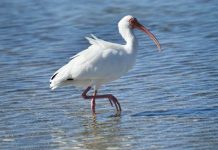
The crowd here is a genuine mix, families with young kids working through the exhibits before the heat of the day, birders scanning the mud flats from the boardwalk railing at low tide, and a steady trickle of people who clearly know to skip the walk back by catching the free tram, which runs daily starting at 10 a.m. I’ve watched roseate spoonbills feed on those exposed flats more times here than at almost any other single spot in this county, and the boardwalk puts you close enough to actually appreciate the color.
My honest advice is to walk the boardwalk on the way out and take the tram back. You’ll want the slow walk once, to actually see the estuary doing its work, and you’ll be glad for the ride once you’re sunburned and sandy and ready to leave.
Satinleaf Trail & Dune Hammock Trail
Maritime Hammock · Shaded Walking
Before or after the beach, the park’s two land trails give you a completely different piece of this barrier island. The Richard Weinstein Satinleaf Trail runs about 1.3 miles through a mixed maritime and tropical hammock along Lake Worth Lagoon, shaded by seagrape and strangler fig, with the satinleaf tree’s distinctive bronze-backed leaves giving the trail its name. The shorter, roughly third-mile Dune Hammock Trail runs along the estuary bridge and the west side of the dune, and it’s the trail I actually recommend most, since it ends with a real view down toward the beach and the surf.
You’ll find a different crowd on these trails than on the beach itself, dedicated walkers, birders with binoculars, and families using the shade to cool down mid-visit rather than commit to a full separate hike. It’s quiet almost year-round, since most visitors come for the beach and never realize the trails exist at all.
I’d make time for the Dune Hammock Trail specifically if you’re only doing one. It’s short enough to fit into any visit, and it gives you a view of this coastline you simply don’t get standing on the sand.
The Main Beach & Reef
South of the Boardwalk · No Lifeguard, Swim at Your Own Risk
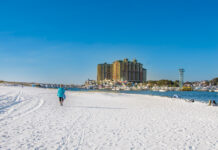
This is the beach most people picture when they think of MacArthur Beach, roughly two miles of undeveloped Atlantic sand backed by real dunes and native vegetation, with a shallow Anastasia rock reef starting just off shore. There are no lifeguards anywhere in this park, and warning flags posted at the welcome stations and the beach itself are the only signal you get on conditions, so this is a beach that rewards visitors who actually pay attention rather than assume someone’s watching for them.
The reef itself is the real draw for anyone who snorkels. It’s built largely from Anastasia limestone colonized by Sabellariid tube worms, a reef-building species that mounds up into branching structures rather than true coral, and it holds tropical fish, rays, and the occasional small shark, especially in spring and fall. A diver-down flag is required by law for anyone snorkeling or diving here, and you can rent one at the gift shop if you didn’t bring your own. Stingrays are common enough in the sand near the reef that shuffling your feet on the way in is genuinely good advice, not just a formality.
I never snorkel here without a flag and I never walk into that water without shuffling, and both habits have saved me from a bad afternoon more than once. This reef rewards patience and a calm day far more than it rewards showing up at low tide expecting a show.
North Beach
Quieter Stretch · Prime Nesting Ground
Walk north from the main beach access and the crowd thins out fast. This stretch runs quieter and wilder feeling than the main beach, and it’s also some of the most significant sea turtle nesting habitat in the park, with loggerhead and green turtle nests recorded here by the hundreds most seasons. As of this writing, the North Beach restroom has been closed for an extended stretch, so plan your visit assuming you’ll need to use the facilities back near the Nature Center.
You’ll find a smaller, more deliberate crowd here, mostly people who specifically walked north looking for quiet rather than visitors who wandered up from the main access by accident. It has the same reef and the same open Atlantic water as the main beach, just with far fewer people sharing it.
I send serious beach walkers and anyone chasing a quiet morning straight to North Beach rather than the main access. It’s the same park, the same sand, and a fraction of the company.
Munyon Island
Kayak or Paddleboard Only · Lake Worth Lagoon
Munyon Island is the piece of this park almost nobody sees, because you can only reach it by kayak, canoe, or paddleboard, launching from inside the park and paddling west under the A1A bridge into the Intracoastal. The island has a genuinely wild history. Named for Dr. James Munyon, a patent medicine entrepreneur who built a five-story, twenty-one room hotel called the Hygeia here in 1903, promising ailing northerners a cure in the form of his Paw-Paw Elixir and a soak in a so-called fountain of youth. The hotel burned down in 1917, and the island passed through a string of owners, including John D. MacArthur himself in 1955, before the state acquired it in 1981 as part of this park.
The crowd here is essentially just kayakers and paddleboarders, since there’s no bridge and no dock for casual foot traffic. You’ll find protected mangrove channels through the island’s interior, hidden sandy beaches on the north and west sides good for landing a kayak, and picnic shelters with no restrooms, so plan accordingly. Herons and ibis work the interior channels constantly, and I’ve had manatees surface within a few feet of my kayak more than once on a calm morning.
Paddling out to Munyon Island and picturing wealthy northern guests bathing in a promised fountain of youth on an island that’s now just mangroves and birds is the kind of thing that stays with me. Whatever they were chasing back then, it’s long gone. What’s left is quieter and, I think, better.
Lake Worth Cove & the Kayak Launch
West of the Boardwalk · Calm Water Paddling
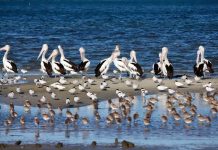
Between the parking area and the ocean side, Lake Worth Cove gives you the calm-water half of this park, a sheltered estuary where kayak and paddleboard rentals launch daily from 9 a.m., with all watercraft due back by 4 p.m. This is where you’ll see the widest range of wildlife in the shortest amount of time, wading birds working the shallows, fish schooling near the mangrove roots, and dolphins and manatees showing up more reliably at high tide.
The crowd here is calmer and more spread out than the beach, since the cove naturally absorbs paddlers without ever feeling crowded the way a beach parking lot can. Families renting their first kayak together, birders drifting quietly near the mangrove edge, and repeat visitors who’ve learned the tide schedule all share this water without much friction.
If you only do one water activity here, make it a slow paddle through this cove at high tide rather than a straight shot out to Munyon Island. You’ll see just as much wildlife with a fraction of the effort.
MacArthur Beach State Park Rankings: Expert Scores Across 11 Categories
These scores weigh the whole park, from the reef and the open beach to the quiet paddle out to Munyon Island, since so much of what makes this place worth the entrance fee happens away from the sand itself.
Sand Quality
7/10
Warm quartz sand with real shell and coquina content, backed by genuine dunes and native vegetation rather than a manicured beachfront. Honest Atlantic sand with a wilder edge than the county parks nearby.
Hiking & Beach Walking
8/10
Two miles of undeveloped beach plus the Satinleaf and Dune Hammock trails give this park more genuine walking variety than almost anywhere else in the county.
Shelling at MacArthur Beach
6/10
Moderate, with the reef nearby limiting how much loose shell washes ashore compared to open sand beaches. Worth a look after a storm, but not the main reason to visit.
Water Conditions
7/10
Clear enough for genuinely good reef snorkeling on a calm day, but there are no lifeguards anywhere in this park. Check the flags and respect them, since nobody else is watching for you.
Scenery & Natural Beauty
9/10
Undeveloped dunes, a mangrove estuary, and a hidden island reachable only by kayak. Few beaches this close to a major metro area still look this wild.
Birding & Wildlife
9/10
A stop on the Great Florida Birding Trail, record turtle nesting numbers most seasons, and manatees and dolphins showing up reliably in Lake Worth Cove at high tide.
Family Friendliness
7/10
The nature center, the tram, and the calm cove paddling make this a genuinely educational family day, but the lack of lifeguards means closer supervision in the water than at a county beach.
Dog Friendliness
3/10
Leashed pets are welcome in the parking areas and on some trails, but not on the beach, the boardwalk, or inside any building. This is a wildlife-first park, and it shows in the rules.
Solitude & Peace
7/10
Genuinely quiet on weekday mornings, especially at North Beach and out on Munyon Island. Weekends and summer holidays fill the parking lot and the beach both.
Entertainment & Nightlife
3/10
There’s no boardwalk and no nightlife inside the park itself, though occasional Under Moonlight concerts and a small amphitheater give it more going on than a typical nature preserve.
Parking & Beach Access
7/10
Plenty of parking and a free tram make access easy once you’re inside, but there’s an entrance fee and a genuine walk or ride between the lot and the sand, unlike the drive-up county beaches nearby.
MacArthur Beach State Park Sand & Water: Deep-Dive Analysis
Sand Composition & Texture
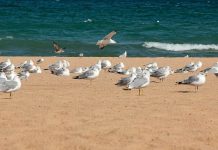
The first thing you notice walking off the boardwalk onto MacArthur Beach is how much more natural the dune line looks compared to almost anywhere else in this county. There’s no seawall, no manicured grading, just native beach vegetation holding real dunes together the way they’ve done for centuries. The sand itself sits on the same Anastasia Formation that runs the length of this coast, a mix of quartz and coquina limestone, but here the story is less about the sand itself and more about what’s growing on the rock just offshore.
That offshore rock is the real geologic headline. Rather than true coral, the reef here is built by colonies of Sabellariid tube worms, industrious little builders that cement sand grains into tube-shaped homes and, over time, grow the whole structure into branching, mounding formations. It’s a genuinely unusual reef type, different from anything you’ll find at the sandier beaches further south in the county, and it’s a big part of why this stretch stayed a state park rather than a resort strip.
-
Sand Color. A warm, natural tan, less uniform than a groomed resort beach, with real organic material and shell mixed into the upper beach near the dune line. It looks and feels like an undeveloped barrier island because it is one.
-
Texture. Medium grained with real shell and small coquina fragments throughout, coarser than a pure quartz beach but still comfortable underfoot away from the reef. Packs firm at the waterline for good walking.
-
Grain Size. Quartz and coquina from the Anastasia Formation, the same rock that forms the reef itself just offshore. This sand and that rock are the same geologic story at two different stages.
-
Shell Content. Moderate, since the offshore reef traps some material that would otherwise wash ashore at a purely sandy beach. Still worth checking after a storm, particularly near the reef edges.
-
Walking Comfort. Excellent at the waterline on the open beach, rockier and slower going right around the reef zone. Stingrays favor the sandy patches near the rock, so a shuffling walk is worth the habit.
-
Barefoot Rating. 7/10 on the open beach, dropping to 4/10 right in the reef zone where exposed rock and stingray activity both make water shoes the smarter call.
Water Conditions at MacArthur Beach State Park
The water here shifts dramatically depending on which side of the park you’re standing on. The Atlantic side runs open and exposed to real surf and rip current risk, while Lake Worth Cove on the west side stays sheltered and calm almost regardless of what the ocean is doing. Neither side has a lifeguard, so understanding which water you’re actually in matters more here than at almost any other beach in this guide.
-
Water Clarity. Genuinely good over the reef on a calm day, since the shallow rock bottom keeps visibility high close to shore. Clarity drops fast after wind or storm swell and needs a few settled days to recover.
-
Water Color. Turquoise to green on the ocean side under good light, shifting to a darker, tannin-tinted color in Lake Worth Cove where the estuary and mangroves influence the water directly.
-
Wave Action. Real surf on the Atlantic side, enough for casual surfing on the right swell, breaking directly over the reef in places, which is exactly why the reef can turn dangerous in heavy conditions.
-
Swimming Quality. Good on a calm day, but this is a swim-at-your-own-risk beach with no lifeguard coverage at all. Watch the posted flags closely, since a purple flag here means marine pests, not just surf conditions.
-
Water Sports. Reef snorkeling and diving on the ocean side, calm-water kayaking and paddleboarding in Lake Worth Cove, and a genuine multi-hour paddle out to Munyon Island. Few parks in the state offer this much range from a single entrance fee.
Crowd Levels and the Overall Feel of MacArthur Beach State Park
Compared with the free county beaches further north in Jupiter and Juno, MacArthur Beach draws a crowd that’s actively chosen to pay an entrance fee and make the walk or tram ride to the sand, and that self-selection shapes the whole atmosphere. It’s rarely as packed as a drive-up beach can get, but weekends and summer holidays still fill the parking lot.
You’ll find a different crowd depending on where you go. Near the Nature Center and main beach it’s families and first-time visitors working through the exhibits before heading to the sand. On the trails it’s dedicated walkers and birders. Out on Munyon Island it’s almost exclusively kayakers and paddleboarders who came specifically for that trip.
The feel here shifts by season more around wildlife than around typical tourist patterns:
- Winter: the most comfortable weather of the year and a busy season for out-of-state visitors, though the beach itself rarely feels overrun thanks to the walk-in access
- Spring: pleasant water and the start of nesting season, with the park’s wildlife programs picking up pace
- Summer: hot and the park’s busiest season for locals, coinciding with peak sea turtle nesting and hatching
- Fall: warm water lingering, nesting season winding down, and noticeably lighter crowds than summer
Who Is MacArthur Beach State Park Really For?
✓ Who Will Love MacArthur Beach State Park
-
Nature and wildlife lovers who want a real estuary, a working reef, and a genuinely undeveloped barrier island, not just a beach
-
Snorkelers comfortable bringing their own dive flag and reading the water themselves, since there’s no lifeguard here
-
Kayakers and paddleboarders looking for a genuine multi-hour trip, not just a rental loop near the launch
-
Families who want an educational beach day, with the nature center and turtle exhibits adding real substance to the trip
-
Birders chasing a stop on the Great Florida Birding Trail with roseate spoonbills, herons, and osprey all realistic sightings
-
Anyone who wants a beach day that feels like an actual outing rather than a quick drive-up stop
✗ Consider Another Beach If…
-
You want a free, drive-up beach with a lifeguard on duty. Head to the county parks in Jupiter and Juno instead
-
You’re traveling with a dog and want beach access. Pets aren’t allowed on the sand or the boardwalk here at all
-
You want nightlife, dining, or shopping steps from the sand. This is a nature preserve, not a resort strip
-
You’re not comfortable swimming or snorkeling without a lifeguard present, since none are stationed anywhere in this park
-
You want to skip the walk entirely. Even with the free tram, there’s more distance between the parking lot and the water here than at almost any other beach in this guide
Things to Do at John D. MacArthur Beach State Park, Florida
This park packs an unusual range of activity into one entrance fee. Here’s what actually fills a day here.
-
Visiting the Nature Center. The William T. Kirby Nature Center is open daily from 10 a.m. to 4 p.m., with a sea turtle tank, mangrove aquarium, reef exhibit, and a short educational film. A great first stop before the beach.
-
Snorkeling the Reef. The offshore Anastasia rock and Sabellariid worm reef holds tropical fish, rays, and the occasional shark. A diver-down flag is required by law and available to rent at the gift shop.
-
Kayaking to Munyon Island. Rentals run daily from 9 a.m., with all watercraft due back by 4 p.m. Budget two to four hours for the round trip and time it around high tide.
-
Stand-Up Paddleboarding. Rentals are available near the northern parking lot, with hourly and half-day rates. Lake Worth Cove’s calm water makes this a beginner-friendly option even on a breezy day.
-
Hiking the Satinleaf and Dune Hammock Trails. Two short, shaded trails through maritime hammock, with the Dune Hammock Trail ending in a real view down toward the beach.
-
Sea Turtle Watching. This park has recorded some of its highest loggerhead and green turtle nesting numbers in recent seasons. Nesting runs roughly May through October, with guided programs offered in season.
-
Birding. A stop on the Great Florida Birding Trail, with roseate spoonbills, herons, ospreys, and brown pelicans all realistic sightings from the boardwalk at low tide.
-
Fishing. Allowed from non-swimming areas of the beach and by wading, kayak, or canoe in the lagoon. A Florida fishing license is required, and motorized vessels aren’t permitted in the estuary.
-
Surfing. The open Atlantic side picks up real swell on the right day, though the reef just offshore means checking conditions carefully before paddling out.
Local Knowledge and Practical Advice
A few things I’ve picked up visiting this park more times than I can count:
-
There’s an entrance fee here, unlike the county parks up in Jupiter and Juno. Current rates run $5 per vehicle with two to eight people, $4 for a single-occupant vehicle or motorcycle, and $2 for pedestrians, bicyclists, and extra passengers.
-
There are no lifeguards anywhere in this park. Watch the posted warning flags closely, and know that a purple flag specifically means marine pests are present, not rough surf.
-
A diver-down flag is required by law for snorkeling or diving. Bring your own or rent one at the Beach Outfitters gift shop before you head to the water.
-
Pets are not allowed on the beach, the boardwalk, or inside any building. Leashed pets are permitted in some other areas of the park, but plan around this if you’re traveling with a dog.
-
The free tram runs daily starting at 10 a.m. It’s a genuine help on a hot day, especially on the walk back from the beach to the parking lot.
-
The North Beach restroom has been closed for an extended stretch. Use the facilities near the Nature Center before you head north, and check current status before you go.
-
Shuffle your feet walking into the water near the reef. Stingrays favor the sandy patches close to the rock, and a shuffling walk is genuinely good protection, not just an old wives’ tale.
-
Kayak and paddleboard rentals must be back by 4 p.m. Rentals begin at 9 a.m., so plan a Munyon Island trip early enough to make the round trip comfortably.
-
Time any paddle into the estuary or out to Munyon Island around high tide. Low tide turns much of Lake Worth Cove into an impassable mud flat.
-
Bring a refillable water bottle. There’s a filling station outside the restroom at the Nature Center, and the walk between the parking lot and the beach is longer than most county beaches in this guide.
Where to Stay Near John D. MacArthur Beach State Park, Florida
There’s no camping or lodging inside the park itself, since this is a day-use state park, so here’s how the nearby options break down.
Singer Island Resorts & Condos
Just south of the park, Singer Island offers the closest beachfront lodging, with high-rise resorts and oceanfront condo towers a short drive from the park entrance. This is the trade-off locals talk about: the density MacArthur Beach never got is right next door if you want it.
North Palm Beach Residential Rentals
Quieter vacation rentals in North Palm Beach’s residential neighborhoods put you a short drive from the park without the resort density of Singer Island. This is where I’d point anyone who wants easy access without the high-rise view.
Camping
The nearest real camping option is Jonathan Dickinson State Park in Hobe Sound, about a 30-minute drive north, with tent and RV sites in a genuinely wild inland setting.
Inland & Budget Options
West Palm Beach and Palm Beach Gardens, both a short drive inland, offer a much wider range of budget to mid-range hotel chains for visitors who’d rather day-trip to the park than pay oceanfront prices nearby.
What Makes MacArthur Beach State Park Different from Nearby Beaches
MacArthur Beach stands apart from every other beach in this guide because it was donated rather than developed, and the park’s entire layout, from the nature center to the boardwalk to the kayak-only island, reflects that origin.
A few features make it distinct:
The only state park beach in Palm Beach County
Every other beach in this guide is a city or county park. This is the one place in the entire county where the state, not a municipality, sets the rules, and the difference shows in the lack of a boardwalk, the entrance fee, and the wildlife-first approach.
A reef built by worms, not coral
The Sabellariid tube worm reef just offshore is a genuinely unusual feature, different from the coquina rock reefs at Jupiter Island’s beaches and the sandier bottoms further south.
An island you can only reach by paddling
Munyon Island has no bridge and no dock for casual visitors. That single fact keeps an entire piece of this park nearly untouched.
No lifeguards, anywhere, ever
Every county beach in this guide posts a lifeguard in season. This park never does, and that single difference changes how you should plan every part of your visit here.
MacArthur Beach State Park vs. Other Nearby Beaches
These are the beaches visitors most often weigh against MacArthur Beach, and the honest read on when you’d choose one over the other.
MacArthur Beach State Park vs. Singer Island
Singer Island, just south, offers a denser resort feel with lifeguards, easy drive-up access, and beachfront dining. Choose MacArthur Beach if you want an undeveloped estuary and reef experience. Choose Singer Island if you want convenience and a resort stay right on the sand.
MacArthur Beach State Park vs. Jupiter & Juno Beach
Jupiter and Juno’s county parks offer free parking, lifeguards, and an off-leash dog beach, all things this state park doesn’t have. MacArthur Beach counters with a genuine estuary, a kayak-only island, and a reef system you won’t find on that stretch.
MacArthur Beach State Park vs. Peanut Island
Peanut Island, a short drive south near the Lake Worth Inlet, offers a similarly undeveloped, boat-access feel with its own snorkeling lagoon and Cold War-era bunker tour. Choose Peanut Island if you want a boat-in day trip. Choose MacArthur Beach if you’d rather drive up and walk in.
MacArthur Beach State Park vs. Blue Heron Bridge (Phil Foster Park)
Blue Heron Bridge, just south in Riviera Beach, is one of the most celebrated shore dives in Florida, built around an artificial reef under the bridge rather than a natural coquina formation. Choose Blue Heron Bridge for structured muck diving and seahorses. Choose MacArthur Beach for a full day that combines beach, reef, and estuary in one park.
Bottom line: MacArthur Beach State Park is the version of this coastline that chose conservation over development, and every part of a visit here reflects that choice, from the entrance fee to the missing lifeguard towers to the kayak-only island. Singer Island and the beaches further north give you more convenience. This park gives you the last genuinely wild barrier island left in the county.
John D. MacArthur Beach State Park, Florida: Frequently Asked Questions
Is there an entrance fee at MacArthur Beach State Park?
Yes. Current rates run $5 per vehicle with two to eight people, $4 for a single-occupant vehicle or motorcycle, and $2 for pedestrians, bicyclists, and extra passengers. Rates are set by Florida State Parks and can change, so check current fees before you go.
Are there lifeguards at MacArthur Beach?
No. This park has never posted lifeguards, on either the ocean side or in Lake Worth Cove. Swim at your own risk and pay close attention to the posted warning flags.
Are dogs allowed at MacArthur Beach State Park?
Leashed pets are welcome in some areas of the park, but they are not permitted on the beach, the boardwalk, or inside the Nature Center or gift shop. This is a wildlife-first state park, and the rule is enforced.
How do you get to Munyon Island?
Only by kayak, canoe, or paddleboard. There’s no bridge or dock for casual foot traffic, and the park rents kayaks and paddleboards on site for the trip, which takes roughly 45 minutes to an hour each way depending on tide and wind.
Do I need a dive flag to snorkel at MacArthur Beach?
Yes. A diver-down flag is required by law for anyone snorkeling or diving in the park, since boaters also use the reef area. Flags can be rented at the Beach Outfitters gift shop.
Is there a tram at MacArthur Beach State Park?
Yes. A free tram runs daily starting at 10 a.m. and carries visitors across the boardwalk between the Nature Center area and the beach, which is a genuine help on a hot day.
When is sea turtle nesting season at MacArthur Beach?
Nesting runs roughly May through October, and this park has recorded some of its highest loggerhead and green turtle nesting numbers in recent seasons. Guided programs run in season through the park and its Friends group.
Can you camp at MacArthur Beach State Park?
No. This is a day-use park with no camping or overnight lodging on site. The nearest camping option is Jonathan Dickinson State Park in Hobe Sound, about a 30-minute drive north.
Is MacArthur Beach good for families?
Yes, especially for families who want an educational component to their beach day. The Nature Center’s exhibits, the free tram, and the calm-water kayaking in Lake Worth Cove all make this a well-rounded family outing, though the lack of lifeguards means closer supervision in the water.
How does MacArthur Beach compare to Singer Island?
MacArthur Beach is undeveloped and wildlife-focused, with an entrance fee, no lifeguards, and a genuine estuary and reef system. Singer Island, right next door, offers a denser resort feel with easy drive-up beach access and lifeguards in season.
Patti’s Perspective: My Honest Take on MacArthur Beach State Park
This park opened to the public in 1989, right around the years I was raising my kids in Lake Worth, and it quickly became the trip we saved for when we wanted the day to feel bigger than a normal beach outing. Walking through the nature center before the beach, watching my kids press their faces against the turtle tank glass, then crossing that boardwalk out over the estuary, it never once felt like just another beach trip. It felt like we were going somewhere.
What still gets me about this park is the sequence of it. You don’t just arrive at MacArthur Beach, you earn it, through the nature center, across the boardwalk, past the reef, and if you’re willing to paddle, all the way out to an island that used to hold a five-story hotel and now holds nothing but mangroves and birds. That structure, that requirement to actually move through the park rather than just park next to it, is exactly why it’s stayed as wild as it has.
The Munyon Island paddle is the one that stayed with me longest. Floating through those quiet mangrove channels, knowing that wealthy northerners once came to that same patch of water chasing a promised fountain of youth, and finding instead just herons, ibis, and a manatee that surfaced close enough to touch, it’s the kind of moment that puts everything else about aging and searching and starting over in a different light. Whatever they were looking for, the island itself simply outlasted the need for it.
My honest caveat: if you only ever walk straight from the parking lot to the main beach and back, you’ll get a good day, but you’ll miss almost everything that makes this park worth the entrance fee. Walk the Dune Hammock Trail. Rent a kayak if the tide is right. Bring your own dive flag if you’re serious about the reef. That’s where this park actually delivers.
My verdict: 8/10. The wildest, most naturally intact beach left in Palm Beach County, and it earns that distinction fairly on scenery and wildlife alone. It asks more of you than a drive-up county beach, an entrance fee, a walk, no lifeguard, but what it gives back, a real reef, a real estuary, and an island frozen somewhere between history and mangrove, is worth every bit of that trade.
Want to Live by the Water?North Palm Beach and neighboring Singer Island offer some of the most sought-after waterfront real estate in Palm Beach County, from high-rise oceanfront condos with direct beach access to quieter residential streets just minutes from MacArthur Beach’s entrance.
The market here draws a mix of retirees, boating families drawn to the Intracoastal and Lake Worth Lagoon access, and buyers who specifically want proximity to one of the last undeveloped stretches of coastline in the county. Oceanfront condos on Singer Island typically range from the mid six figures into the multi-millions depending on age, size, and view, while inland North Palm Beach homes offer a more moderate entry point within a short drive of the park.
If living by the water is something you’re considering, whether full time, part time, or as an investment, it’s worth exploring what’s available in this area.
Explore Waterfront Living at LiveByTheWater.com
Real estate referral partner