




Ponce Inlet, Florida
Ponce Inlet might be the closest thing to an actual secret left on this whole barrier island. A town of roughly 3,000 people guarding Florida’s tallest lighthouse, the literal birthplace of NASCAR, and a stretch of white, broken-shell sand that looks and feels nothing like the orange coquina beaches just up the coast at Ormond. I’ve walked every corner of this town more times than I can count, and it never stops surprising me how much history is packed into such a small footprint.
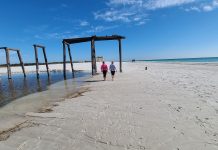
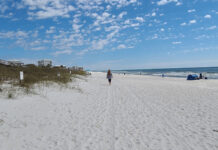
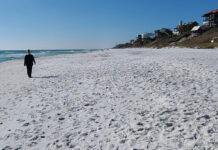
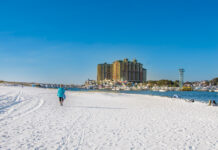
Ponce Inlet sits at the far southern tip of the same barrier island as Daytona and Ormond Beach, anchored by the inlet that gives the whole town its name. Where Ormond’s sand runs coarse and orange with coquina influence, Ponce Inlet’s beach is a genuinely different mixture, broken-up shell fragments and visibly more white quartz showing through, shaped by the tidal currents pouring in and out of the inlet mouth.
In this guide I’ll walk you through this town’s distinct areas, the lighthouse district, the inlet beach, and Ponce Preserve, going deep on what makes this sand so different from its neighbors, scoring it honestly, and telling you exactly who this town actually suits. I close with why this remains one of my favorite quiet corners of this entire coast.
The Vibe & Culture at Ponce Inlet
Where NASCAR Was Born, and Nobody Talks About It Much
This town carries more genuine history per square mile than almost anywhere else on this coast, and it wears that history quietly.
Before Daytona International Speedway existed, before the Daytona Beach and Road Course, stock car racing ran on a beach and road circuit right here in Ponce Inlet. Bill France Sr. organized the meeting that founded NASCAR at the Streamline Hotel in December 1947, and the very next year, races began running on a course that started on A1A, went south two miles parallel to the ocean, cut onto the hard-packed beach itself, and ran back north to complete the lap. That course operated from 1948 through 1958, and the restaurant now called Racing’s North Turn sits on the exact spot where cars once banked into the sand.
You’d never guess that history walking through town today. Ponce Inlet feels less like a historic proving ground and more like a place people quietly decided to keep for themselves. Beach driving isn’t part of daily life here the way it is a few miles north in Daytona, and most of the town’s beach is pedestrian only. The pace slows down noticeably the moment you cross into town limits, and the biggest landmark, Florida’s tallest lighthouse, has stood watch over all of it since long before any of these cars ever raced past.
Seasonally, this town runs quieter than almost anywhere else in this guide series. Bike Week and Spring Break traffic barely registers here, since Ponce Inlet has limited hotel inventory of its own. Summer brings the most boat traffic in and out of the inlet. Winter brings the clearest water and the calmest walking, especially through Ponce Preserve’s maritime hammock.
Ponce Inlet Areas: Five Distinct Stretches
This small town packs a genuine variety of experiences into a short stretch of barrier island. Here’s how it breaks down.
The Lighthouse District & Lighthouse Point Park
4931 S. Peninsula Drive · Modest Admission
Ponce Inlet announces itself with Florida’s tallest lighthouse, a red brick tower rising 175 feet with 203 steps to the top and sweeping views of the Atlantic, the inlet, and the Halifax River. The Ponce de Leon Inlet Lighthouse & Museum anchors a small historic district that includes restored keeper’s dwellings and the Pacetti Hotel Museum next door.
A short walk from the lighthouse, Lighthouse Point Park runs 52 acres along the north shore of the inlet, with elevated boardwalks, a nature trail, an observation tower over the Halifax River, and a jetty deck extending nearly 1,000 feet out into the inlet. This park is also home to one of Volusia County’s few true dog beaches, where leashed dogs can swim right in the inlet shoreline, and it’s genuinely one of the better wildlife-watching spots on this whole coast, with dolphins, manatees, and sea turtle sightings all common from the jetty.
I’ve spent more mornings than I can count watching the sunrise from that jetty, coffee in hand, waiting to see if a dolphin pod works its way through the inlet mouth. This is the stretch of the whole Daytona area that feels the least like a tourist beach and the most like an actual coastal preserve.
Winterhaven Park & the Main Beach Corridor
4589 S. Atlantic Avenue · Family-Friendly, No Driving
Winterhaven Park is Ponce Inlet’s most conveniently located family beach access, a 1.3 acre park with private restrooms, freshwater showers, picnic tables, grills, and a handicap-accessible boardwalk leading straight to the sand. Beach driving is prohibited here, and a lifeguard is often posted nearby during busier stretches of the year, making it one of the more family-friendly spots in town.
The crowd here is a genuine mix of Ponce Inlet residents and the handful of visitors staying in nearby vacation rentals, since the town has limited hotel inventory of its own. It’s a small, unfussy park, but it does exactly what it needs to do for a family beach day without any of the production of a bigger beach town.
This is where I’d send anyone who wants a straightforward, guarded beach day in Ponce Inlet without the crowds of the lighthouse district or the currents near the inlet itself.
The Beach Driving Zone
Beach Street Ramp · South Atlantic Avenue
On the south end of town, Ponce Inlet keeps a genuine piece of this coast’s driving culture alive. Accessed via the Beach Street Ramp at the stop sign on South Atlantic Avenue, this stretch of beach opens to vehicles from 8 a.m. until sunset or 7 p.m., whichever comes first, from May through October, and sunrise to sunset the rest of the year, tides permitting. A year-round fee of $20 per day applies, including one same-day re-entry, with annual passes available for both residents and non-residents.
The crowd here mirrors Daytona’s driving culture in miniature, families parked with their cars facing the surf, though at a noticeably smaller scale and with less of the boardwalk energy attached to it further north. Speed stays capped at 10 miles per hour, same as everywhere else on this coast that still allows it.
I still get a small thrill driving onto this stretch, knowing it sits practically on top of the old NASCAR beach circuit’s southern turn. Few places let you connect a drive on the sand directly to the sport’s actual origin story.
Ponce Preserve Park & the Green Mound
4401 S. Peninsula Drive · Free Admission
Ponce Preserve is a 41-acre park running from the ocean to the Intracoastal Waterway, and it’s the stop most visitors to Ponce Inlet never find. A well-maintained boardwalk winds through wetlands where red, black, and white mangroves thrive in brackish water, leading to a dock on the Halifax River where locals net mullet for bait and watch the birds work the shoreline. On the ocean side, without vehicular traffic or high-rises anywhere nearby, the beach here is simply a wide, open place to walk or sit.
Deeper into the preserve sits the Green Mound, a significant pre-Columbian shell midden that takes some looking to find, since even longtime locals don’t always know it’s there. Nature-themed playgrounds, a picnic pavilion, a wildlife viewing tower, and an exercise circuit round out the amenities, and kayak and canoe launches with floating docks make river access easy, even if you’ll want wheels to move a boat from the parking lot to the water.
This is genuinely one of my favorite stops in this entire guide series. Live oaks intertwine overhead along the sand paths through the maritime hammock, cool and a little spooky in the best way, and finding the Green Mound after asking around town for directions felt like uncovering something most visitors simply walk past.
Ponce Inlet’s Oceanfront Residential Stretch
South Atlantic Avenue · Quiet, Mostly Pedestrian
Between the lighthouse district and the southern driving zone, Ponce Inlet’s beach runs quietly past oceanfront homes and low-rise condo buildings. This is the town at its most residential, with a genuine local surf reputation strong enough that it’s often mentioned alongside better-known break spots on this coast.
The crowd here is almost entirely residents and second-home owners rather than day visitors, since Ponce Inlet has limited hotel inventory and most people staying here are renting a house or condo directly on the water. The beach itself stays clean and uncrowded even in the middle of summer.
This is the stretch I’d point a surfer or anyone chasing genuine quiet toward, more so than almost anywhere else covered in this guide. It doesn’t have amenities to speak of, just sand, surf, and a noticeably wealthier, quieter version of beach life than you’ll find anywhere else on this barrier island.
Ponce Inlet Rankings: Expert Scores Across 11 Categories
These scores reflect a small, quiet town built around history, wildlife, and water rather than tourist infrastructure.
Sand Quality
7/10
A genuinely different mixture from Ormond’s orange coquina sand further north, off-white and hard-packed with visible broken shell fragments shaped by the inlet’s tidal currents.
Hiking & Beach Walking
8/10
Long, hard-packed, and genuinely pleasant throughout, with Ponce Preserve’s maritime hammock trails adding real variety beyond the open beach itself.
Shelling
6/10
Better than Daytona or Ormond, especially near the jetty at Lighthouse Point Park after a storm. Not a dedicated shelling destination, but genuinely rewarding.
Water Conditions
7/10
A genuine local surf reputation along the open beach, with real current strength near the inlet itself. Respect the jetty area specifically.
Scenery & Natural Beauty
8/10
A clear step up from Daytona, with the lighthouse, the inlet, and Ponce Preserve’s maritime hammock all adding genuine visual and natural variety.
Birding & Wildlife
9/10
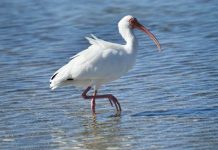
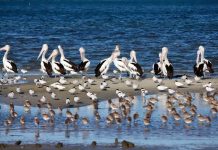
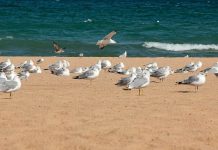
Dolphins and manatees from the Lighthouse Point Park jetty, mangrove-dependent birds at Ponce Preserve, and sea turtle nesting May through October. One of the richer wildlife towns in this guide series.
Family Friendliness
7/10
Winterhaven Park and the Marine Science Center both suit families well, and Ponce Preserve’s nature-themed playgrounds add another good option.
Dog Friendliness
8/10
Lighthouse Point Park’s leashed dog beach is one of only a handful of true dog beaches on this entire coast, a genuine strength for this small town.
Solitude & Peace
8/10
Genuinely quiet nearly everywhere in town, thanks to limited hotel inventory and a population that stays small even in peak season.
Entertainment & Nightlife
4/10
Modest by design. Good dining near the lighthouse and along the inlet, but no boardwalk, arcade, or nightlife scene of any kind.
Parking & Beach Access
7/10
Multiple free and modestly priced access points throughout, with beach driving still available at the south end for a daily fee.
Ponce Inlet Sand & Water: Deep-Dive Analysis
Sand Composition & Texture
Here’s the distinction worth understanding before you visit: Ponce Inlet’s sand is not the same story as Ormond’s orange coquina beaches a few miles north. Where Ormond-by-the-Sea’s sand runs coarse and visibly rust-toned from Anastasia formation coquina, Ponce Inlet’s beach is a genuinely different mixture, broken-up shell fragments mixed through hard-packed, off-white sand, with noticeably more visible white quartz showing through than the orange patches further north.
That difference comes down to the inlet itself. Tidal currents pouring in and out of Ponce de Leon Inlet grind shell material more finely and distribute it differently than the calmer open coastline does, giving this beach its own distinct texture. It’s part of the same broad expanse of hard-packed sand that Daytona and New Smyrna are known for, but closer to the jetty, the shell content and current-driven mixing become impossible to miss.
-
Sand Color. Off-white to white through most of the beach, a clear contrast to Ormond’s orange coquina sand a few miles north, with a grayer, more shell-flecked mix right near the jetty.
-
Texture. Hard-packed and firm through most of town, with a coarser, more broken-shell texture near Lighthouse Point Park’s jetty where inlet currents mix the sand most actively.
-
Grain Size. The same quartz base found throughout this coast, but visibly mixed with more broken shell fragments than Ormond’s coquina-heavy sand, ground finer by the inlet’s tidal action.
-
Shell Content. Noticeably higher near the jetty, where whelks, coquina, and occasional sand dollars concentrate after storms. Genuinely better shelling than the open beach further north.
-
Walking Comfort. Excellent throughout, especially along the pedestrian-only residential stretch and Ponce Preserve’s beach, where foot traffic stays genuinely light.
-
Barefoot Rating. 7/10 most of the year, dropping slightly right at the jetty where the broken shell content runs highest.
Water Conditions at Ponce Inlet
The water here changes character sharply depending on your distance from the inlet mouth. Away from it, this is typical Atlantic surf with a genuine local following among surfers. Right at the inlet, tidal flow creates real current strength worth respecting.
-
Water Clarity. Moderate on calm days away from the inlet, dropping noticeably right at the mouth where current and boat traffic both stir up sediment.
-
Water Color. Green-blue on calm days along the open beach, shifting more dramatically near the inlet where Halifax River water mixes with the Atlantic.
-
Wave Action. A genuine local surf following along the open beach, with real current strength near the inlet itself. Respect the jetty area specifically.
-
Swimming Quality. 7/10 in season. Winterhaven Park’s often-guarded beach is the safer swimming choice over the unguarded jetty rocks at Lighthouse Point Park.
-
Water Sports. Fishing off the jetty is a genuine local institution, and Ponce Preserve’s kayak launches offer calm-water paddling on the Halifax River side.
Crowd Levels and the Overall Feel of Ponce Inlet
Compared with Daytona a few miles north, Ponce Inlet runs dramatically quieter, and it holds that quiet even during peak season. Limited hotel inventory means most visitors are day-trippers or renters in a private home, not a hotel crowd.
You’ll find a genuinely local crowd nearly everywhere in town. The lighthouse district draws the most visitors, Winterhaven Park draws families, the driving zone draws a small version of Daytona’s beach culture, and Ponce Preserve draws almost nobody beyond a handful of locals and curious hikers.
The overall feel here shifts gently by season:
- Spring and fall: the most comfortable weather and lightest crowds throughout town
- Summer: peak boat traffic through the inlet and the busiest stretch of the year, still modest by any Space Coast standard
- Winter: the clearest water and calmest walking, especially through Ponce Preserve
- Sea turtle nesting season, May through October: active nests along the open beach, with lighting restrictions in effect
Who Is Ponce Inlet Really For?
✓ Who Will Love Ponce Inlet
-
Anyone chasing a lighthouse climb, with sweeping views from Florida’s tallest at the Ponce de Leon Inlet Lighthouse
-
Dog owners who want to actually walk their leashed dog on the sand, at one of only a handful of true dog beaches on this coast
-
Motorsports history enthusiasts curious about NASCAR’s actual birthplace, well beyond the more famous version at Daytona International Speedway
-
Surfers looking for a genuine local break, which Ponce Inlet offers more consistently than most of this coast
-
Wildlife watchers hoping for dolphins, manatees, and mangrove birds without fighting a crowd for the view
-
Anyone who enjoys finding a genuinely under-the-radar spot, like the Green Mound tucked inside Ponce Preserve
✗ Consider Another Beach If…
-
You want abundant, budget hotel inventory directly on the beach. Ponce Inlet has very little of its own lodging
-
You’re looking for boardwalk energy, arcades, or nightlife. This town has none, and doesn’t want any
-
You want the widest, most reliably calm swimming water. The inlet area carries real current risk that a casual swimmer should respect
-
You expect the same orange, coquina-heavy sand found at Ormond Beach. This is a genuinely different mixture, whiter and more broken-shell
-
You’re a dedicated sheller chasing a high hit rate. Shelling here is decent, especially near the jetty, but still modest compared to Gulf beaches
-
You want a beach that feels busy and social. This town is built around the opposite feeling on purpose
Things to Do at Ponce Inlet, Florida
Between the lighthouse, the inlet, and Ponce Preserve, this small town fills a day with more variety than its size suggests. Here’s what actually works.
-
Climb the Lighthouse. 203 steps to the top of the Ponce de Leon Inlet Lighthouse, Florida’s tallest, with panoramic views of the Atlantic, the inlet, and the Halifax River.
-
Dog Beach Walking. Lighthouse Point Park offers a genuine leashed dog beach along the inlet shoreline, one of only a handful on this entire coast.
-
Racing History. Visit the North Turn and South Turn historic markers, and stop by Racing’s North Turn restaurant, built on the exact site where NASCAR’s earliest races once ran.
-
Find the Green Mound. A significant pre-Columbian shell midden tucked inside Ponce Preserve, easy to miss even for locals.
-
Surfing. Ponce Inlet has a genuine local surf reputation, especially near the inlet itself.
-
Fishing. The jetty at Lighthouse Point Park is a genuine local institution, and Ponce Preserve’s river dock offers a calmer alternative.
-
Marine Science Center. Located inside Lighthouse Point Park, with touch tanks, sea turtle rehabilitation, and educational programs suited for kids as young as two.
-
Kayaking. Ponce Preserve’s floating docks make Halifax River access easy, offering a calmer alternative to the ocean side.
Local Knowledge and Practical Advice
A few things I’ve picked up walking this town more times than I can count:
-
Bring the dog to Lighthouse Point Park. This is one of the few beaches in the entire Daytona area where a leashed dog is actually allowed on the sand.
-
Beach driving here costs $20 per day year-round. That includes one same-day re-entry, with annual passes available for both residents and non-residents.
-
Respect the current near the inlet jetty. This is where the strongest water movement in town happens, and it’s not the place for a casual swim.
-
Ask around for the Green Mound at Ponce Preserve, but don’t be surprised if locals haven’t heard of it. It’s genuinely one of the more obscure historic sites on this whole coast.
-
Most of Ponce Inlet’s beach is pedestrian only. Beach driving is limited to the Beach Street Ramp at the south end of town.
-
Pair the lighthouse with the racing history markers nearby. Both sit close together and tell two very different stories about the same small stretch of sand.
-
Nesting season runs May through October. Keep beachfront lighting dim after dark and stay clear of any marked nest.
-
Bring wheels if you’re launching a kayak at Ponce Preserve. There’s some distance between the parking lot and the water.
Where to Stay Near Ponce Inlet, Florida
Ponce Inlet has very little traditional hotel inventory of its own. Here’s how the options break down.
Ponce Inlet Vacation Rentals
Most visitors stay in a vacation rental home or condo directly on the water. Rates run higher here than in neighboring towns given Ponce Inlet’s exclusivity and limited inventory.
Daytona Beach Shores, North of Town
For more traditional hotel and condo inventory, Daytona Beach Shores sits just north, offering easy access to Ponce Inlet without its lodging limitations.
New Smyrna Beach, South Across the Inlet
New Smyrna Beach sits just across the inlet to the south, with a wider range of vacation rentals and hotels than Ponce Inlet itself.
Camping
The nearest camping options sit further north in Ormond Beach and Daytona, since Ponce Inlet itself has no dedicated campground.
What Makes Ponce Inlet Different from Nearby Beaches
Ponce Inlet stands apart because it holds a genuine, underappreciated claim to motorsports history alongside a sand story that diverges sharply from its neighbors just up the coast.
A few other features make it distinct:
The actual birthplace of NASCAR
Stock car racing ran on a beach and road course here from 1948 to 1958, a full decade before Daytona International Speedway existed, and the North and South Turn markers still stand on the original sites.
A sand story that breaks from its neighbors
Where Ormond and Flagler show off orange coquina sand, Ponce Inlet’s beach runs whiter and more broken-shell, shaped by the inlet’s tidal mixing rather than the Anastasia formation further north.
Real dog access and real wilderness in a small footprint
Between Lighthouse Point Park’s dog beach and Ponce Preserve’s maritime hammock and Green Mound, this small town packs in genuine variety most visitors never expect from its size.
Ponce Inlet vs. Other Florida Atlantic Beaches
These are the beaches visitors most often weigh against Ponce Inlet, and the honest read on when you’d choose one over the other.
Ponce Inlet vs. Daytona Beach
Daytona sits a short drive north and offers the boardwalk, the pier, and the ability to drive onto most of the beach. Choose Daytona for energy and events. Choose Ponce Inlet for the same coastline with the crowd and the sand character both changed entirely.
Ponce Inlet vs. Ormond Beach
Ormond Beach, further north on the same barrier island, offers coarser, more orange coquina sand and its own dog beach and racing history. The two towns share a similar quiet character but tell genuinely different sand stories.
Ponce Inlet vs. New Smyrna Beach
New Smyrna sits just across the inlet and offers a similarly laid-back, surf-friendly feel with more restaurant and shopping infrastructure of its own. It’s a close cousin to Ponce Inlet in personality, just with more to do off the sand.
Bottom line: Ponce Inlet is the quiet, history-rich counterpart to its more famous neighbors, holding a genuine claim to NASCAR’s origin story and a sand mixture that looks and feels distinctly different from Ormond’s orange coquina beaches just up the coast. Daytona gives you the energy. New Smyrna gives you more infrastructure. Ponce Inlet gives you the quiet and the history in one small package.
Ponce Inlet, Florida: Frequently Asked Questions
Is Ponce Inlet worth visiting?
Yes. The lighthouse climb, the genuine NASCAR birthplace history, and the dog-friendly beach at Lighthouse Point Park all make this small town worth a dedicated visit, not just a drive-through on the way to New Smyrna.
Is Ponce Inlet’s sand the same as Ormond Beach’s orange sand?
No. Ormond’s sand runs coarse and orange from coquina in the Anastasia formation, while Ponce Inlet’s beach is a genuinely different mixture, off-white and hard-packed with more visible broken shell content, shaped by the inlet’s tidal currents.
How much does it cost to visit the Ponce Inlet Lighthouse?
General admission runs under 10 dollars for adults and under 2 dollars for children, covering the lighthouse climb and the surrounding museum buildings.
Are dogs allowed on the beach in Ponce Inlet?
Yes, at Lighthouse Point Park’s designated dog beach along the inlet shoreline, leashed at all times. This is one of only a handful of true dog beaches anywhere on this coast.
Is Ponce Inlet really where NASCAR was born?
Yes. Stock car races sanctioned by the newly formed NASCAR ran on a beach and road course here from 1948 through 1958, a full decade before Daytona International Speedway existed. The North and South Turn historic markers still stand on the original sites.
Can you drive on the beach in Ponce Inlet?
Yes, at the southern end of town via the Beach Street Ramp, for a $20 daily fee year-round. Most of the rest of Ponce Inlet’s beach is pedestrian only.
Is Ponce Inlet good for surfing?
Yes, genuinely so. The break near the inlet has a real local reputation among Florida surfers, stronger and more consistent than the casual surf found along much of this coast.
What is Ponce Preserve?
A 41-acre park running from the ocean to the Intracoastal Waterway, with a maritime hammock, mangrove boardwalk, kayak launches, and the Green Mound, a significant pre-Columbian shell midden tucked inside the preserve.
Is Ponce Inlet crowded?
No, generally not. Limited hotel inventory keeps this town quiet even during peak season, with the lighthouse district drawing the most visitors and Ponce Preserve staying nearly empty.
Where can you see manatees and dolphins in Ponce Inlet?
The jetty at Lighthouse Point Park offers reliable sightings of both, especially in the calmer morning hours.
Patti’s Perspective: My Honest Take on Ponce Inlet
Ponce Inlet earned its own guide, and separating it from Ormond Beach was the right call. These two towns share a barrier island, but they don’t share a sand story, and lumping them together the first time undersold just how different this place actually feels underfoot. Where Ormond’s beach runs coarse and orange, Ponce Inlet’s is whiter, more broken-shell, shaped by an inlet instead of a coquina formation.
What I keep coming back to here is how quietly this town carries its history. A town of three thousand people guarding a lighthouse, a jetty, and the actual birthplace of NASCAR, and yet none of it feels like it’s performing for visitors the way a bigger racing town might. I’ve climbed that lighthouse more times than I probably need to, and the view from the top still gets me every time, the whole curve of this coast laid out at once, quiet water on one side and the ocean stretching out on the other.
Finding the Green Mound inside Ponce Preserve after asking a few locals who genuinely didn’t know it was there might be my favorite small discovery on this entire coast. That’s the kind of thing that keeps me coming back to towns this size, long after the bigger, louder beaches have shown me everything they have to offer.
My verdict: 8/10. A small town that quietly holds one of this coast’s best-kept secrets, both in its NASCAR origin story and in a sand mixture that looks nothing like its neighbors. Climb the lighthouse, bring the dog, and find the Green Mound if you can.
Want to Live by the Water?Ponce Inlet sits at the exclusive end of this coast’s real estate market, a small peninsula town where nearly every property touches water and inventory stays genuinely limited. Homes here range from waterfront cottages to larger custom builds along the inlet and the Halifax River.The market draws boaters, retirees, and buyers looking for privacy and water access without leaving this stretch of coast entirely. Ponce Inlet commands a real premium for its combination of exclusivity, limited supply, and proximity to both the ocean and the Intracoastal Waterway.If living by the water is something you’re considering, whether full time, part time, or as an investment, it’s worth exploring what’s available in this area.Explore Waterfront Living at LiveByTheWater.com
Real estate referral partner