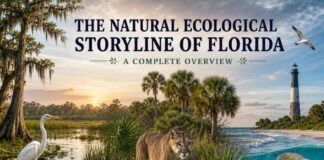



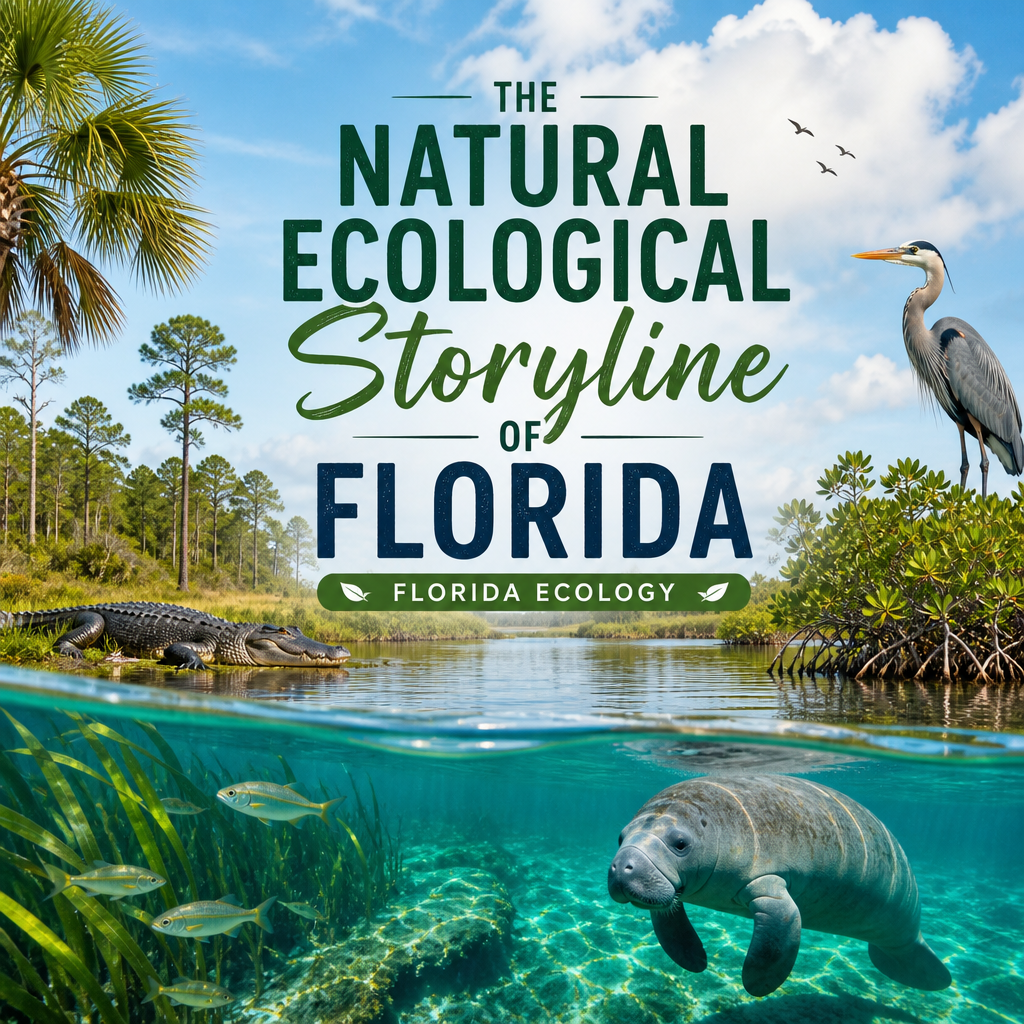
The Natural Ecological Storyline of Florida
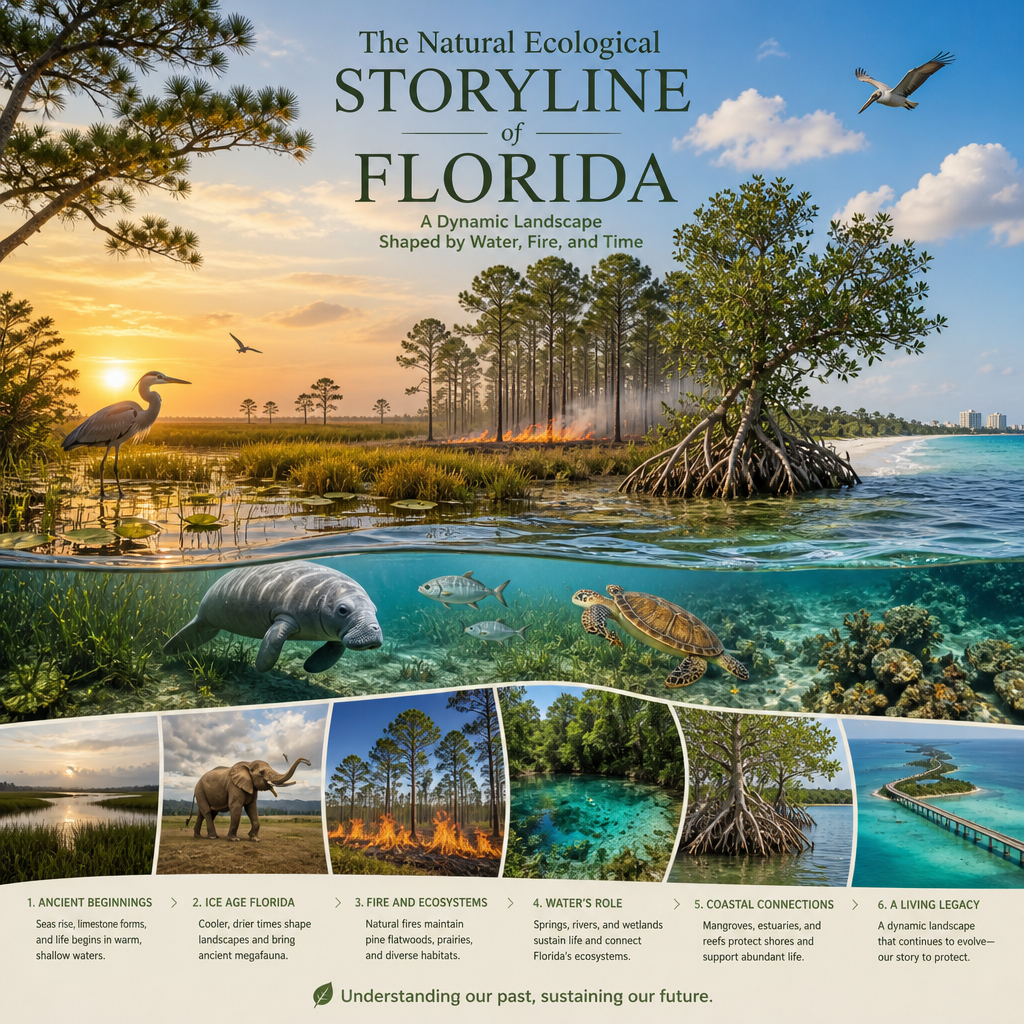
Florida is often described through its beaches, theme parks, and warm weather, but its deeper identity is rooted in a far more complex and fascinating tale. The natural ecological storyline of Florida is one of shifting water, rich biodiversity, fragile balance, and constant change. From ancient coastal dunes to vast wetlands and coral reefs, the state’s landscapes have been shaped by geology, climate, and life itself.
Understanding Florida’s ecology means following the path of water. It is the invisible force that connects almost every ecosystem in the state.
A Landscape Built by Water
Florida sits on a peninsula surrounded by the Atlantic Ocean and the Gulf of Mexico. Beneath its surface lies a foundation of limestone, a porous rock formed over millions of years from marine sediments. Because limestone allows water to move through it easily, Florida has an unusual relationship with groundwater, springs, and sinkholes.
Rainfall seeps into the ground, reemerges in crystal-clear springs, and feeds rivers, marshes, and wetlands. This creates a natural system that is both abundant and delicate. In many parts of the state, the land is never far from water, and that closeness shapes everything from plant growth to animal movement.
The Wetlands: Florida’s Living Heart
Among the most important parts of Florida’s ecological story are its wetlands. These areas include marshes, swamps, floodplains, and the legendary Everglades. Wetlands act like giant sponges, storing water during wet seasons and releasing it slowly during dry periods.
They also provide critical habitat for countless species. Wading birds, alligators, turtles, fish, and amphibians all depend on these systems. In addition to supporting wildlife, wetlands help filter pollutants, reduce flooding, and protect coastlines from storm surge.
The Everglades as an Ecological River
The Everglades is often called a river of grass, and for good reason. It is not a river in the usual sense, but a slow-moving sheet of water flowing south from Lake Okeechobee toward Florida Bay. This unique ecosystem supports sawgrass marshes, cypress swamps, mangrove forests, and a remarkable range of wildlife.
Its ecological story is also a story of pressure. Drainage, development, and altered water management have changed the natural flow of the system. Yet the Everglades remains one of the most iconic examples of Florida’s environmental identity and the importance of restoration.
Coastal Ecosystems and Marine Life
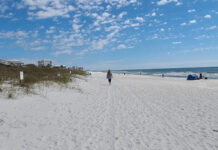
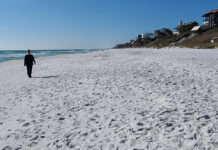
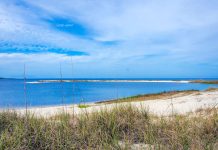
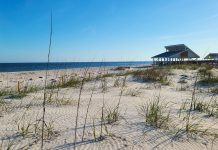
Florida’s long coastline creates another major chapter in its ecological narrative. Along the edges of the state, salt marshes, mangroves, dunes, seagrass beds, and coral reefs form highly productive ecosystems.
Mangrove forests, in particular, are vital to southern Florida. Their tangled roots stabilize shorelines, shelter juvenile fish, and create nurseries for birds and marine life. Seagrass meadows serve a similar role underwater, supporting manatees, sea turtles, and many fish species.
Farther offshore, Florida’s coral reefs are among the most biologically rich ecosystems in North America. These reefs support thousands of species and act as natural barriers that reduce wave energy and protect coastal communities.
The Role of Fire, Storms, and Climate
Florida’s ecological story is not only shaped by water. Fire, storms, and climate also play important roles. In natural areas, periodic fire helps maintain pine flatwoods and scrub habitats by clearing away dead plant material and encouraging new growth. Many native species have adapted to survive, or even benefit from, these cycles.
Storms are another powerful force. Hurricanes can damage forests and coastlines, but they also redistribute nutrients, shape habitats, and create opportunities for regeneration. Over time, these disturbances have helped define the resilience of Florida’s ecosystems.
Climate adds another layer of complexity. Florida’s warm temperatures allow tropical and subtropical species to thrive, especially in the southern part of the state. At the same time, its position between ocean systems makes it vulnerable to rising sea levels, saltwater intrusion, and changing rainfall patterns.
Native Species and Biodiversity
Florida has one of the most diverse collections of plants and animals in the United States. Its range of habitats supports species from temperate, tropical, freshwater, and marine environments. This diversity is a key part of the state’s ecological identity.
Some of Florida’s notable native species include:
- American alligator
- Florida panther
- Manatee
- Roseate spoonbill
- Gopher tortoise
- Saw palmetto
- Mangrove species
- Longleaf pine
Each species plays a role in the broader system. Predators help regulate populations, plants stabilize soil and provide food, and pollinators support reproduction across the landscape. The natural ecological storyline of Florida is really a story of interdependence.
Human Influence and Environmental Change
Human settlement has dramatically altered many of Florida’s natural systems. Wetlands have been drained, forests cleared, coastal areas developed, and water channels redirected. As the population has grown, so has the pressure on land and water resources.
Yet Florida also has a strong tradition of conservation. State parks, wildlife refuges, restoration projects, and scientific research efforts all aim to protect the state’s remaining natural heritage. These efforts matter because Florida’s ecosystems are not isolated pieces of scenery. They are living systems that support biodiversity, tourism, fisheries, clean water, and storm protection.
Why Florida’s Ecological Story Matters
The natural ecological storyline of Florida is a reminder that the state is more than a destination. It is a place where land and water meet in constant negotiation, where species have adapted to shifting conditions, and where every habitat is tied to the health of the whole system.
To understand Florida is to understand its ecological connections. Its springs, swamps, forests, reefs, and coastlines are chapters in one ongoing story, shaped by nature and now increasingly influenced by human choices. Protecting that story means protecting the balance that makes Florida unique.
In the end, Florida’s natural world is not just beautiful. It is dynamic, interconnected, and essential.