









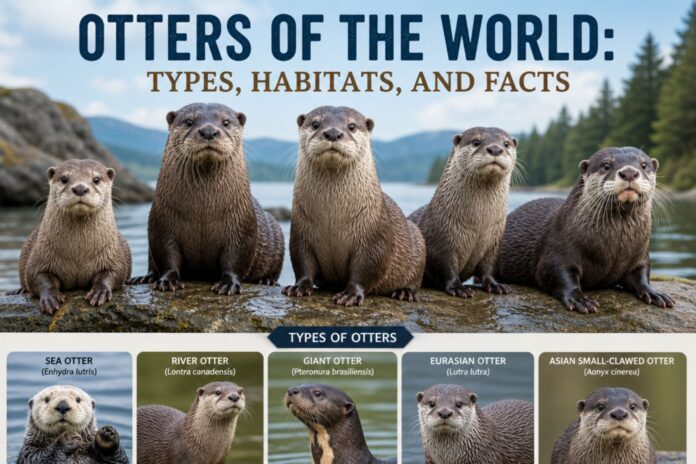
Otters are among the most beloved mammals on Earth. With their playful behavior, sleek bodies, and curious personalities, they have captured human fascination for centuries. Found across North America, South America, Europe, Africa, and Asia, otters of the world live in many different habitats and have adapted in remarkable ways.
While some species spend most of their lives in the water and others split time between land and water, all otters belong to the weasel family and share many common traits: dense fur, webbed feet, strong tails, and a love of fish and other aquatic prey.
What Makes Otters Unique?
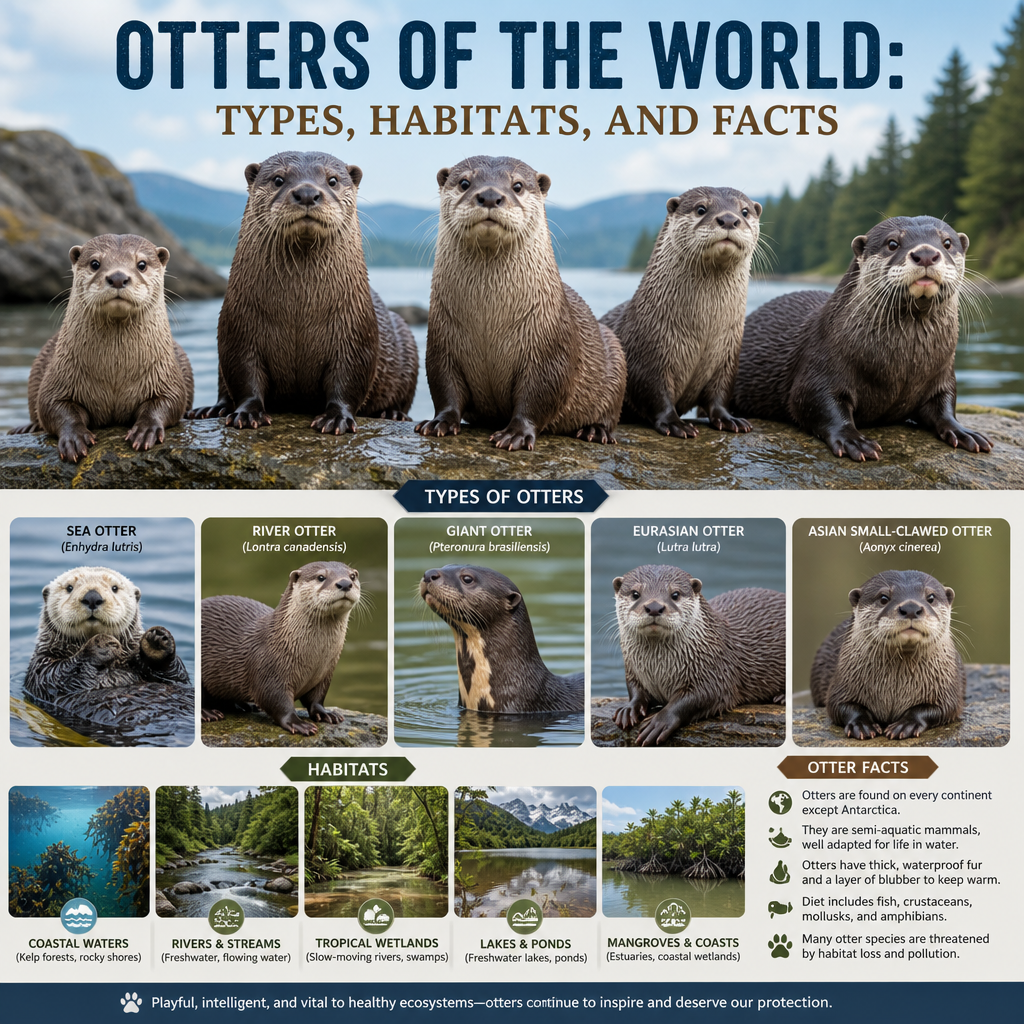
Otters are semi-aquatic mammals built for life around water. Their streamlined bodies help them swim efficiently, while their thick fur provides insulation. Unlike many marine mammals, most otters rely on fur rather than blubber to stay warm.
They are also highly intelligent and social. Some species live alone, while others form family groups or large rafts. Their behavior can include play, grooming, sliding, chasing, and using rocks as tools to open shellfish.
Common otter traits
- Long, flexible bodies
- Webbed feet for swimming
- Thick, water-resistant fur
- Strong whiskers for sensing prey
- Sharp teeth for catching and eating fish, crustaceans, and small animals
Where Otters Live
Otters are found on nearly every continent except Australia and Antarctica. Their habitats vary widely depending on the species. Some live in cold northern rivers and lakes, while others occupy tropical mangroves, coastal oceans, or freshwater wetlands.
Most otters need clean water, plenty of food, and safe places to rest or raise their young. Because of this, they are often seen as indicators of healthy ecosystems.
Major Types of Otters Around the World
There are 13 species of otters worldwide, each adapted to a different environment. Though they all share a similar body plan, their size, diet, and behavior can differ greatly.
Sea otter
Sea otters live along the Pacific coast of North America and parts of Russia. They are famous for floating on their backs, using stones to crack open shellfish, and wrapping themselves in kelp to avoid drifting. Sea otters are one of the best-known otter species and are often seen as a symbol of conservation success and challenge at the same time.
River otters
River otters are found in freshwater habitats across many regions of the world. They live in rivers, lakes, marshes, and wetlands, and several species fall under this general description. In North America, the North American river otter is widespread, while other river otter species live in South America, Europe, and Asia.
Giant otter
The giant otter is the largest otter species and lives in the Amazon and other parts of South America. It is highly social and often lives in family groups. Giant otters are vocal, territorial, and powerful hunters in freshwater ecosystems.
Smooth-coated otter
Found in South and Southeast Asia, the smooth-coated otter prefers rivers, lakes, mangroves, and coastal areas. It has a sleek appearance and is known for living in groups. It is one of the most adaptable otters in warmer climates.
Asian small-clawed otter
This is the smallest otter species and lives in wetlands, estuaries, and mangroves across South and Southeast Asia. It has tiny claws compared with other otters, which help it handle prey like crabs and mollusks.
Eurasian otter
The Eurasian otter is widespread across Europe and parts of Asia. It can live in freshwater and coastal habitats and has made a comeback in some regions after suffering declines from pollution and habitat loss.
North American river otter
This well-known species lives in rivers, lakes, and coastal areas throughout much of North America. It is highly mobile and can adapt to different environments as long as food and shelter are available.
What Do Otters Eat?
Otters are carnivores, but their diets vary by species and location. Fish are a major food source for many otters, but they also eat:
- Crabs
- Frogs
- Crayfish
- Mussels
- Snails
- Small birds
- Reptiles
- Insects
Sea otters often focus on shellfish and sea urchins, while river otters may eat whatever aquatic prey is most abundant in their habitat.
Why Otters Matter
Otters play an important role in the ecosystems they inhabit. As predators, they help control prey populations and maintain balance in aquatic food webs. Sea otters, for example, help protect kelp forests by eating sea urchins that would otherwise overgraze the plants.
Beyond their ecological value, otters have cultural significance in many parts of the world. They appear in folklore, conservation campaigns, and wildlife tourism. Their presence often signals that a waterway is alive and functioning well.
Conservation Challenges
Many otter species face threats from habitat destruction, water pollution, hunting, and entanglement in fishing gear. Wetland drainage and river development can also reduce the clean habitats otters need.
Conservation efforts include:
- Protecting wetlands and coastal habitats
- Reducing pollution in rivers and oceans
- Enforcing hunting protections
- Monitoring otter populations
- Promoting coexistence with local communities
Some species are recovering, while others remain vulnerable. Protecting otters means protecting the health of entire freshwater and coastal systems.
Thoughts & Reflection
From icy northern rivers to warm tropical mangroves, otters of the world show just how adaptable and diverse wildlife can be. Each species has its own habits and habitat, but all share a remarkable connection to water and a special place in the natural world.
Whether gliding through a river, floating in kelp, or hunting in a rainforest stream, otters remind us that nature is full of intelligence, playfulness, and resilience.
