
I have walked away from more gorgeous shells than I can count, and every single time it’s the same small routine. I pick it up, I feel that telltale weight or resistance or a tiny foot pulling back inside, and I crouch back down and set it in the wet sand exactly where the next wave will find it. It’s genuinely one of my favorite parts of this whole beach walking journey, that quiet little negotiation with myself every time, and it turns out Florida has built an entire, surprisingly complicated legal framework around that exact moment.
Florida’s Shells
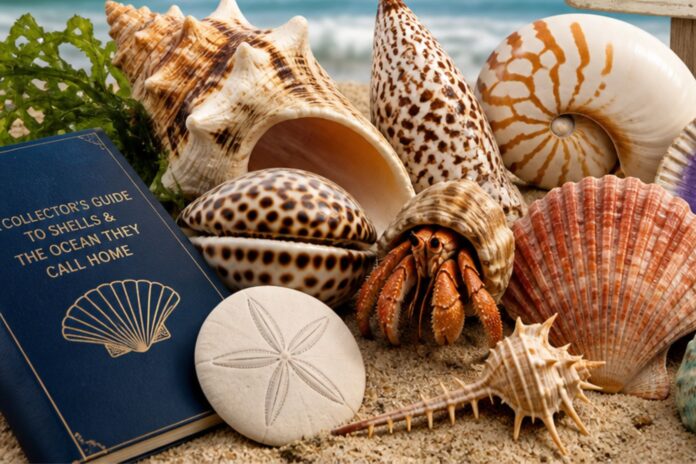
Florida’s Gulf coast, and Sanibel Island in particular, has earned a real, deserved reputation as one of the best shelling destinations on Earth, a product of the island’s unusual east west orientation catching shells drifting in from the Gulf the way almost no other Florida beach does. The state’s official shell, chosen for good reason, is the Florida horse conch, the largest gastropod found anywhere in North American waters, and the shelling lineup beneath it includes the lightning whelk, the endlessly hunted junonia, the common but genuinely lovely Florida fighting conch, and the smooth, glossy lettered olive.
Florida Horse Conch
Triplofusus giganteus can reach two feet in length, making it not just Florida’s state shell but the largest sea snail found anywhere in the United States, a genuinely startling find for anyone who stumbles onto a live one for the first time. It’s a predator, hunting other mollusks including smaller conchs, and its bright orange foot and vivid interior coloring make it almost impossible to mistake for anything else once you’ve seen one.
A horse conch this size needs open, unobstructed sand to move across, since it spends its life crawling rather than burrowing, dragging that substantial shell forward across sandy sea bottom and grass flat edges in the same lurching, single foot hop as its smaller conch relatives. Adults favor slightly deeper, subtidal sand just beyond where waves break, while the empty shells that eventually wash up on Sanibel’s famous beaches have usually traveled a fair distance from wherever the animal actually lived and died offshore.
Lightning Whelk
Sinistrofulgur sinistrum is famous among shell collectors for one specific, genuinely odd trait: it’s left handed, meaning its spiral opens on the left side rather than the right, the opposite of nearly every other whelk and conch in the world. Indigenous peoples across the southeastern United States valued lightning whelk shells enough to trade them hundreds of miles inland, using them for tools, ceremonial cups, and ornaments long before European contact.
Lightning whelks live and hunt across the same open sand and mud flats found throughout Florida’s bays and nearshore Gulf waters, plowing shallow furrows through soft sediment as they track down the clams and other bivalves that make up most of their diet. They tolerate a wider range of sand types than many of their neighbors, from firm packed sand near an inlet to the softer, siltier bottom found deeper into a quiet bay, which partly explains why they’re one of the more consistently found large shells across so much of the state’s coastline.
Junonia
Scaphella junonia is the shell every serious Sanibel visitor secretly hopes to find, a pale, cream colored spiral scattered with distinctive square brown spots, rare enough that finding one, especially a live one, has become a genuine point of local pride, sometimes even making the local news. It lives considerably deeper than most of the shells washing up on Sanibel’s beaches, which is exactly why an intact junonia is such an uncommon sight on the sand itself.
This species spends its life buried in soft sand well offshore, typically ten to thirty feet deep or more, only rarely disturbed into shallower water by a strong storm or an unusually powerful tide. That deep, soft, undisturbed sand habitat is precisely why a junonia sighting on the beach is such a genuine event rather than a routine find, since you’re really looking at a shell that’s been dislodged from a home most beachgoers will never actually see for themselves.
Florida Fighting Conch
Strombus alatus is one of the most commonly found live shells on Florida’s Gulf beaches, small enough to hold in one hand, with a flared, spiny lipped shell in shades of orange, brown, and cream. Despite the name, it’s not aggressive toward people at all, the fighting reputation comes entirely from how it defends itself against other fighting conchs, using a sharp, clawed foot to flip itself and rivals over during territorial disputes.
Fighting conchs live in shallow, sandy, grass fringed water just off the beach, often visible right at the tideline in only a foot or two of water, grazing on algae growing on the sand surface itself rather than burrowing down into it. Because they favor exactly the shallow, easily waded zone most people walk through while shelling, they’re also the species most beachgoers accidentally pick up alive without realizing it at first, which makes them a genuinely good one to learn to recognize before you go.
The Law You Need to Know Before You Stoop
Here’s where Florida gets genuinely complicated, and where I think most visitors, and plenty of longtime residents, get the rules wrong without realizing it. Statewide, Florida law technically allows limited harvest of some live shells with a recreational saltwater fishing license and strict bag limits, but that baseline gets overridden by tougher local rules almost everywhere serious shelling actually happens. In Lee County, home to Sanibel and Captiva, it is illegal to collect any live shell at all, with a short list of specific exceptions, coquina, oysters, hard clams, and sunray venus clams, still permitted in limited quantities with a license. The City of Sanibel goes even further with its own local ordinance banning live shell collection outright, stricter than the county rule underneath it. In Collier County, covering Naples and Marco Island, the ban on live shells is total, with no exceptions at all, not even the ones Lee County still allows.
Manatee County takes a middle path, capping live shell collection, including live sand dollars and sea stars, at two individuals per species per person. Statewide, taking a queen conch is illegal in any condition, alive or dead, full stop, a rule dating back to a 1985 total harvest ban after the species collapsed from decades of overfishing, and possessing even a single empty queen conch shell taken illegally can carry a fine of five hundred dollars or more. Florida’s state parks generally prohibit shell removal entirely regardless of county, the J.N. “Ding” Darling National Wildlife Refuge on Sanibel permits no shell collecting of any kind, live or empty, and the Florida Keys National Marine Sanctuary bans all shell collection outright across its entire protected waters. The honest, simple rule that covers nearly every situation you’re likely to encounter: take only empty shells, know your county’s specific rules before you stoop, and when a shell turns out to be occupied, put it back immediately, no exceptions, no just this once.
Where the Shells Actually Come From
Sanibel’s legendary shelling isn’t luck, it’s geography and sand working together. Most barrier islands in Florida run roughly north to south, parallel to the coast, but Sanibel curves east to west, putting its beaches directly in the path of Gulf currents carrying shells and sediment north from the Caribbean and the Gulf’s own deeper water. That current delivers a steady, genuinely unusual mix of species you won’t find washing up in equal volume anywhere else in the state, and the soft, gently sloping sand across much of the island’s Gulf side lets even fragile shells wash ashore mostly intact rather than getting pulverized by a steeper, higher energy beach. The famous “Sanibel stoop,” the bent over posture every serious shell hunter adopts here, exists specifically because this stretch of sand is doing something most Florida beaches simply aren’t.
Region by Region Shell Story
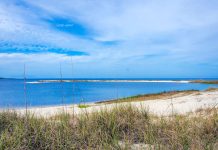
Shelling in Florida is really a sand story more than a shell story. The best shell beaches in this state all share the same thing underneath the shells themselves: a gently sloping, current fed stretch of sand that lets fragile shells wash ashore intact instead of getting ground down by a steeper, higher energy beach. Here’s the state, region by region, with the local shell laws that matter most at each stop.
Southwest Florida: The Shelling Capital
Sanibel Island is the reason this whole region has a national reputation, and its unusual east to west orientation, rather than the typical north to south run of most Florida barrier islands, puts its soft, gently graded sand directly in the path of Gulf currents carrying shells up from deeper water and the Caribbean. The “Sanibel stoop” is a real, practiced posture here for good reason. Remember that live shell collection is banned outright in Lee County, with only a short list of specific exceptions. Captiva Island, connected to Sanibel and sharing the same current pattern, is nearly as productive and carries the identical county rule. Cayo Costa State Park, reachable only by boat, offers similarly rich sand with far fewer people combing it, and as a state park, shell removal is generally prohibited entirely regardless of live or empty status.
Further south, Marco Island and the beaches around Naples in Collier County sit on comparably soft, shell rich sand, but carry the strictest local law in the state: no live shell collection at all, with no exceptions whatsoever. Tigertail Beach on Marco Island is a particularly good bet for empty shells along its lagoon side.
Tampa Bay & the Central Gulf Coast
Fort De Soto Park, at the mouth of Tampa Bay, catches a strong tidal flow and a mix of finer beach sand and coarser shell hash that makes for genuinely good hunting, especially along its northern beach. Barrier islands further south in Manatee County, including Anna Maria Island, sit under a more moderate local rule than Lee or Collier, capping live shell collection, including live sand dollars and sea stars, at two individuals per species per person.
The Nature Coast & Panhandle
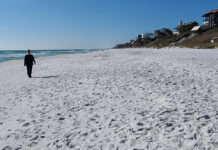
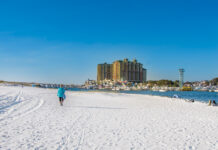
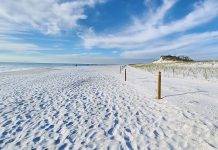
North of Tampa, the Nature Coast’s softer, siltier sand and abundant seagrass beds favor lightning whelks and other species that tolerate muddier bottom, though shelling here tends to reward patience over volume compared to the sweeping open sand of the southwest coast. Along the Perdido Key and Gulf Islands National Seashore stretch of the Panhandle, the sand runs notably finer and whiter, quartz rather than shell hash, which means fewer shells overall but a genuinely lovely, high contrast find when a colorful one does turn up against that pale background.
The Atlantic Coast
Florida’s east coast generally runs a higher energy, steeper beach profile than the Gulf side, which tends to break shells down faster and deliver a smaller, more fragmented haul overall. That said, Blowing Rocks Preserve near Jupiter and the beaches around Sebastian Inlet both benefit from strong tidal currents funneling shells through a narrow inlet mouth, concentrating finds in a way the open, unobstructed coastline nearby doesn’t. Behind Lido Key and Siesta Key on the Gulf side, the same soft, quartz rich sand famous for the keys’ beach quality also happens to be gentle enough on fragile shells to make both islands reliably good, easy shelling for a Sarasota area visit.
The Florida Keys
Shelling in the Keys works differently than anywhere else on this list, since the coral reef tract offshore means far more of what washes up arrives as coral rubble and reef debris rather than the sandy bottom species common on the Gulf coast. It’s also worth remembering that the entire Florida Keys National Marine Sanctuary prohibits all shell collection outright, live or empty, so admire what you find here and leave it exactly where it landed.
A Note on the Sand Itself
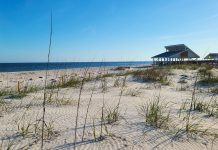
The single best predictor of a great shelling beach in Florida isn’t the shells at all, it’s the sand’s slope and grain size working together. A gentle, gradually sloping beach lets waves deposit shells gently rather than tumbling and cracking them the way a steep, high energy beach does, and a mix of fine sand with a healthy amount of coarser shell hash tends to trap and hold shells right at the surface instead of burying them out of sight. That’s the real, unglamorous reason Sanibel beats out so many objectively prettier beaches for shelling. The sand there is quietly doing exactly what a shell needs it to do.
Who’s Protecting Florida’s Shells
The Bailey-Matthews National Shell Museum on Sanibel is the only museum in the country dedicated entirely to shells and the mollusks that build them, and it plays a real, ongoing role in public education about live shell laws and conservation. The Florida Fish and Wildlife Conservation Commission enforces the statewide queen conch ban and the baseline recreational harvest rules that individual counties then build stricter protections on top of, and the Sanibel-Captiva Conservation Foundation works to protect the barrier island habitat that makes this whole shelling ecosystem possible in the first place.
Questions I Get All the Time
Can I keep a live shell if I plan to eat what’s inside?
Only for species specifically permitted for live harvest in your exact county, and only with a valid recreational saltwater fishing license and full compliance with bag limits. In Lee and Collier counties specifically, that permitted list is very short or, in Collier’s case, nonexistent.
What if I already picked up a live shell before realizing it?
Return it to the water as close as possible to where you found it, ideally still wet and in shallow water rather than dry sand, and do it as soon as you notice rather than waiting until the end of your walk.
Why is Sanibel specifically so good for shelling?
Its unusual east to west orientation catches Gulf currents that run mostly north to south everywhere else, funneling an unusually large and varied supply of shells directly onto its beaches.
Is finding a junonia really that rare?
Genuinely, yes. It lives buried in deep offshore sand most people never disturb, so an intact one washing up, especially still alive, is a real event among longtime Sanibel shellers.
Can I collect shells in a Florida state park?
Generally no. Most Florida state parks prohibit removing shells at all, live or empty, so check the specific park’s rules before you start collecting rather than assuming beach access means shell collecting is allowed.
Thoughts & Reflections
I think what I’ve come to appreciate most about the whole put it back ritual is how ordinary it’s become. It doesn’t feel like a rule I’m following anymore so much as just how I walk a beach now, crouch, check, decide, set back down if needed, keep walking. Somewhere along the way that small, repeated act of restraint turned into one of the more grounding parts of this entire mission, a tiny practice in noticing something fully before deciding what, if anything, I actually get to take from it. Most of the best things I’ve found on this walk were never really mine to keep in the first place. Learning to be at peace with that took longer than learning the actual shell laws did.
