



Siesta Key Beaches, Florida
Siesta Key is the beach that turned my childhood love of sand into something closer to an obsession. I remember standing on it as a kid on a drive over from Miami and thinking no sand should feel like that. Decades and a full walk of the Florida coast later, I can tell you it still doesn’t feel like anything else in this state, and there’s a real reason for that, not just a marketing line.
Siesta Key is a barrier island in Sarasota County, connected to the mainland by two bridges: the North Bridge off Siesta Drive and the Stickney Point Bridge further south. The Gulf of Mexico runs the length of the west side, and the sand along the northern stretch of the island is the same near pure quartz that has earned this beach the title of best in the country more times than any other stretch of Florida coast.
This guide covers Siesta Key from the North Bridge down through Point of Rocks at the south end of Crescent Beach, the stretch where that famous quartz sand actually lives. Past Point of Rocks, the sand shifts character entirely, and the beach becomes a different place with its own guide, which I’ll point you to when we get there. In this guide I’m walking you through every distinct stretch of the quartz sand island, going deep on what the sand and water are actually doing, scoring it honestly across every category that matters, and telling you exactly who this beach is built for. I close with my own take on what makes this sand different from anywhere else I’ve walked, since I’ve been coming here since long before I had a website to write it down on.
The Vibe & Culture at Siesta Key
Famous for a Reason, Crowded for the Same One
Siesta Key earned its reputation honestly, and that’s exactly why it can be a lot in season. Knowing that going in changes your whole day.
Cross either bridge onto the island and the energy builds fast toward the north end, where Siesta Village sits a few blocks from the main public beach, a compact strip of restaurants, bars, and shops that fills up every evening with a mix of vacationers and locals who never really left the beach mindset behind. This is where the crowd concentrates. Siesta Public Beach itself draws day trippers from as far as Tampa, snowbirds who’ve made it their winter routine, and a steady stream of families who read the same rankings I did as a kid and came to see for themselves.
Head south past the Village and the character shifts. Crescent Beach runs quieter and more residential, backed by condos rather than commerce, and by the time you reach Point of Rocks at its southern tip the mood has shifted again, into something rockier and more exploratory. Past that point, the island keeps going for miles more, but the sand itself changes, and so does the crowd, which is exactly why I treat it as its own separate stop rather than folding it into this guide.
Seasonally, this island runs busiest from late fall through spring, when snowbirds fill the rentals and the Siesta Key Crystal Classic sand sculpting festival draws forty thousand people to the main beach every November. Summer brings heat, afternoon storms, and a slightly thinner crowd on weekdays. The main beach and Crescent Beach both stay lively nearly year round, since the quartz sand and easy access from the Village keep this the busiest stretch on the island by a wide margin.
Siesta Key Beach Areas: Three Stretches of Quartz Sand
This guide covers the island from the main public beach south through Point of Rocks, the run of genuine quartz sand that made Siesta Key famous. Here’s how that stretch actually breaks down and what you’ll find at each stop.
Siesta Public Beach
Main Beach · 948 Beach Road · Free Parking
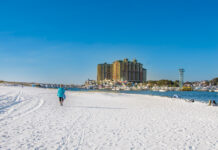
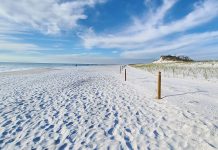
This is the beach behind the rankings, and the first time you walk onto it you understand why the sand gets talked about the way it does. The beach here is wide, the shoreline curves in a long open arc, and the sand itself is so fine and so white it genuinely looks like snow in certain light, a comparison I thought was an exaggeration until I saw it myself as a kid. The water slopes in gently, calm most days, and the whole scene reads exactly like the photos, which is rare for a beach this famous.
The crowd here is the biggest and most varied on the island. Families claim the shaded playground and picnic areas near the pavilion, volleyball games run most afternoons on the sand courts, and by Sunday evening a crowd gathers for the weekly drum circle, an hour before sunset, that pulls in dancers, drummers, and onlookers of every age. In November, this same beach becomes an open air gallery for the Siesta Key Crystal Classic, where two dozen master sculptors from around the world spend four days turning mountains of this sand into towering, detailed art. I was there for it once, and watching artists carve this specific sand into something that looked closer to carved marble than a sandcastle stuck with me.
I’ll be honest, this isn’t where I go for solitude, it’s where I go to feel why this island became what it became. If you only have one stop on Siesta Key, make it this one, and then use the rest of this guide to decide whether you want more of the same energy or something quieter.
Crescent Beach
South of the Village · Limited Parking
Crescent Beach picks up just south of Siesta Public Beach, and the shift is immediate even though the sand itself barely changes. The beach curves in the shape that gives it its name, backed by condos rather than a park pavilion, and the crowd thins out considerably compared to the main beach a short walk north. There are no restrooms or lifeguards here, which keeps the day trip crowd smaller and the mood noticeably calmer.
You’ll find repeat visitors and condo owners here more than day trippers, people who know this stretch well enough to have a favorite entry point among the handful of narrow beach accesses along Midnight Pass Road. Parking is genuinely limited, closer to twenty spaces at most of the access points, so this isn’t the stop for a spontaneous group outing without a walk built into the plan.
I like Crescent Beach specifically for the quiet version of the same sand everyone drives to see at the main beach. Walk here in the early morning and you’ll often have long stretches of that same near pure quartz almost to yourself, with the added benefit of a straight shot south toward Point of Rocks once you’re ready to keep exploring.
Point of Rocks
South End of Crescent Beach · Snorkeling
Point of Rocks is the one stretch covered in this guide that has nothing to do with powder soft sand, and it might be the most different thing you can do on this part of the island. A natural limestone formation, estimated at more than four thousand years old, juts into the Gulf here, creating small tidal pools and a shallow reef like habitat that stands in complete contrast to the sugar sand beaches on either side of it.
The crowd here is smaller and more purposeful than anywhere else covered in this guide: snorkelers, a few spearfishers, and photographers working the tide pools at low water. Parking is the real limiting factor, with only about twenty spaces at the nearest access point, so this is a spot people walk to more often than they drive to. Visibility on a calm day can run to twenty feet, and I’ve watched snapper, small crabs, and the occasional ray move through these rocks in water clear enough to make the whole thing feel more like the Keys than the Gulf Coast.
This is also where the sand itself changes. Stand at Point of Rocks and look south, and you’ll notice the color of the shoreline shift within just a few hundred yards, from the bright quartz behind you to a darker, coarser sand ahead. That’s Turtle Beach starting, a completely different beach in personality and geology, narrow and quiet and mostly used by locals, and I’ve written it up as its own guide rather than trying to force it into this one.
Siesta Key Rankings: Expert Scores Across 11 Categories
These scores cover the quartz sand stretch of the island, from the main beach through Point of Rocks, weighing the fame and crowd at the main beach against the real quiet you’ll find at Crescent Beach.
Sand Quality
10/10
Near pure quartz, close to 99 percent silica, the finest and coolest sand I’ve walked anywhere in Florida. This is the standard every other Gulf Coast beach gets measured against, including its own close neighbor Lido Key.
Hiking & Beach Walking
8/10
A firm, flat waterline runs the full stretch from the main beach to Point of Rocks. Loses a point only because the main beach crowd breaks up the walk in season.
Shelling
5/10
The famous quartz sand isn’t a heavy shelling beach, though Point of Rocks holds small pockets of shell debris among the limestone. For serious shelling, keep walking south into my separate Turtle Beach guide.
Water Conditions
9/10
Calm and gradually sloped at the main beach and Crescent Beach, genuinely clear at Point of Rocks, where the limestone breaks up wave action almost entirely.
Scenery & Natural Beauty
10/10
The sand alone earns most of this score. Add in the turquoise water and the limestone formations at Point of Rocks and this is about as complete a Gulf Coast scene as exists in Florida.
Birding & Wildlife
7/10
Dolphins and manatees are regular offshore sightings along this whole stretch. It’s a solid score rather than an exceptional one here, since the heavier wildlife activity on this island picks up further south.
Family Friendliness
9/10
Shallow gradual entry, daytime lifeguard coverage, a shaded playground, and free parking at the main beach make this one of the easier family beach days in Florida, provided you arrive early enough to actually park.
Dog Friendliness
1/10
Dogs are not permitted on any Siesta Key beach, no exceptions beyond trained service animals. The nearest official dog beach is Brohard Paw Park in Venice, about thirty minutes south.
Solitude & Peace
6/10
The main beach is genuinely crowded in season and on weekends, no way around it. Crescent Beach and Point of Rocks bring this score up considerably if you know to look for them.
Entertainment & Nightlife
8/10
Siesta Key Village is a short walk from the main beach, with restaurants and bars that stay lively into the evening. The Sunday drum circle and the November Crystal Classic add a real cultural layer beyond typical beach nightlife.
Parking & Beach Access
7/10
Free everywhere on the island, which is a genuine advantage, but the main lot fills fast in season and the two bridges onto the island create real bottlenecks. Know this going in and plan your timing around it.
Siesta Key Sand & Water
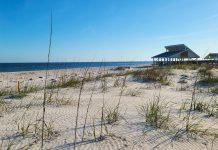
Siesta Key’s sand might be the softest you ever walk on. It’s wide and nearly flat from the dune line to the water, and the upper beach is so fine and powdery it feels more like sugar than sand, genuinely one of the best sandcastle beaches around once you add a little water. Down at the waterline, it firms right up, giving you an easy, packed surface for a long walk, a jog, or chasing the tide with a kid in tow.
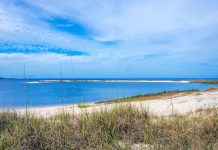
The water follows the same easy pattern at the main beach. On a calm day it runs a clear turquoise blue, entry is gradual, and the surf stays gentle enough for confident swimmers of nearly any age. The one real caution is location-specific rather than beach-wide: stay out of the water right where Big Pass meets the Gulf at the north end, and the same goes for the reopened Midnight Pass at the south end, both spots carry genuinely strong currents that the open swimming beach in between simply doesn’t have.
-
Walkability. Wide, flat, and firm at the waterline nearly the whole length of the island. One of the easiest long walks on this coast.
-
Softness & Playability. Famously soft and powdery on the upper beach, close to the finest sand you’ll find anywhere. Great for sandcastles once you add water, firmer right at the water’s edge.
-
Barefoot Comfort. About as good as it gets. This sand reflects heat instead of holding it, so it stays comfortable underfoot even on a hot July afternoon.
-
Swimmability. Gradual entry, generally calm at the main beach. Just steer clear of the water directly at Big Pass and Midnight Pass, where currents run genuinely strong.
Want the full geology, grain composition, and the complete sand and water condition ratings? I broke it all down separately in Sand & Shore: Siesta Key.
Dogs & Pet Accessibility
Are Dogs Allowed on the Sand? NO, ANYWHERE ON THE ISLAND.
Sarasota County ordinance prohibits dogs, except trained service animals, on any public beach, park, or playground in the county, and that includes every inch of sand on Siesta Key.
Where Dogs Are Allowed
- ✓Bird Key Park, on the way toward Lido Key via the John Ringling Causeway, welcomes leashed dogs on its green space and a small stretch of sandy shoreline.
- ✓Brohard Paw Park in Venice, roughly 20 to 30 minutes south, is the only official off-leash dog beach in Sarasota County, with fenced sections for large and small dogs.
Where Dogs Are NOT Allowed
- ✗Siesta Key Public Beach, no dogs on the sand, no exceptions beyond service animals.
- ✗Crescent Beach and Point of Rocks, same rule.
- ✗Turtle Beach, same rule, even though it’s the most natural-feeling stretch on the island.
Paws on the Ground Reality
This is, plainly, a tough island for dog owners. There is no workaround on the sand itself, and the fines for trying ($50 first offense, $200 second) aren’t symbolic. If you’re staying on Siesta Key with a dog, plan on a short drive for their actual beach time and treat the island’s own sand as a people-only stretch.
The upside: the same rule that keeps dogs off the sand is explicitly tied to protecting nesting shorebirds here, which matters more than it might sound like on paper. Give the posted colony areas the same respect you’d want for your own dog’s favorite spot.
Crowd Levels and the Overall Feel of Siesta Key
Siesta Key runs busier than most Sarasota area beaches, and that’s simply the cost of being ranked the best beach in the country as often as this one has been. The crowd concentrates hardest at the main public beach and thins out predictably the further south you go, with Crescent Beach and Point of Rocks each stepping down in intensity.
The seasonal rhythm here tracks snowbird migration more than a typical spring break calendar, though spring break brings its own surge:
- Winter (snowbird season): the busiest stretch of the year at the main beach, with a well established, repeat visitor crowd rather than a rowdy one
- Spring break: a real surge in younger crowds and traffic, especially around Siesta Village in the evenings
- Summer: hot and storm prone in the afternoons, but mornings stay pleasant and the crowd thins slightly on weekdays
- Fall, especially November: the Crystal Classic sand sculpting festival brings the single busiest weekend of the year to the main beach, alongside otherwise comfortable weather and thinner everyday crowds
Who Is Siesta Key Really For?
✓ Who Will Love Siesta Key
-
Anyone chasing the single finest quartz sand in Florida, since this is the beach every other quartz beach on this coast gets measured against
-
Families wanting calm, gradual entry water, daytime lifeguards, and a real walkable village of restaurants and shops right off the sand
-
Snorkelers and tide pool explorers, thanks to the limestone formation at Point of Rocks unlike anything else on this stretch of coast
-
Anyone visiting in November who wants to see world class sand sculpting created from the exact sand under their feet
-
Photographers and sunset chasers, since the open western sightlines along this whole stretch are reliably worth setting up for
-
Anyone who wants to island hop within one trip. Walk south past Point of Rocks and you’re already at the start of my separate Turtle Beach guide
✗ Consider Another Beach If…
-
You’re bringing a dog. No Siesta Key beach permits pets, and the nearest official off leash beach is thirty minutes south in Venice
-
You want genuine solitude on a Gulf beach. Head to Crescent Beach instead of the main lot, or consider Lido Key entirely
-
You’re visiting during the Crystal Classic in November without a parking plan. The main lot and surrounding streets fill fast, and traffic across both bridges backs up significantly
-
You want serious shelling. This stretch of quartz sand isn’t a shelling beach. Head south to Turtle Beach for that instead
-
You want beachfront camping. There’s none on this stretch of the island. My Turtle Beach guide covers the island’s only campground
Things to Do at Siesta Key, Florida
This stretch of Siesta Key gives you a full beach day without ever needing a boat or a car once you’ve parked.
-
Beach Walking. A firm, flat waterline runs from the main beach to Point of Rocks. Quietest and most rewarding early in the morning at Crescent Beach, before the main beach crowd arrives.
-
Snorkeling at Point of Rocks. A natural limestone reef with visibility up to 20 feet on calm days. Best at high tide, and rentals are available from local outfitters if you don’t bring your own gear.
-
Swimming. Gradual entry and calm water at the main beach and Crescent Beach, with daytime lifeguard coverage at the main beach.
-
Siesta Key Crystal Classic. Held every November at the main beach, this four day sand sculpting festival draws 24 master sculptors from around the world working the exact quartz sand you’re standing on.
-
Sunday Drum Circle. A weekly gathering at the main beach an hour before sunset, with drummers, dancers, and onlookers of every age. Free and open to anyone who wants to join in or just watch.
-
Siesta Key Village. A short walk from the main beach, with restaurants, bars, and shops that stay lively well into the evening. The easiest way to end a beach day without moving your car.
-
Wildlife Watching. Dolphins and manatees are regular sightings offshore along this whole stretch, with shorebirds working the wrack line at Crescent Beach and Point of Rocks.
-
Volleyball & Tennis. Sand volleyball courts and tennis courts sit right at the main beach pavilion, a solid option for an active break between swims.
-
Keep Heading South. Once you’ve explored Point of Rocks, my separate Turtle Beach guide covers the shellier, quieter, more local half of the island just beyond it.
Local Knowledge and Practical Advice
A few things I’ve picked up walking this stretch more times than I can count:
-
The two bridges are the real bottleneck, not the parking lots. During peak season and especially during the Crystal Classic, traffic backs up on both the North Bridge and Stickney Point Bridge before you ever reach a lot. I’ve had a normal fifteen minute drive take an hour during a busy event weekend.
-
If the main lot looks full, don’t keep circling. Park at whichever end of this stretch you can actually reach and either walk in or simply enjoy the beach where you landed. Fighting for one specific lot wastes far more time than the walk does.
-
No dogs are permitted on any Siesta Key beach. Only trained service animals. The nearest official off leash beach is Brohard Paw Park in Venice, about thirty minutes south.
-
All beach parking on Siesta Key is free. No meters, no time limits, which is genuinely rare for a beach this popular. That’s exactly why the lots fill fast, since there’s no cost barrier keeping anyone away.
-
Plan around the Crystal Classic if you want to avoid the biggest crowd of the year. It runs four days each November. If you want to see it, arrive early in the day and expect a longer walk from your car.
-
Alcohol is legal on Sarasota County beaches, glass is not. Stick to plastic or aluminum if you’re bringing drinks to the sand.
-
Watch the sand change under your feet at Point of Rocks. Keep walking south past the rocks and you’ll feel the quartz give way to a darker, coarser beach within a few hundred yards. That’s Turtle Beach, and it’s worth treating as its own trip.
-
Use the free Siesta Breeze trolley to skip the parking fight entirely. It connects the Village, the main beach, and points south, running frequently during the day in season.
-
The quartz sand stays cool, but the pavement and boardwalks don’t. Wear sandals for the walk from your car, then go barefoot once you’re on the sand itself, since the temperature difference is genuinely dramatic.
Where to Stay Near Siesta Key, Florida
Lodging on this stretch of Siesta Key runs from beachfront high rises near the main beach to quieter rentals near Crescent Beach, with the whole area small enough that nothing is ever truly far from the sand.
Gulf-Front Resorts & Condos
Properties near Siesta Public Beach and Crescent Beach put you steps from the sand, with several offering beach chair, umbrella, and paddleboard rental service directly on site, worth checking before you book if that convenience matters to your trip.
Siesta Key Village Rentals
Condos and cottages within walking distance of the Village suit visitors who want dining, shopping, and nightlife without driving anywhere in the evening. Expect higher rates and earlier booking windows for winter and spring break.
Near Point of Rocks
Quieter rentals near the south end of Crescent Beach put you closest to the snorkeling at Point of Rocks, with a genuinely slower pace than the Village end of the island.
Camping
There’s no camping on this stretch of Siesta Key. The island’s only campground sits further south at Turtle Beach, covered in my separate guide, with beachfront tent and RV sites right against the dunes.
Downtown Sarasota & the Mainland
For lower rates, downtown Sarasota sits a short drive across either bridge, with a much wider range of budget to mid range hotel options for visitors who’d rather day trip to the beach than stay directly on it.
What Makes Siesta Key Different from Nearby Beaches
Siesta Key stands apart because it doesn’t just have good sand, it has the specific sand professionals travel here to work with.
Sand that professional sculptors specifically request
The Siesta Key Crystal Classic didn’t choose this beach by accident. Master sand sculptors travel here from around the world because this quartz holds fine detail the way looser, shellier sand cannot, and that’s a real, measurable difference, not just a marketing claim.
Free parking on one of America’s most visited beaches
Most beaches this popular charge for parking or ration it tightly. Siesta Key keeps every public lot free, which is a genuine advantage even though it means the lots fill fast in season.
A real cultural calendar built around the sand itself
The weekly drum circle and the November Crystal Classic both treat the beach as more than scenery. Few Gulf Coast beaches have built this much recurring community event around their own sand.
A sharp, visible line where the geology changes
Very few beaches let you watch the sand itself change character as you walk. At Point of Rocks, you can see and feel the transition from Siesta Key’s famous quartz to the darker sand beaches to the south within a few hundred yards.
Siesta Key vs. Other Sarasota Area Beaches
These are the beaches visitors most often weigh against this stretch of Siesta Key, and the honest read on when you’d choose one over the other.
Siesta Key vs. Lido Key
The sand geology is nearly identical, both sit on the same regional quartz system, but Siesta Key’s quartz concentration runs measurably higher, giving it the edge in pure sand quality. Lido Key gives you nearly the same sand with a fraction of the crowd, plus a walk to St. Armands Circle. Choose Siesta if the most talked about sand in the country matters to you. Choose Lido if you want the same quality with room to breathe.
Siesta Key vs. Longboat Key
Longboat Key sits north of Lido and runs quieter and more residential than Siesta, with limited public beach access since most of the shoreline fronts private condos and estates. If total seclusion matters more than fame, Longboat wins easily.
Siesta Key vs. Turtle Beach
These sit on the very same island, but they’re genuinely different beaches. Siesta Key has the famous white quartz, lifeguards, and the biggest crowds on the coast. Turtle Beach, just south of Point of Rocks, has darker, coarser sand, real shelling, no lifeguards, and a crowd that’s mostly local. See my separate Turtle Beach guide for the full breakdown.
Bottom line: This stretch of Siesta Key is the place for anyone who wants the single best quartz sand on this coast and is willing to deal with real crowds and real traffic to get it. Lido Key gives you nearly the same sand with far less hassle. Turtle Beach, a short walk south of Point of Rocks, gives you a completely different, quieter beach without ever leaving the island.
Siesta Key, Florida: Frequently Asked Questions
Is Siesta Key worth visiting?
Yes. The sand quality alone justifies the reputation, and this stretch of the island offers enough range, from the drum circle at the main beach to snorkeling at Point of Rocks, that a single day doesn’t come close to covering it.
Why is Siesta Key sand so white?
It’s close to 99 percent pure quartz, weathered out of the Appalachian Mountains over millions of years and carried south by ancient rivers. The unusually high concentration of quartz here is what gives the sand its powder soft texture and near reflective white color.
Are dogs allowed on Siesta Key Beach?
No. Dogs are prohibited on all Siesta Key beaches, with only trained service animals permitted. The nearest official off leash beach is Brohard Paw Park in Venice, about thirty minutes south.
Where is the best parking on Siesta Key?
Siesta Public Beach has the largest lot, with more than 900 free spaces, though it fills quickly in season. Crescent Beach and Point of Rocks both have smaller, more limited lots nearby.
Is Siesta Key Beach crowded?
The main public beach gets genuinely busy in season, on weekends, and especially during the November Crystal Classic. Crescent Beach and Point of Rocks stay noticeably quieter even at peak times.
What is the Siesta Key Crystal Classic?
An international sand sculpting festival held every November on the main beach, drawing 24 master sculptors and around 40,000 visitors over four days. It began in 2010 and has grown into one of the largest events of its kind in the world.
Where is the best snorkeling on Siesta Key?
Point of Rocks, at the south end of Crescent Beach, where a natural limestone formation creates shallow tide pools and clear water with visibility up to 20 feet on calm days.
Does the sand on Siesta Key stay the same the whole island?
No, and that surprises a lot of first time visitors. The famous white quartz runs from the main beach through Point of Rocks. Past that point, the sand shifts to a darker, coarser beach at Turtle Beach, covered in a separate guide.
When is the best time to visit Siesta Key?
Spring and fall offer the best balance of warm water and lighter crowds. Winter is peak snowbird season, while summer afternoons run hot and storm prone even though mornings stay pleasant.
Is Siesta Key better than Lido Key?
It depends on what you want. Siesta Key has the edge in pure sand quality and the bigger reputation. Lido Key gives you nearly the same sand quality with considerably less crowd and traffic. Most visitors standing on either couldn’t tell the sand apart.
Patti’s Perspective: My Honest Take on Siesta Key
Siesta Key is the beach that made me fall in love with sand before I understood there was a difference between one beach’s sand and another’s. Growing up, my friends’ families in the Sarasota area would have us over, and we’d drive across Alligator Alley from Miami to spend the day here. I remember standing on it as a kid and just staring down at my own feet, convinced something was wrong with the sand because it didn’t look or feel like anything I’d walked on before. Nothing was wrong with it. It was just that good.
I was there for the Crystal Classic once, and it’s one of those experiences that reframes a place you think you already know. Watching a master sculptor shape this exact sand into something that looked carved from stone, ten feet tall and holding detail I couldn’t believe sand could hold, made me understand the sand itself in a way just walking on it never had. I’ve since walked this entire coast for this work, and I still haven’t found sand that behaves quite like this anywhere else in Florida.
The traffic and parking are real, and I won’t pretend otherwise. During a busy season visit, it took us close to an hour just to get onto the island, and we ended up parking well short of where we meant to and walking the rest of the way in. That’s actually become my honest advice now: pick an end of this stretch, park there, and enjoy the beach you can actually reach instead of burning your whole morning chasing one specific lot. The sand doesn’t change much from the main beach to Crescent Beach. Your patience will thank you either way.
My honest read: stop at Point of Rocks and you’ve had a wonderful day on the most famous sand in Florida. Keep walking south and you’ll find a completely different beach waiting, one I’ve given its own guide because it genuinely deserves one.
My verdict: 9/10. This stretch of Siesta Key earns its reputation the honest way, on sand quality that genuinely has no equal on this coast. It loses a little only to crowding and traffic, which are simply the cost of being this good for this long. Come for the sand everyone talks about, and when you’re ready for something quieter, keep walking south into Turtle Beach.
Want to Live by the Water?Siesta Key and the surrounding Sarasota area offer some of the most sought after barrier island real estate in Florida, from high-rise Gulf-front condos near the main beach to quieter single-family homes toward Crescent Beach.The market here draws retirees, second-home buyers, and investors who value the island’s consistent ranking and year-round rental demand, though buyers should expect a premium for that reputation compared to less famous stretches of the Sarasota coastline. Condo pricing near the main beach and Village runs strong given the walkability and tourism draw, while properties near Crescent Beach tend to offer more space for the price.If living by the water is something you’re considering, whether full time, part time, or as an investment, it’s worth exploring what’s available in this area.Explore Waterfront Living at LiveByTheWater.com
Real estate referral partner