




Jacksonville Beaches, Florida
The Jacksonville Beaches are three separate cities that share one uninterrupted stretch of sand, and figuring out which one you’re actually standing on rarely matters until you need to know where to park. Jacksonville Beach, Neptune Beach, and Atlantic Beach each kept their own city government when the rest of Duval County consolidated with Jacksonville in 1968, and nearly six decades later, each one still has a genuinely distinct personality even though you can walk between all three without noticing a border.
This corridor sits about seventeen miles east of downtown Jacksonville, and it’s the liveliest, most amenity-dense stretch of coast in this entire guide, a real pier, a real boardwalk, and a nightlife and dining scene that outpaces every other beach town I’ve covered so far. It’s also home to a surf culture that changed the sport in Florida, and it sits just south of Manhattan Beach, Florida’s first African American beach resort, a history I’ll point you toward in more depth in my upcoming guide to Kathryn Abbey Hanna Park, where that site now sits.
In this guide I’m covering the Jacksonville Beach pier and downtown, the surf scene that put this stretch of coast on the map, the shared Beaches Town Center, and the distinct characters of Atlantic Beach and Neptune Beach. I’ll go deep on what the sand and surf are actually like across this four-mile corridor, score it honestly across every category that matters, tell you exactly who this stretch fits and who might want a quieter beach further up the coast, and cover exactly how the dog rules shift as you cross from one town into the next. I close with my honest take on why three tiny city halls turned out to be a genuinely good thing for this stretch of Florida.
The Vibe & Culture at the Jacksonville Beaches
Three Cities, One Beach, and a Tax Revolt That Explains Everything
You can’t understand why these three towns feel so different from each other without knowing that one of them exists specifically because its residents got fed up paying taxes for services they weren’t getting.
Jacksonville Beach traces back to 1886 as Pablo Beach, renamed in 1925, and it grew into the commercial and entertainment anchor of this whole corridor, home to an early 1900s boardwalk amusement district, a Mission-style 1925 hotel, and eventually the pier and SeaWalk Pavilion that anchor downtown today. Neptune Beach split off in 1931 after a genuine tax revolt, when the sparsely populated northern stretch of Jacksonville Beach found itself paying full taxes for police, fire, and road service it wasn’t actually receiving. Atlantic Beach developed its own separate identity even earlier, built around Henry Flagler’s 1901 Continental Hotel, a six-story, roughly 300-room resort that put this stretch of coast on wealthy northern travelers’ maps decades before anyone was thinking about surfboards.
That layered history includes a chapter this corridor is still working to properly remember. Just north of Atlantic Beach, in what’s now Kathryn Abbey Hanna Park, Henry Flagler’s own railway company founded Manhattan Beach around 1900 for Black employees building his hotels and rail lines. It became Florida’s first African American beach resort, thriving with picnic pavilions, cottages, and an amusement park until American Beach on Amelia Island eclipsed it by the early 1940s. Within Atlantic Beach’s own boundaries, the Donner community grew up as a historically Black residential neighborhood, now anchored by Donner Park and the Gail Baker Community Center. Both histories deserve real attention, and I go deeper into Manhattan Beach specifically in my guide to Hanna Park, where the physical site now sits.
Today, the feel across these three towns shifts noticeably as you move north to south. Jacksonville Beach carries the most energy, restaurants and bars lined up along 1st Street, live music at the SeaWalk Pavilion, and a genuine surf culture with deep roots. Neptune Beach, the smallest of the three, keeps a tight-knit, local-first character built around walkable Beaches Town Center. Atlantic Beach spreads out into a more residential, varied town, from modest beach cottages to gated country club streets, with a quieter, more art-and-community-driven pace. All three share the same excellent sand and the same easy, laid-back rhythm that keeps people who move here from ever wanting to leave.
Jacksonville Beaches Areas: Three Towns, Five Ways to Experience Them
This corridor runs about four miles total, and each stretch has its own reason to visit. Here’s how I break it down.
Jacksonville Beach Pier & Downtown
1st Street · The Corridor’s Anchor
Stretching more than 1,300 feet into the Atlantic, the Jacksonville Beach Pier has survived a genuinely rough history, destroyed by Hurricane Floyd in 1999, rebuilt five years later, then partially damaged again by Hurricane Matthew in 2016. It remains the visual anchor of the whole corridor, with fish cleaning stations, a bait shop, and concessions serving anglers working the rail. A short walk inland, the SeaWalk Pavilion functions as this town’s actual town square, an open-air venue hosting the Springing the Blues Festival, a seafood and music festival, outdoor movies, and enough events that locals plan their calendars around it.
The crowd here is the busiest and most varied in this entire corridor, families near the pier, a lively bar and restaurant scene along 1st Street after dark, and a steady flow of visitors staying in the oceanfront hotels and condos that cluster around downtown. This is genuinely the liveliest beach town in this whole guide after dark, and it earns that reputation honestly.
My honest take, base yourself here if nightlife and restaurant variety matter to your trip, and walk or bike north into Neptune and Atlantic Beach when you want a quieter afternoon. The whole corridor is genuinely walkable if you’re staying anywhere near downtown.
The Surf Scene & 1st Street
Where Florida’s Surf Culture Actually Started
This stretch of coast has a legitimate claim to changing surfing in Florida. Local businessman R.L. Williams built a pier at 6th Avenue South with his own money in 1963, and the pilings created breaks that held up even at high tide, when the natural breaks elsewhere went flat. A year later, on July 9, 1964, filmmaker Bruce Brown brought his groundbreaking film The Endless Summer to town, opening with a live surfing demonstration at the pier that drew thousands before the screening. Jacksonville caught a surfing fever that hasn’t broken since, and this remains one of the more consistent, well-regarded surf stretches on the East Coast.
The crowd here mixes serious surfers checking the pier break at dawn, students taking lessons through shops like Jax Surf and Paddle and Aqua East, and a broader beach crowd drawn to the same energy that makes this town’s nightlife scene work. Surf shops line the streets near the beach, genuinely easy to find gear or a lesson on short notice.
My honest take, even non-surfers should watch the lineup near the pier for a few minutes. There’s a reason this specific stretch of sand has produced competitive surfers for decades, and you can feel it in how seriously the local surf community treats this particular break.
Beaches Town Center
Where Neptune Beach Meets Atlantic Beach
Right where Atlantic Boulevard meets the ocean, Beaches Town Center serves as the shared heart of both Neptune Beach and Atlantic Beach, a walkable cluster of boutiques, cafes, galleries, and restaurants built around brick-lined courtyards and sidewalks. Locals call the exact intersection the corner, since it genuinely sits on the line between the two towns, and it’s home to longstanding local institutions like The BookMark, an independent bookstore that’s anchored the district for decades. I’ve written a closer look at walking this specific district separately, since it rewards a slower, more deliberate visit than a quick drive-through.
The crowd here is a genuine mix of both towns’ residents, locals grabbing coffee or dinner, tourists staying at the district’s two oceanfront hotels, and a slower, more social pace than downtown Jacksonville Beach a mile or two south. Restaurants here fill up fast on weekend evenings, and street parking gets tight after dark.
My honest take, this is where I send people who want the beach town charm without Jacksonville Beach’s bigger crowd. Arrive early for dinner reservations, and plan to walk rather than drive once you’re parked.
Atlantic Beach & the Donner Community
North End · Residential, Varied, and Historically Deep
Atlantic Beach spreads out north of Beaches Town Center into a genuinely varied residential town, from modest beach cottages to the gated streets of Atlantic Beach Country Club and Selva Marina. Its roots trace to Henry Flagler’s 1901 Continental Hotel, a genuinely grand resort for its era, and the Adele Grage Cultural Center, housed in the town’s former city hall, now anchors much of the community’s arts and history programming. A few blocks inland, the Donner community grew up as a historically Black residential neighborhood, today centered around Donner Park and the Gail Baker Community Center, a piece of local history that’s easy to miss without knowing to look for it.
The crowd here is overwhelmingly local and residential, with a noticeably artsier, more community-driven feel than the tourist-focused stretch further south. A weekly farmers market and a genuine local arts scene give this town a different rhythm than its two neighbors.
My honest take, drive or bike through Atlantic Beach’s residential streets even if you’re staying elsewhere. The mature oak canopy and quieter pace here offer a real contrast to the energy downtown, and it’s worth understanding both sides of this corridor.
Neptune Beach
The Smallest, Quietest of the Three
Neptune Beach exists because of that 1931 tax revolt, and it’s remained the smallest and most tightly knit of the three towns ever since. Jarboe Park anchors much of the community’s recreational life, and the town’s laid-back, local-first culture shows up in small ways, a historic bar that’s operated here for decades, brick-lined streets, and a pace that consistently converts skeptical house-hunters within a single visit, according to more than one local I’ve talked to.
The crowd here is almost entirely residents and people specifically seeking out Neptune Beach’s quieter reputation rather than the energy of Jacksonville Beach a short distance south. It’s genuinely the town where, as more than one local business has put it, people move in and simply never leave.
My honest take, if you’re choosing a home base for a longer stay rather than a single beach day, Neptune Beach is worth serious consideration. It’s small enough to feel genuinely like a neighborhood rather than a tourist strip, while still sitting minutes from everything the other two towns offer.
Jacksonville Beaches Rankings: Expert Scores Across 11 Categories
These scores weigh all three towns together, since the beach itself runs continuously between them even though the character shifts noticeably from one end to the other.
Sand Quality
8/10
Wide, consistent quartz sand throughout the corridor, hard-packed enough in stretches for genuinely good beach biking.
Hiking & Beach Walking
7/10
A long, walkable stretch of sand connecting all three towns, though this corridor is built more for a beach town stroll than a wilderness hike.
Shelling
6/10
Decent throughout, though this corridor is known far more for its surf culture and nightlife than for shelling specifically.
Water Conditions
8/10
Genuinely excellent, historically significant surf, with pier-created breaks that hold up even at high tide.
Scenery & Natural Beauty
7/10
A developed beach town corridor rather than untouched coastline, though Atlantic Beach’s oak-lined residential streets add genuine character.
Birding & Wildlife
6/10
Modest within the developed corridor itself, though nearby Dutton Island Preserve and Tideviews Preserve offer considerably better wildlife viewing a short drive inland.
Family Friendliness
8/10
Easy amenities, a genuine boardwalk feel near the pier, and Adventure Landing’s water park and go-karts make this a strong family destination.
Dog Friendliness
7/10
Neptune Beach and Atlantic Beach allow leashed dogs on the sand year-round with no time restrictions. Jacksonville Beach keeps a seasonal window, no dogs from 9am to 5pm between April and September.
Solitude & Peace
5/10
Genuinely busy in downtown Jacksonville Beach, considerably quieter once you move north into Neptune and Atlantic Beach’s residential stretches.
Entertainment & Nightlife
9/10
The strongest nightlife and dining scene in this entire guide, from SeaWalk Pavilion’s festival calendar to the Jax Ale Trail’s brewery scene.
Parking & Beach Access
7/10
Metered parking in the busiest downtown blocks, with more relaxed free residential street parking further into Neptune and Atlantic Beach.
Jacksonville Beaches Sand & Water
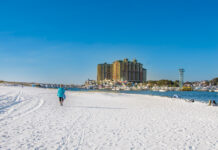
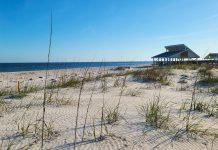
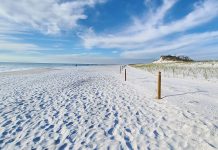
The sand across all three towns runs wide and hard-packed enough that beach cruisers and joggers both do well on it, especially near the pier. It’s a pale, quartz-based color rather than the coquina tones you’d find further south, and it stays comfortable and flat for most of the corridor, plenty of room for a blanket, a game of catch, or a long walk between towns. It softens up a bit near the dunes for sandcastles once you’ve worked some water into it.
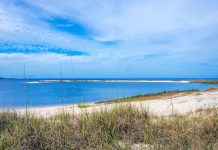
This is a real surf coast, and the water shows it, especially near the pier, where decades of structure have shaped consistent, rideable breaks. On a calm day it runs a deep Atlantic blue-green with a gradual entry, and seasonal lifeguards cover the main beaches. Always check the flags before you wade in past your knees, and expect actual waves rather than a flat, lake-like swim.
-
Walkability. Wide, hard-packed, and comfortable through most of the corridor, one of the better beach-town walking stretches in this guide.
-
Softness & Playability. Firm near the water, softer near the dunes, with plenty of room for sandcastles, games, and a big group blanket.
-
Barefoot Comfort. Genuinely comfortable throughout, with minimal shell hazard.
-
Swimmability. Good near the lifeguarded main beaches, with real surf near the pier. Check the flags before you go in.
Want the full geology, grain composition, and the complete sand and water condition ratings? I broke it all down separately in Sand & Shore: The Jacksonville Beaches.
Dogs & Pet Accessibility at the Jacksonville Beaches
Are Dogs Allowed on the Sand? RESTRICTED.
This is genuinely a three-city answer. Neptune Beach and Atlantic Beach both updated their ordinances to allow leashed dogs on the sand year-round with no time restrictions. Jacksonville Beach still keeps a seasonal window, no dogs between 9am and 5pm from April through September, though the beach opens up to dogs at any hour the rest of the year.
Where Dogs Are Allowed
- ✓Neptune Beach’s sand, on a leash, any hour, any season.
- ✓Atlantic Beach’s sand, on a leash, any hour, any season.
- ✓Jacksonville Beach’s sand from October 1 through March 31, any hour, and outside the 9am to 5pm window the rest of the year.
Where Dogs Are NOT Allowed
- ✗Jacksonville Beach’s sand between 9am and 5pm, April 1 through September 30.
- ✗The dunes anywhere along this corridor, regardless of city.
Paws on the Ground Reality
The hard-packed sand near the pier stays comfortable for paws most of the year, and the water’s right there for a cool-down. Neptune Beach’s ordinance actually requires you to provide drinkable water and shade if you’re on the beach with your dog for more than half an hour, a genuinely thoughtful rule worth following even where it isn’t required. Both Neptune and Atlantic Beach allow a dog to swim off leash briefly while actively in the water with you, but the leash goes back on the moment paws hit sand again.
Enforcement is visible here, especially during the Jacksonville Beach restricted hours in summer, when officers do check. If you’re staying near downtown Jacksonville Beach in summer, plan your dog’s beach time for early morning or evening, or walk a few blocks north into Neptune Beach instead.
Crowd Levels and the Overall Feel of the Jacksonville Beaches
The crowd concentrates most heavily around downtown Jacksonville Beach and its pier, especially on weekends and during SeaWalk Pavilion events. Beaches Town Center runs busy in the evenings but stays more manageable during the day. Atlantic Beach and Neptune Beach’s residential stretches stay genuinely quiet nearly year-round.
The overall feel shifts by season and by this corridor’s active event calendar:
- Spring: the Springing the Blues Festival draws crowds to the SeaWalk Pavilion, alongside comfortable weather and good surf
- Summer: peak season throughout, with downtown Jacksonville Beach at its busiest and liveliest
- Fall: my favorite window here, consistent surf, thinner crowds, and comfortable temperatures for exploring all three towns on foot or bike
- Winter: quiet on the beach itself, with the Jax Ale Trail’s indoor brewery scene picking up the slack
Who Are the Jacksonville Beaches Really For?
✓ Who Will Love the Jacksonville Beaches
-
Surfers and beginners alike, given this corridor’s genuinely historic and beginner-friendly surf culture
-
Anyone who wants real nightlife, dining, and festival programming alongside their beach time
-
Families who want boardwalk-style amenities and an amusement park within reach
-
Visitors who want a walkable small-town feel, whether that’s Neptune Beach’s tight-knit scale or Atlantic Beach’s artsier community character
-
History-minded visitors interested in Northeast Florida’s surf history and its layered, sometimes difficult, African American beach heritage
-
Craft beer enthusiasts working through the Jax Ale Trail
✗ Consider Another Beach If…
-
You want untouched, undeveloped coastline. Head to Kathryn Abbey Hanna Park or the Talbot Islands just north instead
-
You want total solitude on a weekend. Downtown Jacksonville Beach gets genuinely busy in season
-
You’re chasing a dedicated shelling destination. This corridor is better known for surf and nightlife
-
You want free, abundant parking directly at the sand. Downtown Jacksonville Beach relies on metered parking in its busiest blocks
-
You want a quiet, resort-style beach vacation. This corridor’s energy is a feature, not a flaw, but it isn’t for everyone
Things to Do at the Jacksonville Beaches, Florida
Between three towns and a genuinely deep surf culture, this corridor offers more range than almost anywhere else in this guide.
-
Surfing. Lessons and rentals widely available near the pier, with genuinely historic, consistent breaks that helped launch Florida’s surf culture.
-
Pier Fishing. The 1,300-foot Jacksonville Beach Pier offers fish cleaning stations, a bait shop, and concessions for anglers.
-
SeaWalk Pavilion Events. Live music, outdoor movies, and festivals including Springing the Blues and a seafood and music festival throughout the year.
-
The Jax Ale Trail. Work through local breweries including Engine 15, Green Room, Ink Factory, and Southern Swells with a dedicated passport.
-
Shopping & Dining in Beaches Town Center. Boutiques, galleries, and restaurants in a walkable district shared by Neptune Beach and Atlantic Beach.
-
Adventure Landing. A water park and amusement center with go-karts and mini golf, the main amusement attraction left in Jacksonville Beach.
-
Biking. First Street and the hard-packed beach sand both make for genuinely good cycling throughout the corridor.
-
Visiting the Beaches Museum. A history park with preserved buildings, a 1911 train engine, and exhibits on the area’s railroad, shrimping, and Manhattan Beach history.
-
Wildlife Watching. Sea turtle nesting runs May through October along the open beach, with considerably richer birding a short drive inland at Dutton Island and Tideviews Preserves.
Local Knowledge and Practical Advice
A few things I’ve picked up walking this corridor more times than I can count:
-
Expect metered parking near the pier and downtown Jacksonville Beach. Free residential street parking becomes more common as you move into Neptune and Atlantic Beach.
-
Take a surf lesson if you’ve never tried it. This is one of the more historically significant, beginner-friendly breaks on the East Coast, and shops near the beach make it easy.
-
Visit the Beaches Museum for real context. Understanding this corridor’s railroad, shrimping, and Manhattan Beach history changes how the whole area feels.
-
Walk or bike between all three towns. The whole corridor is genuinely connected on foot, and driving between them often takes longer than walking.
-
Check the SeaWalk Pavilion’s event calendar before you go. Festivals like Springing the Blues can shape your whole visit, for better or worse depending on your crowd tolerance.
-
Respect sea turtle nesting season, May through October. Avoid white light on the beach at night and give marked nests a wide berth.
-
Pick up a Jax Ale Trail passport if craft beer interests you. Several genuinely good breweries sit within easy reach of the beach.
-
Arrive early for dinner in Beaches Town Center. Both parking and tables fill up fast on weekend evenings.
-
Bike the beach at low tide. The hard-packed sand throughout this corridor makes for genuinely easy, scenic riding.
-
Pair this trip with Kathryn Abbey Hanna Park just north. It’s covered in its own dedicated guide, and it’s where the deeper history of Manhattan Beach actually lives.
Where to Stay Near the Jacksonville Beaches, Florida
This corridor offers the widest range of lodging in this entire guide, from historic hotels to boutique beach inns.
Downtown Jacksonville Beach Hotels & Condos
Oceanfront hotels and condos cluster around the pier and SeaWalk Pavilion, including the historic 1925 Casa Marina Hotel and the Margaritaville Beach Hotel, putting you within walking distance of the corridor’s liveliest nightlife.
Beaches Town Center Boutique Hotels
Two oceanfront hotels sit directly within the walkable Beaches Town Center district, a good middle-ground option between Jacksonville Beach’s energy and Atlantic Beach’s quiet.
Atlantic Beach & Neptune Beach Vacation Rentals
Homes and cottages throughout both towns’ residential streets offer a quieter, more local base within an easy walk or bike ride of the beach.
Camping at Kathryn Abbey Hanna Park, North
For a camping option, Kathryn Abbey Hanna Park just north offers oceanfront and lakeside sites, covered in its own dedicated guide in this series.
What Makes the Jacksonville Beaches Different from Nearby Beaches
This corridor stands apart because it’s genuinely urban in a way very few other beaches in this guide are, three real city governments, a real nightlife scene, and a surf culture with a documented, significant history.
A few features make it distinct:
The birthplace of Florida’s modern surf culture
The Endless Summer screening in 1964 and the pier-created breaks that predate it give this corridor a genuine claim to changing how the sport developed statewide.
Three cities, one seamless beach
Very few stretches of coast in this guide let you walk between three entirely separate municipal identities without ever losing sight of the same beach.
The strongest nightlife and dining scene in this guide
No other beach corridor covered so far matches this stretch’s combination of restaurants, breweries, live music, and festival programming.
A layered, still-being-recovered African American beach history
Manhattan Beach’s proximity, and the Donner community within Atlantic Beach itself, give this corridor a depth of history that goes well beyond its surface reputation as a party beach.
Jacksonville Beaches vs. Other Northeast Florida Beaches
These are the beaches visitors most often weigh against this corridor, and the honest read on when you’d choose one over the other.
Jacksonville Beaches vs. Ponte Vedra Beach
Ponte Vedra, just south, trades this corridor’s energy for exclusivity and restricted access. Choose Ponte Vedra for quiet and golf culture, the Jacksonville Beaches for nightlife and surf.
Jacksonville Beaches vs. Amelia Island
Amelia Island, further north, offers deeper historic resort character and horseback riding. The Jacksonville Beaches offer a livelier, more urban beach town experience.
Jacksonville Beaches vs. Kathryn Abbey Hanna Park
Hanna Park, just north, trades this corridor’s development for genuine wilderness, camping, and the physical site of Manhattan Beach’s history.
Jacksonville Beaches vs. the Talbot Islands
Little Talbot and Big Talbot, further north still, offer undeveloped, protected barrier island coastline with none of this corridor’s amenities or nightlife.
Bottom line: The Jacksonville Beaches are the choice for anyone who wants a real beach town, surf culture, nightlife, dining, and three distinct communities within a genuinely walkable stretch of coast. Ponte Vedra and Amelia Island give you more exclusivity and history. Hanna Park and the Talbot Islands give you more wilderness. This corridor gives you the fullest, most energetic beach town experience in this entire guide.
Jacksonville Beaches, Florida: Frequently Asked Questions
What’s the difference between Jacksonville Beach, Neptune Beach, and Atlantic Beach?
They’re three separate municipalities sharing one continuous stretch of coast. Jacksonville Beach is the largest and liveliest, with the pier and nightlife. Neptune Beach is the smallest and most walkable. Atlantic Beach is the most residential and varied, with a quieter, artsier character.
Is Jacksonville Beach good for surfing?
Yes, genuinely historically significant. Pier-created breaks near downtown Jacksonville Beach helped establish Florida’s modern surf culture starting in the 1960s.
Is the Jacksonville Beach Pier open?
The pier has been rebuilt and repaired multiple times after hurricane damage over the decades. Check current status before planning a fishing trip specifically around it.
Are dogs allowed on Jacksonville’s beaches?
Yes, on a leash, though the rules differ by town. Neptune Beach and Atlantic Beach allow dogs on the sand year-round with no time restrictions. Jacksonville Beach restricts dogs from 9am to 5pm between April and September, but allows them at any hour the rest of the year.
What is Beaches Town Center?
A walkable district of shops, restaurants, and galleries shared by Neptune Beach and Atlantic Beach, centered where Atlantic Boulevard meets the ocean.
Is Jacksonville Beach family friendly?
Yes, with boardwalk-style amenities near the pier, Adventure Landing’s water park and go-karts, and a generally easy, walkable layout.
What is Manhattan Beach, and where was it?
Manhattan Beach was Florida’s first African American beach resort, founded around 1900 by Henry Flagler’s railway company for Black employees. It sat where Kathryn Abbey Hanna Park is today, just north of Atlantic Beach, and thrived until American Beach on Amelia Island eclipsed it by the early 1940s.
Is Jacksonville Beach crowded?
Downtown Jacksonville Beach gets genuinely busy in season, especially around the pier and SeaWalk Pavilion. Neptune Beach and Atlantic Beach’s residential stretches stay noticeably quieter.
How far are the Jacksonville Beaches from downtown Jacksonville?
About seventeen miles, roughly a 25 to 30 minute drive.
What is the Donner community in Atlantic Beach?
A historically Black residential neighborhood within Atlantic Beach’s town limits, today centered around Donner Park and the Gail Baker Community Center.
Patti’s Perspective: My Honest Take on the Jacksonville Beaches
Learning about the Endless Summer screening at the pier in 1964 changed how I see this whole stretch of coast. I’d walked past surf shops in a dozen Florida towns without thinking much about where the culture actually started, and standing near the spot where a single film screening reportedly sparked a statewide obsession put a lot of what I’d seen elsewhere into better context. This corridor didn’t just adopt surf culture. It helped invent Florida’s version of it.
Learning about Manhattan Beach hit differently, and heavier. I’d already covered American Beach and Butler Beach by the time I got here, and I assumed I understood the full shape of this region’s African American beach history. Finding out that Manhattan Beach predates both of them by decades, sitting quietly under what’s now a city park just a few miles north of here, reminded me how much of this coast’s full story still isn’t as widely known as it should be. I go into that more in my Hanna Park guide, but I wanted it acknowledged here too, since this corridor sits close enough to feel like part of the same story.
My honest caveat, don’t treat this as just a party beach and move on. Walk Atlantic Beach’s residential streets, visit the museum, and give Neptune Beach’s quiet corner its due. This corridor has more depth than its nightlife reputation lets on.
Want to Live by the Water?The Jacksonville Beaches offer three genuinely different real estate markets within a few miles of each other, from Jacksonville Beach’s energetic condo and cottage scene to Neptune Beach’s tight-knit walkability and Atlantic Beach’s varied mix of modest cottages and gated luxury streets.The market here draws buyers across a wide range, young professionals and surfers drawn to Jacksonville Beach’s energy, families seeking Neptune Beach’s community feel, and luxury buyers drawn to Atlantic Beach’s country club and oceanfront streets. As of 2026, median sale prices range from around $593,000 in Jacksonville Beach to roughly $640,000 in Atlantic Beach, with considerable variation at the top end of each market.If living in this kind of energetic, walkable beach corridor is something you’re considering, it’s worth exploring what’s available in this area.Explore Waterfront Living at LiveByTheWater.com
Real estate referral partner