




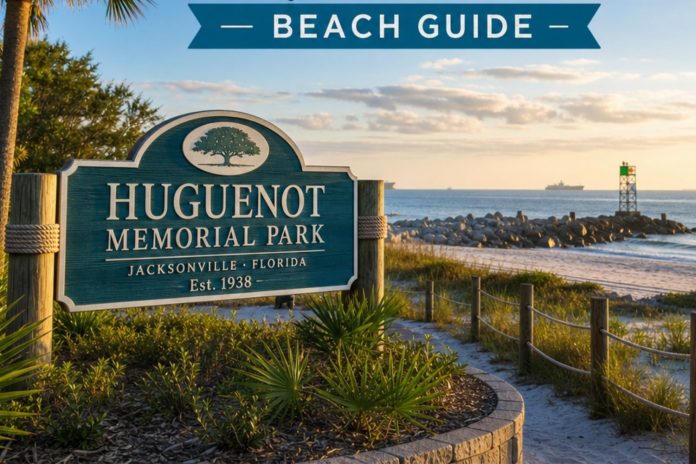
Huguenot Memorial Park & Mayport, Florida
Huguenot Memorial Park and the village of Mayport sit on opposite banks of the same river mouth, and I’m covering them together in one guide for a simple reason. You can’t really visit one without the other showing up in your day, whether that’s the naval helicopters overhead, the ferry connecting them, or the shrimp boats you’ll see working the water from either side.
Huguenot Memorial Park is a genuinely rare thing in Florida, a beach where you can still drive your own vehicle directly onto the sand, on a 295-acre peninsula surrounded on three sides by the St. Johns River, Fort George Inlet, and the Atlantic Ocean. Mayport, just across the river, is a working fishing village that predates most of Florida’s beach towns by centuries, still hauling in shrimp within sight of one of the largest naval ports on the Atlantic coast.
In this guide I’m covering Huguenot’s beach and beach driving, its exceptional bird sanctuary, its waterfront campground, and Mayport’s ferry, seafood, and working waterfront across the water. I’ll go deep on what the sand and water are actually like at the literal mouth of the St. Johns River, score it honestly across every category that matters, tell you exactly who this stop fits and who might want a more developed beach further south, and cover exactly why you should leave your dog at home for a day trip here. I close with my honest take on a park where your tires and the tide are in a genuine, ongoing negotiation.
The Vibe & Culture at Huguenot Memorial Park & Mayport
A Landing Site, a Naval Neighbor, and a Beach You Drive Onto
This stretch of coast has been a point of arrival for a very long time, French Huguenots in 1562, fishing families in the early 1800s, and now a steady stream of Jeeps and trucks rolling straight onto the sand.
Huguenot Memorial Park takes its name from a historic marker commemorating the landing of French Huguenot refugees here on May 1, 1562, part of an expedition led by Jean Ribault searching for a safe haven from religious persecution back in France. The peninsula itself sits at a genuinely unusual geographic point, horseshoe-shaped and surrounded by three different bodies of water, which is exactly why it’s become such a significant staging ground for migratory birds and one of the only beaches left in the Jacksonville area where driving directly onto the sand is still allowed.
Across the river, Mayport carries its own layered history. Nobody’s entirely certain when it was first settled, with guesses ranging from that same 1562 French landing to the 1820s, but the original community was built by fishermen and bar pilots, later platted formally in 1841. The Florida East Coast Railway reached town around 1900, turning Mayport briefly into a coal-loading port and tourist destination with hotels and taverns, until a 1917 fire and the Depression-era collapse of the rail line pushed the community back toward its fishing and shrimping roots. In 1942, the Navy dredged a harbor and built what’s now Naval Station Mayport, one of the largest naval ports on the Atlantic coast, permanently changing both the town’s economy and its rhythm of life.
Today, the feel across both places is unmistakably working-class and unpolished in the best sense. Huguenot draws surf anglers, birders, and families willing to navigate sand and tide for a beach day unlike any other in this guide. Mayport still runs on shrimp boats, a car ferry that’s operated since 1874, and a slowly reviving waterfront where new murals and a genuinely good brewery now sit alongside decades-old seafood houses. Neither place is trying to be a resort, and that’s precisely their appeal.
Huguenot Memorial Park & Mayport: Four Ways to Experience This River Mouth
This stretch splits cleanly into the beach park on one side of the St. Johns River and the historic village on the other. Here’s how I approach it.
The Beach & Beach Driving
10980 Heckscher Drive · Drive Directly Onto the Sand
This is one of the last places in the Jacksonville area where you can legally drive and park a vehicle right on the beach, and it’s genuinely the park’s signature draw. Locals sometimes call this stretch The Jetties, and the rock formations near the river mouth create small tide pools worth exploring at low tide, alongside a view of shipping traffic and naval vessels moving in and out of the St. Johns River.
I want to be direct about the risk here, because it comes up constantly in visitor accounts. Vehicles do get stuck in soft sand, and more seriously, cars parked too close to the waterline have been swept by an incoming tide more than once. A four-wheel-drive vehicle is strongly recommended, and knowing the tide schedule before you park matters more here than at almost any other beach in this guide.
The crowd here runs family-heavy in summer, with vehicles parked close together across the sand, coolers out, and a genuinely festive, informal beach day atmosphere. My honest take, this is a memorable, kid-pleasing experience precisely because it’s so different from a typical parking-lot beach day, but come with real respect for the tide.
The Bird Sanctuary & Critical Wildlife Area
250+ Recorded Species · A Red Knot Staging Ground
Huguenot Memorial Park has earned a reputation as one of the best birding sites on the entire East Coast, and the Duval Audubon Society calls it the premier birding location in the county. The park serves as a critical staging area for endangered Red Knots, which migrate roughly 9,300 miles between Tierra del Fuego in Chile and their Arctic nesting grounds, stopping here to rest and feed along the way. Rare sightings recorded here over the years include Florida’s first Greater Sand-Plover in 2009, along with Bar-tailed Godwits, Razorbills, Lapland Longspurs, and Snow Buntings.
To protect this activity, the north end of the peninsula closes to vehicles seasonally, generally from before Memorial Day through after Labor Day, safeguarding nesting Laughing Gulls, Royal Terns, Brown Pelicans, and Sandwich Terns that form one of the largest seabird colonies on the East Coast each summer. A large portion of the park carries a formal critical wildlife area designation.
The crowd here is genuinely different from the beach-driving crowd, quiet, patient birders working the shoreline with scopes and long lenses, especially during spring and fall migration. My honest take, bring binoculars even if birding isn’t usually your thing. Few beaches in this entire guide offer a realistic shot at a genuinely rare sighting the way this one does.
The Campground
70 Primitive Sites · Phone Reservations Only
Huguenot’s campground offers 70 sites directly on the water, with electric hookups but no water or sewer connections at individual sites, a genuinely rustic, no-frills setup by design. Reservations are handled entirely by phone, Monday through Friday, 9am to 5pm, with no online booking option, and tent sites run noticeably cheaper than RV spots.
The crowd here skews toward overlanders, surf anglers, and campers specifically chasing beachfront access at a lower price point than a full-service private campground. Reviews consistently describe the experience as better suited to a short trip than a long weekend, given the limited shower facilities and basic amenities, though the direct beach access and wildlife viewing genuinely compensate for the rustic setup.
My honest take, call ahead well before your trip, since phone-only reservations can be easy to miss if you’re used to booking online. Come prepared with your own water and basic supplies rather than expecting a full camp store experience.
Mayport: Ferry, Fishing & Murals
Across the River · A Working Village, Not a Beach Town
Cross the St. Johns River on the car ferry that’s been running since 1874, roughly a five to ten minute crossing departing every half hour from around 6am to 8:45pm daily, and you land in Mayport, a genuinely different world from the beach park you just left. Ocean Street still holds working seafood houses and markets, including Safe Harbor Seafood Market and Restaurant, and Mayport shrimp, prized for a distinctively sweet flavor, remains a hyper-local delicacy worth seeking out specifically here. I’ve written a closer look at walking this historic village separately, since it deserves more attention than a quick ferry stop allows.
Newer additions have brought fresh energy without erasing the town’s working character. The Mayport Walls public art project has brightened several blocks with murals from local and visiting artists, and Mayport Brewing Company now draws a genuinely lively crowd with more than 40 beers on tap, duckpin bowling, shuffleboard, and outdoor fire pits. The old Ribault Elementary School building, constructed in 1927, now houses the Marine Science Education Center, with wet lab tanks and a small museum on local marine life.
The crowd here mixes longtime shrimping families, Naval Station Mayport personnel and their families, and a growing number of visitors drawn by the murals, the brewery, and the genuinely good seafood. My honest take, don’t treat Mayport as just a ferry stop on the way to Fort George Island. Give it an actual meal and a walk down Ocean Street before you move on.
Huguenot Memorial Park & Mayport Rankings: Expert Scores Across 11 Categories
These scores weigh the beach park and the village together, since visiting one so naturally leads to the other.
Sand Quality
7/10
Decent, typical Northeast Florida sand, though heavily used by vehicles throughout the developed driving area.
Hiking & Beach Walking
6/10
Good walking in the critical wildlife area away from vehicles, though the drive-on sections feel more like a beach parking lot than a walking beach.
Shelling
6/10
Decent around the jetty rocks and tide pools, though this park is far better known for birding and beach driving than shelling specifically.
Water Conditions
5/10
Genuinely tricky at the mouth of a major river, with strong currents and the recurring, well-documented risk of vehicles getting stuck or swept by the tide.
Scenery & Natural Beauty
7/10
A genuinely unique horseshoe peninsula between three bodies of water, with working shipping and naval traffic adding real character rather than detracting from it.
Birding & Wildlife
10/10
One of the best birding sites on the entire East Coast, a critical Red Knot staging ground, and host to one of the largest seabird colonies in the region each summer.
Family Friendliness
6/10
Genuinely fun and memorable for kids, though basic amenities, naval helicopter noise, and the tide-related driving risk all ask more attentiveness than a typical family beach day.
Dog Friendliness
2/10
Stricter than it first appears. Day-use visitors cannot bring dogs into the park at all, and even registered campers with a dog must keep them off the beach and shoreline entirely.
Solitude & Peace
5/10
The beach driving area can get genuinely packed with vehicles in summer, while the critical wildlife area and Mayport’s quieter streets offer real calm nearby.
Entertainment & Nightlife
5/10
Little at the park itself, but Mayport’s brewery, murals, and seafood houses across the ferry add genuine character not found at a typical beach park.
Parking & Beach Access
7/10
Genuinely easy since you drive directly onto the sand for a modest entry fee, balanced against real seasonal closures and tide-related access risk.
Huguenot Memorial Park & Mayport Sand & Water
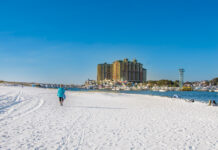
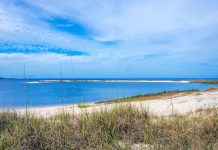
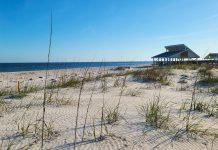
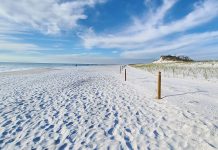
The sand here does double duty as a functioning road for beach traffic through the summer, so its character shifts depending on exactly where you’re standing. Away from the driving zones, especially toward the peninsula’s protected north end, it stays wide, flat, and comfortable, with plenty of room for a picnic or a slow walk. Near the jetties at low tide, you’ll find small tide pools worth poking through, and the calmer “Family Beach” area on the river side gives you a gentler, wave-free stretch of sand that works well for younger kids.
This beach sits right at the mouth of the St. Johns River, one of the busiest shipping channels on the East Coast, and the water reflects that. On a calm day it runs a working, sometimes churned blue-green, generally murkier than a beach further from a river mouth. This isn’t a casual, carefree swim beach, current near the inlet runs genuinely strong, and vehicles parked too close to the waterline have been swept by incoming tides more than once. Know the tide schedule before you settle in anywhere near the water’s edge.
-
Walkability. Good away from the vehicle traffic, considerably busier and less pleasant for walking during peak summer beach-driving hours.
-
Softness & Playability. Comfortable in the open sections, with the calmer Family Beach area a good bet for younger kids and sandcastles.
-
Barefoot Comfort. Comfortable in most spots, though watch for vehicle traffic and tire ruts in the developed driving areas.
-
Swimmability. Swim with real caution near the inlet and jetties. The calmer Family Beach area on the river side is the better bet for casual wading.
Want the full geology, grain composition, and the complete sand and water condition ratings? I broke it all down separately in Sand & Shore: Huguenot Memorial Park.
Dogs & Pet Accessibility at Huguenot Memorial Park
Are Dogs Allowed on the Sand? NO.
This one is stricter than most people expect, so I want to be direct about it. Day-use visitors are not allowed to bring dogs into the park at all, not even on a leash for a quick walk. Registered campers can have a dog at their site, but even then, the beach and shoreline stay strictly off-limits to pets.
Where Dogs Are Allowed
- ✓Registered campsites only, on a leash, never left alone.
Where Dogs Are NOT Allowed
- ✗Anywhere in the park at all for day-use visitors, dogs included, no exceptions.
- ✗The beach and shoreline, even for registered campers with a dog at their site.
- ✗The dunes anywhere in the park, for people, vehicles, and pets alike.
Paws on the Ground Reality
If you’re planning a day trip here, leave your dog at home. This isn’t a gray area the way it is at some parks, staff do enforce it, and a day-use visitor showing up with a dog will be turned away at the gate. If you’re camping, your dog can settle in at your site, but plan on walking them somewhere other than the beach itself, since that rule is enforced regardless of whether you’re a registered camper.
Given how strict this policy is, if a beach day with your dog is the actual goal, this isn’t the park for it. Kathryn Abbey Hanna Park just south permits leashed dogs in designated beach areas and makes for a far easier choice.
Crowd Levels and the Overall Feel of Huguenot Memorial Park & Mayport
The beach driving area at Huguenot can get genuinely packed with vehicles on summer weekends, while the critical wildlife area and campground stay considerably quieter. Mayport itself runs at its own steady, unhurried pace regardless of what’s happening across the river.
The overall feel shifts by season and by the shorebird nesting calendar:
- Spring: strong migratory birding as species pass through on their way north, with comfortable temperatures for exploring both sides of the river
- Summer: the busiest beach driving season, with the north end closed to vehicles to protect the seabird colony
- Fall: another strong migratory birding window, with thinner beach crowds as summer heat breaks
- Winter: quiet at the beach, with rare gull species like the Glaucous and Iceland Gull showing up for patient birders
Who Are Huguenot Memorial Park & Mayport Really For?
✓ Who Will Love Huguenot Memorial Park & Mayport
-
Serious birders chasing one of the most significant sites on the entire East Coast
-
Families and overlanders who want the novelty of a genuine drive-on beach experience
-
Anglers chasing productive surf and jetty fishing at a genuine river mouth
-
Foodies interested in authentic, working-waterfront Mayport shrimp
-
History-minded visitors interested in a 1562 landing site and a genuinely old Florida fishing village
-
Rustic campers who want direct waterfront access at a lower price point than a full-service campground
✗ Consider Another Beach If…
-
You want calm, casual swimming. This river-mouth beach carries genuine current and tide risk
-
You don’t have a 4WD vehicle and want to drive on the beach. Standard vehicles risk getting stuck
-
You want a quiet, undeveloped beach walk without vehicle traffic. Stick to the critical wildlife area specifically, or consider Little Talbot Island instead
-
You want full-service camping amenities. This campground is genuinely rustic by design
-
You’re sensitive to noise. Naval Station Mayport sits directly across the inlet, and helicopter traffic is a regular occurrence
Things to Do at Huguenot Memorial Park & Mayport, Florida
Between the beach park and the village across the river, this stop offers genuine variety for a single visit.
-
Beach Driving. One of the last spots in the Jacksonville area where you can legally drive and park directly on the sand.
-
Birding. A critical Red Knot staging ground and one of the best birding sites on the East Coast, with over 250 recorded species. My birding guide to Huguenot Memorial Park covers the full picture.
-
Fishing. Genuinely productive surf and jetty fishing at the mouth of the St. Johns River.
-
Camping. 70 rustic waterfront sites with electric hookups, reserved by phone only.
-
Riding the St. Johns River Ferry. A car and passenger ferry connecting Mayport to Fort George Island, running since 1874.
-
Eating Mayport Shrimp. A genuinely distinct, hyper-local delicacy served at working seafood houses along Ocean Street.
-
Visiting Mayport Brewing Company. More than 40 beers on tap, plus duckpin bowling, shuffleboard, and outdoor fire pits.
-
Walking the Mayport Walls. A public mural project brightening several blocks of the historic village.
-
Wildlife Watching. Dolphins, manatees, and sea turtles are all regularly spotted in the surrounding waters.
Local Knowledge and Practical Advice
A few things worth knowing before you plan a visit here:
-
Bring cash. Cash lines move faster at the entrance gate than card lines, especially on busy summer weekends.
-
Know the tide before you park on the beach. Vehicles genuinely do get stuck or swept by incoming tides here, more often than you’d expect.
-
Check current seasonal closures at the north end. That stretch typically closes to vehicles from before Memorial Day through after Labor Day to protect nesting shorebirds.
-
Reserve campsites by phone only, Monday through Friday. There’s no online booking option for the campground.
-
Come prepared with your own water. Campsites have electric hookups only, no water or sewer connections.
-
Expect helicopter noise. Naval Station Mayport sits directly across the inlet, and air traffic is a regular part of the soundscape.
-
Take the ferry across if you want to continue north. It’s the most direct route to Fort George Island, Little Talbot, and Big Talbot Island State Parks.
-
Order the shrimp at a working seafood house on Ocean Street. Mayport shrimp has a genuinely distinct, sweet flavor worth seeking out specifically.
-
Bring binoculars even if birding isn’t your main plan. This is one of the most significant sites on the East Coast for it.
-
Check current park alerts before you go. Erosion along the main roadway has required temporary repairs in recent years.
Where to Stay Near Huguenot Memorial Park & Mayport, Florida
Camping at Huguenot itself is the most direct option, with more traditional lodging a short drive south.
Huguenot Memorial Park Campground
70 rustic, waterfront sites with electric hookups, reserved by phone, offering direct beach access unlike almost anywhere else in this guide.
Atlantic Beach & the Jacksonville Beaches, South
Hotels, vacation rentals, and Beaches Town Center’s boutique lodging all sit a short drive south, covered in my Jacksonville Beaches guide.
Kathryn Abbey Hanna Park, South
For a more developed camping option with full amenities, Hanna Park sits just south, covered in its own dedicated guide.
Mayport Village
Limited overnight lodging exists directly in Mayport itself, making it more of a day-trip and dining destination than an overnight base for most visitors.
What Makes Huguenot Memorial Park & Mayport Different from Nearby Beaches
This stop stands apart because it’s built around function, driving, fishing, and shrimping, rather than leisure in the way most beaches in this guide are.
A few features make it distinct:
A genuine drive-on beach
Very few beaches left in the Jacksonville area still allow this, and it defines the entire character of a visit here.
One of the East Coast’s most significant birding sites
The Red Knot staging ground and the seasonal seabird colony give this park an ecological importance that goes well beyond its recreational reputation.
A working fishing village, not a beach town
Mayport never rebuilt itself around tourism the way most of Florida’s coast has, and that unpolished, working character is exactly what makes it worth the ferry ride.
A 150-year-old ferry as part of the visit
Very few beach destinations in this guide include a genuine, still-operating piece of 19th-century transportation infrastructure as part of the experience.
Huguenot Memorial Park & Mayport vs. Other Nearby Beaches
These are the beaches and parks visitors most often weigh against this stop, and the honest read on when you’d choose one over the other.
Huguenot Memorial Park vs. Kathryn Abbey Hanna Park
Hanna Park, just south, offers a more developed, full-amenity experience with a lake, extensive trails, and a real campground. Huguenot offers beach driving and birding that Hanna Park doesn’t.
Huguenot Memorial Park vs. Little Talbot Island State Park
Little Talbot, reachable via the Mayport ferry, offers a protected, undeveloped wilderness beach without vehicle traffic. Choose Little Talbot for quiet, Huguenot for the drive-on novelty.
Huguenot Memorial Park vs. the Jacksonville Beaches
The Jacksonville Beaches offer restaurants, nightlife, and a real boardwalk scene. Huguenot and Mayport offer working waterfront character and genuine wildlife instead.
Bottom line: Huguenot Memorial Park and Mayport are the choice for anyone who wants a beach that still functions the way beaches used to, drivable, workable, and genuinely wild in patches, paired with a fishing village that never traded its identity for tourism. Come with a 4WD vehicle, respect the tide, and take the ferry across for the shrimp.
Huguenot Memorial Park & Mayport, Florida: Frequently Asked Questions
Can you drive on the beach at Huguenot Memorial Park?
Yes, this is one of the last beaches in the Jacksonville area where driving and parking directly on the sand is allowed. A 4WD vehicle is strongly recommended.
How much does it cost to enter Huguenot Memorial Park?
Around $5 per vehicle for up to six people, with an additional charge per extra passenger, and $3 for pedestrians and cyclists. An annual pass is also available.
Can you camp at Huguenot Memorial Park?
Yes, at 70 waterfront sites with electric hookups, reserved by phone only, Monday through Friday during business hours.
Is Huguenot Memorial Park good for birding?
Yes, genuinely exceptional. It’s considered one of the best birding sites on the East Coast and serves as a critical staging ground for endangered Red Knots.
Are dogs allowed at Huguenot Memorial Park?
No for day-use visitors, dogs aren’t allowed in the park at all. Registered campers can have a dog at their site on a leash, but even then, the beach and shoreline are off-limits to pets.
How do you get from Mayport to Fort George Island?
Via the St. Johns River Ferry, a car and passenger ferry that’s operated since 1874, running roughly every half hour from about 6am to 8:45pm daily.
What is Mayport known for?
A historic fishing and shrimping village at the mouth of the St. Johns River, home to Naval Station Mayport and known for a genuinely distinct local shrimp variety.
Is it safe to drive on the beach at Huguenot Memorial Park?
With caution. Vehicles have gotten stuck in soft sand or swept by incoming tides, so check the tide schedule and avoid parking too close to the waterline.
Is there a Naval base near Huguenot Memorial Park?
Yes, Naval Station Mayport sits directly across the inlet, and helicopter and vessel traffic are a regular part of the experience here.
What is the St. Johns River Ferry?
Also known as the Mayport Ferry, it’s a car and passenger ferry connecting Mayport and Fort George Island across a roughly 0.9-mile stretch of the St. Johns River, operating since 1874.
Patti’s Perspective: My Honest Take on Huguenot Memorial Park & Mayport
Mayport gave me a different kind of appreciation. Watching a shrimp boat unload at the same dock where families have worked for generations, then walking past a fresh mural two blocks later, made the town feel like it was quietly building its own next chapter without abandoning the one it’s already lived. I don’t get to say that about many small Florida towns anymore.
My honest caveat, respect the tide, bring the right vehicle, and don’t skip the ferry ride across. Both halves of this guide reward people willing to take them seriously rather than treating them as a quick, easy beach stop.
Want to Live by the Water?Mayport offers one of the more affordable waterfront markets in the greater Jacksonville area, with 2025 home prices averaging around $310,000 and select properties reaching closer to $450,000, considerably lower than the beach towns just south.The market here draws buyers connected to Naval Station Mayport, working waterfront families, and increasingly, newcomers drawn to the town’s revitalization efforts, including new murals, dining, and planned waterfront development. Proximity to Huguenot Memorial Park’s beach and birding, along with easy ferry access north, adds real value for buyers who want genuine outdoor access without the price tag of the more developed Jacksonville Beaches.If living in this kind of working waterfront community is something you’re considering, it’s worth exploring what’s available in this area.Explore Waterfront Living at LiveByTheWater.com
Real estate referral partner