


Big Talbot Island State Park, Florida
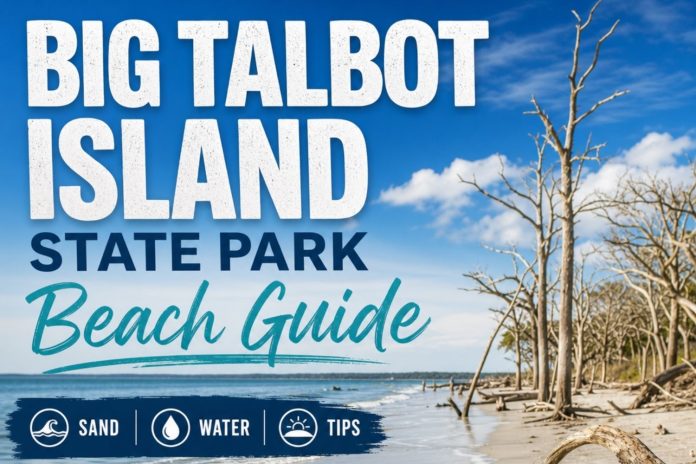
Big Talbot Island State Park is the beach in this entire guide that photographs like nowhere else in Florida, and I mean that literally. This is where you’ll find Boneyard Beach, a shoreline scattered with the salt-bleached skeletons of live oak and cedar trees that once grew well back from the water, and Blackrock Beach, where dark, rocklike formations that look like volcanic lava are actually something far stranger. Neither of these is a beach you swim at. Both are beaches you stand still and stare at for a while.
This park sits immediately north of Little Talbot Island, which I’ve covered in its own guide as the full-facility, camping-and-surfing counterpart to this purely day-use nature preserve. Big Talbot doesn’t offer camping, doesn’t recommend swimming, and doesn’t try to be anything other than a place to witness erosion doing exactly what erosion does to a barrier island, dramatically and in plain view.
In this guide I’m covering Boneyard Beach and the Bluffs, Blackrock Beach and its genuinely strange geology, the Big Pine Trail’s salt marsh overlook, and the paved Timucuan Trail connecting it all. I’ll go deep on what the sand, rock, and water are actually like at one of the most visually distinctive beaches in this entire guide, score it honestly across every category that matters, tell you exactly who this park fits and who should head to Little Talbot Island instead, and cover exactly where your dog can and can’t go here. I close with my honest take on a beach that’s basically a live demonstration of a barrier island losing an argument with the ocean.
The Vibe & Culture at Big Talbot Island State Park
A Nature Preserve That Doubles as a Geology Lesson
Most beaches in this guide fight erosion. This one has simply let it happen, and the results have made it one of the most photographed natural features in Northeast Florida.
People have lived on this island for thousands of years, starting with the Timucua, whose shell middens, ancient piles of oyster shell and food refuse, still turn up across the island today. General James Oglethorpe named the Talbot Islands in 1735 in honor of Charles Talbot, Lord High Chancellor of England, and European plantation agriculture followed during the British and Second Spanish periods, growing oranges, sugar, indigo, and cotton on land that included the Spicer plantation at the island’s north end and the Houston plantation at the south. One of the more notable planters connected to this history, Zephaniah Kingsley, later built the plantation on nearby Fort George Island that still bears his name today. The state opened Big Talbot Island as an official park in 1984, formally protecting what had already become one of the region’s rarest things, an undeveloped barrier island left almost entirely to nature’s own devices.
That decision to simply let the coastline do what it wants is exactly what created Boneyard Beach and Blackrock Beach. Wind and wave action have carved 30-foot bluffs into the island’s northeastern edge, and as the land behind those bluffs erodes away, live oaks and cedars that once grew safely inland tumble onto the sand below, stripped of bark and bleached white by sun and salt until they look like driftwood skeletons scattered across the shore. A local legend holds that the pirate Blackbeard once landed on these same shores with a treasure he never recovered. Whether or not that’s true, the beach genuinely does look like the kind of place where something has been buried and left to the elements.
The overall feel here is quiet, contemplative, and photography-heavy. This isn’t a beach where families spread out towels for the day. It’s a stop where visitors walk a maze of dead trees and dark rock formations, take their photos, watch the birds, and move on, often to Little Talbot Island next door for the actual swimming and camping this park deliberately doesn’t offer.
Big Talbot Island Areas: Boneyard, Blackrock, Marsh, and Trail
This park’s shoreline and interior break into a few genuinely distinct experiences. Here’s how I approach it.
Boneyard Beach & the Bluffs
Bluffs Picnic Area · The Island’s Signature View
The Bluffs picnic area sits at the north end of the park, with three covered pavilions overlooking Nassau Sound and a short trail leading down to Boneyard Beach itself. This roughly three-mile stretch of shoreline is the park’s namesake attraction, salt-washed skeletons of live oak and cedar trees lying scattered across the sand, victims of the same 30-foot bluff erosion that continues reshaping this island year after year. A staircase that once led directly from the picnic area down to the beach no longer exists, since the ocean has claimed even that access point over the past couple of decades, and reaching the sand now takes a bit more scrambling than it once did.
The crowd here mixes photographers working the early morning or late afternoon light, families picnicking at the pavilions, and a steady trickle of visitors who’ve heard about this beach specifically and came to see it for themselves. Weddings happen here too, with the Bluffs available as a genuinely dramatic backdrop for an oceanfront ceremony, though parking capacity is limited to just 25 spaces.
My honest take, come for the view and the walk, pack a picnic for the pavilions, and don’t expect a swim. This beach is built for looking, not for wading in.
Blackrock Beach & Trail
Off A1A · Rock That Isn’t Actually Rock
The Blackrock Trail winds roughly 0.8 miles through maritime hammock, pinewoods, and saw palmetto before delivering you to a stretch of shoreline that looks, at first glance, like it belongs on a volcanic coastline rather than in Florida. The dark, rocklike formations here are actually compressed, hardened remains of decayed roots, trunks, and branches, a rare sedimentary hardpan unique within the state, darker and geologically different from the coquina rock found at Washington Oaks Gardens further south or the limestone outcroppings at Blowing Rocks Preserve much further south still. Where these formations sit exposed in shallow tide pools, they host mollusks, crabs, oysters, and other small tide pool creatures.
The crowd here is thinner and more deliberate than at the Bluffs, hikers and geology-curious visitors who came specifically for this unusual formation rather than a general beach walk. I’ve written a closer look at this specific trail separately, since the geology here deserves more explanation than a quick beach stop allows.
My honest take, check the tide before you come. Low tide exposes far more of the formations and the tide pools around them, while high tide can make much of this stretch difficult or impossible to reach.
Big Pine Trail & the Salt Marsh
Off A1A · A Short Walk to Simpson Creek
At the park’s southern end, the Big Pine Trail runs a short 0.7 to 0.8 miles through southern magnolia, tall pines, and live oaks draped in Spanish moss and resurrection fern, ending at a bluff overlooking the estuary and salt marsh grasses along Simpson Creek. This is the quietest, most purely botanical stop in the park, with no beach access at the end, just a genuinely peaceful overlook.
The crowd here is thin, mostly birders and hikers looking for a shorter, calmer walk than the trip out to Boneyard or Blackrock Beach. Snowy egrets and other wading birds are a regular sight from the overlook, and the trail’s shade makes it a comfortable option even on a hot day.
My honest take, this is the trail to choose if you want a quick, genuinely lovely walk without committing to the full beach experience elsewhere in the park. It’s short enough to fit into almost any schedule.
The Timucuan Trail & Old Kings Highway
Paved Multi-Use Path · Historic Unrefined Trails
A paved, multi-use section of the Timucuan Trail runs for nearly three miles alongside A1A, connecting the park’s various trailheads and offering overlooks of Spoonbill Pond near the north end. It’s genuinely good for biking, in-line skating, or pushing a stroller, gentle enough for families while still winding through shaded maritime forest for most of its length. On the west side of A1A, the more rugged Old Kings Highway and Jones Cut Trails, an old, unrefined jeep road roughly 1.5 miles long, cut through the heart of the island’s maritime hammock and scrubby flatwoods, popular with off-road cyclists looking for a rougher ride than the paved path offers.
The crowd on the paved Timucuan Trail is the most varied in the park, cyclists, walkers, and families, while the Old Kings Highway and Jones Cut trails draw a smaller, more dedicated off-road biking crowd. Interpretive panels along parts of the route add context on the island’s natural and cultural history as you go.
My honest take, ride the paved Timucuan Trail if you’re combining a Big Talbot visit with Little Talbot Island just south, since the two parks connect well by bike. Save the Old Kings Highway route for when you specifically want rougher terrain.
Big Talbot Island Rankings: Expert Scores Across 11 Categories
These scores reflect a purely day-use nature preserve built around erosion, geology, and photography rather than a typical swim-and-sunbathe beach day.
Sand Quality
6/10
Genuinely secondary to the driftwood and rock formations that define this beach. What sand exists is typical and unremarkable next to the real attraction.
Hiking & Beach Walking
8/10
A genuinely rewarding, varied trail system, from the short beach access trails to the longer Timucuan Trail and the rougher Old Kings Highway.
Shelling
7/10
Genuinely good, with clam, scallop, oyster, and periwinkle shells regularly found in the shell line, especially at low tide.
Water Conditions
3/10
Not recommended for swimming, with hardpan rock formations, tide pools, and active erosion making the shoreline better suited to exploring than wading in.
Scenery & Natural Beauty
10/10
One of the most visually distinctive beaches anywhere in Florida. Boneyard Beach and Blackrock Beach together make this a standout in this entire guide.
Birding & Wildlife
9/10
A premier spot for painted buntings and roseate spoonbills, with genuinely excellent birding throughout the salt marsh and maritime hammock.
Family Friendliness
6/10
Genuinely memorable for older kids who enjoy climbing on fallen trees and exploring tide pools, though the terrain, lack of facilities, and no-swimming reality make this a different kind of family visit.
Dog Friendliness
5/10
Leashed dogs are welcome on all nature and hiking trails and in picnic areas, but not permitted on the beach itself.
Solitude & Peace
7/10
Generally quiet, though the Bluffs and Boneyard Beach draw a steady stream of photographers, especially around sunrise and sunset.
Entertainment & Nightlife
1/10
None. This is a day-use nature preserve that closes at sundown, with no camping and no nearby amenities inside the park itself.
Parking & Beach Access
6/10
A modest $3 self-pay honor system fee, though parking is genuinely limited, just 25 spaces at the Bluffs, and erosion has made direct beach access from that lot harder over time.
Big Talbot Island Sand & Water
Talking about sand here almost misses the point, since what makes this beach famous is what’s scattered across it. Boneyard Beach is covered in salt-bleached skeletons of live oak and cedar trees that toppled from the eroding bluffs above, and Blackrock Beach nearby holds dark, rocklike formations that look volcanic but aren’t. What sand does exist sits between and around these features, and this isn’t a beach for spreading out a towel. It’s one for walking slowly, picking your way across driftwood and rock, and looking closely at what the tide has uncovered.
Swimming isn’t recommended anywhere along this shoreline, and the park doesn’t market it as a swim beach. The wave and wind action here is exactly what carved the bluffs and toppled the trees in the first place, and between that active erosion and the hardpan rock formations, this coastline is built for exploring at the waterline rather than getting in the water. On a calm day it runs a typical Atlantic and Nassau Sound blue-green, made more dramatic by the dark rock and pale driftwood breaking up the view.
-
Walkability. Slow and deliberate rather than a stroll. You’re picking your way across driftwood and rock more than covering ground quickly.
-
Softness & Playability. Mostly driftwood and rock rather than open sand. This is an exploring and photographing beach, not a spread-out-and-relax beach.
-
Barefoot Comfort. Genuinely poor. Wear real shoes, since the driftwood and rock formations that make this beach so photogenic are hard on bare feet.
-
Swimmability. Not recommended anywhere on this beach. Head to Little Talbot Island just south if swimming is the goal.
Want the full geology, grain composition, and the complete sand and water condition ratings? I broke it all down separately in Sand & Shore: Big Talbot Island.
Dogs & Pet Accessibility at Big Talbot Island
Are Dogs Allowed on the Sand? RESTRICTED.
Your leashed dog is welcome on all the nature and hiking trails and in the picnic areas, but not on the beach itself. Plan around that split, since the beach is the main reason most people visit.
Where Dogs Are Allowed
- ✓The Blackrock Trail and Big Pine Trail, on a leash.
- ✓The paved Timucuan Trail and the rougher Old Kings Highway route.
- ✓The picnic pavilions at the Bluffs.
Where Dogs Are NOT Allowed
- ✗Boneyard Beach and Blackrock Beach, no exceptions.
Paws on the Ground Reality
The trail system here gives your dog real, shaded ground to cover, maritime hammock, pinewoods, and saw palmetto, even though the beach itself is off-limits. Bring your own water, since there’s nothing to refill from once you’re away from the parking areas. Enforcement on the beach restriction is genuinely consistent here, since staff and regular visitors alike know this rule well.
If your dog is disappointed about missing the driftwood, Little Talbot Island just south offers a similar wild, undeveloped feel with dog-friendly trails and a campground of its own, even though its beach carries the same restriction.
Crowd Levels and the Overall Feel of Big Talbot Island
The crowd concentrates at the Bluffs and Boneyard Beach, especially during good early morning or late afternoon photography light, while the Big Pine Trail and the more rugged Old Kings Highway stay genuinely quiet nearly all the time.
The overall feel shifts by season more around light and tide than tourist traffic:
- Spring: painted buntings arrive to nest, making this one of the best windows for birding photography
- Summer: the busiest season for casual visitors, though this park never gets genuinely crowded the way a swim beach does
- Fall: my favorite season here, comfortable temperatures and beautiful late-day light on the driftwood
- Winter: quiet and often dramatic, with storm-driven erosion sometimes visibly reshaping the shoreline between visits
Who Is Big Talbot Island Really For?
✓ Who Will Love Big Talbot Island
-
Photographers chasing some of the most visually unique natural scenery in Florida
-
Anyone curious about coastal geology and erosion, given the genuinely rare hardpan formations at Blackrock Beach
-
Birders chasing painted buntings and roseate spoonbills in a genuinely excellent habitat
-
Hikers and cyclists who want a varied trail system from paved paths to rougher off-road terrain
-
History-minded visitors interested in the island’s Timucua, plantation-era, and pirate-legend past
-
Anyone pairing a visit with Little Talbot Island next door for a fuller day combining nature and a genuine swim beach
✗ Consider Another Beach If…
-
You want to swim. Head to Little Talbot Island next door instead
-
You want to camp. This is a day-use-only park with no camping facilities
-
You’re bringing a dog and want it with you on the beach. Dogs aren’t allowed on the sand here
-
You need abundant parking. The Bluffs lot holds only 25 spaces
-
You want a relaxed, towel-and-cooler beach day. This park asks for exploring and walking, not lounging
Things to Do at Big Talbot Island State Park, Florida
This day-use nature preserve packs genuine variety into a relatively small footprint.
-
Photographing Boneyard Beach. Salt-bleached tree skeletons scattered across roughly three miles of shoreline, best in early morning or late afternoon light.
-
Exploring Blackrock Beach. Genuinely unique hardpan rock formations and tide pools, best explored at low tide.
-
Hiking. The Blackrock Trail, Big Pine Trail, and the rougher Old Kings Highway and Jones Cut Trails all offer distinct terrain and views.
-
Biking & Skating. The paved Timucuan Trail suits bikes, in-line skates, and strollers, while Old Kings Highway offers rougher off-road riding.
-
Birding. Painted buntings nest here in spring, and roseate spoonbills feed in the surrounding marshes.
-
Picnicking. Three covered pavilions at the Bluffs overlook Nassau Sound, first-come, first-served.
-
Kayaking & Boating. A boat ramp at the north end and guided kayak tours through PADL offer access to the surrounding salt marsh.
-
Shelling. Clam, scallop, oyster, and periwinkle shells collect in the shell line, best at low tide.
-
Weddings. The Bluffs offer a genuinely dramatic oceanfront ceremony backdrop, available by permit through the ranger station.
Local Knowledge and Practical Advice
A few things worth knowing before you plan a visit here:
-
Visit at low tide. This isn’t optional advice, it’s essential. High tide can make much of Boneyard and Blackrock Beach difficult or impossible to fully explore.
-
Pay the $3 self-pay fee at the trailhead honor box. Bring exact cash, since there’s no staffed gate at most access points.
-
Wear real shoes, not sandals. The driftwood scramble and Blackrock formations are genuinely rough on bare or lightly protected feet.
-
Never remove driftwood from the beach. It’s a strictly protected park feature, and taking it home is both prohibited and slowly erases the very thing that makes this beach famous.
-
Don’t plan to camp here. This is a day-use-only park. Little Talbot Island’s campground just south is the nearest option.
-
Leave your dog at the trailhead for the beach itself. Leashed dogs are welcome on the trails and in picnic areas, but not on the sand.
-
Bring your own water and snacks. There are no facilities directly at Boneyard Beach or Blackrock Beach.
-
Watch for seasonal nesting closures. Sections of the beach may close periodically for nesting shorebirds or sea turtles. Respect posted signage.
-
Go early or late in the day for the best photography light. The driftwood and rock formations both photograph dramatically different depending on the angle of the sun.
-
Pair this with Little Talbot Island just south. Big Talbot works best as a focused two to three hour stop, not a full beach day, and Little Talbot fills in everything this park deliberately doesn’t offer.
Where to Stay Near Big Talbot Island State Park, Florida
This park offers no lodging or camping of its own, so here’s where to base yourself nearby.
Little Talbot Island Campground
The nearest and most logical camping option, just south, with 40 full-facility sites serving the entire Talbot Islands system, covered in its own dedicated guide.
Amelia Island, North
For hotels and resorts, Amelia Island sits a comfortable drive north, covered in its own set of dedicated guides in this series.
Kathryn Abbey Hanna Park & the Jacksonville Beaches, South
Both offer additional camping and full hotel options a short drive south.
What Makes Big Talbot Island Different from Nearby Beaches
Big Talbot Island stands apart because it doesn’t fight the ocean the way most beaches in this guide do. It lets erosion happen in full view, and the result is a landscape unlike anywhere else on Florida’s coast.
A few features make it distinct:
A genuinely rare geological formation
Blackrock Beach’s hardpan formations are unique within Florida, a different geological story entirely from the coquina and limestone found at other rock beaches further south.
A beach built from erosion, not despite it
Very few parks in this guide treat active coastal erosion as the main attraction rather than a problem to manage, and it’s part of what makes this place so visually unlike anywhere else.
A direct link to Zephaniah Kingsley’s plantation history
This island’s plantation-era past connects directly to Kingsley Plantation on nearby Fort George Island, adding real historical depth beyond the natural spectacle.
A pirate legend that fits the landscape
Whether or not Blackbeard actually buried treasure here, the beach’s otherworldly, bone-strewn appearance makes the legend feel entirely plausible.
Big Talbot Island vs. Other Nearby Beaches
These are the parks visitors most often weigh against Big Talbot, and the honest read on when you’d choose one over the other.
Big Talbot Island vs. Little Talbot Island State Park
Little Talbot offers a full-facility campground, permitted swimming areas, and real surf. Big Talbot offers no camping and no swimming, trading both for a purely visual, geological spectacle.
Big Talbot Island vs. Washington Oaks Gardens State Park
Both are unique rock beaches unsuited to swimming, but Washington Oaks pairs its coquina formations with formal gardens, while Big Talbot pairs its hardpan formations with driftwood and open wilderness.
Big Talbot Island vs. Fort Clinch State Park
Fort Clinch offers history, camping, and excellent shark tooth hunting. Big Talbot offers a purely natural, photography-driven spectacle with none of Fort Clinch’s built infrastructure.
Bottom line: Big Talbot Island State Park is the choice for anyone who wants to see Florida’s coastline doing exactly what barrier islands naturally do, erode, reshape, and reveal something genuinely strange in the process. Little Talbot Island gives you the swimming and camping this park deliberately skips. Big Talbot gives you a landscape unlike anywhere else on this coast.
Big Talbot Island State Park, Florida: Frequently Asked Questions
Can you swim at Big Talbot Island State Park?
Swimming is not recommended anywhere along this shoreline. If a swim beach is your goal, Little Talbot Island just south offers designated swimming areas instead.
What is Boneyard Beach?
A roughly three-mile stretch of shoreline covered in the salt-bleached skeletons of live oak and cedar trees, toppled from eroding bluffs above and stripped white by years of sun and saltwater exposure.
What are the black rocks at Blackrock Beach made of?
They’re not actually rock at all, but compressed, hardened remains of decayed roots, trunks, and branches, a rare sedimentary hardpan formation unique within Florida.
Can you camp at Big Talbot Island State Park?
No, this is a day-use-only park with no camping facilities. Little Talbot Island’s campground just south is the nearest option.
Are dogs allowed at Big Talbot Island State Park?
Leashed dogs are welcome on all nature and hiking trails and in picnic areas, but pets are not permitted on the beach.
Can you take driftwood home from Boneyard Beach?
No, driftwood is a strictly protected park feature, and its collection is prohibited.
What is the best time to visit Boneyard Beach?
Low tide, which exposes significantly more of the beach and its driftwood and rock formations. Early morning or late afternoon also offers the best light for photography.
How much does it cost to enter Big Talbot Island State Park?
$3 per vehicle, paid through a self-pay honor system box at the trailhead. The park is open 8am to sunset year-round.
Is Big Talbot Island good for birding?
Yes, genuinely excellent. Painted buntings nest here in spring, and roseate spoonbills feed in the surrounding salt marshes.
How far is Big Talbot Island from Jacksonville?
About 20 miles, roughly a 30 to 35 minute drive.
Patti’s Perspective: My Honest Take on Big Talbot Island State Park
Blackrock Beach still catches me off guard every single visit. Knowing that what looks exactly like volcanic rock is actually compressed plant matter, something closer to a very young, very strange kind of peat, makes we want to stand there scratching my head appropriately. I’ve walked a lot of unusual sand in my life. I’ve never walked anything quite like this.
My honest caveat, come with the right expectations. This is a two or three hour stop, not a beach day, and it rewards patience, careful footing, and genuine curiosity far more than it rewards a cooler and a beach chair.
Want to Live by the Water?The area surrounding Big Talbot Island State Park offers one of the most protected, genuinely undeveloped coastal settings left near Jacksonville, with the park’s day-use-only status helping preserve the wild, unbuilt character of this specific stretch of coast.The market here draws buyers who want proximity to genuinely unique natural scenery and protected parkland, along with those drawn to the broader Timucuan Ecological and Historic Preserve’s conservation status. Nearby communities toward Little Talbot Island and Amelia Island offer more traditional inventory for buyers who want easy access to this stretch of coast.If living near this kind of protected, visually distinctive coastline is something you’re considering, it’s worth exploring what’s available in this area.Explore Waterfront Living at LiveByTheWater.com
Real estate referral partner