


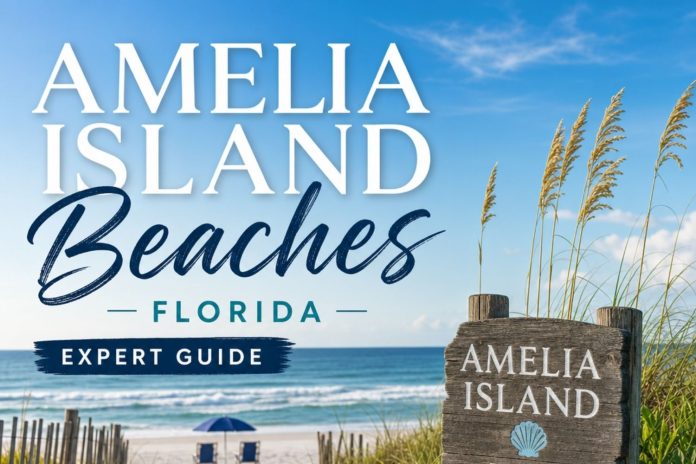
Amelia Island Beaches, Florida
Amelia Island is where Florida’s coast stops feeling entirely like Florida. This is the state’s northernmost barrier island, close enough to Georgia that the Spanish moss and live oaks feel more Lowcountry than tropical, and thirteen miles of beach here carry more layered history than almost anywhere else I’ve covered in this guide, eight different flags, a Black-owned resort town that outlasted Jim Crow, and a shrimping industry that quite literally started here.
This guide covers the island’s general beach corridor, from historic Fernandina Beach at the north end down through American Beach and Summer Beach toward the island’s southern tip. Two of the island’s most significant natural areas, Amelia Island State Park and Fort Clinch State Park, each get their own dedicated guide in this series, since both deserve that kind of depth on their own terms. Here, I’m covering the beaches, the towns, and the communities that make up everyday life on Amelia Island itself.
In this guide I’m covering Fernandina Beach and Main Beach Park, the historic community of American Beach, Peters Point Beachfront Park, and the resort corridor around Summer Beach. I’ll go deep on what the sand and water are like across this island’s full length, score it honestly across every category that matters, and tell you exactly who this island fits and who might want a quieter, more protected stretch of coast instead. I close with my honest take on the story I think about most every time I walk this island’s sand.
The Vibe & Culture at Amelia Island Beaches
Eight Flags, One Island, and a Story That Doesn’t Get Told Enough
Amelia Island calls itself the Isle of Eight Flags for a reason. French, Spanish, British, Patriot, Green Cross, Mexican, Confederate, and American forces have all claimed this island at one point or another, and that layered history is only half the story worth knowing before you set foot on the sand.
Fernandina Beach, at the island’s north end, is the more commonly told half of that story, a 50-square-block historic district on the National Register of Historic Places, full of Victorian-era homes now operating as bed and breakfasts, and home to the Palace Saloon, Florida’s oldest continuously operating bar, pouring drinks since 1903. This is also, genuinely, the birthplace of the modern shrimping industry, and the Isle of Eight Flags Shrimp Festival every May still celebrates that heritage with parades, live music, and more shrimp than one town should reasonably be able to produce.
The half of the story that doesn’t get told enough sits a few miles south, at American Beach. In 1935, Abraham Lincoln Lewis, Florida’s first Black millionaire and president of the Afro-American Life Insurance Company, purchased land here to build a beach resort specifically for a Black community locked out of nearly every other stretch of Florida coastline during segregation. He described his vision simply, as a place for recreation and relaxation without humiliation. At its peak, American Beach drew as many as 10,000 visitors a day, and its guest list over the decades included Zora Neale Hurston, Ray Charles, and Duke Ellington. I go into this history in real depth in the American Beach section below, because it deserves more than a passing mention in a beach guide, and because it’s still very much alive today, not just a historical marker.
The present-day feel of the island reflects both of these histories at once. You can spend a morning riding a horse along an open stretch of beach, an afternoon wandering Fernandina’s Victorian downtown, and an evening at a resort in Summer Beach, all without leaving a fifteen-mile island, and each of those experiences will feel like a genuinely different place. That range, more than any single beach or attraction, is what makes Amelia Island worth a longer stay than most visitors initially plan for.
Amelia Island Beach Areas: Four Stretches, Four Different Stories
Amelia Island’s thirteen miles of beach break down into distinct stretches, each worth understanding on its own terms. Here’s how I approach it.
Fernandina Beach & Main Beach Park
North End · The Island’s Historic Anchor
Main Beach Park, about a mile from downtown Fernandina, is the island’s most recognizable beachfront park, a straightforward stretch of sand with a playground, picnic pavilions, and easy access that works well for a family afternoon without much planning required. It’s the beach most visitors default to simply because it’s close to everything else Fernandina Beach offers.
The crowd here mixes locals who treat this as their everyday beach, visitors staying in the historic district a short drive or bike ride away, and families drawn by the playground and open lawn space. It’s genuinely busier than the beaches further south, but nothing close to a crowded Florida beach town scene.
My honest take, use Main Beach Park as your base and treat downtown Fernandina as the real draw of this end of the island. Walk Centre Street, stop at the Palace Saloon even if you don’t drink, and time a visit for May if the Shrimp Festival lines up with your trip.
American Beach
South of Fernandina · A Beach Built as an Act of Defiance and Love
I want to slow down here, because American Beach carries more weight than almost anywhere else in this entire series of guides. In 1935, A.L. Lewis purchased land here to build a resort where his employees and, soon, Black families from across the Southeast could vacation freely during an era when nearly every other Florida beach was closed to them. The community grew into a genuine cultural landmark, drawing thousands of visitors a day at its peak and welcoming figures like Zora Neale Hurston, who reportedly sunbathed on this sand, and Duke Ellington and Ray Charles, who both played the local clubs.
The heart of the community sits around a 60-foot sand dune that locals came to call NaNa, the Twi word for grandmother, part of what remains the tallest dune system on Florida’s Atlantic coast. When development pressure threatened the dune in the 1980s, MaVynee Betsch, Lewis’s great-granddaughter and a former opera singer known locally as the Beach Lady, gave up her career and her entire inheritance to fight for American Beach’s survival. She got the community listed on the National Register of Historic Places in 2002, secured NaNa Dune’s protection under the National Park Service’s Timucuan Ecological and Historic Preserve, and spent decades giving walking tours and planting trees until her death in 2005. The A.L. Lewis Museum, which opened in 2014 at 1600 Julia Street, now tells this story in full, and I’d genuinely recommend visiting it before you walk the beach itself.
The crowd today is thin and local, residents, descendants of the original community, history-minded visitors who came specifically for this story, and a much smaller version of the beach crowd that once filled this sand ten thousand strong. Hurricane Dora struck this community hard in 1964, the same year the Civil Rights Act passed and other Florida beaches began legally opening to Black visitors, and American Beach never fully returned to its earlier scale. What survives, though, is genuinely significant, and it’s protected now in a way that MaVynee Betsch spent her whole later life fighting to secure. I’ve written a separate, closer look at walking this beach and its history, since a few paragraphs here can’t do it justice.
Peters Point Beachfront Park & Horseback Riding
South-Central Island · The Launch Point for Beach Rides
Peters Point Beachfront Park sits roughly midway down the island’s southern half, a straightforward waterside park with picnic tables, a boardwalk, beach access, and showers. It’s best known, though, as the meeting point for several of the island’s horseback riding outfitters, who lead guided rides along the open sand from here, a genuinely rare experience on Florida’s coast and one of Amelia Island’s signature draws.
The crowd here splits between riders arriving for a booked tour, sunrise photographers, and a steady trickle of beachgoers who prefer this quieter, less developed stretch to the busier north end. Reservations for horseback rides fill up, especially for the popular sunrise slots, so this isn’t the kind of activity you can typically walk up and join same-day.
My honest take, book a ride here even if you’ve never been on a horse before. Most outfitters cater to complete beginners, and riding an open beach at sunrise is a genuinely different way to experience this coast than walking it.
Summer Beach & the Resort Corridor
Near the Island’s South End · Omni & Ritz-Carlton Territory
Toward the southern half of the island, Summer Beach holds the Omni Amelia Island Resort’s roughly seven miles of bike trails and the general resort character that draws golf and tennis travelers to this end of the island, with the Ritz-Carlton anchoring a similarly polished stretch nearby. This is the most developed, most amenity-rich section of Amelia Island’s coastline, closer in spirit to a golf resort town than the historic character further north.
The crowd here is resort-focused, guests staying on-property, golfers moving between courses, and vacationers who came specifically for a full-service beach resort experience rather than a historic downtown or a quiet park.
My honest take, this stretch is worth knowing about even if you’re not staying here, since the bike trails connecting through this area link up with the rest of the island’s beach access points. If a resort stay is part of your plan, this is where you’ll end up regardless.
Amelia Island Beaches Rankings: Expert Scores Across 11 Categories
These scores weigh the island’s general beach corridor, from historic Fernandina through American Beach and down to the resort areas near the southern end.
Sand Quality
8/10
Wide, hard-packed quartz sand consistent along most of the island’s thirteen miles, genuinely comfortable for long walks and biking.
Hiking & Beach Walking
8/10
Long, flat, walkable beach for most of the island’s length, with the option to combine a beach walk with Fernandina’s historic downtown streets.
Shelling
6/10
Decent throughout, though this island is better known for its history and horseback riding than as a dedicated shelling destination.
Water Conditions
7/10
Generally moderate and swimmable through the island’s middle stretches, with stronger current near the inlets at the very north and south tips of the island.
Scenery & Natural Beauty
8/10
Genuine barrier island beauty throughout, with maritime forest, dunes, and the added texture of Victorian architecture in Fernandina’s historic district.
Birding & Wildlife
8/10
Solid birding throughout, with sea turtle nesting on the open beaches and the added ecological weight of the protected NaNa Dune system at American Beach.
Family Friendliness
8/10
Main Beach Park’s amenities, the resort corridor’s kid-friendly programming, and horseback riding as a genuine novelty activity all make this a strong family destination.
Dog Friendliness
7/10
Generally good at most public access points on a leash, though always check posted signage at each specific park, since rules can vary slightly by location.
Solitude & Peace
6/10
The resort corridor and Main Beach Park carry real foot traffic in season, while American Beach and Peters Point offer noticeably more quiet.
Entertainment & Nightlife
7/10
Downtown Fernandina’s Centre Street restaurants and the 122-year-old Palace Saloon give this island genuine character after dark, alongside a strong annual festival calendar.
Parking & Beach Access
7/10
Free lots at Main Beach and Peters Point make access easy, though South Fernandina relies on limited street parking.
Amelia Island Beaches Sand & Water
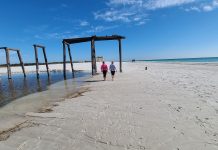
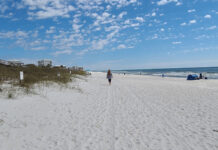
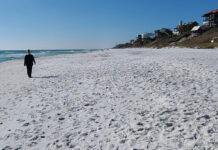
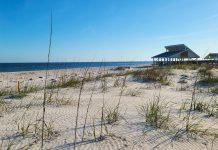
The sand across most of Amelia Island runs pale and firm, hard-packed enough through most of its thirteen miles that horseback riding and biking both work well right on the beach. It stays wide and flat for most of its length, plenty of room for a beach day without crowding your neighbors, and softens up a bit near the dunes for sandcastles once you’ve worked in some water. This is genuinely comfortable, easy sand to spend a full day on, whether you’re walking, riding, or just setting up a chair.
The water changes depending on where along the island you are. Through the middle stretches, Main Beach, American Beach, and Peters Point, conditions run moderate and manageable on a calm day, with a gradual entry and a typical deep Atlantic blue-green color. Closer to either tip of the island, where inlets cut through at St. Marys and Nassau Sound, currents pick up noticeably, so save your swimming for the calmer middle of the island and exercise real caution near either end.
-
Walkability. Wide, flat, and firm through most of the island, one of the more comfortable long-distance walking beaches in this entire guide.
-
Softness & Playability. Firm near the water, softer near the dunes, with plenty of room for sandcastles and a full day’s setup.
-
Barefoot Comfort. Genuinely comfortable through most of the island, with minimal shell hazard outside of storm-affected stretches.
-
Swimmability. Good through the island’s middle stretches. Exercise real caution near either tip of the island, where inlet currents run stronger.
Want the full geology, grain composition, and the complete sand and water condition ratings? I broke it all down separately in Sand & Shore: Amelia Island Beaches.
Dogs & Pet Accessibility at Amelia Island Beaches
Are Dogs Allowed on the Sand? YES.
Every beach covered in this guide, Main Beach Park, American Beach, Peters Point, and the Summer Beach corridor, welcomes leashed dogs under both City of Fernandina Beach and Nassau County ordinances. The only exceptions on this island are the state parks, Fort Clinch and Amelia Island State Park, each covered in their own separate guides, where dogs are not permitted on the beach itself.
Where Dogs Are Allowed
- ✓Main Beach Park and North Beach Park, on a leash, anywhere on the sand and in the surf.
- ✓American Beach, including Burney Park, with plenty of open sand to walk.
- ✓Peters Point Beachfront Park, on a leash, including the stretch used for horseback riding tours.
- ✓Seaside Park and the general Summer Beach corridor, on a leash.
Where Dogs Are NOT Allowed
- ✗Fort Clinch State Park’s beach at the island’s north tip, covered in its own guide.
- ✗Amelia Island State Park’s beach at the south tip, also covered separately.
Paws on the Ground Reality
The firm, hard-packed sand across most of the island stays comfortable for paws even on a hot day, and you’re never far from the water for a quick cool-down. Bring your own water anyway, since beach fountains are inconsistent, and always carry a bag, since Fernandina Beach and Nassau County both actively cite owners who don’t clean up. Enforcement is genuinely visible here, especially at the busier parks in season, so keep that leash on even if your dog is well-behaved.
With thirteen miles of dog-friendly beach outside the state parks, this island gives you more room to walk a dog than almost anywhere else in this guide.
Crowd Levels and the Overall Feel of Amelia Island Beaches
The crowd concentrates most heavily around Main Beach Park and the Summer Beach resort corridor, especially during festival weekends and peak season. American Beach and Peters Point both stay noticeably quieter, with American Beach in particular carrying a slower, more reflective pace than the rest of the island.
The overall feel shifts by season and by the island’s active festival calendar:
- Spring: the Amelia Island Concours d’Elegance in March draws a car-loving crowd to the resorts, alongside comfortable weather for beach walking
- Summer: peak beach season, with Main Beach Park and the resort corridor at their busiest
- Fall: comfortable temperatures and thinner crowds, a strong window for horseback riding and biking
- Winter: quiet on the beach, with Dickens on Centre transforming downtown Fernandina into a Victorian holiday celebration
Also worth planning around, the Isle of Eight Flags Shrimp Festival fills the island every May, with parades, live music, and crowds centered on downtown Fernandina.
Who Are Amelia Island Beaches Really For?
✓ Who Will Love Amelia Island Beaches
-
Anyone who wants to ride a horse on the beach, a genuinely rare Florida experience centered here
-
History lovers interested in both Fernandina’s Victorian-era heritage and American Beach’s civil rights significance
-
Resort travelers who want golf, tennis, and full-service amenities alongside genuine beach time
-
Families who want a mix of easy beach access, historic downtown charm, and a novelty activity kids will remember
-
Foodies interested in the birthplace of Florida’s modern shrimping industry, especially around the annual Shrimp Festival
-
Cyclists who want flat terrain and genuinely good trail connections across the island
✗ Consider Another Beach If…
-
You want completely undeveloped wilderness. Head to Amelia Island State Park, Fort Clinch, or Little Talbot Island instead
-
You’re on a tight budget and want to avoid resort pricing. The Summer Beach corridor skews upscale
-
You want a big boardwalk or high-energy nightlife scene. Amelia Island stays historic and low-key rather than loud
-
You’re visiting during Concours d’Elegance or the Shrimp Festival without a reservation. Both events fill lodging fast
-
You want calm swimming right at the island’s tips. Currents near St. Marys Inlet and Nassau Sound deserve real caution
Things to Do at Amelia Island Beaches, Florida
Between the beaches, the history, and the resort corridor, this island offers a genuinely wide range of things to do.
-
Horseback Riding on the Beach. Several outfitters lead guided rides departing from Peters Point Beachfront Park, with sunrise slots the most popular.
-
Exploring Historic Fernandina Beach. A 50-square-block Victorian-era historic district, home to the Palace Saloon, Florida’s oldest continuously operating bar.
-
Visiting the A.L. Lewis Museum at American Beach. A genuinely essential stop for understanding this community’s role in Black American beach culture and civil rights history.
-
Biking. Flat terrain and dedicated resort trails, including roughly seven miles at the Omni Amelia Island Resort, make this genuinely good cycling territory.
-
Attending the Isle of Eight Flags Shrimp Festival. Held every May in downtown Fernandina, celebrating the island’s shrimping heritage with parades and live music.
-
Golf & Tennis. Multiple courses and resort-level tennis facilities cluster around the Summer Beach corridor.
-
Kayaking & Paddleboarding. Guided tours through the island’s salt marsh and inland waterways, with several local outfitters based near Fernandina Harbor Marina.
-
Visiting the Amelia Island Museum of History. Housed in the restored 1935 Nassau County Jail, telling the island’s 4,000-year human history through guided tours.
-
Wildlife Watching. Sea turtle nesting along the open beaches and a genuinely rich birding scene throughout the island’s maritime forest and dune systems.
Local Knowledge and Practical Advice
A few things I’ve picked up walking this island more times than I can count:
-
Main Beach and Peters Point both have free parking lots. South Fernandina Beach access relies on limited free street parking instead.
-
Book horseback riding well ahead, especially sunrise slots. Most tours meet at Peters Point Beachfront Park and fill up fast in season.
-
Visit the A.L. Lewis Museum before walking American Beach. Check current hours ahead of time, since the museum has historically operated on a limited weekend schedule.
-
Respect the NaNa Dune system at American Beach. It’s protected National Park Service land and part of the tallest dune system remaining on Florida’s Atlantic coast.
-
Stop at the Palace Saloon even if you don’t drink. Florida’s oldest continuously operating bar, pouring since 1903, is worth seeing for the history alone.
-
Book lodging early for the Shrimp Festival in May and Concours d’Elegance in March. Both events fill the island’s hotels and rentals well in advance.
-
Watch the current near both ends of the island. St. Marys Inlet at the north and Nassau Sound at the south both run stronger than the calmer middle stretches.
-
Respect sea turtle nesting season on the open beaches. Avoid white light on the sand at night and give marked nests a wide berth.
-
Bring or rent a bike. The island’s flat terrain and connected trail system make this one of the better beaches in this guide for exploring on two wheels.
-
Pair this guide with Fort Clinch State Park and Amelia Island State Park. Both sit at opposite ends of the island and are covered in their own dedicated guides in this series.
Where to Stay Near Amelia Island Beaches, Florida
This island offers real range in lodging, from historic bed and breakfasts to full-service resorts.
Historic Fernandina Beach Inns & B&Bs
Restored Victorian-era homes throughout the historic district offer bed and breakfast lodging within walking distance of Centre Street and Main Beach Park.
Summer Beach Resorts
The Omni Amelia Island Resort and the Ritz-Carlton, Amelia Island both anchor the island’s southern resort corridor, offering full-service amenities, golf, and tennis.
Vacation Rentals Near American Beach
Homes and cottages in and around American Beach offer a quieter, more residential base with genuine proximity to this community’s history.
Camping at Fort Clinch or Amelia Island State Park
Both parks, covered in their own dedicated guides, offer camping at opposite ends of the island for visitors who want to combine a beach stay with more rugged accommodations.
What Makes Amelia Island Different from Nearby Beaches
Amelia Island stands apart because it holds more distinct identities within one island than almost anywhere else in this guide, a Victorian resort town, a landmark of Black American beach culture, and a golf-and-tennis resort corridor, all within thirteen miles of coastline.
A few features make it distinct:
Horseback riding as a signature activity
Very few Florida beaches have built horseback riding into their core identity the way Amelia Island has, and the firm, hard-packed sand here makes it genuinely excellent for it.
American Beach’s civil rights legacy
No other beach in this guide carries a story this significant to Black American beach culture, founded as an act of defiance against segregation and preserved through one woman’s decades of sacrifice.
The birthplace of Florida’s modern shrimping industry
Fernandina Beach’s shrimping heritage gives this island a genuine culinary and economic identity that goes beyond typical beach town tourism.
Genuine range within a small footprint
Few barrier islands this size hold a historic Victorian downtown, a landmark civil rights site, and a full resort corridor all within such an easily explored distance of each other.
Amelia Island vs. Other Northeast Florida Beaches
These are the destinations visitors most often weigh against Amelia Island, and the honest read on when you’d choose one over the other.
Amelia Island vs. Fort Clinch State Park Beach
Fort Clinch, at the island’s north tip, trades the general island’s variety for a focused historic fort and quieter, more protected beach. The two pair naturally into one trip.
Amelia Island vs. Amelia Island State Park Beach
The state park, at the island’s south tip, offers the same horseback riding heritage in a more protected, wilderness-first setting without the resort development found further north.
Amelia Island vs. Little Talbot & Big Talbot Island State Parks
Both further south offer a wilder, more undeveloped barrier island experience without Amelia’s historic towns or resort infrastructure.
Amelia Island vs. Jacksonville Beaches
Jacksonville’s beaches, further south, offer a livelier, more urban beach town scene. Amelia Island stays smaller, more historic, and considerably more layered in its storytelling.
Bottom line: Amelia Island is the choice for anyone who wants genuine range within one trip, history, horseback riding, resort amenities, and a story about American beach culture that deserves far wider recognition than it currently gets. The state parks at either end of the island give you more wilderness. Amelia Island itself gives you the fullest, most layered version of this stretch of Florida’s coast.
Amelia Island Beaches, Florida: Frequently Asked Questions
Can you ride horses on Amelia Island’s beaches?
Yes, several outfitters offer guided horseback rides along the open sand, typically departing from Peters Point Beachfront Park. Amelia Island State Park at the island’s south tip is also the only Florida state park that permits horseback riding on its own beach.
What is American Beach, and why is it historically significant?
American Beach was founded in 1935 by Abraham Lincoln Lewis, Florida’s first Black millionaire, as a resort community for Black vacationers during segregation. It became a major cultural landmark, and its preservation is largely credited to Lewis’s great-granddaughter, MaVynee Betsch, known as the Beach Lady.
Is Amelia Island good for families?
Yes, with easy beach access at Main Beach Park, resort amenities at Summer Beach, and horseback riding as a memorable activity for kids and adults alike.
Are dogs allowed on Amelia Island beaches?
Generally yes on a leash at most public access points, though rules can vary by specific park, so check posted signage.
What is the NaNa Dune?
A 60-foot sand dune at American Beach, part of the tallest dune system remaining on Florida’s Atlantic coast, protected today as part of the National Park Service’s Timucuan Ecological and Historic Preserve.
Is there a fee to park at Amelia Island’s public beaches?
No, Main Beach Park and Peters Point Beachfront Park both offer free parking lots. South Fernandina Beach access has limited free street parking instead.
What is the Isle of Eight Flags Shrimp Festival?
An annual festival held every May in downtown Fernandina Beach, celebrating the island’s role as the birthplace of the modern shrimping industry with parades, live music, and food.
Is Amelia Island crowded?
Main Beach Park and the Summer Beach resort corridor see real seasonal traffic, while American Beach and Peters Point stay noticeably quieter year-round.
How far is Amelia Island from Jacksonville?
About 30 miles, roughly a 45-minute drive via I-95 and A1A.
What’s the difference between Amelia Island Beaches and Amelia Island State Park?
This guide covers the island’s general beach corridor, including Fernandina Beach, American Beach, and the resort areas. Amelia Island State Park is a separate, protected 200-acre park at the island’s southern tip, covered in its own dedicated guide.
Patti’s Perspective: My Honest Take on Amelia Island Beaches
I’d walked plenty of Amelia Island’s beaches before I ever learned the full story of American Beach, and once I did, I understood how much I’d been missing by treating this island as just a pretty, historic stop on the way to Georgia. You can read more about the full walk across the island, including the route through American Beach, in my full hiking experience on Amelia Island.Standing at the base of NaNa Dune, knowing what it took to keep it standing, changed how I see every protected piece of coastline in this entire guide. MaVynee Betsch gave up an opera career and every dollar of her inheritance for a sand dune and a beach community, not because it was easy or practical, but because she understood exactly what her great-grandfather had built and exactly what would be lost if it disappeared. I think about her decision to remove the letter R from her name in protest of environmental policy she disagreed with, and I think about how much conviction that kind of gesture actually takes. Very few places I’ve covered in this entire series carry that kind of individual, deliberate act of preservation behind them.
The rest of the island gave me a completely different, lighter kind of joy. My first horseback ride on an open beach, with nothing but sand and surf in every direction, is still one of my favorite single experiences from this whole project. Fernandina’s Victorian downtown, the Palace Saloon’s century of continuous pours, the shrimping boats still working the harbor, all of it adds up to an island that rewards slowing down far more than most.
My honest caveat, don’t treat American Beach as a quick stop on a longer itinerary. Give it real time, visit the museum, and let the story sit with you before you move on to the rest of the island’s considerable charms.
Want to Live by the Water?Amelia Island offers one of the more historically layered real estate markets in Northeast Florida, from restored Victorian homes in downtown Fernandina to resort-adjacent properties near Summer Beach and quieter, more residential options near American Beach.The market here draws history-minded buyers, retirees, and remote professionals who want small-town character alongside genuine beach access, with property values benefiting from the island’s protected status at both its northern and southern tips. American Beach in particular carries a cultural significance that continues to shape preservation efforts and property decisions in that specific community.If living on this kind of historically rich island is something you’re considering, it’s worth exploring what’s available in this area.Explore Waterfront Living at LiveByTheWater.com
Real estate referral partner