
Florida Beach Weddings: Let’s Talk Sand, Barefoot, Vibe & FAQs

Florida beach wedding venue options across the Gulf, Atlantic, and Treasure coasts
Beautiful Florida beach wedding venues along the Gulf, Atlantic, and Treasure coasts.

I’ve walked every beach in this state. All of it, mile after mile, starting at the Alabama line with my daughter beside me back at the start of Covid, when I didn’t have much of a plan beyond putting one foot in front of the other. I know which sand squeaks. I know which sand hides shark teeth. I know which beach will ruin a white dress hem and which one will make you look like you hired a wind machine for the photos.

So when people ask me about Florida beach weddings, they usually want the Pinterest version: an arch, some string lights, a couple in linen. What they actually need is the version nobody puts on Pinterest. Which beaches let you just show up. Which ones want a permit and a check. Which sand is soft enough for bare feet and which one will have your flower girl complaining by the second boardwalk.

This is that guide. Panhandle, the Gulf coast south of it, and the Atlantic side. The best spots on each coast, the sand truth for every one of them, the venues and packages actually worth looking at, and the permit rules as they stand right now (always double-check before you book, because counties change their minds more often than brides change their seating charts).

The Allure of a Florida Beach Wedding

Beach weddings in Florida are a dream for couples who want sunshine, ocean views, and a relaxed celebration with natural beauty all around. With three distinct coastlines, the Panhandle, West Coast, and East Coast, Florida offers a wide range of settings, from soft white sand and emerald water to dramatic sunsets and lively Atlantic beaches.

Florida makes beach weddings easy to love. The state has warm weather most of the year, scenic waterfront backdrops, and plenty of wedding vendors experienced in destination events.

Some of the biggest benefits include:

  • Beautiful beaches in nearly every region
  • Options for intimate elopements or larger celebrations
  • Plenty of resorts, rentals, and planners familiar with beach ceremonies
  • Great access for out-of-town guests through major airports
  • Stunning photo opportunities at sunrise and sunset

Beach weddings in Florida are beautiful, but they do require a little extra planning and knowing the rules. Let’s clear the fog, because I’ve read some genuinely bad advice online.

Permits and Local Rules

Many Florida beaches require permits for ceremonies, especially if you are using chairs, arches, music, or decorations. Rules vary by city and county, so always check with the local parks department or beach authority.

Can you just walk onto a Florida beach and get married?
Technically, for a tiny, spontaneous gathering with no chairs, no arch, and no vendor setup, sure. Florida beaches are public land. But the second you want to reserve a spot, bring in chairs or an
arbor, hire a photographer who needs to set up equipment, or invite more than a handful of people, most cities and counties want you to have a permit. That’s not bureaucracy for its own sake. It’s how they keep the dunes from getting trampled, the sea turtle nests undisturbed, and the beach open to everyone else who also paid for that parking spot.

Permits, county by county, are where things get genuinely inconsistent, and I’ll break each one down as we go. But here’s the pattern that holds almost everywhere: no glass on the sand, no open flame or tiki torches, amplified music usually needs a separate sound variance, alcohol is often restricted or needs its own permit, and nothing gets staked into a protected dune. Sea turtle nesting season runs May 1 through October 31 statewide, and during those months you’ll often see restrictions on when equipment can be set up or left overnight, and rules about wildlife-friendly amber lighting instead of white light after dark. This isn’t the county being difficult. A confused hatchling heading toward your string lights instead of the water is a bad way to start a marriage, so just work with it.

The marriage license is the part that actually matters legally, and it’s the same no matter which sand you choose. You apply in person, together, at any county clerk’s office in Florida, with valid photo ID and your Social Security numbers. The fee is $86, or $61 (as of 2026 – check current fees) if both of you complete a four-hour premarital course beforehand. If either of you lives in Florida, there’s a mandatory three-day wait unless you take that course. If you’re both from out of state, there’s no wait at all. You can get married the same day you apply. The license is good for 60 days, valid in any Florida county regardless of where you got it, and whoever officiates has ten days after the ceremony to return it to the clerk. No blood test, no residency requirement, no citizenship requirement.

Who can actually marry you is broader than people think. Florida Statute 741.07 covers ordained ministers of any denomination (including online ordination, which Florida recognizes and doesn’t require you to register anywhere), active or retired judges, clerks of the circuit court, and notaries public. That last one surprises people. A Florida notary can legally marry you. If your favorite uncle wants to do the honors, he can get ordained online for free in about ten minutes and be fully legal on your wedding day.

Weather and Season

Florida is warm year-round, but the best wedding months are usually fall, winter, and early spring. Summer can bring strong heat, afternoon storms, and hurricane concerns in some regions. Always have a backup plan.

Tides and Timing

Ceremonies should be planned around tide schedules, especially if you want a wide stretch of sand for guests. Sunset ceremonies are popular, but they can also be crowded in peak season.

Guest Comfort

Beach weddings are gorgeous, but guests will appreciate practical details like:

  • Shade or umbrellas
  • Water stations
  • Easy footwear advice
  • Seating on stable ground
  • Bug spray or fans if needed

It’s also nice to give your guests a heads up on the possibilities of strong winds, stormy weather or high heat.

What Goes on Your Feet

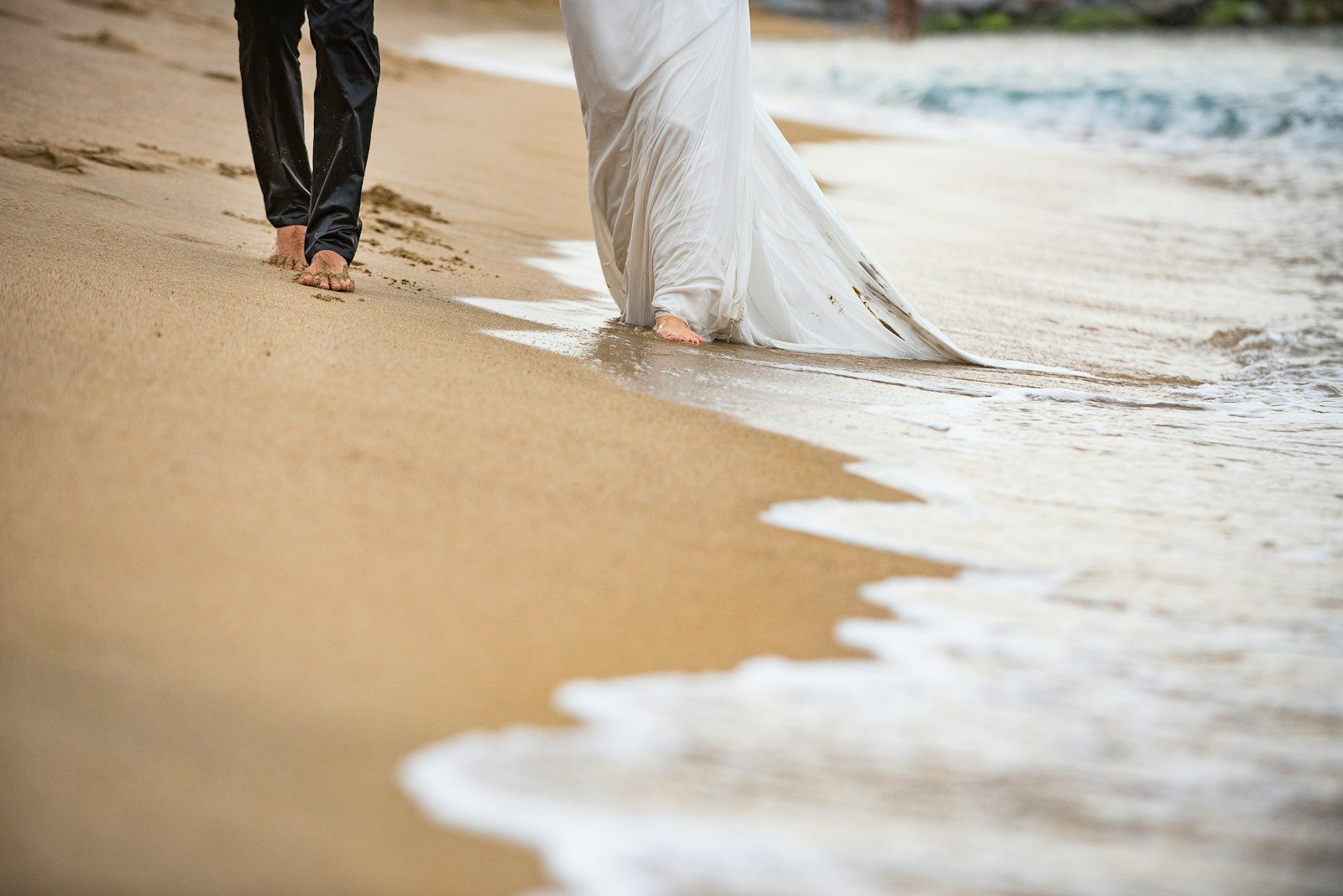
This deserves its own section because I watch people get this wrong constantly. If you’re the couple, go barefoot. That’s the whole point of choosing sand over a ballroom floor. But think about your guests before you assume everyone wants the full sensory experience.

The sugar-fine quartz sand of the Panhandle and much of the Gulf coast is soft enough that flat sandals or bare feet work fine, and it stays surprisingly cool underfoot even in July, since that pale, fine quartz doesn’t hold heat the way darker or coarser sand does. If you’re getting married on that sand, skip the heels entirely (and make shoes optional) and tell your guests in the invitation. A basket of cheap flip-flops at the ceremony entrance is a nice touch and a smart one, and it’s exactly the kind of detail a sponsor or local shoe shop loves to provide, so don’t be shy about asking a local business to donate a set.

On the Atlantic side, where the sand runs coarser with more shell and coquina content, and on shell-heavy beaches like Sanibel or the darker, fossil-rich sand at Venice, bare feet are still fine for the couple, but a woven aisle runner or a strip of decking over the sand keeps grandma’s cane and the flower girl’s Mary Janes from sinking or catching on a broken shell edge. Ask your venue or planner about this. Most of the resort properties I mention below have a boardwalk or a matting solution built into their packages already.


Venues and Services to Consider

You do not have to plan beach weddings in Florida on your own. Many venues and service providers specialize in full beach wedding packages.

Venue Types

Look for:

  • Beachfront resorts with ceremony and reception spaces
  • Private beach houses for intimate weddings
  • State park or public beach permits for simple ceremonies
  • Waterfront restaurants for receptions after the ceremony
  • Ocean-view hotels with planning teams on site

Helpful Services

The right services can make your wedding much easier to manage. Common vendors include:

  • Beach wedding planners
  • Officiants
  • Floral designers
  • Chair and arch rental companies
  • Photography and videography teams
  • Hair and makeup artists
  • Caterers and bartenders
  • Transportation services for guests

Many venues in Florida also offer package deals that include setup, cleanup, and coordination.
Now, the coasts. (Note, any prices are fees are as of 2026. Please check current pricing with the venues, city or park.


The Panhandle: Sugar-White Sand and Emerald Waters

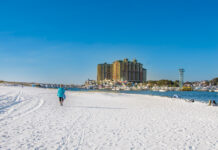
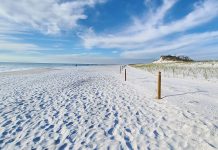
Florida’s Panhandle is known for some of the most picturesque beaches in the state. The water here often looks turquoise, and the sand is famously soft and white.

Best areas for beach weddings in Florida’s Panhandle include:

  • Destin – Popular for its sugar-white sand and upscale resorts
  • Pensacola Beach – A classic Gulf Coast destination with a laid-back vibe
  • 30A / Santa Rosa Beach – Ideal for stylish weddings near charming beach towns
  • Panama City Beach – Great for larger weddings and easy guest access

The Panhandle is a strong choice for couples who want a clean, elegant beach setting with a relaxed atmosphere.

This is where my walk started, at the Alabama line, and it’s where I still tell people to begin if sand is the whole point of the day. The Panhandle’s sand is quartz, ground down over millennia and washed south out of the Appalachian Mountains, and it is genuinely some of the whitest sand anywhere on the planet. It squeaks when you walk on it. It stays cool under bare feet even at high noon in August, which is not a small thing when you’re standing in a wedding dress. Locals call this stretch the Emerald Coast for the water color, but the sand is the real star, and I’d put most of it at a 9 or 9.5 out of 10 for barefoot comfort.

Perdido Key

Perdido Key doesn’t have the resort towers you’ll see thirty minutes east in Pensacola Beach, and that’s exactly its appeal. Most of it sits inside Gulf Islands National Seashore, so the dunes are tall, the beach is uncrowded, and the sand is the same sugar-fine quartz you’ll find all along this coast, ranking it a 9 out of 10 for barefoot comfort. Escambia County doesn’t run a dedicated wedding permit system here the way it does on Pensacola Beach proper, and small ceremonies at the public access points generally don’t need one. If you’re on the stretch inside the National Seashore, you’ll need a National Park Service Special Use Permit instead, which runs about $100 plus $50 a day. Because there aren’t big resort chains lining this beach, most weddings here happen through a vacation rental home or a small boutique property rather than a hotel ballroom. That’s a feature, not a limitation, if you want a quiet, small, unfussy ceremony.

Pensacola Beach

This is the flagship. Casino Beach and the strip around it have some of the whitest sand I’ve walked anywhere in the state, a 9.5 out of 10 for barefoot comfort, and the water shifts from clear to a genuine emerald green that photographs better than anything I can describe. The Santa Rosa Island Authority allows ceremonies anywhere along the eight miles of beach with no reservation required for the sand itself, though you do need to stay at least 30 feet from any beach access point and off the dunes entirely. No open flame, no glass, no wish lanterns, and tents larger than 10×12 feet need a separate permit from both the SRIA and Escambia County. There’s also a Leave No Trace ordinance that requires everything, chairs included, off the sand between sunset and sunrise, and a Barrier Island Lighting Ordinance that limits evening lighting to wildlife-friendly amber tones during turtle season, so plan a golden-hour ceremony rather than a late-night one. For venues, the Hilton Pensacola Beach is the big full-service option, with beach ceremony space and reception rooms that scale from 80 to 350 guests, plus a complimentary night in a suite for the couple. Portofino Island Resort sits at the quieter eastern tip of the island against the National Seashore, with both Gulf-front and Sound-side ceremony spots and a lower guest minimum, around 31, for couples who don’t want a massive production.

Quieter than Pensacola Beach and Destin, and locals like it that way. Same quartz sand, same emerald water, wider and less developed than its neighbors. Navarre Beach Marine Park is free and open to the public from dawn to dusk, with affordable pavilions you can rent as a rain backup, and it’s become one of the go-to spots for a no-fuss ceremony. Santa Rosa County handles permitting here, and it’s worth a call to their office to confirm current requirements since this beach has grown in popularity. If you want it handled for you, local planners like Navarre Beach Weddings run full-service packages. I’d rate this sand a 9 out of 10 for barefoot comfort, right up there with Pensacola Beach, just with a fraction of the crowd.

Destin

Here’s what almost nobody tells you before they fall in love with Destin photos online: the city itself only permits weddings at two small public parks, Crystal Beach Park and June White Decker Beach Park, and both cap out at 25 guests for $50. If you’re picturing a hundred-person wedding on the sand right in downtown Destin, that’s not happening through the city. Your real options are Henderson Beach State Park, which allows up to 250 guests on a reserved stretch for a permit starting around $600, or a private resort beachfront where the property itself handles permission. The sand here is the same sugar-white quartz, a 9 out of 10 for barefoot comfort, though the beach is narrower and busier than Navarre thanks to the sheer volume of visitors. For a beachfront package, The Henderson and Henderson Park Inn sit right against the state park and are popular for exactly this reason: you get the state park’s beach without navigating its permit process alone.

Miramar Beach & Sandestin

Technically Walton County, not Destin, and that distinction matters because Walton County has no stated guest maximum on its beach permits, unlike the City of Destin next door. Every wedding on a South Walton public beach access needs a Beach Wedding Permit from Walton County Beach Code Compliance regardless of size, with fees on a sliding scale: $150 for up to 30 guests, $250 for 31 to 50, $500 for 51 to 75, and $1,000 for anything larger. The sand is the same sugar quartz ranking a 9 out of 10 for barefoot comfort, though the beach narrows in front of the dense resort development compared to the open stretches further east. Hilton Sandestin Beach Golf Resort & Spa and Sandestin Golf and Beach Resort (home to Hotel Effie) are the anchor properties here, both with in-house wedding teams and multiple venue configurations from an intimate beachfront ceremony to a full resort takeover.

Grayton Beach, WaterColor & Seaside (30A West)

This stretch of Scenic Highway 30A is where the sand meets something you won’t find almost anywhere else on Earth: rare coastal dune lakes, freshwater bodies separated from the Gulf by nothing but a narrow spit of sand, that occasionally break through to the ocean during storms. WaterColor sits right against Western Lake, so you can choose a ceremony with the Gulf at your back or the lake, and either way the sugar sand underfoot is a solid 9 out of 10 for barefoot comfort. Seaside is the pastel-cottage town you’ve probably seen in a hundred engagement photo shoots, and the Seaside Chapel or the open-air Court at Seaside are beloved small-venue options if you want charm without a resort price tag. Walton County’s same tiered permit fees apply here, so budget accordingly if you’re on the public beach rather than a private venue.

Rosemary Beach, Alys Beach & Inlet Beach (30A East)

The eastern half of 30A trades Seaside’s cottage colors for European-inspired architecture, cobblestone streets in Rosemary Beach and the clean white walls of Alys Beach. The sand doesn’t change, still a 9 out of 10 for barefoot comfort, with sugar quartz, but the backdrop absolutely does, and it’s a different photographic mood entirely. The Pearl Hotel in Rosemary Beach is the standout property, with a rooftop terrace overlooking the Gulf and four distinct event spaces inside a boutique 55-room hotel. Alys Beach leans toward private vacation home rentals rather than big hotel inventory, which suits couples who want a more curated, design-forward wedding weekend. Inlet Beach, at the far eastern end, is quieter and less developed than either, with wide Gulf views and fewer crowds if you’re chasing a photo without a stranger’s beach umbrella in the frame.

Panama City Beach

Twenty-seven miles of beach, and a genuinely more relaxed permit system than its neighbors to the east. Under 40 guests, you just email the city’s beach wedding coordinator to get approved. Between 41 and 100 guests, it’s a condensed application with a $50 fee. Over 100, you’ll need a full special events application. Bay County itself requires a permit for 50 or more people at any public access point outside the incorporated city. The sand runs a strong 8.5 to 9 out of 10 for barefoot comfort, sugar-white and soft, though the beach sees more spring break and tourist traffic than the quieter 30A stretch just west of it, so a weekday or off-season date will serve you better here than almost anywhere else on this coast. Local packages from companies like Panama City Beach Weddings range from an $850 elopement to a $2,650 full-service ceremony, and MB Miller County Pier is consistently the most requested public ceremony spot for its central location and pier backdrop.

Cape San Blas & Port St. Joe

This is the Panhandle most visitors skip, and I think that’s a mistake if you want a wedding that actually feels remote. Neither Gulf County nor the City of Port St. Joe currently requires a permit or license to marry on the beach, which is almost unheard of this close to the more developed stretches to the west. The sand is the same quartz base, ranking a 9 out of 10 for barefoot comfort, but the beach itself feels wilder, backed by tall dunes and very little high-rise development. SunScape & SeaScape is a beachfront vacation home venue that hosts up to 75 guests directly on South Cape San Blas, and several other private rental compounds in the area do the same. If you want a beach wedding that photographs like nobody else was there, this is it.

St. George Island & the Forgotten Coast

Franklin County, appropriately nicknamed the Forgotten Coast, currently requires no permit for a beach wedding on St. George Island, though locals will tell you the county has discussed adding one, so call ahead as your date approaches. The Gulf side gives you the same sugar-fine sand, a solid 9 out of 10 for barefoot comfort, with a real chance of dolphins showing up mid-ceremony. The bay side offers a completely different, marshier setting if you’d rather trade sand for tidal grass and quieter water. St. George Island State Park is the most requested spot, and The Lodge at Rivercrest in nearby Apalachicola handles the Old Florida elegance angle if you want a reception venue with wraparound porches instead of a resort ballroom.


The West Coast: Powder Sand, Sunset Ceremonies, and a Little Bit of Everything

Florida’s West Coast runs along the Gulf of Mexico and is known for calm water, beautiful sunsets, and polished wedding venues. This region includes famous beach destinations with excellent resort options and strong vendor networks.

Popular West Coast wedding spots include:

  • Naples – Upscale and romantic, with luxury hotels and pristine beaches
  • Sarasota – A refined coastal city with beautiful Gulf beaches
  • Clearwater Beach – Bright, lively, and great for destination weddings
  • St. Pete Beach – Offers a mix of classic beach charm and resort convenience
  • Fort Myers Beach – Casual and scenic, with plenty of waterfront options

This coast is especially appealing for couples who want easy planning with resort amenities and gorgeous evening ceremonies.

South of the Panhandle, the sand stays largely quartz-based through the Sarasota area, but it’s not uniform the way the Emerald Coast is. Siesta Key is famously 99 percent pure quartz. Venice, less than an hour south, has dark, mineral-rich sand from fossil deposits that make it the shark tooth capital of the country. Sanibel trades soft sand for the best shelling in the state. This coast rewards you for knowing the differences before you pick a spot, and every beach here faces west, so if a sunset ceremony matters to you, you’re in the right region.

Clearwater Beach

Wide, powdery white sand that stays cool underfoot, a solid 8.5 out of 10 for barefoot comfort, and one of the most visited beaches in the state, which means you’ll want an early or off-peak time slot if crowds bother you. Pinellas County requires a Park Use Permit for any organized event here regardless of
size, one of the stricter counties on this list, with fees between $50 and $200 and a lead time of at least ten business days, though four to six weeks is smarter during peak season. Sandpearl
Resort
is the standout beachfront property, with 25,000 square feet of event space and a beach split into a smaller South Beach ceremony area and a larger North Beach option for bigger guest counts. Wyndham Grand Clearwater Beach overlooks Pier 60 and scales from intimate to
a 400-guest reception, and JW Marriott Clearwater Beach and Hilton Clearwater Beach round out the big-resort options.

St. Pete Beach & Pass-a-Grille

Two very different personalities on the same barrier island. The northern stretch, anchored by the pink towers of the Don CeSar, is lively and resort-heavy. Pass-a-Grille, at the southern tip, has no high-rises at all, just a historic village feel and some of the quietest sand on this whole coast. The sand itself ranks an 8.5 out of 10 for barefoot comfort, sugar-white and soft. St. Pete Beach requires a permit for a Pass-a-Grille ceremony, somewhere between $200 and $350 depending on residency, and alcohol isn’t allowed on that stretch of sand, so plan your toast for the reception instead. TradeWinds Island Resorts can handle up to 700 guests if you want the opposite of intimate, while the Don CeSar itself remains the most requested ceremony backdrop on the island even for couples getting married elsewhere on the beach, purely because it’s that recognizable in every photo.

Treasure Island & Madeira Beach

The quieter middle ground between St. Pete Beach and Clearwater, with the same fine white sand, an 8 out of 10 for barefoot comfort, and noticeably fewer crowds than either neighbor. Both cities require a Small Gathering Permit for a beach wedding or similar event, and Madeira Beach’s application process is a good template for what to expect: straightforward, inexpensive, and handled directly through the city rather than the county. This stretch is underused for weddings relative to how nice the sand actually is, which, selfishly, is exactly why I like recommending it.

Anna Maria Island & Coquina Beach

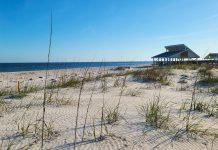
This is old Florida in the best sense. No high-rises, tall pine trees lining the dunes instead of condo towers, and native sea oats holding the sand in place the way nature intended. The sand itself is soft and white, ranking an 8.5 out of 10 for barefoot comfort, and Manatee County or the Town of Anna Maria (depending on the exact access point) requires a Special Event Permit for gatherings of 10 or more, generally $50 to $100, with no staked structures allowed and limited vehicle access, so plan for your vendors to carry equipment in. Sand Petal Weddings runs two long-standing all-inclusive packages here, one with a wood-floor pavilion reception and one with a more rustic sand-floor setup, and both lean into the old-Florida character rather than fighting it.

Longboat Key & Lido Key

Longboat Key is quiet and largely residential, the kind of beach where you won’t have an audience of strangers during your vows. Lido Key sits a few minutes from St. Armands Circle, so you get upscale shopping and dining within walking distance of the sand. Both fall under Sarasota County, where a Special Event Permit is required for 25 or more guests, with smaller ceremonies technically exempt from a formal permit though you still can’t block public access or bring amplified sound without a separate variance. The sand on both keys is soft and light, ranking an 8 out of 10 for barefoot comfort. The Resort at Longboat Key Club anchors the private end of the spectrum, while Sand Petal’s Florida Aquarium package on Lido Key is a genuinely unusual option if your guests would rather toast next to a shark tank than a ballroom chandelier.

Siesta Key

If you’ve heard of one Gulf coast beach for its sand specifically, it’s this one. Siesta Key has been ranked the number one beach in the country more than once, and the sand is 99 percent pure quartz, powder-fine, and genuinely cool to the touch even at the height of a Florida summer. This is a 10 out of 10 for barefoot comfort, no hedging. Sarasota County’s rules mirror Longboat and Lido: a permit is required for 25 or more attendees, and Siesta Key Public Beach’s Zone 1 is the most commonly used and most straightforward public spot, with a rentable pavilion and easy parking. Every local planner from Dream Beach Weddings to Platinum Beach Weddings runs Siesta Key packages, because it’s simply the beach couples ask for by name.

Venice Beach

Now for the beach that breaks the pattern. Venice is known as the Shark Tooth Capital of the World, and the sand here is genuinely different from everywhere else on this list: darker, coarser, full of tiny fossils and mineral content instead of the pale quartz powder further north. I’d rank it at a 6 out of 10 for barefoot comfort, but a 10 for personality, because your guests can hunt fossilized shark teeth before and after the ceremony, which is a better icebreaker than anything a wedding planner could invent. Sarasota County permits apply here too, running around $52 an hour, and locations near Sharky’s on the Pier and the Maxine Barritt pavilion are the most requested. If you want the classic soft sand experience instead, ask your planner. There are pockets of Venice Beach with finer sand than the main shark-tooth stretches, and a good local coordinator knows exactly where they are.

Sanibel & Captiva Islands

Famous for shelling, not for silky sand, and I want to be honest about that trade-off. The sand on Sanibel and Captiva runs coarser than the Gulf beaches to the north, closer to a 6.5 out of 10 for barefoot comfort, because the islands’ unusual east-west orientation catches an enormous volume of shells against the shore. That’s precisely why people love it here. If your wedding party wants to spend the rehearsal day shelling, know that the move locals call the “Sanibel Stoop” (bend at the knees, not the waist, and you’ll save your back) doubles as a free leg workout, so tell your bridal party they’ve earned dessert. Lee County uses a tiered permit system: a Small Gathering Permit under 50 guests runs $25 to $75 with a five to seven day turnaround, while a Special Event Permit for 50 or more takes 30 to 45 days and costs $75 to $250. Sanibel enforces strict noise ordinances, so amplified music after sunset is unlikely to get approved. ‘ Tween Waters Island Resort & Spa on Captiva has hosted weddings for more than 80 years, and South Seas Resort and Sundial Beach Resort & Spa round out the island’s main venue options.

Fort Myers Beach

A more casual, value-friendly alternative to Naples and Sanibel, with soft white sand ranking around an 8 out of 10 for barefoot comfort. The area is still working through its post-Hurricane Ian recovery in places, so confirm current beach access with Lee County before you lock in a public beach location, though most of the resort properties have rebuilt and reopened. Pink Shell Beach Resort & Marina and DiamondHead Beach Resort are the most established wedding venues here, both directly on the sand with in-house planning support.

Naples & Marco Island

The most polished sand on this entire coast, fine and pale and genuinely a 9 out of 10 for barefoot comfort, kept immaculately maintained along a beach lined with some of the state’s most upscale resorts. Collier County requires a Beach Events Permit for 10 or more attendees or any setup involving chairs or décor, generally $100 to $200 with four to eight weeks lead time, and liability insurance of at least $500,000 for events over 50 guests. The Ritz-Carlton Naples and its sister property the Ritz-Carlton Golf Resort both handle everything from a beachfront elopement to a 500-guest reception. LaPlaya Beach & Golf Resort sits directly between the Gulf and Vanderbilt Bay with over 12,000 square feet of event space, and on Marco Island, the JW Marriott Marco Island Beach Resort is the area’s largest full-service option.


The East Coast: Ocean Views, Sunrise Ceremonies, and Vibrant Energy

Florida’s East Coast brings Atlantic Ocean views, lively cities, and a wide mix of beach wedding experiences. The waves are often more dramatic here, and many couples love the energetic feel.

Top East Coast spots include:

  • Key Biscayne – A beautiful, quieter option near Miami
  • Miami Beach – Stylish and modern, with luxury hotels and city access
  • Delray Beach – Charming, walkable, and ideal for smaller weddings
  • Vero Beach – A peaceful, upscale location for elegant ceremonies
  • Daytona Beach – Best known for broad beaches and convenience

If you want a beach wedding with a mix of city excitement and ocean scenery, the East Coast delivers.

The Atlantic side is a genuinely different beach experience, and I want you to know that going in rather than being surprised by it. The sand here tends to run coarser and tan-gold rather than white, with more shell and coquina content mixed in, and in places like Daytona it’s famously firm, packed hard enough that cars used to race on it. That firmness is actually a gift for a wedding: heels don’t sink the way they do in Panhandle powder. And because this coast faces east, sunrise ceremonies are genuinely on the table here in a way they simply aren’t on the Gulf side.

Amelia Island & Fernandina Beach

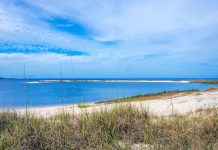
Golden, dune-lined sand backed by sea oats and the kind of driftwood you’ll want in your photos without even trying to stage it. Nassau County requires no permit for a beach wedding, full stop, and the beaches are public with more than 40 access points to choose from. This is a genuinely relaxed 8 out of 10 for barefoot comfort, softer than most Atlantic beaches thanks to the barrier island’s geology. The Ritz-Carlton, Amelia Island sits directly on the dunes with an oceanfront lawn built for exactly this kind of ceremony, and the Omni Amelia Island Resort offers seven distinct event spaces including a marsh-side sunset deck if you want the Intracoastal view instead of the open Atlantic.

Jacksonville Beach, Atlantic Beach & Neptune Beach

Firm, wide, golden-tan sand that ranks a 7.5 out of 10 for barefoot comfort, with a longstanding surf culture that gives this stretch a different energy than the resort towns further south. One Ocean Resort and Spa in Atlantic Beach is the area’s most established oceanfront venue, with a private beach ceremony space and a boutique feel rather than a mega-resort one. Duval County beaches generally follow the same pattern as their neighbors: small, unstructured ceremonies typically don’t need a permit, but anything with chairs, an arch, or a vendor setup should be cleared with the specific beach city (Jacksonville Beach, Atlantic Beach, and Neptune Beach each run their own parks departments) well ahead of your date.

St. Augustine Beach

One of the more heavily regulated beaches on this list, and worth planning around carefully. St. Johns County requires a special-event permit for every beach ceremony regardless of guest count, $100 for up to 200 people or $200 for larger events, plus a $1,000,000 liability insurance certificate submitted at least 14 days out. During sea turtle nesting season, May through October, equipment can’t be set up before 8 a.m. or left past 7:30 p.m. Anastasia State Park and the Town of St. Augustine Beach each run separate permitting on top of the county’s, so confirm which jurisdiction your exact spot falls under. All that paperwork aside, the sand itself is a genuine 8 out of 10 for barefoot comfort, golden and fine, and Anastasia State Park in particular bans driving on its beach, which keeps the setting quieter than the drive-on sections further north. Casa Monica Resort & Spa downtown handles the reception side beautifully if you want Moorish-Spanish architecture as your ballroom backdrop, and Embassy Suites St. Augustine Beach offers direct beach access for couples who want ceremony and reception under one roof.

Daytona Beach & New Smyrna Beach

The most famously firm sand in the state, hard-packed enough that it once hosted actual car races, which makes it an unexpectedly practical choice if you have older guests or anyone in dress shoes who doesn’t want to fight soft sand all afternoon. I’d rank it a 7 out of 10 for barefoot comfort, but an 8.5 for sheer usability. Volusia County doesn’t require a permit for groups under 50; above that, you’ll need one plus event insurance. New Smyrna Beach mirrors that rule almost exactly, no permit needed for 50 or fewer guests, though a courtesy call to Beach Patrol is appreciated. Twenty-three miles of open shoreline means you’ll rarely struggle to find space, even during a busy weekend. Hilton Daytona Beach Oceanfront Resort and The Shores Resort & Spa in Daytona Beach Shores are the two most requested full-service properties.

Cocoa Beach & the Space Coast

Golden, moderately coarse sand, rank a solid 7.5 out of 10 for barefoot comfort, with one genuinely unique local wrinkle: Kennedy Space Center launches can affect beach access and parking, so if you’re planning a spring or fall date, check the launch schedule before you finalize your timeline. Otherwise, Brevard County’s rules are fairly approachable, a permit needed for 25 or more guests or any real setup, generally $25 to $100 for a smaller ceremony, with sound restrictions kicking in after 9 p.m. Hilton Cocoa Beach Oceanfront and the neighboring Hilton Garden Inn Cocoa Beach Oceanfront both offer direct beach ceremony access with a covered indoor backup, which matters more here than almost anywhere given how quickly a Florida afternoon storm can roll in off the water.

Vero Beach

Quieter and more upscale than the Space Coast just to its north, with a long-standing local pride in keeping high-rises off the immediate beachfront, which keeps the sand feeling more open than the density further south. I’d rank it around a 7.5 out of 10 for barefoot comfort. Costa d’Este Beach Resort & Spa, owned by Gloria and Emilio Estefan, is the area’s signature venue, with an oceanfront suite and custom cake included in its all-inclusive package. Disney’s Vero Beach Resort offers a genuinely sweet, smaller-scale option with packages starting around an intimate ten-guest ceremony, and Kimpton Vero Beach Hotel & Spa rounds out the boutique end of the spectrum. Indian River County doesn’t publish a heavily detailed beach wedding permit process the way St. Johns or Sarasota does, so a direct call to the county parks office is your best move here to confirm current requirements for your specific guest count.

Jupiter & Juno Beach

Golden sand backed by sea grape trees and real sand dunes rather than manicured landscaping, and this stretch of Palm Beach County takes sea turtle nesting seriously, since Juno Beach has one of the highest nesting densities in the country. The sand itself ranks a 7.5 out of 10 for barefoot comfort,, and Jupiter Beach Resort & Spa has the largest private beachfront in Palm Beach County at roughly 1,000 feet, with a ceremony spot tucked into the sand dunes under the shade of sea grapes that I think is one of the prettier settings on this whole coast. Palm Beach County beaches generally require a permit for any organized ceremony involving chairs or vendor setup, and given how seriously this stretch protects nesting turtles, expect extra attention to lighting rules if your date falls between May and October.

Palm Beach & West Palm Beach

This is Florida wedding luxury at its most concentrated. The sand itself is a manicured 7 out of 10, coarser than the Gulf coast but kept immaculate along some of the most photographed shoreline in the country. The Breakers Palm Beach is the anchor property, with an oceanfront lawn ceremony option and reception space that scales from an intimate 50-guest gathering to a 500-person ballroom event, and a guest list history that includes more than a few recognizable names. Eau Palm Beach Resort and Four Seasons Resort Palm Beach round out the top tier, both offering infinity pools and grand ballrooms alongside their beach ceremony spaces. Expect this coast’s pricing to run well above the state average, and expect the permit and insurance process to be handled largely by the resort itself if you book through one of them.

Fort Lauderdale

Wide, renourished, golden-tan sand along a lively beachfront promenade, a solid 7 out of 10 for barefoot comfort. Fort Lauderdale Beach itself doesn’t require a permit for a beach wedding, one of the more relaxed rules on this entire coast. Fort Lauderdale Marriott Harbor Beach Resort & Spa, Pelican Grand Beach Resort, and B Ocean Resort are the established full-service options, all directly on the sand with experienced wedding teams.

Hollywood Beach & Pompano Beach

Just south of Fort Lauderdale, and a little different in character. Hollywood Beach is anchored by its famous Broadwalk, a two-and-a-half mile paved path that gives this beach a genuinely lively, family-friendly energy, and it does require a permit, starting around $260. Pompano Beach requires one too, around $150, with a location near the historic Hillsboro Lighthouse being especially popular for the backdrop alone. The sand on both ranks a 7 out of 10 for barefoot comfort, golden and firm. Margaritaville Hollywood Beach Resort and the Hollywood Beach Marriott are the go-to oceanfront properties if you want ceremony and reception in one place.

Miami Beach

The most iconic sand in the state, even if it’s not the softest, an honest 6.5 out of 10 for barefoot comfort, feel since much of it has been renourished over the decades, but a 10 for sheer photographic energy with the Art Deco skyline behind you. Miami-Dade County and the City of Miami Beach both require a permit for any organized beach ceremony, particularly if you want chairs or decor on the sand, so build that into your timeline early. Given the hurricane season running June through November, I’d steer most couples toward a December through May date here, and always have a covered indoor backup, since South Florida’s summer storms move in fast and don’t care about your seating chart. The Art Deco district hotels along Collins Avenue offer everything from vintage boutique charm to full luxury resort service, so this is a coast where your reception venue can say almost anything about your style you want it to.


Final Tips for a Smooth Beach Wedding

To keep your day stress-free, plan early and stay flexible. Beach weddings are naturally beautiful, so you usually do not need heavy décor. Focus on comfort, timing, and a layout that works with the sand and weather.

A few final tips:

  • Book early during peak wedding season
  • Confirm permit requirements well in advance
  • Choose attire that works in warm, breezy conditions
  • Have a backup plan for rain
  • Schedule photos around sunset for the best light

What the Sand Actually Teaches You

Here’s the thing I keep coming back to after all these miles. A footprint in the sand doesn’t last. The tide erases it within hours, sometimes minutes, and somehow that never stops people from choosing sand as the ground they want to stand on when they promise each other forever. I think that’s the whole point, actually. A marriage isn’t a permanent state you arrive at and then just occupy. It’s something you keep making, one day at a time, the same way the tide keeps remaking the beach every single night whether anyone’s watching or not.

I’ve walked past more strangers’ weddings than I could count on this coastline, some of them barefoot in sugar sand up in the Panhandle, some of them standing on Venice’s dark, fossil-flecked shore with a metal detector still in someone’s back pocket from the morning’s shark tooth hunt. None of them had a perfect day. The wind always does something to somebody’s hair. A gull always shows up in at least one photo looking unreasonably pleased with itself. And every single one of those couples looked, in that moment, like the sand under their feet was exactly where they were supposed to be standing.

So which beach is right for you? I’ve given you the sand ratings, the permit fees, the resorts with the experienced coordinators who’ve done this a thousand times. But the honest answer is the same one I’d give you about most things in life: the beach that’s right is usually the one that already feels like yours before you’ve even looked at the checklist.

What does the sand under your feet actually need to feel like on the one day you’ll remember it for the rest of your life?