




My mother pulled me out of the surf so fast once, over a Portuguese man o’ war drifting toward me, that I didn’t even have time to be scared before I was already back on dry sand. I was a kid and I didn’t understand yet what I’d almost brushed against, only that whatever it was mattered enough for my mother to move faster than I’d ever seen her move. Jellyfish and their strange, drifting relatives have carried that same mix of beauty and real caution for me ever since, and researching this piece finally gave me the whole picture behind that one fast, protective memory.
Jellyfish and other drifters are some of the ocean’s most fascinating creatures. They move without urgency, carried by currents, tides, and winds. Unlike fish that actively swim to stay in one place, these animals depend on the sea itself to transport them. Their drifting lifestyle makes them both widespread and mysterious.
What Makes Them So Unique
Jellyfish and other drifters are adapted to life in motion. Their bodies are usually lightweight, soft, and built for energy efficiency. Instead of fighting the current, they move with it.
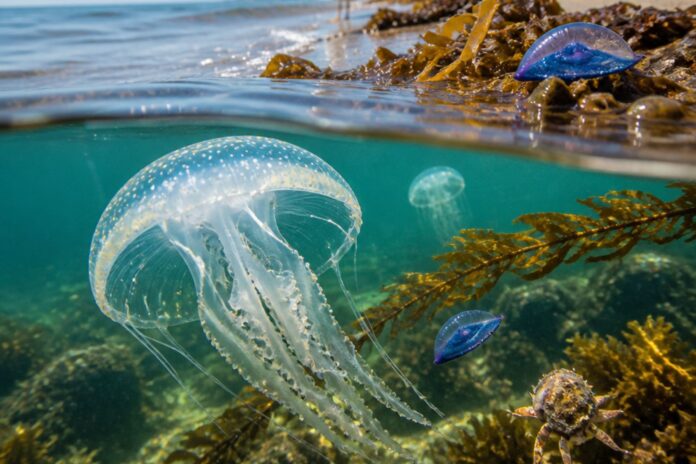
Jellyfish, for example, have simple body structures. They do not have bones, brains, or complex organs like many other animals. Yet they are remarkably successful. Their bell-shaped bodies pulse gently through the water, and their tentacles help them catch tiny prey.
Other drifters are equally unusual.
A few notable types include:
- Jellyfish: Known for their gelatinous bells and stinging tentacles.
- Comb jellies: Shimmering animals that move with rows of beating cilia.
- Salps: Barrel-shaped planktonic animals that drift in chains.
- Siphonophores: Colonial organisms that function as a single floating unit.
Many of these creatures play important roles in the marine food web. They feed on plankton and are eaten by turtles, fish, seabirds, and other marine predators.
Where Jellyfish and Other Drifters Live
Jellyfish and other drifters are found in oceans around the world, from tropical seas to polar waters. Some species prefer warm, shallow coastal areas, while others live far offshore in the open ocean. Many drift near the surface, where sunlight and plankton are more abundant, but some can also be found at great depths.
Common habitats include:
- Coastal waters: Bays, estuaries, and shorelines often support dense blooms.
- Open ocean: Many drifters live in the vast pelagic zone.
- Temperate seas: Seasonal blooms are common in spring and summer.
- Tropical waters: Warm currents support year-round populations.
- Polar regions: Cold-water species thrive in Arctic and Antarctic seas.
Because they are carried by currents, their range can change quickly. A jellyfish bloom may appear along one coastline one year and vanish the next. Ocean temperature, food availability, and wind patterns all influence where these animals gather.
Why They Wash Up on Shorelines and Sand
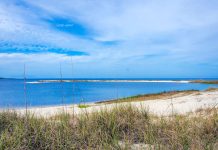
One of the most familiar encounters with jellyfish and other drifters happens on the beach. After storms, strong winds, or shifts in current, many of these animals are pushed ashore. Once stranded on sand or pebbles, they may dry out quickly or break apart.
Beachgoers often see them after rough weather, especially in summer and fall when blooms are more common in many regions. Some wash ashore intact, while others arrive as translucent fragments or colorful remains.
The most common reasons they end up on beaches:
- Strong tides and currents
- Storm surges and high winds
- Changes in water temperature
- Natural die-offs after blooms
- Shallow coastal trapping by retreating tides
Shorelines can act like natural collection zones. A curved bay, sandbar, or inlet may trap drifting creatures as water moves in and out. This is why one beach may be covered in jellyfish while another nearby remains clear.
What Shorelines and Sand Tell Us
The sand and shoreline where these creatures wash up can reveal a lot about local ocean conditions. A beach full of jellyfish may signal a recent bloom offshore. A line of stranded salps or comb jellies may show the path of a current or wind-driven surface flow.
Different shore types collect drifters differently:
Sandy beaches
Sandy shorelines often catch and hold soft-bodied organisms. Their broad, gently sloping surfaces make them common landing places.
Rocky coasts
Rocky shores may break up stranded creatures quickly, leaving only fragments behind.
Estuaries and bays
These sheltered areas can trap drifters as water circulates within them.
Barrier islands
Currents around these features can create concentrated wash-up zones.
For scientists, these wash-ups are useful clues. They can help track bloom patterns, migration, ocean health, and even changes in climate.
Meet the Family
Jellyfish and other drifters, refers to a broad group of floating or weakly swimming marine life that includes jellyfish, salps, siphonophores, comb jellies, and similar planktonic organisms. They inhabit nearly every ocean on Earth and often end up washed onto beaches, where their strange shapes capture attention.
Most of what people call jellyfish belong to the phylum Cnidaria, within a group called Medusozoa that includes true jellyfish, box jellyfish, and a huge range of smaller relatives. Nearly every species in this family carries nematocysts, microscopic stinging cells loaded like tiny harpoons, triggered by touch and used both to capture prey and to defend against anything careless enough to brush against them, human skin included. Most true jellyfish also cycle through two completely different body forms in one lifetime: a tiny, plant like polyp stage anchored to a hard surface, and the free floating, bell shaped medusa stage most people actually picture when they hear the word jellyfish. Not everything drifting past you in warm water is even in this phylum at all, and untangling which is which turns out to be one of the more genuinely useful things you can learn before your next beach trip.
Jump to a drifter:
- Moon jellyfish — coastal waters worldwide
- Box jellyfish — tropical Indo-Pacific waters, especially northern Australia
- Portuguese man o’ war — warm ocean surfaces worldwide
- Lion’s mane jellyfish — cold northern oceans
- Upside-down jellyfish — warm mangrove lagoons and bays worldwide
- Comb jelly — every ocean on Earth
Moon Jellyfish
Aurelia species are the jellyfish most people picture first, a pale, translucent bell often marked with four visible horseshoe shaped rings, drifting nearly worldwide in coastal water. Its sting is mild, barely noticeable to most people, and it feeds mostly on plankton, small fish, and tiny crustaceans strained passively from the water as it pulses along.
A moon jelly’s relationship with sand is almost entirely one directional. Its tiny polyp stage settles onto hard structure, rocks, pilings, docks, shells, never sand itself, and grows there for months or years, periodically budding off new juvenile medusae. Once that medusa is released and grows into the drifting adult everyone recognizes, it spends the rest of its life in open water, only ever touching sand at the very end, stranded and dying after a storm or a shift in current pushes it ashore, which is exactly why a beach covered in moon jellies after a rough night usually means nothing more than wind direction, not any actual danger still in the water.
Box Jellyfish
Box jellyfish, class Cubozoa, are named for their distinctly cube shaped bell, and they include the single most dangerous jellyfish on Earth. Chironex fleckeri, found along Australia’s northern coast and through parts of Southeast Asia, carries venom potent enough to cause cardiac arrest within minutes in a severe sting, and unlike most jellyfish, box jellies have genuine eyes, up to twenty four of them clustered in structures around the bell, giving them the ability to actively navigate and hunt rather than simply drift with the current.
Box jellyfish hunt over shallow, tropical, often sandy nearshore water, particularly near river mouths after monsoon rains flush freshwater and prey out to sea, which is exactly why beach closures in northern Australia cluster around the same rainy season every year. Their polyp stage still follows the usual family pattern, settling onto hard submerged structure rather than sand, but the hunting adult spends real time patrolling directly over sandy shallows most swimmers would otherwise consider perfectly inviting.
Portuguese Man o’ War
Here’s a piece of myth busting worth knowing before anything else about this animal: the Portuguese man o’ war is not a jellyfish at all. It’s a siphonophore, a colony of specialized, genetically identical organisms called zooids, each doing one specific job, floating, feeding, stinging, or reproducing, that function together as a single creature. Its trademark gas filled float sits entirely above the water’s surface, catching wind like a sail, while tentacles trailing beneath can stretch dozens of feet, delivering a sting that’s genuinely more painful than nearly any true jellyfish most people will ever encounter.
Of every animal in this entire wildlife series, the man o’ war may have the single most posthumous relationship with sand of all. It has no polyp stage attached to any surface at all, its entire life is spent drifting on the open ocean’s surface, at the mercy of wind and current with no ability to swim against either. The only time this animal ever touches sand is after death or near death, washed ashore deflated and stranded, tentacles still capable of delivering a real sting for hours or even days afterward. It never once, in its entire life, chooses to be anywhere near a beach. The beach simply happens to it, eventually, whether it wants to be there or not.
Lion’s Mane Jellyfish
Cyanea capillata is the largest jellyfish species on Earth, with a bell that can exceed three feet across and tentacles trailing well over a hundred feet in the largest recorded individuals, longer than a blue whale. It lives in cold, northern waters, the North Atlantic and North Pacific especially, and its sting, while rarely dangerous to a healthy adult, can be genuinely painful and long lasting given how much venom that much tentacle length carries.
Like most true jellyfish, its polyp anchors to hard underwater surfaces in cold coastal shallows, never sand, and the adult medusa spends its life drifting through open, often quite deep water far from any beach at all. Mass strandings do happen after storms push large populations ashore all at once, occasionally covering considerable stretches of cold water coastline in tentacled, gelatinous bells, but that’s always the ending of this animal’s story, never any part of how it actually lives.
Upside-Down Jellyfish
Genus Cassiopea breaks nearly every rule the rest of this family follows, and it’s the one true sand and mud dweller in this entire article. Rather than drifting through open water, an upside-down jellyfish spends its adult life lying bell down directly on the seafloor, frilly, flower like oral arms fanned upward toward sunlight, hosting the same kind of photosynthetic algae, called zooxanthellae, that powers a coral or a giant clam. When disturbed, it releases a cloud of stinging mucus filled with tiny structures called cassiosomes, which is very likely the real explanation behind decades of swimmers reporting a mysterious “stinging water” sensation in mangrove lagoons with no visible jellyfish anywhere nearby.
This species needs exactly what a sandy or muddy, shallow, sun warmed lagoon or mangrove basin provides: a stable bottom to rest on, calm water, and direct sunlight reaching all the way to the seafloor for its algae to keep producing food. Large colonies can carpet the bottom of a quiet backwater cove so thickly the entire sediment surface appears to pulse gently, a genuinely strange sight the first time you look down and realize the seafloor itself is alive and breathing.
Comb Jelly
Comb jellies belong to an entirely separate phylum, Ctenophora, not Cnidaria at all, and despite the gelatinous, translucent resemblance, they carry no stinging cells whatsoever. Instead, they capture prey using sticky cells called colloblasts and move using eight rows of tiny, hair like cilia that beat in shimmering, rippling waves, refracting light into a genuinely mesmerizing rainbow shimmer that has nothing to do with actual bioluminescence, though many comb jelly species also glow with true bioluminescent light of their own when disturbed in dark water.
Comb jellies are pure open water drifters their entire lives, with no polyp stage and no relationship with sand of any kind, and they’re so delicate, often over ninety five percent water, that a stranded comb jelly rarely survives even a few minutes on dry sand before collapsing into a nearly invisible smear, leaving almost no trace behind at all. Of every animal in this whole series, it may be the one that leaves the least evidence it was ever there.
The Whole Drifting, Cycling Life
Most true jellyfish spend far more of their actual lifespan as a tiny, easily overlooked polyp than as the dramatic medusa everyone notices, sometimes years as a polyp compared to mere months as an adult jellyfish. One species takes that flexibility to a genuinely remarkable extreme: Turritopsis dohrnii, the so called immortal jellyfish, can respond to injury, starvation, or sudden stress by reverting its adult medusa body directly back into the polyp stage, essentially restarting its own life cycle rather than dying, a trick no other known animal on Earth can fully replicate. It isn’t invincible, plenty are still eaten or fail to trigger the reversal in time, but the capability itself remains one of the strangest, most genuinely useful discoveries in aging research to come out of this entire family.
Rules Wherever You Go
Never touch a jellyfish, alive or stranded, since detached tentacles and even the deflated float of a man o’ war can still deliver a real sting long after the animal itself is dead. If you’re stung by a true jellyfish, rinse the area with vinegar to deactivate any remaining stinging cells; if you’re stung by a Portuguese man o’ war, use hot water instead, since vinegar can actually trigger a man o’ war’s cells to fire further. Seek medical attention immediately for any sting involving difficulty breathing, chest pain, or a reaction covering a large area of the body, and always heed posted beach flag warnings rather than judging risk yourself from the shore.
How to Observe Them Safely
Jellyfish and many other drifters can be beautiful, but they should always be treated with caution. Even washed-up jellyfish may still sting. Some species remain dangerous after death, and tentacles can trigger painful reactions.
If you find them on the beach:
- Do not touch them with bare hands.
- Keep pets and children away.
- Rinse affected skin with seawater, not fresh water, if stung.
- Follow local beach safety advice.
Observing from a distance is the safest and best way to appreciate them. Their delicate forms, colors, and patterns are a reminder of how alive the shoreline can be.
Who’s Protecting Them
Jellyfish and their relatives face far fewer dedicated conservation programs than most animals in this series, largely because most species remain abundant, and in some warming, overfished waters, are actually increasing rather than declining. Where research does concentrate is on the family’s biology and its risk to people: Australia’s Surf Life Saving organizations run active box jellyfish monitoring and public safety programs along the country’s northern coast, and researchers studying Turritopsis dohrnii‘s reversal ability, including teams at Texas A&M University at Galveston, continue working to understand what that process might eventually teach us about human aging and regeneration.
Curiosity Corner
Is a Portuguese man o’ war really not a jellyfish?
Correct, it’s a siphonophore, a colony of specialized organisms working together rather than a single jellyfish, though its sting is genuinely more painful than most true jellyfish.
Why does vinegar help with a jellyfish sting but not a man o’ war sting?
Vinegar deactivates the stinging cells of true jellyfish, but it can actually cause a man o’ war’s cells to fire even more venom, which is why hot water is the recommended treatment for that species specifically.
Can a jellyfish sting you after it’s already dead?
Yes, genuinely, for hours or even days in some species. Stinging cells can remain active on a stranded tentacle long after the rest of the animal has died, which is exactly why you should never touch one on the beach.
What makes the upside-down jellyfish so different from other jellyfish?
It rests on the seafloor rather than drifting through open water, farming sunlight through symbiotic algae the way a coral or giant clam does, rather than relying purely on hunting or filter feeding.
Is the immortal jellyfish actually impossible to kill?
No. It can still be eaten by a predator or fail to complete its reversal process in time. What’s remarkable is that it doesn’t die of old age the way virtually every other animal does.
A Drift Through the Ocean
Jellyfish and other drifters are more than beach curiosities. They are essential parts of marine ecosystems, found in waters all over the world. They live in oceans, coasts, bays, and deep sea currents, always moving with the rhythm of the sea.
When they wash up on shorelines and sand, they leave behind evidence of the hidden motion beneath the waves. Their presence tells a story of tides, seasons, and the living ocean itself.
