


Indian Rocks Beach, Indian Shores, and Belleair Beach, Florida
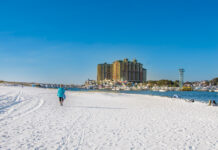
This is the most residential stretch of beach in Pinellas County, and that is exactly the point. Indian Rocks Beach, Indian Shores, and Belleair Beach make up about five miles of Gulf shoreline on the central Suncoast where the vacation cottage and the single-family home outnumber the resort hotel by a wide margin, the sand runs the same white quartz as everything else in this county, and the crowd is simply nowhere near what you find twenty minutes north at Clearwater Beach.
These three small cities sit on the Sand Key barrier island between Sand Key Park to the north and Redington Shores to the south, connected along Gulf Boulevard. Indian Rocks Beach anchors the northern end with 27 public beach access points spread across 2.7 miles of shoreline. Indian Shores holds the stretch to the south, primarily residential and vacation-rental territory with one genuinely good public access at Tiki Gardens. Belleair Beach, the smallest and most upscale of the three, runs roughly 4,500 feet of Gulf frontage that is largely reserved for residents, with Morgan Park as the only spot where a visitor without a residency permit can park and walk to the water. All three communities share the same quartz sand, the same calm Gulf water, the same sea turtle nesting season, and the same fundamental character: this is local beach country, not a resort corridor.
In this guide I’m covering every meaningful public access point along this stretch, going deep on what the sand and water are actually doing here, scoring it honestly across every category that matters, and telling you exactly who this coastline is built for and who will be happier somewhere with more infrastructure. I cover the Main Access park at Indian Rocks Beach, the smaller northern accesses, the IRB Nature Preserve, the Tiki Gardens access at Indian Shores, Seaside Seabird Sanctuary, and the limited public access at Belleair Beach. I close with what draws me back to this stretch personally and why I think it represents the Central West Florida beach experience that most visitors to this coast never actually find.
The Vibe and Culture at Indian Rocks Beach, Indian Shores, and Belleair Beach
Local in the Best Possible Sense
This stretch of barrier island is Florida Gulf Coast beach life without the resort layer on top of it, and once you understand that, everything about it makes sense.
Indian Rocks Beach has the most concentrated activity of the three communities, but it is activity by local standards: a dozen or so modest restaurants and shops strung along Gulf Boulevard, a weekly arts event on Friday evenings called Arts on the Rocks, a handful of civic traditions like an annual April food festival and an Oktoberfest celebration that feel organized by and for people who actually live here. The beach behind all of this is the same white quartz found throughout Pinellas County, running wide and mostly uncrowded through the week, with a noticeably different energy than what you find a few miles north at the pier and boardwalk scene of Clearwater Beach. There are no lifeguards anywhere on this stretch. There is no pier. There is no nightly festival. What there is: a long, quiet walk, warm Gulf water, and the kind of beach day that does not require a plan.
Indian Shores is primarily a vacation-rental community, dense with Gulf-front cottages and condos that book by the week or by the weekend. Tiki Gardens, the main public beach access, sits on the site of a former South Seas Polynesian theme park that opened in 1964 and closed in the 1980s. The parking lot is where the tiki huts and exotic animals used to be. There is something quietly appealing about that: a beach access park that replaced a tourist attraction rather than the other way around. The beach itself at Indian Shores is wide, calm, and well suited for anyone who wants a Gulf beach day without the infrastructure of a larger destination. The Seaside Seabird Sanctuary sits on Gulf Boulevard between Indian Shores and neighboring Redington Shores, free and open to the public daily, and it is one of the more unusual beach experiences on this entire coastline.
Belleair Beach operates on an entirely different scale. It is one of the last strictly residential beach neighborhoods in Pinellas County, with about 1,630 full-time residents, no commercial businesses on the Gulf side, and beach access that is designed around those residents rather than visitors. Morgan Park at 2650 Gulf Blvd is the only public access where a non-resident can park and walk to the sand, and that single fact tells you everything you need to know about the feel of Belleair Beach: it is a community that chose deliberately to stay residential, and it has held that line for decades. If you know about Morgan Park, you get one of the quietest stretches of Gulf sand in Pinellas County. If you don’t, you drive past without stopping.
Beach Areas: Six Distinct Access Points, Six Different Experiences
This stretch of coastline does not announce itself. The access points are spread across Gulf Boulevard, most are modest in scale, and the one that feels the most like a destination is a former tourist attraction. Here is how it actually breaks down, north to south.
Indian Rocks Beach Main Access Park
18th Avenue · Main County Access · Paid Parking
The 18th Avenue access is the main county beach park for Indian Rocks Beach, the largest single public beach facility on this stretch, and the most practical starting point for a first visit. It sits right on Gulf Boulevard at 18th Avenue, with 80 paid parking spaces, four boardwalks leading to the beach, outdoor showers, restrooms, benches, picnic tables, and bicycle racks. As of May 2026, parking costs $4.50 per hour via the ParkMobile app, enforced 8am to 10pm seven days a week. Residents of Indian Rocks Beach with a city-issued decal park free.
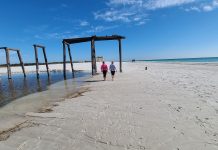
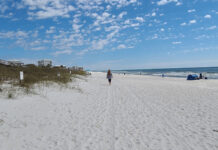
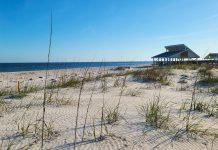
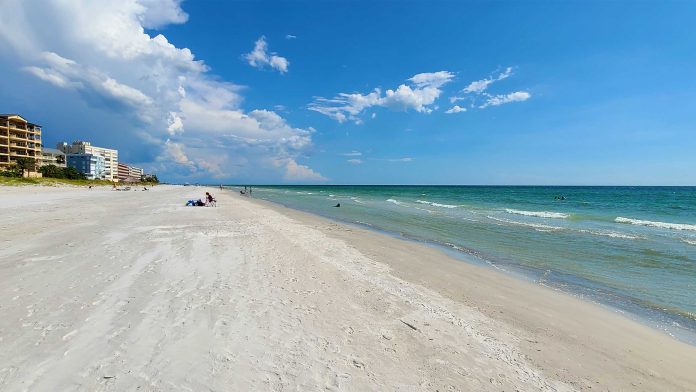
The beach here runs wide, backed by a low dune line and the residential and vacation-rental properties that define this coastline. The sand is white quartz, fine underfoot, and the water on a calm day runs the same turquoise-to-green the Gulf does throughout Pinellas County. What you notice immediately compared to Clearwater Beach is the quiet: no music, no rental chair rows stacked to the waterline, no amplified energy pulling the crowd toward a central point. People set up in their own space, some walking the waterline north and south, and the beach absorbs them without filling up. Even on a summer Saturday this stretch does not feel overwhelmed the way the central Clearwater strip does.
There are no lifeguards here or anywhere on this stretch, and that is worth being direct about. Swim with your own judgment and keep an eye on the water. The Gulf here is generally calm and the entry gradual, but the lack of lifeguard coverage is a real distinction from Clearwater Beach and Caladesi. The water temperature peaks in the mid-80s in late summer and stays swimmable well into fall. Shell activity after a storm or a strong overnight tide is notably better here than at the groomed, high-traffic Clearwater main beach.
Indian Rocks Beach Northern Accesses
1st Through 12th Avenue · Street Parking · Walk-In
North of the main 18th Avenue park, Indian Rocks Beach has a series of smaller access points off Gulf Boulevard at numbered cross streets, most with a handful of paid street parking spaces and a boardwalk leading over the dune to the beach. These accesses are where the local character of this coastline really shows. The lots are small, the boardwalks are narrow, and the beach on the other side is as good as anything at 18th Avenue with considerably fewer people on it, particularly on weekday mornings.
The beach gets noticeably less development visible behind it as you move north through these accesses, approaching the area near the IRB Causeway Bridge at 5th Avenue and the nature preserve stretch between 9th and 10th. The Walsingham Bridge access at 7th Avenue is a good walk-in point if you want the beach near the causeway, where the intracoastal side of the island is close enough that you get the two-water feeling without being on a narrow spit. The morning light here from late fall through early spring is worth getting up for: low angle, warm color, and the sand still cool enough to walk barefoot the full length.
I will be honest about the practical limitation: many of these spots have only four to eight paid spaces, and they fill on weekends. The workaround is to arrive before 9am or to park on a side street and walk, which is exactly what locals do. The paid parking program that went into effect in May 2026 changed the calculus here, since these accesses are now metered at the same $4.50 per hour rate as the main park. But the beach on the other side of any of these boardwalks is identical in quality to the 18th Avenue access, and you’ll almost always have more space to spread out.
Indian Rocks Beach Nature Preserve
Between 9th and 10th Avenue · Boardwalk Through Mangroves · Free
The IRB Nature Preserve sits between 9th and 10th Avenues on the bay side of the island, and it is one of those places that most beach visitors drive right past. The preserve features a boardwalk through a coastal mangrove system, native vegetation, and shoreline habitat on the intracoastal side of the island. There are no lifeguards, no beach swimming, and no Gulf access directly from here. What there is: a quiet walking trail, bird life that is notably denser than on the open beach, and a mangrove environment that gives you a completely different perspective on what this barrier island is actually made of.
Dogs are not allowed on the boardwalk, which is the same rule that applies on the beach throughout Indian Rocks Beach. The preserve sits adjacent to the IRB Dog Park, which is located next to the boardwalk on the inland side and gives dog owners a place to let their dogs run in a fenced area before heading elsewhere. Restrooms are available at the preserve, making it a practical midday stop even if you’re spending the rest of the day at one of the beach access points.
I find myself walking this boardwalk whenever I’m spending a full day in Indian Rocks Beach, usually in the late afternoon when the beach crowds thin and the light is getting interesting on the intracoastal. The bird life in these mangroves, particularly herons, egrets, and the occasional roseate spoonbill, is a consistent reward. It is a two-minute drive from the main beach access and it makes the trip feel more complete. Anyone who loves wildlife and birds on the coast should budget time here.
Tiki Gardens: Indian Shores Beach Access
19601 Gulf Blvd, Indian Shores · Pinellas County Park · $2.50/hr Parking
Tiki Gardens is the best public beach access on the Indian Shores stretch, and it carries more history than the parking lot suggests. The site opened in 1964 as a South Seas Polynesian theme park called Tiki Gardens, complete with exotic birds, monkeys, and thatched-roof structures. It closed in the 1980s, Pinellas County eventually bought the property from a developer who had planned a hotel, and it became what it is today: a 9.9-acre county beach access park with 168 parking spaces, restrooms, outdoor showers, a pedestrian crossing light on Gulf Boulevard, and a short boardwalk to the sand. The history is long gone but the location is good and the beach access here is some of the most practical public access on this entire five-mile stretch.
You’ll notice the walk from the parking lot to the water is real, long enough that a cart or a gear-carry matters. The parking lot is on the inland side of Gulf Boulevard, the beach access boardwalk is across the street, and the Gulf is a few hundred feet further across open sand. Bring a bag or a cart if you’re carrying chairs and umbrellas. Green Iguana, a gear rental shop a couple of minutes from the park, delivers chair and umbrella setups to the beach directly, which solves the carry problem entirely. The beach itself once you arrive is wide, clean, and typically quiet enough that you won’t need to stake out a spot early. The water here has the same turquoise quality as the rest of the Pinellas barrier island system on calm days, and the gradual sandy entry makes it comfortable for any level of swimmer.
The crowd at Tiki Gardens is mixed: families who found it by searching for less-crowded alternatives to Clearwater, vacation rental guests from the surrounding cottages who walk or bike over, and regulars from the Largo and Seminole mainland communities who know the parking rate here ($2.50 per hour, significantly lower than the $4.50 now charged at Indian Rocks Beach) makes this one of the better-value beach days in Pinellas County. There are no lifeguards. No dogs. Sea turtles nest on this beach from May through October, and shorebirds nest here from February through August, so you will sometimes see marked nest areas on the upper beach during those seasons.
Seaside Seabird Sanctuary
18328 Gulf Blvd, Indian Shores · Free Admission · Open Daily 8am to 4pm
Seaside Seabird Sanctuary sits on three acres of beachfront property in Indian Shores and is one of the more genuinely unusual places on the entire Pinellas coast. It is a working wildlife hospital and rehabilitation center for injured native wild birds, open to the public every day with free admission, and it sits close enough to the beach that after your visit you can walk directly to the Gulf. The sanctuary houses over 100 permanently disabled birds that cannot be released back into the wild: pelicans, owls, hawks, eagles, terns, and various other species, all in large aviaries designed around their natural needs.
The practical details: 18328 Gulf Blvd in Indian Shores, open every day from 8am to 4pm, free admission, with a small parking lot and overflow parking across the street. Donations support the rescue and rehabilitation work, and the gift shop helps fund the operation. The sanctuary was significantly impacted by the 2024 hurricane season but has recovered and is fully operational. Volunteers walk the grounds and can tell you the story behind almost every bird in residence, which turns a twenty-minute stop into an hour without any effort.
What makes this worth including in a beach guide and not just an activities list is the setting: you’re on the Gulf side of Gulf Boulevard, a short walk to the sand, and the birds you’re looking at in the sanctuary are the same species you’ll see working the surf line and diving for mullet while you’re sitting on the beach. Understanding what a brown pelican looks like up close and what it takes to rehabilitate one that flew into a power line changes the way you watch the pelicans offshore. I always stop here when I’m spending a day on this stretch, and I always leave with a better eye for the birds on the waterline.
Belleair Beach: Morgan Park
2650 Gulf Blvd · Only Public Access in Belleair Beach · Metered Parking
Morgan Park is the only place in Belleair Beach where a non-resident can park and reach the Gulf. The city has four beach access points total, but three of them are resident-only parking areas. Morgan Park carries metered parking for visitors, with residents who hold a current city parking permit exempt from the fee. The beach access itself leads to a Gulf shoreline that is among the most quietly beautiful in the county: wide sand, virtually no commercial development behind the dune line, and water that is often clearer and calmer than what you find at the higher-traffic beaches to the north.
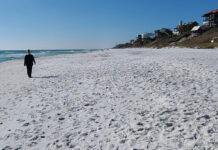
Belleair Beach is a deliberate community. It was chartered in 1950, covers only about 1.7 square miles, and has maintained a strictly residential character for its entire existence. There are no restaurants, no shops, no gas stations, and no hotels on the Gulf side of Gulf Boulevard. The 4,500 feet of beach here is shared between 680 households and a modest number of visitors who know enough to find Morgan Park. If you arrive on a weekday morning in spring or fall, you may walk this beach for a long stretch without passing anyone. That level of quiet is genuinely uncommon on the Pinellas barrier island system.
I want to be direct about something that matters for planning: Belleair Shore, the tiny community of about 55 homes immediately north of Belleair Beach, has no public parking access at all. Belleair Shore residents own property deeds that extend to the sand, and as of mid-2026 the town is actively petitioning the state to remove the erosion control line that helps protect public access to the dry sand portion of the beach, a dispute that has Pinellas County officially opposed to the petition. The wet sand is constitutionally public in Florida, but the dry sand access question is unsettled. For now, the beach between Belleair Shore and the IRB line to its south is walkable from the public access points at Morgan Park and along the Indian Rocks Beach accesses to the south. If you stay below the wet-dry sand line you are on solid legal footing.
Indian Rocks Beach Area Rankings: Expert Scores Across 11 Categories
These scores weigh the Indian Rocks Beach, Indian Shores, and Belleair Beach stretch as a whole, accounting for the range from the most accessible public access to the quietest residential stretches.
Sand Quality
8/10
Same Appalachian quartz origin as the rest of Pinellas County, white and fine, with slightly more shell and mineral content than the near-pure quartz at Panhandle beaches. The post-hurricane 2024 renourishment added significant sand width across all three communities. Loses a point to Clearwater for composition purity, but gains it back in texture and foot feel since this beach is less mechanically groomed.
Hiking and Beach Walking
8/10
Five-plus miles of connected Gulf shoreline with no piers, no resort access breaks, and light foot traffic through most of it. The waterline walks here are among the best uninterrupted walking on the central Gulf Coast. The IRB Nature Preserve adds a distinct mangrove boardwalk option on the bay side.
Shelling
7/10
Noticeably better than the main Clearwater Beach because this beach is less heavily groomed and trafficked. After a storm or an overnight high tide, the wrack line at the northern IRB accesses and along the Belleair Beach stretch produces augers, conchs, fighting conchs, coquinas, and occasional sand dollars. Not a destination shelling beach, but a rewarding one if the conditions cooperate.
Water Conditions
8/10
Calm, gradual entry, warm through most of the year, and clear on settled days. Gulf water temperatures peak in the mid-80s in late summer and stay swimmable well into November. No rip current issues under normal conditions. No lifeguards anywhere on this stretch, so swim with your own judgment.
Scenery and Natural Beauty
8/10
The residential and vacation-rental character of this coastline means the view from the waterline is mostly modest homes and cottages rather than resort towers. That counts as scenery in my book. The Belleair Beach section in particular, with almost no commercial development visible behind the sand, is as natural-looking a stretch as you’ll find on a built-out Florida barrier island.
Birding and Wildlife
9/10
The combination of the Seaside Seabird Sanctuary on the beach, active shorebird nesting colonies on the sand from February through August, sea turtle nesting from May through October, year-round dolphins, and summer manatees in the intracoastal makes this one of the better wildlife corridors on the central Gulf Coast. The IRB Nature Preserve adds a mangrove habitat dimension that most Gulf beach towns don’t have.
Family Friendliness
8/10
Calm Gulf water and a gradual sandy entry make this excellent for kids who swim or wade. The Seaside Seabird Sanctuary is one of the better free family activities on the Pinellas coast. Splash Harbour Water Park at the Holiday Inn Harbourside in Indian Rocks Beach is a bonus option for families with young children. Loses two points for the complete absence of lifeguards anywhere on this stretch.
Dog Friendliness
3/10
No dogs on any beach in any of these three communities, with fines up to $500 per offense. The IRB Dog Park adjacent to the Nature Preserve gives leashed dogs a fenced off-leash run, but no beach access. The closest dedicated dog beach is the Belleair Causeway area for informal wading, with Fort De Soto Park about 35 minutes south for a full off-leash dog beach experience.
Solitude and Peace
8/10
On a weekday morning this is one of the quietest Gulf beach stretches in Pinellas County. Even on busy summer weekends the lack of a resort hub or a nightly festival crowd keeps the population density well below what you find at Clearwater Beach or St. Pete Beach. The Belleair Beach section in particular can feel almost deserted outside of summer peaks.
Entertainment and Nightlife
5/10
A few excellent restaurants on Gulf Boulevard, including Salt Rock Grill for a serious seafood dinner, and local events like Arts on the Rocks on Friday evenings and the April Taste of IRB festival. But there is no nightlife scene to speak of, no boardwalk, and no consistent evening entertainment. If nights out matter, use Clearwater Beach or St. Pete Beach as the evening anchor.
Parking and Beach Access
6/10
The 27 public access points at Indian Rocks Beach give this stretch more access per mile of beach than most Pinellas communities, but the new $4.50/hour paid parking program (launched May 2026) raised costs significantly. Tiki Gardens at $2.50/hour is the better-value option. Belleair Beach’s limited public access at Morgan Park only is the biggest constraint on this entire stretch.
Indian Rocks Beach, Indian Shores & Belleair Beach Sand & Water
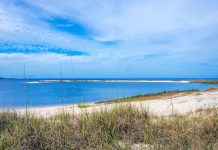
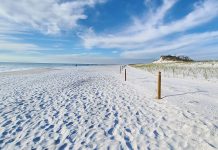
The sand across all three towns is fine, white to cream, and soft enough underfoot that you’ll want to kick your shoes off the second you’re out of the car. It runs wide and flat the whole way, especially now after a recent renourishment project widened the beach across the board, so you’ve got plenty of room to spread out a towel no matter which access point you pick. The upper dry beach has a soft, natural give to it, good for lounging and for sandcastles once you’re working with sand that’s held a little moisture. Down at the waterline, it firms right up, which makes for easy, fast walking and a solid surface for beach games, cornhole, paddle ball, whatever you brought. Whether you’re planning to walk a mile or just set up camp for the day, this sand cooperates with you either way.
The water matches the sand’s easygoing personality. On a calm day it runs a beautiful turquoise to pale green in the shallows, clear enough that you can usually see your own feet, and the sandy bottom slopes into the Gulf gradually rather than dropping off fast, so wading in feels natural instead of intimidating. Swimming conditions are good most of the year, with warm water lasting well into fall, and there’s no real rip current concern here under normal conditions. The one thing worth knowing before you wade out: there are no lifeguards anywhere on this five-mile stretch, in any of the three towns, so keep a close eye on kids and swim within your own comfort level.
-
Walkability. Wide, flat, and connected for miles with a firm waterline that makes for easy, effortless walking in either direction.
-
Softness & Playability. Soft enough on the upper beach for comfortable lounging and decent sandcastles once you add a little water, plenty of room for games and towels at every access point.
-
Barefoot Comfort. Very comfortable spring through fall. On peak summer afternoons the dry sand near the boardwalks can get hot enough that you’ll want sandals for the crossing.
-
Swimmability. Calm, gradual entry water that’s easy for any confidence level, warm well into fall. Just remember there are no lifeguards anywhere on this stretch.
Want the full geology, grain composition, and the complete sand and water condition ratings? I broke it all down separately in Sand & Shore: Indian Rocks Beach, Indian Shores & Belleair Beach.
Dogs & Pet Accessibility
Are Dogs Allowed on the Sand? STRICTLY NO.
Dogs are prohibited on every beach in Indian Rocks Beach, Indian Shores, and Belleair Beach, with no exceptions and no seasonal loophole. This is enforced with real fines, up to $500 per offense in Indian Shores.
Where Dogs Are Allowed
- ✓The IRB Dog Park, a fenced off-leash area next to the Nature Preserve in Indian Rocks Beach. Exercise only, no beach or boardwalk access from here.
- ✓Fort De Soto Park, about 35 minutes south, has the area’s best full off-leash dog beach if a real dog beach day is the goal.
Where Dogs Are NOT Allowed
- ✗Every beach in Indian Rocks Beach, Indian Shores, and Belleair Beach, with no exceptions.
- ✗The IRB Nature Preserve boardwalk between 9th and 10th Avenue, even though it sits right next to the dog park.
Paws on the Ground Reality
This is not a dog-friendly stretch, and I’d rather be direct about that than let you find out after driving here with a leash in hand. The IRB Dog Park gives your dog a place to burn energy in a fenced area, which is genuinely useful if you’re staying in a rental nearby, but it isn’t a substitute for a beach day.
If a real dog beach day is the point of your trip, plan around Fort De Soto Park instead. It’s about 35 minutes south, has a proper off-leash dog beach, and is worth the drive if your dog is part of the vacation.
Crowd Levels and the Overall Feel of Indian Rocks Beach, Indian Shores, and Belleair Beach
This stretch runs quiet by design. The residential and vacation-rental character of all three communities limits the kind of infrastructure that typically draws large crowds: there is no pier, no nightly festival, no boardwalk shopping strip, and no cluster of resort hotels with 500 guests each deploying beach chairs every morning. The crowds here are made up of people who are either renting a cottage for the week, visiting the Seaside Seabird Sanctuary, or have been coming to this stretch long enough to know about the smaller access points.
The seasonal rhythm shifts in recognizable ways:
- Spring break: the busiest period relative to the norm, with vacation rental turnover high and the main access park at 18th Avenue seeing its peak weekend crowds; still notably less congested than Clearwater Beach or Treasure Island on the same weekends
- Summer: warm water and peak vacation rental season, with Tiki Gardens and the 18th Avenue park filling on weekend mornings and the beach busy but manageable; the mid-afternoon heat tends to thin the waterline crowd noticeably around 2 to 3pm
- Fall: the best season here, in my view; water stays warm into November, the vacation rental crowd drops after Labor Day, and the weekday beach is about as quiet and good as a Gulf beach day gets
- Winter: genuinely off-season, with the beach used mostly by snowbirds in residence, locals, and the occasional day-tripper; the Seaside Seabird Sanctuary stays open year-round and is worth visiting on a cooler winter morning when the bird activity is high
Who Is This Stretch Really For?
✓ Who Will Love the Indian Rocks Beach Area
-
Repeat visitors to Pinellas County who have done Clearwater Beach and want the same quartz sand and warm Gulf water with significantly less company and none of the resort energy
-
Families who rent a cottage or condo for a week and want a beach that rewards being there every day rather than just once as part of a broader itinerary
-
Bird watchers and wildlife watchers who want the Seaside Seabird Sanctuary, active shorebird nesting colonies, sea turtle nesting season, and a mangrove boardwalk all within a mile of each other
-
Long-distance beach walkers who want five or more miles of connected Gulf waterline without commercial breaks, resort chairs, or event infrastructure interrupting the walk
-
Anyone who grew up vacationing on this stretch of the Pinellas coast and wants the version of it that still feels like it always did: local, quiet, and a little harder to find than the famous beaches further north
-
Shellers who want better-than-Clearwater results without driving to Sanibel; the post-storm wrack line here delivers reliably and the beach is not groomed flat every morning
✗ Consider Another Beach If…
-
Lifeguard coverage is important for your group. There are no lifeguards anywhere on this five-mile stretch, which is a real safety consideration for groups with young swimmers or non-swimmers.
-
You are bringing a dog and want beach access. The $500 fine and zero-exception policy is strictly enforced across all three communities. Fort De Soto Park is the better answer for a full dog-friendly beach day in this part of Pinellas County.
-
You want evening entertainment, live music, a boardwalk, or a restaurant scene that goes past 9pm. The dining here is good but limited, and the nightlife does not exist. Drive north to Clearwater or south to St. Pete Beach for those needs.
-
You are hoping for parking at Morgan Park in Belleair Beach on a weekend in peak season without arriving early. The limited spaces fill, and there is genuinely no other public parking option in the city.
-
You need extensive resort amenities, chair service, or a hotel directly on the beach. This is primarily vacation rental and private residential territory. The infrastructure is modest by design.
Things to Do at Indian Rocks Beach, Indian Shores, and Belleair Beach
This stretch rewards being present and paying attention more than it rewards booking activities in advance. Here is what actually fills a day here well.
-
Long Beach Walks. Five-plus miles of connected Gulf waterline with no commercial interruptions through most of it. The walk from the IRB main access south to Morgan Park in Belleair Beach covers the full stretch in one direction and shows you every distinct character of this coastline. The morning waterline is firm and flat for easy walking, and the bird activity is highest in the first two hours after dawn.
-
Seaside Seabird Sanctuary. 18328 Gulf Blvd in Indian Shores, open daily 8am to 4pm, free admission. A working wildlife hospital for injured seabirds with over 100 permanently resident birds in large aviaries. Budget an hour, walk the grounds with a volunteer guide, and visit the gift shop. One of the more genuinely worthwhile free activities on the Pinellas coast.
-
IRB Nature Preserve Boardwalk. Between 9th and 10th Avenues in Indian Rocks Beach, this mangrove boardwalk on the bay side of the island gives you a completely different perspective on what this barrier island is made of. The bird life in the mangroves, particularly herons, egrets, roseate spoonbills, and ospreys, is consistent year-round. Free, open daily, and well worth a morning hour.
-
Swimming and Wading. Calm Gulf water, gradual sandy entry, and temperatures warm enough for comfortable swimming from late spring through October. No lifeguards anywhere on this stretch. Check local weather and wave conditions before entering with young children, and be aware of any water quality advisories.
-
Kayaking and Paddleboarding. The calm Gulf waters and the intracoastal waterway on the bay side of the island both support kayak and paddleboard outings. Rental operators including Green Iguana near Tiki Gardens offer gear rentals and deliver to the beach. The intracoastal is good for manatee watching in warm months and osprey watching year-round.
-
Shelling. The wrack line on this stretch is not cleaned by mechanical raking at the same frequency as Clearwater Beach, which means post-storm and post-tide accumulations stay on the beach longer. The quiet northern accesses and the Belleair Beach section tend to produce the best finds. Bring a bag and plan to squat for your shells; fighting conchs, whelks, and coquinas are the most consistent finds.
-
Sea Turtle Nest Watching. Nesting season runs May 1 through October 31, with loggerhead turtles making up the majority of nests along this stretch. Nests are marked and protected by volunteers and local wildlife management. If you are on the beach in the early morning from May through July, you may see tracks indicating a female came ashore overnight. Remove all beach gear before sunset during nesting season.
-
Arts on the Rocks. A Friday evening arts event in Indian Rocks Beach featuring local artists, make-it-and-take-it workshops, gallery space at the IRB Beach Art Center, and a relaxed community gathering that is one of the more authentic local events on this stretch of the coast. Dates and details vary by season; check the IRB community calendar.
-
Dinner at Salt Rock Grill. The Salt Rock Grill is the most serious dining option on this stretch, a proper seafood and steak restaurant with waterfront views and a reputation that draws people in from the wider Pinellas area. Reservations recommended in season. It represents the upscale side of what is otherwise a casual dining scene along Gulf Boulevard.
-
Sunrise and Sunset Photography. The western Gulf exposure means every evening here has a sunset view, and the low-development horizon at Belleair Beach and the quieter IRB accesses gives you sky in every direction without resort towers interrupting the frame. Early morning light on the wet sand at the northern accesses, particularly in fall and winter, consistently produces the kind of light that looks too good for a random Tuesday.
Local Knowledge and Practical Advice
A few things I’ve picked up walking this stretch across multiple seasons that most guides won’t tell you:
-
The paid parking pilot at IRB launched May 18, 2026, at $4.50 per hour via the ParkMobile app. This was the last free-parking beach community in Pinellas County, and the change was significant and controversial locally. Tiki Gardens in Indian Shores charges only $2.50 per hour and is the better-value parking choice for a full-day visit to this stretch if you’re flexible about which access point you use.
-
Belleair Beach’s Morgan Park is the only place visitors can park and access the Gulf in that city. The three other beach access points in Belleair Beach are resident-permit-only parking. If you arrive at any other access point in Belleair Beach without a resident decal, you will get a ticket.
-
Dogs are not allowed on any beach in Indian Rocks Beach, Indian Shores, or Belleair Beach. The fine is $500 per offense in Indian Shores and is actively enforced. The IRB Dog Park adjacent to the Nature Preserve gives leashed dogs a fenced off-leash area, but no beach access. For a full dog-beach day, Fort De Soto Park is the best nearby option, about 35 minutes south.
-
There are no lifeguards anywhere on this five-mile stretch. This applies to every named access point in all three communities. If you are swimming with children or anyone who is not a confident swimmer, be aware and swim close to shore.
-
Sea turtle nesting season runs May 1 through October 31. Remove all chairs, umbrellas, sand structures, and gear from the beach by sunset during nesting season, fill in any holes you dug, and use amber or red-filtered light at night instead of white flashlights or cell phone screens. Hatchlings navigate by light, and disorientation at night is one of the main causes of hatchling mortality.
-
Shorebirds nest directly on the sand in Indian Shores from February through August. Nests are marked with staking and posted signs from the Florida Fish and Wildlife Conservation Commission and local Audubon volunteers. Stay outside the posted areas, keep kids and any dogs away from the upper beach in marked sections, and don’t fly kites near active nesting areas.
-
The best shelling happens the morning after a storm or an overnight high tide on a new or full moon. Walk the northern IRB accesses before 8am on those mornings and you will consistently find a better wrack line than at the more heavily trafficked Clearwater beaches. Bring a bag and plan to walk at least half a mile north and south from wherever you start.
-
Manatees appear in the intracoastal waterway alongside the barrier island during the warmest months, typically June through September. The IRB Causeway bridge and the bay-side edges of the island near the nature preserve are good viewing points. Boaters in this area are required to observe slow-speed zones in designated manatee protection areas.
-
The post-hurricane beach renourishment project that ran through 2025 and 2026 added significant sand width across all three communities. The beaches are now wider than they have been in years and in better shape than the pre-2024-storm baseline in most sections. If you visited this stretch before Helene and thought the beach had gotten narrow, the current state is worth a return visit.
-
The 17th Avenue county access park within Indian Rocks Beach maintains separate parking that was NOT included in the new May 2026 pilot program. Check the city’s current parking information before your visit, as the program is being evaluated for expansion and rules may change during or after the six-month pilot period.
Where to Stay Near Indian Rocks Beach, Indian Shores, and Belleair Beach
Accommodation on this stretch skews heavily toward vacation rentals rather than hotels, which matches the residential character of all three communities.
Vacation Rentals Along Gulf Boulevard
The dominant accommodation option on this entire stretch is vacation rentals: Gulf-front cottages, condos, and houses that book by the week or the weekend through the major rental platforms. Indian Rocks Beach has the widest variety in size and price range, from older condo buildings on Gulf Boulevard to single-family homes with private beach access on the Gulf side. Indian Shores is dense with rental condos, particularly in the area around the Tiki Gardens access. Staying in a rental in this area is genuinely the right match for how this beach works: a home base you return to daily rather than a hotel room you leave in the morning.
Holiday Inn and Suites Harbourside
The Holiday Inn Harbourside at Indian Rocks Beach is one of the few traditional hotels on this stretch, sitting on the intracoastal side of the island with a marina. It is the home of Splash Harbour Water Park, a waterpark facility open to guests and to the public, which is one of the better family amenity options in the area for a day when the beach is too hot for young children at midday. Jimmy Guana’s, the restaurant on site, is a popular casual Gulf-front dining option.
Belleair Beach Condos and Gulf-Front Properties
The limited inventory of condos directly in Belleair Beach, including properties along Gulf Boulevard, tends toward the upper end of the market and attracts a buyer and renter profile looking for quiet, upscale beach proximity without resort infrastructure. Availability is limited and early booking is important for peak season weeks.
Camping Nearby
There is no camping in any of the three communities. Fort De Soto Park in St. Petersburg, about 35 to 40 minutes south, has the best camping on the Pinellas coast with tent and RV sites, direct Gulf beach access, and the best dog beach in the county. Reserve well in advance for any weekend in peak season.
Mainland Largo and Seminole
The mainland cities of Largo and Seminole sit directly east of this stretch across the intracoastal, with a wide range of mid-range and budget hotels within a ten to fifteen minute drive of the beach accesses. This is the right choice for anyone who wants to day-trip to the beach from a lower-cost mainland base without the hourly parking accumulating at a Gulf-side rental rate.
What Makes This Stretch Different from Nearby Beaches
Indian Rocks Beach, Indian Shores, and Belleair Beach occupy a specific niche in the Pinellas barrier island system that no other stretch quite fills. A few things specifically set this five-mile run apart.
A seabird rehabilitation center on the beach
The Seaside Seabird Sanctuary is the only working wildlife hospital on a Pinellas Gulf beach that is open daily with free public access. It is not a zoo, it is not an aquarium, and it is not primarily a tourist attraction. It is a rescue and rehabilitation operation that happens to be walkable from the sand. No other beach town in this county has anything equivalent directly on the waterline.
Active wildlife alongside working beach access
The combination of sea turtle nesting from May through October, shorebird nesting colonies February through August, year-round bottlenose dolphins, summer manatees in the intracoastal, and the mangrove habitat of the IRB Nature Preserve creates a wildlife density that is unusually high for a stretch of beach that also has active vacation rentals and street-level access. This coastline functions as a wildlife corridor in a way that most built-out barrier islands in Florida have lost.
The quietest long walk in Pinellas County
Five-plus miles of connected Gulf waterline with no pier, no nightly festival crowd, no resort chair operations across most of the stretch, and no commercial breaks that stop a walking beach experience. For people who measure a Gulf beach day in miles rather than amenities, this is the best walk available on this coastline south of Caladesi Island.
A community that just changed its parking story
Indian Rocks Beach held the distinction of being the only free-parking beach community in Pinellas County until May 2026, when a paid parking pilot program launched at $4.50 per hour. That history, and the local controversy surrounding the change, is part of what makes this community different: it resisted the trend toward monetizing visitor access longer than any other barrier island community in the county, and the discussion about whether that was the right choice is ongoing.
Indian Rocks Beach Area vs. Other Pinellas Suncoast Beaches
These are the beaches most visitors weigh against this stretch, and the honest read on when you’d choose one over the other.
Indian Rocks Beach Area vs. Clearwater Beach
Same quartz sand, same Gulf water, dramatically different experience. Clearwater Beach has the nightly Sunsets at Pier 60 festival, lifeguards, more restaurants, and resort-level infrastructure. Indian Rocks Beach has the quiet, the wildlife, the seabird sanctuary, and a waterline with room to walk. Both are twenty minutes apart on the same barrier island system. Which one you want depends entirely on what kind of beach day you came for.
Indian Rocks Beach Area vs. Sand Key Park
Sand Key Park sits immediately north of Belleair Beach and is part of the same geological formation. It is Pinellas County-managed with a $5 daily parking flat rate, a salt marsh trail, and a quieter-than-Clearwater vibe. Sand Key Park is the right choice for a single day visit to this stretch of coastline with maximum amenities for the price. Indian Rocks Beach is the right choice if you are spending multiple days and want the community character rather than a county park facility.
Indian Rocks Beach Area vs. Redington Shores and Redington Beach
Immediately south of Indian Shores on the same barrier island, Redington Shores and Redington Beach share the same residential character with slightly less vacation-rental density. The public beach access at 18200 Gulf Blvd in Redington Shores is the primary access point. The sand and water quality are virtually identical. Indian Rocks Beach has more total public access points and the added draw of the nature preserve and the seabird sanctuary. If you want the same quiet with even fewer visitors, Redington is worth knowing about.
Indian Rocks Beach Area vs. Treasure Island
Treasure Island sits about fifteen minutes south and represents a step up in commercial development compared to this stretch, with more restaurants, a stronger vacation-rental hotel presence, and the lively John’s Pass Village boardwalk at the southern end. The sand is comparable. If you want a mix of quiet beach and evening entertainment, the Treasure Island to John’s Pass corridor is a reasonable combination. If you want the quiet without the commercial activity, this stretch wins.
Bottom line: The Indian Rocks Beach, Indian Shores, and Belleair Beach stretch is the most residential and wildlife-rich section of the Pinellas barrier island system south of Caladesi Island. It earns that position on sand quality, walking access, wildlife density, and the fact that the Seaside Seabird Sanctuary exists at all. The trade-off is clear: no lifeguards, no nightlife, and limited dog access. Choose accordingly.
Indian Rocks Beach, Indian Shores, and Belleair Beach: Frequently Asked Questions
Is Indian Rocks Beach worth visiting?
Yes, especially if you want a quiet Gulf beach day with good sand and genuine solitude. It is not the right choice if you want lifeguards, nightlife, or a full resort experience. The Seaside Seabird Sanctuary alone makes it worth a stop even if you don’t plan to spend the day on the sand.
Is there parking at Indian Rocks Beach?
Yes, with 27 public beach access points spread across the city. As of May 18, 2026, parking at beach access points costs $4.50 per hour, paid via the ParkMobile app, enforced 8am to 10pm daily. Residents with city-issued decals park free. The Tiki Gardens access at Indian Shores charges $2.50 per hour and is the better-value option for a full-day visit.
Are dogs allowed on Indian Rocks Beach?
No. Dogs are prohibited on all beaches in Indian Rocks Beach, Indian Shores, and Belleair Beach. The fine is up to $500 per offense in Indian Shores. The IRB Dog Park adjacent to the Nature Preserve gives leashed dogs a fenced area, but no beach access. Fort De Soto Park, about 35 minutes south, has a full off-leash dog beach.
Are there lifeguards at Indian Rocks Beach?
No. There are no lifeguards anywhere on the five-mile stretch covering Indian Rocks Beach, Indian Shores, and Belleair Beach. Swim at your own judgment and keep a close eye on children in the water.
What is Tiki Gardens in Indian Shores?
Tiki Gardens is the main public beach access park in Indian Shores, managed by Pinellas County at 19601 Gulf Blvd. It has 168 parking spaces at $2.50 per hour, restrooms, outdoor showers, and a short boardwalk to the Gulf. The site was formerly a South Seas Polynesian theme park that opened in 1964 and closed in the 1980s before Pinellas County bought it and converted it to a beach access park.
What is the Seaside Seabird Sanctuary?
The Seaside Seabird Sanctuary at 18328 Gulf Blvd in Indian Shores is a nonprofit wildlife rehabilitation facility dedicated to rescuing and rehabilitating injured native seabirds. It is open daily from 8am to 4pm with free admission. Over 100 permanently disabled birds live on the 3-acre beachfront property, including pelicans, owls, hawks, eagles, and various shorebirds. Donations support the operation.
Can visitors access Belleair Beach?
Only at Morgan Park, located at 2650 Gulf Blvd in Belleair Beach. This is the only public access point in the city where non-residents can park with a pay meter. The other three beach access points in Belleair Beach have resident-permit-only parking. Belleair Shore, just north of Belleair Beach, has no public parking access at all.
When is sea turtle nesting season on Indian Rocks Beach?
Sea turtle nesting season runs from May 1 through October 31 in Indian Rocks Beach and Indian Shores. Nests are marked and protected by volunteers. Remove all beach chairs, umbrellas, sand structures, and gear from the beach before sunset during nesting season, fill in any holes, and avoid using white light at night.
What are the best restaurants near Indian Rocks Beach?
Salt Rock Grill is the most serious dining option on this stretch for a special occasion seafood dinner with waterfront views. For casual meals, Jake’s Coastal Cantina and Kooky Coconut are popular Gulf Boulevard options. Jimmy Guana’s at the Holiday Inn Harbourside is a lively beachfront spot. The overall dining scene is modest but has enough variety for a week-long stay without repeating yourself.
Is Indian Rocks Beach good for shelling?
Better than Clearwater Beach for casual shelling, since the beach is less heavily groomed and trafficked. After a storm or strong overnight high tide, the wrack line at the northern IRB accesses and along the Belleair Beach stretch produces fighting conchs, whelks, coquinas, and occasional sand dollars. For dedicated shelling, Caladesi Island or Sanibel are better destinations, but for a productive morning walk after the right conditions, this stretch delivers.
What happened to the beaches after Hurricane Helene in 2024?
Hurricane Helene caused severe erosion across the Sand Key barrier island system in late 2024, in some areas removing most of the beach width. Pinellas County launched a $126 million beach renourishment project in September 2025 that restored significant sand width along Indian Rocks Beach, Indian Shores, and Belleair Beach. The renourishment project was largely complete by early 2026, and the beaches are currently wider than the pre-storm baseline in most sections.
Patti’s Perspective: My Honest Take on Indian Rocks Beach, Indian Shores, and Belleair Beach
This stretch of coastline is personal to me in a way I don’t always know how to explain simply. My family came to this area every year when I was a child and a teenager. Not the resort strip up at Clearwater, not the pier and the nightly crowd: these quieter communities south of the bridge, the ones that felt like they belonged to the people who lived there and to families like mine who came back year after year to the same rented cottage on the same block. I brought my own kids here later. And now I keep coming back with my notebook and my walking shoes, trying to see if the place I remember matches the place it actually is.
It mostly does. The sand is the same. The water is the same blue-green that I remember looking different from Atlantic ocean water in a way I couldn’t articulate at eight years old but now know is the quartz seafloor showing through. The cottages are mostly still cottages. The Belleair Beach section still feels like the residential neighborhood it chose to be and has stayed. The biggest change is the paid parking at Indian Rocks Beach, which went into effect just weeks ago as I’m writing this and ended the last free-parking beach on the Pinellas barrier islands. The locals are still processing that. I understand why it had to happen, and I understand why it stings.
The Seaside Seabird Sanctuary is the thing I always try to tell people about and that people always look at me slightly skeptically about until they actually go. A free wildlife hospital on a Gulf beach, open every day, where you can watch a brown pelican learn to fly again in a large aviary next to the same surf line where you’ll see the wild ones diving for fish when you sit on the sand afterward. That kind of experience is the reason I walk beaches for a living: the detail that changes how you see everything else. Go before the beach. Go after. Go both times.
Want to Live by the Water on the Pinellas Suncoast?Indian Rocks Beach, Indian Shores, and Belleair Beach represent three distinct market tiers on the Pinellas barrier island, all within a five-mile stretch. Indian Rocks Beach has the broadest range of property types, from older Gulf-front condos and small beachside cottages to newer vacation-rental investment properties, with pricing that runs significantly below the Clearwater Beach and Sand Key markets to the north. Indian Shores is dense with vacation-rental condos that attract buyers specifically for short-term rental income potential from the Gulf-front location.Belleair Beach operates at the upper end of this stretch. The city is intentionally residential, low-density, and has held that character since its 1950 charter. Properties here, particularly Gulf-front homes and condos with private beach access, attract buyers looking for upscale waterfront living without the resort-corridor density of the communities to the north. The proximity to the mainland community of Belleair and the Belleair Golf Course adds an additional draw for buyers who want golf-adjacent waterfront living.Like all Pinellas barrier island real estate, this stretch saw significant insurance cost and condo-milestone-report challenges following the 2024 hurricane season, with some building inventories increasing as owners navigate post-storm costs. Single-family Gulf-front properties remain highly sought after and move quickly when priced correctly. For buyers who want the Pinellas Gulf Coast lifestyle at a price point below Clearwater Beach or Sand Key, this five-mile stretch deserves a close look.Explore Waterfront Living at LiveByTheWater.com
Real estate referral partner