



Stump Pass Beach State Park, Florida
Stump Pass Beach State Park sits at the very southern tip of Manasota Key, and it’s the one beach on this entire coast where I stop giving directions and just tell people to trust me. A mile of shell-strewn beach, a mangrove trail through five different natural communities, and a pass that the Gulf keeps rewriting on its own schedule. This is my favorite mile of sand in Southwest Florida, and I don’t say that about many places.
This is a Florida State Park that protects the southern peninsula of Manasota Key along with two small barrier islands just offshore, Whidden Key and Peterson Key, all wrapped around the pass that gives the park its name. It’s the natural, wild bookend to the beaches further up the key, which I cover in full in my Manasota Key Beaches guide, and if you only have time for one stop on this coast, I’d send you here before anywhere else.
In this guide I’ll walk you through the trail, the beach, the pass itself, and the bay side most people never bother crossing to, going deep on what the sand and water are actually doing at a pass this active, scoring it honestly across every category that matters, and telling you exactly who this park is built for. I close with the afternoon a pod of manatees showed up close enough to change how I see this place entirely.
The Vibe & Culture at Stump Pass Beach State Park
The Beach That Refused to Be Developed
Every other beach on Manasota Key eventually gives you a parking meter, a boardwalk, or a rental cottage. This one gives you a trailhead and tells you the rest is up to your legs.
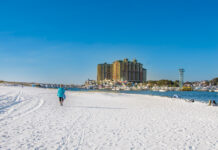
There’s no boardwalk here, no pavilion you can count on, no snack bar, and honestly, that’s the entire appeal. Stump Pass Beach State Park is intentionally minimal, a 1.3-mile nature trail leading from a small unpaved parking area through coastal hammock, dune scrub, and mangrove forest before finally opening onto a mile of Gulf beach at the tip of the peninsula. The energy here is quiet in a way that’s genuinely rare on this coast, park rangers leading occasional nature walks, a handful of serious shellers working the tide line at sunrise, and kayakers threading the channels around Whidden and Peterson Key.
What crowd exists here comes for a reason, not by accident. You won’t find anyone wandering in off a boardwalk because they got tired of the beach next door. The people I run into on this trail are shellers with mesh sifters, birders with binoculars, and the occasional angler working the surf or the pass itself for snook and redfish. It’s a park that self-selects for people who actually want to be here, and that changes the whole feel of the place.
The park has had a rough few years, honestly, and it’s worth being upfront about that. Hurricane Milton in 2024 cut an entirely new pass through the barrier island, since nicknamed Milton’s Pass, that separated the lower stretch of beach from the rest of the peninsula for months. The park reopened in September 2025 with the parking lot and beach access restored, though the pavilion remains unavailable and the new pass has been slowly filling back in with sand. I’ll go into more detail on what that means for a visit right now further down this guide, but the short version is that this park is a living, shifting piece of coastline, and that’s part of what makes it worth watching.
Stump Pass Beach State Park: Five Distinct Stretches Along One Wild Mile
This isn’t a park with multiple named beaches, it’s a single mile of coastline that changes character completely as you move through it. Here’s how the walk actually breaks down, from the trailhead to the tip of the pass.
The Trailhead & Coastal Hammock Trail
Parking Area · $3 Per Vehicle · Restrooms at the Trail Start
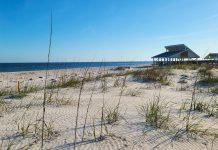
The park entrance drops you into a small, unpaved parking lot with room for roughly fifty vehicles, and from there the 1.3-mile trail begins, winding through five distinct natural communities before it ever touches sand. The first stretch is coastal hammock, shaded and dense with cabbage palms and sea grapes, followed by dune scrub studded with prickly pear cactus and coontie, the kind of native plant community that’s become genuinely rare on developed Gulf Coast islands.
The crowd here is almost entirely trail users, since this stretch has no beach access of its own. I’ve passed gopher tortoises ambling across the sand path more than once, and the covered picnic tables spaced along the route make for a natural place to pause even if you’re not stopping for lunch. This isn’t a beach walk yet, it’s a genuine nature trail, and I think a lot of first-time visitors underestimate how much of the park’s character lives in this first mile before you ever see open water.
My honest take: don’t rush this part. I’ve watched people power-walk straight through the hammock just to get to the sand, and they miss the transition entirely, the moment the shaded trail opens into dune light and you can suddenly smell the Gulf before you can see it. That’s one of my favorite moments on this entire coast.
The Gulf-Side Beach
Main Shelling & Shark Tooth Stretch
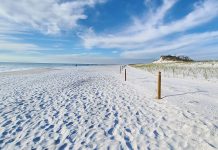
Once the trail delivers you to open sand, you’re on the main Gulf-facing beach, and this is where most visitors spend the bulk of their day. The beach here sits at an angle that seems built specifically to collect shells, and I mean that almost literally, since the currents feeding this stretch scoop debris in from a wide arc of the Gulf and deposit it right along this shoreline. Conchs, tulip shells, murex, and fossilized shark teeth all turn up here with a consistency I haven’t found anywhere else on Manasota Key.
The crowd on this stretch stays thin even in season, simply because the limited parking upstream caps how many people can be here at once. I’ve had entire mornings on this beach with nothing but shorebirds and the occasional distant kayaker for company, which is close to impossible to find on a Gulf beach this easy to reach by car.
This is genuinely the best shelling beach I’ve walked in Florida, and I don’t say that lightly given how many beaches this job has taken me to. Get here early, walk slowly, and look at the tide line rather than just the dry sand. That’s where the good finds actually sit.
Milton’s Pass & the Tip of the Point
Active, Shifting Terrain · Wildlife Hotspot
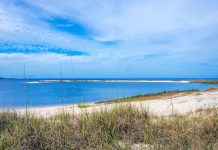
Continue south along the beach and you’ll reach the most dynamic stretch of the park, the tip of the peninsula where Hurricane Milton cut a new breach through the island in 2024. That pass has been slowly closing on its own in the time since, and as of this year it’s largely filled back in, walkable across a shallow sandbar at low tide, though conditions here change with every storm season and I’d genuinely encourage you to treat this stretch with a little extra caution and check current park conditions before you plan a route across it.
This is also, without question, the best spot in the park for wildlife. The tidal exchange through the pass concentrates baitfish, which draws dolphins working the current, and the shallow flats on the bay side of the point are where I’ve had my best luck spotting manatees. Ospreys and magnificent frigatebirds work the air overhead, and least terns nest on the open sand here during the summer.
I’ll be honest about how special this stretch felt the first time I reached it. Standing at the literal end of the peninsula, watching the Gulf and Lemon Bay meet, with Don Pedro Island visible just across the water, is one of those moments that reminds you why barrier islands are worth protecting in the first place.
The Bay Side & Lemon Bay
Mangroves · Kayak Launch · Calmer Water
Most visitors never make it to the bay side of the park, and that’s honestly a mistake, since it’s a completely different experience from the Gulf beach just a short walk away. The eastern edge of the peninsula faces Lemon Bay, sheltered and calm, with mangrove shoreline that makes for some of the best casual kayaking and paddleboarding on this whole coast.
The crowd here is almost exclusively paddlers and anglers, since there’s no direct road access, only the trail or a boat. I’ve fished this side for snook and redfish on quiet afternoons without seeing another person for hours, and the water stays flat enough that even a nervous first-time kayaker would feel comfortable out here.
If you brought a kayak or can rent one nearby, do not skip this side of the park. It gives you the complete picture of what this peninsula actually is, a narrow strip of land holding back the Gulf on one side and cradling a genuinely healthy estuary on the other.
Whidden Key & Peterson Key
Paddle-Only Access · The Farthest Escape
Just east of the park’s land base sit two small islands, Whidden Key and Peterson Key, both part of the protected acreage of the park but reachable only by kayak, canoe, or small boat. These islands are as close to untouched as anything on this stretch of coast gets, low mangrove and marsh with no facilities of any kind.
The only people you’ll find out here are paddlers who came specifically for the isolation, and on most days that’s a very short list. I’ve paddled around both islands on calm mornings and seen more wading birds in an hour than I typically see in a full day anywhere else on Manasota Key.
This is the furthest edge of what Stump Pass has to offer, and it’s not for everyone. But if you’ve already fallen for the quiet of the main beach and want to go one step further, this is where that impulse leads.
Stump Pass Beach State Park Rankings: Expert Scores Across 11 Categories
These scores reflect the full park experience, from the trailhead through the beach to the pass itself, weighed against the reality that limited parking and zero amenities are deliberate features here, not shortcomings.
Sand Quality
7/10
Coarser and shellier than the beaches further up the key, with rockier patches near the pass. Water shoes are genuinely worth packing here.
Hiking & Beach Walking
9/10
A genuine 1.3-mile trail through five natural communities before you even reach the beach, then a full mile of shoreline walking beyond that.
Shelling & Shark Tooth Hunting
10/10
The best shelling beach I’ve walked on this coast. The angle of the point scoops shells and fossilized shark teeth in from a wide arc of the Gulf.
Water Conditions
7/10
Clear along the open Gulf stretch, more current-driven and occasionally tannic near the pass mouth. Respect the tidal movement around the point.
Scenery & Natural Beauty
9/10
Mangroves, dunes, coastal hammock, and two barrier islands visible offshore. This is what an undeveloped Southwest Florida barrier island actually looks like.
Birding & Wildlife
10/10
Manatees and dolphins around the pass, gopher tortoises on the trail, frigatebirds and ospreys overhead, and sea turtle nesting May through October.
Family Friendliness
5/10
No lifeguard, no concessions, and a real trail to walk before reaching the beach. Better suited to families with older kids ready for a genuine outdoor day.
Dog Friendliness
3/10
Leashed dogs are welcome on the nature trail but not on the beach itself. A real perk if you’re hiking with a dog, a real limit if the beach is the point.
Solitude & Peace
9/10
The limited parking keeps this park quiet by design. Once you’re past the trailhead, long stretches of beach with almost no one else on them are the norm.
Entertainment & Nightlife
1/10
None, and that’s entirely the point. The park closes at sunset. Dinner and any nightlife happen back up the key at Englewood Beach.
Parking & Beach Access
4/10
Roughly fifty spaces in an unpaved lot, and it fills by mid-morning on winter weekends. Arrive early or expect to wait, especially in season.
Stump Pass Beach State Park Sand & Water: Deep-Dive Analysis
Sand Composition & Texture
The sand at Stump Pass is coarser and shellier than what you’ll find at the beaches further up Manasota Key, and the reason comes down to the pass itself. Tidal currents moving in and out of Lemon Bay constantly rework the sediment here, pulling in shell fragments, small rock, and fossilized material from a wider stretch of the Gulf floor than a calmer beach would ever collect. It’s the same fossil-rich geology that runs the length of this coast, but concentrated by a genuinely active pass rather than spread evenly along open shoreline.
That concentration is exactly why this beach produces the shelling and shark tooth hunting it’s known for. Where a beach like Manasota Beach further north gives you a gentler mix of sand and shell, Stump Pass gives you patches that are more shell and rock than sand outright in places, especially near the pass mouth. It rewards a slower walk and a willingness to get your feet a little uncomfortable in exchange for better finds.
-
Sand Color. Light tan on the open Gulf stretch, darkening and coarsening noticeably as you approach the pass, where shell hash and small fossil fragments make up a much larger share of the beach surface.
-
Texture. Soft and walkable on the main beach, genuinely rocky and shell-heavy near the point. Water shoes or sturdy sandals earn their keep on this stretch more than almost anywhere else on the key.
-
Grain Size. Highly mixed, from fine sand on the open beach to coarse shell hash and small pebbles near the pass mouth, driven by the tidal currents constantly reworking this stretch of coast.
-
Shell Content. Exceptional. Conchs, fighting conchs, murex, tulip shells, and fossilized shark teeth all wash up here with real consistency, especially in the winter months and after storms. Only take shells that are clearly unoccupied.
-
Walking Comfort. Good on the open Gulf stretch, genuinely uneven and rocky closer to the pass. The 1.3-mile trail before you reach sand is soft and can run hot at midday, so plan footwear for the whole visit, not just the beach.
-
Barefoot Rating. 6/10 overall, closer to 8/10 on the open beach stretch and dropping toward 4/10 near the pass. I’d keep sandals on for the full walk unless you’re only staying on the northern part of the beach.
Water Conditions at Stump Pass
Water conditions here vary more than at almost any other beach on this coast, simply because a genuine tidal pass is moving a real volume of water in and out of Lemon Bay every six hours. Along the open Gulf stretch, the water runs clear and calm most days. Get closer to the pass mouth and you’ll feel the current pick up, sometimes noticeably, along with a shift toward murkier, more tannic water where bay and Gulf mix.
-
Water Clarity. Good along the open Gulf beach, dropping noticeably near the pass where tidal mixing stirs up sediment and tannic water from Lemon Bay. Clarity also drops for a few days after any significant storm.
-
Water Color. Clear green to turquoise on the open beach, shifting to a darker, more tea-colored tone near the pass mouth where bay water meets the Gulf.
-
Wave Action. Generally light on the open beach, but genuinely stronger tidal current near the pass itself. Do not underestimate that current, it moves real volume on a strong tide.
-
Swimming Quality. 7/10 on the open beach, lower near the pass where current strength varies with the tide. There is no lifeguard anywhere in this park, so swim with a buddy and respect the water you’re actually in.
-
Water Sports. Excellent kayaking and paddleboarding on the bay side and around Whidden and Peterson Key. Fishing is strong in the pass itself, in the surf, and in the flats on the bay side for snook, redfish, and trout.
Dogs & Pet Accessibility at Venice’s Beaches
Are Dogs Allowed on the Sand? RESTRICTED.
You can bring your dog to Venice, but you’ll want to plan around it rather than assume every beach welcomes them. One stretch of sand is built just for dogs, and everywhere else on the island keeps them off the beach entirely.
Where Dogs Are Allowed
- ✓Brohard Paw Park, a fenced play yard that opens directly onto a designated stretch of Gulf beach where your dog can run off leash under voice control.
Where Dogs Are NOT Allowed
- ✗Venice Beach, the main downtown beach, off limits to dogs on the sand year round.
- ✗Brohard Beach and the Venice Fishing Pier, the main day use stretch just north of Paw Park, no dogs on the sand here either.
- ✗Caspersen Beach and South Brohard Beach, both fully off limits despite the natural, undeveloped feel.
- ✗North Jetty Beach, no dogs permitted on the sand.
- ✗Humphris Park at the South Jetty, leashed dogs are allowed in the parking area only, never on the sand or the jetty walkway itself.
- ✗Service Club Park, no dogs on the sand.
Paws on the Ground Reality
Paw Park is genuinely built for a dog’s whole visit, not just tolerated. You’ll find dog showers, waste bag stations, and drinking fountains for both ends of the leash, plus enough shade near the fenced yard that midday isn’t miserable for anyone involved. One thing worth knowing before you go: this stretch carries the same shelly, coarse sand you’ll find at Caspersen, so check your dog’s paws after a good run, especially if you’ve got an older dog or one with sensitive pads.
The rules here are clearly posted and genuinely followed. You’ll see signage marking exactly where the off leash section ends, and locals who use this beach regularly tend to self enforce it, so don’t expect to slip your dog onto the closed stretches unnoticed. If you’re looking for a longer walk beyond the beach itself, the paved Legacy Trail nearby is dog friendly and gives you miles of shaded, flat walking, and Oscar Scherer State Park up in Osprey permits pets in its campground and recreation areas if you want to turn the day into something longer.
Dogs & Pet Accessibility at Stump Pass Beach State Park
Are Dogs Allowed on the Sand? RESTRICTED.
Leashed dogs are welcome on the park’s nature trail, but the beach itself is off limits to dogs entirely. It’s a genuine trade if you want your dog along for part of the visit, just not all of it.
Where Dogs Are Allowed
- ✓The full 1.3-mile nature trail, on a leash, from the parking area through the coastal hammock, dune scrub, and mangrove sections.
Where Dogs Are NOT Allowed
- ✗The Gulf-side beach at the end of the trail, no exceptions.
- ✗The tip of the point and the pass area, including the sandbar that connects to it at low tide.
- ✗Whidden Key and Peterson Key, the two paddle-only islands offshore.
Paws on the Ground Reality
Keep your dog leashed the whole way out. The trail runs close enough to nesting habitat in a few spots that even a well-behaved dog off leash can cause real disruption without meaning to. The sand path itself is soft and can run hot at midday, so bring water for your dog and check the ground with your own hand if you’re not sure it’s comfortable for paws.
There’s no water source anywhere in the park, so pack enough for both of you, especially if you’re walking the full trail out and back. If your dog needs a longer outing than this trail allows, Lemon Bay Park on the mainland is a genuinely good alternative, with shaded, dog-friendly waterfront trails and none of the beach restrictions you’ll run into here.
Crowd Levels and the Overall Feel of Stump Pass Beach State Park
Compared with every other beach on Manasota Key, Stump Pass runs the quietest by a wide margin, and the limited parking is doing most of that work. Once the small lot fills, the park effectively caps its own crowd, which means even a busy day here feels calm compared to a slow day at Englewood Beach up the key.
The crowd you’ll find here comes for specific reasons. Shellers and shark tooth hunters arrive early and work the tide line methodically. Birders and wildlife watchers move slowly and carry binoculars. Kayakers launch from the bay side and disappear around the point for hours. Ranger-led nature hikes and turtle walks bring a small but genuinely engaged group during the winter and summer months respectively. The overall feel shifts with the seasons more than with the day of the week:
- Winter (December through February): the busiest stretch, with the small lot filling by mid-morning on weekends and ranger-led nature hikes running regularly
- Spring (March and April): excellent shelling as winter storms rework the sand, still busy but slightly less than peak winter
- Summer (May through September): sea turtle nesting season, with ranger-led turtle walks available and noticeably fewer visitors due to the heat
- Fall (October and November): my personal favorite window, warm water, thinning crowds, and the shark tooth hunting starting to pick back up
Who Is Stump Pass Beach State Park Really For?
✓ Who Will Love Stump Pass Beach State Park
-
Serious shellers and shark tooth hunters who want the single best stretch of beach on this entire coast for it
-
Wildlife watchers hoping to see manatees and dolphins from shore, especially around the pass on a calm morning
-
Hikers who want a genuine nature trail through five distinct natural communities before ever reaching sand
-
Kayakers and paddleboarders drawn to the calm bay side and the paddle-only access to Whidden and Peterson Key
-
Anyone chasing genuine solitude on a Gulf beach that’s still reachable by a short drive and a moderate walk
-
Photographers who want the dynamic, ever-changing geography of an active pass rather than a static, developed shoreline
✗ Consider Another Beach If…
-
You have young kids who can’t handle a mile-plus round trip walk before reaching easy swimming water. Try Manasota Beach instead
-
You want lifeguard coverage, concessions, or a boardwalk. None of that exists here, by design
-
You’re bringing a dog and want beach access. Leashed dogs are welcome on the trail but not on the beach itself
-
You need guaranteed parking without an early arrival. The lot holds roughly fifty vehicles and fills fast in season
-
You want to bring a big group with coolers and umbrellas for a full beach day. The walk in and limited space make that impractical here
Things to Do at Stump Pass Beach State Park
Between the trail, the beach, the pass, and the bay side, there’s more here than a quick beach visit suggests. Here’s what actually fills a day at this park.
-
Hiking the Nature Trail. The 1.3-mile trail runs through coastal hammock, dune scrub, and mangrove forest before reaching the beach. Allow 45 minutes to an hour round trip if you’re walking it at a leisurely pace.
-
Shelling. The single best shelling beach on this coast. Conchs, murex, tulip shells, and fossilized shark teeth wash up regularly, with the best conditions right after winter storms.
-
Shark Tooth Hunting. The angle of the point and the active tidal pass concentrate fossils here more consistently than at the beaches further up the key. Winter and post-storm conditions produce the best finds.
-
Wildlife Watching. West Indian manatees and dolphins frequent the pass and the bay-side flats, especially in cooler months. Gopher tortoises are common along the trail, give them the right of way.
-
Kayaking & Paddleboarding. One of the best paddling spots in the area, with calm bay-side water and access to the mangrove channels around Whidden and Peterson Key.
-
Fishing. Strong in the pass, in the Gulf surf, and in the bay flats, with flounder, snook, redfish, trout, whiting, sheepshead, and tarpon all possible catches depending on season.
-
Swimming. Good along the open Gulf beach, with no lifeguard on duty anywhere in the park. Stay aware of current strength near the pass, which shifts with the tide.
-
Snorkeling. Possible in calm conditions along the beach, limited to a sandy bottom without much structure. Bring your own gear, since there are no rentals in the park.
-
Birding. Ospreys, snowy egrets, least terns, and magnificent frigatebirds are all regular sightings, with the pass area and the trail’s mangrove stretch offering the best concentrations.
-
Ranger-Led Programs. Nature hikes run in winter, and turtle walks run in summer during nesting season. Check the park’s current schedule ahead of your visit, since programs are seasonal.
Local Knowledge and Practical Advice
A few things I’ve picked up from more visits to this park than I can count:
-
Arrive by 8:30am, especially in winter. The lot holds roughly fifty vehicles and it fills fast on weekends during snowbird season. Weekdays are noticeably calmer.
-
The entrance fee is $3 per vehicle, up to eight people. Walkers and bikers pay $2 per person. Pay by envelope at the honor box or by QR code, and an annual Florida State Parks pass covers it entirely.
-
Bring everything you’ll need for the day. There are no concessions in the park beyond a vending machine for drinks. Water, snacks, sunscreen, and shade are all on you.
-
Leashed dogs are welcome on the trail, not on the beach. Keep them on a short leash near the mangrove stretch, since off-leash dogs can disturb nesting birds even unintentionally.
-
Wear real footwear, not flip flops. The trail can be soft and hot at midday, and the beach itself gets genuinely rocky and shell-heavy near the pass.
-
Check current conditions at the pass before you plan a route across it. Milton’s Pass, cut by Hurricane Milton in 2024, has largely filled back in but the terrain here is still actively changing season to season.
-
The pavilion has been unavailable since a 2025 closure. Restrooms remain open near the trailhead, but don’t plan on the pavilion for shade or shelter during your visit.
-
Sea turtle nesting runs May through October. Ranger-led turtle walks are offered in summer. Keep well clear of any marked nests and use red light only if you’re out after dark.
-
Winter and the days right after a storm are the best shelling windows. Get there early, before the tide line has been walked by anyone else that day.
-
Plan dinner up the key, not here. Lighthouse Grill at the nearby Stump Pass Marina is the closest option, with more choices back at Englewood Beach at Chadwick Park.
Where to Stay Near Stump Pass Beach State Park, Florida
There’s no lodging or camping inside the park itself, so here’s how to base yourself nearby for easy access to this stretch of coast.
Gulf-Front Rentals South of Englewood Beach
The residential corridor between Englewood Beach and the park entrance holds the closest vacation rentals, cottages and condos within a short drive of the trailhead. This is the most convenient base if Stump Pass is the centerpiece of your trip.
Condos & Cottages Near Englewood Beach at Chadwick Park
A few extra minutes further north puts you within walking distance of restaurants and the boardwalk, a good trade if you want dinner options within reach after a full day on the trail.
Camping
There’s no campground within Stump Pass Beach State Park itself. The nearest options are inland RV and tent sites in the greater Englewood, Port Charlotte, and North Port area, a reasonable drive from the park entrance.
Englewood & Venice, Mainland
For lower rates and a wider range of hotels, the mainland towns of Englewood and Venice sit a short drive from the key, making them a practical base for day-tripping out to the park rather than staying directly on the island.
What Makes Stump Pass Beach State Park Different from Nearby Beaches
Stump Pass earns its reputation through restraint as much as anything else. A few features make it distinct:
A pass that’s still actively shaping the land
Most beaches on this coast are relatively static year to year. Stump Pass had an entirely new channel cut through it by a hurricane in 2024, and watching that pass slowly close back up over the following seasons is a genuinely rare chance to see barrier island geology at work in real time.
The best shelling on the Shark Tooth Coast
The angle of the point does something none of the other beaches on Manasota Key manage, it concentrates shells and fossils from a wide arc of the Gulf onto one consistent stretch of sand.
A real trail before you ever reach the beach
Five distinct natural communities and a 1.3-mile walk set this apart from every drive-up beach on this coast. It’s a genuine hiking experience with a beach at the end of it, not the reverse.
Manatees close enough to feel like a private encounter
Between the pass and the bay-side flats, this is the most reliable spot on the entire key for manatee sightings from shore, something almost none of the developed beaches nearby can offer.
Stump Pass Beach State Park vs. Other Southwest Florida Beaches
These are the nearby beaches and parks visitors most often weigh against Stump Pass, and the honest read on when you’d choose one over the other.
Stump Pass vs. Manasota Beach & Blind Pass Beach
Both are excellent, easier beaches further up the same key, with free parking, calmer access, and in Manasota Beach’s case, a lifeguard. Stump Pass trades that convenience for a real trail, better shelling, and noticeably better wildlife odds. Choose the northern beaches for an easy day, choose Stump Pass when the destination itself is the point.
Stump Pass vs. Caspersen Beach, Venice
Caspersen is the more famous shark tooth beach and still produces plenty of finds, but it currently has no vehicle parking due to hurricane damage to its access road, and it never had the trail system or protected land that defines Stump Pass. This park offers a more complete, better-protected version of the same fossil-hunting experience.
Stump Pass vs. Gasparilla Island State Park, Boca Grande
Gasparilla Island carries a more polished, historic feel with a restored lighthouse and a wealthier surrounding town, plus genuinely good shelling of its own. Stump Pass feels wilder and less curated, with better odds at seeing manatees and a trail system Gasparilla doesn’t offer in the same way.
Stump Pass vs. Cayo Costa State Park
Cayo Costa, accessible only by boat further south, offers an even more remote experience with miles of undeveloped Gulf beach. Stump Pass gives you nearly the same sense of wildness with the convenience of a short walk from an actual parking lot, a fair trade for most visitors.
Bottom line: Stump Pass Beach State Park is the wild, protected version of everything the rest of Manasota Key does well. The shelling is unmatched, the wildlife sightings are the most reliable on this coast, and the pass itself is a genuinely rare chance to watch a barrier island reshape in real time. This is the one beach on this entire coast I’d never skip.
Stump Pass Beach State Park: Frequently Asked Questions
Is Stump Pass Beach State Park worth visiting?
Yes, and it’s my personal favorite beach on this entire stretch of coast. The combination of a genuine nature trail, the best shelling on Manasota Key, and reliable manatee and dolphin sightings makes it worth the extra effort compared to a drive-up beach.
How much does it cost to enter Stump Pass Beach State Park?
Entry is $3 per vehicle, up to eight people, or $2 per person if you arrive by bike or on foot. An annual Florida State Parks pass covers admission at no extra charge.
Are dogs allowed at Stump Pass Beach State Park?
Leashed dogs are welcome on the 1.3-mile nature trail but are not allowed on the beach itself. Keep dogs on a short leash near the mangrove sections to avoid disturbing nesting birds.
How long is the hike at Stump Pass Beach State Park?
The main trail runs 1.3 miles one way from the parking area to the tip of the peninsula, about 2.6 miles round trip. Allow 45 minutes to an hour for a relaxed pace, longer if you’re stopping to shell along the way.
Is there parking at Stump Pass Beach State Park?
Yes, but it’s limited to roughly fifty spaces in an unpaved lot. It fills quickly on winter weekends, so arrive by 8:30am during peak season for the best chance at a spot.
Can you see manatees at Stump Pass Beach State Park?
Yes, especially around the pass and the bay-side flats during cooler months. It’s one of the most reliable spots on this coast for manatee sightings directly from shore.
Is Stump Pass Beach State Park good for shelling and shark teeth?
Yes, and it’s widely considered the best shelling beach on Manasota Key. The point’s angle concentrates shells and fossilized shark teeth from a wide arc of the Gulf, with winter and post-storm conditions producing the best finds.
Is there a lifeguard at Stump Pass Beach State Park?
No, there is no lifeguard anywhere in the park. Swim with a buddy and be especially aware of current strength near the pass, which shifts with the tide.
What happened to the beach after Hurricane Milton?
Hurricane Milton cut a new pass through the barrier island in 2024, temporarily closing the park. It reopened in September 2025 with parking and beach access restored, though the pavilion remains unavailable, and the new pass has largely filled back in with sand as of this year.
Are there restrooms or food at Stump Pass Beach State Park?
Restrooms are available near the trailhead. There are no food concessions beyond a vending machine, so bring your own food, water, and snacks for the day.
Patti’s Perspective: My Honest Take on Stump Pass Beach State Park
My son was with me on the visit that changed how I think about this park, and I still think about it more than I probably should. We’d walked the trail out to the point on a calm, quiet morning, and as we came around toward the pass, a group of manatees surfaced just offshore, close enough that we could hear them breathe. We stood there for a long time, not talking much, just watching. Seeing wildlife on this coast is common enough that you can get a little used to it after enough beach walks, but a pod of manatees that close, on a morning with my son beside me, is not something I’ve gotten used to, and I hope I never do.
The shelling here earned my loyalty long before the manatees did, honestly. I’ve found genuinely good shark teeth and shells on nearly every visit, and the angle of that point does something the rest of Manasota Key simply doesn’t. If I’m being fully honest about the rest of this guide, I underweighted just how good the shelling would be until I’d walked it myself a few times. It’s not close.
What I keep coming back to, though, is how complete this park feels compared to a normal beach day. You get a real trail, a real Gulf beach, a genuinely calm bay side, and two paddle-only islands beyond that if you’re willing to bring a kayak. Very few stops on this entire coast give you that much range in one mile of coastline. My honest caveat: this isn’t a beach for a quick, easy afternoon. Budget real time for the walk in, and don’t rush the trail just to get to the sand faster.
My verdict: 8/10. Stump Pass Beach State Park is the beach I’d choose first if I could only walk one more mile of sand on this entire coast. The shelling is unmatched, the wildlife is the real thing rather than a lucky sighting, and the pass itself is a living reminder that barrier islands are never actually finished changing. Come for the shells, stay for the manatees, and give yourself the whole morning.
Want to Live by the Water?The southern tip of Manasota Key and the surrounding Englewood area offer some of the quietest waterfront real estate left on Florida’s Gulf Coast, from Gulf-front homes and condos on the key itself to more affordable properties across the bridge in Englewood proper.The stretch nearest Stump Pass tends to draw buyers who want genuine seclusion, retirees, second-home owners, and anyone prioritizing a protected natural area over walkability to restaurants and nightlife. Property here holds its value in part because so little of it remains buildable, with the state park itself permanently protecting the peninsula’s southern tip from any future development.If living by the water is something you’re considering, whether full time, part time, or as an investment, it’s worth exploring what’s available in this area.Explore Waterfront Living at LiveByTheWater.com
Real estate referral partner