


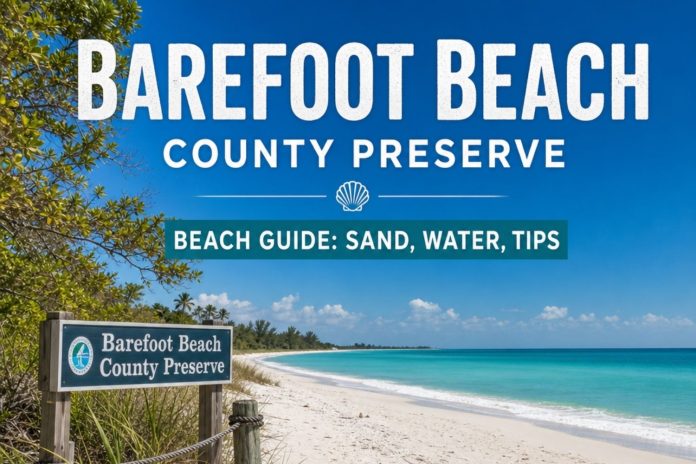
Barefoot Beach Preserve, Florida
You have to drive through a gated community of Gulf front mansions to reach Barefoot Beach Preserve, and the first time I did it I was genuinely convinced my GPS had made a mistake. It hasn’t. Tell the gatekeeper you’re headed to the beach and they’ll wave you straight through. What’s waiting on the other side is one of the last truly undeveloped barrier islands left on this coast, and I love this spot precisely because so few people bother to find out it’s there.
Barefoot Beach Preserve sits on 342 acres straddling the Collier and Lee County line, technically addressed in Bonita Springs but functionally the northernmost stretch of the greater Naples beach system, which is why you’ll find it mentioned in both areas. It’s one of the last undeveloped barrier islands on Florida’s southwest coast, with 8,200 feet of Gulf shoreline running south to Wiggins Pass, a coastal hammock thick with sabal palm and gumbo limbo, and a resident population of gopher tortoises that outnumber the people on a quiet weekday.
In this guide I’m walking you through the preserve itself, from the gated entrance road to the Saylor Trail at the far south end, going deep on what the sand and water are actually doing, scoring it honestly across every category that matters, and telling you exactly who this beach is built for. I’ll cover the drive in, the three parking lots, the nature trail, and what’s actually changed here since Hurricane Ian. I close with my own honest take on why this stayed one of my favorite stops on this whole stretch of coast.
The Vibe & Culture at Barefoot Beach Preserve
The Beach You Have to Know About to Find
There’s no sign from the main road telling you this beach exists. You have to already know.
Turn south off Bonita Beach Road onto Barefoot Beach Boulevard and the first thing you’ll hit is a guardhouse in front of a private community of Gulf front homes. This trips people up every single time, and I mean every time. You are not lost. Tell the attendant you’re headed to the county preserve at the end of the road and they’ll direct you straight through, no fee, no hassle, just a slow mile and a half past palm lined driveways and homes that make you wonder what it would be like to wake up here every day.
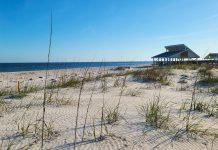
Once you clear the community, the character of the place flips completely. The developed world disappears, the road narrows, and you’re suddenly driving through actual coastal wilderness, dunes, sea oats, and a canopy of native vegetation that feels nothing like the manicured neighborhood you just left. This is a Collier County park, actively managed as a gopher tortoise preserve since 1990, and the whole place runs with a quieter, more conservation minded energy than any beach access point I’ve covered in this area.
The crowd that finds this place tends to already know what they’re looking for: locals who’ve made it their regular spot, shellers who’ve heard about the shelling, and a smaller number of visitors who did their homework before the trip. It is not undiscovered, and the lots do fill by midday in season, but it never feels like the developed core of Naples or Bonita Beach a few minutes north. I’ve had entire stretches of shoreline here with nobody else in sight, something I can’t say about most beaches this good.
Barefoot Beach Preserve Areas: Four Distinct Stops Along One Undeveloped Island
Barefoot Beach Preserve isn’t one flat stretch of sand, it’s a sequence, and where you park changes the experience more than at almost any other beach I’ve covered. Here’s how it actually breaks down as you move south through the gate.
The Gated Drive and Parking Lot 1
Preserve Entrance · Learning Center
The first parking lot you reach after clearing the residential gate is the most developed part of the preserve, and it’s also home to the Learning Center, a small nature building run largely by the volunteer Friends of Barefoot Beach Preserve group with displays on the island’s shells, birds, and tortoises. A butterfly garden and a cactus garden sit right alongside it, and from January through April trained docents are usually on hand to answer questions if you catch them at the right time.
This is where the crowd concentrates first, since it’s the closest lot to the entrance and has the most complete facilities, restrooms, showers, and the preserve’s main concession point. Families with younger kids tend to settle in here rather than push further down the island, and it’s an easy, low effort stop if you just want a straightforward beach afternoon without walking far from the car.
I always slow down through this lot specifically to check under parked cars before anyone pulls out. Gopher tortoises use the shade underneath vehicles constantly, and the rangers here genuinely mean it when they ask you to look before you back out. It’s a small ritual that tells you a lot about how seriously this place takes its wildlife.
Parking Lot 2 and the Main Beach
Mid-Preserve · Beach Crossovers
Lot 2 sits a short drive past the entrance and functions as the most straightforward beach access on the island, a paved lot with a direct boardwalk crossover onto wide, genuinely beautiful sand. This is the easiest stretch for anyone with mobility concerns, and the preserve keeps beach wheelchairs on hand here for exactly that reason.
The beach itself widens out considerably compared to the entrance area, and the water stays shallow and calm well out from shore, which is part of why families gravitate here almost as much as Lot 1. It’s noticeably quieter than the entrance lot even at peak times, mostly because fewer visitors realize there’s more preserve to explore past this point.
I think of Lot 2 as the sweet spot for most people. You get the wide open beach without the crowd concentration of the entrance, and it’s close enough to the restrooms and showers back at Lot 1 that you’re not sacrificing convenience for space. If you only have time for one stop here, this is a strong default.
Parking Lot 3 and the Saylor Trail
Far South End · Wiggins Pass
Drive all the way to the end of the unpaved loop road and you reach Lot 3, the wildest and least visited part of the preserve, and the trailhead for the Saylor Nature Trail. This 1.5 mile looped path winds through the coastal hammock between the dunes and the mangrove swamp, past gnarled gumbo limbo trees and thick native scrub, out toward Wiggins Pass at the very southern tip of the island.
The beach access from this lot is noticeably more secluded than either of the first two, and it’s also where the gopher tortoise density feels highest, likely because there’s simply less foot and car traffic to disturb their burrows. Shelling improves here too, since fewer people are working this stretch of sand on any given day. There’s also a canoe and kayak launch on the estuary side of this lot, with a numbered nature trail marked one through fifteen through the mangroves on the inland side of the island.
This is where I go when I actually want to disappear for a few hours. The walk to the pass itself, where you can watch the swift tidal current running between Barefoot Beach and Delnor-Wiggins Pass State Park directly across the water, is worth the extra effort on its own. Take the trail all the way through to the pass rather than turning back early. The extra quarter mile is worth it.
The Estuary Side and the Wiggins Pass View
Inland Waterway · Water Turkey Bay
The Gulf side of Barefoot Beach gets most of the attention, but the inland side of this barrier island is a genuinely different environment worth its own stop. Tidal creeks and mangrove swamps thread through the estuary side of the preserve, protected from motorboat traffic, functioning as a nursery for marine life and a paddling route for anyone who’s brought a kayak or canoe.
This is where the birding gets serious. Ospreys work this shoreline constantly, diving for fish and hauling their catch back to nests you can often spot from the trail, and long legged wading birds and pelicans treat this stretch as a permanent home rather than a stopover. Migrant species pass through heavily in spring and fall, and I’ve had some of my best bird photography moments on this coast right along the estuary trail markers.
Standing at the southern tip looking across Wiggins Pass at Delnor-Wiggins Pass State Park on the other side is one of those quiet moments that sticks with you. Two protected pieces of coastline facing each other across a pass that neither one lets you swim across safely, a reminder that even in a heavily developed part of Florida, there’s still real wild space if you know where to look for it.
Barefoot Beach Preserve Rankings: Expert Scores Across 11 Categories
These scores reflect the preserve as a whole, weighing the developed entrance area against the genuine wilderness you find the further south you push toward the Saylor Trail.
Sand Quality
8/10
Fine, light colored quartz sand with a real shell mix, consistent with the rest of the Naples and Bonita Springs coastline. Genuinely soft underfoot along the dry upper beach.
Hiking & Beach Walking
8/10
A full two miles of shoreline plus the 1.5 mile Saylor Trail loop through coastal hammock. The walk from Lot 3 out to Wiggins Pass is some of the best short hiking on this coast.
Shelling at Barefoot Beach
8/10
Genuinely good, especially after a storm or strong wind at low tide. The stretch near Lot 3 sees noticeably less pressure than the entrance area and shells better because of it.
Water Conditions
8/10
Clear, shallow, and calm most of the year. Currents pick up noticeably right at Wiggins Pass itself, so don’t try to swim across it.
Scenery & Natural Beauty
9/10
One of the last truly undeveloped barrier islands on this coast, with dunes, coastal hammock, and mangrove estuary all within one preserve.
Birding & Wildlife
9/10
Gopher tortoises are the signature sighting, alongside ospreys, wading birds, dolphins offshore, and sea turtle nests through the summer. The wildlife density here is hard to match anywhere else in the Naples area.
Family Friendliness
7/10
Calm, shallow water and beach wheelchairs work in its favor, but there are no lifeguards and the walk from the gate takes real patience with younger kids in the car.
Dog Friendliness
1/10
No pets of any kind are permitted in the preserve. This is an active tortoise conservation site, and the rule is enforced without exception.
Solitude & Peace
7/10
Genuinely quiet compared to the mainstream Naples and Bonita beaches, though the lots do fill by midday during spring break and peak winter season.
Entertainment & Nightlife
2/10
There’s essentially none, and that’s the entire point of this place. A single small food option exists near the entrance and that’s the extent of it.
Parking & Beach Access
5/10
The gated drive trips up first timers, the fee runs around $10 a vehicle, and the lots close for the day once full. Arrive early, especially in season.
Barefoot Beach Sand & Water: Deep-Dive Analysis
Sand Composition & Texture
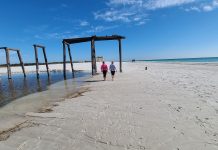
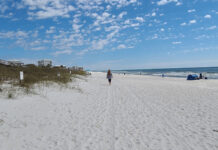
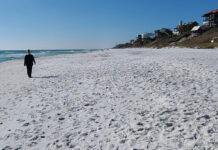
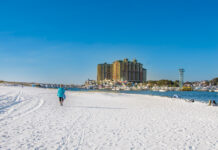
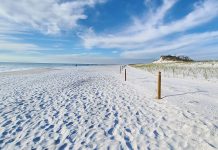
The single biggest thing you’ll notice walking onto Barefoot Beach is how little it’s been touched. The sand runs a soft, light cream color, fine underfoot with a genuine shell mix worked into it, consistent with the quartz and shell sand you find across the rest of the Naples and Bonita Springs coastline. What sets it apart isn’t a different composition, it’s the near total absence of foot traffic pressure that keeps the upper beach and dune line looking closer to natural than almost anywhere else I’ve walked on this coast.
Hurricane Ian hit this island hard in 2022, and the recovery is part of the story now. Storm surge damaged the dune system and the mangrove fringe along the estuary side, and the preserve’s gopher tortoise population, which numbered in the hundreds before the storm, was hit hard by flooding. It’s been rebuilding steadily since reopening in late 2023, and walking the trail today you’ll still see regrading work and younger dune vegetation alongside the older growth that survived. That resilience is genuinely part of what makes this place worth understanding, not just visiting.
-
Sand Color. Soft cream white, brightest at midday, with a warmer tone in early morning light. Less blinding than the purest Panhandle beaches, closer to the rest of the Naples and Collier County coastline.
-
Texture. Fine with a genuine shell mix, softer and less trafficked than the beaches south of here near downtown Naples. The dry upper beach stays comfortable underfoot most of the day.
-
Grain Size. Quartz based like the rest of this coast, with enough shell content mixed in to give it real texture rather than a powder fine feel. Consistent with the broader Naples sand system.
-
Shell Content. Good to excellent, especially after a storm or strong onshore wind at low tide. Sand dollars and a genuine variety of shells wash up here more consistently than at the busier mainland Naples beaches.
-
Walking Comfort. Excellent along the full 8,200 foot stretch, with the section near Lot 3 and the Saylor Trail offering the firmest, least churned sand on the island.
-
Barefoot Rating. 8/10 most of the year. Walk the wet sand at the waterline on the hottest afternoons and the quartz content keeps things comfortable even in peak summer.
Water Conditions at Barefoot Beach
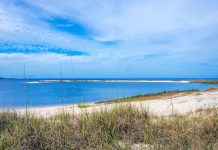
The Gulf here stays calm and shallow for most of its length, sheltered enough that it’s genuinely one of the easier places on this coast to bring a nervous swimmer. The one real exception is right at Wiggins Pass itself, at the southern tip near the Saylor Trail, where the tidal current running between the Gulf and Water Turkey Bay picks up sharply. That current is exactly why this pass exists as a natural inlet, and it’s not a place to swim across no matter how calm the rest of the beach looks that day.
-
Water Clarity. Good on calm days, with visibility dropping after heavy rain pushes tannin stained water out of the estuary side. Clearest in the dry winter and spring months.
-
Water Color. Turquoise to soft green close to shore, shifting to a deeper Gulf blue further out, with almost no development on the horizon to interrupt the view.
-
Wave Action. Gentle to calm along the main beach, with a genuinely stronger current right at Wiggins Pass. Stay well clear of the pass itself if you’re not a confident swimmer.
-
Swimming Quality. 8/10 along the main beach. There are no lifeguards anywhere on the preserve, though complimentary life vests and children’s life jackets are available to borrow near the entrance.
-
Water Sports. Kayaking and canoeing are genuinely good on the estuary side near Lot 3, with a marked canoe trail through the mangroves. This is not a paddleboard or surf beach on the Gulf side.
Dogs & Pet Accessibility at Barefoot Beach Preserve
Are Dogs Allowed on the Sand? NO.
Barefoot Beach Preserve is an active gopher tortoise conservation site, and pets of any kind, including one left in a car in the lot, are not permitted anywhere within the preserve boundaries. This covers the beach, the trails, and the parking areas alike.
Where Dogs Are Allowed
- ✗None. There are no pet friendly areas anywhere inside Barefoot Beach Preserve, on the sand or off it.
Where Dogs Are NOT Allowed
- ✗The entire preserve, including the beach, the Saylor Trail, the coastal hammock, and all three parking lots.
Paws on the Ground Reality
This rule is enforced consistently, and for good reason. The preserve’s gopher tortoise population is still recovering from Hurricane Ian, and keeping the whole property pet free is part of how that recovery actually works. Even a well behaved, leashed dog can spook wildlife that’s already under enough pressure here.
If you’re traveling with a dog and still want a beach day nearby, Bonita Beach Dog Park at Lovers Key State Park, a short drive north, offers genuine off leash water access built for exactly that purpose. For a longer walk on solid, shaded ground, Collier-Seminole State Park to the south welcomes leashed dogs on its hiking trails and even in its campground.
Crowd Levels and the Overall Feel of Barefoot Beach Preserve
Barefoot Beach runs on the same broad Naples and Bonita Springs calendar as the rest of this coast, but the crowd here stays lighter across every season simply because fewer visitors know to look for it.
- Snowbird season (November through April): the busiest stretch, with lots filling by late morning on weekends and holidays. Weekday mornings are still genuinely quiet.
- Spring break: the one window where this preserve feels close to full, especially at Lots 1 and 2.
- Summer (June through September): quiet and hot, with the best shelling odds after afternoon storms and noticeably fewer visitors overall.
- Fall (October and November): the sweet spot, with lighter crowds and water still warm from summer.
Who Is Barefoot Beach Preserve Really For?
✓ Who Will Love Barefoot Beach Preserve
-
Anyone chasing genuine solitude on Gulf sand without needing a boat to get there
-
Wildlife watchers hoping to see gopher tortoises, ospreys, and dolphins in the same afternoon
-
Shell collectors willing to walk to Lot 3 for the better stretch of sand
-
Hikers and walkers who want a real nature trail attached to their beach day
-
Sunset watchers looking for open western sightlines with almost no development in view
-
Couples and quiet travelers who’d rather drive through a gate than fight a crowded lot
✗ Consider Another Beach If…
-
You’re traveling with a dog. No pets of any kind are permitted anywhere in the preserve
-
You want a beach bar, restaurant, or real concession nearby. There’s almost nothing here on purpose
-
Driving through a gated community for a beach trip isn’t something you want to deal with
-
You need guaranteed parking on a busy holiday. The lots close once full, no exceptions
-
You’re chasing a lively, social beach scene. Head south toward Vanderbilt Beach instead
Things to Do at Barefoot Beach Preserve, Florida
This is a preserve first and a beach second, and the activities here lean naturally toward that. Here’s what actually fills a day.
-
Beach Walking. A full 8,200 feet of shoreline, firmest and least crowded near Lot 3. Early morning is the quietest window before the gate traffic picks up.
-
Hiking the Saylor Trail. A 1.5 mile loop through coastal hammock between the dunes and the mangrove swamp, ending at Wiggins Pass. Take the full route out to the pass rather than cutting back early.
-
Shelling. Genuinely good, best after a storm or strong wind at low tide. The stretch near Lot 3 sees less pressure and shells better because of it.
-
Gopher Tortoise Watching. A genuine signature of this preserve. Look along the trail edges and in the shade under parked cars, and always give them space rather than approaching directly.
-
Kayaking and Canoeing. Best on the estuary side near Lot 3, with a marked mangrove trail on the inland waterway. Bring your own gear, since there’s no rental concession on site.
-
Birdwatching. Ospreys, wading birds, and pelicans work the estuary side constantly, with migrant species passing through heavily in spring and fall.
-
Sunset Watching. Wide open western views with no development on the horizon, best from the main beach near Lots 1 and 2.
Local Knowledge and Practical Advice
A few things I’ve picked up walking this preserve more times than I can count:
-
Don’t stop at the residential gate. Just tell the attendant you’re headed to the county preserve at the end of the road, and they’ll wave you through. You are not lost, and you are not trespassing.
-
Always check under your car before you leave. Gopher tortoises use parked vehicles for shade constantly, and it’s a genuine local habit to look before backing out.
-
Bring a card or your phone for the parking fee. It runs around $10 a vehicle, paid by QR code or at a kiosk, and there’s no cash option at the unattended gate during off hours.
-
Leave the dog at home, no exceptions. This is an active tortoise conservation site, and pets of any kind are prohibited throughout the preserve.
-
Arrive early in season. The lots close for the day once full, and that can happen by late morning during spring break and peak winter weekends.
-
There are no lifeguards. Complimentary life vests and children’s life jackets are available to borrow near the entrance, but swim within your own limits.
-
Park at Lot 3 if you want the trail and the quietest beach. It’s an unpaved lot, but it’s worth the extra few minutes of driving to reach the Saylor Trail.
-
Sea turtle nesting runs through the summer months. Give any marked nests a wide berth and remove all gear from the beach by sunset.
-
There’s very little food on site. Pack water and snacks, since the only option near the entrance is minimal and not guaranteed to be open.
-
Watch the sky, not just the forecast. Afternoon storms build fast off the Gulf in summer, and this preserve has almost no shelter once you’re out on the trail or the far end of the beach.
Where to Stay Near Barefoot Beach Preserve, Florida
There’s no lodging directly inside the preserve, and nothing built right at the gate on purpose. Here’s how the nearby options break down.
Bonita Springs Gulf-Front Resorts
A short drive north along Hickory Boulevard puts you in Bonita Beach and Bonita Springs proper, where a handful of Gulf front resorts and condo rentals offer easier access without the daily gate drive. This is the most practical option if you want to visit the preserve more than once during a trip.
North Naples & Vanderbilt Beach
Staying near Vanderbilt Beach to the south puts you close to more resort amenities, restaurants, and nightlife, with Barefoot Beach a short drive away rather than a walk. This suits visitors who want the preserve as one stop among several rather than the center of the trip.
Camping at Collier-Seminole State Park
There’s no camping at Barefoot Beach itself, but Collier-Seminole State Park sits roughly 30 miles south along the Tamiami Trail, with full hookup and tent sites in a genuine mangrove wilderness setting. It’s the closest real camping option, and reserving ahead matters during the cooler months.
Inland Bonita Springs & Estero
For lower rates, the inland stretch of Bonita Springs and neighboring Estero along US 41 offers a wider range of budget to mid-range hotels for visitors willing to drive fifteen to twenty minutes to reach the preserve.
What Makes Barefoot Beach Preserve Different from Nearby Beaches
Barefoot Beach stands apart because it’s the rare stretch of this coast that was deliberately kept undeveloped rather than left over by accident.
A few features make it distinct:
A gated drive that filters out the crowd
The residential gate scares off more visitors than the parking fee does. That accidental filter is a real reason this beach stays quieter than places with objectively easier access.
A working conservation site, not just a pretty beach
Active gopher tortoise relocation, a staffed nature center, and a volunteer Friends group set this preserve apart from a standard county beach park. The wildlife focus here is genuinely part of the daily operation, not a side note.
A real trail attached to the sand
The Saylor Trail gives you a legitimate hiking experience, coastal hammock and mangrove included, layered directly onto a beach day. Very few Southwest Florida beaches offer that combination in one stop.
Barefoot Beach Preserve vs. Nearby Beaches
Barefoot Beach vs. Delnor-Wiggins Pass State Park
These two sit directly across Wiggins Pass from each other and share the same barrier island geology, but Delnor-Wiggins is a state park with more developed infrastructure while Barefoot leans more purely into wilderness and tortoise conservation. Choose Barefoot for the trail and the quiet. Choose Delnor-Wiggins for the observation tower, the reef snorkeling, and slightly easier parking logistics.
Barefoot Beach vs. Vanderbilt Beach
Vanderbilt Beach, a short drive south, is wider, busier, and backed by resort hotels with a noticeably more social energy. Choose Vanderbilt for convenience and amenities. Choose Barefoot Beach for genuine solitude and wildlife.
Barefoot Beach vs. Bonita Beach and Lovers Key
Bonita Beach, just north across the county line, is more developed and easier to reach without the gated drive, while Lovers Key State Park further north offers a comparable undeveloped, wildlife heavy experience with dog friendly options Barefoot doesn’t have. Choose Barefoot for the tortoises and the trail. Choose Lovers Key if you’re traveling with a dog and want a similar wild feel.
Bottom line: Barefoot Beach Preserve is the version of this coast that chose conservation over convenience, and it shows in every part of the visit, from the gated drive to the tortoise crossings to the trail out to the pass. If you want a beach that still feels genuinely wild this close to Naples and Bonita Springs, this is it.
Barefoot Beach Preserve, Florida: Frequently Asked Questions
Do I have to stop at the gate to get to Barefoot Beach Preserve?
No. The gate belongs to a private residential community, but visitors are waved straight through to the county preserve at the end of the road. Just tell the attendant you’re headed to the beach.
Are dogs allowed at Barefoot Beach Preserve?
No. This is an active gopher tortoise conservation site, and pets of any kind are prohibited throughout the preserve, no exceptions.
How much does it cost to park at Barefoot Beach Preserve?
Around $10 per vehicle, paid by QR code or at a kiosk, unless you’re carrying a current Collier County beach parking permit. Bring a card or your phone, since cash isn’t always accepted at unattended times.
Is there a lifeguard at Barefoot Beach Preserve?
No. There are no lifeguards anywhere on the preserve, though complimentary life vests and children’s life jackets are available to borrow near the entrance.
What is the Saylor Trail?
A 1.5 mile looped hiking trail through the preserve’s coastal hammock, accessible from Parking Lot 3, running between the dunes and the mangrove swamp out to Wiggins Pass at the island’s southern tip.
Is Barefoot Beach good for shelling?
Yes, genuinely good, especially after a storm or strong onshore wind at low tide. The stretch near Lot 3 sees less foot traffic than the entrance area and tends to shell better because of it.
Did Barefoot Beach Preserve recover from Hurricane Ian?
Largely yes. The preserve reopened in November 2023 after storm surge damage, and it’s been steadily rebuilding since. The gopher tortoise population, hit hard by the storm, has been recovering with active support from park staff and volunteers.
Can I swim at Wiggins Pass?
No. The tidal current running through the pass at the southern tip of the preserve is genuinely dangerous, even when the rest of the beach looks calm. Stay on the main beach for swimming.
Is Barefoot Beach Preserve crowded?
Less crowded than most Naples and Bonita Springs beaches, largely because the gated drive filters out casual visitors. It does fill by midday during spring break and peak winter weekends, so arriving early matters.
Is Barefoot Beach Preserve in Naples or Bonita Springs?
Both, functionally. The preserve’s mailing address is Bonita Springs, and it sits right at the Collier and Lee County line, which is why it shows up as a stop in guides to both areas.
Patti’s Perspective: My Honest Take on Barefoot Beach Preserve
I still remember the first time I drove up to that gate. I genuinely thought I’d typed the wrong address into my GPS, because everything about the entrance says private community, not public beach. I want to save you that moment of doubt: just tell the gatekeeper you’re going to the beach. That’s it. They’ll wave you through, and a mile and a half later the whole character of the drive changes completely.
I love this spot, genuinely, more than most places I’ve covered on this coast. It’s tucked away in a way that keeps it from ever feeling like the rest of Naples and Bonita Springs, and the walking here is some of the best I’ve done in Southwest Florida. There’s something about knowing most visitors to this area never bother to find this place that makes every gopher tortoise sighting and every quiet stretch of sand feel a little more earned.
What stays with me most is how deliberate the quiet feels. This isn’t an accident of geography, it’s an actively managed preserve, and you can feel that intention in the trail signage, the tortoise crossing reminders, and the volunteers who show up to keep it this way. Walking the Saylor Trail out to Wiggins Pass, watching the current run between here and Delnor-Wiggins Pass State Park on the other side, is the kind of moment that reminds me why I keep doing this work.
My verdict: 8/10. A genuinely quiet, undeveloped stretch of Gulf coast that most visitors to Naples never find, held back only by the total dog ban and the extra effort it takes to get through the gate. If you want to know what this coastline looked like before the resorts arrived, this is the closest you’ll get.
Want to Live by the Water?The neighborhoods surrounding Barefoot Beach Preserve, from the gated Gulf front community at the preserve entrance to the wider Bonita Springs and North Naples market, offer some of the more distinctive waterfront real estate on this coast, prized specifically for the undeveloped preserve sitting right next door.The market here draws buyers who want beach proximity without a busy commercial beach town attached to it, along with retirees and second home owners who’ve discovered this quieter corner of Collier and Lee County. Pricing runs at a real premium for anything directly inside the gated community, with more accessible options a short drive north and east.If living near this kind of protected coastline is something you’re considering, whether full time, part time, or as an investment, it’s worth exploring what’s available in this area.Explore Waterfront Living at LiveByTheWater.com
Real estate referral partner