




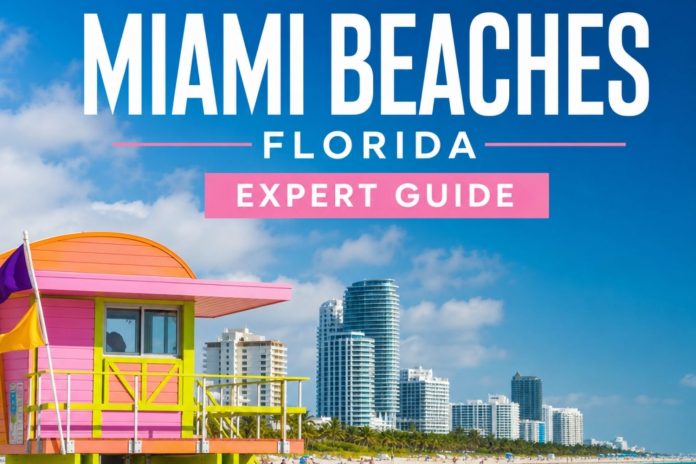
Miami Beach, Florida: South Beach, Mid Beach & North Beach
I have pictures of myself on this beach as a toddler. I walked it as a teenager, came back for spring break, brought my own four kids here when they were small, and now I walk it again as a midlifer figuring out who I am next. Miami Beach is the one stretch of sand that has been with me my entire life, and after everything I have learned researching sand for a living, I can tell you it is not the same sand at all. It just knows how to look like it is.
Miami Beach is a barrier island, three and a half miles from the mainland at its closest point, separated from the city of Miami by Biscayne Bay. It runs about nine miles north to south, from South Pointe Park at the tip to the Surfside town line, and every guidebook divides it the same three ways I am dividing it here: South Beach, the famous stretch south of 23rd Street with the Art Deco buildings and the Ocean Drive scene, Mid Beach, the resort corridor from 23rd to 63rd Street built around the Fontainebleau and the Faena District, and North Beach, the residential, locals-first stretch from 64th Street up to the Surfside line.
I grew up coming to this beach, so I do not have the luxury of writing about it as a stranger discovering something new. What I have instead is forty years of watching it change and enough research into how Florida beaches actually work to tell you what is true and what is postcard. In this guide I am walking you through all seven distinct stretches of this island, giving you the real story on the sand, which is stranger and more engineered than most people realize, scoring the beach honestly across every category that matters, and telling you exactly who this beach is built for and who should look elsewhere. I close with what four decades on this sand actually taught me.
The Vibe & Culture at Miami Beach
Three Beaches Wearing One Name
South Beach gets photographed. Mid Beach gets booked. North Beach gets lived in. All three are technically the same nine miles of sand.
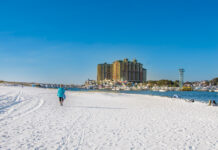
Cross onto the island from the MacArthur Causeway and you land in South Beach, and within about ten minutes you will understand why this place became shorthand for an entire aesthetic. Ocean Drive runs pastel and neon for a mile and a half, the Art Deco Historic District packs in one of the largest concentrations of 1930s and 1940s architecture anywhere in the country, and the beach itself, Lummus Park, is doing what it has done for close to a century: hosting the show. Music drifts out of open air cafes, muscle builders work the bars at 9th Street, and camera crews are genuinely not unusual. This is not a quiet beach and it was never trying to be one.
Head north past 23rd Street and the volume drops fast. Mid Beach is where Miami Beach’s resort history actually lives, Morris Lapidus curves at the Fontainebleau and Eden Roc, the newer art driven Faena District, condo towers full of people who treat this as home rather than vacation. It is polished rather than loud. Keep going past 63rd Street into North Beach and the register shifts again. You will hear more Spanish and Haitian Creole, the buildings get shorter and older, MiMo architecture from the 1950s and 60s lines Collins Avenue, and the beach itself, particularly at North Shore Open Space Park, still has actual dune vegetation, something you will not find anywhere south of 63rd Street.
Seasonally, this island runs on a different calendar than most Florida beaches. Winter, not summer, is peak season here, since South Florida stays warm while the rest of the country freezes, and the Atlantic side of the island rarely dips below the mid 70s even in January. Spring break brings its own specific chaos to South Beach in March. Summer is hot, humid, and thinner on tourists but thick with humidity and the occasional afternoon storm. Hurricane season runs June through November, and I always check the tropics before booking anything down here. What never changes is the sunrise. This is an east facing beach, which means the daily show happens in the morning, not the evening, and almost nobody outside the local runners and dog walkers seems to know that.
Miami Beach Areas: Seven Stretches, Three Very Different Islands
Nine miles sounds short until you actually walk it end to end, which I have done more times than I can count. Here is how the island actually breaks down, south to north, and what you will find at each stop.
South Pointe Park & SoFi
Southern Tip · Family Park & Fishing Pier
The first thing you notice at the very southern tip of the island is how different it feels from everything you have heard about South Beach. South Pointe Park is seventeen landscaped acres with rolling lawns, a 450 foot fishing pier, and a front row seat to watch cruise ships slide out of Government Cut toward the open Atlantic. The sand here is wide and well kept, and because the park absorbs so much of the foot traffic, the beach itself never feels as packed as what you will find ten blocks north.
You will find families here more than anywhere else on the southern half of the island. Strollers, kids at the splash pad, retirees fishing off the pier, a genuinely mixed local and visitor crowd rather than the see and be seen energy that starts a few blocks up. The neighborhood behind it, SoFi, short for South of Fifth, is quietly the most expensive real estate on the island, full of high rise condos and a noticeably calmer street life than the rest of South Beach.
This is where I send anyone who tells me they tried South Beach once and found it exhausting. Walk the promenade along the jetty in the early morning, watch the boats work the inlet, and you will get an entirely different read on this island than the one Ocean Drive gives you at midnight. There is also a small, real surf break here, First Street Beach, right along the jetty, small and inconsistent but genuine, one of the only spots on this whole coast where you will actually see a longboard in the water.
Lummus Park & the Art Deco Beachfront
5th to 15th Street · The Classic South Beach Scene
This is the beach you have seen in every movie and postcard. Lummus Park runs a ten block stretch between Ocean Drive and the sand, and the beach here is wide, the sand is pale and well groomed, and the colorful lifeguard towers, each one an individually designed piece of public art, have become the unofficial visual shorthand for the entire city. The Beach Walk, a paved path shared by joggers, cyclists, and skaters, cuts through the middle of the park and never really goes quiet.
The crowd here is the crowd you expect: tourists from everywhere, models and their photographers, bodybuilders working the outdoor gym at 9th Street known locally as Muscle Beach, topless sunbathers, beach vendors, volleyball games between 9th and 11th Street, and around 11th and 12th Street, a stretch that has been Miami’s best known LGBTQ beach for decades, flying its own pride colored lifeguard tower. This is not a nude beach, but it is a beach where nobody is surprised by much of anything.
Honestly, I do not come here for solitude and neither should you. I come here to feel the pulse of the place, to watch the Art Deco Welcome Center crowd at 10th Street, and to remember what this beach looked like when I was young enough to think all of Florida was this loud. It still is, in this ten block stretch, and there is something to be said for a beach that has never once apologized for what it is.
Upper South Beach: Lincoln Road & the 21st Street Corridor
15th to 23rd Street · Where Locals Actually Shop
North of Lummus Park the beach itself does not change dramatically, still wide, still pale sand, but the energy on land shifts noticeably. This stretch backs up to Lincoln Road, the pedestrian shopping and dining corridor that locals actually use rather than the tourist heavy blocks around Ocean Drive, and the beachfront hotels get taller and more upscale as you move north toward 23rd Street.
The crowd thins compared to Lummus Park, and skews slightly older and more local, people who live in the high rises along Collins Avenue and treat this stretch as their regular beach rather than a bucket list stop. Dogs are not permitted on the sand here, the same as everywhere else on the island outside Bark Beach, so leave that particular errand for North Beach.
I like this stretch for an early swim before Lincoln Road wakes up, then breakfast at one of the sidewalk cafes a few blocks over. It gives you the Art Deco energy without the full Ocean Drive circus, and it is the honest transition zone between South Beach’s chaos and Mid Beach’s polish.
Mid Beach: Faena District & Resort Row
23rd to 45th Street · Fontainebleau, Eden Roc & Faena
Cross 23rd Street and Miami Beach changes its entire personality. This is Mid Beach, and the beach itself widens considerably compared to South Beach, since much of this stretch has been rebuilt and re sanded more recently and more generously. The hotels lining Collins Avenue here are not boutique Art Deco buildings, they are full scale resorts, the curved white tower of the Fontainebleau, its Morris Lapidus designed neighbor the Eden Roc, and further south the Faena District, an arts corridor built by Argentine developer Alan Faena that includes a gilded woolly mammoth skeleton sitting steps from the sand.
The crowd here is overwhelmingly hotel guests, since much of this beachfront is lined with resort chair and umbrella service, and the vibe is polished rather than raw. You will see far fewer street vendors and far more staff in matching resort polos. It is quieter than South Beach in terms of street noise, but it is not empty, the pools and beach clubs at these hotels run at full volume most of the year.
I always walk through the Fontainebleau lobby even when I am not staying there, because the architecture alone is worth the detour, and grabbing a drink at the lobby bar gets you the atmosphere without the room rate. If you want the version of Miami Beach with better sand and fewer street performers, this is where you come, understanding that you are trading grit for polish.
Upper Mid Beach: The Quiet Stretch
45th to 63rd Street · Residential, Uncrowded, Underrated
This is the part of Mid Beach most visitors skip entirely, and I think that is a mistake. North of the Fontainebleau, the resort towers thin out and give way to a more residential stretch of condos and smaller hotels. The beach itself stays wide and well maintained, since it falls within the same nourishment zones as the resort corridor to the south, but the crowd drops off sharply once you are a few blocks past 45th Street.
You will find mostly local residents here, people walking dogs on the paved path, retirees on morning walks, a scattering of hotel guests from the smaller independent properties that cluster around 50th to 55th Street. It is the kind of stretch where you can actually hear the waves rather than a hotel pool DJ, and on a weekday morning I have had long sections of this sand entirely to myself.
If solitude on Miami Beach sounds like a contradiction, this is where you go to test that theory. It will not be empty the way a wilderness beach is empty, this is still a dense barrier island city, but it is the closest this particular nine miles gets to peaceful.
North Beach: Oceanside Park & North Shore Open Space Park
64th to 87th Terrace · Local, Uncrowded & the Only Real Dunes on the Island
Cross 63rd Street and you have left the resort version of Miami Beach behind entirely. North Beach is where the city’s actual year round population lives, and the built environment reflects it, low rise MiMo apartment buildings from the 1950s and 60s, small family restaurants, fewer chain hotels, and a beach that serves residents first and tourists second. North Beach Oceanside Park, roughly 73rd to 79th Street, is a green corridor directly on the Atlantic with fitness equipment, shaded benches, and a noticeably older and more local crowd than anything south of it.
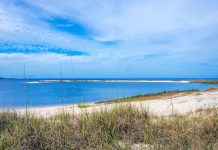
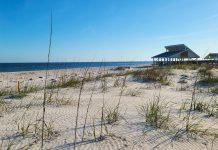
Push a little further north and you reach North Shore Open Space Park, running from about 78th Street to 87th Terrace, and this is the one stretch of the entire island where the beach still looks something like it did before development. Raised wooden boardwalks cross real dune vegetation, sea oats and railroad vine holding sand in place the way nature actually intended, rather than a seawall or a hotel foundation. It is a genuinely different sensory experience than anywhere south of it, quieter, greener, less manicured, and I always slow down when I walk this stretch. Miami Beach’s one designated dog beach, Bark Beach, sits at 80th and 81st Street, the only place on the entire island where the city allows dogs on the sand.
I bring visitors here specifically to prove that Miami Beach has a quiet side, because almost nobody who has only seen South Beach believes me otherwise. It will never make anyone’s list of must visit nightlife, and that is exactly the point.
Surfside: The Quiet Mile
88th to 96th Street · A Separate Town, A Slower Pace
Technically Surfside is not Miami Beach at all, it is its own incorporated town, but it sits directly on the same barrier island and shares the same sand, so I am including it here as the natural endpoint of this walk. Cross 87th Terrace and you leave the city of Miami Beach and enter a town of about one square mile, home to roughly six thousand residents and a beach that runs a clean, uninterrupted mile from 88th to 96th Street.
The crowd here skews toward Surfside residents, guests of the Four Seasons Hotel at The Surf Club, and visitors who have specifically sought out the quieter alternative to South Beach a few miles south. The commercial strip along Harding Avenue has a genuine small town feel, family run cafes and delis rather than nightclubs, and the pace on the sand matches the pace on the street.
Surfside also runs a public art installation called Turtle Walk, colorful loggerhead sculptures scattered along the beach path that raise awareness for the sea turtles that nest here every summer, and I appreciate a beach town that puts its conservation messaging out in a way that does not feel like a lecture. If South Beach is the loud opening act of this island, Surfside is the quiet last word.
Miami Beach Rankings: Expert Scores Across 11 Categories
These scores weigh the full nine mile stretch, which means South Beach’s crowds and nightlife get balanced against the genuine quiet you will find at Surfside and North Shore Open Space Park.
Sand Quality
6/10
Tan to golden, coarser than Panhandle quartz, and mostly trucked in from Central Florida mines rather than naturally deposited. Good, walkable sand, but honest expectations matter here.
Hiking & Beach Walking
8/10
Nearly nine uninterrupted miles on the paved Beachwalk, flat and easy, with a genuinely different feel every couple of miles. Loses a point to less developed beaches for the constant urban backdrop.
Shelling at Miami Beach
3/10
Not a shelling beach. Decades of nourishment and daily raking leave mostly coquina fragments. If shells matter to your trip, this is not your beach.
Water Conditions
7/10
Warm nearly year round thanks to the nearby Gulf Stream, generally calm surf, decent but not Caribbean clear visibility. Watch for rip currents near jetties and piers.
Scenery & Natural Beauty
8/10
Pastel Art Deco skyline, palm lined streets, cruise ships sliding through Government Cut. This is urban beauty layered onto a beach, not untouched nature, and it earns its score on those terms.
Birding & Wildlife
6/10
Pelicans, terns, and gulls work the shoreline daily, loggerhead and green sea turtles nest April through October, and dolphins show up offshore. Not a premier wildlife destination, but far from empty.
Family Friendliness
7/10
South Pointe Park, Mid Beach resorts, and Surfside all work well for families. South Beach’s nightlife energy is less suited to young kids, so choose your stretch on purpose.
Dog Friendliness
3/10
Dogs are banned from nearly the entire beach. One designated Bark Beach at 80th and 81st Street is the only legal option on the sand.
Solitude & Peace
3/10
South Beach is genuinely never quiet. Upper Mid Beach, North Shore Open Space Park, and Surfside offer real relief, but the island as a whole is built for crowds.
Entertainment & Nightlife
10/10
Nothing else on this coast comes close. Ocean Drive, Lincoln Road, resort nightclubs, and a scene that runs later than almost anywhere else in Florida.
Parking & Beach Access
5/10
Metered and pricey in the South Beach core, cheaper north of 63rd Street, and towing is genuinely aggressive if you misread the signage. Garages are the reliable option.
Miami Beach Sand & Water
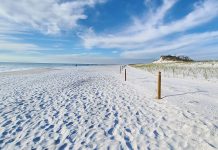
The sand along Miami Beach runs wide and flat for most of its nine miles, easy to walk for long stretches without fighting soft, deep patches. The upper beach stays soft enough for a proper sandcastle once you add water, while the packed sand right at the waterline gives you a firm, easy surface for walking or jogging. It runs a shade darker and coarser than the sugar white sand you will find further north on the Florida coast, and it can hold real heat by midday, so don’t be surprised if you head for the water sooner than you planned in July.
The water itself runs turquoise to green close to shore on a calm day, with decent but not crystal clear visibility depending on recent wind and weather. Entry is gradual almost everywhere along this stretch, and the surf stays generally mild, though rip currents are real near piers, jetties, and the groins built into the beach to slow erosion, so always check the flags before you swim past your knees.
-
Walkability. Wide and flat nearly the whole length of the island, with a paved Beachwalk running alongside the sand for anyone who wants a break from walking in it.
-
Softness & Playability. Soft enough on the upper beach for sandcastles and games, firmer and easier underfoot right at the waterline.
-
Barefoot Comfort. Comfortable most mornings, but the darker, coarser sand heats up fast under a midday summer sun, so plan your walk accordingly.
-
Swimmability. Gradual entry and generally calm water with lifeguard coverage the length of the island. Check the flags and give piers and jetties a wide berth.
Want the full geology, grain composition, and the complete sand and water condition ratings? I broke it all down separately in Sand & Shore: Miami Beach.
Dogs & Pet Accessibility at Miami Beach
Are Dogs Allowed on the Sand? RESTRICTED.
Miami Beach keeps dogs off nearly all of its nine miles of sand, with one clearly designated exception up in North Beach.
Where Dogs Are Allowed
- ✓Bark Beach at 80th and 81st Street, the only stretch of Miami Beach sand where your dog is legally allowed off the boardwalk.
- ✓The paved Beachwalk running the length of the island, where leashed dogs are welcome on the path itself, just not on the sand beside it.
Where Dogs Are NOT Allowed
- ✗Lummus Park and the entire Ocean Drive stretch of South Beach, no exceptions.
- ✗South Pointe Park’s beach, Mid Beach’s resort corridor, and every other stretch of sand outside Bark Beach.
Paws on the Ground Reality
You won’t find water bowls or shade structures built specifically for dogs at Bark Beach, so bring your own water and a way to cool your dog down between swims. The sand itself runs warm underfoot by midday the same way it does everywhere else on this island, so early morning is genuinely the kindest time to bring a dog here in summer. Enforcement is real. Miami Beach patrols its beaches regularly, and you will be asked to leave if you are caught with a dog outside Bark Beach, so don’t count on a quiet stretch of Mid Beach sand looking the other way. If your dog needs a longer walk than a beach visit allows, the paved Beachwalk itself is dog friendly the entire nine miles, making it a solid alternative to actual sand time.
Crowd Levels and the Overall Feel of Miami Beach
Compared with quieter Florida beaches, Miami Beach runs busy essentially year round, and that is by design rather than accident. This is the most internationally recognized beach in the state, and the crowd reflects that everywhere south of 63rd Street. Head north of that line and the crowd shifts to something closer to a normal residential beach town.
You will find a different crowd depending on where you stand. South Beach draws visitors from everywhere on earth, spring breakers, bachelorette parties, models, and a genuine international mix. Mid Beach skews toward resort guests and condo residents. North Beach and Surfside skew local, older, and quieter. The overall feel also shifts by season more than most people expect from a place that stays warm year round:
- Winter: peak season, since South Florida stays warm while most of the country is cold, hotel rates and crowds both climb
- Spring: spring break brings a specific, well known intensity to South Beach in March, while Mid Beach and North Beach stay comparatively calm
- Summer: hot, humid, and quieter on the tourist front, though still busy on weekends with local day trippers, and afternoon storms are common
- Fall: my favorite window here, warm water, thinner crowds, though you are watching the tropics through the heart of hurricane season
Who Is Miami Beach Really For?
✓ Who Will Love Miami Beach
-
First time visitors who want the classic, iconic Miami experience: Art Deco architecture, Ocean Drive, and a beach that doubles as a stage
-
Couples and groups chasing genuine nightlife, from beach clubs to late night clubs that do not slow down until sunrise
-
Architecture and design lovers, given the largest concentration of Art Deco buildings in the country plus MiMo era gems further north
-
Families who choose their stretch on purpose, South Pointe Park, Mid Beach resorts, or Surfside rather than the loudest blocks of South Beach
-
Northerners escaping winter, since this beach stays warm and swimmable nearly every month of the year
-
LGBTQ travelers, given the 12th Street beach’s decades long standing as one of the country’s best known LGBTQ beaches
✗ Consider Another Beach If…
-
You want genuinely untouched, natural sand and shoreline. This is an engineered, heavily renourished beach, not a wilderness one
-
You are a dedicated sheller. Decades of raking and nourishment leave almost nothing worth collecting
-
You are bringing a dog and want more than one small, restricted window of sand to work with
-
You want to avoid paying for parking entirely. Free parking is genuinely rare south of 63rd Street
-
You want true solitude on a Saturday afternoon. Even the quiet stretches here are quiet by Miami Beach standards, not by wilderness standards
Things to Do at Miami Beach, Florida
Miami Beach gives you more to do without leaving the sand than almost any beach I have covered. Here is what actually fills a day here.
-
Sunrise Walking. This is an east facing beach, so the daily light show happens in the morning, not the evening. Walk the Beachwalk at first light and you will have long stretches almost to yourself, even in South Beach.
-
Beach Walking. Nearly nine flat, paved miles connecting South Pointe Park to the Surfside line. Each stretch has a genuinely different personality, so a long walk here doubles as a neighborhood tour.
-
Pier Fishing. South Pointe Park’s 450 foot pier is the go to spot for shore fishing on the island, drawing anglers after snapper, snook, and the occasional small shark.
-
Surfing. Small and inconsistent, but real. First Street Beach near the South Pointe jetty catches occasional rideable waves, mostly in the fall and winter with the right east swell.
-
Water Sports. Jet skis, parasailing, and paddleboard rentals are easy to find throughout South Beach and Mid Beach. The calmer bay side around Sunset Harbour is the better call for beginners.
-
Art Deco Architecture. Self guided or docent led walking tours of the historic district cover Ocean Drive’s pastel hotels, many dating to the 1930s and 40s. Pair it with a stop at the Faena District’s gilded mammoth further north.
-
Wildlife Watching. Sea turtle nesting runs April through October, with loggerheads accounting for the vast majority of nests. Pelicans and terns work the shoreline daily, and dolphins are a regular offshore sighting.
-
Biking & Skating. The Beachwalk and Lummus Park’s paved paths are built for it. Citi Bike stations are scattered the length of the island for anyone without their own ride.
-
Nightlife. Ocean Drive’s sidewalk clubs, Lincoln Road’s restaurants and bars, and Mid Beach’s resort nightclubs give this island a nightlife scene with essentially no equal on this coast.
-
Bark Beach. The only legal dog beach on the island, at 80th and 81st Street. Bring water, a leash, and check current posted hours before you go.
Local Knowledge and Practical Advice
A few things I have picked up walking this beach across four decades:
-
Come for sunrise, not sunset. This island faces east. If you want a dramatic sky moment over water, set an alarm. Sunset here happens over the mainland skyline and Biscayne Bay, not the ocean.
-
Learn the flags before you swim. Green means calm, yellow means moderate caution, a single red means high hazard, double red means the water is closed, and purple means marine life like jellyfish or man o war have been spotted. Lifeguards are on duty 9am to 7pm.
-
Parking is cheaper the further north you go. Meters in the South Beach core run around four dollars an hour, while stretches north of 63rd Street run closer to a dollar. Garages are more predictable than street parking, and towing here is genuinely aggressive if you misjudge a sign.
-
Dogs belong at Bark Beach, and only Bark Beach. The 80th and 81st Street dog beach is the one legal option on the sand. Digging is not allowed and both dogs need current rabies tags.
-
Turtle nesting season runs April through October. If you are staying beachfront during those months, keep blinds closed or lights off after dark. Disoriented hatchlings following the wrong lights toward the road, rather than the water, is exactly what Miami Dade’s turtle program was created to prevent.
-
Sargassum shows up most in late spring and summer. Crews clean it daily, but if you catch a heavy week, the water will look less inviting than usual near the wrack line. It clears within a day or two of the cleanup crews working through.
-
Stay 100 feet clear of jetties and piers when you swim. That includes the South Pointe jetty and the groins built into the beach to slow erosion. Rip currents form around structures like these more reliably than anywhere else on this stretch.
-
The sand color can change block to block after a renourishment project. If you notice a subtle seam where the tone shifts, you are looking at where one truckload of sand met another. It is a small detail almost nobody else will point out to you.
-
Skip the car for getting between neighborhoods. A Citi Bike or a walk on the Beachwalk will get you from South Beach to Mid Beach faster than driving and searching for parking twice in one day.
-
Weekday mornings are the real secret. Even Lummus Park empties out considerably before 9am on a Tuesday. If solitude matters to you at all on this island, that is your window.
Where to Stay Near Miami Beach, Florida
Miami Beach has more lodging variety packed into nine miles than almost anywhere in Florida, from Art Deco boutique hotels to full scale resorts. Here is how the options break down.
South Beach: Ocean Drive & the Art Deco District
Boutique hotels along Ocean Drive and Collins Avenue put you inside the postcard, walking distance to everything, though rooms tend to run small and valet parking adds up fast. This is the pick for anyone whose whole trip is built around the South Beach scene.
South of Fifth (SoFi)
The quieter, more expensive southern tip of South Beach, high rise condos and a handful of luxury hotels near South Pointe Park. Good for anyone who wants proximity to South Beach without sleeping in the middle of the loudest blocks.
Mid Beach Resort Row
The Fontainebleau, Eden Roc, and Faena District properties offer full resort amenities, including private beach chair and umbrella service directly on the sand. Expect higher rates and a more polished, less street level experience than South Beach.
North Beach & Surfside
Smaller independent and MiMo era hotels in North Beach run noticeably cheaper than South Beach or Mid Beach, with a more residential, local feel. Surfside adds the ultra luxury option of the Four Seasons Hotel at The Surf Club, alongside quieter mid range choices along Harding Avenue.
Camping
There is no camping directly on Miami Beach. The nearest real option is Oleta River State Park in North Miami, about thirty minutes away, with tent and cabin sites tucked into mangrove and pine forest along the Intracoastal.
Downtown Miami & Brickell, Mainland
For lower rates and easy access via the free trolley or a short rideshare, the mainland neighborhoods of Downtown Miami and Brickell offer a much wider range of budget to mid range hotel options for visitors willing to day trip to the beach rather than sleep on it.
What Makes Miami Beach Different from Nearby Beaches
Miami Beach stands apart because almost nothing about it is accidental. Most Florida beaches are defined by what nature gave them. This one is defined by what a century of engineering and design decisions built on top of nature.
A few features make it distinct:
An east facing sunrise beach
Nearly every beach guide reflexively talks about sunset. This island faces the Atlantic to the east, which means sunrise is the daily event here, and most visitors never adjust their internal clock to catch it.
The largest Art Deco district in the country
Very few beaches anywhere pair a genuine architectural landmark district directly against the sand. Ocean Drive’s pastel hotels are not staged for tourists, they are a protected historic district with real preservation rules behind them.
A beach that is honestly, almost entirely rebuilt
Most of the sand under your towel arrived by truck or dredge at some point in the last fifty years. That is not a criticism, it is the reason this beach still exists at the width it does, and it makes Miami Beach one of the most studied nourishment projects in the country.
Three personalities in nine miles
South Beach, Mid Beach, and North Beach genuinely do not feel like the same place, and very few barrier islands in Florida pack that much contrast into a single connected walk.
Miami Beach vs. Other South Florida Beaches
These are the beaches visitors most often weigh against Miami Beach, and the honest read on when you would choose one over the other.
Miami Beach vs. Fort Lauderdale Beach
Fort Lauderdale Beach, about thirty minutes north, offers a wider paved promenade along A1A, easier and generally cheaper parking, and a more laid back, less architecturally dense atmosphere. Choose Miami Beach for the scene and the Art Deco backdrop. Choose Fort Lauderdale for an easier, less expensive day at the beach with a similar climate.
Miami Beach vs. Key Biscayne
Key Biscayne, a short drive south across the Rickenbacker Causeway, trades Miami Beach’s density and nightlife for a genuinely quieter, more natural barrier island experience at Crandon Park and Bill Baggs Cape Florida State Park. I am covering both in a dedicated guide, but the short version is that Key Biscayne is where you go when Miami Beach starts to feel like too much.
Miami Beach vs. Sunny Isles Beach & Bal Harbour
Head north past Surfside and the island’s personality shifts again toward a condo canyon of high rise towers with a quieter, more residential beach underneath. I cover that stretch, along with Haulover Beach, in its own guide, but generally it trades Miami Beach’s street level energy for a calmer, more upscale, more insulated beach day.
Miami Beach vs. Hollywood Beach
Hollywood Beach, about forty five minutes north, offers a wide paved Broadwalk, a strong local Cuban and Latin American community feel, and noticeably cheaper parking and dining. Choose Hollywood if you want a beach day that feels more like a neighborhood than a stage.
Bottom line: Miami Beach is the beach you visit for the full sensory experience, architecture, nightlife, people watching, and a genuine sense of occasion. If you want nature untouched, Key Biscayne and the beaches further from the urban core will serve you better. Miami Beach knows exactly what it is, and it has never once tried to be something quieter.
Miami Beach, Florida: Frequently Asked Questions
Is Miami Beach worth visiting?
Yes. Few beaches anywhere combine architecture, culture, warm water nearly year round, and a genuine sense of occasion the way this one does. Just go in knowing this is an urban, engineered beach experience, not a wilderness one.
Is Miami Beach crowded?
South Beach, especially Lummus Park and Ocean Drive, stays busy essentially year round. Mid Beach’s resort corridor and North Beach thin out considerably, and Surfside at the northern end is the quietest stretch of the whole island.
Where is the best parking at Miami Beach?
Garages are more reliable than street meters, especially in South Beach. Meters run roughly four dollars an hour in the South Beach core and closer to a dollar an hour north of 63rd Street. Use the PayByPhone app and read posted signage carefully, since towing is aggressive.
Are dogs allowed on Miami Beach?
Only at the designated Bark Beach at 80th and 81st Street. Dogs are prohibited on every other stretch of Miami Beach’s public sand.
When are lifeguards on duty at Miami Beach?
Miami Beach Ocean Rescue staffs 36 towers from South Pointe Park to 86th Street, daily from 9am to 7pm. Always check the posted flags before swimming, since conditions can change quickly.
Is the water clear at Miami Beach?
Moderately. On calm days visibility is decent a few feet down, but this is not a gin clear beach, and clarity drops after wind events or heavy seasonal Sargassum.
What is the best time of year to visit Miami Beach?
Winter is technically peak season here, since South Florida stays warm while much of the country is cold. I personally prefer fall for warm water and thinner crowds, while keeping an eye on the tropics during hurricane season.
What can you do at Miami Beach besides swim?
Quite a lot. Art Deco architecture tours, pier fishing at South Pointe, paddleboarding and jet skiing, biking the full length of the Beachwalk, sea turtle season wildlife watching, and nightlife that runs later than almost anywhere else in Florida.
Is Miami Beach good for families?
Yes, if you choose your stretch. South Pointe Park, Mid Beach’s resort corridor, and Surfside all work well for families. The loudest blocks of South Beach are better suited to adults.
Is Miami Beach better than Fort Lauderdale Beach?
It depends on what you want. Miami Beach wins on architecture, culture, and nightlife. Fort Lauderdale Beach wins on ease, cost, and a calmer overall pace. Both share a similar climate and a similar sand composition, so the real choice comes down to how much scene you want with your beach day.
Patti’s Perspective: My Honest Take on Miami Beach
I have a photo of myself as a toddler on this sand, and another from spring break as a teenager, and another with all four of my kids piled onto a towel at South Pointe Park when they were small enough to still want that. I came back again a few years ago, alone, in the middle of rebuilding my life in midlife, and walked the same stretch at sunrise before anyone else was out. Four completely different versions of me, on what looks like the same beach every single time.
Here is what took me the longest to understand, and what changed how I see this place entirely. This is not the same sand from my toddler photos. Most of it has been dredged, trucked, and rebuilt more than once since then, quietly, block by block, because the beach that supports this entire city’s economy could not survive without constant intervention. On the surface, it looks eternal. Underneath, it has been reinvented over and over just to keep looking that way.
That is not a criticism. If anything, it is the thing I respect most about this beach now that I know the whole story. It gets knocked down by erosion and storms, and someone rebuilds it, and it keeps showing up looking like nothing ever happened. I have spent the last several years of my own life doing something similar, starting over more than once and learning to look steady on the surface while everything underneath was quietly being rebuilt. Walking this particular beach as a midlifer, knowing what I know now about how it actually survives, hits different than it did when I was a kid who just thought the sand was pretty.
My honest caveat: if you only ever see Lummus Park at 2pm on a Saturday, you have seen the loudest hour of the loudest ten blocks on a nine mile island, and you will walk away with a skewed picture. Walk north. Walk early. Find the dunes at North Shore Open Space Park and the quiet mile at Surfside. That is where this island tells you the truth about itself.
My verdict: 7/10. Miami Beach earns its fame honestly on architecture, culture, and nightlife, and it is genuinely one of the most distinctive beach experiences in the country. It loses points on natural sand quality and solitude, since so much of what you are standing on was engineered rather than deposited by the Gulf Stream over centuries. Come for the show. Stay long enough to find the quiet mile at the end of it.
Want to Live by the Water?Miami Beach and the surrounding barrier island communities offer some of the most recognizable oceanfront real estate in the country, from Art Deco condos in South Beach to resort branded residences in Mid Beach and the quieter single family streets of Surfside just north of the city line.The market here draws international buyers, retirees chasing year round warmth, and remote workers who want beach access without leaving South Florida’s job market behind. Pricing runs high across nearly the entire island, though North Beach and parts of Surfside remain more approachable than the South Beach and Mid Beach corridors, and rental income potential stays strong given the volume of visitors this island draws every month of the year.If living by the water is something you are considering, whether full time, part time, or as an investment, it is worth exploring what is available in this area.Explore Waterfront Living at LiveByTheWater.com
Real estate referral partner