
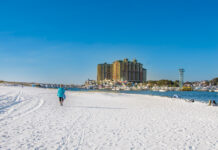

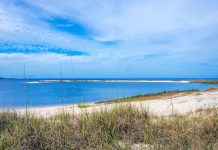
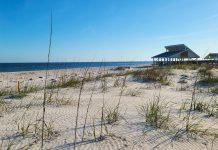
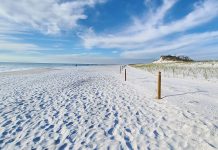
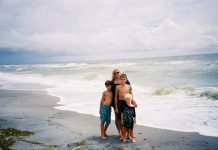



Jupiter & Juno Beach, Florida
Jupiter and Juno Beach sit at the northern edge of Palm Beach County, and after walking this stretch more times than I can count, I can tell you it doesn’t feel like the rest of South Florida. There’s no boardwalk, no high-rise wall along the sand, and no meter eating your quarters. What you get instead is free parking at every single beach access, a lighthouse older than the Civil War, and more nesting sea turtles per mile than almost anywhere else on earth.
This is the Treasure Coast’s southern gateway, where the Atlantic Coastal Ridge rises up out of the flat Florida landscape and gives you actual elevation, actual bluffs, and a coastline built on ancient coquina rock instead of the pure sand you’ll find further south. Jupiter and Juno Beach run together as one long shoreline broken up by inlets, parks, and a scatter of small preserves, from the historic Jupiter Inlet in the north down through Juno’s turtle nesting grounds in the south.
In this guide I’m walking you through every distinct stretch of this coastline, going deep on what the sand and water are actually doing here compared to the rest of the county, scoring it honestly across every category that matters, and telling you exactly who this beach is built for. I’ll cover the lighthouse, exactly where your dog is welcome, the turtle nesting grounds, the snorkeling reefs, and the quiet residential stretches locals actually use. For more on what lives here and what you might find in the sand, I’ve also written up a full hiking guide, a birding guide, and a beach finds guide for this stretch of coast. I close with my own take on what makes this coastline different from the rest of the beaches I grew up on further south.
The Vibe & Culture at Jupiter and Juno Beach
Small-Town Pace, Big Wild Coastline
Jupiter and Juno Beach never got the memo about resort towers and boardwalks, and that’s exactly why people who find it never want to leave.
Growing up in South Florida, I spent my early years covering the beaches from Miami up through Palm Beach, and Jupiter always sat at the far edge of that range, the place you drove to when you wanted the whole day to feel different. Later, when I was raising my kids in Lake Worth, Jupiter and Juno were the trip we saved for something special: a Saturday with no plans, a cooler in the trunk, and a stop at the lighthouse on the way home. That feeling hasn’t changed. This is still the part of Palm Beach County that moves at its own pace.
What sets the tone here is height and density, or the lack of it. Local building limits kept most of Jupiter’s oceanfront condos low and set back on the west side of A1A, so you’re not driving past a wall of towers to reach the sand. Nearly a third of Juno Beach is preserve land, and Jupiter Island just to the north is one of the most private, least developed barrier islands in the state. The result is a coastline that still feels like Old Florida in a county that mostly doesn’t anymore.
The crowd reflects that pace too. Weekday mornings at Carlin Park or Juno Beach Park belong to walkers, surfers checking the swell, and retirees with their coffee. Weekends bring families and day-trippers up from West Palm Beach, but even then, the beaches are wide enough and numerous enough that you rarely feel packed in. Winter is peak season here the same as everywhere in South Florida, snowbirds filling the parking lots and restaurants along US 1. Summer runs hotter and quieter by comparison, except for one thing: sea turtle season, which turns Juno Beach into one of the most-watched stretches of sand in the country from May through August.
Jupiter & Juno Beach Areas: Seven Distinct Stretches from the Inlet South
Jupiter and Juno Beach aren’t one beach, they’re a chain of parks and access points strung along roughly seven miles of coastline, each with its own personality. Here’s how it actually breaks down, north to south, and what you’ll find at each stop.
DuBois Park & the Jupiter Inlet
North Side of the Inlet · Calm Water
The first thing you notice at DuBois Park is that it isn’t really an ocean beach at all, it’s a protected cove where the Loxahatchee River and the Indian River Lagoon meet the Atlantic through the Jupiter Inlet. The water here stays calm almost year-round, sheltered by the inlet’s jetty, which makes it the one spot on this whole stretch where you can let small kids wade without watching every wave. The sand is coarser here than the open beaches further south, mixed with more shell and small coquina fragments, and the whole park sits on ground that was once an Indian shell midden going back thousands of years.
The crowd here is almost entirely local families and a steady trickle of history buffs, since the park is also home to the 1898 DuBois Pioneer Home, one of the oldest standing structures in this part of the county and now listed on the National Register of Historic Places. You’ll see kids snorkeling in the shallow cove looking for small fish, boats idling through the inlet channel a few hundred feet away, and grandparents parked on benches watching the tide push in and out. It’s a different kind of beach day than anywhere else on this list, quieter and more domestic.
I’ve spent more mornings at DuBois than I probably should admit, mostly because it’s the one place on this stretch where you can watch the inlet do its work up close, the ocean pushing in on one tide and the river pushing back out on the other. If you want a beach day that’s actually restful rather than a production, this is where I send people first.
Jupiter Beach Park & the Jupiter Inlet Lighthouse
South Side of the Inlet · Guarded Beach
Cross to the south side of the inlet and the whole feel changes. Jupiter Beach Park runs 1,700 feet of guarded, open Atlantic beach right below the red brick Jupiter Inlet Lighthouse, first lit in 1860 and still the tallest, oldest structure in Palm Beach County. The lighthouse sits on a genuine bluff, part of the Atlantic Coastal Ridge, so this is one of the only places on this coast where you get real elevation behind the sand instead of a flat dune line.
You’ll find anglers working the inlet jetty at all hours, since fishing here runs 24 hours even after the park itself closes at sunset, along with a steady rotation of families setting up near the guarded swim area and paddleboarders launching toward the calmer inlet side. It draws a slightly older, more local crowd than the beaches further south in the county, people who know to time their visit around the tide and the lighthouse tour schedule rather than just showing up.
I always tell people to climb the lighthouse before they get in the water here, not after. Standing at the top, you can see the entire curve of this coastline at once, the turquoise Atlantic on one side and the tea-colored Loxahatchee pushing out through the inlet on the other. It’s the best free orientation to this whole guide you’ll ever get, except it isn’t free, and it isn’t open Mondays.
Carlin Park
Mid-Town Jupiter · Biggest Beach on This Coast
Carlin Park is the anchor of this entire guide, and the moment you pull into the lot you understand why. This is 120 acres of oceanfront park with 3,000 feet of guarded beach, the longest stretch of watched sand on this part of the coast, backed by an amphitheater, tennis courts, a fitness trail, and a beachside cafe that’s been feeding hungry beachgoers for years. The beach itself is wide, the sand runs a warm tan rather than bright white, and the water on a calm day turns a genuine turquoise that surprises people who think of the Atlantic as always gray.
The crowd here is the most varied on this list. Families claim the guarded center, surfers and snorkelers work the unguarded edges where the rules actually allow it, and in the evening the Seabreeze Amphitheater pulls in a completely different audience for concerts and the Palm Beach Shakespeare Festival. Dogs aren’t allowed anywhere inside Carlin Park itself, which surprises visitors who assume the whole area is part of Jupiter’s famous dog beach. It isn’t, and the rule is enforced.
This is the beach I’d bring first-timers to if they only had one stop in Jupiter. It does more things well than any other single park on this coast, and the 1.25-mile fitness trail winding through the dunes behind the beach is still one of my favorite short walks in the county, especially early, before the heat and the crowd both show up.
The Jupiter Dog Beach Corridor
Marcinski Road to Carlin Park’s Southern Line · Off-Leash
This one earns its own entry because it’s genuinely rare. A 2.5-mile stretch of open Atlantic beach, running from beach marker 26 at Marcinski Road north to marker 57 at the southern edge of Carlin Park, is fully off-leash, maintained in partnership with the nonprofit Friends of Jupiter Beach. There’s no fence, no separate lot, just open sand where dogs run free alongside their owners for miles.
The crowd here skews heavily local, and you’ll recognize the regulars fast: the same dogs, the same owners, often at the same time every morning. It has a completely different social rhythm than a guarded family beach, more neighborhood dog park than tourist stop, and dog owners plan entire relocations around living near this stretch. I’ve met more friendly Labradors here than on any other beach I’ve covered in this state.
If you’re traveling with a dog, this corridor and the reputation it’s built are a real reason to choose Jupiter over almost anywhere else in South Florida. Just know the boundary lines matter. Walk north past marker 57 into Carlin Park’s property and you’re technically breaking the rule, even though there’s no visible fence to tell you so.
Ocean Cay Park
Between Jupiter and Juno · The Quiet Connector
Ocean Cay is the beach most visitors drive right past, a smaller guarded access point tucked between the busier anchors at Carlin Park and Juno Beach Park. The sand here runs narrower and the parking lot is smaller, which naturally filters out anyone just looking for the biggest, easiest beach day. What’s left is a stretch that feels more like a neighborhood beach than a destination.
You’ll find a mostly local crowd here, people who live nearby and treat this as their regular spot rather than a special trip. It’s guarded in season, clean, and rarely crowded even on a warm weekend, since most visitors default to Carlin or Juno without realizing this stop exists at all.
I like Ocean Cay specifically because it’s the connector piece, the beach that lets you walk the shoreline continuously between the two bigger anchors without ever leaving the sand. If you’re doing a long beach walk on this coast, this is the stretch that ties it all together.
Juno Beach Park & the Pier
Turtle Nesting Ground Zero · Off-Leash Section
Juno Beach Park is small on paper, just over five acres with 300 feet of guarded beach, but it punches far above its size. The Juno Beach Pier stretches 990 feet into the Atlantic and has been managed by the Loggerhead Marinelife Center since 2014. As of this writing the pier is midway through a refurbishment project that began in June 2026, so check the pier’s status before you plan a fishing trip out to the end of it. The sand here runs a deeper, shell-flecked tan than the beaches to the north, and the water is consistently some of the clearest on this stretch, which is part of why this spot doubles as north county’s most reliable surf break.
You’ll find surfers checking the break at dawn, kiteboarders working the wind just north of the pier, and anglers working the rail. This is also, without question, the beach on this list built around wildlife. Juno Beach sits on one of the densest sea turtle nesting grounds anywhere in the world, and the Loggerhead Marinelife Center runs guided night walks through nesting season to watch it happen up close.
I’ve done the turtle walk more than once, and it never stops being the kind of thing that quiets a group of strangers down to a whisper. Watching a loggerhead the size of a dinner table haul herself up a beach she’s returned to her entire life, dig a pit with back flippers built for exactly this, and lay a hundred eggs by feel in the dark is not something you forget. It’s the closest this whole coastline comes to a genuinely sacred moment, and I don’t use that word carelessly.
Coral Cove Park & Blowing Rocks Preserve
Jupiter Island, North End · Reef Snorkeling
Head north past the inlet onto Jupiter Island and the coastline turns rocky in a way that surprises people expecting nothing but sand. Coral Cove Park has 600 feet of guarded beach fronting a shallow limestone reef that starts just steps from shore, clear water running two to six feet deep and packed with parrotfish, rays, and the occasional sea turtle. A few minutes north, Blowing Rocks Preserve takes the same coquina rock formation and turns it dramatic, with sea caves and blowholes that shoot water up to 50 feet into the air when high tide meets a rough sea.
The crowd here is smaller and more deliberate than anywhere else on this list. You don’t stumble onto Coral Cove or Blowing Rocks on your way to something else, you drive out here specifically to snorkel or to see the rocks, and that self-selection keeps both spots relatively calm even in season.
Bring water shoes if you’re getting in the water here. The same rock that makes the snorkeling worthwhile will cut up soft feet fast, and I say that from experience. Time your Blowing Rocks visit for high tide during or right after a windy stretch, since a calm day means the blowholes barely spit at all.
Jupiter & Juno Beach Rankings: Expert Scores Across 11 Categories
These scores weigh the whole stretch, from the calm cove at DuBois Park to the reef at Coral Cove, since so much of what makes this coastline worth visiting is how differently each piece of it behaves.
Sand Quality
7/10
Warm tan quartz mixed with coquina and shell fragments, coarser and grittier than the sugar sand further north on the Panhandle. It’s honest Atlantic sand, not a postcard beach, and I mean that as a compliment.
Hiking & Beach Walking
8/10
Nearly continuous sand from DuBois Park down through Juno Beach Park if you’re willing to cross a few property lines close to the tide. Add the rocky trail at Blowing Rocks and this is one of the more varied walks in the county.
Shelling at Jupiter & Juno Beach
7/10
Consistently good, with a rare Junonia shell find at Juno Beach Park putting this stretch on the map for serious shellers. Not a Sanibel-level destination, but genuinely rewarding after a high tide.
Water Conditions
8/10
Clear, warm, and genuinely swimmable most of the year, with the added bonus of reef snorkeling at Coral Cove and a consistent surf break at Juno Pier. Rip currents are real, so check the flags.
Scenery & Natural Beauty
9/10
The lighthouse on its bluff, the inlet cutting the coast in two, and rock formations you won’t find on most Florida beaches. This stretch has more visual variety than almost anywhere else in the state.
Birding & Wildlife
9/10
One of the densest sea turtle nesting grounds on the planet, dolphins and manatees working the inlet, and a reef system full of fish at Coral Cove. Few beaches in Florida can match this range of wildlife.
Family Friendliness
8/10
DuBois Park’s calm cove, Carlin Park’s guarded center, and turtle walks kids never forget make this one of the more genuinely kid-friendly stretches in the county.
Dog Friendliness
10/10
A genuine 2.5-mile off-leash beach, one of very few in the entire state. Nothing else in Palm Beach County comes close to this.
Solitude & Peace
6/10
Ocean Cay and the far ends of Coral Cove and Blowing Rocks give you real quiet. Carlin Park and Juno Beach Park in season do not.
Entertainment & Nightlife
6/10
No boardwalk, but the Seabreeze Amphitheater’s concerts and Shakespeare Festival, plus a solid run of waterfront restaurants on US 1, give this coastline more going on than its low-key reputation suggests.
Parking & Beach Access
9/10
Free parking at every major beach access, including the lots at DuBois Park, Jupiter Beach Park, Carlin Park, Ocean Cay Park, and Juno Beach Park. Rare for South Florida, and worth celebrating.
Jupiter & Juno Beach Sand & Water
The sand along Jupiter and Juno runs wide and mostly flat, with a warm tan color that’s a shade darker and coarser than the sugar-fine sand you’ll find further north on the Panhandle. The upper beach stays soft enough for a proper sandcastle once you add water, and the packed sand right at the waterline gives you a firm, easy surface for a long walk or a jog the whole stretch. It’s honest, real sand, not a groomed resort beach, and it holds up well underfoot almost everywhere except right around Coral Cove and Blowing Rocks, where the limestone reef pokes through and rewards water shoes over bare feet.
The water follows the same pattern you’d expect from an open Atlantic coastline, running turquoise and genuinely clear on a calm day, then shifting toward a more typical gray green once the wind picks up. Entry is gradual almost everywhere except right at the inlet, and DuBois Park’s protected cove is about as calm as this coast gets, a real option if the ocean side looks rough that day. Rip currents are real here, so stick to a guarded beach and check the flags before you swim past your knees.
-
Walkability. Firm and flat at the waterline nearly the whole seven miles, one of the more continuously walkable stretches in this entire series.
-
Softness & Playability. Soft enough on the upper beach for real sandcastles once you add water, firmer and less forgiving right at the surf line. Great for volleyball and beach games near Carlin Park’s wide center.
-
Barefoot Comfort. Comfortable most of the year, though the dry sand near Carlin Park and the lighthouse can get hot enough by midday in summer to send you back to the water.
-
Swimmability. Gradual entry and lifeguards at every major park, plus a genuinely calm backup at DuBois Park’s cove. Rip currents are real, so always check the flags.
Want the full geology, grain composition, and the complete sand and water condition ratings? I broke it all down separately in Sand & Shore: Jupiter & Juno Beach.
Dogs & Pet Accessibility at Jupiter & Juno Beach
Are Dogs Allowed on the Sand? RESTRICTED.
Dogs run free off leash on a specific 2.5-mile stretch of this coastline, but everywhere else on this list, the sand itself is off limits, even on a leash.
Where Dogs Are Allowed
- ✓The Jupiter Dog Beach corridor, 2.5 miles of open Atlantic sand between beach marker 26 at Marcinski Road and marker 57 at Carlin Park’s southern property line, fully off leash.
- ✓DuBois Park’s grounds, on a six-foot leash, though dogs must stay off the actual beach and out of the water there.
Where Dogs Are NOT Allowed
- ✗Carlin Park, no dogs anywhere on the property, strictly enforced.
- ✗Jupiter Beach Park, Ocean Cay Park, and Juno Beach Park, no dogs on the sand at any of these guarded beaches.
- ✗Coral Cove Park and Blowing Rocks Preserve, no pets permitted on the beach at either stop.
Paws on the Ground Reality
The off-leash corridor is the real deal, not a token strip of sand. There’s no fence and no separate lot, just open beach, so bring your own water since none is provided out on the sand itself, and expect the dry upper beach to get hot enough by midday in summer to bother tender paws the same way it bothers bare human feet. Waste bags are available at most crossovers courtesy of Friends of Jupiter Beach, but bring your own just in case. The boundary at marker 57 isn’t marked with anything more than a small sign, so it’s worth knowing exactly where Carlin Park’s property line starts before you keep walking your dog north.
Enforcement here is genuinely community driven rather than heavy handed. Regulars police the rules themselves, since everyone understands this privilege disappears the moment it becomes a problem for neighbors or wildlife. If your dog needs more room to run than the beach allows, or you’d rather skip the sand entirely, Carlin Park’s fitness trail and DuBois Park’s grounds both welcome a leashed dog for a longer walk inland.
Crowd Levels and the Overall Feel of Jupiter & Juno Beach
Compared with the busier beaches further south in the county, Jupiter and Juno Beach run noticeably calmer, and locals here like it that way. Carlin Park and Juno Beach Park draw the steadiest traffic, especially on weekends, but even at their busiest they never approach the density you’ll find at Singer Island or Palm Beach itself.
You’ll find a different crowd depending on where you stand. Near the lighthouse and Carlin Park it’s a mix of longtime residents, retirees, and families up from West Palm Beach for the day. Head to the dog beach corridor and it’s almost entirely locals with their regular dogs on their regular schedule. Out at Coral Cove and Blowing Rocks, it thins out to snorkelers and people specifically chasing that rocky shoreline.
The overall feel here shifts by season more around wildlife and weather than around spring break crowds:
- Winter: peak season, snowbirds fill the parking lots and restaurants, but the beaches themselves rarely feel crowded thanks to how spread out the access points are
- Spring: comfortable water, lighter crowds, and the very start of sea turtle nesting season in March
- Summer: hot and humid, but this is peak turtle nesting and hatching season, and the Loggerhead Marinelife Center’s turtle walks run through June and July
- Fall: my favorite window here, warm water lingering, nesting season winding down through October, and a noticeably lighter crowd than winter
Who Is Jupiter & Juno Beach Really For?
✓ Who Will Love Jupiter & Juno Beach
-
Dog owners who want a real off-leash beach experience, not a small fenced-in dog park with a token strip of sand
-
Wildlife lovers chasing sea turtles, dolphins, manatees, and reef fish, all within a few miles of each other
-
History lovers who want a working 1860 lighthouse and a real archaeological site, not just a plaque
-
Snorkelers and surfers looking for genuine reef and consistent break without a boat charter
-
Anyone who wants a South Florida beach day without paying to park
-
Families who want calm, protected water for younger kids alongside real surf for older ones, all on the same stretch of coast
✗ Consider Another Beach If…
-
You want sugar-white, powder-fine sand. This is coquina and quartz country, not the Panhandle
-
You’re looking for a boardwalk, beachfront nightlife, or a resort strip. Head south to Singer Island or Palm Beach instead
-
You’re visiting during peak turtle nesting season and want to walk the beach after dark without restrictions. Lighting and access rules are genuinely enforced here
-
You’re bringing a dog and planning to bring it into Carlin Park proper. Stick to the marked off-leash corridor instead
-
You want to skip water shoes entirely. Coral Cove and Blowing Rocks reward the rocky shoreline, but they don’t forgive bare feet
Things to Do at Jupiter & Juno Beach, Florida
This coastline packs an unusual amount of variety into seven miles. Here’s what actually fills a day here beyond laying out a towel.
-
Beach Walking. Nearly continuous sand from DuBois Park down through Juno Beach Park, with a rockier detour available north at Coral Cove and Blowing Rocks. Quietest and coolest in the early morning.
-
Climbing the Jupiter Inlet Lighthouse. 105 steps to the best view in the county. Docent-led tours typically run Tuesday through Friday, the tower is closed Mondays, and children need to be at least 48 inches tall to climb. Check current hours before you go, since tours are weather permitting.
-
Sea Turtle Walks. The Loggerhead Marinelife Center runs guided night walks through nesting season, typically Tuesday through Saturday in June and July, starting around 9 p.m. No flashlights, no phones, and you’ll stay at least 30 feet from any nesting activity.
-
Snorkeling. Coral Cove Park and Blowing Rocks Preserve share the same shallow reef system, with parrotfish, rays, and the occasional sea turtle visible just steps from the sand. Calm summer days after a stretch of settled weather give the best visibility.
-
Surfing. Juno Beach Pier holds the most consistent break in north Palm Beach County. Carlin Park and the unguarded stretches around it also pick up swell, though surfing isn’t permitted inside the guarded areas.
-
Off-Leash Dog Walking. The 2.5-mile corridor between beach markers 26 and 57 is fully off-leash. Bring water and waste bags, and stay south of Carlin Park’s property line.
-
Shelling. Best right after a storm or a strong high tide, particularly at Juno Beach Park, which has produced rare Junonia shell finds. Bring a mesh bag and only take shells that are clearly unoccupied.
-
Kiteboarding. Consistent northeast and southeast winds make the water just north of Juno Beach Pier a favorite for intermediate and advanced kiteboarders.
-
Wildlife Watching. Dolphins and manatees are regular sights in the Jupiter Inlet, and sea turtle nesting runs March through October with the heaviest activity in June and July. Loggerheads, greens, and leatherbacks all nest along this stretch.
-
Pier Fishing. The 990-foot Juno Beach Pier is managed by the Loggerhead Marinelife Center, with small entry fees for spectators, anglers, and kids. Check on the current status of its ongoing refurbishment before you plan a trip.
Local Knowledge and Practical Advice
A few things I’ve picked up walking this coastline more times than I can count:
-
Parking is free at every major access point on this coastline. DuBois Park, Jupiter Beach Park, Carlin Park, Ocean Cay Park, and Juno Beach Park all offer free lots, plus roadside parking along the A1A corridor. That’s genuinely rare for this part of South Florida.
-
Know exactly where the off-leash zone starts and ends. Beach marker 26 at Marcinski Road to marker 57 at Carlin Park’s southern line. There’s no fence, so it’s on you to know the boundary.
-
Flags mean something different at every guarded park. DuBois Park, Jupiter Beach Park, Carlin Park, Ocean Cay Park, Juno Beach Park, and Coral Cove Park each fly their own conditions, so check the flag at the exact spot you’re swimming, not just the one you passed on the way in.
-
Nesting season runs March 1 through October 31. Fill in any holes you dig, knock down sandcastles before you leave, and use only red or amber light if you’re out on the sand after dark near nesting areas.
-
The lighthouse museum building has faced periodic closures tied to nearby bridge construction. Call ahead or check the museum’s site before you drive out expecting the full indoor exhibit experience.
-
Bring water shoes if Coral Cove or Blowing Rocks are on your list. The same limestone reef that makes the snorkeling worthwhile will cut up bare feet fast.
-
Fishing at the Jupiter Inlet jetty runs 24 hours, even after the park closes. It’s one of the only spots on this stretch where the clock doesn’t apply.
-
No fires of any kind are allowed on Palm Beach County beaches. This is enforced countywide, not just here, so leave the firepit at home.
-
Lodging or camping overnight on the beach is prohibited between midnight and 6 a.m. If you’re chasing a sunrise, plan to arrive that morning rather than sleeping out.
-
Book the Loggerhead Marinelife Center turtle walk early. These fill up fast in June and July, and it’s the single best wildlife experience on this entire coastline.
Where to Stay Near Jupiter & Juno Beach, Florida
This stretch has fewer high-rise resorts than most of South Florida, which is exactly the point for a lot of people who visit. Here’s how the lodging options break down.
Beachfront Resorts
Jupiter Beach Resort & Spa, just south of the inlet, is one of the only true oceanfront hotels on this stretch, and it offers valet parking and direct beach access for guests. Expect a smaller, more boutique feel than the big resort towers further south in the county.
Oceanfront Condos
Jupiter’s oceanfront condo market runs lower and less dense than most South Florida beach towns thanks to height limits put in place after the early 1980s. Juno Beach’s oceanfront buildings, including older properties from the 1970s and newer luxury towers built directly on the sand, tend to sit right at the waterline with very little public beach access nearby, which locals treat as a feature rather than a flaw.
Residential Rentals
Vacation rentals in neighborhoods like Ocean Walk in Jupiter or the communities around Juno Isles put you a short walk or bike ride from the sand without paying for direct oceanfront. This is where I’d point anyone who wants the quiet, small-town version of this trip.
Camping
There’s no beachfront camping directly on this stretch, but Jonathan Dickinson State Park a few miles inland in Hobe Sound offers tent and RV camping in a genuinely wild setting, with easy access back to the coast the next morning.
Inland & Budget Options
West Palm Beach and Palm Beach Gardens, both a short drive inland, offer a much wider range of budget to mid-range hotel chains for visitors who’d rather day-trip to the beach than pay oceanfront prices to sleep next to it.
What Makes Jupiter & Juno Beach Different from Nearby Beaches
Jupiter and Juno Beach stand apart from the rest of Palm Beach County because they held onto something most of the coastline gave up decades ago: low buildings, free parking, and genuine wild space between the parks.
A few features make it distinct:
A working 1860 lighthouse you can actually climb
Most Florida beaches have a plaque. This one has 105 steps to the top of a lighthouse still doing its original job, sitting on a real coastal bluff instead of flat dune line.
One of the densest sea turtle nesting grounds on the planet
Juno Beach isn’t just a nice place to spot a turtle, it’s one of the most significant nesting beaches in the world, with a dedicated marine hospital and research center built specifically because of it.
A real off-leash dog beach, not a token strip
A 2.5-mile stretch of open Atlantic sand where dogs run free is genuinely rare in Florida, and it shapes the entire character of this coastline.
Free parking at every major access point
In a county where beach parking meters and paid lots are the norm, this stretch stands out simply by not charging you to park.
Jupiter & Juno Beach vs. Other Nearby Beaches
These are the beaches visitors most often weigh against Jupiter and Juno, and the honest read on when you’d choose one over the other.
Jupiter & Juno Beach vs. Singer Island
Singer Island, just south, brings a taller, denser resort skyline and John D. MacArthur Beach State Park’s protected shoreline. Choose Jupiter and Juno if you want free parking, an off-leash dog beach, and a quieter small-town feel. Choose Singer Island if you want a more resort-style stay with easy high-rise access to the sand.
Jupiter & Juno Beach vs. Palm Beach
Palm Beach runs far more exclusive and manicured, with narrow public access and an old-money residential feel. Jupiter and Juno are dramatically more accessible, with far more free parking and public beach frontage per mile of coastline.
Jupiter & Juno Beach vs. Hobe Sound and Jupiter Island’s Northern End
Push north past Blowing Rocks and the coastline turns almost entirely private, with some of the most exclusive real estate in Florida fronting the sand. Jupiter and Juno give you public access to nearly identical coquina geology without needing a private address to enjoy it.
Jupiter & Juno Beach vs. Stuart and Martin County Beaches
Stuart’s beaches, a short drive north, offer a similar laid-back, low-rise feel with their own inlet and fishing culture. The turtle nesting density and the lighthouse give Jupiter and Juno the edge for anyone chasing wildlife and history in the same trip.
Bottom line: Jupiter and Juno Beach are the version of Palm Beach County that never fully commercialized. Singer Island and Palm Beach give you more polish and more amenities. This stretch gives you a working lighthouse, a world-class turtle nesting ground, and free parking at every stop, which is a trade most people who’ve tried both sides end up making happily.
Jupiter & Juno Beach, Florida: Frequently Asked Questions
Is Jupiter Beach worth visiting?
Yes. Few stretches of Florida coastline pack in this much variety within seven miles: a working 1860 lighthouse, a world-class sea turtle nesting ground, a coral reef you can snorkel from the sand, and a genuine off-leash dog beach.
Is parking free at Jupiter and Juno Beach?
Yes, at every major access point, including DuBois Park, Jupiter Beach Park, Carlin Park, Ocean Cay Park, and Juno Beach Park, plus roadside parking along the A1A corridor. This is unusual for South Florida, where paid beach parking is far more common.
Are dogs allowed on Jupiter Beach?
Yes, in a specific off-leash corridor running 2.5 miles from beach marker 26 at Marcinski Road north to marker 57 at Carlin Park’s property line. Dogs are not allowed inside Carlin Park itself, and that rule is enforced.
When is sea turtle nesting season at Juno Beach?
Official nesting season in Palm Beach County runs March 1 through October 31, with the heaviest nesting and hatching activity in June and July. Loggerheads, greens, and leatherbacks all nest along this stretch.
Can I climb the Jupiter Inlet Lighthouse?
Yes. The 1860 lighthouse offers self-guided and docent-led climbing tours, typically Tuesday through Sunday with the tower closed Mondays. Children must be at least 48 inches tall to climb, and tours are weather permitting, so check current hours before visiting.
Where is the best snorkeling near Jupiter Beach?
Coral Cove Park and Blowing Rocks Preserve on Jupiter Island share a shallow limestone reef system just steps from the sand, with parrotfish, rays, and occasional sea turtles visible in water running two to six feet deep.
Is Juno Beach good for surfing?
Yes. Juno Beach Pier holds the most consistent wave in north Palm Beach County, drawing a steady local surf crowd, especially at dawn before the wind picks up.
What is the best time of year to visit Jupiter and Juno Beach?
Fall offers the best balance of warm water and lighter crowds, since winter is peak snowbird season and summer brings heat alongside peak turtle nesting activity. Spring is comfortable and quieter as nesting season begins.
Is Jupiter Beach good for families?
Yes, especially DuBois Park’s calm, protected cove for younger kids and Carlin Park’s guarded center with its amphitheater and fitness trail. Turtle walks in summer are a memorable family activity as well.
How does Jupiter Beach compare to Singer Island or Palm Beach?
Jupiter and Juno Beach are far less developed and far more accessible, with free parking, an off-leash dog beach, and more natural coastline. Singer Island and Palm Beach offer more resort polish and denser high-rise living directly on the sand.
Patti’s Perspective: My Honest Take on Jupiter & Juno Beach
Growing up in South Florida, I covered the beaches from Miami all the way up through Palm Beach, and Jupiter always sat at the far edge of that range, the beach you drove to when you wanted the day to feel like a real trip instead of a quick stop. Years later, raising my kids in Lake Worth, this stretch became our reward beach, the place we’d go when we wanted the lighthouse, the inlet, and a whole day with nowhere else to be.
What still gets me every time is how much this coastline refuses to behave like one beach. In the space of a single morning you can wade in the flat, warm cove at DuBois Park, climb 105 steps of a working lighthouse, watch a surfer catch a break at Juno Pier, and end up ankle deep in a tide pool at Coral Cove picking through rock for shells. No other stretch in this county asks you to shift gears that many times before lunch.
The turtle walk stayed with me longer than almost anything else I’ve covered for this work. Standing thirty feet back in the dark, watching a loggerhead that’s been returning to this exact stretch of sand for longer than most of us have been alive, dig a nest by feel and lay her eggs without a single wasted motion, it puts the whole rest of the day in a different light. You come for the lighthouse and the dog beach. You leave thinking about the turtle.
My honest caveat: if you only ever park at Carlin Park, you’ll get a good day, but you’ll miss what makes this coastline actually rare. Drive the extra ten minutes to Coral Cove. Book the turtle walk if you’re here in season. Let the dog run the full 2.5 miles instead of just the first quarter. That’s where this stretch earns everything I just told you about it.
My verdict: 8/10. The most naturally varied coastline in Palm Beach County, and it earns that distinction fairly on wildlife, history, and free parking alone. The sand won’t compete with the Panhandle’s quartz beaches, but nothing else in this county gives you a working lighthouse, one of the densest turtle nesting grounds on earth, and a real off-leash dog beach within the same seven miles.
Want to Live by the Water?Jupiter and Juno Beach offer some of the more distinctive waterfront real estate in Palm Beach County, from low-rise oceanfront condos kept intentionally modest by decades-old height limits to single-family homes tucked into quiet, tree-lined streets just blocks from the sand.
The market here draws retirees, boating families chasing easy access to the Jupiter Inlet, and buyers who specifically want the small-town pace this stretch has protected for decades. Oceanfront condos in Jupiter and Juno Beach typically run from the mid six figures into the millions depending on age and location, while single-family homes near the beach have climbed well past a million dollars for even modest, older properties.
If living by the water is something you’re considering, whether full time, part time, or as an investment, it’s worth exploring what’s available in this area.
Explore Waterfront Living at LiveByTheWater.com
Real estate referral partner