
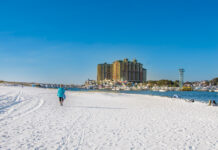

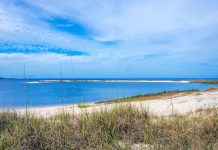
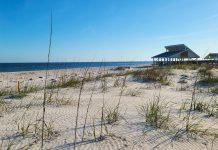
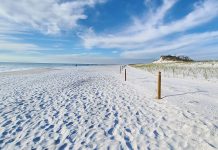


Hobe Sound National Wildlife Refuge Beach, Florida
Hobe Sound National Wildlife Refuge is the wildest beach in this entire series, and I don’t say that lightly after covering everywhere from the Panhandle to Palm Beach. This is the largest contiguous stretch of undeveloped beach left in Southeastern Florida, and on more than one visit here I’ve counted more sea turtle nests than people on the sand.
Officially named the Nathaniel P. Reed Hobe Sound National Wildlife Refuge, this federal refuge sits split across two tracts by the Indian River Lagoon, a 735-acre Island Tract on the northern tip of Jupiter Island holding 3.5 miles of untouched Atlantic beach, and a 300-acre Mainland Tract off US 1 with the refuge’s nature center, hiking trails, and a quieter lagoon-side beach. The Reed family, longtime Jupiter Island residents, gifted this land to the U.S. Fish and Wildlife Service in 1969 specifically to keep it from ever looking like the rest of this coastline.
In this guide I’m walking you through both tracts of this refuge, going deep on what the sand and water are actually doing here, scoring it honestly across every category that matters, and telling you exactly who this beach is built for. I’ll cover the wild ocean beach, the ancient dune sanctuary behind it, where pets are and aren’t welcome across both tracts, the nature center on the mainland side, and the rules that keep this place feeling like Florida did a century ago. For more on what lives here and what you might find in the sand, I’ve also written up a full hiking guide, a birding guide, and a beach finds guide for this refuge. I close with my own take on why this refuge might be the most important beach in this entire series.
The Vibe & Culture at Hobe Sound National Wildlife Refuge
A Beach Built for Wildlife First, Visitors Second
Every other beach in this series balances people and nature. This one tips the scale deliberately toward nature, and the entire experience is built around that choice.
You feel the difference the moment you turn down North Beach Road toward the Island Tract. There’s no signage advertising the beach, no strip of shops, no glimpse of a condo tower breaking the tree line. The refuge exists because the Reed family, who once owned much of Jupiter Island, chose in 1968 and 1969 to give five miles of oceanfront to the federal government specifically to keep it undeveloped, and that choice still shapes every rule posted at the entrance gate.
Those rules are stricter than anywhere else in this series. No picnicking. No fires. No metal detectors. No pets of any kind on the Atlantic beach itself. No lifeguards, ever. This isn’t a park built to entertain visitors, it’s a refuge built to protect nearly 40 species of threatened, endangered, or special-concern wildlife, and visitors are welcome as long as they understand they’re the guests, not the priority.
The crowd here reflects that mission. You’ll find serious birders, dedicated surfers who know this stretch holds a real break, and a steady trickle of people who simply want to see what an undeveloped Florida beach actually looks like. It never gets crowded in the way a county park does, partly because of the entrance fee and remote location, and partly because the refuge simply doesn’t try to draw a crowd.
Hobe Sound National Wildlife Refuge Areas: Six Distinct Pieces of Wild Florida
This refuge splits into two separate tracts connected only by the Indian River Lagoon between them, and each tract holds its own distinct pieces. Here’s how it breaks down.
The Island Tract Beach
North Beach Road, Jupiter Island · 3.5 Miles of Undeveloped Sand
This is the beach most people mean when they talk about Hobe Sound National Wildlife Refuge, a small parking lot at the dead end of North Beach Road opening onto the largest contiguous stretch of undeveloped beach left in Southeastern Florida. There’s no boardwalk, no pavilion, nothing but sea oats, dune, and open Atlantic stretching further than you can comfortably walk in a single visit.
The crowd here is thin even on a nice weekend, a handful of surfers reading the break, a few fishermen working the surf line, and beachgoers who came specifically for the solitude rather than stumbling onto it by accident. There’s no lifeguard anywhere on this beach, and the water can get surprisingly deep within just a few steps of shore, so this isn’t the place to bring young children expecting a gentle wade.
I’ve walked long stretches of this beach without seeing another person, which is genuinely rare this far south in Florida. It’s the kind of quiet that makes you understand exactly what the Reed family was trying to protect when they gave this land away instead of selling it.
The Dune System & Reed Wilderness Seashore Sanctuary
National Natural Landmark · Ancient Coastal Dunes
Behind the beach itself sits the Reed Wilderness Seashore Sanctuary, 173 acres designated a National Natural Landmark back in 1967, protecting some of the highest, least disturbed coastal dune terrain left on this part of Florida’s Atlantic coast. These dunes formed over thousands of years as sea levels rose and fell, and walking near them gives you a sense of scale and age that almost no other beach in this series can offer.
Visitors here are almost exclusively naturalists, photographers, and hikers who came specifically for the dune system rather than a swim. It’s not a developed trail experience, more a chance to appreciate genuinely ancient topography sitting quietly behind an equally undeveloped beach.
I think this sanctuary is one of the most underappreciated pieces of this entire refuge. Most visitors walk past it heading straight for the water without realizing they just passed a federally designated natural landmark on the way.
The Sea Turtle Nesting Grounds
March Through October · One of the Most Productive Sites in the Country
Hobe Sound is considered one of the most productive sea turtle nesting areas anywhere in the southeastern United States, hosting loggerhead, green, leatherback, and even occasional Kemp’s Ridley turtles across its nesting season. Refuge staff actively manage nest predation from raccoons and other animals, and the Hobe Sound Nature Center runs guided turtle walks during peak season for visitors who want to see the process up close.
The crowd during a guided turtle walk skews toward genuine wildlife enthusiasts willing to follow strict rules, no white light, no flash photography, quiet voices, and real patience. Outside of organized walks, casual beachgoers in season will simply notice more marked nests along this stretch than at almost any other beach in this guide.
I’ve said this before in this series, but it holds especially true here: watching a loggerhead work a nest on a beach this undeveloped, with no boardwalk lights or condo glow anywhere nearby, is about as close as you can get in Florida today to what this entire coast looked like before any of us showed up.
The Mainland Tract & Hobe Sound Nature Center
Off US 1 · Free Admission, Visitor Center & Trails
Across the Indian River Lagoon from the Island Tract sits the refuge’s Mainland Tract, home to the Hobe Sound Nature Center, an exhibit room with live animal ambassadors, a small gift shop, and a half-mile self-guided nature trail looping through sand pine scrub and tropical hardwood hammock. Unlike the Island Tract, there’s no entrance fee here, and leashed dogs are permitted on these trails, a real contrast to the beach across the lagoon.
Families and school groups make up much of the crowd on this side of the refuge, drawn by the exhibits and the manageable half-mile loop rather than a full beach day. As of this writing, some sources indicate the visitor center’s regular operations may be limited, so it’s worth confirming current hours before planning a visit specifically around the exhibit room.
I always recommend pairing this stop with the Island Tract beach if you’re making the drive out here. The Mainland Tract gives context, gopher tortoises, scrub jays, the sand pine habitat itself, that makes the wild beach across the lagoon mean even more once you understand what’s actually living around it.
The Lagoon Beach at the Mainland Tract
Indian River Lagoon Side · Calm Water, Different Ecosystem
At the end of the Mainland Tract’s nature trail sits a quiet beach along the Indian River Lagoon, a completely different experience from the open Atlantic side. The water here runs calm and shallow, more estuary than ocean, and the crowd thins out even further than at the nature center itself.
You’ll find this stretch used almost entirely by hikers finishing the loop trail rather than anyone specifically seeking out a swim. It’s a peaceful stop rather than a destination, a place to sit for a few minutes before heading back to the trailhead.
I like ending a Mainland Tract visit here specifically because of the contrast. You walk through dry sand pine scrub and hardwood hammock and arrive at still, lagoon water, a completely different Florida ecosystem within a half-mile loop.
Peck Lake & St. Lucie Inlet Preserve State Park
Just North on the Same Barrier Island · Boat-Access Wilderness
Immediately north of the refuge, Peck Lake and the boat-accessible St. Lucie Inlet Preserve State Park extend the same undeveloped feel further up Jupiter Island. This stretch requires a boat or kayak to reach, since there’s no road access, and that requirement alone keeps it feeling like a genuine extension of the refuge’s wilderness rather than a separate destination.
The crowd here is almost entirely boaters anchoring off Peck Lake’s calm inlet-side water for the day, plus a small number of hikers who’ve paddled or boated in specifically for the preserve’s trails. It’s not a casual add-on to a Hobe Sound visit, but for anyone with access to a boat, it’s a natural extension of the same wild stretch of coast.
I mention this less as a must-do stop and more as context. Understanding that the refuge’s undeveloped feel continues north into a boat-only state preserve helps explain just how much of this particular barrier island has been deliberately kept out of reach of casual development.
Hobe Sound National Wildlife Refuge Rankings: Expert Scores Across 11 Categories
These scores weigh the refuge on its own terms, as a wildlife-first destination rather than a typical beach day, since that distinction shapes every category below.
Sand Quality
8/10
Genuinely wild, undisturbed sand backed by real dunes and native sea oats, without a single groomed or engineered section anywhere along this stretch.
Hiking & Beach Walking
9/10
3.5 miles of uninterrupted, undeveloped beach on the Island Tract alone, plus a genuine nature trail loop at the Mainland Tract. Few places in this series offer walking this continuous.
Shelling
8/10
Genuinely rewarding, since so little foot traffic disturbs the shoreline compared to almost anywhere else in this guide.
Water Conditions
6/10
A real surf break draws dedicated riders, but there’s no lifeguard anywhere on this beach and the water can turn deep within a few steps. Respect it accordingly.
Scenery & Natural Beauty
10/10
The single highest score in this entire series. Nothing else comes close to this level of untouched, undeveloped coastal wilderness this far south in Florida.
Birding & Wildlife
10/10
Nearly 40 threatened, endangered, or special-concern species call this refuge home, and it’s considered one of the most productive sea turtle nesting sites in the entire country.
Family Friendliness
5/10
No lifeguard, no picnicking, and water that drops off fast make the Island Tract better suited to older kids and adults. The Mainland Tract’s nature center is far more family-friendly.
Dog Friendliness
2/10
No pets of any kind are allowed on the Atlantic beach. Leashed dogs are permitted only on the Mainland Tract’s trails, a sharp contrast to the rest of Martin County.
Solitude & Peace
10/10
The defining feature of this entire refuge. It is genuinely possible to walk this beach and see more turtle nests than people.
Entertainment & Nightlife
1/10
None, deliberately. This is a wildlife refuge, not a destination built around dining or nightlife, and it never pretends otherwise.
Parking & Beach Access
6/10
A small entrance fee and a small lot at the Island Tract, though it rarely fills given how few people know this beach exists. The Mainland Tract is free and easy to reach off US 1.
Hobe Sound National Wildlife Refuge Sand & Water
The sand here is about as undisturbed as it gets in this entire series, flat and wide with real dunes behind it, never raked, groomed, or engineered. The upper beach stays soft in the way only an untouched dune line can, and the packed sand at the waterline gives you a firm, easy surface for miles of walking in either direction, one of the most continuous stretches in this whole guide.
The water behaves like a real, open ocean beach without any jetty, reef, or pier to soften it, which means it can be genuinely rough and drops off faster than you’d expect close to shore. On a calm day it runs turquoise and clear, but there’s no lifeguard anywhere on this beach, so swim cautiously, know your own limits, and don’t expect the drop-off to ease you in gently the way a more sheltered beach would.
-
Walkability. Excellent for miles in either direction, one of the most continuous, uninterrupted walks in this entire series.
-
Softness & Playability. Soft and genuinely undisturbed on the upper beach, with no picnicking permitted anywhere in the refuge, so plan on a beach walk rather than a lounging day.
-
Barefoot Comfort. Comfortable and free of rock or reef structure across most of this beach, one of the easier barefoot walks in this series.
-
Swimmability. Use real caution. There is no lifeguard here at any time, and the drop-off close to shore surprises visitors expecting a gentle wade.
Want the full geology, grain composition, and the complete sand and water condition ratings? I broke it all down separately in Sand & Shore: Hobe Sound National Wildlife Refuge.
Dogs & Pet Accessibility at Hobe Sound National Wildlife Refuge
Are Dogs Allowed on the Sand? NO.
This federal refuge is the strictest stop in this entire series when it comes to pets. No pets of any kind are allowed on the Island Tract’s Atlantic beach, though leashed dogs are welcome on the Mainland Tract’s trails across the lagoon.
Where Dogs Are Allowed
- ✓The Mainland Tract’s nature trail, on a leash, looping through sand pine scrub and tropical hardwood hammock.
- ✓The Mainland Tract’s lagoon-side beach at the end of that trail, on a leash.
Where Dogs Are NOT Allowed
- ✗The Island Tract’s Atlantic beach, no pets of any kind, not even on a leash.
- ✗The Reed Wilderness Seashore Sanctuary’s dune system.
- ✗Anywhere on the Island Tract outside the parking area itself.
Paws on the Ground Reality
If your dog is part of the trip, plan on the Mainland Tract and skip the Island Tract entirely. This isn’t a gray area or a rarely enforced rule, it’s federal refuge policy tied directly to protecting nesting shorebirds and one of the most significant sea turtle nesting grounds in the country, and staff take it seriously. The Mainland Tract’s half-mile trail is shaded in sections and genuinely pleasant for a leashed walk, though there’s no water fountain built for pets, so bring your own.
Given how different the two tracts are, it’s worth being upfront with anyone traveling with you: this refuge simply isn’t built around a beach day with a dog. If that’s the priority for your trip, Jensen Beach and Stuart, covered elsewhere in this series, offer Martin County’s full leashed-dog beach access instead.
Crowd Levels and the Overall Feel of Hobe Sound National Wildlife Refuge
This refuge never fills the way a county beach does, and that’s true across every season. The entrance fee, remote location, and complete lack of amenities filter out the crowd most casual beachgoers bring elsewhere in this series.
You’ll find a different crowd depending on which tract you visit. The Island Tract draws surfers, birders, and visitors specifically seeking solitude. The Mainland Tract draws families and school groups here for the nature center and the manageable trail loop.
The overall feel shifts by season more around turtle nesting than typical tourist patterns:
- Spring: comfortable weather and the start of nesting season, with the refuge’s population of nesting turtles beginning to arrive in March
- Summer: peak nesting and hatching activity, plus guided turtle walks through the Hobe Sound Nature Center
- Fall: nesting season winds down through October, with warm water and thinning crowds even by this refuge’s already-quiet standards
- Winter: the quietest season of all, with cooler water and the fewest visitors of the year
Who Is Hobe Sound National Wildlife Refuge Really For?
✓ Who Will Love Hobe Sound National Wildlife Refuge
-
Anyone chasing genuine solitude on an undeveloped stretch of Atlantic coast, the wildest this entire series offers
-
Serious birders and wildlife watchers drawn to nearly 40 threatened, endangered, or special-concern species
-
Sea turtle enthusiasts wanting one of the most productive nesting grounds in the entire southeastern United States
-
Confident surfers and swimmers comfortable without lifeguard coverage
-
Anyone curious what Florida’s Atlantic coast looked like before it was developed
-
Families specifically visiting the Mainland Tract’s nature center and half-mile trail loop
✗ Consider Another Beach If…
-
You’re bringing a dog. Pets of any kind are prohibited on the Atlantic beach entirely
-
You want a lifeguard watching the water. None are posted anywhere on the Island Tract, ever
-
You’re planning a picnic. It isn’t permitted anywhere in the refuge
-
You want amenities, restrooms, dining, or a boardwalk directly at the beach. None exist here by design
-
You’re traveling with young children who need calm, shallow water. The Atlantic side drops off quickly with no lifeguard present
Things to Do at Hobe Sound National Wildlife Refuge, Florida
This refuge offers a genuinely different kind of beach day, built around wildlife and wilderness rather than amenities. Here’s what actually fills a visit here.
-
Walking the Undeveloped Beach. 3.5 miles of uninterrupted, undeveloped Atlantic shoreline on the Island Tract, among the longest continuous walks in this entire series.
-
Sea Turtle Nesting Walks. Guided walks through the Hobe Sound Nature Center during nesting season let visitors observe one of the most productive nesting sites in the country up close.
-
Birding. Nearly 40 threatened, endangered, or special-concern species call this refuge home, making it a serious destination for dedicated birders.
-
Surfing. A real, uncrowded break draws dedicated local surfers who specifically seek out this remote stretch of coast.
-
Hiking the Mainland Tract’s Nature Trail. A half-mile self-guided loop through sand pine scrub and tropical hardwood hammock, ending at a quiet lagoon beach.
-
Visiting the Hobe Sound Nature Center. An exhibit room with live animal ambassadors and a gift shop, free to visit, though it’s worth confirming current hours before your trip.
-
Shelling. Genuinely rewarding thanks to how little foot traffic disturbs this shoreline compared to almost anywhere else in this series.
-
Fishing. Permitted at both tracts, with the Atlantic beach offering surf fishing and the Mainland Tract’s lagoon side offering calmer casting.
-
Photography. The undeveloped dune system, sea oats, and complete absence of buildings make this one of the most photogenic natural landscapes in this entire series.
Local Knowledge and Practical Advice
A few things I’ve picked up visiting this refuge more times than I can count:
-
Bring cash or a card for the Island Tract’s entrance fee. A small vehicle fee applies at the beach parking lot, waived for holders of a current Duck Stamp or America the Beautiful Interagency Pass and on federal fee-free days.
-
Leave the dog at home if you’re headed to the Island Tract beach. Pets of any kind are prohibited there. Leashed dogs are only permitted on the Mainland Tract’s trails.
-
There is never a lifeguard on the Island Tract beach. The water can drop off quickly close to shore, so swim cautiously and know your own limits.
-
Picnicking is not allowed anywhere in the refuge. Plan to eat before or after your visit rather than bringing a spread to the beach.
-
Check current hours before visiting the Mainland Tract’s exhibit room specifically. Some recent information suggests visitor center operations may be limited, so confirm before planning a trip around it.
-
Never take turtles, turtle eggs, or any wildlife from the refuge. This is strictly enforced, and it’s the entire reason this refuge exists.
-
No metal detectors, drones, camping, fires, or off-road vehicles. This refuge’s rules are noticeably stricter than the county beaches covered elsewhere in this series, and they’re enforced.
-
Look for the small, unmarked entrance carefully. There’s little signage advertising this beach from the main road, which is exactly why it stays this quiet.
-
Stay off the dunes. The Reed Wilderness Seashore Sanctuary behind the beach is a National Natural Landmark, and its ancient dune structure is fragile.
-
Watch for gopher tortoises and scrub jays on the Mainland Tract’s nature trail. The sand pine scrub habitat here supports species found almost nowhere else in the country outside Florida.
Where to Stay Near Hobe Sound National Wildlife Refuge, Florida
There’s no lodging inside the refuge itself, but the surrounding area offers a real range of options.
Hobe Sound & Jupiter Island
Small inns and vacation rentals in the town of Hobe Sound put you a short drive from both tracts of the refuge, in a genuinely quiet, low-key setting.
Jonathan Dickinson State Park
Directly across US 1 from the refuge’s Mainland Tract, Jonathan Dickinson State Park offers tent and RV camping in a similarly wild, undeveloped setting, an easy pairing with a refuge visit.
Stuart & Jensen Beach
A short drive north, downtown Stuart and Jensen Beach offer a wider range of hotels, inns, and vacation rentals for visitors who want more amenities nearby.
Jupiter & Juno Beach
A short drive south, Jupiter and Juno Beach offer resort and vacation rental options along with the free county beaches covered elsewhere in this series.
Inland & Budget Options
Palm Beach Gardens and Port St. Lucie, both a reasonable drive from the refuge, offer a wider range of budget to mid-range hotel chains for visitors who’d rather day-trip out here.
What Makes Hobe Sound National Wildlife Refuge Different from Nearby Beaches
This refuge stands apart from every other beach in this entire series because it was never built as a beach in the conventional sense. It’s a wildlife refuge that happens to include one of the most spectacular undeveloped beaches left in the state.
A few features make it distinct:
The largest contiguous undeveloped beach in Southeastern Florida
Nothing else covered anywhere in this series matches this scale of unbroken, untouched coastline.
A National Natural Landmark dune system
The Reed Wilderness Seashore Sanctuary protects genuinely ancient dune terrain, a designation held by very few places in the entire state.
Rules built for wildlife, not visitor convenience
No picnicking, no pets on the beach, no lifeguards, ever. Every rule here exists to protect the nearly 40 species that depend on this refuge.
Two tracts, two completely different experiences
A wild Atlantic beach on one side of the Indian River Lagoon and a calm, family-friendly nature center on the other give this refuge a range that most single beaches can’t offer.
Hobe Sound National Wildlife Refuge vs. Other Nearby Beaches
These are the beaches visitors most often weigh against this refuge, and the honest read on when you’d choose one over the other.
Hobe Sound vs. Jensen Beach & Stuart Beaches
Jensen Beach and Stuart offer full amenities, lifeguards, and countywide dog access. Choose this refuge instead if genuine wilderness and wildlife matter more to you than convenience.
Hobe Sound vs. Bathtub Beach
Bathtub Beach offers a uniquely calm, manufactured-feeling swimming lagoon. This refuge offers the opposite, an entirely unmanaged, wild stretch of open Atlantic coast.
Hobe Sound vs. Blowing Rocks Preserve & Jupiter Island’s North End
Blowing Rocks Preserve, a short drive south, offers dramatic rock formations on a similarly protected stretch of Jupiter Island. Choose Hobe Sound for sheer beach length and turtle nesting density, Blowing Rocks for the more dramatic geology.
Hobe Sound vs. MacArthur Beach State Park
MacArthur Beach State Park, much further south, offers a comparable wildlife-first mission but with far more visitor infrastructure, a nature center, a boardwalk, and kayak rentals. This refuge offers less infrastructure and more genuine wilderness.
Bottom line: Hobe Sound National Wildlife Refuge isn’t competing with the other beaches in this series on amenities, convenience, or crowd-pleasing features. It’s offering something none of them can, a real, working glimpse of what Florida’s Atlantic coast looked like before any of the development covered elsewhere in this guide ever happened.
Hobe Sound National Wildlife Refuge, Florida: Frequently Asked Questions
Is there an entrance fee at Hobe Sound National Wildlife Refuge?
Yes, at the Island Tract beach parking lot on Jupiter Island, a small vehicle fee applies, waived for holders of a current Duck Stamp or America the Beautiful Interagency Pass and on designated federal fee-free days. The Mainland Tract and visitor center are always free.
Are dogs allowed at Hobe Sound National Wildlife Refuge?
No pets of any kind are allowed on the Atlantic Coast Beach at the Island Tract. Well-behaved, leashed dogs are permitted on the trails around the visitor center at the Mainland Tract.
Are there lifeguards at Hobe Sound Beach?
No. There is never lifeguard coverage on the Island Tract’s Atlantic beach, and the water can drop off quickly close to shore. Swim cautiously and know your own limits.
When is sea turtle nesting season at Hobe Sound?
Nesting season runs roughly March through October, and this refuge is considered one of the most productive sea turtle nesting sites in the entire southeastern United States. Guided turtle walks are offered through the Hobe Sound Nature Center in season.
Can you picnic at Hobe Sound National Wildlife Refuge?
No. Picnicking is not permitted anywhere in the refuge, part of a broader set of rules designed to protect the wildlife that depends on this habitat.
What is the Reed Wilderness Seashore Sanctuary?
A 173-acre section of the refuge designated a National Natural Landmark in 1967, protecting some of the highest, least disturbed ancient coastal dune terrain remaining on this part of Florida’s Atlantic coast.
Is Hobe Sound National Wildlife Refuge good for families?
The Mainland Tract’s nature center and half-mile trail loop are genuinely family-friendly. The Island Tract’s Atlantic beach, with no lifeguard and fast-dropping water, is better suited to older kids and confident swimmers.
How long is the beach at Hobe Sound National Wildlife Refuge?
The Island Tract protects 3.5 miles of undeveloped Atlantic beach, considered the largest contiguous stretch of undeveloped beach remaining in Southeastern Florida.
Can you surf at Hobe Sound National Wildlife Refuge?
Yes. The Island Tract’s Atlantic beach holds a real, uncrowded surf break that draws a dedicated local following specifically because of how remote and undeveloped this stretch remains.
How does Hobe Sound compare to other Martin County beaches?
It’s the wildest and least developed by a significant margin. Jensen Beach, Stuart Beach, and Bathtub Beach all offer amenities, lifeguards, and more permissive dog access that this federal refuge deliberately does not.
Patti’s Perspective: My Honest Take on Hobe Sound National Wildlife Refuge
I’ve walked beaches from Miami all the way up through the Panhandle for this work, and I still think about Hobe Sound differently than almost anywhere else I’ve covered. Most beaches in this series ask how to serve visitors better. This one asks visitors to serve it, to follow its rules, respect its wildlife, and understand that we’re the guests here, not the point of the place.
What stays with me most is a walk I took here on a hot Saturday morning, expecting the usual weekend crowd I’d find almost anywhere else in this guide. Instead I counted more marked turtle nests than actual people over nearly two miles of sand. I’ve never had that experience anywhere else in Florida, and I doubt I’ll have it again outside a handful of places exactly like this one.
Standing on dunes old enough to carry a National Natural Landmark designation, looking out at water with no jetty, no pier, no reef structure softening it, just open Atlantic doing exactly what it’s always done, put something in perspective for me about every other beach in this entire series. All of them, mine included, back in Lake Worth, are a negotiation between people and coastline. This one barely negotiates at all.
My honest caveat: this isn’t the beach for a casual afternoon with young kids or a picnic spread. Come here specifically for what it is, wild, strict, and genuinely rare, and you’ll leave understanding something about this coast that no other stop in this series can teach you.
My verdict: 9/10. The most ecologically significant, genuinely wild beach in this entire series, and it earns that ranking on scenery, wildlife, and solitude that nothing else here can match. It scores low on convenience and family amenities because it was never built to deliver them. Come here to see what this whole coastline looked like before any of the other guides in this series existed.
Want to Live by the Water?Jupiter Island and the surrounding Hobe Sound area offer some of the most private, protected waterfront real estate anywhere on the Treasure Coast, shaped directly by the same conservation-minded families who created this refuge.
The market here draws buyers specifically seeking privacy, low density, and proximity to genuinely protected land, a different priority than the resort or convenience-driven buyers found elsewhere in this series. Jupiter Island itself remains one of the most exclusive, low-density barrier islands in Florida, while nearby Hobe Sound and Stuart offer a more moderate range of waterfront options within easy reach of the refuge.
If living by the water is something you’re considering, whether full time, part time, or as an investment, it’s worth exploring what’s available in this area.
Explore Waterfront Living at LiveByTheWater.com
Real estate referral partner