

Alligator Point and Bald Point State Park, Florida
Alligator Point is named for the shape of the land, not the animals living on it, though there are a few of those too. This eight-mile peninsula in Franklin County is where the Forgotten Coast makes its last stand before the coastline turns the corner into the Big Bend, and the sand here tells that transition story better than any map.
Alligator Point and Bald Point State Park share the same strip of land in Franklin County, so covering them together is simply geography doing its job. The peninsula extends southeast from the mainland, with the Gulf of Mexico along the south side and Alligator Harbor along the north. At the tip, Bald Point sits right at the convergence of Ochlockonee Bay and Apalachee Bay, a place where two large bodies of water meet and the coastline of Florida pivots from east-west to north-south.
That pivot point matters more than it sounds. You are standing at the geographic hinge of the Florida coast, the exact corner where the Panhandle ends and the peninsula begins. The sand under your feet is still influenced by the same quartz system that built St. George Island and Carrabelle, but you’re at its far eastern edge, where it transitions into the shell-and-mud character of the Nature Coast to the south. Everything that makes this stretch of coast different from both what came before it and what comes after it is visible from Bald Point if you know what you’re looking at.
I’ve written individual posts about both my time at Alligator Point and Bald Point State Park. This guide covers them together because that’s how the land actually works. You drive down the same road to get to both, and the experience of one informs the other.
The Vibe and Culture at Alligator Point and Bald Point
An Intentional Place for People Who Know Where They Are Going
There is no reason to be at Alligator Point by accident. The road in is a dead end. The community at the end of it knows that, and so does everyone who shows up.
Alligator Point has been described as a vintage snapshot of old coastal Florida, and that holds up. The community runs along a narrow peninsula flanked by the Gulf and the harbor, with vacation rental cottages and private homes crowding the beach road on both sides. There are no hotels, no chain restaurants, no souvenir shops. There is a marina that runs fishing charters, a tiki bar, and the Gulf in front of you. That is the commercial footprint of the entire community.
The people who come here consistently sort into two groups. First are the regulars, families who have been renting the same cottage for twenty years, retirees from Tallahassee who know exactly which pull-off gives you the best morning light, and anglers who treat the boat ramp like a second office. Second are the birders and naturalists, drawn by Bald Point’s extraordinary position on the fall migration corridor and the equally extraordinary thing the Alligator Harbor Aquatic Preserve does for marine wildlife. These two groups coexist without much friction because they’re both looking at the same water through different eyes.
The drive out to Alligator Point sets the tone before you even reach the beach. You leave US 98, and the road narrows through pine flatwood and coastal scrub, with no signal, no commercial strip, and no indication that anyone has tried very hard to prepare this stretch for visitors. That feeling carries through the whole experience. Bald Point State Park, at the far end of the peninsula, has trails, picnic pavilions, and an observation deck, but it operates on the same scale as the community around it. Low-key, unhurried, and much more rewarding than it looks at first glance.
Alligator Point and Bald Point: Every Beach Area on the Peninsula
The peninsula has distinct sections that each behave a little differently. Here is how they actually break down from the Gulf side to the park’s far beaches, and what you’ll find when you get there.
The Alligator Point Gulf Beach
Gulf of Mexico Side · Eight Miles of Peninsula · Scattered Public Access
The Gulf beach at Alligator Point is the first thing most people come looking for, and it takes a moment to find because there’s no central public beach parking lot with a sign pointing you in. The access points are scattered along Alligator Drive, tucked between vacation rental homes, marked with small pulloffs and a strip of sand wide enough to park a few cars. That informality is entirely intentional. This is a residential community with beach access that happens to be open to the public, not a destination built around managing visitor flow.
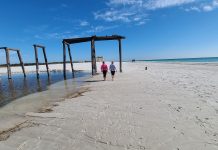
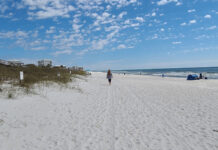
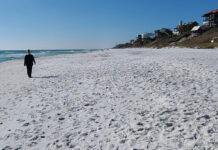
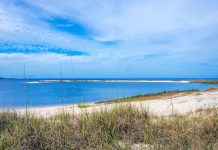
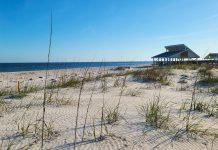
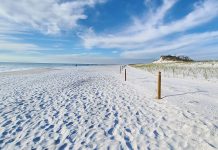
What you’ll notice when you step onto the Gulf sand is that the color tells a two-tone story. The dry sand up by the dunes runs white, a real Gulf beach white that connects this peninsula back to the quartz-influenced Forgotten Coast to the west. As you walk toward the water, that color fades through tan and into a darker cocoa, where shell content and organic material from the bay system mix into the bottom. The beach is narrow compared to St. George Island, and the dune line behind it is modest but intact. What you will not find is churned-up tourist sand, because the foot traffic here is light enough that the beach keeps its own character.
The wave action on the Gulf side has more energy than anything you’ll find further south on the Nature Coast, since you’re still on the edge of the open Gulf rather than deep in the protected Big Bend. It’s modest compared to the Panhandle beaches to the west, but enough for actual swimming and enough for a meaningful waterline walk. The beach is shelled after storms, with lightning whelks, fighting conchs, and horse conchs showing up in the wrack line when conditions cooperate. I consistently found better shells here in the early morning after any north wind.
Alligator Harbor and the Bay Side
Alligator Harbor Aquatic Preserve · Bay Water · Kayaking and Fishing
Flip to the north side of the same peninsula and the experience changes completely. Alligator Harbor is calm, shallow, and brackish, protected from Gulf wave action and sitting within the Alligator Harbor Aquatic Preserve, which has managed water quality and habitat here since 1981. The shoreline on the harbor side is not a beach in any conventional sense. It’s oyster bars, seagrass flats, and tidal marsh, which means it belongs to a completely different set of species than the Gulf side a hundred yards away.
The harbor side is where you’ll find the two boat ramps that give anglers access to both the harbor and the open Gulf. Redfish work the oyster bar edges on falling tides. Sea trout hold in the seagrass. The harbor is also where the Kemp’s Ridley sea turtle, one of the most critically endangered sea turtles on earth, nests on the peninsula’s beaches. The aquatic preserve status has kept the habitat intact enough to support nesting populations that simply don’t exist on more developed coastlines.
For kayakers, the harbor side is the more interesting water. The seagrass beds extend far offshore in shallow, clear-ish water, and the paddling through the preserve edges gives you access to bird life that doesn’t come anywhere near the Gulf beach. Tricolored herons, little blue herons, roseate spoonbills in season, and osprey everywhere. Launch from one of the boat ramps and paddle east toward the park boundary to find the most intact habitat. The wind typically stays lighter on the harbor side in the morning, which is the right time to be on the water here anyway.
The Alligator Point Community
Rental Cottages, Marina, and the One Tiki Bar
Understanding the community character at Alligator Point makes the whole experience make more sense. This is a vacation rental community through and through, built around the same model of family cottages and seasonal regulars that characterized much of the Florida Gulf coast before resort development standardized everything. The marina offers inshore and offshore fishing charters, which is the primary commercial activity on the peninsula. The one tiki bar provides the one place to have a drink after the sun goes down.
There are no grocery stores at Alligator Point. Stock up in Carrabelle or before you cross over from US 98, because the nearest options are 15 to 20 minutes away. The same goes for gas, ice, and anything else you forgot. The community’s remoteness is its feature, not a gap in its infrastructure. People who come here bring what they need and then spend their time paying attention to the water and the wildlife rather than looking for things to do.
The rental market runs the full range from modest to comfortable, mostly single-family cottages and beach houses rather than high-rise units or resort-style condos. The height limit on this stretch of coast keeps everything at a residential scale, which means the views from the road are still dunes and sky rather than buildings. If you’re planning to stay for more than a day, renting a house here gives you the experience the community is actually built for: coffee on the porch at sunrise, easy beach access, and the feeling of being genuinely off the tourist map.
Sunrise Beach at Bald Point State Park
Before the Park Gate · Free Access · Boardwalk to Sand
Sunrise Beach is the first of Bald Point State Park’s three beach access areas, and it sits on the Apalachee Bay side before the main entrance gate, which means you can reach it without paying the park entrance fee. The boardwalk leads down from the parking area to the bay’s edge, with a mobi-mat surface extending toward the water and a portable restroom on-site. A beach wheelchair is available for this access by calling the park office ahead of time at 850-349-9146.
The beach here is bay-facing rather than Gulf-facing, which changes the entire character of the water. Apalachee Bay is wide and open but protected from direct Gulf swells, so the water stays relatively calm even when conditions on the Gulf side are running. The color runs olive-green to murky depending on wind direction, and the bottom mixes sand with shell and organic material. This is honest bay water, not turquoise Gulf water, but it’s perfectly swimmable and genuinely peaceful in a way that Gulf beaches almost never are.
The name tells you when to come. The sunrise at Sunrise Beach, facing east across the bay, is something I didn’t plan for on my first visit and ended up staying for instead of walking further. The light hits the water differently when you’re looking east rather than west, and the wading birds that work the bay’s edge in the early morning have the area mostly to themselves until the day-use crowd arrives around mid-morning. Get here by 7am if you can manage it.
North End Beach at Bald Point State Park
Inside the Park Gate · $4/Vehicle · Most Developed Beach Access
North End Beach is the most developed beach access inside the park gate, and “most developed” at Bald Point still means picnic pavilions, a large restroom, walkways to the waterline, a mobi-mat, and an outdoor shower. There are no concessions, no chair rentals, and no lifeguards. The park entrance fee of $4 per vehicle applies here ($2 for pedestrians and cyclists), and pets are not allowed on the beach, though they are welcome on the park’s trails on a six-foot leash.
The beach at North End sits on the bay-facing coastline, looking out across Apalachee Bay toward the open Gulf to the south. The sand here is more mixed than on the Alligator Point Gulf side, with shell content increasing as you move toward the park’s southern tip. The water stays calm and shallow, excellent for wading and paddling but not for surf swimming. The observation deck near this access gives you an elevated view across the marsh that is worth the short walk even if the beach isn’t your primary destination.
North End Beach draws a modest crowd on spring and fall weekends, particularly from Tallahassee residents who know the park well. On weekdays in any season, and on most winter weekends, you can have this beach entirely to yourself. The combination of easy park facilities, quiet bay water, and the trail system radiating out from the parking area makes this the most versatile access point in the park for a half-day visit.
Bald Point Trails and the Fall Migration Corridor
18 Miles of Multi-Use Trails · Peak Season: September Through November
The trails at Bald Point State Park are the reason birders and naturalists make the drive. The park has 18 miles of multi-use trails through pine flatwoods, maritime oak hammocks, coastal marsh, and scrub habitat, and the variety of ecosystems in such a compact area is what creates the extraordinary wildlife diversity. On a single trail walk you can move from dune scrub to pine forest to tidal marsh and back, each environment supporting its own set of species.
In fall, from roughly late September through November, this peninsula becomes one of the most productive hawk-watching and Monarch butterfly sites in North Florida. The geography explains it: Bald Point juts south into open water at the exact point where migrating hawks and butterflies have to make a decision about crossing. Cold front mornings push the highest concentrations, when peregrine falcons, Northern harriers, Cooper’s hawks, sharp-shinned hawks, and bald eagles move through in numbers that stop you in your tracks. The Monarchs rest in the coastal scrub on those same cold front mornings, sometimes covering the vegetation so densely that the orange color is visible from the road.
A habitat improvement project has been underway at the park since August 2024, with sand pines being removed to allow the land to return to natural scrub state managed by prescribed fire. This is conservation work that will improve the habitat over time, and it may mean some trail sections look different than older photos suggest. Check with the park office for current trail conditions if you’re planning a specific route.
Alligator Point and Bald Point Rankings: Expert Scores
These scores cover the peninsula as a whole, weighting both the Gulf-side Alligator Point beach experience and the Bald Point State Park bay beaches together. This is a destination that punches above its weight on wildlife and below it on beach amenities, and the scores reflect that honestly.
Sand Quality
6/10
The Gulf beach at Alligator Point earns the sand score, with white quartz by the dunes transitioning to darker cocoa near the water. The Bald Point bay beaches drop that score, running more shell-mixed and organic. Compared to the pure quartz of St. George Island to the west, you’re on the far eastern edge of that system. Compared to everything on the Nature Coast to the south, this is genuinely good sand.
Hiking and Beach Walking
8/10
Eight miles of Gulf-side beach on the Alligator Point peninsula for waterline walking, plus 18 miles of multi-use trails inside Bald Point State Park through four distinct habitat types. The walking variety here is exceptional for the size of the area. Almost no foot traffic on either the beach or the trails outside of fall migration season weekends.
Shelling
7/10
Consistently good on the Gulf side after a north wind or overnight storm. Lightning whelks, fighting conchs, horse conchs, and calico scallops show up in the wrack line when conditions cooperate. The low foot traffic means shells that wash up in the morning are often still there. Check the beach early after any significant weather event for the best haul.
Water Conditions
6/10
The Gulf side has modest, manageable wave action and reasonable clarity on calm days, dropping after weather. The bay and harbor sides are flat calm with murky, brackish water that varies with tides and wind. Neither side gives you the turquoise clarity of the Panhandle, but the Gulf beach is a genuine swimmable beach rather than a wading flat.
Scenery and Natural Beauty
9/10
Standing at the tip of Bald Point where two bays converge, with the Gulf visible to the south and marsh in every other direction, is one of the more striking vantage points on the Florida coast. The narrow peninsula, intact dune line, and complete absence of development beyond modest residential cottages put the scenery in a category that more famous beaches rarely reach.
Birding and Wildlife
10/10
The fall migration corridor at Bald Point is elite-level birding by any measure. Raptors, songbirds, and Monarchs concentrated by the peninsula’s geography into a point that extends into open water. Year-round, the habitat diversity supports black bears, bobcats, otters, Kemp’s Ridley sea turtles, loggerheads, dolphins, and a shorebird and wading bird community that benefits from the aquatic preserve protection.
Family Friendliness
7/10
The bay beach at North End is genuinely good for young children: calm, shallow, and enclosed enough to feel manageable. The Gulf beach requires more attention for younger swimmers since there’s real wave action and no lifeguards anywhere on the peninsula. The nature experience for families who want it is excellent. The infrastructure for families who need amenities is minimal.
Dog Friendliness
5/10
Dogs are NOT allowed on any of the Bald Point State Park beach areas. They are welcome on the park’s 18 miles of trails on a six-foot leash. At Alligator Point’s informal public beach accesses outside the park boundary, dogs are generally allowed on leash. If you’re traveling with a dog, you’ll have the trails and the Alligator Point Gulf beach, but the state park beaches are off limits.
Solitude and Peace
9/10
On most days, at most times of year, you will not be competing for space anywhere on this peninsula. The Gulf beach pull-offs serve a handful of people at a time. The park trails are often empty. Even the busier fall migration weekends don’t produce crowds by any broader coastal Florida standard. This is what coastal solitude actually looks like when the infrastructure stays minimal.
Entertainment and Nightlife
2/10
One tiki bar. That is the entertainment. Carrabelle, about 20 minutes north on US 98, has restaurants and a bar scene proportionate to a small Gulf town. Anything beyond that requires a longer drive toward Tallahassee or Apalachicola. Come here for the water, the wildlife, and the quiet. Come expecting nightlife and you’ll be the one confused.
Parking and Beach Access
8/10
Free informal pulloffs along Alligator Drive for the Gulf beach. Sunrise Beach at the park edge is also free. Inside Bald Point State Park: $4 per vehicle, $2 for pedestrians and cyclists. All the parking that exists is rarely full. The access points are informal by Panhandle beach standards, which means you’ll figure out where to park by looking for other cars rather than following signs to a designated lot.
Alligator Point & Bald Point Sand & Water
The sand here doesn’t stay the same the whole way down the beach, and that’s honestly part of the charm. Up near the dunes you’ll find it soft and pale, easy on bare feet with just enough give to remind you you’re walking on real barrier-island sand. Head toward the water and it firms right up, packing down nicely for a solid walking surface, though you’ll notice more shell mixed in the closer you get to the waves. It’s a genuinely walkable beach end to end, wide enough for a real stretch of the legs on the Gulf side, and flat enough that nobody’s ankles complain about the slope. Sandcastles hold together fine with a little water worked in near the tideline, though the drier sand higher up crumbles too easily to hold much detail.
The water tells its own story depending on which way the wind is blowing that day. Give it a few calm days and the Gulf runs a pretty blue-green, clear enough to see your feet in the shallows. A north wind flips that fast, muddying things up within a day. Entry is gradual on both the Gulf beach and the calmer bay side at Bald Point, so wading in is easy rather than a shock to the system. Swimming is genuinely enjoyable here, just keep in mind there are no lifeguards anywhere on this peninsula, so use the same caution you’d use at any unguarded beach, especially after a front has come through.
-
Walkability. Wide and flat on the Gulf side, with plenty of room for a real walk regardless of tide. The bay beaches at Bald Point are shorter but just as easy underfoot.
-
Softness & Playability. Soft enough near the dunes for comfortable lounging and casual play, firm enough at the waterline for a proper walk. Sandcastles work best with a little water mixed in.
-
Barefoot Comfort. Comfortable through most of the dry sand and mid-beach zone. Shell content picks up right at the water’s edge, so keep an eye on your footing there.
-
Swimmability. Gradual entry and generally calm conditions on both the Gulf and bay sides. There are no lifeguards on this peninsula, so swim smart and check conditions after any windy stretch.
Want the full geology, grain composition, and the complete sand and water condition ratings? I broke it all down separately in Sand & Shore: Alligator Point & Bald Point.
Dogs & Pet Accessibility
Are Dogs Allowed on the Sand? DEPENDS ON WHICH BEACH.
This peninsula splits down the middle on dog access. The informal Gulf beach accesses outside the state park boundary generally allow leashed dogs. Inside Bald Point State Park, dogs are not allowed on either beach, but they are welcome on all 18 miles of trails.
Where Dogs Are Allowed
- ✓The informal Gulf beach accesses along Alligator Drive, outside the state park boundary, on leash.
- ✓All 18 miles of multi-use trails inside Bald Point State Park, on a six-foot leash, including the Maritime Hammock and Sundew/Tucker Lake routes.
Where Dogs Are NOT Allowed
- ✗Sunrise Beach, inside or outside the fee gate.
- ✗North End Beach, inside the park gate.
Paws on the Ground Reality
If you’re traveling with a dog, the honest plan is the Gulf beach at Alligator Point for sand time and the full trail network at Bald Point State Park for mileage. That combination covers a genuinely full day. Bring your own fresh water either way, since there’s no reliable freshwater source along the Gulf beach accesses, and keep to the cooler parts of the day in summer when yellowflies and biting gnats are at their worst.
Some Alligator Point residents have specifically flagged unleashed dogs as a reason the community has pushed back on outside beach traffic at the informal accesses. Keeping your dog leashed here isn’t just the rule, it’s part of why these access points are still open to the public at all.
Crowd Levels and the Overall Feel of Alligator Point and Bald Point
This peninsula stays quiet by almost any Florida coastal standard. The community at Alligator Point sees more activity in summer when vacation rentals fill, but even at peak summer occupancy the Gulf beach pull-offs handle the crowd with room to spare. The park trails and bay beaches at Bald Point run emptier still, since the entry fee and the drive filter out casual visitors effectively.
The one genuine crowd event on this coast is fall migration season at Bald Point, particularly on cold front mornings in October when local birders and serious wildlife watchers descend on the park. Even that is a modest crowd by birding-festival standards. What it is is a concentrated group of people paying very close attention to the same marsh, which creates a different kind of energy than a beach crowd but not a larger one.
- Spring: Wildflowers on the trails, good birding during northbound migration, water warming toward swimmable. Light crowds, excellent conditions for a long beach walk and trail day combined.
- Summer: Warmest water, peak rental occupancy at Alligator Point, and the season where yellowflies in early summer and mosquitoes and biting gnats at dawn and dusk are at their worst. Pack serious insect repellent. The Gulf beach is comfortable in the middle of the day when the breeze keeps the bugs moving.
- Fall: The season this peninsula is built for. September through November brings the hawk migration, the Monarchs, and a corresponding group of birders and naturalists who know what’s here. Cold front mornings are the event. The water stays warm enough to swim well into October.
- Winter: The park trails and bay beaches are often empty, the bugs are gone, and the resident wildlife, including bears, bobcats, and wintering waterfowl, is more active and visible. This is my preferred season for the trail system at Bald Point.
Who Is Alligator Point and Bald Point Really For?
✓ Who Will Love This Peninsula
-
Birders, particularly anyone interested in fall hawk migration, Monarch butterfly concentrations, or the year-round diversity that comes from four habitat types in close proximity.
-
Anglers looking for inshore redfish and sea trout in the Alligator Harbor Aquatic Preserve, or offshore access from the peninsula’s charter boat operation.
-
Beach walkers who want miles of quiet Gulf beach with almost no foot traffic and genuinely interesting shelling after weather.
-
Nature photographers who want to work the fall migration corridor or the bay-edge shorebird populations without competing with other photographers for position.
-
Families who book a rental cottage for a week and want a quiet, wildlife-rich experience rather than a resort beach vacation.
-
Anyone who wants to walk a piece of Florida coastline that hasn’t changed its character in decades and has no plans to.
✗ Consider Another Beach If…
-
You need the quartz-white sand and emerald water of the Panhandle. Head west to St. George Island or Carrabelle for that experience.
-
You’re bringing a dog and expect beach access at the state park. Dogs are not allowed on any of the Bald Point beach areas, only on the trails.
-
You want restaurants, beach bar service, or any kind of nightlife within walking distance. Carrabelle is 20 minutes away and has some options; Alligator Point itself has almost none.
-
You’re planning to visit in early summer without serious insect repellent. Yellowflies and biting gnats are real here and can make dawn and dusk miserable without preparation.
-
You want a managed, lifeguarded beach experience with rentals and restrooms on the sand. This peninsula has none of those things and doesn’t intend to get them.
Things to Do at Alligator Point and Bald Point State Park
-
Gulf Beach Walking. Eight miles of peninsula with public access pull-offs along Alligator Drive. Walk east from any entry point and the beach gets quieter. Best in early morning before the wind builds, and especially good after a north wind overnight when shells are fresh on the waterline.
-
Fall Migration Birding. The Bald Point trail system and bay overlooks from September through November for hawk and Monarch migration. Morning after a cold front is the prime window. The park’s mix of pine flatwoods, oak hammock, and coastal marsh also produces year-round birding that rewards a slow trail walk in any season.
-
Kayaking and Paddleboarding. Launch from either harbor boat ramp into the Alligator Harbor Aquatic Preserve for protected flat-water paddling through seagrass and oyster bar habitat. The preserve boundary protects what you’re paddling through, which means the wildlife here is legitimately intact. Canoe access is also available on Tucker Lake inside the park.
-
Inshore Fishing. The harbor and bay flats produce redfish, sea trout, flounder, and sheepshead on any tidal movement. The marina at Alligator Point runs inshore and offshore charters. Surf fishing from the Gulf beach is productive in fall when Spanish mackerel move through. A Florida saltwater fishing license is required for anglers 16 and older.
-
Shelling. Best on the Gulf beach after a north wind or overnight storm. Lightning whelks, fighting conchs, horse conchs, and olives are the reliable finds. Work the wrack line just after high tide clears and you’ll find the freshest material. Use the squat. Stopping to pick up shells is free leg day.
-
Hiking the Bald Point Trail System. Eighteen miles of multi-use trails through four habitat types. The observation deck overlooking the marsh is accessible from the North End parking area and worth the short walk in any season. The full trail network rewards a longer visit for anyone interested in the transition from coastal scrub to pine flatwoods to tidal marsh.
-
Monarch Butterfly Watching. Cold front mornings in October, on the coastal scrub trails at Bald Point. The concentration can be dramatic when timing aligns with a strong front. Bring a camera and arrive early before the butterflies warm up and disperse into flight.
-
Sunrise at Sunrise Beach. Free to access before the park gate. Face east across Apalachee Bay for the morning light before the day-use crowd arrives. Wading birds work the bay edge at first light and largely have the place to themselves until mid-morning.
Local Knowledge and Practical Advice
A few things I’ve picked up walking this peninsula that will save you time and keep you comfortable:
-
Bring DEET-based repellent, not the gentle stuff. Yellowflies are a real problem in late May and early June and can turn a pleasant morning walk into a miserable one within twenty minutes. Biting gnats are active at dawn and dusk most of the year. The middle of a sunny afternoon is usually the safest window if you’re insect-sensitive.
-
Sunrise Beach access is free and accessible before the park gate. If you want the bay beach experience without paying the park fee, Sunrise Beach is your spot. The boardwalk and mobi-mat make it accessible, and a beach wheelchair is available by calling 850-349-9146 in advance.
-
Stock up before you drive down the peninsula. There are no grocery stores at Alligator Point. Carrabelle is the nearest stop for food, gas, and supplies. If you’re staying overnight in a rental cottage, plan your shopping for the drive in, not after you arrive.
-
Cell service is limited. Service drops to one bar or none along the Alligator Point road and inside the state park. Download offline maps before you leave, and let someone know your plans if you’re planning a longer trail walk at Bald Point.
-
The best migration birding is the morning after a cold front in September and October. A front that pushed through overnight stacks migrating hawks and Monarchs at the tip of the peninsula. Arrive by 8am and walk the scrub edge at Bald Point. The activity peaks in the first two hours after sunrise while temperatures are still low.
-
Dogs are welcome on the Bald Point trails but not on the park beaches. Signs at both Sunrise Beach and North End Beach enforce this clearly. The 18 miles of trails are fully available with a leash, and the trail experience is honestly better than the beach for dogs in this habitat anyway. Alligator Point’s informal Gulf beach pull-offs outside the park allow dogs on leash.
-
A habitat improvement project is underway at Bald Point through 2025 and beyond. Sand pines are being removed from sections of the park to restore natural scrub habitat for prescribed fire management. Some trail sections may look different than older references suggest. Call the park at 850-349-9146 for current conditions before a long trail day.
-
Florida black bears live on this peninsula. They are present in the pine flatwoods and coastal scrub, and sightings, while not daily, are not rare either. Secure any food in your vehicle or rental cottage, and do not approach a bear if you see one. The same applies to the occasional alligator along the trail edges near any freshwater feature.
Where to Stay Near Alligator Point and Bald Point State Park
Vacation Rental Cottages at Alligator Point
Vacation rentals are the dominant lodging model here, ranging from modest fishing cottages to more comfortable Gulf-front houses. The rental market runs through platforms like VRBO and Airbnb, and the inventory spans the full length of the peninsula. Gulf-side rentals put you steps from the beach access pull-offs. Some properties offer private boardwalks to the sand. There are no resort-scale condo units anywhere on this peninsula, since the residential character and the road itself limit what can be built. Rates are typically more affordable than comparable Gulf-front rentals on the Panhandle.
Staying in Carrabelle
Carrabelle, about 20 minutes northwest on US 98, is the closest town with hotel options, restaurants, and services. The Old Carrabelle Hotel has earned a strong local reputation and puts you in a walkable small town with character. Staying in Carrabelle and day-tripping to Alligator Point and Bald Point works well for a two-to-three day visit, especially if you want to eat dinner somewhere with more than a tiki bar’s worth of options.
Staying in Panacea or Apalachicola
Panacea, across the bridge in Wakulla County, offers the Oaks RV Resort and motel options with waterfront proximity and boat storage. Apalachicola, about 45 minutes west, has the widest range of lodging on the Forgotten Coast, including historic inns and bed-and-breakfasts in the Victorian downtown. If you’re using Alligator Point as one stop on a longer Forgotten Coast drive, Apalachicola makes the best overnight base.
Camping
There is no campground at Bald Point State Park or at Alligator Point itself. The nearest camping with full facilities is at Dr. Julian G. Bruce St. George Island State Park, about 45 minutes west, which has 60 sites with electric and water hookups and direct beach access. Primitive camping along the Florida Circumnavigational Saltwater Paddling Trail is available at St. Marks NWR to the east for kayakers.
What Makes Alligator Point and Bald Point Different from Nearby Beaches
Two Water Systems on One Strip of Land
Almost no other beach peninsula in Florida gives you open Gulf on one side and an aquatic preserve estuary on the other within a hundred yards of each other. At Alligator Point you can swim in the Gulf in the morning, paddle the harbor flats in the afternoon, and watch different species in each water body on the same day. The dual-water character is not an accident. It’s the direct result of the peninsula’s narrow shape and the protected status of Alligator Harbor.
The Actual End of the Panhandle Sand System
The quartz beach system that defines the Panhandle’s famous white sand reaches its eastern edge at this peninsula. What that means in practice is sand that still earns a beach score but already shows the shell content and gradient that tell you the Nature Coast is starting. Standing here and understanding what you’re looking at puts the larger Florida coastal story in clearer perspective than any geography lesson.
A Documented Sea Turtle Diversity That Most Beaches Can’t Match
Kemp’s Ridley sea turtles, the most critically endangered sea turtle species on earth, nest on Alligator Point beaches alongside loggerheads. That combination in one location is genuinely rare and directly tied to the aquatic preserve protection that keeps the habitat functional. You don’t see that status on most Florida beach signs because most Florida beaches can’t make that claim.
The Fall Migration Corridor
Bald Point’s position where the peninsula extends into open water creates a geographic funnel that concentrates migrating raptors and Monarchs in a way that a flat stretch of beach never could. This is not incidental wildlife watching. It is a specific, documented, significant migration site that the birding community has tracked for decades.
Alligator Point and Bald Point vs. Nearby Beaches
Alligator Point vs. Carrabelle Beach
Carrabelle Beach, about 20 minutes northwest, has better overall sand quality, a more accessible public beach setup, and facilities in town within walking distance. It’s the easier, more comfortable version of this stretch of coast. Alligator Point is the wilder, more remote, more intentional version. Carrabelle is where you go for a good beach day. Alligator Point is where you go when you want more coast and less civilization around it.
Alligator Point vs. St. George Island
Same county, completely different scale. St. George Island has quartz sand, a lighthouse, a boardwalk, restaurants, and the state park that has been named the number one beach in America. Alligator Point has rental cottages, a marina, and a tiki bar. The experiences are not interchangeable. If your group has people who want resort-scale beach comfort, go to St. George Island. If your group is uniform in wanting remote and quiet, Alligator Point is the better stop.
Alligator Point vs. Cape San Blas
Cape San Blas, about 90 minutes west, shares the remote peninsula character and the vacation cottage rental model, and it has slightly better quartz sand. The differences are in the wildlife angle. Cape San Blas is a swimming and beach-walking destination with good birding as a bonus. Alligator Point and Bald Point are a wildlife destination with a good beach as a bonus. Know which version of that you want before you drive.
Bottom line: Alligator Point and Bald Point sit at the exact geographic and ecological transition between the Panhandle’s quartz beach coast and the Nature Coast’s wildlife-first character. They are the only place on Florida’s Gulf coast where you can experience both in the same half-day, and that combination is genuinely worth understanding before you land somewhere that only has one.
Alligator Point and Bald Point State Park: Frequently Asked Questions
Is there a fee to enter Bald Point State Park?
Yes. The fee is $4 per vehicle (up to 8 passengers) and $2 for pedestrians and cyclists. Sunrise Beach is located before the entrance gate and is accessible without paying the fee. The standard Florida State Parks Annual Pass covers entry for all state park beach access areas inside the gate.
Are dogs allowed at Alligator Point and Bald Point State Park?
Dogs are NOT allowed on the beach at Bald Point State Park. Signs are posted at both Sunrise Beach and North End Beach. Dogs are welcome on the park’s 18 miles of trails on a six-foot handheld leash. At the informal public beach access points along Alligator Drive outside the park boundary, dogs are generally allowed on leash.
Are there lifeguards at the beaches here?
No. There are no lifeguards anywhere on the Alligator Point peninsula or at Bald Point State Park. Swim at your own judgment and watch conditions. The bay beaches at Bald Point are calm enough for confident wading, but the Gulf beach at Alligator Point has real wave action that requires attention for weaker swimmers.
What is the best time of year to visit Alligator Point and Bald Point?
Fall, specifically September through November, for the hawk and Monarch butterfly migration at Bald Point. The morning after a cold front produces the best concentrations. For beach walking and swimming, late spring through early fall. Winter is excellent for trail walking without insects and for the resident wildlife that becomes more visible when the vegetation thins.
Are there restaurants or stores at Alligator Point?
No grocery stores, and very limited food options. There is a tiki bar on the peninsula. The nearest restaurants and stores are in Carrabelle, about 20 minutes northwest on US 98. Stock up before you drive down the peninsula.
How do I find the public beach access at Alligator Point?
Look for informal pull-offs along Alligator Drive, the main road running the length of the peninsula. These are scattered between vacation rental homes and not well-signed. Arriving and driving slowly along the road will reveal several pull-off spots with room for a few cars each. There is no large central parking area for the Gulf beach outside the state park.
Is the Sunrise Beach at Bald Point accessible before paying the entrance fee?
Yes. Sunrise Beach is located before the main park entrance gate and does not require paying the $4 entrance fee. It has boardwalk access, a mobi-mat to the waterline, a portable restroom, and outdoor shower. A beach wheelchair is available for this access by calling the park office at 850-349-9146 in advance.
What sea turtles nest at Alligator Point?
Both loggerhead sea turtles and Kemp’s Ridley sea turtles have been documented nesting on Alligator Point beaches. Kemp’s Ridley is the most critically endangered sea turtle species in the world, and Alligator Point represents important nesting habitat directly related to the aquatic preserve protection of Alligator Harbor. Nesting season runs from May through October.
What wildlife can I expect to see at Bald Point State Park?
Year-round: Florida black bears, bobcats, otters, deer, alligators, osprey, bald eagles, herons, egrets, and an extensive shorebird community. Seasonal: migrating hawks and Monarch butterflies in fall (peak October), nesting shorebirds in spring, and wintering waterfowl on the bay. The diversity across four habitat types makes almost every visit produce something worth stopping for.
How far is Alligator Point from Tallahassee?
About 44 miles southwest of Tallahassee, roughly 50 to 60 minutes depending on route. Take US 98 south and east through Carrabelle, then turn south on Alligator Drive. The distance from Carrabelle itself is about 12 miles. Bald Point State Park’s address is 146 Box Cut Road, Alligator Point, FL 32346.
Is Bald Point State Park good for kayaking?
Yes. The park has a canoe access point on Tucker Lake and the bay-facing shoreline provides calm water for paddling. More extensive kayaking opportunities are available in the Alligator Harbor Aquatic Preserve, accessible from the boat ramps outside the park boundary. The harbor’s seagrass and oyster bar habitat makes for interesting paddling through genuinely protected water.
Patti’s Perspective: My Honest Take on Alligator Point and Bald Point
I’ll tell you what I remember most clearly from Alligator Point: the drive in. The way the road narrows and the pine canopy closes in and you start feeling like you made a wrong turn even though you didn’t. And then the trees open and there’s the Gulf on one side and the harbor on the other and the peninsula is barely wider than two lanes with cottages on both sides, and you understand immediately that this place did not evolve for tourists. It evolved for people who specifically wanted to be on the edge of the water with very little between them and it.
The sand on the Gulf side confirmed something I’d been noticing since I started walking east from Pensacola: you can follow the quartz system all the way from the Alabama border and watch it change as you go. By the time I reached Alligator Point, the white at the dune line was still there, but the cocoa color near the water was the first real sign that the system was running out. That gradient was something I stopped and looked at for a while before walking further. The Nature Coast doesn’t start somewhere dramatic on a map. It starts in gradients exactly like that one.
Bald Point was a place I didn’t even know about until I got here and it is for sure a hidden gem. Lots of shoreline, wildlife, birds and just coastal nature at it’s best.
My full walking guide to this peninsula covers the trail routes, the bay edge, and what the waterline looks like mile by mile: Hiking Alligator Point and Bald Point State Park.
My verdict: 6/10. This peninsula earns its score on wildlife and solitude. The beach is good and the sand story is interesting making the Gulf walking genuinely good. But what makes Alligator Point and Bald Point worth the drive is the convergence of things that rarely occupy the same address: a working beach community that hasn’t sold its character, a state park sitting at a geographic hinge point of the entire Florida coast, and a migration corridor that turns ordinary October mornings into something you’ll tell people about. That combination doesn’t need a better sand score to justify the trip.
Want to Live at the Edge of the Forgotten Coast?
Alligator Point and the surrounding Franklin County coastline remain some of the most genuinely affordable Gulf-front real estate in Florida. The vacation rental cottage model dominates the peninsula, and many properties produce strong rental income during peak seasons while still serving as personal retreats in the off months. The combination of Gulf-front position, intact wildlife habitat, and the complete absence of resort development appeals to a buyer looking for something the more developed Gulf coasts stopped being able to offer years ago.Franklin County overall, including Carrabelle, Eastpoint, and Apalachicola, draws retirees, remote workers, and property investors who want waterfront access without the condo-row pricing of more developed coastal markets. Apalachicola in particular has seen steady interest from buyers who value the Victorian town character and the Forgotten Coast lifestyle that the broader area sustains.If waterfront living on Florida’s last undeveloped Gulf coast is something you’re seriously considering, this corner of Franklin County deserves a look before you conclude that the only options are the expensive ones further south.
Explore Waterfront Living at LiveByTheWater.com
Real estate referral partner