
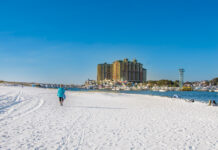

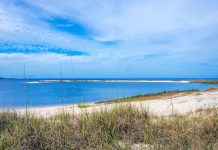
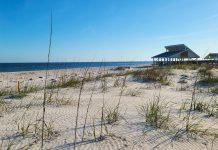
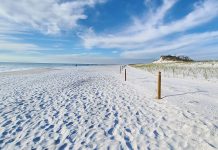


Boca Grande & Gasparilla Island Beaches, Florida
Boca Grande is the only place in Florida where I turned off my phone for three days and didn’t miss it once. This is a barrier island that decided a long time ago what it wasn’t going to become, and it has held that line for over a century. No high-rises. No traffic lights. No chain restaurants. Just golf carts, two lighthouses, and some of the best shelling on this coast.
This is Gasparilla Island, a narrow barrier island straddling the Lee and Charlotte county line on Florida’s southwest Gulf Coast, separated from the mainland by Charlotte Harbor and reached by a private toll causeway from the fishing town of Placida. It runs about seven miles long and never wider than a mile, and nearly the whole of it belongs to Gasparilla Island State Park, the historic village of Boca Grande, or private homes that have sat here since the phosphate-shipping days. I did this walk solo, no family along this time, and it turned out to be exactly the right island for that.
In this guide I’m walking you through every stretch of beach on the island, going deep on what the sand and water are actually doing here (it’s a different animal than the Panhandle sand I usually write about), scoring it honestly across every category that matters, and telling you exactly who this island is built for and who should look elsewhere. I’ll cover both lighthouses, the famous Pass, the quiet north end, and the village in between. I close with what three days alone on this island actually did for me, because it wasn’t what I expected going in.
The Vibe & Culture at Boca Grande
Old Florida, On Purpose
Most beach towns in Florida grew because someone let them. Boca Grande grew because a handful of wealthy families decided exactly how much growth they’d allow, and then stopped it.
Cross the causeway from Placida (six dollars, cash or credit, no EZPass or SunPass accepted) and the transition is immediate. The speed limit drops, the golf carts start outnumbering the cars, and by the time you reach the village you’ll have passed more banyan trees than stoplights, because there aren’t any stoplights. The island has one main road, one real business district of about two blocks, and a level of quiet that feels intentional rather than accidental. It is.
Boca Grande has been a winter retreat for wealthy families since the Gasparilla Inn opened in 1911, and that history is still visible everywhere. The homes along Gilchrist Avenue and the Gulf-front lots near the lighthouse are worth more than most people’s entire net worth, but nobody here acts like it. I passed golf carts driven by teenagers and golf carts driven by men who could buy the island twice, and they waved at me exactly the same way. There’s a phrase locals use, that this is a town of fishermen and billionaires, and after a few days here I understood it wasn’t just a marketing line.
The rhythm of the island shifts with the tarpon. Winter (roughly December through April) brings the snowbirds and the wealthiest crowd of the year, when reservations at the handful of restaurants book out weeks in advance. Late spring flips the switch entirely: tarpon season runs March through June, peaking in May and June when the island fills with charter captains and the Pass turns into the most serious sport-fishing water in the country. Summer is hot, humid, and genuinely quiet, since most of the second-home owners have left for cooler places. I came in the shoulder window between seasons and had entire stretches of beach that felt like they belonged to me alone, which, as someone doing this trip solo, was exactly what I needed.
Boca Grande & Gasparilla Island Beach Areas: Five Distinct Stretches
Gasparilla Island reads almost like a timeline if you walk it end to end. Here’s how it breaks down, south to north, and what you’ll find at each stop.
The South End: Port Boca Grande Lighthouse & Sandspur Beach
Gasparilla Island State Park · $3 Parking Fee
The southern tip of the island is where everything on Gasparilla Island points to eventually, and for good reason. This is Sandspur Beach, sometimes called Lighthouse Beach, and it sits at the mouth of Boca Grande Pass, one of the deepest natural passes in Florida at roughly 80 feet. Standing here, you’re looking at open water on one side and the entrance to Charlotte Harbor on the other, with the 1890 Port Boca Grande Lighthouse rising behind you on iron screw-piles, the oldest building on the island and still visible from up to 12 miles out.
The crowd here skews toward anglers and history-minded visitors rather than families with coolers. Charter boats work the Pass in tight formation during tarpon season, and even outside of season you’ll find a few serious fishermen working the surf line for snook and redfish. The lighthouse museum inside draws a steady trickle of visitors year-round, and I’d budget real time for it. It’s a small building, but the exhibits on the island’s phosphate-shipping era and the lighthouse keepers who lived here are better than you’d expect from something this modest in size.
I’ll be honest about the sand here: it’s good but not the softest on the island, since heavy shell content near the Pass makes it a little coarser underfoot than the stretches further north. What makes this spot worth the trip isn’t the sand, it’s standing at the edge of water that swift enough to move a tarpon boat and watching pelicans work the same current that’s made this place famous for a century. Do not swim in the Pass itself. The currents here are genuinely dangerous, and the park’s own warning signs are not decorative.
Sea Grape Beach & the Dunes
Gasparilla Island State Park · Quietest Stretch in the Park
Moving north from the lighthouse, the Dunes and Seawall parking areas give way to Sea Grape Beach, and this is where the island starts to feel genuinely undeveloped. There’s a real buffer of dune and sea oat between the parking area and the private homes to the north, and the beach itself widens out into a natural, unmanicured stretch with no boardwalk, no vendors, and only porta-potties for facilities.
This is where I found the actual solitude I’d come here looking for. On a weekday morning I had close to a half mile of shoreline without seeing another person, just shorebirds working the wrack line and a pair of dolphins moving parallel to the beach about fifty yards out. The sand here runs finer and whiter than down at the Pass, since it’s further from the heaviest shell deposits, and the walking is some of the most comfortable on the island.
If solitude is what you’re after on Gasparilla Island, this is the stretch to build your morning around. I came back to Sea Grape twice during my stay, once at sunrise and once in the late afternoon, and both times I had long uninterrupted stretches to just walk and think, which turned out to be most of what I actually needed from this trip.
Range Light Beach & the Gasparilla Island Light
Closest State Park Access to the Village
The northernmost beach inside the state park boundary sits beneath the island’s second lighthouse, a slim metal tower that most visitors don’t even realize is a lighthouse until someone tells them. Originally built in Delaware in 1885 and reassembled here in 1927 as the rear range light guiding ships into Boca Grande Pass, it’s a very different structure from the wooden 1890 original down at the south end, and it’s a genuinely pleasant beach walk of about forty minutes between the two.
Range Light Beach has a different crowd than the rest of the park. A row of picnic shelters fronts the sand, and this is the closest thing Gasparilla Island has to a surf beach, one of the few spots on this entire coast where you’ll occasionally see someone paddling out on a longboard. It’s not Panhandle-scale surf by any measure, but on the right swell it’s enough to draw a small, loyal local crowd that treats this stretch like their own private break.
I walked from the Port Boca Grande Lighthouse to this one on my second morning, alone, timing it against the tide so the wet sand at the waterline stayed firm the whole way. It’s one of the better short beach walks I’ve done in Florida specifically because of what it connects: two working pieces of maritime history, four decades apart in construction, standing on the same stretch of sand.
Read more on the history of both Gasparilla Island lighthouses here.
Downtown Boca Grande: Banyan Street to 5th Street
Free Street Parking · Village Beach Access
North of the state park boundary, the beach keeps going, but the access changes entirely. There’s no more $3 fee and no more dedicated lots, just a string of public access points at Banyan Street, Baily Street, Luke Street, 3rd Street, and 5th Street, all with free parking on the surrounding residential streets if you can find a spot. This stretch runs directly behind the village, so a beach morning here can turn into lunch at the Pink Elephant or an ice cream stop at the Loose Caboose without ever getting back in a car.
The crowd here is a mix of locals walking dogs (more casually than the official rules technically allow, in my honest experience), second-home owners, and visitors staying in the village rentals. It’s noticeably more social than the state park beaches to the south, and the beach itself sits right behind some of the most expensive real estate on the island, so you’re walking a shoreline lined with historic cottages and quietly enormous Gulf-front homes rather than dune scrub.
Banyan Street itself, just inland from the beach, is worth the detour even if you never set foot on the sand there. The banyan trees were planted around 1915 by the man who built the Gasparilla Inn, and more than a century later their roots and canopy have grown into something that genuinely stops you mid-step. I sat under them for close to twenty minutes on my last morning, and I wasn’t the only solo traveler doing exactly that.
The North End: Whidden’s Marina & the Fishing Pier
Charlotte County Side · Historic Fishing Village
Keep going north past the village and the island quiets down again, this time in a completely different register than the state park’s natural quiet. This is the old fishing village end of Gasparilla Island, anchored by Whidden’s Marina, a working marina that’s been here since long before Boca Grande became a wealthy retreat, and the Boca Grande Fishing Pier, a Charlotte County park with its own modest parking lot.
This stretch draws working fishermen, marina regulars, and visitors who’ve made it all the way up the bike path and want a reason to turn around. The beach itself is less about sunbathing and more about function: boat traffic, bait shops, and the kind of unpolished, working-waterfront feel that Boca Grande’s southern half has largely traded away. I liked it precisely because it didn’t try to be pretty. It’s the part of the island that remembers what this place was before the phosphate money and the beachfronters arrived.
I biked the full length of the Boca Grande Bike Path to get here, six miles along the old railroad corridor from the lighthouse to this exact spot, and arriving at the pier felt like reaching the actual end of something. If you only see the manicured south end of this island, you’ve seen half the story.
Boca Grande & Gasparilla Island Rankings: Expert Scores Across 11 Categories
These scores weigh the island as a whole, from the quiet natural stretches of the state park to the social, village-adjacent beach in town.
Sand Quality
8/10
A mix of fine quartz and ground shell rather than the near-pure quartz of the Panhandle. Softer and whiter at Sea Grape, coarser and shellier near the Pass.
Hiking & Beach Walking
8/10
Firm, flat waterline the length of the island, plus a genuine six-mile rail trail if you want to cover ground off the sand. The forty-minute walk between the two lighthouses is the highlight.
Shelling at Boca Grande
9/10
One of the better shelling beaches on this coast, especially after winter storms. Sand dollars, lightning whelks, fighting conchs, and olive shells all turn up reliably.
Water Conditions
8/10
Emerald to turquoise, generally calm and gradual entry, with two real exceptions: a steeper drop-off near the south lighthouse, and genuinely dangerous currents directly in the Pass. No lifeguards anywhere on the island.
Scenery & Natural Beauty
9/10
Two working lighthouses, undeveloped dune stretches, and a historic village that never let itself get overbuilt. Very little on this coast looks like this anymore.
Birding & Wildlife
9/10
Bald eagles, ospreys, American oystercatchers, least and royal terns, dolphins offshore most mornings, manatees in the sound, and loggerhead nests from spring through fall.
Family Friendliness
6/10
Gentle water and a beach wheelchair program are genuine pluses, but no lifeguards anywhere and a quiet, adult-paced village mean this suits calm families more than active ones.
Dog Friendliness
5/10
Officially, dogs are welcome leashed in the state park but not permitted on its beaches. In practice, the village beach accesses in town are noticeably more relaxed about it.
Solitude & Peace
8/10
Sea Grape and the Dunes stretch can feel entirely empty on a weekday morning. Winter season and tarpon season both bring real crowds, but the island never gets loud the way bigger beach towns do.
Entertainment & Nightlife
4/10
A handful of excellent restaurants and an early, quiet evening rhythm. This is not a nightlife island, and it isn’t trying to be. Dinner reservations, not bar crawls, are the currency here.
Parking & Beach Access
6/10
A $6 causeway toll plus a $3 state park fee adds up, and winter parking at the park lots fills fast. Free street parking in the village helps, if you can find a spot.
Boca Grande Sand & Water: Deep-Dive Analysis
Sand Composition & Texture
The first thing you’ll notice about this sand if you’ve spent time on Panhandle beaches like I have is that it isn’t pure white quartz. Gasparilla Island sits on Florida’s southwest Gulf Coast, and the sand here is a genuine blend of fine quartz grains and ground carbonate, meaning shell and coral fragments broken down over thousands of years. That shell content is exactly what makes this one of the better shelling beaches on this stretch of coast. The tradeoff is texture: it’s a shade coarser and less powdery underfoot than the sugar sand further north, with more visible variation in color and grain from one stretch of beach to the next.
Where this sand actually comes from is part of what makes Gasparilla Island worth studying. Geologists consider it one of the oldest barrier islands on this section of the Gulf Coast, built up from sand and shell deposits carried by longshore currents over thousands of years and sitting on a limestone bedrock foundation rather than the deep sand shelf you’d find on a younger island. Beach nourishment projects in 2007 and again in 2019 added fresh offshore sand to the most erosion-prone stretches near the state park, so you’ll notice slightly different sand character in a few spots where new material was pumped in versus the naturally accumulated beach around it.
-
Sand Color. White to pale cream through most of the state park, with a warmer, slightly golden tone in the village stretch and near the Pass, where shell content runs heaviest. Not the blinding white of quartz sand, but a softer, more varied palette.
-
Texture. Fine but with more body than pure quartz sand, since it’s carrying a real percentage of ground shell. You’ll feel small shell fragments underfoot in the heaviest shelling zones near the Pass and south lighthouse, while Sea Grape and the Dunes run noticeably softer and finer.
-
Grain Size. A genuine mix of quartz and carbonate shell fragments, unlike the near-pure quartz of Florida’s Panhandle beaches. Gasparilla Island is one of the oldest barrier islands on this stretch of coast, built from sand and shell carried by longshore currents over thousands of years atop a limestone base.
-
Shell Content. Heavy, and genuinely rewarding, especially after winter storms push fresh material onto the beach. Sand dollars, lightning whelks, fighting conchs, olive shells, and augers all turn up regularly. Only take shells that are clearly empty and unoccupied.
-
Walking Comfort. Excellent at the waterline, where the wet sand packs firm the length of the island, including the forty-minute stretch between the two lighthouses. The dry upper beach softens near the dune line, especially in nourished sections.
-
Barefoot Rating. 7/10 overall. Comfortable at Sea Grape and the Dunes, but the heavier shell content near the Pass and the south lighthouse means water shoes are worth packing if you plan to wade or explore the rockier margins.
Water Conditions at Boca Grande
The water here changes character depending on exactly where you’re standing, more than at most single beaches I’ve covered. Out at Sea Grape and the Dunes, the Gulf is calm, clear, and gradual, genuinely pleasant for wading and swimming. Get close to Boca Grande Pass, though, and the water becomes a different thing entirely, since Charlotte Harbor is emptying into the Gulf through one of the deepest natural passes in Florida, and the current there is strong enough to move a loaded fishing boat.
-
Water Clarity. Good on calm days along most of the island, with visibility to knee or waist depth common. Clarity drops near the Pass and after heavy rain, when tannin-stained runoff from Charlotte Harbor pushes out into the Gulf.
-
Water Color. Emerald to turquoise blue-green on a calm day, occasionally shifting toward a darker, olive-tinted color near the Pass or after storms move through Charlotte Harbor.
-
Wave Action. Mostly calm with a modest shore break, except at Range Light Beach, where an occasional real swell draws a small local surf crowd. The one place to genuinely respect is Boca Grande Pass itself, where the current runs swift and dangerous regardless of how calm the surface looks.
-
Swimming Quality. Gradual entry and generally gentle at Sea Grape and the Dunes. Steeper drop-off has been reported near the south lighthouse and some of the village beach accesses. There are no lifeguards anywhere on Gasparilla Island, so swim within your own limits and always check posted flag warnings.
-
Water Sports. Kayaking and paddleboarding are better on the Gasparilla Sound and Charlotte Harbor side than the open Gulf. Scuba diving is possible directly off the beach in the state park. Sport fishing is the real draw here, with the Pass drawing serious tarpon anglers from around the world every May and June.
Dogs & Pet Accessibility at Boca Grande & Gasparilla Island
Are Dogs Allowed on the Sand? RESTRICTED.
Your dog is welcome almost everywhere on this island except the official beaches. Gasparilla Island State Park keeps every one of its beach access points off limits to pets, while the village beach accesses north of the park run on a far more relaxed, unofficial understanding.
Where Dogs Are Allowed
- ✓The village beach accesses at Banyan Street, Baily Street, Luke Street, 3rd Street, and 5th Street, where you’ll see plenty of leashed dogs on the sand, even though it isn’t an official town policy.
- ✓The Boca Grande Bike Path, the six-mile rail trail running the length of the island, where leashed dogs are welcome for the entire route.
- ✓The picnic areas, grounds, and walking paths throughout Gasparilla Island State Park, as long as your dog stays on a six-foot handheld leash.
Where Dogs Are NOT Allowed
- ✗Sandspur Beach, the Dunes, Seawall, Sea Grape, and Range Light Beach, the five official beach access points inside Gasparilla Island State Park, all strictly off limits to pets.
- ✗The Port Boca Grande Lighthouse and Museum building, no exceptions.
Paws on the Ground Reality
Bring your own water if you’re walking the rail trail with your dog. It’s shaded in patches but exposed for a good stretch of its six miles, and there’s nothing to refill from along the way. You’ll also want to think about paws, not just leashes: the sand at the village beach accesses is soft and clean underfoot, but down near the Pass and the south lighthouse, the heavier shell content can turn sharp enough to bother sensitive paws, so it’s worth checking your dog’s feet after a walk down there.
Enforcement is honestly inconsistent. You’ll see locals walking leashed dogs on the village sand without anyone stopping them, but the state park rules are posted and do get enforced, especially near the ranger station and the lighthouse parking area, so don’t push your luck on that end of the island. If you want a longer walk off the sand entirely, Lemon Bay Park across the causeway in Englewood is a solid, genuinely dog-friendly option for a mainland stretch of your legs.
Crowd Levels and the Overall Feel of Boca Grande
Boca Grande runs quieter than almost anywhere else on Florida’s Gulf Coast, and unlike most beach towns, the crowd here doesn’t follow a typical spring-break calendar. This island’s rhythm is set by wealth and by tarpon, not by school schedules.
The crowd shifts noticeably depending on where you stand and when you visit:
- Winter (December through April): the busiest and wealthiest stretch of the year, when snowbirds and second-home owners fill the village and restaurant reservations book out weeks ahead
- Tarpon season (March through June, peaking May and June): charter captains and serious anglers crowd the Pass and the marinas, with the World’s Richest Tarpon Tournament in mid-May turning the whole village into a genuine event
- Summer: hot, humid, and the quietest stretch of the year, since most second-home owners have left for cooler climates
- Fall: my personal favorite window here, warm water, thinning crowds, and long empty mornings at Sea Grape
Who Is Boca Grande Really For?
✓ Who Will Love Boca Grande
-
Anyone chasing real solitude on a Gulf beach without needing to charter a boat to a barrier island to get it
-
Serious shellers who want a genuine shot at sand dollars, whelks, and olive shells without competing with crowds
-
Anglers chasing tarpon, snook, or redfish, especially during the May and June tarpon run
-
History lovers who want two working lighthouses and a genuine phosphate-era backstory with their beach day
-
Solo travelers and couples looking for a slow, reflective island trip rather than an activity-packed vacation
-
Cyclists who want a genuine, protected rail trail rather than sharing a road shoulder with traffic
✗ Consider Another Beach If…
-
You want nightlife, bars, or a lively evening scene. This island is asleep by 9pm most nights, on purpose
-
You’re traveling on a tight budget. The toll, the parking fee, and the dining here all run well above the Florida average
-
You have young kids who need lifeguards. There are none anywhere on the island, and supervision is entirely on you
-
You’re bringing a dog and want a genuine, official off-leash beach. This isn’t that island
-
You want big-wave surfing. Range Light Beach is the exception that proves the rule, and it’s a modest one
Things to Do at Boca Grande & Gasparilla Island, Florida
Boca Grande rewards slow days more than packed itineraries, but there’s genuinely more here than sunbathing if you go looking for it.
-
Beach Walking. Firm, flat waterline the length of the island, with the forty-minute walk between the two lighthouses as the standout route. Quietest and most rewarding at Sea Grape in the early morning.
-
Shelling. Best after winter storms, especially near the state park’s southern access points. Bring a mesh bag and check tide tables, since low tide exposes the most productive sand.
-
Tarpon & Inshore Fishing. Boca Grande Pass is the reason this island has the nickname Tarpon Capital of the World. Charter captains work the Pass heavily from March through June, with the World’s Richest Tarpon Tournament held every May.
-
Biking the Rail Trail. Six miles of dedicated, car-free path following the old railroad corridor from the south lighthouse through the village to the north end near Whidden’s Marina. Bring your own bike or rent one in the village.
-
Lighthouse Museums. The Port Boca Grande Lighthouse Museum covers the island’s maritime and phosphate history in real depth for its size. Open daily November through May, with more limited hours in summer.
-
Kayaking & Paddleboarding. Best on the Gasparilla Sound and Charlotte Harbor side rather than the open Gulf. Rentals and guided eco-tours are available near the village marinas.
-
Wildlife Watching. Dolphins are close to a daily sighting offshore. Manatees show up in the sound and harbor. Bald eagles, ospreys, and American oystercatchers are all resident species, and loggerhead sea turtles nest on the Gulf beach from spring through fall.
-
Golf Cart Touring. The preferred way to see the island. Rent one in the village and cover the whole seven miles at an unhurried pace, stopping wherever looks interesting.
-
Boating to Cayo Costa & Don Pedro Island. Both are boat-access-only barrier islands nearby with even more undeveloped shoreline than Gasparilla Island itself, reachable by charter, kayak, or the Don Pedro ferry from Placida.
Local Knowledge and Practical Advice
A few things I picked up walking this island alone that I’d want to know before my first trip:
-
The causeway toll is cash or credit only. Six dollars each way, and EZPass or SunPass transponders will not work here. Keep a card or cash ready so you’re not scrambling at the booth.
-
Pay the state park fee at the first stop you make. It’s an honor-system iron ranger, three dollars per vehicle, and the hangtag covers all five park parking areas for the day, so you don’t need to pay again at each lot.
-
Rent a golf cart if you’re staying more than a day. It’s genuinely the way this island is meant to be experienced, and parking in the village is far easier for a cart than a car.
-
Never swim directly in Boca Grande Pass. The current is strong enough to be dangerous even on a calm-looking day, and this is not an exaggeration. Stick to Sea Grape or Range Light Beach for actual swimming.
-
If you’re bringing a dog, plan around the village beach accesses, not the state park. Dogs are officially barred from every beach inside Gasparilla Island State Park, leashed or not, even though they’re welcome elsewhere in the park.
-
Book restaurants ahead in winter and during tarpon tournaments. There are only a handful of places to eat on the entire island, and both the winter season and the May tournament weekends fill every table well in advance.
-
Nesting season runs roughly May through October. Give marked nests a wide berth and avoid white light on the beach after dark if you’re out walking in nesting months.
-
The rail trail is shaded in patches but exposed for most of its six miles. Start early if you’re biking the full length in summer, and bring more water than you think you need.
-
Check the beach after the first calm morning following a winter storm. That’s consistently when the best shelling turns up here, same as most of this coast.
Where to Stay Near Boca Grande & Gasparilla Island, Florida
Lodging on Gasparilla Island itself is limited and priced accordingly, but there are real options both on and off the island depending on your budget.
The Gasparilla Inn & Club
The island’s historic anchor property, open since 1911 and still the center of Boca Grande’s social life. Rooms sit in the main building or in surrounding cottages, villas, and estate homes, with a full-service Beach Club, spa, and marina attached. Book well ahead for winter season.
Village Rentals & Cottages
A limited number of vacation cottages and small inns sit within walking or golf-cart distance of the village and the town beach accesses. These book up fastest during winter season and around the May tarpon tournaments.
Gulf-Front Homes Near the State Park
Private vacation home rentals along the southern end of the island put you closest to Sandspur Beach and the lighthouse, with a quieter, more residential feel than the village.
Camping at Cayo Costa State Park
There’s no camping directly on Gasparilla Island, but Cayo Costa State Park, a boat-access-only barrier island nearby, offers rustic cabins and tent sites for visitors who want to extend the undeveloped feel of this coast into an overnight stay.
Placida, Englewood & Port Charlotte, Mainland
For lower rates and easier last-minute availability, the mainland towns just across the causeway offer a much wider range of budget to mid-range hotels, with the beach still only a short drive away.
What Makes Boca Grande Different from Nearby Beaches
Boca Grande stands apart because of what it refused to become. Most Southwest Florida barrier islands eventually gave in to condos and traffic. This one didn’t, and the difference is obvious the moment you cross the causeway.
A few features make it distinct:
No high-rises, no traffic lights, on purpose
Strict, longstanding zoning has kept Gasparilla Island at low density for over a century. There’s no equivalent island on this coast where you can still bike the entire length without dodging real traffic.
Two working lighthouses, four decades apart
Very few Florida beaches let you walk between two distinct, historic lighthouses in under an hour. The 1890 Port Boca Grande Lighthouse and the 1927 Gasparilla Island Light bookend a beach walk that’s genuinely one of the best short hikes on this coast.
A pass that made the island famous before tourism did
Boca Grande Pass built this island’s identity around fishing long before anyone came here to sunbathe, and that identity still shapes everything from the restaurant hours to the May tournament calendar.
Old Florida wealth that chose preservation over commercialization
The same families that could have built resorts here chose not to. That decision, repeated for a hundred years, is the reason this island still looks like this.
Boca Grande vs. Other Southwest Florida Beaches
These are the beaches visitors most often weigh against Boca Grande, and my honest read on when you’d choose one over the other.
Boca Grande vs. Manasota Key & Englewood Beach
I’ve walked and written about Manasota Key and Englewood Beach as well, about thirty miles north, and the contrast is real. Manasota Key runs more affordable, more mixed in its crowd, and stronger for shark tooth hunting. Boca Grande wins on polish, shelling depth, and that specific, preserved Old Florida feel. Choose Manasota Key for value and a more local crowd. Choose Boca Grande for the full, curated experience.
Boca Grande vs. Sanibel & Captiva
Sanibel and Captiva share the shelling reputation and a similarly unhurried pace, but they’re more developed and considerably easier to reach without a toll bridge. Boca Grande is smaller, quieter, and more exclusive by both geography and price. Choose Sanibel if you want more restaurants and amenities. Choose Boca Grande if you want fewer people and more solitude.
Boca Grande vs. Venice Beach
Venice, further north, is the better bet if fossil shark teeth are your specific goal, and it’s a far more budget-friendly, family-oriented town overall. Boca Grande simply doesn’t compete on affordability or family infrastructure, but it wins decisively on natural shelling variety and quiet.
Boca Grande vs. Siesta Key
Siesta Key has the softer, more famous quartz sand and a much livelier beach scene, closer to what I’d compare to a Panhandle beach town in energy. Boca Grande has almost none of that energy, and that’s precisely the point for the traveler who wants this island instead.
Bottom line: Boca Grande is the version of Southwest Florida that chose restraint over growth. Manasota Key and Sanibel give you more amenities for less money. Venice gives you more for families and fossil hunters. Siesta Key gives you energy. Boca Grande gives you quiet, history, and some of the best shelling on this coast, if you’re willing to pay for it.
Boca Grande & Gasparilla Island, Florida: Frequently Asked Questions
Is Boca Grande worth visiting?
Yes, especially if what you want is genuine quiet, real shelling, and a piece of Old Florida that hasn’t been commercialized. It isn’t the right island if you want nightlife or a budget trip.
How much does it cost to get onto Gasparilla Island?
The Boca Grande Causeway toll is six dollars each way, cash or credit only, since EZPass and SunPass transponders aren’t accepted. Gasparilla Island State Park adds a separate three dollar per vehicle parking fee.
Is Boca Grande crowded?
It runs quieter than most Florida beach towns overall. Winter season and the May tarpon tournaments bring the busiest stretches, while Sea Grape Beach and the Dunes can feel nearly empty on a weekday morning even in season.
Are dogs allowed on Boca Grande beaches?
Officially, no. Dogs are welcome on a six-foot leash elsewhere in Gasparilla Island State Park but not permitted on any of its beaches. The village beach accesses north of the park are more informally tolerant, though it isn’t an official policy.
What is the best beach on Gasparilla Island for shelling?
The southern stretches near Sandspur Beach and the Dunes tend to produce the best finds, especially the first calm morning after a winter storm. Sand dollars, lightning whelks, and olive shells all turn up reliably.
When is tarpon season in Boca Grande?
Tarpon season runs roughly March through June, peaking in May and June. The World’s Richest Tarpon Tournament, the island’s signature fishing event, is held every May in Boca Grande Pass.
Are there lifeguards on Gasparilla Island?
No. There are no lifeguards anywhere on the island’s beaches, so swimmers of every age need to supervise themselves and respect posted warning flags.
Is Boca Grande good for families?
It can be, especially for families who want a calm, unhurried trip rather than an activity-packed one. The lack of lifeguards and the island’s quiet evening pace make it a better fit for families with older, more independent kids.
How do you get around Boca Grande?
Golf carts are the preferred way to see the island and are widely available to rent in the village. The six-mile Boca Grande Bike Path also connects the south lighthouse to the north end for cyclists and walkers.
Is the water safe for swimming at Boca Grande?
Most of the island’s Gulf beaches, especially Sea Grape and Range Light, offer calm, gradual swimming conditions. The one place to actively avoid is Boca Grande Pass itself, where currents run swift and genuinely dangerous.
Patti’s Perspective: My Honest Take on Boca Grande
I did this island alone. No adult kids this time, no friends along, no dating plans, no meetups arranged in advance. Just me, a rental golf cart, and three days to figure out what I actually wanted from a trip when nobody else’s preferences were part of the equation. I’ve walked plenty of beaches with my daughter beside me, and I’ve walked plenty more thinking about the next stop on the list. This was the first one in a long time where I had nowhere else to be and nobody to answer to.
The walk between the two lighthouses is where this trip actually landed for me. Forty minutes of firm sand, one lighthouse behind you and the other ahead, and almost nobody else on that stretch in the early morning. I met a couple of people along the way, a retired couple photographing the Range Light and a fishing guide setting up before his charter, and we talked for a few minutes each and then went our separate directions. That’s exactly the kind of contact I wanted on this trip. Enough to remember I wasn’t invisible, not so much that the solitude got interrupted.
What surprised me is how little I missed having company. I’ve built a lot of my identity around being someone’s mother, someone’s business partner, someone’s travel companion, and this island gave me three days where none of that was required. Sitting under the banyan trees on Banyan Street by myself on my last morning, I didn’t feel lonely. I felt like I’d finally caught up with myself.
My honest caveat: this isn’t a cheap trip, and it isn’t built for people who need constant activity. If you need noise, motion, or a packed itinerary to feel like you’re on vacation, Boca Grande will feel slow to you. Go anyway, at least once, and give it the two or three days it actually needs to work on you.
My verdict: 8/10. Not the beach for high energy or a tight budget, but one of the most genuinely well-preserved barrier islands left on Florida’s Gulf Coast, and the best solo trip I’ve taken for this work in a long time. Come for the shelling and the lighthouses, and give yourself permission to do absolutely nothing in between.
Want to Live by the Water?Boca Grande and Gasparilla Island real estate sit among the most exclusive on Florida’s Gulf Coast, from historic Old Florida cottages in the village to sprawling Gulf-front estates near the state park, with low-density zoning that has kept inventory tight for decades.The market here draws second-home buyers, retirees, and multi-generational families who’ve owned on the island for years, along with anglers and boaters drawn by the Pass. Home prices consistently rank among the highest in Florida, reflecting the island’s scarcity and its century-long commitment to staying small, while nearby mainland communities in Placida and Englewood offer a considerably more accessible entry point into the same stretch of coast.If living by the water is something you’re considering, whether full time, part time, or as an investment, it’s worth exploring what’s available in this area.Explore Waterfront Living at LiveByTheWater.com
Real estate referral partner