


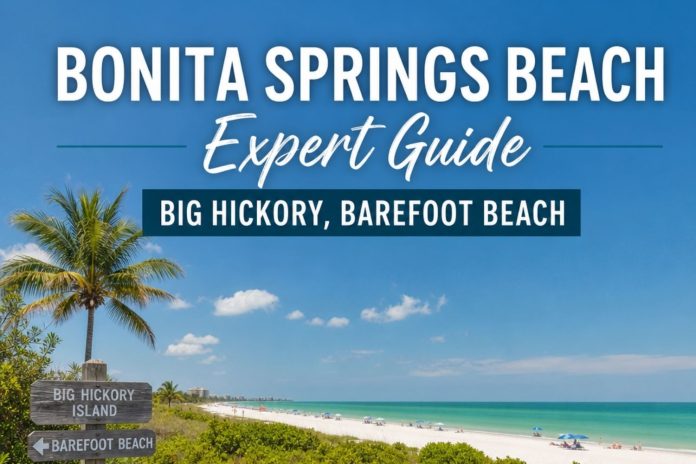
Bonita Springs Beaches, Florida
For years I drove straight past Bonita Springs on my way to Sanibel, Naples, and Fort Myers Beach, because that’s what everyone does. I finally stopped, and I found better shelling than Sanibel, two barrier island beaches you can only reach by boat, and a stretch of undeveloped coastline at the south end that I now count among my favorite walks in Florida.
Bonita Springs sits on Florida’s southwest Gulf coast between Fort Myers Beach and Naples, and it does not get the attention those two names get. What you actually find here is five distinct beach experiences packed into a short stretch of Lee and Collier County coastline: a lively main beach park with real amenities, a quieter residential stretch north of it, a genuine off-leash dog beach, a boat-only barrier island preserve that most visitors never learn exists, and an undeveloped Collier County preserve at the south end that I’d put up against any walk on this coast.
In this guide I’m walking you through all five, going deep on what makes this sand and water different from the quartz beaches up north and the famous shell strand at Sanibel, scoring it honestly across every category that matters, and telling you exactly who this stretch of coast is built for. I’ll cover Bonita Beach Park, the quiet north end, Dog Beach, Big Hickory Island Preserve, and Barefoot Beach Preserve. Lovers Key State Park sits just north of all of this and deserves its own full guide, so I’m covering it separately rather than squeezing it in here. I close with my own take on what surprised me most about a stretch of coast I’d overlooked for years.
The Vibe & Culture at Bonita Springs Beaches
A Beach Town Built Around the Water, Not a Boardwalk
There’s no pier here, no boardwalk lined with bars, and once you’ve spent a day on this stretch of coast you stop missing either one.
Bonita Springs runs on boats more than nightlife. This is a hub on the Great Calusa Blueway, the 190 mile paddling trail that laces through Estero Bay, and you’ll notice that the moment you arrive. Kayak liveries do steady business launching people toward Big Hickory Island. Center console boats idle in the passes. The energy here is quieter and more outdoors oriented than the boardwalk towns to the north, and it shows in who you see on the sand: retirees who winter here every year, families who’ve been coming for a decade, and a steady stream of paddlers heading somewhere the road doesn’t reach.
The coastline itself has a split personality. The center, along Hickory Boulevard, is developed with low-rise condos built mostly in the 1970s and 80s, Doc’s Beach House, and the public parking that makes Bonita Beach Park the easiest entry point. Both ends are almost entirely undeveloped. North of the condo strip, Big Hickory Island Preserve has no development beyond a private beach club, and you can only reach its Gulf side beach by water. South of the Lee-Collier county line, Barefoot Beach Preserve protects 342 acres of one of the last undeveloped barrier islands on this coast. I don’t know many stretches of Florida coastline this short that swing this hard between developed and wild.
Seasonally, this is a snowbird beach more than a spring break beach. Winter and early spring, roughly October through April, bring the heaviest crowds and the best weather, when seasonal residents fill the condos along Hickory Boulevard and Barefoot Beach’s parking lot fills by mid-morning. Summer is hot, humid, and prone to afternoon thunderstorms that roll in almost on schedule, but it’s also sea turtle nesting season and the crowds thin out considerably on weekdays. Fall, once hurricane season quiets down in October, might be my favorite window here: warm water, lighter crowds, and turtle hatchlings still making their way to the Gulf some years.
Bonita Springs Beach Areas: Five Distinct Stretches, Five Different Experiences
Bonita Springs is not one beach any more than Pensacola or Naples is. Here’s how it actually breaks down, south to north, and what you’ll find at each stop.
Bonita Beach Park & the Hickory Boulevard Corridor
South End of Little Hickory Island · $2/Hour Parking
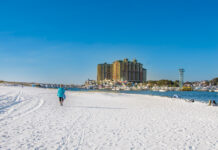
Bonita Beach Park is the hub, and it’s where almost everyone starts. The beach here is wide and gently sloped, with a short walk from the parking lot to the sand, and the water stays calm enough most days that you’ll see young kids wading out without their parents flinching. This is the developed heart of Bonita Springs beaches, sitting at the south end of Little Hickory Island, and it has the amenities to prove it: restrooms, showers, picnic shelters, a sand volleyball court, a paddlecraft launch, and free loaner life vests you return when you’re done.
The crowd here skews family and local. You’ll find coolers, beach umbrellas, kids building sandcastles, and a steady rotation of regulars who’ve been coming for years. Parking runs about $2 an hour through a mobile pay-by-plate system, no meters or cash boxes anymore, and it fills fast on winter weekends. Lee County switched to this text-to-park system at Bonita Beach Park and several of its other beach access points, so download the app before you drive over rather than hunting for a kiosk that isn’t there anymore.
I’ll be honest, this isn’t where I go if I want a quiet walk. It’s where I go to feel the pulse of the place, grab a drink at Doc’s Beach House across the street, and watch the shell hunters work the wrack line at low tide. Doc’s is cash or ATM only, which catches first timers off guard every season. If you only have one stop in Bonita Springs, make it this one, but don’t let it be your only stop.
The Quiet North End
Mid-Island · Access #10 & Bay Park North
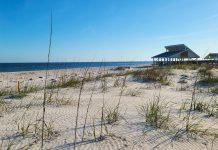
Keep driving north on Hickory Boulevard past Bonita Beach Park and the crowd thins out fast. This stretch runs along the residential middle of Little Hickory Island, past condo buildings with names like Casa Bonita and Sea Isles, and public access is limited to a scatter of numbered accesses rather than one big park. Access #10, tucked near the north end, has restrooms, shelters, picnic tables, and a genuinely nice view of the Gulf that most day-trippers never see because they never make it this far up the island.
The people you’ll find here are almost entirely locals and repeat condo owners who know exactly which small lot to use. Some of the free parking is unmarked and easy to miss, little flagged pull-offs along Hickory Boulevard that longtime visitors pass down like family knowledge. Bay Park North has free parking with a short walk across to Access #10, which locals use to dodge the paid lot entirely.
This is genuinely my pick for the best balance on this stretch of coast. You’re not roughing it since restrooms and shade are still nearby, but the beach itself feels like a different place than the scene two miles south. I walked this stretch at sunrise on a weekday in January and had close to a mile of sand to myself, save for a man fishing off the point and more shorebirds than I could name fast enough.
Dog Beach at New Pass
North Tip of the Island · Free, Off-Leash, Tide-Dependent
Bonita Beach Park does not allow dogs, and neither does most of the coastline south of it. Dog Beach, sitting on a sandbar just north of the New Pass bridge and just south of the entrance to Lovers Key State Park, is the exception, and it’s one of the only off-leash beaches on this entire stretch of Gulf coast. The scale of it changes with the tide, since this is more of a tidal sandbar than a fixed beach, and at higher tides you’ll wade through a stretch of shallow water to get from the parking area to the dry sand.
You’ll find almost nothing but dog owners here, running in loose packs of new friends across the sand and swimming in the shallow, protected water of the bay side. It’s an honor system operation. Owners are expected to control their pets and clean up after them, and on a busy weekend the energy is closer to a neighborhood dog park with Gulf views than a tourist beach. There’s a dog rinse station, waste bag dispensers, and a portable restroom, but nothing else in the way of amenities.
I’d plan around this spot specifically if you’re traveling with a dog, since it’s genuinely the only place on this stretch where your dog gets real freedom. Check a tide chart before you go. I learned the hard way that showing up at high tide means carrying your gear through knee-deep water to reach dry sand, and it’s not the introduction to Dog Beach I’d recommend.
Big Hickory Island Preserve
Boat & Kayak Access Only · Estero Bay
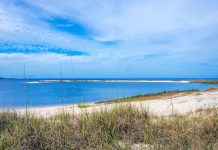
This is the beach almost nobody outside of Southwest Florida knows about, and it might be my favorite discovery on this entire stretch of coast. Big Hickory Island Preserve sits north of Bonita Beach across Big Hickory Pass, and its Gulf side beach has been accessible only by water since the pass reopened in 1988. There’s a private beach club on the north end used by nearby residents, but the rest of the island is untouched preserve, with mangrove swamp on the bay side and roughly a thousand feet of Gulf-front beach that most visitors to Bonita Springs never set foot on.
You get here by kayak, paddleboard, or small boat, launching from free parking near the Bonita Beach Causeway or from the New Pass launch to the north, and the crowd on the beach itself reflects that filter. Paddlers, families out for an eco-tour, and the occasional angler working the pass. Nobody’s driving up and parking. That single fact changes everything about how this beach feels, quieter, less picked over, and noticeably better for shelling than anywhere you can simply walk to.
I paddled out here on a calm morning and spent almost as much time in the mangrove backwaters as I did on the beach itself, watching an osprey work the shallows and a small pod of dolphins cut through the pass. If you rent a kayak in Bonita Springs, this is where the outfitters take you, and for good reason. The shelling alone is worth the paddle.
Barefoot Beach Preserve
Collier County · $10 Parking, No Dogs
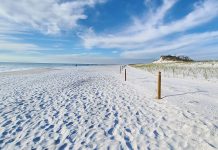
Cross the Lee-Collier county line and the character of the coast changes again. Barefoot Beach Preserve protects 342 acres, one of the last undeveloped barrier islands left on Southwest Florida’s coast, and reaching it means driving through a gated neighborhood of multimillion dollar homes on Barefoot Beach Boulevard before the road ends at the preserve itself. The beach that greets you is wide, the dune line is genuinely natural rather than landscaped, and the mile of shoreline running south to Wiggins Pass is the longest uninterrupted stretch of walkable beach in this guide.
This is a Collier County park with a $10 parking fee, cash or card at the gate, and it draws a different crowd than Bonita Beach Park two beaches north. You’ll see naturalists, birders, and people who came specifically to walk rather than set up camp for the day. The preserve is also a gopher tortoise sanctuary, and you’ll want to check under your car before you drive off, since the tortoises are known to den underneath parked vehicles in the lot. No dogs are allowed anywhere in the preserve, which keeps the shorebird nesting areas genuinely undisturbed.
This was my favorite walk on this entire stretch of coast. I started at the north lot near the Learning Center and walked south past the boardwalks toward Wiggins Pass, and by the time I hit the halfway point I’d lost the sound of the parking lot entirely, just gulf breeze, terns working the shoreline, and my own footprints in sand that hadn’t been walked yet that morning. It’s the kind of walk that reminds you why you started doing this in the first place.
Bonita Springs Beaches Rankings: Expert Scores Across 11 Categories
These scores weigh the full stretch of coast, which means the convenience of Bonita Beach Park gets balanced against the genuine wildness of Big Hickory Island and Barefoot Beach Preserve on either end.
Sand Quality
7/10
A tan to gold mix of quartz and shell fragments, coarser than the sugar-white Panhandle sand and warmer underfoot. Loses points on raw powder softness, gains them on character and shell content.
Hiking & Beach Walking
8/10
Firm, flat, and genuinely long once you string the quiet north end and Barefoot Beach’s mile toward Wiggins Pass together. Loses a point since the developed middle breaks up a true uninterrupted walk.
Shelling at Bonita Springs Beaches
9/10
Genuinely excellent, and I found more on Big Hickory Island in a single morning than I did on a full day at Sanibel. Best right after an overnight tide change or a blow.
Water Conditions
8/10
Calm, warm, and gradual almost everywhere, with turquoise color offshore that shifts to a tea tint near the passes where tannin-stained bay water meets the Gulf.
Scenery & Natural Beauty
8/10
Two genuinely wild barrier island preserves bookend a developed middle stretch, and the contrast between the two is sharper here than on most Gulf coast beach towns.
Birding & Wildlife
9/10
Dolphins in the passes, manatees in the back bays in cooler months, gopher tortoises at Barefoot Beach, and one of Southwest Florida’s stronger sea turtle nesting beaches. Strongest away from the main park.
Family Friendliness
8/10
Bonita Beach Park’s gentle entry, free loaner life vests, and easy amenities make it one of the more welcoming family beaches on this coast.
Dog Friendliness
7/10
A real off-leash beach at the north tip is rare on this coast, but it’s the only spot. Every other beach here, and all of Barefoot Beach Preserve, is off limits to dogs.
Solitude & Peace
7/10
The Hickory Boulevard corridor stays busy in season, but Big Hickory Island’s boat-only access and Barefoot Beach’s south end deliver real solitude minutes from the crowd.
Boating, Paddling & Water Access
9/10
A genuine hub on the Great Calusa Blueway, with free launches, calm mangrove backwaters, and a boat-only barrier island beach most visitors never learn exists.
Parking & Beach Access
6/10
Pay-by-plate parking runs $2 an hour at most Lee County access points and fills fast in season. Barefoot Beach adds a flat $10 gate fee. Free spots exist but take local knowledge to find.
Bonita Springs Beaches Sand & Water: Deep-Dive Analysis
Sand Composition & Texture
The first thing you’ll notice about Bonita Springs sand if you’ve spent time on the Panhandle is that it isn’t sugar white. It runs tan to pale gold, coarser underfoot, and noticeably warmer in full sun than the pure quartz beaches further north, because it isn’t pure quartz. This is a genuine mix of continental quartz sediment and shell material, and the shell content is what makes this stretch of coast worth talking about in the first place.
Southwest Florida’s shallow Gulf shelf and the mangrove estuaries behind these islands produce an enormous volume of shell material, scallops, whelks, augers, olives, cockles, that gets ground down by wave action and mixed into the sand itself. It isn’t the same freak geography that makes Sanibel a shelling legend, that island’s unusual east-west orientation funnels shells ashore in a way this coastline doesn’t replicate, but the raw shell content here rivals it on a good morning, especially on Big Hickory Island where boat-only access means far fewer people beat you to the good stuff.
-
Sand Color. Tan to pale gold rather than sugar white, with a visibly coarser sparkle from shell fragments mixed through it. It photographs warmer than Panhandle sand and holds a golden hour glow especially well.
-
Texture. Coarser than pure quartz sand, with pockets of shell hash near the high tide line, especially after storms. The dry upper beach at Bonita Beach Park and Big Hickory Island can be genuinely rough on bare feet in those pockets, so water shoes earn their keep here.
-
Grain Size. A mixed quartz and carbonate shell composition, coarser and more variable than the well-sorted, nearly pure quartz you’ll find on the Panhandle. Grain size shifts noticeably between the waterline and the dry upper beach.
-
Shell Content. Genuinely rich, and the best on this coast at Big Hickory Island where boat-only access keeps it from getting picked over. Look for lightning whelks, calico scallops, augers, olives, and the occasional sand dollar. Only take sand dollars that are bleached white, since the gray fuzzy ones are still alive.
-
Walking Comfort. Firm and easy at the waterline the entire length of this coast. The dry upper beach is where shell hash shows up, and it’s worth having water shoes in the car for the shellier stretches, particularly right after a storm.
-
Barefoot Rating. 7/10 on an average day, dropping to 5/10 after a storm delivers a heavy shell hash line. The waterline itself stays comfortable barefoot nearly year round.
Water Conditions at Bonita Springs Beaches
The water here changes color more than people expect, and it comes down to how much tannin-stained bay water is mixing with clear Gulf water on a given day. Out past the passes, on a calm morning, you’ll get a genuine turquoise that rivals anywhere on this coast. Closer to New Pass, Big Hickory Pass, and Wiggins Pass, where dark water draining out of the mangrove backwaters meets the Gulf, the color shifts toward a tea or olive tint that surprises first-time visitors expecting postcard blue everywhere.
-
Water Clarity. Good to very good on calm days away from the passes, with visibility to waist depth common in the cooler months. Clarity drops noticeably near pass mouths and after wind events, and it takes a few calm days to settle back.
-
Water Color. Turquoise to aqua offshore, shifting to a tea or olive tint near the passes where tannin-rich backwater mixes in. The contrast between the two is one of the more interesting things to watch for if you’re paddling.
-
Wave Action. Generally calm to light, with a gentle shore break most days. This isn’t a surf coast, and the barrier islands and shallow Gulf shelf keep conditions manageable for swimmers most of the year.
-
Swimming Quality. 8/10 in season. Gradual entry, warm water into the mid 80s degrees Fahrenheit by late summer, and generally forgiving conditions for kids at Bonita Beach Park specifically.
-
Water Sports. This is where Bonita Springs genuinely stands out. Kayaking and paddleboarding through Estero Bay and the Great Calusa Blueway are excellent, with calm, protected mangrove routes leading straight to Big Hickory Island’s beach.
Dogs & Pet Accessibility at Bonita Springs Beaches
Are Dogs Allowed on the Sand? RESTRICTED.
Dogs aren’t allowed on most of Bonita Springs beaches, including Bonita Beach Park and all of Barefoot Beach Preserve, but one dedicated stretch at the north tip of the island gives your dog full run of the sand and the Gulf itself.
Where Dogs Are Allowed
- ✓Dog Beach at New Pass, a tidal sandbar at the north tip of Little Hickory Island with off-leash access to the sand and the Gulf.
Where Dogs Are NOT Allowed
- ✗Bonita Beach Park and the Hickory Boulevard corridor, strictly off limits.
- ✗The quiet north end and Access #10, no dogs permitted on the sand at this stop either.
- ✗Big Hickory Island Preserve, off limits along with the rest of this boat-only stretch.
- ✗Barefoot Beach Preserve, banned entirely since it’s a protected gopher tortoise and shorebird sanctuary.
Paws on the Ground Reality
Dog Beach runs on an honor system, more neighborhood sandbar than patrolled beach, and you’re expected to control your pet and clean up after it rather than follow posted rules from a ranger. Bring your own fresh water since there’s none out there beyond a rinse station, and remember the beach itself shifts with the tide, so you may end up wading in with your dog rather than walking straight onto dry sand.
If your dog wants more exercise than one sandbar can offer, Koreshan State Park in Estero allows leashed dogs on its shaded nature trails along the Estero River, a nice complement to a beach day that’s otherwise limited to a single stretch of sand.
Crowd Levels and the Overall Feel of Bonita Springs Beaches
Compared with Sanibel, Naples, and Fort Myers Beach, Bonita Springs runs quieter and skews older, and that’s true across all five stops in this guide. Bonita Beach Park stays the busiest, especially on winter weekends, while the quiet north end, Big Hickory Island, and Barefoot Beach Preserve all deliver real solitude with almost no extra effort.
The crowd shifts by season more than most Gulf coast towns I’ve covered, since this is a snowbird destination first:
- Winter and early spring (October through April): peak season, with seasonal residents filling the condos on Hickory Boulevard and Barefoot Beach’s lot filling by mid-morning on weekends
- Summer: hot, humid, and prone to predictable afternoon storms, but also sea turtle nesting season and noticeably lighter crowds on weekdays
- Fall: my favorite window here, warm water and thinning crowds once hurricane season quiets down in October
- Holiday weeks: Bonita Beach Park and Barefoot Beach both fill early around Thanksgiving through New Year’s and again over spring holidays, so plan for an early arrival
Who Is Bonita Springs Really For?
✓ Who Will Love Bonita Springs Beaches
-
Shell hunters who want genuinely good hunting without the Sanibel crowds, especially if you’re willing to paddle to Big Hickory Island
-
Paddlers and boaters drawn to the Great Calusa Blueway and calm, mangrove-lined water
-
Families wanting an easy, gentle-entry beach day with real amenities at Bonita Beach Park
-
Dog owners looking for one of the few genuine off-leash Gulf beaches on this coast
-
Birders and wildlife watchers chasing gopher tortoises, dolphins, and a strong sea turtle nesting season
-
Anyone who wants a quiet, mile-long beach walk without driving out to a national seashore
✗ Consider Another Beach If…
-
You want free, easy parking with no app or gate fee. Almost everything here costs something
-
You’re bringing a dog and want more than one beach option. Only the sandbar at the north tip allows them off leash, and Barefoot Beach bans dogs entirely
-
You want boardwalk energy, live music, or beachfront nightlife. This coast is quiet after dark by design
-
You want to walk straight from your car to a wild, undeveloped beach. Big Hickory Island requires a boat or kayak to reach at all
-
You want sugar-white powdery sand. This coast’s shell-rich sand is coarser and more textured than the Panhandle’s quartz beaches
Things to Do at Bonita Springs Beaches, Florida
Bonita Springs gives you more ways to spend a day on the water than most people expect from a beach town this size. Here’s what actually fills a day here.
-
Beach Walking. String together the quiet north end and Barefoot Beach Preserve’s mile toward Wiggins Pass for the best uninterrupted walking on this coast. Quietest in the early morning before the day-trippers arrive.
-
Shelling. The single best reason to come here. Big Hickory Island’s boat-only beach is the standout, but Bonita Beach Park and Barefoot Beach both produce well after an overnight tide change or a storm. Bring a mesh bag, and treat the bending and squatting as free leg day, since a good shelling morning is a workout you don’t notice until you stand back up.
-
Kayaking and Paddleboarding. This coast’s signature activity. Launch free from the Bonita Beach Causeway or New Pass and paddle the calm, mangrove-lined water of the Great Calusa Blueway straight to Big Hickory Island.
-
Swimming. Gradual entry and generally calm water, best for families at Bonita Beach Park where amenities and free loaner life vests make it the easiest stop with kids.
-
Fishing. Strong around the passes, particularly Big Hickory Pass and New Pass, where anglers work the moving water for snook, redfish, and mackerel. A Florida saltwater license is required to fish from shore.
-
Wildlife Watching. Dolphins work the passes on calm mornings, manatees show up in the back bays during cooler months, and gopher tortoises den right in the Barefoot Beach parking lot. Sea turtle nesting runs May through October, with loggerheads the most common nester.
-
Dog Beach. The sandbar at the north tip is one of the only off-leash Gulf beaches on this coast. Check the tide before you go, since higher tides mean wading in to reach dry sand.
-
Gopher Tortoise Watching. Barefoot Beach Preserve is a designated gopher tortoise sanctuary, and you’ll regularly see them grazing near the boardwalks and dune scrub. Give them space and never handle one.
-
Sunset Watching. Reliable most of the year along the whole stretch. Bonita Beach Park’s wide sand and Barefoot Beach’s open dune line both give you an unobstructed western view.
Local Knowledge and Practical Advice
A few things I’ve picked up spending time on this stretch of coast that a first-time visitor would genuinely want to know:
-
Download the parking app before you drive over. Lee County beach parking runs on a pay-by-plate mobile system now, not coin meters or kiosks, and you’ll want it loaded before you’re standing in the lot with no signal.
-
Bring water shoes for the shell-heavy stretches. The shell hash that makes this coast so good for shelling also makes bare feet uncomfortable on the dry upper beach, especially right after a storm.
-
Doc’s Beach House is cash or ATM only. It catches almost every first-time visitor off guard. Plan for it before you’re standing at the counter with just a card.
-
Big Hickory Island requires a boat, kayak, or paddleboard. There’s no walking access. Rent locally near the Bonita Beach Causeway or book a guided eco-tour if you’re not confident navigating the mangroves and pass currents on your own.
-
Check the tide before heading to Dog Beach. It’s a tidal sandbar, not a fixed beach, and high tide means wading through shallow water with your gear to reach dry sand.
-
Check under your car at Barefoot Beach. Gopher tortoises are known to den underneath parked vehicles in the preserve’s lots, so give the undercarriage a glance before you pull out.
-
Nesting season runs May through October. Remove all chairs, tents, and equipment from the beach by sunset, and use only red or amber light if you’re out after dark, since white light disorients hatchlings.
-
Avoid paddling directly into New Pass or Big Hickory Pass. Current through these passes runs strong and fast, especially on an outgoing tide. Stay in the protected coves and let a guide handle the pass crossings if you’re new to the area.
-
Time your shelling to the tide, not just the calendar. The best hunting shows up right after a storm or an overnight low tide, and Big Hickory Island rewards an early paddle before other kayakers get there first.
-
Arrive before 9am at Barefoot Beach in season. The 356-space lot fills by mid-morning on winter weekends, and there’s no overflow lot once it’s full.
Where to Stay Near Bonita Springs Beaches, Florida
Bonita Springs lodging splits between beachfront condo living, a gated preserve-adjacent community, and a full-service inland resort, with a lower cost option a short drive away for anyone who wants to day-trip to the sand.
Gulf-Front Condos on Hickory Boulevard
Most of Bonita Beach’s condo buildings, places like Bonita Beach Club, Casa Bonita, and Sea Isles, were built between the 1970s and mid-1980s as seasonal getaways, and many are still owned that way today, with rental policies that vary significantly by building. Some allow weekly short-term rentals, others require 30-day minimums, so confirm the specific building’s policy before you book. These put you a short walk from Bonita Beach Park and Doc’s Beach House.
Barefoot Beach Gated Community
The neighborhood surrounding Barefoot Beach Preserve is a private, guard-gated enclave of villas and condos built mostly in the 1990s, with multimillion dollar Gulf-front homes lining the road to the preserve. It’s not the most affordable option on this list, but staying here puts you steps from the quietest, longest walk in this guide.
Hyatt Regency Coconut Point Resort & Spa
This inland resort sits on Estero Bay rather than directly on the Gulf, but Hyatt Regency Coconut Point runs a complimentary ferry out to a private island beach, along with multiple pools, a lazy river, and a full spa. It’s a solid full-service option if you want resort amenities and don’t mind a short boat ride to reach the sand.
Camping Near Bonita Springs
There’s no beachfront camping directly on this stretch of coast. The closest option is Koreshan State Park in Estero, about 20 minutes inland, with wooded tent and RV sites along the Estero River. The campground has had periods of temporary closure for renovations recently, so call ahead or check the Florida State Parks site before you book.
Mainland Bonita Springs & Estero
For lower rates, the inland corridor along US-41 in Bonita Springs and neighboring Estero offers a much wider range of budget to mid-range hotel options, with an easy 10 to 15 minute drive back to the beach for anyone who wants to day-trip rather than stay directly on the sand.
What Makes Bonita Springs Beaches Different from Nearby Beaches
Bonita Springs stands apart because it refuses to be one beach or one experience. Most Southwest Florida beach towns pick a lane, developed and social or quiet and protected, and stay there. This one swings between both within a few miles.
A few features make it distinct:
A five-beach system without a boardwalk
There’s no pier, no strip of beachfront bars, and no single beach that defines the whole town. Instead you get a developed park, a quiet residential stretch, a real dog beach, a boat-only preserve, and a wild county park, all within a short drive of each other.
Shell-rich sand instead of pure quartz
This coast’s sand carries far more shell content than the Panhandle’s sugar-white quartz beaches, and it rewards patient shelling in a way most Gulf coast beaches simply don’t.
Two barrier islands you can only reach by boat
Big Hickory Island’s Gulf side beach has been boat and kayak access only since 1988. Very few beach towns this accessible by car still have a beach you genuinely cannot walk to.
Gopher tortoises share the sand with sea turtles
Barefoot Beach Preserve protects both a strong sea turtle nesting beach and a genuine gopher tortoise colony in the same 342 acres, a combination you don’t find at most developed Gulf coast beach towns.
Bonita Springs Beaches vs. Other Southwest Florida Beaches
These are the beaches visitors most often weigh against Bonita Springs, and the honest read on when you’d choose one over the other.
Bonita Springs Beaches vs. Sanibel Island
Sanibel earns its reputation as the shelling capital of Florida through its unusual east-west orientation, which funnels shells ashore in a way most beaches can’t replicate. Bonita Springs doesn’t have that geography, but between Big Hickory Island’s boat-only beach and the shell content at Bonita Beach Park itself, I genuinely found more shells here in a morning than I did during a full day on Sanibel, without the causeway toll or the crowds. Choose Sanibel for the reputation and the shell museum. Choose Bonita Springs if you want comparable hunting with far fewer people combing the same stretch of sand.
Bonita Springs Beaches vs. Fort Myers Beach
Fort Myers Beach carries more nightlife, more restaurants, and a livelier social scene, especially as its beachfront strip continues rebuilding in the years since Hurricane Ian. Bonita Springs trades that energy for a quieter, more nature-focused day, with better shelling and genuine boat-only wilderness at Big Hickory Island. Choose Fort Myers Beach for a livelier evening. Choose Bonita Springs for a quieter morning.
Bonita Springs Beaches vs. Vanderbilt Beach, Naples
Vanderbilt Beach in Naples runs more polished, with the Ritz-Carlton anchoring the north end and a mile of consistently rated sand. Bonita Springs is less manicured and more varied, swinging from a developed park to genuine barrier island wilderness within a few miles. Choose Vanderbilt Beach for resort polish. Choose Bonita Springs for range and better shelling.
Bonita Springs Beaches vs. Lovers Key State Park
Lovers Key sits directly north of Dog Beach and shares the same barrier island system, with its own two miles of protected beach and kayak trails through Estero Bay. It’s similar in spirit to Big Hickory Island and Barefoot Beach Preserve, protected, natural, and paddling-friendly, and it deserves its own full guide rather than a quick comparison here. If you love the wilder stops in this guide, Lovers Key belongs on your list too.
Bottom line: Bonita Springs Beaches gives you the widest range of any Southwest Florida beach town on this list, from an easy family park to a boat-only barrier island to a mile of undeveloped preserve, with shelling that rivals Sanibel and crowds that don’t. Where you land depends on whether you came for the range or for one perfect stretch of sand.
Bonita Springs Beaches, Florida: Frequently Asked Questions
Is Bonita Springs good for shelling?
Yes, genuinely good. Bonita Beach Park and Barefoot Beach Preserve both produce well after a storm or overnight tide change, and Big Hickory Island’s boat-only beach is the best hunting on this stretch of coast, since far fewer people ever reach it.
Are dogs allowed on Bonita Beach?
Not at Bonita Beach Park or anywhere in Barefoot Beach Preserve. The one exception is Dog Beach, a tidal sandbar just south of Lovers Key State Park, which allows dogs off leash.
How do you get to Big Hickory Island?
By boat, kayak, or paddleboard only. The Gulf side beach has had no walking or driving access since Big Hickory Pass reopened in 1988. Free launches are available near the Bonita Beach Causeway and at New Pass.
Is there an entrance fee for Barefoot Beach Preserve?
Yes, a $10 parking fee, cash or card at the gate, or free for Collier County residents with a valid parking permit.
Are there lifeguards at Bonita Beach?
Coverage varies by season and location, so always check current signage and swim conditions at the specific beach you’re visiting. Bonita Beach Park is the most consistently staffed of the beaches in this guide.
When is sea turtle nesting season in Bonita Springs?
May 1 through October 31. Loggerheads are the most common nesting turtle here, and nests are marked and monitored by local volunteer groups along the entire Lee and Collier County coastline.
How much is parking at Bonita Beach Park?
About $2 per hour through a mobile pay-by-plate system. Coin meters and kiosks are no longer in use at this location.
What is the best time of year to visit Bonita Springs beaches?
Late fall through early spring offers the best combination of comfortable weather and manageable crowds, with winter being the busiest and most expensive stretch since it’s peak snowbird season. Early summer brings warm water and lighter weekday crowds before the worst of the afternoon storms set in.
Is Bonita Springs good for families?
Yes, especially at Bonita Beach Park, where the gradual entry, free loaner life vests, and full amenities make it one of the easier family beach days on this stretch of coast.
How is Bonita Springs different from Sanibel Island?
The sand and shelling character are broadly similar, both carry a strong shell content, but Bonita Springs draws a fraction of Sanibel’s crowds and doesn’t require a causeway toll. Sanibel’s east-west orientation gives it a slight edge in reputation, but I’ve personally found comparable or better hunting at Big Hickory Island without the competition.
Patti’s Perspective: My Honest Take on Bonita Springs Beaches
I’d driven past the exit for Bonita Springs more times than I can count on my way to Sanibel, Naples, or Fort Myers Beach, because those are the names everyone talks about. When I finally stopped, I felt a little foolish for how long I’d overlooked it. This is one of the only stretches of Florida coast in my whole walking mission where I found better shelling than a beach with a national reputation for it, and it happened on a paddle I almost talked myself out of taking.
What stuck with me most was Barefoot Beach Preserve. I started at the north lot expecting a pleasant walk and ended up losing track of time entirely, past the boardwalks, past the last other walker I saw that morning, all the way toward Wiggins Pass with nothing but tern calls and my own footprints for company. I’ve walked a lot of beaches for this work, and it isn’t often one still catches me off guard. That one did. I’ve written up the full route for Barefoot Beach Preserve separately, since it earns its own closer look.
Big Hickory Island earned its place here too. Paddling out through the mangroves, watching an osprey work the shallows, and then landing on a beach with genuinely unpicked shells reminded me why I started doing this in the first place. It’s easy to assume the good stuff is always at the famous names. Sometimes it’s a short paddle past the beach everyone else already knows about.
My honest caveat: if you only ever park at Bonita Beach Park, you’ll think you’ve seen this place when you’ve really only seen the easiest hour of it. Rent a kayak. Drive to the end of Barefoot Beach Boulevard. Give yourself a morning you didn’t plan for. That’s where this stretch of coast earns the reputation it should have had all along.
My verdict: 8/10. Not the flashiest name on this coast, but genuinely one of the most rewarding once you get past the main park. The shelling rivals Sanibel, the paddling is some of the best I’ve done in Florida, and Barefoot Beach Preserve delivers the kind of solitude I usually have to drive much further to find. Come for Bonita Beach Park, and stay long enough to reach the parts most visitors never do.
Want to Live by the Water?Bonita Springs offers a genuine mix of waterfront real estate, from low-rise Gulf-front condos along Hickory Boulevard built mostly in the 1970s and 80s, to the gated, guard-staffed enclave of villas and estate homes surrounding Barefoot Beach Preserve, to canal-front properties with deep-water access to Estero Bay at a more accessible price point than direct beachfront.The market here draws seasonal snowbirds, boating enthusiasts, and full-time residents who want Gulf access without the density of Naples or Fort Myers Beach. Most Gulf-front property sits in FEMA flood zones AE or VE, which affects insurance costs, and condo rental policies vary significantly by building, so confirm short-term rental rules before buying if that’s part of your plan.If living by the water is something you’re considering, whether full time, part time, or as an investment, it’s worth exploring what’s available in this area.Explore Waterfront Living at LiveByTheWater.com
Real estate referral partner