


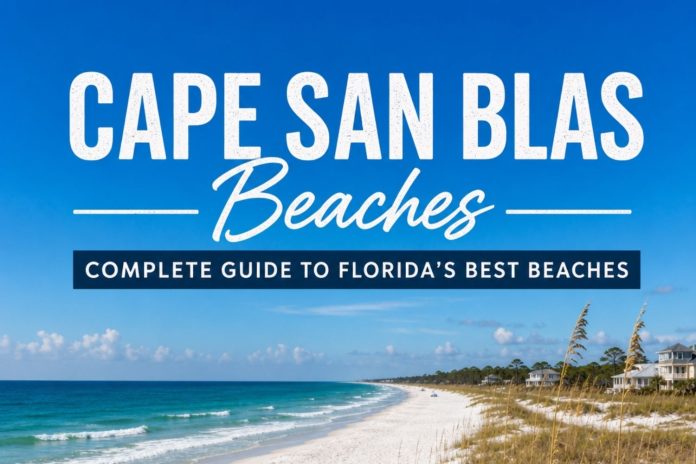
Cape San Blas Area Beaches, Florida
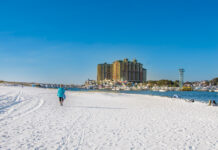
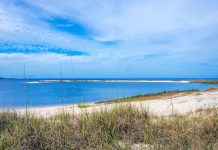
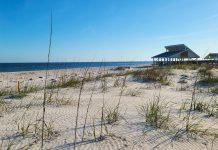
Cape San Blas is the Forgotten Coast delivered straight, no additions. You drive down a narrow two-lane road with dunes pressing in on both sides, Gulf water visible through the sea oats on your right and St. Joseph Bay glinting blue through the scrub on your left, and somewhere along that drive you realize this is what Florida’s Gulf Coast looked like before most of it got found.
Cape San Blas is a narrow peninsula that curves out from the Gulf County coastline near Port St. Joe and shelters St. Joseph Bay from the open Gulf of Mexico. The cape runs about 22 miles of two-lane road lined with beach houses, coastal scrub, and scattered county access points, with T.H. Stone Memorial St. Joseph Peninsula State Park taking over the northern tip and the cape jetty marking the southern end. Across the road from almost any point on the drive, St. Joseph Bay is one of the most clear, scallop-rich, wildlife-visited shallow bays left in the state.
In this guide I’m walking you through the distinct beach zones of the Cape San Blas area, from Indian Pass in the north through the cape’s mid-section and down to the jetty tip, plus Port St. Joe’s waterfront, the Cape San Blas Lighthouse, and the mainland bay beaches at St. Joe Beach and WindMark. I’ll cover what the sand and water are doing at each stretch, score the cape honestly across every category that matters, and give you a straight read on who this place is actually built for. The state park that anchors the northern end of this peninsula is exceptional enough that it has its own dedicated guide. You’ll find a complete breakdown of its beaches, trails, camping, and wilderness experience at St. Joseph Peninsula State Park beaches. This article covers everything else on and around the cape, with a short area entry for the park so you know what you’re passing through.
The Vibe and Culture at Cape San Blas
The Forgotten Coast on Purpose
Cape San Blas doesn’t compete with Destin or Panama City Beach. The people who love it most are glad it doesn’t try.
The term “Forgotten Coast” gets applied loosely to the stretch from Mexico Beach out to Apalachicola, but here at Cape San Blas it means something specific. There are no chain hotels on the cape. No beachfront boardwalks, no souvenir rows, no chain restaurants pulling a lunch crowd. There are no lifeguards on any public beach between the cape jetty and Indian Pass. What you’ll find instead is a two-lane road threading through beach houses, coastal scrub, county access points, and eventually a state park that takes over the northern tip of the peninsula entirely. The character of this place is defined as much by what isn’t there as by what is.
The crowd that comes here self-selects. You’ll find families who’ve been returning every summer for years and know each access point by name. You’ll find serious anglers, serious birders, kayakers who want flat bay water, and couples who came for the long walks. The dogs that run this coast are a tip-off: Cape San Blas is one of the genuinely dog-friendly beach areas of the Florida Panhandle, and you can feel how relaxed the whole place is by watching how the dogs wade in and back out while their owners stand in the surf and just watch the pelicans.
Seasonally, spring and summer bring the most visitors, with scallop season from July through September pulling boaters onto St. Joseph Bay in numbers that would surprise you for a place this far off the beaten path. But even on a busy July weekend, you can walk past Stump Hole or out toward the jetty and find stretches where you’re alone with the water and whatever birds are working the wrack line. Fall here is as good as anywhere on the Panhandle. The water stays swimmable into October, the crowds are gone, and the birding along the bay dunes picks up with the southbound migration. If you asked me for the single best time to come to Cape San Blas, fall is the answer every time.
Cape San Blas Area Beach Zones: Eight Distinct Stretches
The cape runs north to south, with the state park at the northern end and the jetty at the southern tip. I’m going south to north here, starting at the tip and working back toward the mainland, since that’s the order that mirrors the drive most visitors take.
The Cape Jetty and Southern Tip
Southern Tip · Walk-In Access · No Amenities
The first thing you notice at the southern tip is how narrow the land becomes. The beach here isn’t wide, but the view in both directions makes up for it. Standing at the jetty, you have the Gulf on your west side, St. Joseph Bay opening up to the east, and the distant spine of dunes and sea oats running back north up the cape. This is where the lighthouse stood before it was moved to Port St. Joe in 2014 to protect it from Gulf erosion, and there’s still a raw, exposed quality to this spot that makes sense for a place that once had to warn ships off a six-mile underwater shoal extending into the Gulf.
The jetty itself is a stack of granite and concrete worth a walk out for the perspective it gives you on both the bay and Gulf sides simultaneously. The water around the tip runs stronger than the mid-cape beaches, since the tidal exchange between St. Joseph Bay and the Gulf pushes through here with real force. You’ll find anglers working the rocks at most hours for redfish, Spanish mackerel, and flounder, and the pelicans that have claimed the jetty’s far end have long since determined that patience near fishermen pays well.
I’ll be direct: this isn’t a swimming spot. It’s a walk-to and a look-from. The current around the tip is variable and can be deceptive, and there are no amenities out here at all. But if you’re spending a full day on the cape and you want to touch both ends of it, arriving at the jetty just after sunrise before the day heats up is worth the drive down. The sand along the approach to the tip is compact and firm, the light is usually excellent, and the shorebirds along the wrack line are active and unhurried.
Stump Hole Beach and the Donna Kay
Mid-Cape South · No Amenities · Shoulder Parking
Stump Hole Beach is named for the driftwood and storm-exposed tree stumps that settle into and along the sand here. You find it by looking for the granite boulder retaining wall along Cape San Blas Road, parking on the shoulder, and walking through the gap in the boulders to the beach. No restroom, no parking lot, no sign. The people who know it show up. Everyone else drives past.
The beach here opens wider than you’d expect from the narrow shoulder approach, with the Gulf in front and a dune line behind that sees a fraction of the foot traffic of the formal access points. The sand at Stump Hole is slightly coarser than the ultra-fine quartz at the state park a few miles north, with more visible mineral variation and a heavier shell content in the wrack line, especially after a storm. I’ve found lightning whelks along this stretch that I wouldn’t have found at Salinas Park, where the foot traffic turns the wrack line over faster. Arrive at low tide on the first calm morning after an overnight blow and you’ll see what I mean.
About a mile south along the waterline from Stump Hole, you’ll come to the Donna Kay, a shrimp boat that was driven onto the beach by Hurricane Michael in 2018 and has stayed there ever since, listing slightly and slowly becoming part of the landscape. It’s become one of those unexpected landmarks that Cape San Blas regulars have quietly adopted. You can only reach it on foot along the beach at low tide, which means the crowd at the Donna Kay is always exactly the kind of people who found out about it without a sign telling them where to go. I found her quiet on the morning I walked down, just pelicans settled on the hull and ghost crabs working the sand around the keel. It’s the kind of thing that makes a beach day feel like something you discovered rather than something you visited.
Cape Palms Park and Mid-Cape Access
Mid-Cape · Limited Parking · Free · Dogs on Leash
Cape Palms Park is a smaller Gulf County access point mid-cape with a basic parking area, restrooms, and a short boardwalk to the beach. The crowd here runs lighter than Salinas Park, which is several miles north, and the beach in front of Cape Palms tends to vary in width depending on recent storm patterns and seasonal erosion cycles.
You’ll find a mix of families and couples here, mostly people staying in the nearby rental houses who want a quick beach entry without driving to a busier access point. The water in front of Cape Palms is calm to moderate, showing the same emerald Gulf color you’ll find across the cape on a good weather day, and the sand runs fine and white with moderate shell content in the wrack line after tidal activity.
This is a functional access point rather than a destination in itself. If you’re staying mid-cape and you show up at Salinas Park after the lot has filled for the morning, Cape Palms is the call. The beach opens up in both directions once you clear the boardwalk, and the foot traffic from the nearby rentals tends to spread north or south rather than pile up right in front of the access point itself.
Salinas Park: Gulfside and Bayside
Mid-Cape Hub · Free · 280 Cape San Blas Rd · 8am to Sunset · Dogs on Leash
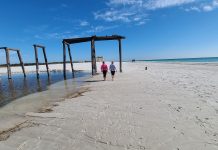
Salinas Park is the public hub of Cape San Blas, and it’s built around a central insight: the cape has two bodies of water, and this park gives you real access to both. The Gulf side has a boardwalk through coastal scrub out to the beach, with restrooms, a playground, and picnic tables on the beach side of the road. The bay side, a short walk across Cape San Blas Road, has a scenic wooden boardwalk extending over St. Joseph Bay, screened picnic shelters that fill up fast on summer weekends, a volleyball court, and recently added pickleball courts. Both sides are free. Both are worth your time.
The gulfside beach at Salinas is one of the more comfortable stretches on the cape, wide enough to spread out even on a moderately busy day. The boardwalk walk through the coastal scrub is one of my favorite short walks on the entire cape: you go from the parking area through a shaded corridor of scrubby coastal vegetation, into an open dune gap, and you’re on the Gulf in under five minutes. The transition from dappled shade to open beach light is the kind of moment that makes you slow down even when you weren’t planning to.
The bayside boardwalk is worth its own separate visit, especially at the end of the day. The bay water below the boardwalk is so clear that you can see the seagrass beds from above, and the golden hour light on the bay produces colors that the Gulf side, which faces west, doesn’t usually replicate. I’ve watched ospreys hunt the shallows below the boardwalk in real time, folding in and hitting the surface and coming back up with something in about four seconds flat. Great blue herons work the shallow edge most mornings, as patient as the bay itself. Arrive before 9am on summer weekends if you want a parking spot at Salinas. That’s not a loose suggestion.
Indian Pass Beach
Northern Cape Area · Free · Dogs Welcome · Equestrian Beach Access
Indian Pass is where the Cape San Blas area meets Old Florida in the most literal remaining sense. The beach here is long and uncrowded, reached from a small parking area along Indian Pass Road, and the vibe is entirely different from anywhere closer to the cape’s center. No boardwalk, no ranger station. Usually some trucks with fishing poles in the holders, a few families with dogs, and if you’re lucky, someone on horseback.
That last detail matters. Indian Pass is one of the genuinely few stretches of Gulf beach in Florida where horseback riding is a real part of the regular beach experience, not a managed commercial ride but actual equestrian beach access. Horses have routine use here, and on mornings when the tide is right you might see riders coming down the waterline while pelicans work the surf offshore. It’s the kind of thing that reminds you how much of Florida used to operate before permits and condominiums turned up everywhere.
The sand at Indian Pass runs fine and white, consistent quartz without the ultra-white brilliance of the state park but still genuinely good Panhandle sand. The water stays calm and clear on most days, and the fishing here is productive: redfish, trout, and cobia are all reachable from the shore or wading the shallows. The Indian Pass Raw Bar nearby is the closest thing the area has to a mandatory local stop, a tin-roofed seafood shack where the oysters and shrimp are as fresh as anywhere on the Forgotten Coast and the hours are loosely tied to when the day’s supply runs out.
St. Joe Beach and WindMark Beach
Mainland Bay Side · West of Port St. Joe on Hwy 98 · Free
St. Joe Beach and WindMark Beach sit on the mainland side of the peninsula rather than on the cape itself, running west of Port St. Joe along Highway 98. The water here is St. Joseph Bay rather than the open Gulf, and that changes the whole experience. Calm, clear, shallow water that you can wade out in for 50 yards before it reaches your chest. No wave anxiety. No rip current flags.
St. Joe Beach is family-friendly in the most functional sense: parking along the highway, public boardwalk access points spaced at regular intervals, and a beach that stays wide enough for chairs, coolers, and a full setup without feeling crowded even on a summer weekend. The sunrise over Cape San Blas and the state park’s dune line across the bay is one of the consistently better sunrise views in the area, and the shorebird activity along the bay edge in the morning is worth setting an early alarm for.
WindMark Beach sits further north on the bay side, quieter and more residential. The development there is newer, and the beach access reflects a community built around the water rather than tourism. Both St. Joe Beach and WindMark are strong options for families with very young children or anyone who wants flat water with good wildlife activity. The bay shallows along this stretch draw herons, egrets, terns, and the occasional roseate spoonbill working the shallows, especially in the cooler months.
Port St. Joe: Town, Lighthouse, and Downtown
Historic Waterfront Town · Reid Avenue · Core Park
Port St. Joe is the closest town to the cape and earns a stop in any guide to this area because the lighthouse alone is worth it. The Cape San Blas Lighthouse was moved from the cape itself to Core Park on the Port St. Joe waterfront in 2014 to protect it from the Gulf’s encroaching shoreline, and it now stands just off Reid Avenue where you can climb the 130-plus steps to a view that takes in St. Joseph Bay and the cape’s full dune line across the water. The keeper’s quarters next to it hold a small museum on the lighthouse’s history, and the story of a tower that was relocated multiple times to outrun Gulf erosion is worth 20 minutes of your afternoon.
Reid Avenue is a short and honest downtown: a few galleries, some local cafes, a handful of shops, and the Port St. Joe Marina where charter fishing boats and kayak rentals tie up along the waterfront. The marina is a practical launch point for a half-day bay fishing trip or a paddling excursion into the seagrass flats where scalloping season draws serious crowds every summer. Constitution Convention Museum State Park, about a mile from the downtown, is where Florida’s first constitution was drafted in 1838 and is worth an hour if the Forgotten Coast’s layered history is part of why you’re here.
Downtown Port St. Joe is not a nightlife destination and it knows it. The pace follows the water: early starts for fishing or birding, lunch at a waterfront table, afternoon on the beach or bay, and an early evening back in town. That rhythm fits the cape perfectly, and if you’re spending several days in the area, Port St. Joe is a sensible home base: a real town with real food, and everything that matters within a 20-minute drive of the water.
St. Joseph Peninsula State Park
Northern Tip of the Cape · $6 per Vehicle · Full Guide Available
The state park occupies the entire northern end of the St. Joseph Peninsula, a 2,516-acre park with 10 miles of Gulf beach, a 1,750-acre Wilderness Preserve, bay-side vacation cabins, full-facility campgrounds, and 240-plus documented bird species. It is exceptional enough that I’ve given it its own complete beach guide rather than try to do it justice in a paragraph here.
What I’ll say is this: if you’re spending any time on Cape San Blas and you don’t go to the state park, you’ve left the best sand on the entire peninsula unwalked. The $6 per vehicle entry fee covers access to a range of beach experience that no other single fee on the Panhandle comes close to matching. Dogs are allowed on the bay-side trails in the park on a leash but not on the beaches, which is the one rule that distinguishes it from the rest of the cape. The Wilderness Preserve at the northern tip is the most remote Gulf beach walking available by car in the entire Florida Panhandle.
See the complete guide at St. Joseph Peninsula State Park beaches for the full breakdown on sand, water, hiking, camping, and what it actually looks like walking its full length.
Cape San Blas Area Rankings: Expert Scores Across 11 Categories
These scores cover the Cape San Blas area as a whole, from Indian Pass down to the cape jetty and across to the bay-side beaches on the mainland. The state park at the northern end scores separately in its own guide.
Sand Quality
8/10
Fine white quartz from the same Appalachian-origin system as the rest of the Panhandle, with slightly more shell content and mineral variation than the ultra-pure sand at the state park a few miles north. Still genuinely good and well above average for the Florida Gulf Coast. Near Stump Hole and the jetty, the quartz picks up heavier mineral particles and heavier shell content from tidal exchange between the bay and the Gulf.
Hiking & Beach Walking
9/10
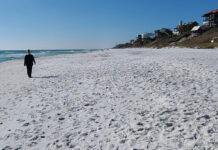
Miles of largely uninterrupted shoreline from Indian Pass to the jetty tip, with firm wet-sand walking at low tide and the state park adding 10 more miles at the northern end. You can walk for hours here without seeing pavement, a condo building, or a beach bar. The bayview boardwalk at Salinas adds a different kind of walk entirely.
Shelling
8/10
Two entirely different shell environments within a short drive of each other. The Gulf side delivers lightning whelks, augers, moon snails, and scallop shells after storms. The bay side offers pen shells, calico scallops in the wrack line, and bay scallop shells during season. Walk the wrack line at low tide on the first calm morning after an overnight blow for the best Gulf-side results.
Water Conditions
8/10
Emerald to turquoise on calm days, generally gradual entry, summer water temperatures in the low-to-mid 80s. No lifeguards on any public beach in the area, so the volunteer flag system at the main access points is not optional to check. The bay side at Salinas and St. Joe Beach adds flat, protected water that stays clear year-round.
Scenery & Natural Beauty
9.5/10
No high-rises. No chain hotels. A two-lane road, dune scrub, sea oats, Gulf water on one side and bay on the other. The scenery here doesn’t need any help. If you want to see what the Panhandle looked like before resort development moved in, Cape San Blas is where you go.
Birding & Wildlife
9/10
Dolphins in both the Gulf and the bay. Loggerhead sea turtle nesting from May through October. Manatees in St. Joseph Bay during warmer months. Ospreys hunting the bay shallows at Salinas. Shorebirds at every access point. The state park north of here adds 240-plus documented species for anyone who wants to go deeper into the birding.
Family Friendliness
7/10
No lifeguards anywhere on public beaches in the Cape San Blas area, which is the main reason this score isn’t higher. The bay-side beaches at Salinas, St. Joe Beach, and WindMark are ideal for young children: shallow, calm, and forgiving. Gulf side is good for confident swimmers and older kids who can handle light surf and understand the flag system.
Dog Friendliness
9.5/10
One of the most dog-friendly beach areas in the Florida Panhandle. Leashed dogs are welcome at Salinas Park, Cape Palms, Stump Hole, Indian Pass, St. Joe Beach, and most county access points. The state park beaches are the exception: no dogs on the beach there, only on bay-side trails on a leash.
Solitude & Peace
9/10
Most of this cape is both accessible and genuinely quiet at the same time, which is a combination most Florida Gulf beaches can’t offer at all. Even in peak summer, walking past Stump Hole or out to the jetty area puts you on beach that most of the day’s visitors never reach.
Entertainment & Nightlife
3/10
The Indian Pass Raw Bar is a local institution and worth every stop. Port St. Joe’s Reid Avenue has a solid handful of restaurants. That’s the honest extent of it. Come for the quiet and the nature, not for a scene. If you need evening entertainment close to the beach, this is the wrong cape for it.
Parking & Beach Access
6/10
Most access is free, which is genuinely rare for beach quality this good. But Salinas Park fills early on summer weekends, Stump Hole has no formal parking, and some of the remote access points require knowing the road. The state park at the north end adds a $6 entry fee. Arrive before 9am at Salinas in summer or plan for Cape Palms as a backup.
Cape San Blas Sand & Water
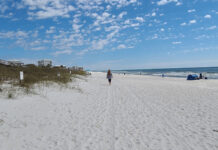
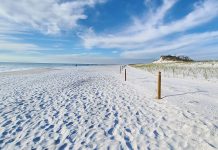
The sand along this cape is fine, white, and easy on your feet nearly everywhere you set them down. It’s flat and wide through the middle of the cape at Salinas and Cape Palms, giving you plenty of room to spread out a chair without feeling boxed in by the dunes behind you. Up near the dune line, the sand runs soft and a little deep, the kind that’s fun to dig your toes into but takes a bit more effort to walk across. Head down to the waterline and it firms right up, easy, confident footing the whole way. That firm wet sand is also your best bet for sandcastles, since it holds a shape far better than the dry, powdery sand higher up the beach. Near Stump Hole and the jetty, expect a little more grit and shell mixed in underfoot, still good walking, just with more texture than the smoother stretch up at Salinas.
The water tells a two-sided story here, and that’s really the whole point of this cape. On the Gulf side, you’re looking at emerald to turquoise water on a calm day, clear enough to see your feet at knee depth, with a gentle, gradual entry that most swimmers find easy to wade into. Cross the road to St. Joseph Bay and the water changes completely: flatter, calmer, and often even clearer, with almost none of the wave action the Gulf side has. There are no lifeguards anywhere on this cape, so keep an eye on the volunteer flag at whichever access point you’re actually using, and give the water near the jetty a little extra respect, since the current there runs stronger than anywhere else on the cape.
-
Walkability. Wide, flat, and easy nearly the whole length of the cape. The waterline stays firm enough for a long barefoot walk without your legs ever feeling the burn.
-
Softness & Playability. Soft, diggable sand up near the dune line, perfect for building and lounging. The firmer sand right at the water’s edge is your best surface for a sandcastle that actually holds its shape.
-
Barefoot Comfort. Very good through most of the cape, especially at Salinas and Cape Palms. Near Stump Hole and the jetty, watch for a bit more shell mixed into the sand.
-
Swimmability. Gentle, gradual entry on the Gulf side with no lifeguards anywhere, so check the flag before you swim. The bay side at Salinas and St. Joe Beach is calmer still and a great pick for nervous swimmers or little ones.
Want the full geology, grain composition, and the complete sand and water condition ratings? I broke it all down separately in Sand & Shore: Cape San Blas.
Dogs & Pet Accessibility
Are Dogs Allowed on the Sand? YES, nearly everywhere.
Cape San Blas is one of the most dog-friendly beach areas on the Florida Panhandle. Leashed dogs are welcome on the sand at nearly every county access point on the cape itself.
Where Dogs Are Allowed
- ✓Salinas Park, both Gulf side and bay side, leashed.
- ✓Cape Palms Park, leashed.
- ✓Stump Hole, leashed, no formal rules posted beyond the county’s general leash requirement.
- ✓Indian Pass Beach, leashed, and one of the more relaxed dog beaches on the whole cape.
- ✓St. Joe Beach and WindMark Beach on the mainland bay side, leashed.
- ✓The cape jetty area, leashed.
Where Dogs Are NOT Allowed
- ✗Any beach inside St. Joseph Peninsula State Park at the peninsula’s northern tip. Leashed dogs are permitted there only on the bay-side trails, never on the beach itself. See the park’s own Hiking Guide for the full breakdown if your trip includes both.
Paws on the Ground Reality
This is genuinely one of the more relaxed dog beaches you’ll find on the Florida Gulf Coast. There’s no single designated stretch you have to hunt for, no early-morning-only window; a leashed dog is simply the norm at nearly every access point along the cape. The bay side at Salinas and St. Joe Beach is especially good for dogs who like to wade without dealing with real surf, since the water there is calm and shallow.
The one exception on this peninsula is the state park at the northern tip. If your day includes both the cape and the park, plan your dog time on the cape and leave the state park beach walking for a trip without your dog, or stick to the park’s bay-side trails, where leashed pets are allowed.
Crowd Levels and the Overall Feel of Cape San Blas
This is not a resort crowd. It’s a repeat-visitor crowd: people who know which access point has the best shelling after a certain kind of blow, who know which side of the cape catches the better sunset, and who came specifically for the quiet. On any summer weekend, you’ll find the Salinas Park lot filling by mid-morning, but the beach itself never feels crowded the way Pensacola or Destin does. The geography of the cape, long and narrow with multiple access points spread across its length, keeps people distributed rather than concentrated in one spot.
- Spring break: lighter than you’d expect for a Panhandle beach destination; the cape doesn’t attract the spring break demographic because there’s no boardwalk scene to center that energy around
- Summer: peak season, with scallop season from July through September adding serious bay traffic from Port St. Joe and the surrounding area; arrive at Salinas before 9am on weekends
- Fall: the best time to come by a comfortable margin; warm water through October, scallop crowds gone, and the birding along the dunes and bay edge picks up with the southbound migration
- Winter: very quiet; some rental houses close and local amenities scale back, but the beach walking in November through February is some of the most peaceful on the entire Panhandle
Who Is Cape San Blas Really For?
✓ Who Will Love Cape San Blas
-
Anyone who wants an uncrowded Gulf beach they can actually drive to without a ferry or a long hike, just a county road that gets quieter the further south you go
-
Dog owners who are tired of hunting for the single designated dog stretch on an otherwise restricted island; most of the cape welcomes leashed dogs without exception
-
Serious shellers who want two completely different shell environments within a short drive of each other: Gulf wrack line finds and bay-side species that don’t overlap
-
Kayakers, paddleboarders, and snorkelers who want clear, shallow, seagrass-bed water with wildlife and without the boat traffic of a developed bay
-
Families who want a beach vacation at a genuinely slower pace, where the entertainment is the bay at sunset and dinner is oysters at the Raw Bar
-
Birders and wildlife watchers who want dolphin sightings, shorebirds, ospreys, sea turtle nesting season, and possible manatee encounters all on the same trip
✗ Consider Another Beach If…
-
You need lifeguards; there are none on any public beach in the Cape San Blas area, and the volunteer flag system is not a substitute for a staffed tower if you’re with young children or uncertain swimmers
-
You want a resort experience: beach chair service, pool access, evening entertainment within walking distance of the sand
-
You plan to drive up on a summer Saturday morning without a specific access point in mind; Salinas Park will be full and the quieter spots require knowing where to look
-
Nightlife is on the agenda; the Indian Pass Raw Bar keeps its own hours and Port St. Joe calls it early
-
You want Panhandle quartz sand with a full suite of services and amenities attached; Pensacola Beach or Navarre offers comparable sand quality with the boardwalk, lifeguards, and restaurants that the cape deliberately doesn’t have
Things to Do at Cape San Blas, Florida
The activity list here is built entirely around what the water and the land offer, not what anyone built around it. Here’s what a full day on the cape actually looks like.
-
Beach Walking. Miles of uninterrupted Gulf shoreline from Indian Pass to the jetty tip, with the state park adding 10 more miles at the northern end. The waterline at low tide packs firm and flat, and the only interruptions on a long walk are the occasional boardwalk crossing or another set of dog tracks ahead of you in the sand.
-
Shelling. Plan around the tide chart: low tide morning, first calm after an overnight blow, wrack line rather than waterline. Gulf side delivers whelks, augers, moon snails, and scallop shells. The bay side adds its own species inventory. The squat workout is real here: stopping to pick up shells along a long beach walk is free leg day, and the stoop-and-crouch is worth it on this stretch.
-
Kayaking and Paddleboarding in St. Joseph Bay. Launch from the bay side at Salinas Park or through outfitters based in Port St. Joe. Flat, clear water over seagrass beds, with dolphins as a near-daily bonus sighting. The morning light on the bay makes this one of the better paddle experiences anywhere on the Panhandle.
-
Scalloping Season. July through September, St. Joseph Bay opens for recreational scalloping. The shallow, clear water makes it as beginner-friendly as any scallop destination in Florida. You need a snorkel, a visible dive flag, and a mesh bag. Check current season dates and bag limits from the Florida Fish and Wildlife Conservation Commission before heading out, as these shift annually.
-
Fishing. Surf fishing along the Gulf side is productive for redfish, trout, Spanish mackerel, and flounder all year. The jetty area concentrates fish from both the bay and Gulf sides. Indian Pass and the bay shallows are good for bay species, and the Port St. Joe Marina offers charter trips offshore for anyone who wants to go further out.
-
Horseback Riding at Indian Pass. One of a genuinely small number of Gulf beaches in Florida where equestrian beach access is part of the regular beach experience. Call local outfitters in the Port St. Joe area and book ahead in peak season, as availability fills. Walking down the beach and coming across horses in the surf is the kind of thing that makes people fall for this coast.
-
Birding and Wildlife Watching. The bayside boardwalk at Salinas Park is one of the better quick birding spots on the cape, with ospreys hunting the shallows and wading birds working the seagrass edge. Dolphins show up offshore and in the bay most mornings. Sea turtle nesting runs May through October. Manatees visit the bay from spring through fall.
-
Walking to the Donna Kay. The grounded shrimp boat is about a mile south of Stump Hole along the waterline at low tide. Pack light, check the tide chart, and give yourself two hours out and back. On most mornings you’ll have the wreck nearly to yourself, just the pelicans and the ghost crabs for company.
-
Cape San Blas Lighthouse. Moved from the cape to Core Park in downtown Port St. Joe in 2014. Open to visitors who want to climb the 130-plus steps for a panoramic view over St. Joseph Bay and back toward the cape’s dune line. The keeper’s quarters museum next door tells the full story of a lighthouse relocated multiple times to stay ahead of Gulf erosion.
-
Sunset Watching. The bayside boardwalk at Salinas Park delivers one of the more consistent evening light shows in the area, with the bay going gold and pink over the open water to the west. The Gulf side access points face west as well, and both give you the full over-the-water sunset most evenings from spring through fall.
Local Knowledge and Practical Advice
A few things I’ve picked up walking the cape over multiple visits and seasons:
-
Arrive at Salinas Park before 9am on summer weekends. The gulfside lot fills fast, and the overflow across the road on the bay side doesn’t hold many cars. If you’re too late, Cape Palms Park a few miles south almost always has room, and the beach there is no worse for having it to yourself.
-
There are no lifeguards anywhere on Cape San Blas public beaches. Gulf County uses a volunteer beach flag system, with flags posted at the main access points. Always check the flag at the access point you’re actually using, not the one you drove past a mile back. Double red means stay out entirely.
-
Stump Hole Beach is easy to miss if you don’t know what you’re looking for. Drive south on Cape San Blas Road and watch for the granite boulder retaining wall on the Gulf side. Park on the shoulder and walk through the gap in the rocks. No sign, no parking lot, nothing to tip you off. That’s exactly why it stays quiet.
-
The best shelling window on the cape is the first low tide on the morning after an overnight Gulf blow. Get out before 8am and walk the wrack line from Stump Hole toward the cape tip. Lightning whelks turn up along this stretch in sizes you won’t find at the busier Panhandle access points where foot traffic turns the wrack line over every hour.
-
Scallop season runs July through September in St. Joseph Bay, but verify the current season dates and bag limits with Florida Fish and Wildlife before heading out. The season window and limits shift year to year, and enforcement on the bay is active. You need a snorkel, a visible dive flag, and a mesh collection bag at minimum.
-
The state park campground and bay-side cabins book out far in advance for summer. If you want to camp or stay in the park, use the Florida State Parks reservation system and look 11 months out from your target dates. Summer weekends go first, but fall shoulder-season dates open up on shorter windows.
-
Dogs are welcome at most county access points on the cape, but not on the beach at St. Joseph Peninsula State Park. Dogs are allowed on the bay-side trails in the state park on a leash. Know that distinction before you load the car with your dog expecting full beach access all the way to the northern end.
-
If horseback riding at Indian Pass is on the list, call ahead and book before you arrive. Availability is genuinely limited, and peak season slots fill. Showing up and hoping for a walk-in is a gamble that usually loses in summer.
-
Sea turtle nesting season runs May through October throughout the Cape San Blas area. Remove all chairs, tents, and beach equipment from the sand by sunset during nesting season. Use a red flashlight only if you’re on the beach after dark. White light from flashlights and phones disorients nesting females and emerging hatchlings, and this stretch of beach sees active nesting throughout the season.
-
Pack as if you’re going somewhere remote, because you are. Between the cape jetty area and Salinas Park, there are no convenience stores or snack options mid-cape. Bring water, food, sunscreen, and a bag for shells or trash. The access points have restrooms but nothing else.
Where to Stay Near Cape San Blas, Florida
The Cape San Blas area is almost entirely vacation-rental territory. There are no chain hotels on the cape, and that’s not a gap in the market that someone forgot to fill.
Gulf-Front and Bay-Front Vacation Rentals on the Cape
The vast majority of overnight accommodation on Cape San Blas is private vacation rental homes, ranging from small bay-view cottages to large Gulf-front houses that sleep 10 or more. Rental companies based in Port St. Joe handle most of the inventory. Book early for summer: Gulf-front houses within easy walking distance of Salinas Park fill months in advance, and the bay-front cottages that let you launch a kayak from the yard go nearly as fast.
St. Joseph Peninsula State Park Vacation Cabins
The state park offers eight fully equipped bay-view vacation cabins with kitchens, screened porches, and fireplace features for the cooler months. These are among the most coveted overnight options in the area, set directly on the bay with immediate access to the park’s trails and beaches and complete quiet from sundown. They book out 11 months in advance through the Florida State Parks reservation system and require the $6 per vehicle daily entry fee on top of the cabin rate. No pets in the cabins or cabin areas, only in the family campground sections.
St. Joseph Peninsula State Park Campgrounds
The Shady Pines campground and Gulf Breeze areas within the park offer full-facility camping with water and electric hookups, tent-only sites, modern bathhouses, and walking access to the beach and bay. The 14 primitive campsites in the Wilderness Preserve are pack-in, pack-out with no water or electricity, and require either a hike or a paddle to reach. Waking up to the sound of the Gulf with no one else around is exactly the experience those sites offer. Reserve through the Florida State Parks system.
Port St. Joe Hotels and Inns
Port St. Joe has a growing selection of small hotels, bed and breakfasts, and boutique inns along the waterfront and downtown area. Staying here gives you walkable access to Reid Avenue dining, the lighthouse, and the marina, with the cape’s beaches within 15 to 20 minutes by car. It’s a sensible home base for visitors who want the softer landing of a hotel with the flexibility to day-trip anywhere on the cape.
Mexico Beach, Mainland Options
Mexico Beach, about 20 miles east of Port St. Joe on Highway 98, has hotels and vacation rentals at a range of price points with its own Gulf beach access. It can serve as a day-trip base for Cape San Blas visits if the cape’s own inventory is fully booked, and the drive between the two is straightforward on 98.
What Makes Cape San Blas Different from Nearby Beaches
Cape San Blas doesn’t have a single feature that sets it apart. It has a combination of things that don’t coexist on most Gulf beaches.
A peninsula with two completely different bodies of water
The Gulf side gives you open-water quartz beach. The bay side gives you St. Joseph Bay, one of the clearest shallow bays remaining in the state, with scalloping, seagrass snorkeling, dolphin watching, and flat paddling water that’s genuinely different from anything the Gulf delivers. Most beaches give you one body of water. Cape San Blas gives you both within a half-mile of each other, and the two experiences are different enough that they each deserve their own day.
Zero high-rise development
The cape is built and zoned in a way that has kept high-rise condos and resort hotels off the peninsula entirely. What you see along the road is a line of beach houses, sea oats, and access points. The skyline is all dunes and sky. That didn’t happen by accident, and it’s what makes the beach experience here feel different from the developed Panhandle even at the height of summer.
Dog access without exceptions or designated zones
Most Panhandle beaches confine dogs to one specific stretch or one early-morning window. The cape does the opposite: dogs on a leash are the norm, not the exception, at most public access points throughout the peninsula. Walking the beach here with a dog feels like exactly the kind of beach day that should be available everywhere but isn’t.
A working Old Florida town as the closest base
Port St. Joe is not a tourist construct. It’s a small Gulf County town with a working marina, a real downtown, a lighthouse with actual documented history, and a raw bar where the oysters were in the water the day before. That kind of authenticity is genuinely getting harder to find on the Florida Gulf Coast, and it extends to how the cape is managed and who lives along it.
Cape San Blas vs. Other Florida Panhandle Beaches
Cape San Blas vs. Mexico Beach
Mexico Beach sits about 20 miles east on Highway 98, on the same Forgotten Coast stretch. Mexico Beach has a rebuilt downtown following Hurricane Michael, a town pier, and more of a small-beach-town scene. Cape San Blas is wider and wilder in character, with far less development and the St. Joseph Bay bonus that Mexico Beach doesn’t offer. Choose Mexico Beach if you want a beach town with an evening strip. Choose Cape San Blas if you want the beach itself to be the main event.
Cape San Blas vs. St. George Island
St. George Island sits about 45 miles east across Apalachicola, with its own state park at the eastern end that shares some of the wilderness character of St. Joseph State Park. Both islands are quiet and comparably low-development. St. George is a barrier island accessed by a bridge rather than a peninsula accessed by a two-lane road, and the Gulf water character is slightly different. St. Joseph Bay is the cape’s defining bonus; St. George has Apalachicola Bay at its back. Both are genuine Forgotten Coast options and the right choice depends more on which way you’re driving.
Cape San Blas vs. Navarre Beach
Navarre Beach is a quieter alternative to Pensacola Beach about 130 miles west, with comparable quartz sand on the same Santa Rosa barrier island. Navarre has a pier and boardwalk character that the cape doesn’t. The cape has St. Joseph Bay, dog access throughout, and considerably less development. Choose Navarre if you want Panhandle quartz with a pier and easy services. Choose Cape San Blas if the bay, the dog access, and the overall wildness are the reasons you’re making the drive.
Cape San Blas vs. St. Joseph Peninsula State Park
The state park is the northern end of the same peninsula, sharing the same basic geology. The difference is management and protection: the state park has entrance fees, dedicated trails, camping infrastructure, and some of the best-preserved dunes in the state, but no dogs on the beach and the same no-lifeguard policy. The state park’s sand runs slightly superior in quartz purity and the beach is wider in the northern sections. See the full St. Joseph Peninsula State Park beaches guide for the complete comparison.
Bottom line: Cape San Blas is the Forgotten Coast for people who know what they’re looking for. The quartz is good, the bay is exceptional, the dogs are welcome, and the lack of development is the feature rather than the flaw. If you came to Florida for a beach that rewards paying attention, this is the one.
Cape San Blas, Florida: Frequently Asked Questions
Are dogs allowed on Cape San Blas beaches?
Yes, at most of them. Leashed dogs are welcome at Salinas Park, Cape Palms Park, Stump Hole, Indian Pass, St. Joe Beach, and most county-managed access points along the cape. The exception is St. Joseph Peninsula State Park, where dogs are permitted on the bay-side trails on a leash but not on any beach. It’s one of the most dog-welcoming beach areas in the Florida Panhandle.
Is there a fee to access Cape San Blas beaches?
Most public beach access points on Cape San Blas are free, including Salinas Park, Cape Palms, Stump Hole, and Indian Pass. St. Joseph Peninsula State Park charges $6 per vehicle, payable at the entrance station, and is open from 8am to sunset, 365 days a year.
Are there lifeguards at Cape San Blas?
No. There are no lifeguards on any public beach in the Cape San Blas area. Gulf County operates a volunteer beach flag system at the main access points. Check the flag color at the specific access point nearest to where you’re entering the water before swimming, not the flag you passed a mile back on the drive in.
What is the best beach access point at Cape San Blas?
Salinas Park is the most developed and versatile access point, with gulfside beach access via a coastal scrub boardwalk plus bayside access with a bay boardwalk, restrooms, and picnic facilities. For more seclusion, Stump Hole and Cape Palms both offer quieter stretches. For the overall best beach experience, St. Joseph Peninsula State Park is the answer if you’re willing to pay the $6 entry.
Is there horseback riding at Cape San Blas?
Yes. Indian Pass Beach, at the northern edge of the Cape San Blas area, is one of a small number of Gulf beaches in Florida with genuine equestrian beach access. Contact local outfitters in the Port St. Joe area and book ahead of your visit, especially during peak season when availability fills.
When is scallop season in St. Joseph Bay?
Generally July through September, but the exact season dates and bag limits are set annually by the Florida Fish and Wildlife Conservation Commission and should be verified before heading out. The bay’s shallow, clear water makes it one of the most beginner-accessible scalloping destinations in the state. You’ll need a snorkel, a visible dive flag, and a mesh collection bag.
What is the Cape San Blas Lighthouse?
The Cape San Blas Lighthouse is a historic 19th-century lighthouse that was relocated from the cape to Core Park in downtown Port St. Joe in 2014 to protect it from Gulf erosion. Visitors can climb the 130-plus steps to a panoramic view over St. Joseph Bay. The keeper’s quarters adjacent to the lighthouse serves as a small museum on the area’s maritime history.
When is the best time to visit Cape San Blas?
Fall, specifically October and early November, offers the best combination of warm water, smaller crowds, and strong birding activity as the migration moves through. Late spring before peak summer is also very good. Summer is peak season and peak scalloping, but the parking at Salinas fills early and the bay gets busy with boaters during scallop season. Winter is very quiet, with comfortable beach walking temperatures even when swimming is off the table.
Is Cape San Blas good for shelling?
Yes, and it offers two different kinds of shelling in one trip. The Gulf side, especially near Stump Hole and the cape tip after storms, delivers lightning whelks, augers, moon snails, and scallop shells. The bay side at Salinas and Indian Pass gives you a different set of species entirely. Walk the wrack line within two hours of low tide on the first calm morning after an overnight blow for the best Gulf-side finds.
How far is Cape San Blas from Panama City Beach?
About 75 miles, roughly an hour and 20 minutes by car via Highway 98 east to Port St. Joe and then south on Cape San Blas Road. The drive is a reasonable preview of the experience shift: you leave the resort corridor gradually and arrive somewhere that feels genuinely different from the developed Panhandle.
Is Cape San Blas good for families?
Yes, with the right expectations set going in. The bay-side beaches at Salinas Park, St. Joe Beach, and WindMark Beach are excellent for small children: flat, shallow, calm water with easy access and no wave risk. The Gulf side is better for confident swimmers and older kids. There are no lifeguards anywhere in the area, which is the main factor to plan around for families with young children.
Patti’s Perspective: My Honest Take on Cape San Blas
The first time I went to Cape San Blas was in 2021, driving that narrow two-lane road toward the jetty with the Gulf on my right and the bay flashing blue through the scrub on my left. The state park had still been closed to vehicle traffic when I came through from Hurricane Michael’s aftermath playing out in washed-out roads and shuttered structures, and coming back to a place finding its feet again feels different than a first visit usually does.
What I couldn’t stop thinking about was the contrast between the two sides of the road. The Gulf side is open and a little exposed, the wind coming off the open water, the sand showing you where the last tide ran. Cross the road and the bay side is completely different: clear and still, a shallow inland sea with its own light and its own pace.
The walk south from Stump Hole to the Donna Kay was low tide and early, almost no one else out there, and that experience is the version of Cape San Blas I’d keep if I could only keep one. Not the sunset or the shelling or the first glimpse of the bay on the drive in, but the walk with a grounded boat as the only destination and no particular hurry about getting there. That’s what this cape offers that most Florida beaches can’t.
My verdict: 7/10. Cape San Blas is the Forgotten Coast living up to its name in the best possible way. The sand is good, the bay is exceptional, the dogs are welcome everywhere that matters, and the development that could have changed this place never arrived. You’ll pay for it in planning: no lifeguards, limited amenities between access points, and a Salinas Park lot that fills fast in summer. The rewards are exactly what most of the Panhandle stopped offering years ago: miles of walking, two bodies of water, dogs running the beach, and quiet that actually holds.
Want to Live by the Water?Cape San Blas and Gulf County represent some of the most affordable remaining Gulf-front real estate on the Florida Panhandle. The absence of high-rise zoning has kept property character low-density, with Gulf-front and bay-front vacation homes making up the majority of the inventory on the cape itself. The area draws retirees, remote workers, and buyers looking for a Gulf-front property that doubles as a rental in a market that hasn’t been fully absorbed by the resort corridor to the west.Gulf County’s median home values sit below most comparable Gulf-front markets, and investment in the Port St. Joe area since Hurricane Michael has brought renewed attention to a community that was off most buyers’ radar for years. If you’re considering a waterfront property with genuine peace, strong rental potential, and a town that feels like a real community rather than a resort construct, this area is worth a serious look.Explore Waterfront Living at LiveByTheWater.com
Real estate referral partner