

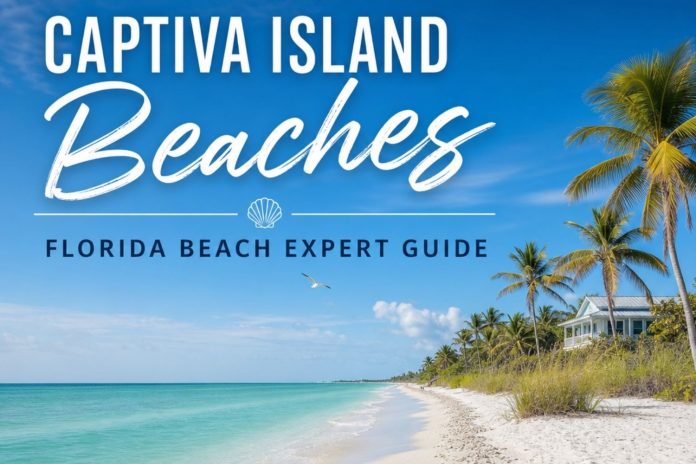
Captiva Island Beaches, Florida
Captiva is the narrow, curving sliver of barrier island north of Sanibel, connected by a short bridge over Blind Pass, and it has been one of my favorite stretches of Florida coastline for forty years. It is smaller than its neighbor, quieter than its neighbor, and it makes you work a little harder for the good shells, but that is exactly why I keep crossing that bridge before the crowds show up.
Captiva runs roughly five miles from the Blind Pass bridge at its south end to the resort grounds at its north tip, and almost the entire island sits on one road, Captiva Drive, which becomes Andy Rosse Lane at the village and Captiva Road further north. Unlike Sanibel, which is its own incorporated city with a beach at nearly every turn, Captiva is unincorporated Lee County, and that distinction actually matters here. It changes who patrols the beach, what the parking rules are, and whether your dog can come with you. I will walk you through all of it.
In this guide I am covering every public stretch of sand on the island, going deep on what the sand and water are actually doing here compared to Sanibel next door, scoring the island honestly across every category that matters, and telling you exactly who this island is built for and who might be happier on the mainland. I will also be straight with you about where Captiva stands in its recovery from three hurricanes in three years, because that is part of visiting responsibly right now. I close with my own take on why I keep coming back to this side of the bridge before anyone else is awake.
The Vibe & Culture at Captiva Island
A One-Street Island That Took a Hard Hit and Is Still Standing
Captiva has always felt like the quiet cousin to Sanibel, and even after everything the last few years threw at it, that personality has not changed.
Cross the little bridge at Blind Pass and the energy drops immediately. There is no strip of hotels, no boardwalk, no stoplight. There is one road lined with pastel cottages, a handful of restaurants, a general store, and enough tropical overgrowth that you feel like you have driven into a different decade. Hurricane Ian tore through here in September 2022, and Helene and Milton added more damage in 2024, and I will not pretend the island looks exactly like it did when I first started coming. The tree canopy is thinner. Some historic cottages are gone. But the village at Andy Rosse Lane is very much alive again. The Bubble Room reopened in July of last year, and the Mucky Duck, the beachfront restaurant that has anchored sunset dinners here for decades, finished its own hurricane repair and reopened this past March. Doc Ford’s fame lives on Sanibel, but Captiva has its own small cluster of places that locals and repeat visitors are genuinely relieved to see back.
At the north end, South Seas Resort occupies roughly a third of the entire island, 330 acres with about two and a half miles of its own Gulf shoreline. It went through a long closure after Ian, a soft reopening around Christmas 2024, and a full grand reopening in May 2025, and it now anchors most of the organized activity on Captiva, including a new family water feature that opened in December. That resort’s scale, and the fact that it controls so much of the island’s northern beachfront, is part of why Captiva’s public beach access stays so limited and so small. This is not a place with a boardwalk full of shops. It is a place where the shops fit on one block, and I mean that as a compliment.
Seasonally, Captiva runs on the same rhythm as the rest of Southwest Florida’s barrier islands. Winter through spring is high season, when snowbirds and shellers fill the small parking lots by mid-morning. Summer is warm, humid, and considerably quieter, with the best light for sunset photography and noticeably thinner crowds at the north end beaches. Hurricane season, June through November, is when I keep half an eye on the tropics and recommend you do too, since this island evacuates fast and the causeway back to Sanibel is the only way off.
Captiva Island Beach Areas: Five Distinct Stretches, One Small Island
Public beach access on Captiva is limited by design. This is a narrow island with a lot of private beachfront, so the handful of true public access points carry more weight than they would on a bigger stretch of coast. Here is how they break down, south to north.
Turner Beach and the Blind Pass Jetty
South End · Captiva Side of Blind Pass Bridge
The first thing you notice crossing onto Captiva is the pass itself, a narrow, moving channel of water separating the two islands, with a rock jetty on the Captiva side that anglers have worked for generations. Turner Beach sits right at that pass, and the beach here is genuinely different from anything else on the island. The current runs strong through Blind Pass, strong enough that swimming is actively discouraged and signs will tell you so, but that same current is exactly what makes this one of the better shelling spots on Captiva. Shells funnel through the pass and pile up along both shorelines.
You will find a mix of serious anglers working the jetty at dawn, shellers working the tideline, and sunset photographers arriving in the last hour of daylight, since Turner Beach has one of the more open, unobstructed views of the sun dropping into the Gulf on the entire island. The parking lot here is small, maybe two dozen spaces, and it is genuinely popular, so it fills fast even on an average day.
I love this spot specifically in the first hour after sunrise, before the anglers have really settled in and before anyone else has walked the tideline. The shell piles left overnight by that current are worth getting up early for, and I have found some of my better recent finds working the wrack line here rather than fighting the crowds further up the beach at Sanibel’s more famous spots.
Alison Hagerup Beach Park
North End · Also Known as Captiva Beach
Alison Hagerup Beach, which most longtime visitors still just call Captiva Beach, sits at the island’s north end and has a reputation as one of the more romantic beaches in the state, which is a claim I do not throw around lightly given how many beaches I have walked. The beach is wide, the sand is soft underfoot compared to some of the shellier stretches further south, and because it faces almost due west, the sunset here has very little competing in the frame. No pier, no buildings crowding the horizon, just open Gulf.
The crowd here skews toward couples, photographers, and visitors staying at the handful of Captiva village rentals within walking distance, since this beach sits close to the restaurants and shops on Andy Rosse Lane. It gets a real evening rush in the final half hour before sunset and then empties out almost completely once the color fades, which is a pattern you do not see at busier beaches further south.
Here is the honest trade-off. The parking lot is small, the minimum stay is two hours at five dollars, and the meters are picky about payment, coins, ones, fives, tens, or a card, with no mobile crossover from Sanibel’s system. It fills up fast, especially in the hour before sunset. But that same expensive, limited lot is doing you a favor, because it keeps this beach from ever feeling crowded the way a free, generous lot would. Pay the premium. It is worth it.
Andy Rosse Lane and the Village Beach Access
Mid-Island · Foot Access Only
Andy Rosse Lane is the closest thing Captiva has to a downtown, one short street lined with the Bubble Room, Keylime Bistro, a handful of boutiques, and the general store, running from the main road down to the Gulf. The west end of the lane dead-ends at a foot-access-only beach opening, no vehicle parking directly there, which keeps this stretch quieter than you would expect given how close it sits to the village’s restaurants.
This is where you will find the crowd that came for lunch or dinner and decided to walk it off with bare feet in the sand afterward. It is a mixed group, families staying in nearby cottages, couples stretching a meal into a sunset walk, and a fair number of locals who live within biking distance and treat this as their neighborhood beach. It never gets the volume that Alison Hagerup does at sunset, mostly because there is no dedicated lot pulling in day-trippers.
My honest read on this spot is that it is the most livable stretch of beach on Captiva, the one that feels like it belongs to the village rather than to visitors passing through. If you are staying anywhere within walking distance of Andy Rosse Lane, this is your beach, and you do not need to drive anywhere else most days.
South Seas Resort and the Northern Tip
Far North · Resort Guests and Club Captiva
The northern third of Captiva belongs to South Seas Resort, two and a half miles of Gulf shoreline that is functionally private to guests and Club Captiva members, though the beach itself, like all Florida beaches below the high tide line, is technically public if you can find a way to walk onto it from the water side. Realistically, this stretch is the resort’s, and I am including it here because it shapes so much of what Captiva feels like at its north end.
Since the resort’s grand reopening last May, this has become the most developed, most amenity-heavy corner of the island by a wide margin, with a new family water feature that opened in December, renovated pools, and a growing restaurant lineup. The crowd here is resort guests almost exclusively, families with young kids drawn by the organized activities, and boaters pulling into the marina.
If you are not staying at South Seas, this stretch is worth knowing about mainly so you understand why Captiva’s public beach access feels so pinched relative to its length. A full third of the island’s Gulf frontage sits behind a resort gate, which is part of why the small public lots further south fill up as fast as they do.
West Gulf Drive: The Quiet Residential Stretch
Mid-Island · Private Homes, Limited Public Footprint
Between the village and South Seas, most of Captiva’s beachfront is lined with private homes and small rental cottages along West Gulf Drive, with no dedicated public parking lot serving this middle section directly. You can walk the beach continuously below the high tide line if you are staying in this stretch, but you cannot simply drive up and park here the way you can at Turner Beach or Alison Hagerup.
The people you will encounter here are almost entirely renters and homeowners, since there is no day-use amenity pulling in outside traffic. It is the quietest stretch of sand on the island for exactly that reason, and if you manage to book a rental along this corridor, you get a version of Captiva that day visitors never really see.
I have stayed along this stretch more than once, and it remains my favorite way to experience the island. Wake up, walk out your own access path, and you have the beach essentially to yourself before the village even opens for breakfast. It is the clearest example of why staying on Captiva itself, rather than day-tripping in from Sanibel or the mainland, changes the entire character of your visit.
Captiva Island Rankings: Expert Scores Across 11 Categories
These scores reflect Captiva as its own island, not as an extension of Sanibel, which means the small, expensive parking and the strict no-dogs rule pull certain categories down even where the beach itself is excellent.
Sand Quality
7/10
Shell-hash sand rather than powdery quartz, coarser underfoot than a Panhandle beach but genuinely clean, with softer patches at Alison Hagerup than at the shell-heavy south end near the pass.
Hiking & Beach Walking
7/10
You can walk long stretches below the high tide line, but South Seas Resort blocks continuous access at the north end, and the island’s short length caps how far you can go compared to Sanibel.
Shelling at Captiva
9/10
Genuinely excellent, especially at the Blind Pass jetty and after a storm, but you are competing with regulars who comb this shoreline daily. Get there before them and the payoff is real.
Water Conditions
7/10
Calm Gulf water for most of the island’s length, but the current at Blind Pass and Turner Beach is genuinely strong and swimming there is discouraged for good reason.
Scenery & Natural Beauty
8/10
Open west-facing sightlines, dense tropical vegetation along the road, and a rock jetty that adds visual character most flat beach towns do not have.
Birding & Wildlife
8/10
Ospreys nesting along the road, dolphins working the pass and offshore waters, and loggerhead sea turtle nests along the beach from late spring through October.
Family Friendliness
6/10
Limited amenities at the small public lots, no lifeguards anywhere on the island, and currents to manage at the pass. Families do better staying at South Seas or renting along the quiet stretches.
Dog Friendliness
2/10
Dogs are not permitted on Captiva’s public beaches, full stop. This is Lee County jurisdiction, not the City of Sanibel, and the rule is enforced. Leave the leash in the car and cross the bridge to Sanibel instead.
Solitude & Peace
7/10
Genuinely quieter than Sanibel or Fort Myers Beach most of the year, though Alison Hagerup at sunset and Turner Beach midday in high season both get busy for a small stretch of sand.
Village Character & Dining
7/10
One short street holds the Bubble Room, the Mucky Duck, Keylime Bistro, and a general store, and after years of hurricane repairs, the island’s dining icons are back and worth planning a meal around.
Parking & Beach Access
4/10
Small lots, cash-and-card-only meters that do not talk to Sanibel’s mobile app, and real scarcity in season. This is the category where Captiva asks the most patience of you.
Captiva Island Sand & Water: Deep-Dive Analysis
Sand Composition & Texture
The first thing you will notice about Captiva sand, if you have spent time on the sugar-white quartz beaches further north in Florida, is that this is a different kind of beach entirely. Captiva’s sand is built from broken shell, not quartz crystal, and it carries a coarser, more textured feel underfoot than the powdery beaches of the Panhandle. That texture is not a flaw. It is the direct result of the same geology that makes this coastline famous for shelling in the first place.
Captiva and Sanibel sit at an unusual angle relative to the rest of Florida’s Gulf coast, and the pair of islands functions almost like a dustpan for shells drifting up from the Caribbean and the deeper Gulf. As currents slow across the shallow shelf offshore, they drop their cargo of whelks, cockles, olives, and tulip shells, and the wave action grinds a portion of that shell material down into the sand itself over time. Compared to Sanibel, Captiva’s beaches sit on a slightly steeper underwater slope, which means fewer shells settle here than at Fort Myers Beach to the south, but the ones that do arrive tend to be well preserved rather than tumbled to fragments.
-
Sand Color. Warm, light tan rather than the blinding white of quartz beaches, with visible shell fragments giving the whole surface a slightly speckled look up close. Alison Hagerup runs noticeably lighter and softer than the shell-heavy stretch right at the Blind Pass jetty.
-
Texture. Coarser than powdered sugar, with a gritty, granular feel from the shell content mixed through it. It is comfortable barefoot everywhere except directly around the jetty rocks at Turner Beach, where broken shell can get sharp underfoot.
-
Grain Size. Mixed and shell-derived rather than uniform quartz, ranging from fine shell hash to larger whole fragments depending on how recently a storm or strong tide has churned the shoreline.
-
Shell Content. High, and this is the whole point of visiting. Whelks, cockles, olives, tulips, and the occasional junonia turn up here, with the Blind Pass jetty and the beach right after a storm producing the best material. Only take shells that are clearly unoccupied.
-
Walking Comfort. Good at the waterline, where wet sand packs firmer, and genuinely excellent along the quieter West Gulf Drive stretch where foot traffic stays light year round.
-
Barefoot Rating. 7/10 most of the year, dropping near the jetty rocks and rising to 8/10 on the softer sand at Alison Hagerup and Andy Rosse Lane, where the shell content thins out.
Water Conditions at Captiva
The Gulf along most of Captiva runs calm and shallow, gentle enough for wading and easy swimming, but Blind Pass changes that equation entirely at the island’s south end. That narrow channel moves a genuine volume of water on every tide cycle, and the current there is strong enough that I do not recommend swimming anywhere near the pass or the jetty, regardless of how calm the rest of the island looks that day.
-
Water Clarity. Generally good away from the pass, with visibility improving noticeably on calm days after a stretch without wind. Clarity drops fast near Blind Pass, where the moving current stirs up sediment continuously.
-
Water Color. Green to turquoise on a clear day, shifting toward a duller olive tone after wind or rain, consistent with the rest of this stretch of the Southwest Florida coast.
-
Wave Action. Light and gentle along most of the island, with the notable exception of the current at Blind Pass, which is a pass current rather than true wave action but carries real force. Respect the posted warnings there.
-
Swimming Quality. Good along the length of the island away from the pass, though remember there are no lifeguards anywhere on Captiva. Swim with a buddy and keep an eye on conditions, since nobody is watching the water for you.
-
Water Sports. Fishing off the Turner Beach jetty is a genuine draw for anglers working mackerel, snook, and redfish. Kayaking and paddleboarding are best arranged through South Seas Resort or outfitters based in the village, since there is no public launch at the small beach lots.
Dogs & Pet Accessibility at Captiva Island
Are Dogs Allowed on the Sand? NO.
Captiva’s beaches fall under Lee County rather than the City of Sanibel, and the county’s rule here is simple. Pets are not permitted on the sand at any public beach access point on this island, and you’ll see it posted at every lot.
Where Dogs Are Allowed
- ✓The sidewalks and streets around Andy Rosse Lane, where you can walk your dog past the shops and restaurants on a leash.
- ✓Most vacation rentals and cottages along West Gulf Drive that list themselves as pet friendly, though you’ll want to confirm the pet policy with your specific rental before you book.
- ✓The short bridge crossing at Blind Pass, if you’d rather just walk your dog over to Sanibel, where the beach rules flip completely in your favor.
Where Dogs Are NOT Allowed
- ✗Turner Beach and the Blind Pass jetty, on the Captiva side.
- ✗Alison Hagerup Beach at the island’s north end.
- ✗The Andy Rosse Lane beach access at the west end of the village.
- ✗The Gulf beach fronting South Seas Resort. If you’re a guest there with a pet, check directly with the resort, since private policy can differ from the public beach rule.
Paws on the Ground Reality
Since your dog can’t join you on the actual sand here, a dog day on Captiva looks a little different than it does on most beach trips. None of the beach parking lots have a pet water station, so plan your dog’s water breaks around the village instead. Shade held up better along Andy Rosse Lane than it did along the beach itself through the last few storms, so the village stretch is genuinely your more comfortable walk on a hot afternoon, and you’ll want to time anything on pavement for morning or evening once the sun gets high.
Enforcement here is real and consistent. Lee County beach patrol does check for pets on Captiva’s sand, and it is not worth testing, since the rule exists to protect nesting wildlife on this shoreline. If your dog needs a proper walk with sand under its paws, the fix is simple. Cross the short bridge to Sanibel, where leashed dogs are welcome on every public beach on the island.
Crowd Levels and the Overall Feel of Captiva Island
Compared to Sanibel or Fort Myers Beach, Captiva stays quieter almost everywhere except two predictable pinch points, the Alison Hagerup lot in the final hour before sunset, and Turner Beach on a weekend morning during shelling season. Outside of those windows, this is a genuinely low-key island, and the crowd you find depends heavily on where you park.
Near South Seas, expect resort guests and families drawn by the water park and organized activities. Near the village, expect a mix of day-trippers who crossed the bridge from Sanibel for lunch and repeat visitors staying in nearby cottages. At Turner Beach, expect shellers and anglers who arrive early and mean business.
The seasonal pattern here tracks the rest of Southwest Florida closely, but Captiva’s small footprint means the swings feel more pronounced:
- Winter and early spring: peak season, snowbirds fill the island’s rentals, and the small parking lots reach capacity by mid-morning on nice days
- Late spring: a genuinely good window, warm water arriving with crowds still thinning from the winter peak
- Summer: hot, humid, and noticeably quieter, my personal favorite time to walk Turner Beach at sunrise with almost nobody else out
- Hurricane season, June through November: watch the tropics closely, since this island’s only way off is back across the causeway through Sanibel
Who Is Captiva Island Really For?
✓ Who Will Love Captiva Island
-
Serious shellers willing to get up early and work the Blind Pass jetty before the regulars arrive
-
Couples chasing a genuinely quiet, open-horizon sunset without a pier or a crowd in the frame
-
Anyone who wants a village small enough to walk in an evening, with real restaurants that survived three hurricanes to reopen
-
Families who book directly into South Seas Resort for the organized activities and the new water feature
-
Anglers who want jetty and pass fishing within walking distance of where they are staying
-
Visitors who would rather stay somewhere quiet on the island itself than day-trip in and fight for parking
✗ Consider Another Beach If…
-
You are traveling with a dog. Captiva’s public beaches do not allow pets, and it is enforced. Sanibel, just across the bridge, does
-
You want abundant free parking. Every public lot on Captiva charges by the hour, and the biggest lots are the smallest and most expensive
-
You want lifeguards. There are none anywhere on this island, on any beach
-
You want nightlife or a boardwalk scene. Captiva closes down early and stays that way on purpose
-
You want a fully rebuilt, pre-storm version of the island. Recovery is real and ongoing, and some familiar landmarks are simply gone
Things to Do on Captiva Island, Florida
Captiva rewards a slower pace than most beach destinations, and the best activities here are the ones that do not require much more than a bucket, a fishing rod, or a dinner reservation.
-
Shelling. The signature activity here. Work the Blind Pass jetty at Turner Beach at low tide, especially the morning after a storm, and bring a mesh bag and a strong back for the Sanibel Stoop.
-
Sunset Watching. Alison Hagerup Beach and Turner Beach both offer open, unobstructed western views. Arrive at least thirty minutes early to claim parking and a spot on the sand.
-
Fishing. The rock jetty at Blind Pass draws anglers after snook, mackerel, and redfish. A valid Florida fishing license is required whether you are casting from shore or a boat.
-
Beach Walking. Walk the tideline below the high water mark for long, uninterrupted stretches, particularly along the quieter West Gulf Drive corridor where foot traffic stays light.
-
Wildlife Watching. Dolphins work the pass and the nearshore Gulf on a near-daily basis. Loggerhead sea turtles nest on Captiva’s beaches from late spring through October, and ospreys nest visibly along the main road.
-
Kayaking and Paddleboarding. Best arranged through South Seas Resort or a village-based outfitter, since the small public lots do not have their own launches.
-
Dining in the Village. The Bubble Room and the Mucky Duck are both back after extensive hurricane repairs, and Keylime Bistro remains a reliable stop for lunch on Andy Rosse Lane.
-
South Seas Resort Amenities. A new five-acre water feature opened in December for resort guests and Club Captiva members, alongside renovated pools and an expanding restaurant lineup.
-
Day Trips to Cayo Costa. Captiva Cruises runs a ferry to Cayo Costa State Park, a boat-access-only island a short ride north with several miles of undeveloped beach.
Local Knowledge and Practical Advice
A few things I have picked up crossing that bridge more times than I can count over the last forty years:
-
Leave the dog on Sanibel. Captiva’s public beaches do not allow pets, period, and it is enforced by Lee County. Sanibel, on the other side of the bridge, welcomes leashed dogs on all its public beaches.
-
Bring exact change or a card for Captiva parking. The meters here take coins, ones, fives, and tens, or Visa and Mastercard, and Sanibel’s mobile parking receipts are not valid on the Captiva side.
-
Arrive at least thirty minutes before sunset if you want a spot at Alison Hagerup. The small lot fills fast in that final hour, and there is no overflow parking nearby.
-
Beat the regulars if you are serious about shelling. A handful of dedicated shellers and shop owners work this shoreline daily, often before sunrise. Get to the Blind Pass jetty early, especially the morning after a storm, and you will find real material still waiting.
-
No live shelling anywhere on the island. If a shell still has an occupant, it goes back in the water. This is state law, not a suggestion, and it protects the population that keeps this coastline famous.
-
Skip swimming at Blind Pass and Turner Beach. The current through that channel is genuinely strong, and there are no lifeguards anywhere on Captiva to help if you misjudge it.
-
Expect visible signs of ongoing recovery. Between Hurricane Ian in 2022 and Helene and Milton in 2024, this island has been through a lot. Some beach access points still have dune stabilization work underway, and the tree canopy along the road is thinner than it used to be.
-
Book dinner reservations ahead in season. The village has a small number of restaurants and they fill up fast now that the Bubble Room and the Mucky Duck are both back and popular again.
-
Watch the tropics if you are visiting June through November. Captiva has exactly one way off the island, back across the causeway through Sanibel, and evacuation orders here are not something to wait out.
-
Bring a bike if you are staying more than a couple of days. The island is small enough that most of the beach accesses and the village are an easy ride apart, and it saves you from hunting for parking twice in one day.
Where to Stay Near Captiva Island, Florida
Captiva’s lodging options are smaller in number than Sanibel’s but genuinely varied, from a full-service resort to individual cottage rentals steps from the sand.
South Seas Resort
The resort occupies the island’s northern third and offers villa-style accommodations through privately owned residences available for rent, rather than traditional hotel rooms, with roughly 260 homes currently available and more coming back online as repairs continue. Guests get access to two and a half miles of private Gulf beach, renovated pools, a new water feature, and a growing dining lineup, all through the Club Captiva program.
Village Cottages and Rentals
Andy Rosse Lane and the streets around it hold a collection of pastel cottages and small rental homes within walking distance of the restaurants and the beach access at the lane’s west end. This is the most walkable way to experience Captiva without a car.
West Gulf Drive Beachfront Homes
Private homes along the quiet middle stretch of the island offer direct beach access with almost no day-tripper traffic. Booking here gets you the version of Captiva that most visitors never see, since there is no public parking lot pulling outside crowds onto this section of sand.
Camping
There is no camping directly on Captiva itself. The closest option is Cayo Costa State Park, a short ferry ride north from the village, with primitive tent sites and rustic cabins on an otherwise undeveloped barrier island.
Sanibel and the Mainland
For lower rates, Sanibel Island next door offers more lodging variety, and Fort Myers and Cape Coral on the mainland give you a wider range of budget hotel options for visitors willing to day-trip out to Captiva rather than stay directly on it.
What Makes Captiva Island Different from Nearby Beaches
Captiva stands apart from its neighbors on a handful of specific points, not just a general sense of being quiet.
No dogs, and that changes the crowd
Lee County’s no-pets rule on Captiva’s public beaches, combined with Sanibel’s leashed-dog-friendly policy right across the bridge, genuinely sorts visitors between the two islands. Captiva ends up with a slightly different, slightly quieter crowd as a result.
A shell funnel with a steeper slope
Captiva sits at the same favorable angle to Gulf currents as Sanibel, but the underwater slope here runs steeper, which means fewer shells arrive than at Fort Myers Beach to the south, though the ones that do wash up tend to be better preserved.
One street, one village, real scarcity
There is no strip of hotels or competing shopping district here. Andy Rosse Lane is genuinely it, and that scarcity is part of what makes the village feel the way it does, especially now that its two most iconic restaurants have both reopened after years of repair.
A visible, ongoing recovery story
Between Ian in 2022 and Helene and Milton in 2024, Captiva has absorbed more consecutive hurricane damage than almost anywhere else on this coast. What you see today, thinner tree canopy, a resort still finishing its transformation, restaurants that only recently reopened, is a real and current chapter of the island’s history, not something fully behind it.
Captiva Island vs. Other Southwest Florida Beaches
These are the beaches I get asked to weigh against Captiva most often, and the honest read on when you would choose one over the other.
Captiva Island vs. Sanibel Island
Sanibel is bigger, welcomes leashed dogs everywhere, and has far more public beach access, restaurants, and lodging variety. Captiva is smaller, quieter, and stricter about pets and parking, with a genuinely more intimate village feel. I recommend basing yourself on Sanibel if you want convenience and flexibility, and staying directly on Captiva if quiet and a short walk to dinner matter more to you than options.
Captiva Island vs. Fort Myers Beach
Fort Myers Beach has softer, more forgiving sand, a longer walkable shoreline, and genuinely more shells washing up thanks to its position further along the current, plus a rebuilding commercial core around Times Square. Captiva trades all of that scale for a much quieter, more residential feel and a shelling experience that rewards effort over volume.
Captiva Island vs. Boca Grande
Boca Grande, further north on Gasparilla Island, shares Captiva’s boutique, one-village character and its exclusivity, but it leans more toward a historic golf-cart-town identity with deeper old-money roots. Both islands reward visitors who want quiet over convenience, but Boca Grande sits further from the Sanibel causeway and requires more driving to reach.
Captiva Island vs. Cayo Costa State Park
Cayo Costa, reachable only by ferry or private boat, is the truly undeveloped version of this coastline, nine miles of beach with no roads, no restaurants, and no cell service to speak of. Captiva gives you a taste of that same quiet with the convenience of a bridge, a bed, and a restaurant reservation.
Bottom line: Captiva is the small, quiet, shell-focused island in this stretch of the Gulf, best suited to visitors who want a slower pace and do not mind working a little harder for parking, a table, or a good shell. Sanibel gives you more room to spread out. Fort Myers Beach gives you more sand and more shells with less effort. Cayo Costa gives you true wilderness. Captiva sits in the middle, and for forty years, that middle ground has kept me coming back.
Captiva Island, Florida: Frequently Asked Questions
Is Captiva Island worth visiting?
Yes. The shelling, the sunsets, and the village character justify the trip, especially now that Captiva’s signature restaurants have reopened after years of hurricane repair. Just come with realistic expectations about small parking lots and limited public beach access.
Are dogs allowed on Captiva Island beaches?
No. Captiva’s public beaches, which fall under Lee County rather than the City of Sanibel, do not permit pets, and the rule is enforced. Sanibel Island, just across the Blind Pass bridge, allows leashed dogs on all of its public beaches.
Where is the best parking on Captiva Island?
Turner Beach at Blind Pass and Alison Hagerup Beach both have small public lots charging by the hour, paid with cash, coins, or a card at the meter. Neither lot is large, and both fill quickly in season, so arrive early.
Is Captiva Island still recovering from Hurricane Ian?
Yes, though the recovery has progressed significantly. Beaches, wildlife, and most restaurants are back, including the Bubble Room and the Mucky Duck, but Helene and Milton added further damage in 2024, and some dune stabilization and rebuilding work is still visible in places.
Is the shelling really as good as people say on Captiva?
It is genuinely good, particularly at the Blind Pass jetty and after storms, but the shoreline gets worked hard by dedicated regulars, so early morning visits produce noticeably better results than an afternoon stroll.
Are there lifeguards on Captiva Island beaches?
No. None of Captiva’s beaches have lifeguard coverage, and the current at Blind Pass in particular is strong enough that swimming there is discouraged entirely.
What is the best beach on Captiva for sunset?
Alison Hagerup Beach and Turner Beach both offer open, unobstructed western views. Alison Hagerup draws more of a crowd for it, so Turner Beach can feel a little quieter for the same view.
Is South Seas Resort open again?
Yes. After a long closure following Hurricane Ian, South Seas held its official grand reopening in May 2025 and continues expanding its amenities, including a new water feature for guests and Club Captiva members that opened in December.
Can I camp on Captiva Island?
Not directly on the island. The nearest camping is at Cayo Costa State Park, reached by a short ferry ride from the Captiva village, with primitive tent sites and rustic cabins on an otherwise undeveloped barrier island.
How is Captiva Island different from Sanibel?
Captiva is smaller, quieter, and stricter, no dogs on the beach, smaller and pricier parking, and a single small village rather than Sanibel’s wider spread of restaurants and shops. Sanibel offers more convenience. Captiva offers more quiet.
Patti’s Perspective: My Honest Take on Captiva Island
I have been crossing that little bridge onto Captiva for forty years now, and it remains one of my favorite pieces of coastline anywhere I have walked. What keeps pulling me back is not the size of the island, since Captiva is genuinely small, it is the quality of the quiet you can still find here if you time it right.
The shelling here is the honest reason most people cross that bridge, and I will tell you the truth about it rather than the postcard version. This is a highly worked shoreline. There are shellers, shop owners, and regulars who comb the Blind Pass jetty in real volume, and if you show up at ten in the morning expecting an untouched beach, you will be disappointed. But I love this side of the bridge specifically before the crowds show up. Get to Turner Beach at first light, especially the morning after a blow, and beat the regulars to the tideline, and the payoff is still there.
The north end parking lot at Alison Hagerup is its own small negotiation. It is expensive, it is small, and it fills fast in that last hour before sunset. But I have come to see that as a feature rather than a flaw. A small, pricey lot keeps this beach from ever turning into a crowd, and if you do not mind paying a premium and arriving early, you get one of the more open sunset views on this entire coast, nearly to yourself.
What has stayed with me most through three hurricanes in three years is watching this island keep coming back. The Bubble Room and the Mucky Duck are open again. South Seas finished its long rebuild and reopened for good last year. The tree canopy is thinner than it used to be, and I will not pretend otherwise, but the character of this place, one street, a handful of honest restaurants, and a beach worth getting up early for, has not gone anywhere.
My verdict: 8/10. Captiva is not the easiest island to visit, and it will ask you to plan around small parking lots, leave the dog behind, and get up earlier than you would like for the best shelling. But for anyone chasing genuine quiet on Florida’s Gulf Coast, with a village worth walking and a sunset worth waiting for, it remains one of the most rewarding small islands I have covered in this work.
Want to Live by the Water?Captiva Island real estate is defined by scarcity even by Florida barrier island standards. With most of the island’s northern third occupied by South Seas Resort and the rest built out along a single road, available inventory stays genuinely limited, and Captiva properties consistently price higher than comparable addresses on neighboring Sanibel.The buyer pool here skews toward second-home owners and investors drawn to the privacy and the short walk to the village, along with those pursuing ownership through South Seas’ Club Captiva program at the island’s north end. Flood and wind insurance on barrier island property runs significant here, and virtually the entire island sits in a high-risk flood zone, so working with an agent who understands post-hurricane elevation requirements and insurance modeling matters more on Captiva than almost anywhere else in Florida.If living by the water is something you’re considering, whether full time, part time, or as an investment, it’s worth exploring what’s available in this area.Explore Waterfront Living at LiveByTheWater.com
Real estate referral partner