




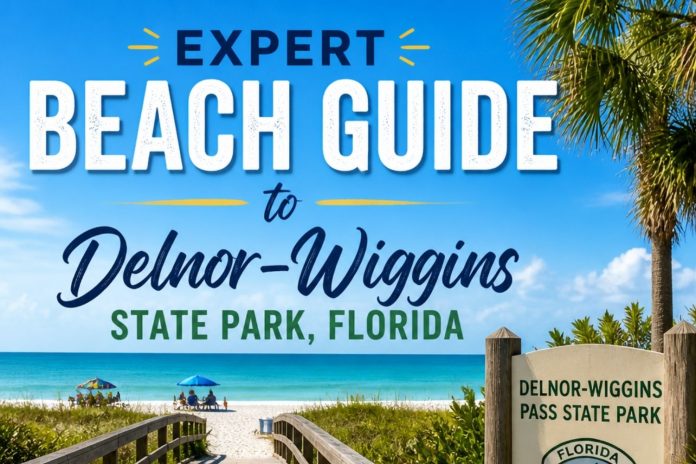
Delnor-Wiggins Pass State Park, Florida
Delnor-Wiggins Pass State Park has so many places to actually stop, walk, play, and shell that I never manage to see all of it in one visit, no matter how many times I go back. I once went on a genuinely stormy afternoon and had the entire mile of beach to myself, watching dark clouds build out over the Gulf from a safe distance. That’s the kind of beach this is. It rewards you for showing up, in almost any weather, as long as you respect what that weather is doing.
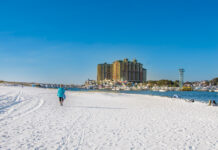
Delnor-Wiggins Pass State Park sits on a 166 acre barrier island at the very north end of Naples, bordered by Vanderbilt Beach to the south, Wiggins Pass and Barefoot Beach Preserve to the north, the Gulf of Mexico to the west, and Water Turkey Bay to the east. This park has ranked among Dr. Beach’s Top 10 U.S. beaches multiple times over the years, most recently landing at number six in the 2026 rankings, and it earns that spot honestly even while still recovering from back to back hurricane damage.
In this guide I’m walking you through the park’s parking areas, the observation tower, the reef, and the pass itself, going deep on what the sand and water are actually doing, scoring it honestly across every category that matters, and telling you exactly who this beach is built for. I’ll cover what’s currently open, what’s still rebuilding after Hurricanes Helene and Milton, and where to actually park depending on what you came here to do. I close with my own honest take on why a storm cloud on the horizon is one of my favorite things to watch from this beach, from a safe distance.
The Vibe & Culture at Delnor-Wiggins Pass State Park
A State Park Still Rebuilding, and Still Worth It
This beach has been hit three times in three years, and it keeps coming back better organized than before.
Hurricane Ian did real damage here in 2022, and just as the park was finding its footing again, Hurricanes Helene and Milton swept through within two weeks of each other in the fall of 2024, burying the parking lots and roads under sand up to five feet deep in places. The park closed for roughly five months while crews shoveled, sifted, and recontoured that sand back onto the beach itself, and it officially reopened on February 4, 2025. As of this writing, recovery is still visible, some parking lots remain closed, restrooms are temporary, and there’s no fresh water on site yet, but the beach itself is genuinely beautiful again.
That resilience is part of what makes this park feel different from a purely developed beach. The vibe here is quieter and more deliberate than the mainstream Naples beaches further south, closer in spirit to a nature preserve than a beach town. You’ll find serious shellers working the shoreline at dawn, anglers working the pass, birders with real binoculars, and families who’ve made this their regular spot despite the ongoing repairs, because the sand and the water were always the real draw, not the amenities.
I’ve watched this park take three hits and come back each time, and there’s something genuinely moving about a piece of coastline that keeps earning national recognition even while it’s still under repair. It tells you something about how good the underlying beach actually is that Dr. Beach kept ranking it in the national top ten through all of this.
Delnor-Wiggins Pass State Park Areas: Five Distinct Stops Along One Barrier Island
This park is built around a numbered system of parking areas, and where you park genuinely changes what kind of day you’re going to have. Here’s how it breaks down.
Parking Areas 1 and 2: The Main Beach
Near Shore Access · Hard-Bottom Reef
The first two parking areas you reach are the busiest, since they offer the shortest walk to the sand and, as of this writing, are the primary lots open during the ongoing hurricane recovery. This stretch is where most visitors settle in, close enough to the entrance that it doesn’t require much planning, and it’s also where the park’s hard bottom reef runs closest to shore, making it the best access point if snorkeling is part of your plan.
Facilities here are currently more limited than they used to be. Temporary restrooms have replaced the permanent ones damaged by the 2024 storms, and there’s no fresh water on site yet, so bring your own. Despite that, the sand and the water are back to their usual quality, and this remains the easiest, most family friendly stretch of the park for anyone who wants a straightforward beach day without much walking.
I always tell people not to let the visible recovery work scare them off this stretch. The beach itself is genuinely as good as it’s ever been, and for anyone with limited mobility, this is also the easiest access point in the park right now while some of the far lots stay closed.
Parking Areas 3 and 4: The Concession and Coastal Hammock
Mid-Island · Picnic Pavilions
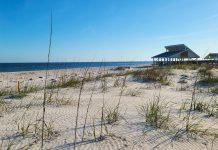
Further down the access road, areas 3 and 4 sit within a shaded coastal hammock of sea grape and native palm, with boardwalks leading from the parking areas out to picnic pavilions before you reach the open beach. This is historically where the park’s concession has operated, renting beach chairs, umbrellas, kayaks, and paddleboards, though hours and availability have shifted during the ongoing recovery, so check before you plan around it.
The beach access from this stretch tends to draw a slightly different crowd than areas 1 and 2, families settling in for a full day with a picnic, along with visitors who specifically want the shade of the hammock as a base before heading out onto open sand. It’s a genuinely pleasant walk from the shaded parking through the boardwalk system, and the transition from dense vegetation to open Gulf view never gets old no matter how many times I’ve made that walk.
This is where I’d point anyone who wants to spend the whole day here rather than just an afternoon. The shade, the picnic tables, and the proximity to both the reef and the open beach make it the most versatile stretch of the park.
The Observation Tower and Wiggins Pass
North End · No Swimming Zone
At the very north end of the park, a wildlife observation tower gives you a genuine bird’s eye view over Wiggins Pass and the surrounding mangrove habitat. This is where the park’s true north end character shows itself, swift tidal current running through the pass, fishermen working the shoreline for snook, redfish, and sea trout, and a noticeably wilder feel than the more developed southern stretch.
Swimming is prohibited at the pass itself, and for good reason. The current running between the Gulf and Water Turkey Bay moves fast enough to be genuinely dangerous even on a day when the rest of the beach looks calm and inviting. Fishing is the main activity here instead, and I’ve watched anglers pull in impressive catches working nets in what looked like a dark cloud of baitfish just offshore.
Climbing the tower for the view alone is worth the walk from wherever you’ve parked. Looking north across the pass at Barefoot Beach Preserve on the other side, two protected pieces of coastline facing each other, is one of the quieter, more reflective moments this park offers if you take the time to actually stop and look rather than just walking past.
The Boat Ramp and Water Turkey Bay
East Side · Cocohatchee River Access
On the bay side of the park, a boat ramp launches into Water Turkey Bay, connecting out through the South Channel to the Cocohatchee River and eventually the Gulf through Wiggins Pass. This side of the park draws an entirely different crowd than the beach itself, boaters, kayakers, and paddlers working the calmer inland water rather than the open Gulf.
Kayaking from here up into the mangrove lined stretches of the Cocohatchee River is one of the better paddling routes in North Naples, and it’s a genuinely different way to experience the same park you were just standing on the beach of an hour earlier. The boat ramp charges its own separate fee on top of the park entrance, but it’s a straightforward, functional launch point that stays busy with locals who know the area well.
If you’ve brought your own kayak or canoe, I’d build at least an hour into your visit here specifically for the bay side paddle. It’s a genuinely quieter, slower pace than the beach, and the bird life along the mangrove edges rewards the patience.
Conner Park and the Free Shuttle
Overflow Access · Bluebill Ave & Gulfshore Dr
With several of the park’s own parking areas still closed for hurricane recovery, Conner Park, just outside the Delnor-Wiggins entrance at the intersection of Bluebill Avenue and Gulfshore Drive, has become an essential overflow option. A free shuttle currently runs visitors between Conner Park and the beach every ten to fifteen minutes, a genuinely useful workaround while the park’s own lots remain limited.
This stretch also connects to Vanderbilt Beach and the wider North Naples beach access system, meaning Conner Park functions as a real hub for anyone island hopping between Delnor-Wiggins and the beaches just south of it. It’s not glamorous, it’s a parking lot and a shuttle stop, but it’s genuinely reliable and worth knowing about if you show up and find the direct lots already full.
I’d actually recommend starting here on a busy season day rather than fighting for a spot in Areas 1 or 2. The shuttle ride is short, and you avoid the disappointment of driving all the way to the gate only to be turned away.
Delnor-Wiggins Pass State Park Rankings: Expert Scores Across 11 Categories
These scores reflect the park as it stands today, factoring in both its genuine natural quality and the real access limitations still in place during hurricane recovery.
Sand Quality
9/10
Fine white quartz sand, painstakingly sifted and recontoured back onto the beach after Hurricanes Helene and Milton buried the parking lots in it. It looks and feels genuinely restored.
Hiking & Beach Walking
7/10
A full mile of walkable beach plus the tower trail, though access to some stretches is currently reduced while several parking areas remain closed for repair.
Shelling at Delnor-Wiggins
8/10
Genuinely good, with kitten paws, olives, whelks, and fighting conchs turning up regularly, especially near the northern end toward the pass. Arrive early for the best picks.
Water Conditions
8/10
Clear and calm along the main beach, with a genuinely dangerous current right at Wiggins Pass itself, where swimming is prohibited.
Scenery & Natural Beauty
9/10
A genuine barrier island setting with mangrove forest, dune vegetation, and an observation tower view over the pass. Nationally ranked scenery that has earned its reputation the hard way.
Birding & Wildlife
8/10
Ospreys, bald eagles, manatees, rays, and loggerhead sea turtles all use this park. The tower and the bay side paddle are the best spots to actually see them.
Family Friendliness
7/10
Generally mild waves suit kids well, though the current lack of fresh water and permanent restrooms is a real factor to plan around until repairs finish.
Dog Friendliness
1/10
No dogs are allowed on the beach itself. This is a state park rule enforced consistently across the property.
Solitude & Peace
6/10
Genuinely quiet on a stormy or overcast day, genuinely packed on a clear season weekend. The park closes to new cars once its limited lots fill.
Entertainment & Nightlife
1/10
None, and none intended. This is a state park built around nature, not nightlife.
Parking & Beach Access
4/10
Genuinely limited right now, with several lots still closed for hurricane repair. The free Conner Park shuttle is a real, reliable workaround if the direct lots are full.
Delnor-Wiggins Pass Sand & Water: Deep-Dive Analysis
Sand Composition & Texture
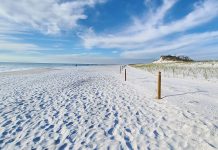
The single biggest thing you’ll notice about Delnor-Wiggins sand right now is that it’s here at all in this condition. When Hurricanes Helene and Milton hit in the fall of 2024, tons of fine white sand were deposited up to five feet deep across the parking lots and access roads. Rather than losing it, crews shoveled that sand up, sifted it, and hand contoured it back onto the beach to rebuild a natural looking shoreline. What you’re walking on today is quartz sand from the same Appalachian source as the rest of this coast, restored through a genuinely painstaking process rather than trucked in fresh.
That history is part of why this beach feels different to walk than a beach that’s never been tested. The sand itself is fine and light colored, consistent with the broader Naples and Collier County coastline, but knowing what it took to get it back onto this shoreline changes how you look at it. This is not a beach that happened to survive. It’s one that was actively rebuilt, grain by grain, by people who thought it was worth the effort.
-
Sand Color. Fine, light, sugar white in most conditions, consistent with the quartz beaches across the rest of Naples and Collier County. Recently restored sections near the parking areas can look slightly different in texture until they settle further.
-
Texture. Fine underfoot with a real shell mix, especially toward the northern end near the pass. Stays reasonably cool most of the year thanks to the quartz content.
-
Grain Size. Quartz based like the rest of the Gulf Coast, carried down by ancient rivers from the Appalachians, with shell fragments mixed in more heavily near the pass than along the central beach.
-
Shell Content. Genuinely good, with kitten paws, olives, whelks, and fighting conchs turning up regularly. The northern stretch near the tower and the pass tends to produce the best finds.
-
Walking Comfort. Firm and pleasant at the waterline along the full mile of beach, with the restored sections near the parking areas still settling in slightly compared to the untouched stretches further out.
-
Barefoot Rating. 8/10 most of the year. Walk the wet sand at the waterline on hot afternoons, and the quartz content keeps things comfortable even in peak summer.
Water Conditions at Delnor-Wiggins
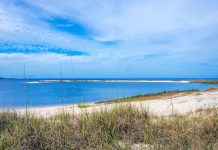
The Gulf along the main beach stays calm and clear on most days, with the water shifting noticeably at the pass itself, where tidal current runs fast enough to be genuinely dangerous. Swimming is prohibited right at Wiggins Pass for exactly that reason, while the rest of the beach remains one of the gentler, more forgiving stretches of Gulf water on this coast.
-
Water Clarity. Good on calm days, with visibility often extending well out from shore. Storms and heavy rain reduce clarity temporarily along the main beach.
-
Water Color. Emerald to turquoise close to shore, shifting to deeper Gulf blue further out, with the mangrove backdrop giving the pass itself a slightly darker, more tannin tinted look.
-
Wave Action. Generally mild along the main beach, with a genuinely strong tidal current at the pass. Wind and offshore systems can occasionally roughen conditions, so check flags before swimming.
-
Swimming Quality. 8/10 along the main beach, dropping to unsafe right at the pass, where swimming is prohibited. There are no lifeguards on duty anywhere in the park, so swim at your own risk.
-
Water Sports. A hard bottom reef runs parallel to the beach near Parking Areas 1 and 2, making this one of the few genuine snorkeling spots on the Naples coast. Kayaking is excellent on the bay side toward the Cocohatchee River.
Dogs & Pet Accessibility at Delnor-Wiggins Pass State Park
Are Dogs Allowed on the Sand? RESTRICTED.
Leashed pets are welcome throughout the paved areas of Delnor-Wiggins Pass State Park, including the parking areas, the picnic pavilions, and the boardwalk trails through the coastal hammock. The one place they aren’t allowed is the beach itself.
Where Dogs Are Allowed
- ✓Paved parking areas and roadways throughout the park, on a six foot handheld leash.
- ✓Picnic pavilions and the boardwalk trails through the coastal hammock, leashed.
Where Dogs Are NOT Allowed
- ✗The beach itself, at any point along the mile of shoreline.
- ✗The water, including the shallow swim areas and the pass.
Paws on the Ground Reality
The paved and boardwalk sections give a leashed dog a genuinely pleasant walk through shaded coastal hammock, but there’s currently no fresh water source anywhere in the park following storm damage from Hurricanes Helene and Milton, so bring your own for your dog as well as yourself. The pavement and boardwalk stay reasonably cool underfoot most of the year, but the parking areas can heat up fast on a summer afternoon, so check the ground before a long walk.
This rule is consistently enforced by park staff, and it exists to protect the same beach nesting habitat that makes this park worth visiting in the first place. If your dog needs real off leash time, Bonita Beach Dog Park at Lovers Key State Park, a short drive north, is the better option.
Crowd Levels and the Overall Feel of Delnor-Wiggins Pass State Park
Delnor-Wiggins runs on the same broad Naples calendar as the rest of this coast, with an added layer right now: crowd levels are also shaped by which parking areas happen to be open on any given day during the ongoing recovery.
- Snowbird season (November through April): the busiest window, with the limited open lots filling fast on clear weekend days. Weekday mornings are noticeably easier.
- Stormy or overcast days: genuinely the quietest, most rewarding time to visit right now, since a lot of visitors skip a beach day when clouds are building. I’ve had this entire mile of sand to myself on exactly this kind of afternoon.
- Summer (June through September): warm water and lighter crowds, with predictable afternoon storms most days that are worth watching from a safe distance and nothing more.
- Fall (October and November): a genuine sweet spot, though this is also hurricane season, so keep an eye on the forecast before planning a trip.
Who Is Delnor-Wiggins Pass State Park Really For?
✓ Who Will Love Delnor-Wiggins Pass State Park
-
Shell collectors chasing kitten paws, whelks, and fighting conchs on a real barrier island beach
-
Snorkelers interested in the hard bottom reef near Parking Areas 1 and 2
-
Birders and wildlife watchers hoping to see ospreys, bald eagles, and manatees from the tower
-
Kayakers and paddlers wanting the calmer, mangrove lined bay side route
-
Families with kids who do well in mild, gently sloping water
-
Anyone who genuinely enjoys watching a storm build over the Gulf from a safe distance on shore
✗ Consider Another Beach If…
-
You need guaranteed access to fresh water and permanent restrooms right now, since both are still being rebuilt
-
You’re traveling with a dog. Dogs aren’t allowed on the beach here
-
You want to swim at the pass itself. That water is genuinely dangerous regardless of how it looks
-
You need a large, guaranteed parking spot on a busy holiday, since several lots remain closed for repair
-
You’re looking for restaurants or nightlife nearby. This is a state park, not a beach town
Things to Do at Delnor-Wiggins Pass State Park, Florida
This park packs a genuine range of activities into one mile of shoreline. Here’s what actually fills a day.
-
Beach Walking. A full mile of shoreline, quietest and most rewarding right after a storm passes, when the crowd thins and the shelling improves.
-
Snorkeling. A hard bottom reef runs parallel to the beach near Parking Areas 1 and 2, one of the few genuine snorkeling spots on the Naples coast.
-
Shelling. Kitten paws, olives, whelks, and fighting conchs turn up regularly, especially near the northern end toward the pass. Early morning after a tide change is the best window.
-
Fishing. The area around Wiggins Pass, past the double red flags, is the designated fishing zone, with anglers regularly landing snook, redfish, and sea trout.
-
Kayaking and Paddleboarding. Launch into Water Turkey Bay from the boat ramp and paddle up the Cocohatchee River, or stick to the calmer sheltered water near shore.
-
Wildlife Watching from the Tower. Climb the observation tower at the north end for views over Wiggins Pass and a real chance at spotting ospreys, bald eagles, and manatees.
-
Sunset Watching. Open western views across the Gulf with almost nothing blocking the horizon, especially striking with storm clouds building in the distance.
Local Knowledge and Practical Advice
A few things I’ve picked up walking this park more times than I can count:
-
Check current parking availability before you go. Several lots remain closed for hurricane repair as of this writing, so confirm which areas are open rather than assuming the full park is accessible.
-
Bring your own drinking water. The park doesn’t currently have fresh water on site following storm damage, and it isn’t guaranteed to be back by your visit.
-
Use the free Conner Park shuttle if the main lots are full. It runs every 10 to 15 minutes from the intersection of Bluebill Avenue and Gulfshore Drive right outside the entrance.
-
Watch storm clouds from the sand, but leave before they arrive. Some of the most beautiful moments here are watching weather build over the Gulf from a distance, but never risk staying on an open beach through an actual storm in Florida.
-
Leave the dog at home. Dogs aren’t permitted on the beach itself at this state park.
-
Never swim at the pass itself. The current there is genuinely dangerous, and it’s off-limits for exactly that reason regardless of how calm it appears.
-
Pay the $6 entrance fee by QR code or honor system. The park currently runs largely unstaffed at the gate, so bring a card or be ready to use the posted payment system.
-
Arrive early after a tide change for the best shelling. The northern stretch toward the tower and the pass consistently produces the better finds.
-
Loggerhead sea turtles nest here through the summer. Give marked nests a wide berth and remove all beach gear by sunset.
-
Bring your own snorkel gear. The concession that historically rented equipment has had reduced or inconsistent hours during the ongoing recovery, so don’t count on renting on site.
Where to Stay Near Delnor-Wiggins Pass State Park, Florida
There’s no lodging inside the park itself. Here’s how the nearby options break down.
Vanderbilt Beach Resorts & Condos
Just south of the park, the Vanderbilt Beach corridor carries the highest concentration of Gulf front resort hotels and condo buildings in North Naples, several offering private beach service. This is the most convenient lodging option for repeat visits to Delnor-Wiggins.
North Naples & Bonita Springs Hotels
A short drive inland along US 41 or Immokalee Road offers a wider range of mid-range hotel options for visitors who don’t need to be directly on the Gulf.
Camping at Koreshan State Park
There’s no camping at Delnor-Wiggins itself, but Koreshan State Park in Estero, a genuinely interesting historic site along the Estero River, sits about 20 minutes north with full hookup and tent sites, hot showers, and fire rings. It’s the closest real camping option to this stretch of North Naples.
Bonita Springs & Inland Naples
For lower rates, the inland stretch through Bonita Springs and central Naples along US 41 offers a much wider range of budget to mid-range hotel options for visitors willing to drive fifteen to twenty minutes to reach the park.
What Makes Delnor-Wiggins Pass State Park Different from Nearby Beaches
Delnor-Wiggins stands apart because it delivers a genuinely complete barrier island experience, reef, pass, mangrove bay, and open beach, all within one mile of protected shoreline.
A few features make it distinct:
A nationally ranked beach that’s actively rebuilding
Very few beaches earn a national top ten ranking while still visibly recovering from back to back hurricane damage. That combination of natural quality and honest, ongoing repair work is unusual, and it’s worth knowing before you go so you arrive with the right expectations.
A real reef within swimming distance
The hard bottom reef near Parking Areas 1 and 2 makes this one of the only genuine snorkeling beaches on the Naples coast, a feature most nearby beaches simply don’t have.
A working inlet, not just a beach
Wiggins Pass itself, with its tidal current, fishing access, and observation tower, gives this park a functional working waterway character that a purely developed beach town beach doesn’t offer.
Delnor-Wiggins Pass State Park vs. Nearby Beaches
Delnor-Wiggins vs. Barefoot Beach Preserve
These two sit directly across Wiggins Pass from each other. Barefoot leans further into pure wilderness and tortoise conservation, while Delnor-Wiggins offers more developed infrastructure, the observation tower, and the reef. Choose Delnor-Wiggins for the snorkeling and the tower view. Choose Barefoot Beach for the trail and the quieter, gated approach.
Delnor-Wiggins vs. Vanderbilt Beach
Vanderbilt Beach, just south, is wider, more resort backed, and easier to access without state park entrance fees or hurricane era parking limits. Choose Vanderbilt for convenience. Choose Delnor-Wiggins for the reef, the shelling, and the genuine wildlife.
Delnor-Wiggins vs. Lowdermilk Park and Downtown Naples
Lowdermilk Park and the beaches near downtown Naples offer far more amenities and an easy, low effort beach day. Delnor-Wiggins trades that convenience for better shelling, snorkeling, and a real state park setting. Choose downtown Naples for simplicity. Choose Delnor-Wiggins for the more complete natural experience.
Bottom line: Delnor-Wiggins Pass State Park earns its national ranking through genuine natural quality, a reef, a working pass, real shelling, and serious birding, even while it’s still catching up on amenities after a rough few hurricane seasons. Go in knowing that, and it’s one of the better beach days on this entire coast.
Delnor-Wiggins Pass State Park, Florida: Frequently Asked Questions
Is Delnor-Wiggins Pass State Park open right now?
Yes. The park reopened officially on February 4, 2025, after roughly five months of closure following Hurricanes Helene and Milton. Some parking areas and amenities, including permanent restrooms and fresh water, are still being rebuilt.
How much does it cost to enter Delnor-Wiggins Pass State Park?
Admission runs $6 per vehicle with up to eight people, generally paid by QR code or on the honor system at the gate.
Can I swim at Wiggins Pass?
No. Swimming is prohibited right at the pass itself because of a genuinely dangerous tidal current. The main beach elsewhere in the park is fine for swimming.
Is there snorkeling at Delnor-Wiggins?
Yes. A hard bottom reef runs parallel to the beach near Parking Areas 1 and 2, making this one of the few real snorkeling spots on the Naples coast.
Are dogs allowed at Delnor-Wiggins Pass State Park?
Not on the beach, but leashed pets are welcome elsewhere in the park.
Is Delnor-Wiggins Pass State Park ranked among the best beaches in the U.S.?
Yes. It has ranked in Dr. Beach’s national Top 10 multiple times over the years, most recently coming in at number six in the 2026 rankings, even while still recovering from hurricane damage.
Is there fresh water or full restrooms at the park right now?
Not yet as of this writing. Following Hurricanes Helene and Milton, the park is currently using temporary restrooms and has no fresh water on site, so bring your own drinking water.
What can you find shelling at Delnor-Wiggins?
Kitten paws, olives, whelks, and fighting conchs turn up regularly, especially near the northern end of the beach toward the pass. Early morning after a tide change tends to produce the best finds.
Is there a lifeguard at Delnor-Wiggins Pass State Park?
No. There are no lifeguards on duty anywhere in the park. Pay attention to posted warning flags and swim at your own risk.
What if the parking lots are full?
Head to Conner Park, just outside the entrance at Bluebill Avenue and Gulfshore Drive, and take the free shuttle in. It runs every 10 to 15 minutes and is a genuinely reliable backup while several of the park’s own lots remain closed for repair.
Patti’s Perspective: My Honest Take on Delnor-Wiggins Pass State Park
This park has so many spots to actually stop. The tower, the reef, the boat ramp, the picnic pavilions in the hammock, the far stretch toward the pass, I never manage to hit all of it in one visit, no matter how many times I’ve gone back. Every time I think I’ve seen this whole park, I find another crossover trail or another quiet stretch I hadn’t walked before.
I went once on a genuinely stormy afternoon, dark clouds building out over the Gulf, and I had the entire mile of beach to myself. I love watching weather like that from the sand, the way the light changes and the water shifts color right before a system moves through. But I want to say this clearly, because it matters: I watched from a safe distance and I left well before that storm actually arrived. Never risk staying on an open Florida beach once a storm is actually on top of you. Watch it build, then get off the sand.
What impresses me most about this park is how it keeps earning national recognition even mid recovery. Three storms in three years would be enough to make most places give up on their reputation for a while. This one kept climbing the Dr. Beach rankings anyway, because the sand and the water underneath all that repair work were always genuinely that good.
My verdict: 8/10. A nationally ranked beach earning that ranking honestly, reef, pass, and real wildlife included, even while some amenities are still catching up after a rough stretch of hurricane seasons. Go in with reasonable expectations about parking and restrooms, and this remains one of the best beach days in Naples.
Want to Live by the Water?North Naples, particularly the Vanderbilt Beach and Bluebill Avenue corridor surrounding Delnor-Wiggins Pass State Park, offers Gulf access real estate at a somewhat more approachable price point than the ultra luxury zip codes further south in Old Naples and Port Royal.The market here draws buyers who want proximity to a genuine nature preserve and nationally ranked beach without the highest end pricing of downtown Naples, along with retirees and second home owners drawn to the calmer, more residential character of this stretch of coast.If living near this kind of protected, storm tested coastline is something you’re considering, whether full time, part time, or as an investment, it’s worth exploring what’s available in this area.Explore Waterfront Living at LiveByTheWater.com
Real estate referral partner