




Dry Tortugas National Park, Florida Keys
I flew out to this one on a small seaplane, and I will tell you honestly, nothing else in this entire Florida Keys series compares to what waits seventy miles past Key West. The beaches at Dry Tortugas are genuinely fantastic, real white sand and water clearer than almost anywhere else I have covered. But the beaches are not even the headline here. A six-sided brick fortress rises straight out of the Gulf, ringed by a moat wall stacked with coral and fish, and I spent my day walking the front of that fort and snorkeling around the back of it, which is exactly the right way to see this place.
Dry Tortugas National Park is seven small islands and roughly one hundred square miles of open water, and Garden Key, home to Fort Jefferson, is where nearly every visitor spends their entire trip. There is no road here, no bridge, no way in except by boat or plane, which is exactly why so few people ever make it and exactly why the ones who do rarely forget it.
In this guide I am walking you through Garden Key’s two beaches, the moat wall and coaling dock snorkeling, Bush Key’s seasonal bird colony, the camping, and the fort itself, plus what it actually takes to get out here in the first place. If you have already read my Key West beaches guide, this is the trip I kept telling you deserved its own page.
The Vibe and Culture at Dry Tortugas National Park
America’s Most Isolated Beach Day
Nothing about getting to Dry Tortugas is convenient, and that inconvenience is the entire point.
Dry Tortugas National Park sits 70 miles west of Key West, reachable only by the Yankee Freedom III ferry, a chartered seaplane, or a private boat with its own permit. Ponce de Leon named these islands Tortugas in 1513 after the sea turtles he found here, and later mariners added Dry to warn sailors that no fresh water exists anywhere in the chain. Construction on Fort Jefferson began in 1846 to guard the shipping lanes into the Gulf of Mexico, and the fort grew into the largest masonry structure in the Western Hemisphere, over 16 million bricks, without ever firing a shot in anger. During the Civil War it became a military prison, most famously holding Dr. Samuel Mudd, the physician convicted of setting John Wilkes Booth’s broken leg after the Lincoln assassination.
The culture here is shaped entirely by that isolation. Day-trip visitors arrive by ferry around 10:20 in the morning and by seaplane throughout the day, spend a few hours touring the fort and snorkeling, and depart by mid to late afternoon. Once the ferry pulls away around 3 p.m., anyone still on the island, campers and the last seaplane passengers, has the fort and the water almost entirely to themselves. That shift, from a genuinely busy midday to an empty, silent evening, is one of the most striking things about visiting.
There are essentially two seasons here, and both come with real tradeoffs. Winter, November through April, brings rougher seas and stronger winds but noticeably thinner crowds and, by spring, the clearest water of the year. Summer runs hotter, calmer on the water day to day, but sits squarely inside hurricane season, June through November, when ferry and seaplane trips can be delayed or canceled with little notice. I always tell people to build flexibility into a Dry Tortugas trip, since weather here has the final say more than it does almost anywhere else in this guide series.
What’s Actually Here: The Fort, the Beaches, and the Birds
Here is every part of Garden Key and the surrounding waters worth planning your day around, in the order most visitors actually experience them.
Fort Jefferson
The Front of the Island · Self-Guided and Ranger-Led Tours
Fort Jefferson is not a backdrop for the beach here, it is the reason most people make this trip in the first place. The self-guided tour covers about half a mile of interior walkways, dark lower corridors, spiral staircases up to the open gun decks, and the parade ground at the center, where you can still see Dr. Samuel Mudd’s cell on the second tier above the entrance. Rangers lead a free guided tour timed to the ferry’s arrival, and I genuinely recommend it, since the stories about the Civil War prison years and the 1867 yellow fever outbreak add a weight to the architecture that a solo walk will not give you on its own.
The crowd inside the fort is almost entirely day-trip visitors during the guided tour window, then thins out fast once people head for the water. Climbing to the upper gun deck rewards you with the best elevated view in the entire park, sweeping ocean panoramas in every direction and, depending on the season, a clear look at the sooty tern colony working Bush Key just offshore.
I walked the front of the fort first, before I ever put on a mask, and I would tell you to do the same. Understanding what this building actually was, a fortress, then a prison, then a quarantine station, changes how the rest of your day here feels once you are floating along its outer wall.
South Beach
Garden Key’s Main Swimming Beach
South Beach is where nearly every visitor enters the water, a genuine stretch of soft white sand just past the campground when you are facing the fort. The water here stays calm and shallow close to shore, ideal for a first, easy entry before you commit to the moat wall snorkel, and I watched more than one nervous beginner ease into the water here and come out twenty minutes later grinning.
The crowd is dense during the midday ferry window and dramatically lighter before 10 a.m. or after 3 p.m. Families dominate the shallow water close to the sand, while more confident swimmers head straight for the moat wall running along the fort’s edge. This beach and the fort tour are, together, the two things almost every single visitor does here.
If you only have a few hours on the island, this is your base of operations. Get in the water here first, get comfortable, then follow the moat wall as far as you are willing to go.
North Beach
Behind the Fort · Quieter, Rougher, Fewer Visitors
North Beach sits on the far side of Fort Jefferson from where the ferry docks, and most visitors never make it here, which is exactly why I like it. It is a little more cluttered with old brick and debris underfoot than South Beach, and it does not photograph quite as cleanly, but the snorkeling out from this side genuinely rivals anything at South Beach, and you will share it with far fewer people.
I snorkeled around the back of the fort specifically because I wanted the quieter water, and it delivered. A big school of fish surprised me in water shallow enough that I was not expecting company, and the coral along this stretch of moat wall felt just as alive as the more popular south side, minus the crowd.
If South Beach feels crowded when you arrive, do not wait it out. Walk around to North Beach instead and start your afternoon there.
The Moat Wall and Coaling Dock Pilings
The Real Reason to Bring a Mask
The moat wall running the entire perimeter of Fort Jefferson is the single best snorkeling spot in this whole guide series, full stop. Coral, sponges, and fish crowd the wall’s exterior face in water that typically runs ten to twenty feet deep and stays clear enough to see fine detail from the surface. Parrotfish, angelfish, barracuda, and nurse sharks are all regular sightings, and if you swim straight out from either side of the fort, roughly fifty to eighty yards, you will find several small, healthy patch reefs that most day-trip visitors never locate.
Further out, the North and South Coaling Dock pilings, remnants of a late 1800s coal-loading pier, have become their own small ecosystem. Grouper, barracuda, tarpon, and occasionally sharks gather around the rusted pilings and the coral growing over them, and this is genuinely the best spot for a slightly more advanced snorkel if the moat wall has you wanting more.
The park does not allow snorkeling or swimming inside the moat itself, at the dinghy beach, or where the seaplanes land, so stick to the marked areas along the outside of the wall. Nothing here can be removed, no shells, no coral, no artifacts, so bring a camera instead of a bag.
Bush Key
Sooty Tern Colony · Seasonally Closed, Always Visible
Bush Key sits just east of Garden Key, connected by a sandbar when conditions allow, and it hosts the only sooty tern nesting colony in the continental United States, along with brown noddies and magnificent frigatebirds. Roughly 80,000 to 100,000 birds pack this tiny island from late January through September, and the noise alone carries clearly across the water to Garden Key.
The island itself is closed to visitors for nearly the entire nesting season, typically reopening sometime between mid-October and mid-January, but that closure does nothing to diminish the experience. The fort’s upper gun deck gives you a full, unobstructed view of the colony in action, and I would argue watching it from there, rather than walking through it, is the better experience anyway.
Time a visit for spring if birding is part of your reason for coming. The colony is at full noise and visual spectacle by March, and almost 300 bird species have been documented in the park overall, with spring migration bringing dozens of species through in a single day.
Camping and Stargazing on Garden Key
Primitive, First-Come, and Genuinely Unforgettable
Garden Key’s small primitive campground sits a short walk from the dock, with eight to ten first-come sites tucked into partial shade, steps from both South Beach and the fort. Camping here is only possible via the Yankee Freedom ferry, which caps camper transport at ten people a day and allows stays of up to three nights, so this is genuinely one of the hardest reservations in the entire National Park System.
The payoff is what happens after the day-trip ferry departs. Once that boat pulls away in the afternoon, campers have the fort, the beaches, and the water almost entirely to themselves, and the night sky here, with zero light pollution seventy miles from anything, is some of the darkest and clearest in the eastern United States. Night snorkeling along the moat wall with a dive light turns up octopus and squid you will never see during the day.
Bring everything. There is no food, water, or fuel sold anywhere in the park, and campers routinely donate surplus water to newly arriving groups, which tells you everything about how seriously people take that requirement out here.
Dry Tortugas National Park: Expert Scores Across 11 Categories
These scores weigh the whole experience, the fort, the water, and the genuine difficulty of getting here, since none of that separates cleanly at this park.
Sand Quality
8/10
Genuine soft white sand at both South and North Beach, close in quality to Bahia Honda. The beach area itself is small, but what is here is the real thing.
Hiking & Beach Walking
4/10
There are no formal trails here. Garden Key’s entire perimeter takes under ten minutes to walk, and the fort’s interior tour covers about half a mile.
Shelling
3/10
You will see genuinely large conch and shells in the shallows, but removing anything from a national park, shells included, is prohibited. Look, photograph, and leave everything exactly where it lies.
Water Conditions
9/10
Among the clearest water covered anywhere in this guide series, with 60 to 80 feet of visibility common in winter and spring. Genuinely exceptional.
Scenery & Natural Beauty
9/10
A 19th century fort rising directly out of turquoise open ocean, seventy miles from the nearest town. Nothing else in Florida looks like this.
Birding & Wildlife
10/10
The only sooty tern, brown noddy, magnificent frigatebird, and masked booby nesting colonies in the continental United States, plus nurse sharks, sea turtles, and nearly 300 documented bird species.
Family Friendliness
5/10
The water itself is calm and manageable for kids, but a two and a half hour open-water ferry ride and no food or shade beyond the fort make this a genuine commitment with young children.
Dog Friendliness
2/10
Pets, other than certified service animals, are not permitted on the ferry at all. Leashed pets are allowed on Garden Key itself but nowhere inside the fort or on any other island.
Solitude & Peace
7/10
Genuinely busy during the midday ferry window, genuinely empty once it departs. Camping is the only way to experience the full solitude this place is capable of.
Entertainment & Nightlife
1/10
There is nothing here beyond the park itself, no restaurants, no shops, no cell service. That absence is exactly what makes camping here so memorable.
Getting There & Access
4/10
There is no parking category that applies here, since there is no road. Access is by ferry, seaplane, or private boat only, all of it expensive, weather-dependent, and worth booking months ahead.
Dry Tortugas Sand & Water
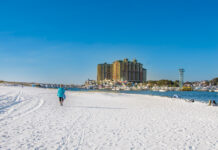
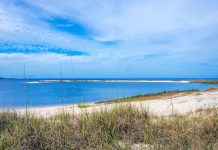
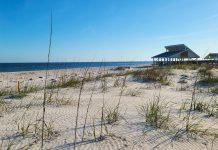
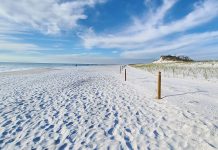
Both beaches on Garden Key give you genuinely soft, white, natural sand, closer in quality to Bahia Honda than to anything on the mainland Keys, and the remoteness out here has kept it that way. South Beach is the wider, softer, more walkable of the two, easy for laying out a towel or building a sandcastle once you add a little water. North Beach, tucked behind the fort, runs a bit rougher underfoot with old brick and construction debris mixed into the sand, a small trade for the quieter crowd you get back there.
The water is, honestly, some of the best I have seen anywhere in Florida. On a calm day it runs a vivid turquoise with visibility that can stretch sixty to eighty feet, especially in winter and spring. Entry is gradual and shallow at both beaches, genuinely easy for a first snorkel, and the fort’s moat wall running right along the shoreline turns the whole swim into an underwater tour of coral and fish rather than just a dip in the ocean. There are no lifeguards anywhere in the park, and winter cold fronts can bring real chop, so check conditions before you commit to a long swim.
-
Walkability. Genuinely soft and easy at South Beach. North Beach is walkable too, just a little rougher underfoot near the old debris.
-
Softness & Playability. Soft, fine, and sandcastle-ready at South Beach, among the best in this entire Keys series.
-
Barefoot Comfort. Excellent at South Beach. Bring water shoes for North Beach and for the coaling dock pilings further out.
-
Swimmability. Calm, shallow, and easy at both beaches, with exceptional water clarity for snorkeling straight off the sand. No lifeguards on duty anywhere in the park.
Want the full geology, grain composition, and the complete sand and water condition ratings? I broke it all down separately in Sand & Shore: Dry Tortugas National Park.
Dogs & Pet Accessibility at Dry Tortugas National Park
Are Dogs Allowed on the Sand? RESTRICTED.
Getting a pet out here at all is the real obstacle, not the park’s own rules. The Yankee Freedom ferry, the way almost every visitor reaches Dry Tortugas, does not allow pets beyond certified service animals, full stop. If you arrive by private boat instead, leashed pets are welcome across Garden Key, including its beaches, just not inside Fort Jefferson and not on any other island in the park.
Where Dogs Are Allowed
- ✓Garden Key’s grounds and beaches, leashed pets welcome if you arrive by private boat with your own permit.
- ✓Garden Key’s campground, leashed pets welcome at your site.
Where Dogs Are NOT Allowed
- ✗The Yankee Freedom ferry, no pets permitted at all except certified service animals.
- ✗Fort Jefferson’s interior, no pets permitted anywhere inside the fort.
- ✗Bush Key, Loggerhead Key, and every other island in the park, no pets permitted.
Paws on the Ground Reality
There is no fresh water anywhere in this park, for people or pets, so if you do manage to bring a leashed dog out on a private boat, you are responsible for every drop it drinks all day. There is no shade beyond the fort itself and the sand gets genuinely hot by midday, so plan around early morning or late afternoon if a pet is with you. The old brick and coral rubble scattered near North Beach is not especially paw-friendly either, so South Beach is the kinder option of the two.
Realistically, this is not a park most pet owners will ever bring a dog to, since the only practical way most people get here, the ferry, prohibits it entirely. Seaplane charters do not accommodate pets either. This section exists mainly for the rare private boater traveling with a leashed dog.
Crowd Levels and the Overall Feel of Dry Tortugas
The rhythm of a day here is almost entirely dictated by the ferry schedule. Roughly two hundred day-trip visitors arrive between the seaplane’s early flights and the ferry’s mid-morning arrival, the island stays busy through early afternoon, and then it empties fast once the return ferry departs. If you want to experience genuine solitude here, the only ways are camping or booking the very last seaplane flight of the day.
Season affects this park more directly than almost anywhere else in this guide series, since weather determines whether you get here at all:
- Winter, November through April: rougher seas and stronger winds, but noticeably thinner crowds and generally the driest weather
- Spring, March through May: the best overall window, calm seas, excellent 60 to 80 foot visibility, and the sooty tern colony at full spectacle on Bush Key
- Summer, June through November: hot, humid, and squarely inside hurricane season, with real potential for delayed or canceled trips
- Fall: hurricane risk peaks, but the shoulder weeks bring excellent migratory bird watching and thinner crowds for those willing to watch the forecast closely
Who Is Dry Tortugas Really For?
✓ Who Will Love Dry Tortugas
-
History lovers who want to walk through a genuine, largely intact Civil War fort and prison, not just read about one
-
Snorkelers and divers chasing some of the clearest water and healthiest reef structure covered anywhere in this guide series
-
Serious birders who want to see the only sooty tern colony in the continental United States
-
Campers chasing the most remote, darkest-sky camping experience available in Florida
-
Anyone who wants to say they have been to one of the least visited and hardest to reach national parks in the country
-
Photographers chasing a genuinely unique subject, a fortress rising straight out of open ocean
✗ Consider Another Beach If…
-
You are prone to seasickness and cannot fly. The ferry ride is two and a half hours each way over open water that is not always calm
-
You are traveling with a dog and want it with you. Pets are not allowed on the ferry at all, service animals excepted
-
You have a tight, inflexible schedule. Weather cancellations are real here, more so than anywhere else in this guide series
-
You are on a tight budget. This is, by a wide margin, the most expensive destination covered across my Florida Keys guides
-
You want to collect shells or souvenirs from the beach. Nothing may be removed from the park, by law
Things to Do at Dry Tortugas National Park
Between the fort, the water, and the birds, this park fills every hour you can spend here.
-
Touring Fort Jefferson. A free ranger-led tour timed to the ferry’s arrival, plus a self-guided route covering the gun decks, the parade ground, and Dr. Samuel Mudd’s cell.
-
Snorkeling the Moat Wall. The best and most accessible snorkeling in this entire guide series, with coral, sponges, and fish visible from the surface in shallow, clear water.
-
Patch Reef and Coaling Dock Snorkeling. Swim fifty to eighty yards out from the fort for healthy patch reefs, or head to the old coaling dock pilings for grouper, barracuda, tarpon, and the occasional shark.
-
Birdwatching. The sooty tern colony on Bush Key, visible from the fort’s upper gun deck, plus nearly 300 documented species and a genuinely excellent spring migration window.
-
Sea Turtle Spotting. Loggerhead, green, and hawksbill turtles nest here from May through October, and the surrounding water is a year-round feeding habitat.
-
Stargazing. Available only to campers and last-flight visitors, with genuinely dark, light-pollution-free skies seventy miles from the nearest town.
-
Kayaking to Loggerhead Key. A three-mile paddle across open water to see the Windjammer Wreck, a snorkel-able 1901 shipwreck, available to campers who arrange kayak transport in advance.
-
Camping. Primitive, first-come sites steps from the beach and the fort, with a maximum three-night stay and a hard cap of ten campers a day via the ferry.
Local Knowledge and Practical Advice
A few things I picked up on my own trip out here, flying in and spending the day between the fort and the water:
-
Book the ferry or seaplane well in advance, especially in peak season. Both sell out weeks ahead, and camping spots go months in advance given the ten-person daily cap.
-
Bring everything you will need for the day. There is no food, water, or fuel sold anywhere in the park beyond what the ferry provides its own passengers.
-
Your cell phone will not work here. Tell people at home not to expect updates until you are back on the ferry or seaplane heading in.
-
Pack seasickness medication if you are taking the ferry and are at all prone to it. It is two and a half hours each way over open Gulf water that is not always calm.
-
Nothing leaves the island, not shells, not coral, not old brick. Removing anything from a national park is illegal, so bring a camera, not a bag.
-
Bush Key is closed most of the year, but you have not missed the colony. Climb to the fort’s upper gun deck for a full view and the full sound of the sooty terns even during the closure.
-
Book the earliest or latest seaplane flight if you want the island with fewer people. The window right before the ferry arrives and right after it leaves is genuinely the quietest time to be here.
-
Leave pets at home unless they are certified service animals. They are not permitted on the ferry, and even on a private boat, they cannot enter the fort or any island besides Garden Key.
-
There is real shade only inside and around the fort. Bring reef-safe sunscreen and reapply often, since the open beaches and water offer none.
-
Check the forecast in the days leading up to your trip, not just the morning of. Weather cancellations happen here more than anywhere else in this guide series, and refund and rebooking policies vary by operator.
Where to Stay for a Dry Tortugas Trip
There is no lodging on Dry Tortugas itself beyond primitive camping, so where you stay comes down to your home base in Key West and whether you are camping on Garden Key.
Key West as Your Home Base
Nearly every visitor stages a Dry Tortugas trip from Key West, where the ferry departs from the Key West Seaport and the seaplane departs from Key West International Airport. I cover Key West lodging in detail in my Key West beaches guide, and staying anywhere near the Historic Seaport puts you closest to the early ferry check-in.
Camping on Garden Key
The park’s own primitive campground is the only way to sleep inside Dry Tortugas National Park itself, available exclusively through the Yankee Freedom ferry, with a hard cap of ten campers a day and stays limited to three nights.
Booking Early Departures
If a day trip is your plan, book the earliest ferry or seaplane departure available. It maximizes your time on the island and gets you into the water before the heat and the crowds both peak.
What Makes Dry Tortugas Different From Other Florida Keys Destinations
Dry Tortugas is not really in competition with anywhere else in this guide series, and the differences are worth stating plainly.
A National Park, not a state park or city beach
Every other stop covered across my Florida Keys guides is a state or municipal park. Dry Tortugas is a full National Park, with the funding, protection, and legal restrictions on removing natural materials that come with that designation.
Accessible only by boat or plane
Nothing else in this entire guide series requires this level of planning, cost, or weather flexibility just to set foot on the sand. That difficulty is precisely why so few people ever make the trip.
History you can walk through, not just read about
Fort Jefferson’s Civil War prison history, including Dr. Samuel Mudd’s actual cell, gives this park a depth that the roadside beaches and even Pennekamp cannot match.
Dry Tortugas vs. Other Florida Keys Beaches and Parks
vs. Bahia Honda State Park
Bahia Honda has comparable sand quality and is dramatically easier and cheaper to reach. Choose Bahia Honda for a normal beach day, Dry Tortugas when the fort, the history, and the isolation matter as much as the water.
vs. John Pennekamp Coral Reef State Park
Pennekamp offers easier, cheaper boat access to reef snorkeling close to shore. Dry Tortugas offers better visibility, more marine life, and a genuine fort to explore on the same trip, at a significantly higher cost and time commitment.
vs. Key West Beaches
Key West’s beaches are convenient, walkable, and attached to a real city. Dry Tortugas trades every bit of that convenience for isolation, history, and water clarity that Key West simply cannot offer from its own shoreline.
vs. Everglades National Park
Everglades, administered by the same superintendent as Dry Tortugas, offers freshwater wetlands, alligators, and an entirely different ecosystem, reachable by car. Dry Tortugas offers saltwater, coral, and a fort, reachable only by water or air.
Bottom line: Nothing else in this guide series asks as much of you to get there, and nothing else pays it back quite the way Dry Tortugas does. If you can make the trip work, financially and logistically, this is the single best day I have had anywhere in the Florida Keys.
Dry Tortugas National Park: Frequently Asked Questions
How do you get to Dry Tortugas National Park?
Only by ferry, seaplane, or private boat. The Yankee Freedom III ferry takes about two and a half hours each way from Key West, while Key West Seaplane Adventures makes the trip in roughly 40 minutes.
How much does it cost to visit Dry Tortugas?
The ferry runs roughly $220 to $235 per adult round trip, including breakfast, lunch, a guided fort tour, and snorkel gear. The seaplane runs from about $494 for a half day up to $868 for a full day, plus the $15 per person national park entrance fee, which is included in the ferry price.
Can you camp at Dry Tortugas National Park?
Yes, at a small primitive campground on Garden Key, but only reachable by the ferry, which caps camping at ten people per day and limits stays to three nights. Reservations sell out extremely far in advance.
Why is Bush Key closed?
Bush Key protects the only sooty tern nesting colony in the continental United States, and the island closes to visitors for most of the year, typically reopening sometime between mid-October and mid-January, to protect the nesting birds.
Is the snorkeling good at Dry Tortugas?
Yes, genuinely excellent, with 60 to 80 feet of visibility common in winter and spring and healthy coral, fish, and even nurse sharks along the fort’s moat wall and the nearby coaling dock pilings.
Can you bring your dog to Dry Tortugas National Park?
Only certified service animals are permitted on the ferry. Leashed pets are allowed on Garden Key itself if you arrive by private boat, but not inside Fort Jefferson or on any other island in the park.
Is there food or water available on the island?
No, aside from the breakfast and lunch the ferry provides its own passengers. There are no restaurants, shops, or fresh water sources anywhere in the park, so bring everything you will need for the day.
Can you keep shells or coral you find at Dry Tortugas?
No. Removing any natural or cultural material from a national park, including shells, coral, and old brick, is prohibited by law. Take photographs instead.
What is the best time of year to visit Dry Tortugas?
Spring, roughly March through May, offers the best combination of calm seas, excellent water visibility, and the sooty tern colony at full activity on Bush Key.
How much time do you actually get on the island on a day trip?
Around four hours on the ferry’s standard schedule, or between two and a half and six and a half hours on a seaplane, depending on whether you book the half day or full day option.
Patti’s Perspective: My Honest Take on Dry Tortugas
I took a small seaplane out of Key West for this one, and I will tell you, the flight alone was worth the price of admission. Watching the water shift from Key West’s harbor blue to that impossible, clear turquoise as the fort came into view below the wing is a memory I still pull up when I need to remember why I do this work in the first place.
Once I landed, I made a choice I would make again every time. I walked the front of the fort first, before the water pulled my attention away entirely. The scale of that building, the cannons still facing out to sea, Dr. Mudd’s cell above the entrance, all of it settled into me before I ever put a mask on. Then I went around to the back and snorkeled the quieter side of the moat wall, away from the crowd still working through the fort tour, and it was without question one of the most beautiful things I have done researching this entire Florida Keys series.
My honest caveat, and I mean this warmly: this trip takes real planning, real money, and a real willingness to let the weather have the final say. None of that changed my mind about it. If you have already spent time on the easier beaches earlier in this Florida Keys series and you are wondering whether Dry Tortugas is worth the extra effort, it is. It was, without a doubt, the best day of the entire trip.
My verdict: 9/10. The most exceptional, most difficult to reach, and most memorable stop in this entire Florida Keys guide series. The beaches alone would earn a strong score. The fort, the history, the birds, and some of the clearest water in Florida make this the one Keys destination I tell people not to skip, budget and schedule permitting.
Want to Live by the Water?Nobody lives on Dry Tortugas itself outside of the small rotation of park rangers stationed at Fort Jefferson, but Key West, the launch point for every visit here, offers some of the most distinctive waterfront real estate in the country for anyone drawn to this remote corner of Florida.The market in Key West draws retirees, remote workers, and investors who want island life within reach of the Gulf and Atlantic both, with Dry Tortugas as the kind of once-a-year trip that makes the location worth it on its own. Pricing runs among the highest in the Florida Keys given the island’s limited land and year-round demand.If living on the water is something you are considering, whether full time, part time, or as an investment, it is worth exploring what is available in this area.Explore Waterfront Living at LiveByTheWater.com
Real estate referral partner