




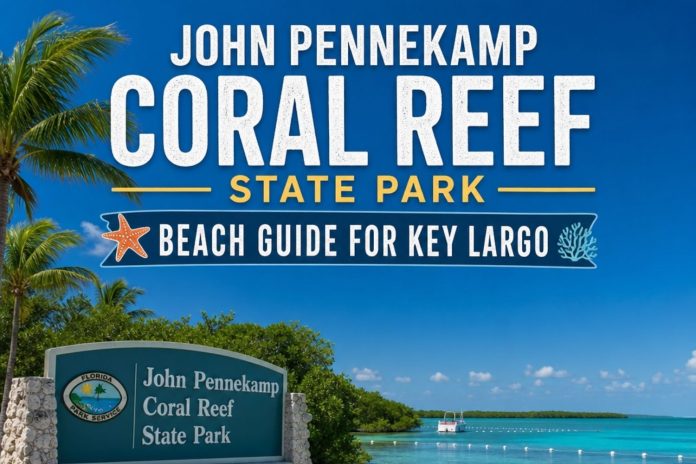
John Pennekamp Coral Reef State Park, Key Largo
I need to set your expectations correctly before you drive in. John Pennekamp Coral Reef State Park has two small, protected beaches, and neither one is why you come here. This is America’s first undersea park, seventy nautical square miles of it, and the entire reason to walk through that gate is what happens once you get in a boat or put your face in the water. I am going to tell you honestly what the beaches actually offer, and then spend the rest of this guide on the reason this park has mattered to Florida diving and snorkeling for more than sixty years.
Named for John D. Pennekamp, a Miami newspaper editor whose advocacy helped protect this stretch of reef, the park sits at mile marker 102.5 on Key Largo and extends three miles into the Atlantic to protect a portion of the only living coral barrier reef in the continental United States. The two beaches, Cannon Beach and Far Beach, sit inside calm, protected Largo Sound rather than directly on the open ocean, which tells you everything about what this park is actually built around.
In this guide I am walking you through both beaches honestly, then into what actually fills a day here: the reef tours, the shore snorkeling, the nature trails, and the camping. If you are looking for a real, open-sand beach day, I would point you toward Bahia Honda State Park further south instead. If you are looking for the best reason to get in the water anywhere in the Upper Keys, you are in exactly the right place.
The Vibe and Culture at John Pennekamp Coral Reef State Park
A Reef Park That Happens to Have a Beach
Every part of how this park is laid out tells you what it actually prioritizes, and it is not sunbathing.
Pennekamp was established in 1963, growing out of John Pennekamp’s advocacy work protecting Florida’s coral reef alongside his role in establishing Everglades National Park. The park protects roughly 178 nautical square miles of coral reef, seagrass beds, and mangrove swamp between the park itself and the adjacent Florida Keys National Marine Sanctuary, and the entire visitor experience is designed around getting people safely into that water, whether by glass-bottom boat, snorkel tour, scuba trip, or kayak.
The crowd here reflects that mission. You will see families booking their first glass-bottom boat tour, serious divers heading to the marina for a two-tank trip to Molasses Reef, and kids pressing their faces against the 30,000-gallon aquarium in the visitor center before they ever touch the water themselves. This is not a beach club scene. It is closer to a working marine research and education center that happens to also let you swim.
Weekends and holidays bring real crowds, especially to the beaches and the boat tour lines, and the park will temporarily close its gates once the 351 parking spots fill, usually by early afternoon. Weekdays, particularly outside of peak winter season, run dramatically calmer. Hurricane season affects boat tour schedules more than it affects most Keys attractions, since the reef trips depend entirely on calm water and good visibility, so I always recommend calling ahead if you are visiting between June and November with a boat tour as the main plan.
What’s Actually Here: Beaches, Reef, and Trails
Here is every part of Pennekamp worth planning around, beach and otherwise, since the beaches alone do not tell the real story of this park.
Cannon Beach
Main Beach Near the Visitor Center · Largo Sound
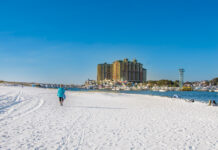
Cannon Beach sits right by the visitor center and gets its name honestly, cannons from an early Spanish shipwreck rest on the sand and just offshore, giving the whole beach a small dose of history before you even get in the water. The sand here is soft and fine close to the tree line, but the bottom turns rocky fast as you wade in, and the swimming area itself is small, roped off, and genuinely calm since it sits inside Largo Sound rather than on the open Atlantic.
This is the busier of the two beaches, since it sits closest to the visitor center, the aquarium, and the snack counter. Families with young kids dominate the crowd, wading in the shallow, protected water and snorkeling out toward the shipwreck remnants about a hundred feet offshore. I would call this a kids’ introduction beach more than an adult sunbathing beach, and it does that job well.
I send first-time snorkelers here specifically, since the calm, shallow water and the shipwreck give you an easy, low-stakes way to get comfortable with a mask and fins before committing to a full reef boat trip. Bring water shoes, since the rocky bottom will not be kind to bare feet.
Far Beach
Palm-Lined Beach · Wheelchair Accessible Shoreline
Far Beach sits a short walk from Cannon Beach and offers a genuinely different feel, quieter, more shaded by palms, and built more for relaxing than for snorkeling. A Mobi-Mat runs across the sand to the water, making this the more wheelchair-accessible of the two beaches, and the swimming area here stays just as calm and protected as Cannon Beach’s, tucked inside the same sheltered sound.
The crowd here skews slightly older and calmer than Cannon Beach, people who came to sit under a palm tree with a book rather than snorkel to a shipwreck. It rarely feels as packed, even on a busy day, since most visitors gravitate toward Cannon Beach’s proximity to the visitor center and the shipwreck draw.
If you have someone in your group who wants shade and a calm swim without the crowd or the rocky snorkel entry, this is where I send them while the rest of the group heads to Cannon Beach or out on a boat tour.
The Reef, by Boat
Molasses Reef & the Christ of the Abyss Statue · The Real Reason to Visit
Neither beach at Pennekamp gets you to the actual reef, and I want to be completely direct about that. The living coral reef this park is named for sits several miles offshore, and the only way to see it properly is by boat, whether that is the park’s glass-bottom boat tour, a guided snorkel trip, or a scuba charter. This is where the real Pennekamp experience happens, over 600 species of fish and 70 species of coral spread across the park’s protected waters.
Boat tours depart from the park’s own docks multiple times a day, year round, weather permitting. The glass-bottom trips run about two and a half hours with roughly ninety minutes actually over the reef, and the snorkel trips follow a similar schedule. Divers head out to sites like Molasses Reef, and many trips include a stop near the submerged Christ of the Abyss statue, an eight-foot bronze figure resting about twenty-five feet underwater that has become one of the most photographed dive sites in the Keys.
I will say this plainly: if you only do one thing at this park, make it a boat trip to the reef, not a beach day. The beaches are a pleasant, calm place to cool off before or after. The reef is the entire reason this park exists.
Mangrove and Hammock Nature Trails
Boardwalk & Hardwood Hammock Loops · Near the Visitor Center
Pennekamp maintains a small network of short, easy trails that most visitors completely skip on their way to the beach or the boat dock, and that is a mistake if you have even thirty spare minutes. The Mangrove Trail is a boardwalk loop with an observation tower giving you a real look at the estuary ecosystem the whole park depends on, while the Wild Tamarind Trail and the Grove Trail wind through tropical hardwood hammock, the Grove Trail ending at a cultural site replanted with tropical fruit trees by early Key Largo pioneers.
The crowd here is thin to nonexistent most days, since almost everyone at this park has their attention on the water. Birders, families waiting between boat tour departures, and the occasional serious hiker make up most of what little foot traffic these trails see.
I genuinely like walking the Mangrove Trail boardwalk before a snorkel trip, since it slows you down and gives you a sense of the ecosystem you are about to swim through. Watch for American crocodiles, rare but occasionally spotted in the mangrove creeks and the marina, along with the snakes, lizards, and iguanas that call this hammock home.
John Pennekamp Coral Reef State Park: Expert Scores Across 11 Categories
These scores judge the park honestly as a beach destination first, with the reef experience noted separately since it operates on its own scale entirely.
Sand Quality
4/10
Coarse, rocky underfoot once you wade in, and genuinely secondary to why this park exists. Do not come expecting soft, open sand.
Hiking & Beach Walking
5/10
Short, easy nature trails through mangrove and hammock, but neither beach offers real open-shoreline walking distance.
Shelling
3/10
Minimal at both beaches. This park’s marine life belongs offshore on the reef, not scattered along the sand.
Water Conditions
7/10
Calm and protected at both beaches inside Largo Sound, though not the crystal-clear open-water color you will find offshore at the actual reef.
Scenery & Natural Beauty
7/10
Genuinely lovely mangrove and hammock scenery on land, with the real showstopper scenery reserved for the reef offshore.
Birding & Wildlife
7/10
Shorebirds, pelagic birds, occasional manatee or crocodile sightings near the marina, and over 600 fish species offshore make this park a genuine wildlife destination.
Family Friendliness
8/10
Calm, shallow, protected beaches plus an aquarium and easy boat tours make this one of the more manageable state parks in the Keys with young kids.
Dog Friendliness
4/10
Dogs are permitted in day-use areas on a leash but are not allowed on the beaches or in the water, limiting how much of the park you can actually enjoy together.
Solitude & Peace
5/10
The nature trails stay genuinely quiet, but the beaches and the boat dock area get busy fast on weekends and holidays.
Entertainment & Nightlife
2/10
This is a day-use nature and reef park, not a nightlife destination. The park closes at sundown, full stop.
Parking & Beach Access
6/10
351 parking spots are usually enough, but the park temporarily closes its gates once full, typically by early afternoon on busy weekends.
Pennekamp Sand & Water
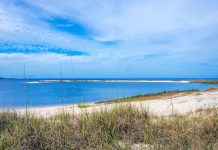
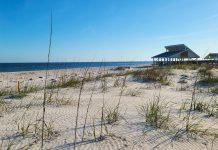
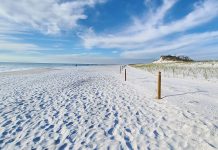
Do not come to Cannon Beach or Far Beach expecting a soft, wide, postcard beach, since neither one was built to be that. Both stay narrow and a little coarse, soft enough near the tree line for a beach chair and a picnic, but the sand turns rockier fast as you reach the waterline, especially at Cannon Beach where the old shipwreck sits just offshore. Far Beach is the gentler of the two, with a Mobi-Mat laid across the sand for easier access to the water.
The water itself is calm and shallow at both beaches, protected inside Largo Sound rather than sitting on the open Atlantic, which makes it easy and safe for a first snorkel or a supervised swim with kids. Entry is gradual everywhere, no real surf, and no lifeguards on duty at either beach. The real color and clarity people come to Pennekamp for is out on the reef itself, not at the beach, so treat these two swim areas as a calm staging point rather than the main event.
-
Walkability. Short and narrow at both beaches. This is not a long beach-walking park, the walking here happens on the nature trails instead.
-
Softness & Playability. Soft enough near the tree line for a picnic blanket, coarser and rockier right at the water’s edge, particularly at Cannon Beach.
-
Barefoot Comfort. Reasonable at Far Beach, rougher at Cannon Beach once you are in the water. Water shoes are worth packing if snorkeling is on your agenda.
-
Swimmability. Calm and protected at both beaches, easy for beginners and kids. No lifeguards on duty, so keep a close eye on young swimmers.
Want the full geology, grain composition, and the complete sand and water condition ratings? I broke it all down separately in Sand & Shore: John Pennekamp Coral Reef State Park.
Dogs & Pet Accessibility at John Pennekamp Coral Reef State Park
Are Dogs Allowed on the Sand? RESTRICTED.
Leashed dogs are genuinely welcome throughout most of this park’s dry land, just not on the beach or in the water, which limits how much of a Pennekamp day you can actually spend together.
Where Dogs Are Allowed
- ✓Day-use picnic areas, leashed dogs welcome throughout.
- ✓The Mangrove, Wild Tamarind, and Grove nature trails, leashed dogs welcome on all three.
- ✓The campground, leashed dogs welcome at your campsite.
Where Dogs Are NOT Allowed
- ✗Cannon Beach, no dogs on the sand or in the water.
- ✗Far Beach, no dogs on the sand or in the water.
- ✗The marina and boat tour docks, dogs are not permitted on tour boats or dive charters.
Paws on the Ground Reality
The nature trails here are genuinely good on-leash walking, shaded hardwood hammock and a mangrove boardwalk that stays cooler than open sand, so this is not a park where your dog is stuck waiting in a hot parking lot while you snorkel. Ground underfoot on the trails is mostly packed earth and a little loose gravel near the hammock, comfortable enough for most dogs, and bring your own water regardless since pet fountains are not part of the park’s setup.
Keep dogs away from the marina edge and any mangrove creek regardless of posted pet rules. Warning signs around the park note the occasional presence of American crocodiles in these waters, and while sightings are rare, that stretch of shoreline is not the place to let a leash go slack. Enforcement of the leash rule is standard state park practice, consistent rather than heavy-handed, and rangers will remind you if a dog ends up off leash near the trails or picnic grounds.
Crowd Levels and the Overall Feel at Pennekamp
This park draws a genuinely mixed crowd built around what people came to do, snorkel, dive, tour the aquarium, or simply cool off at the beach between activities. Weekends and holidays bring real congestion, both on the beaches and at the boat tour ticket counter, and the park has a hard limit of 351 parking spots that it enforces by temporarily closing the gate once full.
Season here tracks the rest of the Upper Keys closely, with one added wrinkle: reef visibility and boat tour reliability both depend heavily on weather.
- Winter: the busiest season, driest weather, and generally the best visibility for reef tours
- Spring: a good balance of manageable crowds and improving water clarity as winter fronts taper off
- Summer: hot, humid, and prone to afternoon storms that can delay or cancel boat tours with little notice
- Fall: hurricane season peaks here, directly affecting boat tour schedules, so call ahead if a reef trip is the main plan
Who Is Pennekamp Really For?
✓ Who Will Love Pennekamp
-
Snorkelers and divers who want boat access to the only living coral barrier reef in the continental United States
-
Families wanting a calm, protected first snorkel experience for kids before a bigger reef trip
-
Anyone who wants to see the Christ of the Abyss statue without booking a specialty dive charter
-
Paddlers looking for calm mangrove tunnel kayaking close to Key Largo
-
Campers wanting full-hookup sites within walking distance of a marina and reef tours
-
History-curious visitors interested in the 1715 Spanish shipwreck remnants near Cannon Beach
✗ Consider Another Beach If…
-
You want a real open-sand beach day. Head to Bahia Honda instead, this park’s beaches are secondary to its reef
-
You are traveling with a dog and want beach or water access together. Dogs are not allowed on the beaches or in the water here
-
You are only interested in lounging, not swimming or snorkeling. This park will feel underwhelming if the water is not part of your plan
-
You want guaranteed plans regardless of weather. Boat tours here depend entirely on conditions and can be delayed or canceled
-
You are a serious sheller. This park’s marine life belongs offshore, not scattered on its small beaches
Things to Do at John Pennekamp Coral Reef State Park
The beaches are just the starting point here. This is what actually fills a day at Pennekamp.
-
Glass Bottom Boat Tours. A 65-foot high-speed catamaran runs three trips daily, year round, to Molasses Reef, giving non-swimmers and families a real look at the reef without getting wet.
-
Snorkel Tours. Multiple daily departures include roughly ninety minutes of actual reef time, with the option to visit the submerged Christ of the Abyss statue depending on conditions.
-
Scuba Diving. A PADI Five-Star Gold Palm dive shop on site offers everything from a one-day resort course to full certification, with two-tank boat trips to sites like Molasses Reef.
-
Kayaking and Canoeing. An extensive network of mangrove streams and tunnels offers calm, protected paddling straight from the park, with rentals available at the marina.
-
Shore Snorkeling at Cannon Beach. The shallow, protected swimming area gives beginners a chance to snorkel to a real, if modest, Spanish shipwreck site about a hundred feet offshore.
-
Visitor Center Aquarium. A 30,000-gallon saltwater aquarium with live coral and reef fish, plus smaller tanks and a nature theater, makes for a genuinely worthwhile stop even on a rainy day.
-
Camping. Full-hookup campsites sit within walking distance of the marina and boat docks, giving campers early access to boat tours before the day-use crowds arrive.
-
Nature Trails. The Mangrove Trail boardwalk and the Wild Tamarind and Grove Trails through tropical hardwood hammock give you an easy, uncrowded way to see the park’s ecosystem on foot.
Local Knowledge and Practical Advice
A few things I have picked up visiting this park more times than I can count:
-
Arrive early on weekends and holidays. The park has only 351 parking spots and will temporarily close the gate once full, usually by early afternoon.
-
Call ahead to confirm boat tours during hurricane season. Reef trips depend entirely on weather and water conditions, and cancellations happen with little notice between June and November.
-
Bring water shoes for Cannon Beach specifically. The rocky bottom near the shipwreck site is not comfortable barefoot, even for adults.
-
Book camping well ahead, especially in winter. Full-hookup sites near the marina go fast during peak snowbird season.
-
Watch for American crocodiles near the marina and mangrove creeks. Sightings are rare but real, and posted warning signs mean exactly what they say.
-
Leave the dog at home if the water is part of your plan. Dogs are allowed on a leash in day-use areas but not on the beaches or in the water anywhere in the park.
-
The glass-bottom boat is the best option for non-swimmers. It still gets you a real, close look at the reef without requiring anyone to get in the water.
-
Bring your own refillable water bottle. The park encourages it to cut down on single-use plastic, and the visitor center has stations to refill.
-
The nature trails are shaded and genuinely worth the thirty minutes. Most visitors skip them entirely on their way to the water, and they are one of the quietest parts of the whole park.
-
The entrance fee runs around eight dollars per vehicle plus a small per-person charge. Reef tours, rentals, and dive trips are all priced separately on top of admission.
Where to Stay Near John Pennekamp Coral Reef State Park
Key Largo has a wide enough range of lodging that where you stay usually comes down to how early you want to be at the park gate.
Key Largo Gulf and Ocean-Side Resorts
Properties along US 1 near mile marker 100 to 106 put you minutes from the park entrance, several offering their own dock access and dive boat pickup for guests planning a full diving-focused stay.
Dive-Focused Lodges
A handful of Key Largo properties cater specifically to the diving community, with gear rinse stations, tank storage, and early boat departures built into the stay.
Camping Inside the Park
Pennekamp’s own campground offers full-hookup sites within walking distance of the marina, the best option if reef tours are your main priority and you want to be first in line each morning.
Lower-Cost Mainland Options
Homestead and Florida City, about a thirty-minute drive north, offer noticeably cheaper hotel options for visitors willing to commute in for a day trip rather than stay directly in Key Largo.
What Makes Pennekamp Different From Other Florida Keys Beaches
Pennekamp is not really competing in the same category as most beaches in this guide, and the differences are worth naming directly.
The only park in this guide built entirely around a reef
Every other beach covered in my Florida Keys guides treats the water as a backdrop. Pennekamp treats it as the entire point, with beaches that exist specifically to stage swimmers for what happens offshore.
Boat access to the Christ of the Abyss
Few state parks in the country let you see a submerged bronze statue on a routine snorkel or glass-bottom boat trip. That kind of accessible, guided reef experience does not exist at the roadside beaches further down the Keys.
America’s first undersea park
Pennekamp’s 1963 designation predates most of Florida’s modern marine conservation infrastructure, and that history shapes everything from the visitor center’s aquarium to the ranger-led programs still running today.
Pennekamp vs. Other Florida Keys and Florida Beaches
vs. Bahia Honda State Park
Bahia Honda wins outright on open sand and beach space. Choose Pennekamp for the reef and the boat tours, Bahia Honda when the beach itself needs to carry the day.
vs. Key West Beaches
Fort Zachary Taylor offers the best comparable shore snorkeling to Pennekamp’s Cannon Beach, but Pennekamp’s boat access to Molasses Reef and the Christ of the Abyss goes well beyond what any Key West beach offers from shore.
vs. the Upper and Middle Keys Beaches
The small roadside beaches from Harry Harris Park to Sombrero offer calmer, more casual stops with no entrance fee. Pennekamp asks more of you, an entrance fee and often a boat tour booking, but delivers a genuinely different caliber of underwater experience in return.
Bottom line: Judge Pennekamp by its beaches and you will leave unimpressed. Judge it by what it was actually built to do, put ordinary visitors safely in front of the only living coral barrier reef in the continental United States, and it becomes one of the most worthwhile stops in the entire Florida Keys.
John Pennekamp Coral Reef State Park: Frequently Asked Questions
Does John Pennekamp Coral Reef State Park have a real beach?
It has two small, protected beaches, Cannon Beach and Far Beach, both inside calm Largo Sound rather than on the open ocean. Neither is a wide, open-sand beach, and both exist mainly to stage swimmers for snorkeling and boat tours.
How much does it cost to enter John Pennekamp Coral Reef State Park?
Admission runs around eight dollars per vehicle plus a small per-person charge, separate from any reef tour, snorkel trip, or dive charter, which are all priced individually.
Can you snorkel from the beach at Pennekamp?
Yes, at Cannon Beach, where a shallow, protected swimming area leads out toward the remnants of a 1715 Spanish shipwreck about a hundred feet offshore. The bottom is rocky, so water shoes are recommended.
How do you see the Christ of the Abyss statue?
The submerged bronze statue sits roughly twenty-five feet underwater near Key Largo Dry Rocks and is typically visited on a guided snorkel or dive boat trip, weather and conditions permitting.
Are dogs allowed at John Pennekamp Coral Reef State Park?
Dogs are allowed on a leash in day-use areas but are not permitted on either beach or in the water anywhere in the park.
Is Pennekamp good for kids?
Yes, particularly the calm, shallow, protected swimming at Cannon and Far Beach, the aquarium at the visitor center, and the accessible glass-bottom boat tour, which lets even non-swimmers see the reef.
Do boat tours run every day?
Glass-bottom boat and snorkel tours run multiple times daily, 365 days a year, weather permitting. Storms, particularly during hurricane season, can delay or cancel trips with limited notice.
Can you camp at John Pennekamp Coral Reef State Park?
Yes, the park offers full-hookup campsites within walking distance of the marina, popular with divers and snorkelers who want early access to the boat docks each morning.
What is the water like at the Pennekamp beaches?
Calm and protected, since both beaches sit inside Largo Sound rather than on the open Atlantic. Water clarity is moderate at the beaches themselves and improves significantly once you are out on the reef.
Is Pennekamp worth visiting if I am not a snorkeler or diver?
Yes, largely for the glass-bottom boat tour, the visitor center aquarium, and the nature trails, all of which let you experience the park’s reef and ecosystem without getting in the water.
Patti’s Perspective: My Honest Take on Pennekamp
Swimming above a reef for the first time as a kid is one of the clearest memories I have from growing up boating in these waters, and every time I come back to Pennekamp, some version of that feeling shows up again. This park is not trying to be a beach, and once I stopped grading it like one, I started appreciating it for exactly what it is, the easiest, most accessible way for an ordinary visitor to see the reef that makes this whole stretch of Florida different from anywhere else in the country.
I will tell you honestly that Cannon Beach itself did not wow me. Small, a little rocky, busier than I expected on a weekday morning. But the shipwreck snorkel just offshore did, and watching a family near me help their kid put on a mask for the very first time in that shallow, protected water reminded me why a beach like this, imperfect as it is, still matters.
My honest caveat: if you show up expecting a real beach day, you will leave disappointed, and that disappointment is entirely avoidable if you plan around what this park actually offers instead. Book the boat tour. Walk the mangrove trail. Let the beach be the calm, easy place you rinse off and cool down between the parts of Pennekamp that actually earned its reputation.
My verdict: 6/10 as a beach, 9/10 as a reef park. The beaches alone would not justify a special trip. The reef access, the shipwreck snorkel, the Christ of the Abyss, and the nature trails absolutely do. Come here with a boat tour booked, not just a towel, and this park earns every bit of its reputation.
Want to Live by the Water?Key Largo offers some of the most dive-oriented waterfront real estate in the Florida Keys, from canal-front homes with private docks to condos within a short boat ride of Pennekamp’s marina and the reefs beyond it.The market here draws serious divers and boaters, retirees who want quick reef access, and remote workers looking for a slower island pace within commuting distance of Miami. Pricing tends to run lower here than in Islamorada or Key West, making Key Largo one of the more accessible entry points into Keys waterfront living.If living on the water is something you are considering, whether full time, part time, or as an investment, it is worth exploring what is available in this area.Explore Waterfront Living at LiveByTheWater.com
Real estate referral partner