

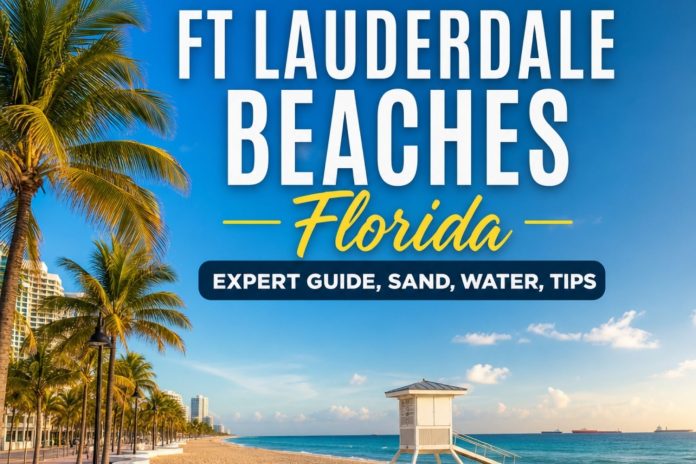
Fort Lauderdale Beaches, Florida
I grew up going to this beach, and I’ve watched it become almost a different place. Fort Lauderdale Beach spent twenty five years as the loudest spring break address in the country, and then it spent the decades since quietly becoming something else entirely. Both versions are part of the same seven miles of sand, and I think you need to understand the first one to appreciate what the second one actually is.
Fort Lauderdale Beach runs roughly seven miles along A1A and Fort Lauderdale Beach Boulevard, from the Sunrise Boulevard area in the north down through the Las Olas Boulevard corridor and Bahia Mar’s marina district, ending where Port Everglades cuts the coastline off from the wild, mangrove-lined shoreline of Dr. Von D. Mizell-Eula Johnson State Park just south. It’s the beach most people picture when they hear Fort Lauderdale, and it’s changed more in the last forty years than almost any other stretch of coast in this guide series.
In this guide I’m walking you through every distinct piece of it, going deep on what’s actually happening with the sand and water here, scoring it honestly against the rest of Broward, and telling you exactly who this beach is built for now, not who it was built for in 1985. I’ll cover the promenade, where your dog is and isn’t welcome, the reef and shipwreck diving this whole coastline is genuinely known for, and the mangrove state park at the southern edge that most visitors never realize is part of the same story. For more on what lives here and what you might find in the sand, I’ve also written up a full hiking guide, a seaside birding guide, and a beach finds guide for this stretch of coast. I close with my own history with this beach, which goes back further than most of what I write about.
The Vibe & Culture of Fort Lauderdale Beach
From Spring Break Capital to Something Else Entirely
You cannot talk honestly about this beach without talking about what it used to be. The current version only makes sense in contrast to the old one.
Fort Lauderdale’s relationship with spring break started almost by accident, when a Colgate University swim team came south to train at the Casino Pool in the 1930s. By 1960, the film Where the Boys Are turned that accident into a national tradition, and by 1985 the city was absorbing an estimated 350,000 college students over a six week stretch, an economic windfall that came with traffic, litter, and enough public disorder that residents had genuinely had enough. The city banned open containers, installed pedestrian barriers, and the mayor went on national television to suggest students try Daytona Beach instead. It worked. Attendance dropped to around 20,000 by the end of the decade, and Fort Lauderdale spent the next several decades deliberately rebuilding its identity around something other than beer and bikini contests.
What exists now is a genuinely different beach. The old motor lodges along the strip have largely given way to boutique hotels and full-service resorts, the Fort Lauderdale Beach Promenade with its distinctive wave-shaped wall draws walkers, cyclists, and rollerbladers rather than pub crawls, and the energy, while still real, especially during a stubborn week or two every March, reads as upscale and social rather than chaotic. Spring break hasn’t disappeared entirely, and some years still bring a rowdier crowd than the city would prefer, but it’s a fraction of what it once was and heavily managed when it does show up.
Seasonally, this beach runs busy nearly year round, which sets it apart from the quieter stretches further north in this series. Winter brings snowbirds and the best water clarity. Spring still carries a whiff of its old reputation, concentrated mostly around March. Summer is hot, humid, and thick with both locals and visitors chasing warm water and the Tortuga Music Festival‘s beachfront stage. Fall brings the Fort Lauderdale International Boat Show, one of the largest in the world, and turns the whole waterfront into a genuine spectacle of yachts for a long weekend.
Fort Lauderdale’s Beach Areas: Six Distinct Stretches from Sunrise to Port Everglades
This coastline covers a lot of ground, and the experience shifts noticeably depending on where you park. Here’s how it breaks down, north to south.
Central Beach & the Wave Wall Promenade
A1A at Fort Lauderdale Beach Boulevard · Guarded Beach
This is the postcard stretch, and the first thing you notice is the promenade itself, a wide, palm-lined walkway anchored by the low, curving wave wall that’s been a fixture here since the 1920s. The beach behind it is wide and well maintained, guarded during daylight hours, and busy in a way that feels social rather than chaotic most of the year. Boutique hotels and full-service resorts line the strip across A1A, and the old motor lodges that once defined the spring break years have mostly given way to something more polished.
The crowd here is a genuine mix: tourists staying at the beachfront hotels, locals out for a run along the promenade, families set up for the day near the guarded sections, and a steady flow of cyclists and rollerbladers using the wide paved path. It’s busier than anything in North Broward, but it doesn’t feel unmanageable the way the old spring break crowds reportedly did. Compared to Pompano or Deerfield further north, this stretch trades a slower pace for genuine energy and easy access to dining right across the street.
My honest take is that this is the stretch to visit first if you want to understand what Fort Lauderdale Beach actually is today, and the stretch to leave quickly if crowds aren’t your thing. I remember this strip from a very different era, and walking it now, boutique hotels and a curated promenade where the old motels used to be, it’s a genuinely different place than the one I knew as a teenager.
Las Olas Beach & The LOOP
Las Olas Boulevard Corridor · Newest Redevelopment
Where Las Olas Boulevard meets A1A, the city poured sixty five million dollars into converting old parking lots into The LOOP, a four park system that includes Las Olas Oceanside Park, the Intracoastal Promenade, DC Alexander Park, and a rooftop Sunset Terrace atop the Las Olas Beach Garage with a 270 degree view of the Intracoastal and downtown skyline. The beach itself here is wide and well kept, and the park behind it includes an interactive splash pad that gets genuine use from both kids and adults on a hot afternoon.
The crowd skews slightly more upscale and slightly older than the main Central Beach strip, pulled in by Las Olas Boulevard’s restaurants and boutiques a short walk inland, plus a weekend farmers market that draws locals as much as visitors. Yacht traffic on the Intracoastal side adds a different kind of scenery than you get facing straight out at the Atlantic.
I like timing a visit here for early evening, when the Sunset Terrace fills in and the wraparound lighting on the Las Olas Bridge turns the whole scene into something worth sticking around for after the beach day itself is technically over.
North Beach & Bonnet House
Sebastian Street Area · Near Hugh Taylor Birch State Park
North of Sunrise Boulevard, the crowd thins noticeably and the beach takes on a more residential character. Sebastian Street Beach is a smaller, quieter access point that locals treat as their alternative to the busier Central Beach stretch, and it sits within easy walking distance of the Bonnet House Museum and Gardens, a historic beachfront estate with grounds worth an hour on their own even if you’re not planning a full museum visit.
This stretch draws a mix of longtime residents, guests from the smaller boutique properties along here, and visitors splitting a day between the beach and Hugh Taylor Birch State Park’s shaded trails just across A1A. It’s a noticeably calmer crowd than what you’ll find further south, closer in feel to the quieter beaches of North Broward than to the promenade scene down at Las Olas.
If I only have time for one quiet stop on this whole coastline, this is usually it. The beach itself isn’t dramatically different from Central Beach, but the pace and the company are.
Canine Beach
North of Sunrise Boulevard · Weekend Hours Only
A hundred yard stretch of this beach, just north of Sunrise Boulevard, is designated Canine Beach, Broward County’s only leashed ocean dog beach along with Hollywood’s dedicated dog beach further south. It’s open Friday through Sunday only, with hours shifting seasonally, and it requires an annual or weekend permit along with proof of vaccination.
The crowd here is exactly what you’d expect: dog owners who’ve built their weekend beach routine around this specific stretch, well socialized dogs of every size splashing in the same surf everyone else on this beach is enjoying, and a genuinely friendly atmosphere among the regulars. It’s a small piece of sand carrying an outsized amount of goodwill.
If you’re traveling with a dog anywhere in Broward County, this and Hollywood’s dog beach are genuinely your only two ocean options, which makes this stretch worth planning a weekend visit around rather than treating as an afterthought.
Bahia Mar & the Southern Strip
Near Pier 66 · Marina District
South toward Port Everglades, the beach runs alongside Bahia Mar‘s marina and the broader yacht basin that gives this whole area its reputation as a boating and diving hub. The sand itself stays consistent with the rest of the central strip, but the backdrop shifts, more marina and yacht charter activity, less straight beachfront hotel density.
This is where I’d point anyone serious about the diving and wreck culture this coastline is genuinely known for. Charter boats headed out to the artificial reef system and the dozens of intentionally sunk wrecks off this coast leave from marinas along this stretch, and the crowd here includes a real concentration of divers and boat charter regulars alongside the usual beach crowd.
Watching the yacht traffic come and go while cruise ships pass in the distance toward Port Everglades gives this stretch a different kind of scenery than anywhere else on this beach, more working waterfront than resort strip, even with the resorts right there.
Dr. Von D. Mizell-Eula Johnson State Park
Formerly John U. Lloyd Beach · Dania Beach
At the southern edge of this coastline, past Port Everglades, the developed strip ends completely and gives way to Dr. Von D. Mizell-Eula Johnson State Park, two and a half miles of natural, mostly undeveloped shoreline squeezed between the Atlantic and the mangrove-lined Whiskey Creek. This park carries real history. It began as Broward County’s segregated beach, reachable only by ferry, and became the site of 1961 wade-in protests led by Dr. Von D. Mizell and Eula Johnson that helped desegregate the county’s beaches. It was renamed in 2016 to honor them.
The crowd here is a different one entirely: paddlers renting kayaks to explore Whiskey Creek’s mangrove tunnels, hikers on the coastal hammock trail, surf anglers working the jetty near the inlet, and shore divers heading out to a natural reef close enough to reach without a boat. It’s quieter and considerably wilder than anything else on this list, with jets from the nearby airport and the occasional cruise ship horn as the only real reminder you’re still inside a major metro area.
Walking this stretch after the polish of Central Beach is genuinely disorienting in the best way. The history here deserves more than a passing mention, and I’d encourage anyone visiting to read the park’s own account of the wade-ins before writing this off as just a quieter beach option.
Fort Lauderdale Beach Rankings: Expert Scores Across 11 Categories
These scores weigh the full stretch from Sunrise Boulevard down through Mizell-Johnson State Park, which means a category like solitude gets pulled hard in two directions by the busy central promenade and the quiet mangrove shoreline at the southern end.
Sand Quality
6/10
Coarse, golden shell-flecked sand on a noticeably sloped profile. Clean and well maintained, but a real change of pace underfoot from Florida’s Gulf beaches.
Hiking & Beach Walking
7/10
A long, mostly uninterrupted promenade for miles, though the sloped sand makes a barefoot waterline walk more demanding than it looks.
Shelling at Fort Lauderdale Beach
5/10
Heavy foot traffic along the central strip keeps pickings modest. The quieter sand near Mizell-Johnson State Park turns up more.
Water Conditions
8/10
Clear, warm, Gulf Stream-fed water most of the year, with a real shore break and a genuinely earned reputation for reef and wreck diving.
Scenery & Natural Beauty
7/10
A striking skyline-meets-ocean view along the promenade, plus a genuine wild card at the southern end where development disappears entirely.
Birding & Wildlife
7/10
Dolphins offshore, iguanas sunning on Riverwalk seawalls, and real sea turtle nesting activity concentrated at Mizell-Johnson State Park.
Family Friendliness
7/10
Guarded swimming, a splash pad at The LOOP, and a far calmer overall atmosphere than this beach’s old reputation would suggest.
Dog Friendliness
7/10
Home to Canine Beach, one of only two leashed ocean dog beaches in Broward County, though its Friday-through-Sunday, permit-only schedule is more restrictive than Hollywood’s daily, free dog beach further south.
Solitude & Peace
4/10
The busiest, most urban beach in this guide series. Mizell-Johnson State Park at the southern end is the one real exception.
Entertainment & Nightlife
9/10
The strongest dining, hotel, and event scene in Broward County, from Las Olas Boulevard to the Boat Show to the Tortuga Music Festival.
Parking & Beach Access
5/10
Metered at roughly four dollars an hour along most of the beachfront, with garages available but rarely cheap. Budget for parking here.
Fort Lauderdale Beach Sand & Water
The first thing you’ll feel here, more than see, is the slope. This beach drops off more steeply than a lot of Florida beaches, so your feet sink in more than you’d expect even right at the waterline, and it’s a genuine workout compared to a flat, fine-sand beach. If you or someone you’re with has balance or back concerns, that’s worth knowing before you commit to a long walk. The upper beach is coarser and looser, but it still packs well enough for a sandcastle once you add water, and there’s plenty of width for volleyball, football, or just spreading out a group of towels.
On a calm day the water runs a clear turquoise to deep blue-green, genuinely some of the clearest water in this guide series thanks to the Gulf Stream running close offshore. Entry is on the steeper side, so the drop-off comes faster than a beginner swimmer might expect, and rip currents are a real risk here, so always check the flags before swimming past your knees. Once you’re past the shore break, though, the swimming and the diving both are excellent.
-
Walkability. A long, mostly uninterrupted promenade for miles, though the sloped sand itself makes a barefoot waterline walk more demanding than it looks.
-
Softness & Playability. Coarser and looser on the upper beach than a fine-sand beach, but still good for sandcastles, volleyball, and spreading out with a group.
-
Barefoot Comfort. Fine for a normal beach day, but the slope and coarser grain mean this isn’t the beach for a long, easy barefoot walk. Water shoes are genuinely useful near the reef access points.
-
Swimmability. Guarded during daylight hours, warm water most of the year, but the drop-off is steeper than a beginner swimmer might expect, so wade in with a little more care than usual.
Want the full geology, grain composition, and the complete sand and water condition ratings? I broke it all down separately in Sand & Shore: Fort Lauderdale Beach.
Dogs & Pet Accessibility at Fort Lauderdale Beach
Are Dogs Allowed on the Sand? RESTRICTED.
Dogs are only allowed on the sand at one designated stretch, Canine Beach, and only with a permit. Everywhere else along this coastline, the sand is off limits to dogs.
Where Dogs Are Allowed
- ✓Canine Beach, a hundred-yard stretch just north of Sunrise Boulevard, open Friday through Sunday with a permit and proof of vaccination.
Where Dogs Are NOT Allowed
- ✗Central Beach and the wave-wall promenade.
- ✗Las Olas Beach and The LOOP.
- ✗Bahia Mar and the southern strip.
- ✗The swimming beach at Mizell-Johnson State Park, though leashed dogs are welcome on the park’s trails.
Paws on the Ground Reality
You’ll want to buy your Canine Beach permit ahead of time rather than showing up and hoping. Hours shift seasonally, and beach patrol does check for both the permit and proof of vaccination, so don’t plan on talking your way past it. Shade is limited on this stretch, so bring your own if your dog needs a break from the sun, and there’s a rinse station nearby for washing off saltwater before you head home.
If your schedule doesn’t line up with Canine Beach’s Friday-through-Sunday window, Hollywood’s Dog Beach a bit further south is open every day of the year for free, which makes it the more flexible option if you’re visiting midweek.
Crowd Levels and the Overall Feel of Fort Lauderdale Beach
The crowd here shifts by season more dramatically than anywhere else in this guide series, a legacy of its spring break history that still shapes the calendar even decades later. Central Beach and Las Olas stay busy nearly year round. North Beach and Mizell-Johnson State Park stay comparatively calm no matter the month.
The seasonal pattern is worth planning around:
- Winter (December through February): peak snowbird season, calm clear water, the most pleasant weather of the year
- Spring (March especially): the one stretch where this beach’s old reputation still shows up, concentrated and heavily managed
- Summer: hot, humid, warm water, and the Tortuga Music Festival crowd on the sand
- Fall: my favorite window, thinner crowds, warm water lingering, and the Boat Show turning the marina district into a spectacle
Who Is Fort Lauderdale Beach Really For?
✓ Who Will Love This Beach
-
Dog owners who want one of only two ocean dog beaches in Broward County
-
Divers and snorkelers chasing this coastline’s genuine reputation for reef and wreck diving
-
Visitors who want dining, nightlife, and hotel options within walking distance of the sand
-
Couples and groups planning a trip around the Boat Show or the Tortuga Music Festival
-
History-minded visitors interested in the civil rights story at Mizell-Johnson State Park
-
Walkers, cyclists, and rollerbladers who want a long, well-maintained paved promenade
✗ Consider Another Beach If…
-
You want genuine solitude on a developed beach. Head to Deerfield, Pompano, or Hillsboro Beach further north instead
-
You have balance or back concerns. The steep, coarse-sand profile here is more demanding underfoot than a flat, fine-sand beach
-
You want cheap or free parking. This is one of the more expensive beaches to park at in the region
-
You’re set on fine, powdery, white quartz sand. Florida’s Panhandle is a better match for that specific feel
-
You’re chasing the old spring break scene from decades past. That version of this beach is largely gone by design
-
You want a wide, uninterrupted pedestrian boardwalk built for miles of easy biking. Hollywood’s Broadwalk is the better fit
Things to Do at Fort Lauderdale Beach
This beach gives you more ways to fill a day than almost anywhere else in Broward County. Here’s what actually fills the hours here.
-
Wreck and Reef Diving. Charter boats out of the Bahia Mar area reach dozens of intentionally sunk shipwrecks and a continuous three-tier natural reef, all within a short ride of shore.
-
Promenade Walking, Biking, and Rollerblading. The wave-wall promenade runs for miles along A1A, paved and well maintained the entire way.
-
Canine Beach. A leashed, permit-required stretch of sand just north of Sunrise Boulevard, open Friday through Sunday for dog owners.
-
Water Taxi and Riverwalk. Hop the water taxi through the Intracoastal and New River canals, past the “Venice of America” waterfront homes and the occasional sunning iguana on a seawall.
-
Bonnet House Museum and Gardens. A historic beachfront estate and grounds tucked between the sand and Hugh Taylor Birch State Park.
-
Kayaking Whiskey Creek. The mangrove-lined waterway at Mizell-Johnson State Park is a genuinely different paddling experience than anything else in this guide series.
-
Surf Fishing. The jetty near Port Everglades at Mizell-Johnson State Park is a legitimate spot for shore anglers.
-
Las Olas Boulevard. A short walk inland from the beach for boutique shopping and dining, plus a weekend farmers market at The LOOP.
-
Fort Lauderdale International Boat Show. Held every fall, it’s one of the largest boat shows in the world and turns the marina district into a genuine spectacle.
-
Tortuga Music Festival. A major beachfront music festival held each spring, drawing national touring acts directly onto the sand.
Local Knowledge and Practical Advice
A few things I’ve picked up from knowing this beach across several very different decades:
-
Wear water shoes for reef access points. Between the coarser sand and any rocky patches near the reef, bare feet take more of a beating here than on a fine-sand beach.
-
Budget roughly four dollars an hour for parking. Meters are enforced and not cheap along most of the beachfront. Download PayByPhone ahead of time to avoid fumbling at the meter.
-
Get your Canine Beach permit before you arrive. It’s only open Friday through Sunday, and proof of vaccination is required for the annual or weekend pass.
-
Mind the slope, especially with kids or anyone unsteady on their feet. This beach drops off more sharply than a flat, fine-sand beach, and the shore break can be stronger than it looks.
-
Check the flag colors before swimming past your knees. Rip current risk is real here, particularly after wind or swell.
-
Plan around March if you want to avoid this beach’s old reputation. Most of the year this is a calm, upscale strip, but a rowdier crowd still shows up some spring break weeks.
-
Book dive or wreck charters out of the Bahia Mar area. That’s where most of the reputable operators serving this coastline’s reef and wreck sites are based.
-
Give Mizell-Johnson State Park real time, not a quick photo stop. The wade-in history there deserves attention, and the mangrove paddling is worth an afternoon on its own.
-
Take the water taxi at least once. It’s a genuinely different way to see this city’s canal system than driving or walking ever will be.
-
Walk the promenade at sunrise before the crowds arrive. It’s the only time Central Beach feels anything like the quieter stretches further north in Broward.
Where to Stay Near Fort Lauderdale Beach
This is the most hotel-dense beach in this guide series, ranging from full-service luxury resorts to smaller boutique stays.
Central Beach Resorts
Full-service oceanfront resorts and boutique hotels line the strip near the promenade, several offering private beach chair and umbrella service directly on the sand.
Las Olas Beach Hotels
Properties near The LOOP put you within walking distance of Las Olas Boulevard’s dining and shopping in addition to the beach itself, generally at a slightly higher price point.
North Beach & Sebastian Street
Smaller, quieter boutique properties near Bonnet House and Hugh Taylor Birch State Park suit visitors who want a calmer stay without leaving the beach entirely.
Bahia Mar & Marina District
Resorts near the marina put divers and boaters closest to charter departures, with easy access to both the beach and the boat show grounds each fall.
Camping Near Mizell-Johnson State Park
There’s no camping inside the park itself, but smaller, locally owned motels and vacation rentals in nearby Dania Beach offer a lower-cost, less resort-driven overnight option close to the park entrance.
Lower-Cost Mainland Options
Hotels a short drive west of the Intracoastal, away from direct beachfront, offer meaningfully lower rates for visitors willing to day-trip to the sand.
What Makes Fort Lauderdale Beach Different from Nearby Beaches
This beach doesn’t compete on quiet, and it knows it. What sets it apart is scale, history, and genuine range packed into one continuous stretch of sand.
A few features make it distinct:
A documented, dramatic reinvention
Very few beaches in this guide series, or in Florida generally, have as clear a before-and-after story as this one. The spring break capital of the 1980s and the upscale promenade of today are the same seven miles of sand.
A genuine wreck and reef diving reputation
Over eighty intentionally sunk shipwrecks and a continuous three-tier reef system make this one of the most significant dive destinations on the entire Atlantic coast, not just a regional highlight.
Civil rights history at the southern edge
Mizell-Johnson State Park’s wade-in history gives this coastline a layer of significance that most beach guides skip entirely.
Broward’s only leashed ocean dog beach north of Hollywood
Canine Beach is a genuinely rare amenity along this coast, and it draws a dedicated following because of it.
Fort Lauderdale Beach vs. Other Florida Broward Beaches
These are the beaches visitors most often cross-shop against this one, and the honest read on when you’d pick one over the other.
Fort Lauderdale Beach vs. Hollywood Beach
Hollywood’s paved Broadwalk is more pedestrian-friendly and more family-oriented in feel, and it has its own dog beach. Fort Lauderdale wins on dining, nightlife, and diving. Choose Hollywood for an easier, calmer walk. Choose Fort Lauderdale for range and energy.
Fort Lauderdale Beach vs. North Broward’s Beaches
Deerfield, Pompano, and Hillsboro Beach trade this beach’s scale and nightlife for a quieter, more residential pace and lower parking costs. Choose North Broward for solitude. Choose Fort Lauderdale for everything this coastline has built around the sand.
Fort Lauderdale Beach vs. Boca Raton
Boca’s beaches lean manicured and residential, with tunnel-access parks and a higher-end, quieter crowd. Fort Lauderdale has more grit, more history, and considerably more going on after dark.
Fort Lauderdale Beach vs. Miami Beach
Miami Beach plays in a similar league for nightlife and international crowd draw, but Fort Lauderdale’s promenade is calmer, its parking is somewhat more manageable, and its wreck diving reputation is genuinely stronger.
Bottom line: Fort Lauderdale Beach is the beach to choose when you want the full range, dining, diving, history, and a real dog beach, all on one continuous strip of sand. The trade-off is crowds and parking cost. If solitude matters more to you than range, North Broward or the quiet end of Hollywood will serve you better.
Fort Lauderdale Beach: Frequently Asked Questions
Is Fort Lauderdale Beach still a spring break destination?
Not in the way it was in the 1980s. The city deliberately reshaped its identity after peak crowds of roughly 350,000 students in 1985, and while some rowdier crowds still show up during a stretch of March some years, the beach now reads as upscale and social rather than chaotic most of the year.
Is Fort Lauderdale Beach crowded?
Yes, more than any other beach in this guide series. Central Beach and the Las Olas corridor stay busy nearly year round. North Beach and Mizell-Johnson State Park at the southern end stay noticeably calmer.
Where is the best parking at Fort Lauderdale Beach?
Metered street parking runs roughly four dollars an hour along most of the beachfront, with garages available near Las Olas Beach and the central strip. There is little to no free parking directly on the beach.
Are dogs allowed at Fort Lauderdale Beach?
Yes, at Canine Beach, a designated leashed stretch just north of Sunrise Boulevard, open Friday through Sunday with a required permit and proof of vaccination. Dogs are not permitted on the rest of the beach.
Is the water good for diving at Fort Lauderdale Beach?
Genuinely excellent. This coastline hosts a three-tier natural reef system and over eighty intentionally sunk shipwrecks, earning it a real reputation as one of the top wreck diving destinations in the country.
What is Mizell-Johnson State Park?
Formerly John U. Lloyd Beach State Park, it’s a natural, mangrove-lined stretch of shoreline at the southern edge of Fort Lauderdale Beach, renamed in 2016 to honor Dr. Von D. Mizell and Eula Johnson, civil rights leaders who led 1961 wade-in protests that helped desegregate Broward County’s beaches.
What is the best time of year to visit Fort Lauderdale Beach?
Late fall and winter offer the calmest crowds and clearest water. Spring, especially March, can still bring a livelier and sometimes rowdier crowd tied to the beach’s spring break history.
Is Fort Lauderdale Beach good for families?
Yes, more than its history might suggest. Guarded swimming, a splash pad at The LOOP, and a generally calmer atmosphere outside of peak spring break weeks make this a workable family beach today.
What can you do besides swim?
Wreck and reef diving, promenade walking and biking, water taxi rides through the Intracoastal, kayaking the mangroves at Mizell-Johnson State Park, and visiting Bonnet House Museum and Gardens.
Are there hotels directly on the beach?
Yes, more than anywhere else in this guide series, from full-service luxury resorts along Central Beach to smaller boutique properties near Sebastian Street and North Beach.
Patti’s Perspective: My Honest Take on Fort Lauderdale Beach
I have more history with this beach than almost anywhere else I write about. I grew up going to South Florida’s beaches, and as a teenager this stretch of sand was the spring break destination, the kind of place where locals like me would watch a whole different crowd take over the beach for a week at a time and, honestly, enjoy the energy of it. After my teen years, though, I found myself avoiding this beach during that season. I wanted something different from a beach than the hoopla of activities and nightlife, and for a long stretch of my life, this wasn’t where I went looking for it.
Coming back to walk it in midlife, with a completely different purpose than I had at seventeen, gave me a new appreciation for it that I didn’t expect. The walk itself is different here than on most beaches I cover. Your feet sink into the coarser sand, and the workout is more intense even right at the waterline. The beach is genuinely sloped, sloped enough that I’d think twice about it if I had balance or back problems, and that’s worth knowing before you commit to a long walk here. It’s still not my favorite beach in this state, honestly, mostly because of how many people are on so much of it, but I recognize that’s a personal preference more than an honest mark against the place.
What I found myself thinking about most while walking this shoreline wasn’t the crowd or the sand at all. It was the nostalgia, the specific, layered kind that comes from watching a place you knew as a teenager become something almost unrecognizable, and then finding pieces of the old version still there if you know where to look. I’ve written more about that particular walk, and what it stirred up, in my hiking guide to this stretch.
I’ve also covered the walk through Mizell-Johnson State Park separately, since the history there deserves its own space rather than a passing mention.
My verdict: 7/10. Not my personal favorite beach in Florida, mostly because of the crowds, but I can separate my own preference from an honest assessment. Fort Lauderdale Beach earns real credit for its reinvention, its genuine diving reputation, and for still holding space for a piece of civil rights history most visitors never learn is there. Come for the polish along the promenade, and don’t skip the quiet, complicated history at the southern end.
Want to Live by the Water?Fort Lauderdale Beach offers some of the most in-demand oceanfront and Intracoastal real estate in Broward County, from high-rise condos along the promenade to canal-front homes just west of the beach in the neighborhoods locals call the “Venice of America.”The market here draws young professionals, boaters who want direct Intracoastal access, retirees, and investors chasing steady year-round rental demand from one of the busiest beach markets in the state. Pricing runs meaningfully higher than North Broward, reflecting the density of dining, nightlife, and marina access packed into this stretch of coast.If living by the water is something you’re considering, whether full time, part time, or as an investment, it’s worth exploring what’s available in this area.Explore Waterfront Living at LiveByTheWater.com
Real estate referral partner