




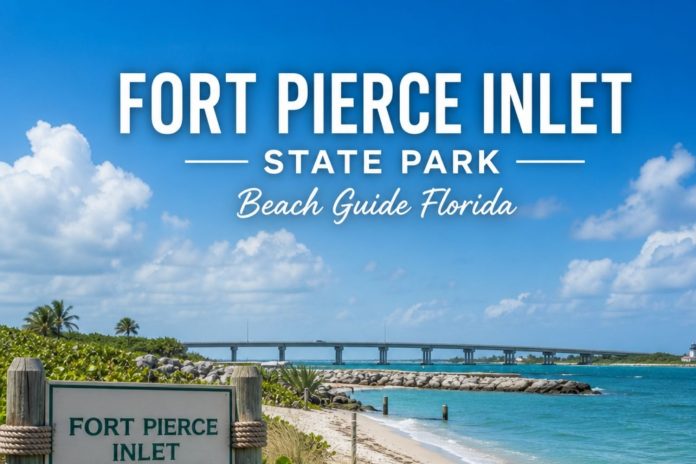
Fort Pierce Inlet State Park, Florida
Fort Pierce Inlet State Park sits on the north side of the same inlet that gives this whole stretch of Florida its treasure hunting reputation, and after walking its half-mile beach more times than I can count, I still think it’s one of the most underrated state parks on this entire coast. You get a real surf break, a shore dive reef, a WWII training ground turned bird sanctuary, and a mangrove preserve, all inside 340 acres.
This 340-acre state park sits on North Hutchinson Island at 905 Shorewinds Drive, tucked between the Atlantic Ocean and Tucker Cove, an inlet of the Indian River Lagoon. Combined with neighboring Avalon State Park just up the road, this stretch protects two and a half miles of dune, coastal hammock, and genuinely undeveloped beach, and the adjoining Jack Island Preserve adds more than 1,000 acres of mangrove forest to the whole picture.
In this guide I’m walking you through every distinct piece of this park, going deep on what the sand and water are actually doing here, scoring it honestly across every category that matters, and telling you exactly who this park is built for. I’ll cover the surf break, the reef, the WWII history hiding in plain sight, where pets are actually welcome, and the mangrove boardwalk that makes this one of the best birding stops on the entire Treasure Coast. For more on what lives here and what you might find in the sand, I’ve also written up a full hiking guide, a birding guide, and a beach finds guide for this park. I close with my own take on why this park deserves more attention than it gets.
The Vibe & Culture at Fort Pierce Inlet State Park
A Working Inlet Doing Double Duty as a Nature Preserve
This park sits right where a genuine shipping channel meets a real bird sanctuary, and somehow both identities coexist without stepping on each other.
The Fort Pierce Inlet itself is a federal navigation project, 30 feet deep, cut at the start of the 1900s after a hurricane closed the original natural inlet about a mile north near Jack Island. During World War II, the Navy used this exact inlet to train landing craft crews and underwater demolition teams, the forerunners of today’s Navy SEALs, ahead of the D-Day invasion. Dynamite Point, right in the park, gets its name from that training history.
Today the working side of the inlet, boats, jetty anglers, and a real surf crowd, sits comfortably alongside a genuinely significant natural area. More than 180 bird species have been recorded here, the park is a stop on the Great Florida Birding Trail, and Jack Island Preserve just north protects one of the last undisturbed maritime hammock ecosystems left on this barrier island.
The crowd here reflects that dual identity. You’ll find surfers checking the jetty break at dawn, birders working the Jack Island boardwalk with binoculars, snorkelers and divers heading for the reef, and families settled onto the half-mile beach for a straightforward day in the sun. It rarely feels crowded even in season, since the entrance fee and the park’s slightly out-of-the-way location naturally limit the numbers compared to the free city beaches nearby.
Fort Pierce Inlet State Park Areas: Six Distinct Pieces of One Working Park
This park packs a surprising amount of variety into 340 acres. Here’s how it breaks down.
The Main Ocean Beach
Half-Mile Atlantic Shoreline · Swimming, Sunbathing & Picnicking
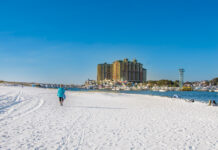
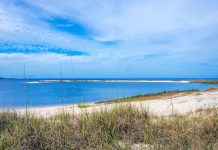
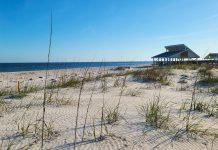
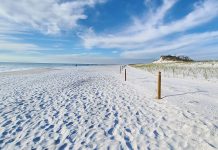
The park’s half-mile beach is the straightforward heart of a visit here, a genuinely natural shoreline with a gentle slope, backed by dunes and a scattering of picnic pavilions overlooking the sand. There’s no development crowding the view, just sea oats, dune, and open Atlantic, which gives this beach a noticeably wilder feel than the more built-up city beaches just south of here.
The crowd here is a mix of families settled in for a straightforward beach day and visitors using this stretch as a home base before heading to the jetty, the reef, or Jack Island’s trails. There’s no lifeguard anywhere in this park, so it draws a slightly more self-reliant crowd than a guarded county beach would.
I like this beach specifically because it still feels like a real dune system rather than a manicured park lawn. Arrive early on a weekday and you can genuinely have long stretches of it to yourself.
The North Jetty & Surf Zone
South End of the Park · One of Florida’s Historic Surf Spots
The rock jetty at the park’s south end, extending roughly 400 feet into the Fort Pierce Inlet, has drawn surfers since some of the earliest days of Florida’s surf culture, and it still produces the most consistent break in St. Lucie County. Offshore shoals tied to the Atlantic Coastal Ridge shape the swell here, and the wave works best on an incoming tide, when the shape improves over the sandy bottom near the jetty.
The crowd here is dedicated and knowledgeable, longtime locals who know exactly which tide and swell direction to wait for, plus a steady trickle of surfers making a pilgrimage specifically for the historic reputation of this spot. Anglers work the same jetty rocks for snook, redfish, and tarpon during their seasonal runs, sharing the space without much friction.
I always tell visiting surfers to check the tide chart before driving out here specifically for waves. This break has a real personality, punchy and workable on the right incoming tide, nearly flat and current-torn on the wrong one.
The Reef & Shore Dive Site
About 100 Yards Offshore · Diver Down Flag Required
A natural reef sits roughly 100 yards off the main beach, reachable by a shore swim rather than a boat, with a maximum depth around 16 to 20 feet and average visibility running 11 to 15 feet on a good day. It’s a genuinely accessible dive and snorkel site, part of what locals call this stretch’s underwater paradise, and a diver-down flag is required by law for anyone in the water here.
The crowd is almost entirely snorkelers and certified divers who came specifically for this reef, a quieter, more purposeful group than the general beach crowd nearby. It’s not a boat-dive spectacle, but a modest, approachable reef that rewards patient exploring.
I think this reef is a genuinely underrated stop in this whole series. A shore-accessible dive site with real structure and real fish life, a hundred yards from a state park parking lot, isn’t something you find everywhere in Florida.
Dynamite Point
WWII Navy Frogmen Training Ground · Now a Birdwatcher’s Haven
Dynamite Point carries one of the more unusual pieces of history in this entire series. During World War II, this stretch trained Navy Frogmen, the forerunners of today’s Navy SEALs, using demolition and diving techniques that would help clear the way for the D-Day invasion of Normandy. Today, that same ground has settled into a quiet haven for birdwatchers, with little visible trace of its wartime purpose beyond the name itself.
The crowd here is small and specific, birders working through the park’s more than 180 recorded species, and visitors who came specifically to stand somewhere with this much unlikely history attached to it. It doesn’t draw a beach crowd the way the main shoreline does.
I think about this spot differently every time I visit, once you know men trained here to swim ashore under fire before one of history’s largest invasions, and today you’re more likely to see a roseate spoonbill than anything else. Few places in Florida hold that particular contrast as quietly as this one does.
Jack Island Preserve & the Marsh Rabbit Run Trail
One Mile North · 1.8-Mile Mangrove Boardwalk
Jack Island Preserve, a separate but connected unit just a mile north of the main park, protects one of the last undisturbed maritime hammock ecosystems on this barrier island, more than 1,000 acres combined with the main park’s land. The elevated Marsh Rabbit Run Trail runs 1.8 miles through red mangrove, black mangrove, and buttonwood communities, with an observation tower at the west end offering a genuine bird’s-eye view over the Indian River and the island itself.
The crowd here is almost entirely hikers, bikers, and birders, a noticeably different group than the beach-focused visitors at the main park. Gopher tortoises, brown pelicans, and roseate spoonbills all turn up regularly along this corridor, and manatees are a real possibility in the calmer winter months.
I make a point of climbing the observation tower every time I’m out here. The view over the mangroves and the lagoon puts the whole scale of this preserve into perspective in a way you don’t get from the boardwalk alone.
The Oak Hammock Trail & Tucker Cove
Lagoon Side · A Different Ecosystem Entirely
On the inlet side of the park, the Oak Hammock Trail offers a leisurely 30-minute walk through one of the few remaining oak hammocks left on a South Florida barrier island, with gumbo limbo, red bay, and a variety of native oaks shading the path. It leads toward Tucker Cove, a quiet indentation of the Indian River Lagoon that behaves nothing like the open Atlantic beach a short walk away.
The crowd here is thin, mostly hikers and a handful of anglers working the calmer lagoon water. Swimming isn’t recommended within the inlet channel itself, given the current, boat traffic, and submerged rocks, so this stretch draws visitors here for the walk and the view rather than a swim.
I like ending a visit here specifically because of the contrast. You start at an open, working Atlantic inlet with surfers and jetty anglers, and you finish in a quiet, shaded oak hammock a short drive away. Few state parks in this series offer that range in such a small footprint.
Fort Pierce Inlet State Park Rankings: Expert Scores Across 11 Categories
These scores weigh the whole park, from the surf break and reef to the mangrove preserve and oak hammock, since this park’s real strength is how much range it packs into a modest footprint.
Sand Quality
7/10
Natural, undeveloped Atlantic sand with a gentle slope, more textured near the jetty rocks and reef zone at the park’s south end.
Hiking & Beach Walking
8/10
A half-mile beach plus the Oak Hammock Trail and Jack Island’s 1.8-mile boardwalk give this park more genuine walking variety than its size suggests.
Shelling
6/10
Moderate, with the reef nearby limiting how much loose shell washes ashore compared to an open sand beach further from any rock structure.
Water Conditions
7/10
A real, historic surf break and a genuinely accessible shore dive reef, though the inlet channel itself carries strong current and boat traffic best avoided for swimming.
Scenery & Natural Beauty
8/10
Genuine dune, coastal hammock, and mangrove habitat within a short drive of each other, with little development anywhere in view.
Birding & Wildlife
9/10
More than 180 bird species recorded, a stop on the Great Florida Birding Trail, and gopher tortoises, manatees, and roseate spoonbills all regular sightings at Jack Island.
Family Friendliness
7/10
A straightforward, picnic-friendly beach and an easy oak hammock walk make this a solid family stop, though the lack of a lifeguard means closer supervision in the water.
Dog Friendliness
4/10
Leashed pets are welcome in the parking areas and on the Coastal Hammock Trail, but pets are banned from every sand beach area in the park, including Dynamite Point, not just the swimming zone.
Solitude & Peace
7/10
Genuinely quiet on weekday mornings, especially along the Oak Hammock Trail and Jack Island’s boardwalk. Summer weekends bring more traffic near the main pavilion.
Entertainment & Nightlife
2/10
None on site, and it doesn’t try to be. This is a nature-and-recreation park, with Fort Pierce’s own nightlife scene a short drive south.
Parking & Beach Access
7/10
A modest entrance fee applies, but the lot rarely fills the way a free city beach does, and access to every part of the park is straightforward once you’re inside.
Fort Pierce Inlet State Park Sand & Water
The sand here runs natural and undeveloped along the half-mile main beach, with a warm tan color and enough width to spread out comfortably even on a busier day. The upper beach stays soft, and the packed sand at the waterline gives you a firm, easy surface for walking, though the ground turns rockier and slower right around the jetty and reef zone, where water shoes are worth packing.
The water splits into two very different personalities depending on which side of the park you’re on. The open Atlantic beach behaves like a real ocean beach, with a historic surf break and genuine rip current risk, while the reef just offshore offers calmer, clearer water for snorkeling and diving on a good day. The inlet channel itself carries strong current and boat traffic, so that’s the one stretch to avoid entirely for swimming.
-
Walkability. Firm and flat along the half-mile main beach, rockier and slower near the jetty and reef, where structure changes the footing.
-
Softness & Playability. Soft and genuinely undeveloped on the upper beach, wide enough for sandcastles and beach games without feeling crowded.
-
Barefoot Comfort. Comfortable on the main beach, dropping off right around the jetty and reef, where rock structure rewards footwear over bare feet.
-
Swimmability. No lifeguards anywhere in this park. Swim the open beach cautiously and avoid the inlet channel entirely, where current and boat traffic make it unsuitable.
Want the full geology, grain composition, and the complete sand and water condition ratings? I broke it all down separately in Sand & Shore: Fort Pierce Inlet State Park.
Dogs & Pet Accessibility at Fort Pierce Inlet State Park
Are Dogs Allowed on the Sand? NO.
Leashed pets are welcome in parts of this park, but every sand beach area, including Dynamite Point and the main ocean beach, is off limits, not just the guarded swim zone.
Where Dogs Are Allowed
- ✓The main parking area and additional parking area, on a leash no longer than six feet.
- ✓The Coastal Hammock Trail, on a leash, a genuinely pleasant shaded walk in its own right.
Where Dogs Are NOT Allowed
- ✗Every sand beach area in the park, including the main ocean beach and Dynamite Point. Transporting pets across the beach sand is prohibited entirely, not just swimming in it.
- ✗The fenced playground area, Pavilion 3, and the covered picnic tables.
Paws on the Ground Reality
This is a stricter rule than a lot of visitors expect walking in, so it’s worth knowing before you make the drive with a dog specifically for the beach. The Coastal Hammock Trail gives you a real, shaded walk with your dog, but you genuinely cannot cross onto the sand at any point, even briefly, even on a leash. Rangers here do enforce it, and it’s tied to protecting nesting shorebirds and sea turtles rather than general park tidiness.
If a beach day with your dog is the actual goal, this isn’t the park for it. Jensen Beach and Stuart, covered elsewhere in this series, offer Martin County’s countywide leashed-dog beach access a short drive south, and it’s a completely different experience from what’s available here.
Crowd Levels and the Overall Feel of Fort Pierce Inlet State Park
This park never fills the way a free city beach does, thanks to its entrance fee and slightly out-of-the-way location on North Hutchinson Island. Weekday mornings are close to empty outside of a few surfers and birders, and even summer weekends rarely feel overwhelmed.
You’ll find a different crowd depending on where you go. The main beach draws families and picnickers. The jetty draws dedicated surfers and anglers. The reef draws divers and snorkelers. Jack Island and the Oak Hammock Trail draw hikers and birders almost exclusively.
The overall feel shifts by season more around surf conditions and migratory birding than typical tourist patterns:
- Winter: the most comfortable weather of the year, peak birding season, and a real chance of manatee sightings near Jack Island
- Spring: pleasant water and the start of sea turtle nesting season along the beach and at nearby Avalon State Park
- Summer: hot and humid, with the busiest weekend crowds of the year at the main pavilion
- Fall: my favorite window here, storm-driven swell improving the surf at the jetty and noticeably lighter crowds than summer
Who Is Fort Pierce Inlet State Park Really For?
✓ Who Will Love Fort Pierce Inlet State Park
-
Surfers chasing one of Florida’s historically significant early breaks at the north jetty
-
Snorkelers and divers wanting a genuinely accessible shore dive reef without needing a boat
-
Serious birders chasing more than 180 recorded species along the Great Florida Birding Trail
-
History buffs curious about the WWII Navy Frogmen training ground hiding behind Dynamite Point’s name
-
Hikers and kayakers wanting real mangrove and oak hammock habitat within a short drive of the beach
-
Anyone who wants a quieter, less crowded alternative to Fort Pierce’s free city beaches
✗ Consider Another Beach If…
-
You want a free beach with no entrance fee. Fort Pierce’s city beaches nearby don’t charge admission
-
You need a lifeguard watching the water. None are posted anywhere in this park
-
You want dining, shopping, or nightlife directly at the beach. This is a nature-and-recreation park without amenities beyond picnic pavilions
-
You’re hoping to swim in the inlet channel itself. Current, boat traffic, and submerged rocks make this stretch unsuitable for swimming
-
You want full RV or tent camping on site. Only a primitive youth/group campground is available, by reservation for organized groups
Things to Do at Fort Pierce Inlet State Park, Florida
This park offers a genuinely wide range of activity for a 340-acre footprint. Here’s what actually fills a visit here.
-
Surfing the North Jetty. One of St. Lucie County’s most consistent breaks, working best on an incoming tide during northeast swells.
-
Snorkeling and Diving the Reef. A shore-accessible reef about 100 yards offshore, with depths of 16 to 20 feet and visibility often running 11 to 15 feet. A diver-down flag is required.
-
Birding. More than 180 species recorded, with the park serving as a stop on the Great Florida Birding Trail across beach, dune, and hammock habitats.
-
Hiking the Oak Hammock Trail. A leisurely 30-minute loop through one of the few remaining oak hammocks on a South Florida barrier island.
-
Walking the Marsh Rabbit Run Trail at Jack Island. An elevated 1.8-mile mangrove boardwalk with an observation tower offering panoramic views over the Indian River.
-
Biking the Paved Path. A bike-friendly route connects the parking area to the playground, picnic areas, and the beach itself.
-
Fishing the Jetty. Anglers target snook, redfish, and tarpon during seasonal runs from the rock jetty at the park’s south end.
-
Kayaking Near Jack Island. Interior mangrove channels are best explored within two hours of high tide, when currents are calmer and easier to navigate.
-
Exploring Dynamite Point’s History. A former WWII Navy Frogmen training ground, now a quiet birdwatching spot with little visible trace of its wartime past.
Local Knowledge and Practical Advice
A few things I’ve picked up visiting this park more times than I can count:
-
Bring cash or a card for the entrance fee. Current rates run $6 per vehicle with two to eight people, $4 for a single-occupant vehicle or motorcycle, and $2 for pedestrians and cyclists.
-
There are no lifeguards anywhere in this park. Swim the open beach cautiously, and avoid the inlet channel itself entirely.
-
A diver-down flag is required by law for snorkeling or diving the reef. Bring your own or check with the park about availability.
-
Check the tide chart before a surf trip to the jetty. This break depends heavily on incoming tide for its best shape.
-
Watch for gopher tortoises along the Jack Island boardwalk. They’re a common, genuinely charming sighting on the Marsh Rabbit Run Trail.
-
Climb the observation tower at Jack Island. It’s a short detour off the main boardwalk and gives you the best single view in the whole preserve.
-
Camping here is limited to organized youth groups. There’s no general tent or RV camping on site, so plan lodging elsewhere nearby.
-
Nesting season runs roughly March through October. This applies to the park’s beach and to nearby Avalon State Park as well.
-
Paddle Jack Island’s mangrove channels within two hours of high tide. Outgoing tides create strong currents that make navigation harder.
-
Arrive before 9 a.m. on a summer weekend. Parking and beach space near the main pavilion fill up during peak season.
Where to Stay Near Fort Pierce Inlet State Park, Florida
This park offers only limited youth-group camping, so most visitors base themselves nearby.
Fort Pierce Beaches
South Beach and the surrounding neighborhoods, covered in the companion guide to this park, offer vacation rentals and small hotels within a short drive of the park entrance.
Downtown Fort Pierce
Boutique inns near the historic downtown district put you close to the Sunrise Theatre and the A.E. Backus Museum, a short drive from the park.
RV Resorts
Several RV parks in and around Fort Pierce, including options along US 1 and near Port St. Lucie, offer a practical base for visitors touring this stretch of the Treasure Coast by RV.
Youth Group Camping
A primitive campground inside the park itself is available by reservation, but only to organized youth groups, not general visitors.
Inland & Budget Options
Port St. Lucie, a short drive inland, offers a wider range of budget to mid-range hotel chains for visitors who’d rather day-trip to this park than stay directly on the coast.
What Makes Fort Pierce Inlet State Park Different from Nearby Beaches
This park stands apart from the free city beaches covered elsewhere in this guide because it combines a working inlet, real surf history, and genuine wilderness within one entrance fee.
A few features make it distinct:
A federally engineered inlet with real WWII history
Dynamite Point’s training ground for Navy Frogmen ahead of D-Day is a genuinely unusual piece of history hiding behind a quiet birding spot.
A shore-accessible reef most visitors never expect
A real dive and snorkel site sits just 100 yards off the beach, no boat required.
A historic surf break with a real local following
The north jetty has drawn Florida surfers since some of the earliest days of the state’s surf culture.
A mangrove preserve connected directly to the beach
Jack Island’s 1.8-mile boardwalk and observation tower give this park a depth of natural habitat most city beaches simply can’t offer.
Fort Pierce Inlet State Park vs. Other Nearby Beaches
These are the beaches visitors most often weigh against this park, and the honest read on when you’d choose one over the other.
Fort Pierce Inlet State Park vs. Fort Pierce’s City Beaches
The city beaches, covered in the companion guide to this park, offer free access and more amenities. Choose this park for the surf history, the reef, and the birding depth those beaches don’t have.
Fort Pierce Inlet State Park vs. Avalon State Park
Avalon, just four miles north, extends the same undeveloped beach and turtle nesting habitat with its own modest entrance fee. Choose Fort Pierce Inlet for the jetty, the reef, and Jack Island’s trails, Avalon for an even quieter, more undeveloped stretch of sand.
Fort Pierce Inlet State Park vs. MacArthur Beach State Park
MacArthur Beach, much further south in Palm Beach County, offers a comparable wildlife-first mission with a nature center and kayak rentals. This park offers less visitor infrastructure and a more historically layered story.
Fort Pierce Inlet State Park vs. Hobe Sound National Wildlife Refuge
Hobe Sound offers a wilder, stricter, dog-free experience with no amenities at all. This park strikes a more moderate balance, real recreation alongside real conservation.
Bottom line: Fort Pierce Inlet State Park earns a spot in this series by doing more with less, a working inlet, a historic surf break, an accessible reef, and a genuine mangrove preserve, all inside a modest entrance fee and a footprint smaller than most other stops in this guide.
Fort Pierce Inlet State Park, Florida: Frequently Asked Questions
What is the entrance fee at Fort Pierce Inlet State Park?
Current rates run $6 per vehicle with two to eight people, $4 for a single-occupant vehicle or motorcycle, and $2 for pedestrians and cyclists. The park is open 8 a.m. to sundown, 365 days a year.
Is Fort Pierce Inlet State Park good for surfing?
Yes. The north jetty is one of Florida’s historically significant early surf spots and remains the most consistent break in St. Lucie County, working best on an incoming tide.
Are there lifeguards at Fort Pierce Inlet State Park?
No. There are no lifeguards anywhere in this park. Swim the open beach cautiously and avoid the inlet channel itself, which carries strong current and boat traffic.
Can you snorkel or dive at Fort Pierce Inlet State Park?
Yes. A natural reef sits about 100 yards offshore, with depths of 16 to 20 feet and average visibility of 11 to 15 feet. A diver-down flag is required by law.
What is Jack Island Preserve?
A connected unit of the park about a mile north of the main entrance, protecting more than 1,000 acres combined with the main park, including a rare, undisturbed maritime hammock ecosystem and a 1.8-mile mangrove boardwalk trail.
Can you camp at Fort Pierce Inlet State Park?
Only in a primitive youth/group campground available by reservation to organized youth groups. There is no general tent or RV camping on site.
What happened at Dynamite Point?
During World War II, this area trained Navy Frogmen, the forerunners of today’s Navy SEALs, in preparation for the D-Day invasion of Normandy. Today it’s a quiet birdwatching spot with little visible trace of that history.
Is Fort Pierce Inlet State Park good for birding?
Yes, genuinely. More than 180 bird species have been recorded here, and the park is a stop on the Great Florida Birding Trail, with especially strong birding along the Jack Island boardwalk.
Are dogs allowed at Fort Pierce Inlet State Park?
Leashed pets are welcome in the parking areas and on the Coastal Hammock Trail, but they aren’t permitted on any sand beach area in the park, including Dynamite Point and the main ocean beach, not just the guarded swimming zone.
How does Fort Pierce Inlet State Park compare to Fort Pierce’s city beaches?
This park charges an entrance fee but offers a historic surf break, an accessible reef, and a genuine mangrove preserve that the free city beaches nearby don’t have. The city beaches, covered in the companion guide, offer more amenities and a livelier local scene.
Patti’s Perspective: My Honest Take on Fort Pierce Inlet State Park
I think this park is one of the more quietly underrated stops in this entire series, and I say that after covering a lot of beaches with a lot bigger reputations. It doesn’t have a boardwalk, a resort, or a famous name attached to it. What it has is a real surf break, a reef you can swim to, and a piece of World War II history that most visitors walk right past without knowing it’s there.
What stays with me most about this park is Dynamite Point. Standing there, knowing that young men once trained in those exact waters to swim ashore under fire before one of history’s largest military operations, and then watching a roseate spoonbill work the shallows a few hundred feet away like nothing unusual had ever happened here, is the kind of contrast I don’t find at many other stops in this series. History and nature aren’t competing for attention at this park. They’re just quietly sharing the same ground.
Climbing the observation tower at the end of the Marsh Rabbit Run Trail and looking back over the mangroves toward the inlet gave me a real sense of how much this modest 340-acre park is actually holding, a working shipping channel, a historic surf break, a shore dive reef, and one of the last undisturbed maritime hammocks on this whole barrier island.
My honest caveat: if you only ever park at the main pavilion and swim at the beach, you’ll have a good day, but you’ll miss most of what makes this park worth the entrance fee. Walk the jetty. Snorkel the reef if conditions allow. Make the short drive to Jack Island. That’s where this park actually delivers.
My verdict: 8/10. One of the more underrated state parks in this entire series, and it earns that ranking on genuine range, surf history, an accessible reef, real WWII history, and some of the best birding on the Treasure Coast, all inside a modest entrance fee. It asks a little more effort than a free city beach, and it rewards that effort generously.
Want to Live by the Water?North Hutchinson Island and the surrounding Fort Pierce area offer some of the more affordable waterfront real estate on the Treasure Coast, with homes and condos within easy reach of this park’s beach, reef, and preserve.The market here draws buyers who specifically want proximity to genuine natural areas rather than a resort strip, along with retirees and remote workers drawn to Fort Pierce’s lower cost of living compared to the counties further south in this series. Waterfront pricing on this stretch of the island remains noticeably more accessible than the beaches covered elsewhere in this guide.
If living by the water is something you’re considering, whether full time, part time, or as an investment, it’s worth exploring what’s available in this area.
Explore Waterfront Living at LiveByTheWater.com
Real estate referral partner