


Fort Pierce & St. Lucie County Beaches, Florida
Fort Pierce is the beach town before Florida decided beach towns needed valet parking. This is one of the oldest communities on the east coast, and after walking its 33 public beach access points, I can tell you the sand here comes with more actual history attached to it than almost anywhere else on the Treasure Coast, a Spanish shipwreck you can snorkel, an African American art movement born a few blocks from the water, and a beach the county legally recognized rather than pretended not to notice.
Fort Pierce sits on the mainland side of the Fort Pierce Inlet, with its beach neighborhoods spread across the southern end of North Hutchinson Island and continuing down toward the St. Lucie County line. This stretch runs roughly 21 miles total, sharing the barrier island with Martin County’s beaches further south, and it earned the “Treasure Coast” name honestly, since the 1715 Spanish treasure fleet actually sank offshore of here.
In this guide I’m walking you through the main beach neighborhoods of Fort Pierce and the string of access points running south through St. Lucie County, going deep on what the sand and water are actually doing here, scoring it honestly across every category that matters, and telling you exactly who this stretch is built for. I’ll cover the shipwreck you can snorkel from shore, exactly which beaches actually welcome your dog, and the clothing-optional stretch the county formally recognized in 2020. For more on what lives here and what you might find in the sand, I’ve also written up a full hiking guide, a birding guide, and a beach finds guide for this stretch of coast. I close with my own take on what makes this working beach town different from the more polished coastline further south in this series.
The Vibe & Culture at Fort Pierce & St. Lucie County
Old Florida That Never Got the Resort Memo
Fort Pierce calls itself the Sunrise City, and it earns that a little differently than most beach towns earn their nicknames, through history and grit rather than marketing.
This city was incorporated in 1901, built on commercial fishing, citrus, pineapple farming, and cattle ranching, and it still carries that working waterfront identity today. Downtown Fort Pierce, just a few miles inland from the beach itself, has been named one of the most beautiful main streets in America, and it’s the kind of downtown that earned that honor through decades of actual restoration work rather than a developer’s master plan.
The art history here runs deeper than most visitors expect. Landscape painter A.E. “Bean” Backus mentored a group of young African American artists in the 1950s and 60s who came to be known as the Florida Highwaymen, selling their paintings out of car trunks along US 1 because segregation kept them out of the galleries that would eventually celebrate their work. The A.E. Backus Museum and the Highwaymen Heritage Trail both trace that history today, a genuine piece of Florida art history most beach guides never mention.
The crowd on the sand itself reflects this same unpolished, unhurried character. You’ll find surfers checking the jetty break at dawn, families spread across the wider county parks, snorkelers heading straight for the Urca de Lima wreck site, and a noticeably more local, less tourist-driven crowd than you’ll find at the beaches further south in this series. Fort Pierce doesn’t perform for visitors. It just keeps being itself, and that’s exactly the appeal.
Fort Pierce & St. Lucie Beach Areas: Six Distinct Stops Along the Coast
This stretch runs through a string of county and city parks, each with its own personality, from the surf-heavy inlet area down through the county’s most secluded beaches. Here’s how it breaks down, north to south.
South Beach, Jetty Park & Jaycee Park
Fort Pierce’s Main Beach Neighborhood · Walkable & Local
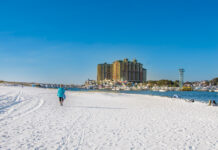
South Beach is what most people mean when they say Fort Pierce Beach, a compact, walkable neighborhood at the southern tip of North Hutchinson Island holding South Jetty Park, Jaycee Park, and a run of casual restaurants and bars within a short walk of the sand. The South Jetty itself is a 1,200-foot fishing pier at the end of Seaway Drive, and Jaycee Park adds a playground, sports courts, and a buoyed swimming area that makes it one of the more complete family stops in this guide.
The crowd here mixes surfers working the inlet, families settled into Jaycee Park’s swim area, and a genuine local nightlife scene once the sun goes down, spots like Archie’s Seabreeze and the Inlet Grill keep this small neighborhood lively well past a typical beach day. Free public parking on the island is a real plus here, since much of Florida’s more developed coastline has moved away from that.
I like this stretch specifically because it still feels like a neighborhood rather than a destination. You can genuinely walk from a swim to a meal to a live band without ever getting back in a car.
Pepper Park & the Urca de Lima Shipwreck
North A1A · Snorkel a 1715 Spanish Wreck
Pepper Park, named for the late Florida Senator Claude Pepper, sits on North A1A and holds one of the more remarkable features in this entire series, the wreck of the Urca de Lima, part of the 1715 Spanish treasure fleet that sank in a hurricane and now rests in just 15 feet of water roughly 200 yards offshore. It was designated Florida’s first underwater archaeological preserve, and you can snorkel directly out to it from the beach without a boat.
The crowd here splits between snorkelers and divers specifically chasing the wreck and a more typical beach crowd using the park’s tennis, basketball, and volleyball courts along with its picnic areas and boardwalk. It’s a genuinely different draw than most beaches in this guide, history you can actually swim to rather than just read about on a plaque.
I never get tired of telling people that this stretch of the Treasure Coast has its name for a real reason. Snorkeling out to a 300-year-old Spanish wreck on a casual Tuesday morning is not something most beach towns can offer, and Pepper Park delivers it without any fanfare at all.
South Beach Park, Surfside & Kimberly Bergalis Memorial Park
South Ocean Drive · Family-Focused, Full Amenities
This cluster of county parks along South Ocean Drive gives families the most complete, amenity-rich beach experience in this guide, restrooms, rinsing showers, overlook decks, and enough parking to handle a busy weekend without much trouble. Kimberly Bergalis Memorial Park in particular carries a somber namesake, honoring a young Fort Pierce woman whose case in the early 1990s brought national attention to healthcare-related HIV transmission, and the park stands today as a quiet, well-kept piece of that history.
The crowd here is heavily local, families who treat this stretch as their regular beach rather than a special trip, with enough space and parking that it rarely feels overcrowded even in season. It’s a straightforward, no-surprises beach day, which is exactly what a lot of visitors are looking for after chasing wrecks and dune trails elsewhere on this list.
I send first-time visitors to this stretch specifically because it’s the easiest entry point into Fort Pierce’s beaches, full facilities, easy parking, and a genuinely pleasant, wide stretch of sand.
Walton Rocks Beach
South St. Lucie County · The County’s Off-Leash Dog Beach
Walton Rocks Beach holds a distinction that matters a lot to anyone traveling with a pet, it’s a genuine 24-acre off-leash dog beach, one of relatively few anywhere in the state, specifically recommended as an alternative for visitors who can’t bring pets to Blind Creek Beach just up the road. The beach itself is a straightforward, natural stretch without heavy development, giving dogs real room to run free in the sand and surf.
The crowd here is almost entirely dog owners and their pets, along with a smaller contingent of beachgoers who simply prefer this quieter, less trafficked stretch of St. Lucie County’s coastline. It doesn’t carry the crowds or amenities of the parks further north, and most visitors here wouldn’t want it to.
I always recommend this stop to anyone traveling with a dog through this part of the Treasure Coast. It’s a real, dedicated answer to a question most of this county’s other beaches simply say no to.
Blind Creek Beach
South Hutchinson Island · The County’s Clothing-Optional Beach
Blind Creek Beach sits roughly eight miles north of the Jensen Beach Causeway, a remote, undeveloped 409-acre preserve with a mile and a half of dune and shoreline that had informally drawn naturists for more than two decades before St. Lucie County formally designated a section of it clothing-optional in 2020. The county worked with volunteer Beach Ambassadors to establish clear etiquette and boundaries, and today the beach also functions as a genuinely significant loggerhead and green sea turtle nesting site, with shell middens nearby testifying to centuries of earlier Ais tribal occupation.
The crowd here splits by section, and boundaries are clearly marked for anyone who prefers a traditional beach day, while a separate, specific stretch is set aside for those choosing to go without clothes. There’s no lifeguard, limited facilities, and construction on a paved lot and ADA-compliant restroom has been ongoing, so check current access conditions before a visit. Pets aren’t permitted here, and visitors are asked to respect posted boundaries, avoid lewd behavior, and never photograph anyone without consent.
I think this beach earns a place in this guide simply because it represents an honest, formally managed answer to something that exists at plenty of remote beaches everywhere without any real acknowledgment. Whether or not it’s the stop for you, it’s worth understanding what this beach actually is and isn’t before you decide.
North Beach & the Approach to Fort Pierce Inlet
Toward the State Park Line · Where This Guide Connects to the Next
Heading north from South Beach, the shoreline transitions toward Fort Pierce Inlet State Park, covered in its own dedicated guide in this series, with a run of smaller access points along the way offering a quieter, more residential feel than the busier South Beach neighborhood.
The crowd here thins out compared to South Beach, mostly locals from the neighborhoods lining this stretch of the island, with fewer amenities and a more low-key pace overall.
I mention this stretch mainly as a bridge. If you’re working your way through Fort Pierce’s beaches south to north, this is where the city’s beach neighborhoods hand off to the wilder, more protected land covered in the Fort Pierce Inlet State Park guide.
Fort Pierce & St. Lucie Beach Rankings: Expert Scores Across 11 Categories
These scores weigh the whole stretch, from South Beach’s walkable neighborhood feel to Blind Creek’s remote, formally managed seclusion, since this guide covers a genuinely wide range of beach personalities.
Sand Quality
7/10
Honest Atlantic quartz and coquina sand throughout, wider and better maintained at the county parks, more natural and undisturbed at Blind Creek and Walton Rocks.
Hiking & Beach Walking
7/10
Genuinely long stretches available across the county’s 33 access points, though you’ll drive between distinct neighborhoods more than walk continuously.
Shelling
7/10
Solid throughout, best at the quieter, less trafficked stretches like Blind Creek and Walton Rocks after a good tide or storm swell.
Water Conditions
7/10
Clear enough for genuinely good wreck snorkeling at Pepper Park, with a real surf break near the inlet. Rip currents are real at the unguarded stretches, so check conditions.
Scenery & Natural Beauty
7/10
Solid throughout, with the more developed South Beach neighborhood trading some natural feel for convenience, and the southern stretches holding onto a wilder look.
Birding & Wildlife
8/10
Sea turtle nesting at Blind Creek, manatees at nearby Moore’s Creek, and a genuine shipwreck ecosystem at the Urca de Lima all add up to a strong wildlife lineup.
Family Friendliness
8/10
Jaycee Park and the South Beach Park cluster both offer genuinely complete family setups, playgrounds, buoyed swim areas, and full facilities.
Dog Friendliness
6/10
Walton Rocks Beach is a genuine 24-acre off-leash dog beach, and Wild Cat Cove near the Navy SEAL Museum offers a second leashed option, but Fort Pierce’s own city beaches and Blind Creek do not permit pets at all.
Solitude & Peace
7/10
Blind Creek and Walton Rocks both deliver genuine seclusion. South Beach and the Jaycee Park cluster fill in on weekends and holidays.
Entertainment & Nightlife
7/10
South Beach’s restaurant and bar scene plus downtown Fort Pierce’s Sunrise Theatre and monthly Art Walk give this stretch real cultural depth beyond the sand.
Parking & Beach Access
7/10
Mostly free with 33 public access points countywide, though a small fee applies at some locations and construction has limited parking at Blind Creek in recent seasons.
Fort Pierce & St. Lucie Sand & Water
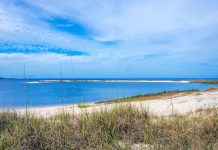
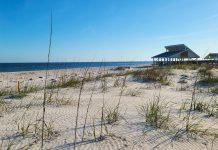
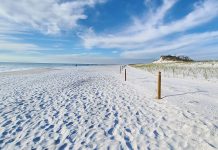
The sand across this stretch runs wide and mostly flat, with a warm cocoa tint near the inlet and jetty that lightens up at the more groomed county parks further south. The upper beach stays soft enough for sandcastles nearly everywhere, and the packed sand at the waterline gives you a firm, easy surface for walking, especially at the less-trafficked stretches like Walton Rocks and Blind Creek, where daily grooming simply doesn’t happen and the beach feels genuinely natural underfoot.
The water shifts a lot depending on how close you are to the Fort Pierce Inlet. Near the jetty, expect real current and a genuine surf break, water that behaves like a working inlet rather than a calm swimming beach. Further south, conditions settle into more typical, gradual, swimmable Atlantic beach behavior, running a good turquoise on a calm day. Rip currents are real near the inlet, so save your swimming for the guarded stretches further south.
-
Walkability. Firm and flat at the waterline throughout, one of the more continuously walkable coastlines in this series if you’re willing to drive between neighborhoods.
-
Softness & Playability. Soft and sandcastle-ready nearly everywhere, with real shell content at the quieter stretches for anyone who likes to comb the tide line.
-
Barefoot Comfort. Comfortable across most of this stretch, free of significant rock structure compared to the reef-adjacent beaches covered elsewhere in this series.
-
Swimmability. Strong at the guarded, amenity-rich parks. Blind Creek and several smaller access points have no lifeguard, so swim cautiously there.
Want the full geology, grain composition, and the complete sand and water condition ratings? I broke it all down separately in Sand & Shore: Fort Pierce & St. Lucie County.
Dogs & Pet Accessibility at Fort Pierce & St. Lucie County
Are Dogs Allowed on the Sand? RESTRICTED.
Two specific county-run beaches welcome dogs, one fully off leash, but Fort Pierce’s own city beaches and Blind Creek prohibit pets on the sand entirely.
Where Dogs Are Allowed
- ✓Walton Rocks Beach, a genuine 24-acre off-leash dog beach on South Hutchinson Island, no permit required.
- ✓Wild Cat Cove, near the Navy SEAL Museum, on a leash.
Where Dogs Are NOT Allowed
- ✗Fort Pierce’s own city beaches, including Jetty Park, South Causeway Park, and Jaycee Park, prohibited by city ordinance.
- ✗The stretch of north beach between Pepper Park and the North Jetty, dune line to water, except law enforcement dogs.
- ✗Blind Creek Beach, no pets anywhere on the property.
Paws on the Ground Reality
Walton Rocks is the real deal, 24 acres of open sand and surf where dogs genuinely run free, not a token strip. Bring a leash anyway, since county rules require one the moment a dog bothers another dog or person, and pack your own water, since the beach can get hot enough by midday to bother paws the same way it bothers bare feet. Restrooms and a rinse hose are on site, and it’s free with no permit needed.
Enforcement on Fort Pierce’s own city beaches is real and consistent, this isn’t a gray area, so don’t plan on a quick walk with your dog along the jetty or through Jaycee Park even on a leash. If Walton Rocks is out of your way, Wild Cat Cove near the Navy SEAL Museum is the closer, leashed alternative, and both are genuinely county-run rather than city-run, which is exactly why the rules differ so much between them.
Crowd Levels and the Overall Feel of Fort Pierce & St. Lucie County
This stretch runs noticeably more local and less resort-driven than the beaches further south in this series. South Beach draws the steadiest crowd thanks to its walkable neighborhood feel, while Walton Rocks and Blind Creek stay quiet nearly year-round.
You’ll find a different crowd depending on where you go. Near South Beach and Jaycee Park it’s families, surfers, and a local nightlife crowd. At Pepper Park it’s snorkelers and divers chasing the wreck. Further south at Walton Rocks and Blind Creek, it’s dog owners, naturists, and visitors specifically seeking real seclusion.
The overall feel shifts by season more around turtle nesting and typical Florida tourist patterns than anything unique to this stretch:
- Winter: peak season for visitors, with comfortable weather and manatee sightings picking up at Moore’s Creek near downtown
- Spring: pleasant water and the start of sea turtle nesting season at Blind Creek and the surrounding beaches
- Summer: hot and humid, with peak nesting and hatching activity and strong local weekend crowds at South Beach
- Fall: my favorite window here, warm water lingering, nesting season winding down, and noticeably lighter crowds across the board
Who Is Fort Pierce & St. Lucie County Really For?
✓ Who Will Love Fort Pierce & St. Lucie County
-
Snorkelers and divers wanting to swim directly out to a real 1715 Spanish shipwreck
-
History and art lovers curious about the Florida Highwaymen and downtown Fort Pierce’s genuine cultural depth
-
Dog owners looking for a dedicated, genuine dog beach at Walton Rocks
-
Surfers chasing one of Florida’s historically significant early surf spots near the inlet
-
Anyone who wants an unpolished, genuinely local beach town experience rather than a resort strip
-
Naturists seeking a legally recognized, clearly bounded clothing-optional beach at Blind Creek
✗ Consider Another Beach If…
-
You want a polished resort strip with dining and nightlife directly on the sand. This stretch stays deliberately unpolished
-
You’re bringing a dog and heading anywhere other than Walton Rocks. Most other beaches on this list don’t allow pets
-
You want guaranteed lifeguard coverage everywhere. Several of the smaller, quieter access points have none
-
You’re specifically uncomfortable with the idea of a nearby clothing-optional beach. Blind Creek’s boundaries are clear, but it exists nonetheless
-
You need a single, continuous beach walk without driving between distinct neighborhoods
Things to Do at Fort Pierce & St. Lucie County Beaches, Florida
This stretch offers a genuinely wide range of things to do beyond the sand itself. Here’s what actually fills a visit here.
-
Snorkeling the Urca de Lima Wreck. Florida’s first underwater archaeological preserve, resting in just 15 feet of water roughly 200 yards off Pepper Park.
-
Surfing Near the Inlet. A historically significant Florida surf spot, with peaks breaking up and down the beach near the jetty.
-
Exploring Downtown Fort Pierce’s Art Scene. The A.E. Backus Museum and the Highwaymen Heritage Trail tell a genuinely significant piece of Florida art history a few miles from the sand.
-
Catching a Show at the Sunrise Theatre. A restored 1,200-seat venue hosting concerts, comedy, and touring Broadway-style productions year-round.
-
Watching Manatees at Moore’s Creek. The Manatee Observation and Education Center’s deck overlooks a longtime manatee gathering spot, especially in winter.
-
Walking Your Dog at Walton Rocks Beach. The county’s dedicated dog beach, and the go-to answer for pet owners elsewhere in St. Lucie County.
-
Sea Turtle Watching. Nesting runs March through October, with Blind Creek serving as a genuinely significant loggerhead and green turtle nesting site.
-
Browsing the Downtown Farmers Market. A Saturday morning tradition in downtown Fort Pierce, with produce, seafood, crafts, and live entertainment.
-
Birding. The Indian River Lagoon side of this stretch draws shorebirds, dolphins, and manatees, especially around the quieter county parks.
Local Knowledge and Practical Advice
A few things I’ve picked up covering this stretch more times than I can count:
-
Bring your own mask and fins to Pepper Park. The Urca de Lima wreck is genuinely close enough to reach by snorkeling, and it’s one of the more remarkable free things to do in this entire series.
-
Know which beach allows dogs before you pack the car. Walton Rocks Beach is the dedicated dog beach in this county. Blind Creek and most of the other parks do not permit pets.
-
Check current access conditions at Blind Creek Beach before visiting. Ongoing construction on a paved lot and ADA-compliant restroom has affected parking in recent seasons.
-
Blind Creek’s clothing-optional section is clearly bounded and posted. Respect the marked areas, and know that pets, glass containers, and lewd behavior are all prohibited there.
-
Lifeguard coverage varies significantly by beach. The busier county parks post guards, while Blind Creek and several smaller access points have none at all.
-
Time a visit around the monthly downtown Art Walk if you can. Fort Pierce’s gallery scene and Highwaymen history are worth an evening on their own.
-
Nesting season runs March 1 through October 31. Fill in holes, knock down sandcastles, and never disturb a marked nest, especially at Blind Creek.
-
Most beach access here is free, but not all of it. A small fee applies at some locations, so bring a little cash just in case.
-
Visit the Manatee Observation Center in winter for the best sightings. Moore’s Creek draws the biggest numbers during cold snaps.
-
Pair a beach day with downtown Fort Pierce. It’s only a few miles inland, and the art history, farmers market, and waterfront dining make it worth the short drive.
Where to Stay Near Fort Pierce & St. Lucie County, Florida
This stretch offers a genuine range of lodging, from beachfront rentals to historic downtown options.
South Beach Rentals
Vacation rentals and small beachfront hotels in the South Beach neighborhood put you within walking distance of the jetty, Jaycee Park, and the local restaurant scene.
Downtown Fort Pierce
Boutique inns near the historic downtown district put you close to the Sunrise Theatre, the A.E. Backus Museum, and the waterfront marina, a short drive from the beach itself.
Hutchinson Island Resorts
Larger beachfront resorts further up the island offer more traditional amenities for visitors who want a full-service stay near the sand.
Camping
Fort Pierce Inlet State Park, covered in its own guide in this series, offers camping options just north of the beaches covered here.
Inland & Budget Options
Port St. Lucie, a short drive inland, offers a wider range of budget to mid-range hotel chains for visitors who’d rather day-trip to these beaches than pay beachfront prices to sleep near them.
What Makes Fort Pierce & St. Lucie County Different from Nearby Beaches
Fort Pierce stands apart from the more polished beaches further south in this series because it never really tried to become one of them. This is a working waterfront town first, a beach destination second.
A few features make it distinct:
A shipwreck you can snorkel without a boat
The Urca de Lima at Pepper Park is a genuine piece of 1715 Spanish treasure fleet history sitting close enough to shore to reach by swimming.
A real African American art history a few miles from the sand
The Florida Highwaymen’s story, rooted in downtown Fort Pierce, gives this stretch a cultural depth most beach towns simply don’t have.
A formally managed answer to a beach most counties pretend doesn’t exist
Blind Creek’s 2020 clothing-optional designation reflects a level of honest civic management that’s genuinely rare.
A dedicated dog beach, not just a leash rule
Walton Rocks Beach gives pet owners a real, specific answer rather than a countywide policy with exceptions.
Fort Pierce & St. Lucie County vs. Other Nearby Beaches
These are the beaches visitors most often weigh against this stretch, and the honest read on when you’d choose one over the other.
Fort Pierce vs. Fort Pierce Inlet State Park
Fort Pierce Inlet State Park, covered in its own guide in this series, offers a more protected, dune-and-forest setting just north of the city beaches. Choose the city beaches for amenities and nightlife, the state park for a wilder, more managed natural setting.
Fort Pierce vs. Jensen Beach & Stuart
Jensen Beach and Stuart, just south in Martin County, offer a countywide leashed-dog policy and a surviving House of Refuge. Fort Pierce counters with its own shipwreck, its own art history, and a genuinely lower-key local scene.
Fort Pierce vs. Vero Beach
Vero Beach, a short drive north, offers a more polished, resort-adjacent feel with its own strong beach access points. Fort Pierce stays grittier and more historically rooted.
Fort Pierce vs. Singer Island
Singer Island offers resort density and the Blue Heron Bridge’s world-class snorkeling. Fort Pierce offers its own historic wreck snorkel and a far less developed, more local coastline overall.
Bottom line: Fort Pierce and St. Lucie County are the version of the Treasure Coast that kept its working waterfront identity intact. Nothing else in this series pairs a snorkelable Spanish shipwreck with a real African American art history and a formally managed clothing-optional beach within the same short stretch of coast.
Fort Pierce & St. Lucie County, Florida: Frequently Asked Questions
Can you snorkel the Urca de Lima shipwreck without a boat?
Yes. The wreck rests in about 15 feet of water roughly 200 yards off Pepper Park, close enough to reach by snorkeling from the beach.
Is there a dog beach in St. Lucie County?
Yes, two of them. Walton Rocks Beach is a 24-acre off-leash dog beach, and Wild Cat Cove near the Navy SEAL Museum allows leashed dogs. Fort Pierce’s own city beaches, including Jetty Park and Jaycee Park, prohibit dogs by city ordinance, as does Blind Creek.
Is Blind Creek Beach really clothing-optional?
Yes. St. Lucie County formally designated a section of Blind Creek Beach as clothing-optional in 2020, following more than two decades of informal use. The boundaries are clearly marked, and visitors may dress however they prefer.
Are there lifeguards at Fort Pierce’s beaches?
It varies. The busier county parks, including several along South Ocean Drive, post lifeguards. Blind Creek Beach and several smaller access points have no lifeguard coverage at all.
What is the Florida Highwaymen art movement?
A group of 26 African American landscape painters, mentored by Fort Pierce artist A.E. “Bean” Backus, who sold their work from car trunks along Florida highways in the 1950s through 1970s due to segregation-era gallery restrictions. Their work is now celebrated at the A.E. Backus Museum and along the Highwaymen Heritage Trail.
When is the best time to see manatees in Fort Pierce?
Winter, particularly during cold snaps, when manatees gather at Moore’s Creek near the Manatee Observation and Education Center in downtown Fort Pierce.
When is sea turtle nesting season in St. Lucie County?
Nesting season runs March 1 through October 31, with Blind Creek Beach serving as a genuinely significant nesting site for loggerhead and green sea turtles.
Is parking free at Fort Pierce’s beaches?
Mostly, yes, across the county’s 33 public beach access points, though a small fee applies at some locations. Free public parking is a genuine advantage of South Beach specifically.
Is Fort Pierce good for surfing?
Yes. The area near the Fort Pierce Inlet jetty is one of Florida’s historically significant early surf spots, with a real, consistent break that works best around high tide.
How does Fort Pierce compare to the beaches further south in this series?
Fort Pierce is grittier, more historically rooted, and less resort-driven than the beaches covered further south in Martin and Palm Beach counties. It trades some polish for genuine local character, real history, and a lower cost of admission to nearly everything.
Patti’s Perspective: My Honest Take on Fort Pierce & St. Lucie County
I keep coming back to Fort Pierce for the same reason I keep coming back to any place that doesn’t perform for visitors. This is a real working town that happens to have some of the more interesting beaches on the entire Treasure Coast, and it’s never once tried to convince me otherwise.
What stays with me most about this stretch is how much genuine range it holds inside one county. In a single day you can snorkel out to a Spanish shipwreck that’s been sitting on the bottom since 1715, walk through a museum dedicated to artists who had to sell their paintings out of car trunks because the galleries wouldn’t have them, bring your dog to a beach that’s actually built for that purpose, and drive past a stretch of sand the county decided to formally acknowledge rather than quietly ignore. That’s an unusual amount of honesty for one coastline to hold.
Standing at Pepper Park picturing that Spanish fleet going down in a hurricane three centuries ago, then walking twenty minutes later through a gallery of paintings by men who weren’t allowed inside the buildings that now celebrate them, put something in perspective for me about how much real, complicated history sits quietly under a lot of beaches most people just drive past.
My honest caveat: if you only ever stop at the busiest section of South Beach, you’ll have a good day, but you’ll miss almost everything that makes this county worth the drive. Snorkel the wreck. Walk through downtown. Bring your dog to Walton Rocks if you’ve got one. That’s where Fort Pierce actually tells you who it is.
My verdict: 7/10. The grittiest, most historically honest stretch in this entire series, and it earns real credit for that alone. It won’t compete with the polish of the beaches further south, but nowhere else in this guide lets you snorkel a 300-year-old shipwreck, walk through a genuine civil rights-era art history, and bring your dog to a beach built specifically for it, all in the same short drive.
Want to Live by the Water?Fort Pierce and St. Lucie County offer some of the most affordable waterfront real estate on the entire Treasure Coast, from beachfront condos on Hutchinson Island to historic homes near downtown’s walkable, art-filled streets.
The market here draws buyers priced out of the more expensive counties further south, retirees looking for genuine small-town character, and a growing number of artists and creatives drawn to Fort Pierce’s cultural history. Waterfront pricing across this stretch remains noticeably more accessible than the beaches covered elsewhere in this series, without sacrificing genuine access to the coast.
If living by the water is something you’re considering, whether full time, part time, or as an investment, it’s worth exploring what’s available in this area.
Explore Waterfront Living at LiveByTheWater.com
Real estate referral partner