


Grayton Beach State Park, Florida
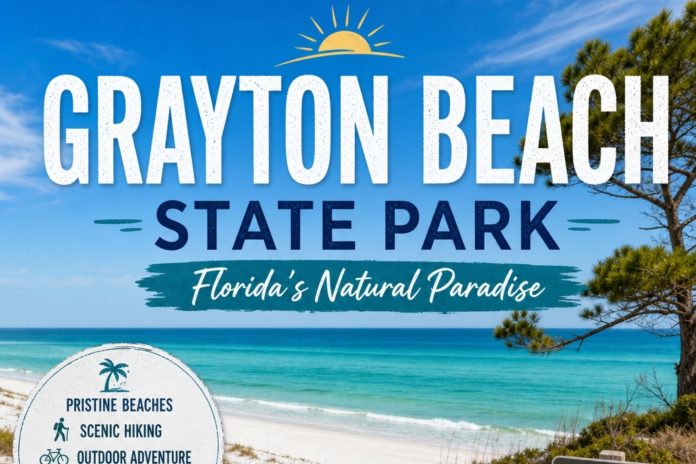
Grayton Beach State Park is the reason I keep telling people that the best beach on 30A isn’t a community you can rent a house in. It’s a state park that closes its gate when it gets too crowded. Nearly 2,000 acres of protected Panhandle coastline, a rare 100-acre coastal dune lake, 13 distinct ecosystems, and one of the most consistently top-ranked Gulf beaches in the country. If you’ve spent a day here, you understand why. If you haven’t, this guide will tell you exactly what’s waiting.
Grayton Beach State Park sits at 357 Main Park Rd in Santa Rosa Beach, right along Scenic Highway 30A between the artsy Grayton Beach community to the east and WaterColor to the west. The park runs from 8 AM to sunset year-round and charges $5 per vehicle for day use, which may be the strongest value proposition in the Florida State Park system once you see what that five dollars gets you.
What makes this park distinct from every other beach on the 30A corridor is scale. Nearly 2,000 acres of protected land means the beach has no development behind it, no vacation rental peering over the dune line, nothing but coastal scrub, salt-bent scrub oaks, and pine flatwoods running between the Gulf and the highway. The park holds 13 distinct ecological communities within those acres, from tidal marshes and coastal dunes to pine flatwoods and cypress hammocks around Western Lake, and the transitions between them happen in a matter of minutes on the nature trail. It’s a different relationship with the Florida coast than any of the planned communities on either side of the park offer, and it shows in how the beach feels when you step onto it.
In this guide I’m covering every distinct section of Grayton Beach State Park, from the day-use Gulf beach to the cabin section to Western Lake, scoring it across all 11 categories, and going deep on the sand and water that have earned this beach national recognition. I also close with my personal take on why this is my favorite beach in all of Florida.
The Vibe and Culture at Grayton Beach State Park
Wilderness with a Campfire in It
The vibe at Grayton Beach State Park is the opposite of the designed communities on either side of it. Nobody planned this. Florida’s geography planned it, and the state park system protected it.
The experience of entering the park shifts your pace within about 30 seconds. You pay your $5 at the entrance, pull through the gate, and the road narrows into a single lane through coastal scrub and tall pines. The noise of 30A drops off. The air gets saltier. By the time you reach the parking area you’re already thinking differently than you were on the highway, and that psychological shift is one of the reasons people return to this park year after year rather than just the once.
The social texture of the park is determined mostly by who stays. Day visitors come for the beach and often have it nearly to themselves on weekday mornings. Campers develop a relationship with the park over three or four days that day visitors never get: they know which trails have the best morning bird activity, where to be on the beach at low tide, and what the light looks like on Western Lake at 7 AM when nobody else is awake. The cabin guests, some of whom have been booking the same weeks for a decade or more, feel even more embedded. One family group has reportedly been coming back together since 2002, growing from 4 cabins to 15 in a single annual reservation. That kind of repeat loyalty tells you something about what a week in the park does to people.
The artsy Grayton Beach community sits immediately adjacent to the park on the east side of Main Park Road, and the two complement each other in a way that’s been true since long before 30A became a destination. The town has galleries, the Red Bar, sandy streets, and the kind of creative, unpretentious atmosphere that makes it feel like a real place rather than a lifestyle concept. A morning in the state park followed by an evening in the Grayton Beach community is as good a day as the Panhandle offers anywhere.
Seasonally, the park follows the pattern of the rest of 30A but with its own significant twist: it can actually close to day visitors when it reaches capacity, a policy in effect since June 2024. Summer weekends see the park fill by mid-morning, and the gate goes down until cars leave. Campers and cabin guests with reservations are still admitted when the park closes to day visitors. This isn’t a minor footnote; it’s the single most important planning detail for a day visit to this park, and I cover it in full in the local knowledge section.
Grayton Beach State Park: Six Distinct Zones and What to Expect at Each
Grayton Beach State Park has two separate beach sections, a 100-acre coastal dune lake, an outfall zone where the lake meets the Gulf, a nature trail through 13 ecosystems, and a campground that delivers its own relationship with the beach at hours the day-use crowd never sees. Here’s what each zone actually looks like.
The Day-Use Gulf Beach
Main Parking Area to the Shoreline
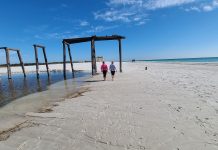
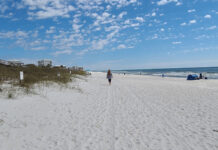
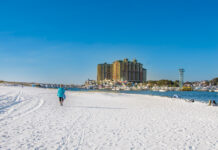
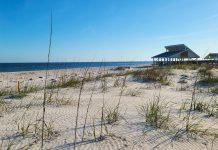
You’ll notice two things the moment you clear the boardwalk and step onto the day-use beach at Grayton Beach State Park. The first is how wide the beach is. The high dune line behind the shore creates a significant visual separation from the park interior, and the sand stretches out generously in both directions without a rental umbrella row or a condominium in the frame. The second thing you’ll notice is the silence. The Gulf water here is calm relative to the ocean beaches, the sand absorbs sound, and the dune system provides enough elevation to block highway noise. It’s quiet in a way that takes a few minutes to settle into.
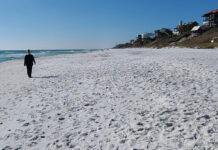
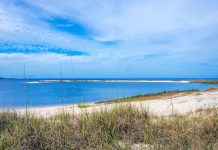
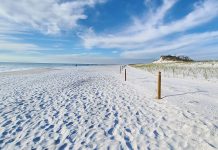
The sand quality here is the same near-pure quartz formation that runs the whole Panhandle, but the protection status of the state park means it has been far less trafficked and disturbed than the community beaches on either side. The grain is fine and well-sorted, the upper beach is powdery rather than churned, and the color is the kind of brilliant white that makes people reach down and run it through their fingers without planning to. The water off this beach runs emerald to deep turquoise on calm days, with visibility into the sand bottom at knee and waist depth, and the gradual entry slope makes it comfortable for all swimming levels.
This beach has been ranked among the most beautiful in the United States by multiple national surveys over multiple decades, and the ranking isn’t wrong. What earns it isn’t dramatic geography, it’s consistency: the sand is always this good, the water is almost always this color, and the absence of development behind the dune line never changes. I’ve been here in February with the beach to myself and in July with a summer crowd, and the beach holds up in both conditions. On a calm day, the Gulf here is as close to glass as it gets anywhere on the Panhandle.
The Cabin Beach
Gated Section for Cabin Guests
The cabin beach is a separate section of the Gulf beach accessible only through a gated area for guests staying in the park’s 30 duplex cabins. It sits roughly a half-mile from the day-use beach section, and the walk between the two along the tidal line is one of the better beach walks inside the park, passing the dune scrub transition zone and possibly crossing a shallow stream if Western Lake has recently overflowed through the dune base.
The cabin beach has a distinctly quieter quality than the day-use section because the only people on it are the people who slept 200 yards away. No day visitors, no turnover of cars in the parking lot, nobody carrying rental chairs across the sand. What you find here is the version of this beach that looks most like what Florida’s Gulf coast looked like before the development corridor arrived: wide white sand, natural dune line, the Gulf ahead, nothing else. The accessible boardwalk connects the cabin area to this beach section and makes it reachable regardless of mobility level.
If you’ve been debating whether to book a cabin specifically for the beach, this section answers the question. The cabin beach is quieter than anything available on the 30A corridor at any price point, and you have it exclusively as a cabin guest. The cabins themselves are fully equipped two-bedroom, one-bath duplexes with kitchens, screened porches, gas or electric fireplaces, BBQ grills, and linens. No Wi-Fi, no TV. That’s intentional, and after a day on this beach you’ll understand why no one’s missing either.
Western Lake
The 100-Acre Coastal Dune Lake
Western Lake is the reason Grayton Beach State Park occupies a different category from every other beach park I’ve covered on the Panhandle. It’s a 100-acre brackish coastal dune lake, a geologic feature found in only about 30 locations worldwide, and it sits directly behind the dune line at the park’s eastern edge. Kayaks, canoes, and NuCanoe rentals are available seasonally at the ranger station through the Friends of Grayton Beach and Deer Lake State Parks, and the boat ramp provides launch access for your own vessels.
Paddling Western Lake in the early morning is one of the most complete sensory experiences available at any state park in Florida. The water is glassy at that hour. Spanish moss hangs from the cypress trees along the northern shore. Herons stand motionless in the shallows, waiting. You might see an alligator on the bank, which is startling the first time and oddly peaceful after that. The contrast between the lake’s complete stillness and the steady sound of the Gulf a dune-width away is surreal in the best way. I’ve been out there at sunrise and sat for twenty minutes without paddling anywhere because moving seemed like the wrong choice.
The lake is also a serious fishing destination. Both surf fishing on the Gulf and lake fishing on Western Lake are permitted with a valid Florida fishing license, and the lake holds bass, bream, panfish, and catfish in its freshwater zone, with the fish population shifting toward the saltwater-tolerant species near the Gulf-influenced outfall zone. The combination of fresh and brackish conditions creates an unusually diverse fishery for a single body of water, and the banks are accessible on foot for those who prefer to cast from shore rather than a boat.
The Western Lake Outfall Zone
Where the Lake Meets the Gulf
The outfall zone is where Western Lake periodically breaches through the dune line and connects to the Gulf, and if you’re at the beach during or after an active outfall, you’ll know it before you understand what you’re looking at. The water near the dune base runs discolored, fanning out in a small delta pattern into the turquoise Gulf. The fresh-salt junction draws baitfish, which draws the birds that follow them: pelicans working low and fast, ospreys circling above and diving repeatedly into water 30 feet from the shore, terns in tight rotation over the plume edge.
The outfall zone shifts in location along the dune face depending on where the lake finds its exit, and the exact spot varies with lake water levels driven by rainfall. You’re looking for a discolored fan of water running from the dune base down to the waterline, possibly with a small cut channel in the dune. It’s not always active, and when it’s inactive the zone is still visible as a low, damp section of the dune face with different vegetation from the surrounding area. When it is active, it’s one of the best free wildlife observation points on the entire 30A corridor.
This is the feature I find myself describing most when people ask what makes Grayton Beach State Park worth the extra effort over just using the community beach access points on either side of it. The beach is excellent. The lake is rare. The outfall zone where those two things meet and create a dynamic ecological interface is genuinely something I haven’t seen replicated at any other point on the Florida Gulf coast that I’ve walked.
The Grayton Beach Nature Trail
1 Mile Through 13 Ecosystems
The Grayton Beach Nature Trail is a roughly one-mile loop that starts near the parking area and winds through the interior landscape of the park, touching 13 distinct ecological communities in the process. You’ll move from coastal scrub through pine flatwoods, past dune wetlands and through a transition zone of salt-bent scrub oaks before arriving at views of Western Lake and the dune system above the Gulf. It’s not a strenuous trail but it’s a dense one: every hundred yards delivers a visible ecosystem change.
The sound design of this trail is one of the things I remember most clearly. Gulf sounds come and go as the trail moves closer to and further from the dune ridge. Bird calls shift by habitat: the coastal scrub has its wrens and towhees, the pine flatwoods have their woodpeckers and nuthatches, the lake edges have herons and ospreys. At the right hour in the right season you can walk 20 yards and hear the ambient soundscape change three times. The trail is part of the Great Florida Birding Trail and draws dedicated birders who know exactly which sections produce which species.
The best window for the nature trail is the morning, specifically in the first two hours after sunrise when wildlife is most active and the light through the pines is worth stopping for. I’ve done this trail in afternoon heat in July and it’s still good, but the morning version is a different walk entirely. The trail is well-marked and suitable for most fitness levels. For visitors who arrive at the park and find the beach parking full, the nature trail is a genuinely worthy alternative that most people in the parking lot queue don’t think of.
The Campground and the Evening Beach
The Version of This Park Most Day Visitors Never See
The Grayton Beach campground holds 59 sites, all with water and electric hookups and some with sewer, tucked into the coastal forest between Western Lake and the Gulf. The older loop, sites 1 through 36, is the one most seasoned campers prefer: denser vegetation, more visual separation between sites, more sense of being in the landscape rather than parked in a lot. The access road runs close to the lake, and a short path from several sites leads directly to the water’s edge.
The evening experience in the campground is what converts people to multi-night stays. The star visibility from inside the park, away from the 30A highway lighting, is genuinely striking on a clear night. The Gulf sounds carry through the pine trees after dark. The ranger-led programs at the campground amphitheater run seasonally and are worth attending for the sea turtle talks in summer and the ecosystem programs in the shoulder seasons. Breakfast the following morning with the Gulf two minutes away changes the whole rhythm of a beach vacation.
What the campground gives you that no day visit can replicate is the park at hours that aren’t operating hours. The beach before the gate opens in the morning, when the sand has been reset by the overnight tide and the shorebird tracks are fresh. The lake at dusk when the evening insects bring the bats out over the water and the herons make one more patrol before settling in for the night. Those hours exist inside the campground fence regardless of what’s happening on 30A, and they’re the reason the 59 campsites fill months in advance for summer dates.
Grayton Beach State Park Rankings: Expert Scores Across 11 Categories
These scores weigh the full park experience, including both beach sections, Western Lake, and the camping and cabin overnight options.
Sand Quality
10/10
Near-pure quartz, protected by state park status from vehicle access and heavy foot traffic. The grain here is finer and more consistent than any comparable stretch of public beach on the 30A corridor because the dune system has been left to function naturally. Multiple national rankings have put this sand among the best in the country, and those rankings are accurate.
Hiking and Beach Walking
9.5/10
1 mile of Gulf beach plus 4 miles of nature trail through 13 ecosystems, plus the full Western Lake shoreline for walking and paddling. The variety of terrain within 2,000 acres is more than most Panhandle parks three times the size. Loses one point only because the beach itself is relatively short compared to parks like Topsail Hill.
Shelling
7/10
Better than most 30A community beaches because the beach sees less picking and less foot traffic. Calico scallops, augers, fighting conchs, and sand dollars show up regularly after storm events and northeast winds. The cabin beach section is the least-picked stretch on the whole park and worth walking after a blow specifically for the wrack line material.
Water Conditions
8/10
Same near-pure quartz seafloor as the rest of the western Panhandle, with excellent clarity on calm days and the emerald-turquoise color the corridor is famous for. No lifeguards anywhere in the park. Gradual entry, generally manageable surf, with the flag system indicating conditions. Swimming quality is high when conditions are right; read the water yourself.
Scenery and Natural Beauty
10/10
Two distinct beach sections with no development in any sightline, a 100-acre coastal dune lake with cypress hammock edges, 13 ecosystem transitions within walking distance, and a dune ridge that frames everything. The visual variety per acre here is unmatched on 30A and competitive with any beach park in Florida.
Birding and Wildlife
9/10
Part of the Great Florida Birding Trail, with 13 habitat types supporting an exceptional species range. Bald eagles, ospreys, herons, snowy plovers, pelicans, and migratory warblers in season are reliable sightings. Alligators in Western Lake. Sea turtle nesting on the Gulf beach May through October. Deer and foxes on the nature trail at dawn and dusk.
Family Friendliness
8/10
Excellent family beach with calm, gradual-entry water, picnic pavilions, a playground, and ranger programs that are genuinely good for kids at any age. The capacity closure situation requires planning. No lifeguards means parents need to supervise water time actively. The cabin option with a full kitchen makes a family week here very manageable.
Dog Friendliness
4/10
Leashed dogs are welcome on all nature trails and in the campground. Dogs are not permitted on the beach at all, either the day-use section or the cabin section. The nature trail is genuinely good dog hiking terrain, but if beach access for your dog is the priority, the Grayton Beach community beach immediately adjacent to the park is a better option for that day.
Solitude and Peace
9/10
On weekday mornings in the shoulder and off-seasons, this beach delivers the kind of quiet that’s essentially unavailable anywhere else on 30A regardless of price. Even in summer, the early morning before 9 AM and the late afternoon after 4 PM offer beach conditions that the day-use parking peak never gets to. The cabin and campground versions of this park are exceptionally peaceful.
Entertainment and Nightlife
2/10
The park itself has no nightlife. The campground amphitheater runs seasonal ranger programs. The Red Bar in the Grayton Beach community is a five-minute walk from the park entrance and covers the evening entertainment need well. The score reflects the park’s internal offerings; add the adjacent community and the evening picture changes significantly.
Parking and Beach Access
7/10
A dedicated parking lot at the day-use beach area with a standard entrance fee. The access is straightforward and the parking-to-beach walk is short. The significant caveat is the capacity closure policy active since June 2024: the park gates can close to day visitors during high visitation, and this happens by mid-morning on summer weekends. Campers and cabin guests with reservations are not affected.
Grayton Beach Sand & Water
The sand at Grayton Beach is about as soft as Florida sand gets, fine and white enough that it genuinely feels like powdered sugar under your feet, and on a dry day it will even squeak a little as you walk. The beach itself is flat and easy to move around on, with a moderate width between the dunes and the water, plenty of room to spread out a blanket without feeling boxed in. That upper dry sand stays loose and a little tiring to walk through for long stretches, but it’s wonderful for lounging, digging, and building with, especially once you add a little water to help it hold a shape. Get closer to the water and the sand firms right up, packed hard enough by the waves that walking takes no effort at all. However you’re using this beach, sunbathing, playing with the kids, or just walking the shoreline, the sand here rarely gives you a reason to complain.
The water is the other half of what makes this beach famous, a clear, vivid emerald green on a calm day that photographs even better than it looks in person. Entry is gradual and easy, no sudden drop-offs to worry about, which makes it a comfortable spot for waders and swimmers of most ages and experience levels. Conditions are generally calm to moderate, though there are no lifeguards on duty here, and like anywhere on the Gulf, rip currents can develop during and after windy weather or storm systems passing through, so it’s always worth checking conditions before you swim out past waist deep.
-
Walkability. Flat, easy, and comfortable underfoot, especially near the waterline where the sand packs firm. Great for a slow shoreline stroll.
-
Softness & Playability. Fine, powdery sand that’s excellent for digging, lounging, and sandcastles once it has a little moisture worked in.
-
Barefoot Comfort. Genuinely comfortable most of the day, cool underfoot and low on shells. The one exception is the dry upper beach at midday in summer, which heats up fast.
-
Swimmability. Gradual entry and calm to moderate conditions suit most swimmers well. No lifeguards are on duty, so keep an eye on conditions and respect rip current risk after any windy stretch.
Want the full geology, grain composition, and the complete sand and water condition ratings? I broke it all down separately in Sand & Shore: Grayton Beach.
Dogs & Pet Accessibility
Are Dogs Allowed on the Sand? RESTRICTED.
Inside Grayton Beach State Park, leashed pets are welcome in designated day-use areas, on the Nature Trail, and throughout the Hike & Bike Trail system, but they are not permitted on the Gulf beach itself, anywhere in the park. Outside the park, on the public beach in the village and along the rest of 30A, Walton County requires a paid annual dog permit, and that permit is only available to county residents or property owners, not visitors.
Where Dogs Are Allowed
- ✓The Grayton Beach Nature Trail and the entire Western Lake Hike & Bike Trail system, leashed, inside the park.
- ✓The campground at Grayton Beach State Park welcomes pets.
- ✓The paved Timpoochee Trail and the streets of Grayton Beach village, leashed, no permit required.
- ✓The public beach outside the park, but only for Walton County residents or property owners with a current dog permit, and only during set early-morning and evening hours.
Where Dogs Are NOT Allowed
- ✗The Gulf-facing beach anywhere inside Grayton Beach State Park.
- ✗The public 30A beach for visitors without a Walton County dog permit, at any hour.
- ✗Cabins and cabin areas within the park.
Paws on the Ground Reality
This is a genuinely dog-loving town, Grayton’s unofficial motto is “Nice Dogs, Strange People,” and there’s a mural in the Shops of Grayton dedicated to local dogs. But the actual beach access rules are stricter here than the town’s personality might suggest. If you’re visiting without a Walton County address, plan your dog’s beach time around the Nature Trail and the Hike & Bike Trail instead of the sand itself, both are genuinely good walks and both welcome your leashed dog without any permit at all.
If a beach walk with your dog is the priority for your trip, the trail system here delivers real mileage and real scenery. Just don’t plan on your dog joining you for a swim.
Crowd Levels and the Overall Feel at Grayton Beach State Park
The crowd at Grayton Beach State Park self-selects in a specific way: the $5 entrance fee and the park’s occasional capacity closures keep the most casual visitors from showing up unplanned, while the campground and cabin system builds a core of repeat visitors who know exactly what they’re coming for. The result is a beach that draws a nature-minded, intentional crowd rather than the mix of casual and committed visitors you find at community beach access points on either side of the park.
The day-use beach is the most variable section by crowd level. A clear summer Saturday will fill the parking lot by 10 AM and potentially trigger the capacity closure by midday. A Tuesday in October will give you the same beach with a handful of other people on it. The campground stays more consistently occupied through the year because the reservation system creates advance planning, and campers tend to have a quieter presence on the beach than day-use crowds simply because they’ve committed to being here for days rather than hours.
The seasonal pattern at the park runs closely parallel to the rest of 30A:
- Summer (June through August): Peak visitation with the real risk of capacity closures on weekends and busy days. Arrive before 9 AM without exception. The campground is at full occupancy well in advance of summer dates.
- Spring (March through May): Good beach conditions, spring break family crowds in March and April, and the start of sea turtle nesting season in May. Campsite availability is tighter in spring than fall.
- Fall (September through November): The best window for a relaxed visit. Water stays swimmable through October, crowds thin after Labor Day, migratory bird activity on the nature trail picks up significantly, and the park is at its most atmospheric in the October and November light.
- Winter (December through February): Quiet and uncrowded, with the campground hosting mostly RV travelers and the cabins available on shorter advance notice than summer. The beach in winter is cold for swimming but genuinely beautiful to walk, and the bird activity on Western Lake in January and February is excellent.
Who Is Grayton Beach State Park Really For?
✓ Who Will Love Grayton Beach State Park
-
Anyone who wants the best beach on 30A in its most protected, undeveloped state, with the ranked-beach reputation fully backed by what you actually find when you get there
-
Paddlers and kayakers who want access to a rare 100-acre coastal dune lake with cypress hammock shores, alligator sightings, and a wildlife density that a public water body can’t replicate
-
Birders following the Great Florida Birding Trail, with 13 distinct habitats to work through within a single park and a bird list that grows across the seasons
-
Campers who want a full-hookup campground in a forested coastal setting with a nationally ranked Gulf beach two minutes from the site and a dune lake to paddle between beach walks
-
Families who want a state park beach vacation with a proper kitchen, screened porch, and a gated private beach section included in the cabin rental
-
Beach walkers, shellers, and wildlife watchers who want miles of unworked shoreline and the wrack line benefits of a protected beach
✗ Consider Another Beach If…
-
You need to bring your dog to the beach. Dogs are welcome in the park on trails and in the campground, but not on the beach. The Grayton Beach community beach immediately adjacent allows dogs on leash and is a short walk from the park entrance.
-
You’re planning a late-morning day visit in summer without checking conditions first. The park can close to day visitors at capacity, and it reaches that point by mid-morning on busy summer days. Call ahead or plan to arrive before 9 AM.
-
You need lifeguard coverage. There are no lifeguards at Grayton Beach State Park. If lifeguard supervision is a requirement for your group, Seaside’s summer beach is the closest 30A option with coverage.
-
You want chair rentals, umbrella service, food vendors on the sand, or any beach infrastructure beyond restrooms and picnic pavilions. None of that exists at the park beach.
-
Your RV is over 40 feet. The campground has a 40-foot maximum RV length, and not all sites can accommodate that. Check site specifics before booking if you’re running a larger rig.
Things to Do at Grayton Beach State Park
The park’s activities list spans the Gulf beach, Western Lake, the nature trail system, and the broader Grayton Beach community immediately adjacent.
-
Beach Walking. One mile of protected Gulf beach, accessible in both sections. Walk from the day-use area toward the cabin section along the tidal line and cross two beach ecosystems, the outfall zone, and some of the least-trafficked sand on all of 30A. The walk between the two beach sections at low tide is one of the better beach walks on the whole corridor.
-
Kayaking and Canoeing on Western Lake. The boat ramp on Western Lake provides launch access, and kayak, canoe, and NuCanoe rentals are available seasonally at the ranger station through the Friends of Grayton Beach and Deer Lake State Parks (rentals include paddles and life vests). The lake is calm, the cypress hammock edges are dense with wildlife, and the connection to the Gulf dune system is visible from the water in a way that changes how you understand the park’s geography.
-
Hiking the Nature Trail. The 1-mile Grayton Beach Nature Trail loops through 13 distinct ecosystems between the parking area and the lake. Part of the Great Florida Birding Trail. Best in the morning. Well-marked and accessible for all fitness levels, with lake views and dune views as the trail opens up from the scrub sections.
-
Birding. Bald eagles, ospreys, herons, egrets, snowy plovers, piping plovers, painted buntings in season, and migratory warblers in spring and fall are all part of the park’s bird list. The variety of habitat within the park’s 2,000 acres produces an unusually broad species range for a single-park visit. The nature trail and Western Lake shoreline are the two most productive birding areas.
-
Swimming. Calm, gradual-entry Gulf water with no lifeguards on duty. Read the water and check the flag system before swimming. The beach water peaks in the mid-to-upper 80s°F by late summer and stays swimmable comfortably through October.
-
Fishing. Surf fishing along the Gulf beach and fishing on Western Lake are both permitted with a valid Florida fishing license. The lake holds bass, bream, panfish, and catfish. The Gulf beach produces redfish, pompano, and whiting. The boat ramp on Western Lake serves as the primary lake fishing launch point. Bank fishing from the lake shore is accessible on foot.
-
Shelling. Best after a storm or sustained northeast wind, particularly along the cabin beach section and near the Western Lake outfall zone. The beach sees less picking pressure than any community beach on 30A. Collect only clearly empty and bleached shells. Leave sand dollars that still have color as they are still alive.
-
Sea Turtle Programs and Nesting Season. Sea turtles nest on the Gulf beach from May through October. The park runs ranger-led turtle programs during nesting season, including nest identification walks and education programs. All beach equipment must be removed from the sand by sunset during nesting season.
-
Camping and Stargazing. The campground’s position inside the park boundaries keeps it away from the 30A road lighting, and the star visibility from the campfire circles on a clear night is dramatically better than anything available from a 30A vacation rental. The amphitheater hosts seasonal ranger programs. Reserve online up to 11 months in advance at the Florida State Parks reservation system or call 800-326-3521.
-
Biking the 30A Trail. The park connects to the 19-mile Timpoochee Trail, making Grayton Beach State Park an excellent base for a day of biking the full 30A corridor. Bring your bike or rent from outfitters in the Grayton Beach community. The off-road trail within the park itself adds another option for riders who want to stay inside the park boundaries.
Local Knowledge and Practical Advice
A few things I’ve picked up over multiple visits that make the difference between a good day at this park and a great one:
-
Arrive before 9 AM on any summer weekend or busy day. The park actively closes its gates to day visitors when it reaches capacity. This policy has been in effect since June 2024 and is not a rare occurrence on summer weekends: the closure can happen by mid-morning and last several hours. Campers and cabin guests with reservations are still admitted when the park closes. If you’re a day visitor without a reservation and you arrive late on a summer weekend, you may not get in.
-
Call ahead before a summer day visit. The park number is 850-267-8300. A quick call on a summer morning will tell you the current status and whether the gate is open. The park’s Florida State Parks page also posts alerts about capacity closures. Thirty seconds of planning saves a wasted trip across the bridge.
-
Book cabins and campsites as early as the reservation window opens. Reservations open 11 months in advance. Summer cabins and popular campsite loops fill quickly within days of opening. If you want a specific week in July or August, mark the date 11 months ahead and book the day the window opens. Fall dates are more flexible but still fill ahead. Use the Florida State Parks reservation system online or call 800-326-3521.
-
Dogs on trails, not on the beach. The nature trail, the campground, and the area around the boat ramp and Western Lake are all open to leashed dogs. The beach itself, both the day-use section and the cabin section, does not permit dogs. If your day requires both dog time and beach time, start with the nature trail and then walk to the Grayton Beach community beach immediately east of the park entrance, which does allow dogs on leash.
-
No lifeguards, and the outfall zone requires awareness. There are no lifeguards at Grayton Beach State Park. Check the flag system at the park entrance before swimming. Additionally, when Western Lake is actively overflowing through the dune face to the Gulf, the outfall zone near the dune base creates current and mixed-water conditions. Avoid swimming in or directly adjacent to an active outfall.
-
Check kayak rental availability at the ranger station before planning your lake day around it. Rentals on Western Lake are offered seasonally through the Friends of Grayton Beach and Deer Lake State Parks. Availability can be limited and hours vary. If you’re planning a specific paddling trip, call the park ahead of time to confirm current rental status. You can also bring your own non-motorized vessel and use the boat ramp.
-
Bring bug spray, especially in the transition seasons and after rain. The coastal scrub and pine flatwood ecosystems inside the park create ideal mosquito habitat in certain weather conditions. This is particularly true on the nature trail in the morning after overnight rain. The beach itself is usually fine, but the trail and the lake shoreline can require protection.
-
Remove all beach equipment by sunset during nesting season (May through October). Sea turtle nesting is active on the Grayton Beach State Park Gulf beach during this window. All chairs, tents, and umbrellas must be off the sand by sunset. Use a red-filtered flashlight if you’re on the beach after dark during nesting season, and give nesting turtles a wide berth if you encounter one on the beach at night.
-
Pack everything you need for the beach day. There are no food vendors at the park beach, no umbrella or chair rentals, and no concession stand at the waterline. The picnic pavilions near the day-use beach area have tables and grills. The Grayton Beach community, a 5-minute walk from the park entrance, has cafes and a general store if you need supplies before heading in.
-
The best version of this park is early morning before most day visitors arrive. The nature trail with active morning birds, Western Lake in the glass-still pre-wind hour, and the beach before footprints are on it are all genuinely different experiences from what’s available at noon on a summer day. This is especially true for overnight guests. Set an alarm, make coffee at the cabin, and go.
Where to Stay at or Near Grayton Beach State Park
The park itself offers two excellent overnight options at opposite ends of the comfort spectrum, and the surrounding 30A corridor provides the full range of alternatives.
Campground (59 Sites)
The Grayton Beach State Park campground has 59 sites in the coastal forest between Western Lake and the Gulf. All sites have water and electric hookups; some have sewer. Four sites are ADA accessible. Rates start at $30 per night. The older loop (sites 1 through 36) is the most wooded and private, preferred by most returning campers. The newer sections offer more level pads for larger rigs. Maximum RV length is 40 feet. All sites have a ground grill, picnic table, water, and electric. A centralized dump station is available. Reservations open 11 months in advance at the Florida State Parks reservation system or by calling 800-326-3521.
Duplex Cabins (30 Cabins)
The park’s 30 two-bedroom, one-bath duplex cabins sit in the pine woods with a gated boardwalk connecting them to the private cabin beach section on the Gulf. Each cabin sleeps up to six people and comes fully equipped: kitchen with stove, refrigerator, microwave, dishwasher, flatware, utensils, pots and pans, and coffee pot. Screened porch, gas or electric fireplace, BBQ grill, and linens are included. There is no Wi-Fi and no TV. Peak season rates (February 1 through July 31) are $130 per night or $775 per week. Off-season rates (August 1 through January 31) are $110 per night or $705 per week. Book early: peak season cabins fill months ahead, and some extended family groups have been booking the same weeks for years.
Grayton Beach Community Vacation Rentals
The Grayton Beach community is immediately adjacent to the park entrance on the east side of Main Park Road. Vacation rentals range from original beach cottages to larger Gulf-front homes, with the community’s arts-and-sandy-streets character providing a distinctly different experience from the more designed 30A communities further east. This option gives you walkable access to the park, the Red Bar, and the beach while staying in the more social Grayton community rather than the state park itself.
WaterColor Inn and Resort
The WaterColor Inn, a short distance west along 30A, is the primary full-service hotel on the corridor and provides resort amenities including pools, Western Lake boat house access, and proximity to both the state park and the WaterColor community. It’s the best hotel option for visitors who want a resort-service experience alongside state park access.
Budget Options Along US 98
The US 98 corridor between Destin and Panama City Beach offers a full range of budget to mid-range hotel options 10 to 20 minutes from the park. Freeport, north on US 331, also has more affordable lodging for visitors day-tripping to the park. Neither option provides the community character or walking access of staying at or near the park, but both are practical for budget-conscious visitors making the park a day-trip destination.
What Makes Grayton Beach State Park Different from Nearby Beaches
Every beach in the 30A corridor has something to recommend it. Grayton Beach State Park has several things that don’t exist anywhere else along this stretch.
The beach is ranked nationally, consistently, and the ranking holds up in person
Grayton Beach has appeared on national top-beach lists, including the coveted top spot in Dr. Beach’s annual survey, multiple times over multiple decades. That’s not marketing: it reflects a genuinely exceptional combination of sand quality, water color, dune integrity, and protected natural character that survives close inspection. Most beaches that get ranked at the top look good from a distance and feel ordinary up close. This one doesn’t.
Western Lake gives the park a second complete ecosystem within the same visit
A 100-acre brackish coastal dune lake with cypress hammock edges, alligators, freshwater fish, wading birds, and a boat ramp sits literally within a 10-minute walk of the Gulf beach. No other accessible state park beach on the 30A corridor offers this combination within a single day-use fee. The experience of paddling Western Lake in the morning and walking the Gulf beach in the afternoon is the park in its fullest form.
Overnight access fundamentally changes what you experience
The campground and cabin options let you access the park at hours that don’t exist for day visitors. The pre-dawn beach. The evening bird activity on the lake. The stars from inside the park fence. These are experiences that no day trip produces, and they’re the reason guests return year after year to the same cabin weeks.
The adjacent Grayton Beach community adds culture the park doesn’t have to provide
The Red Bar is a five-minute walk from the park entrance. Gallery studios and the sandy-street feel of the Grayton community are immediately accessible for an evening. The state park provides the wilderness; the community provides the culture. Together they make a more complete destination than either one alone.
Grayton Beach State Park vs. Other Nearby Parks and Beaches
Grayton Beach State Park vs. Topsail Hill Preserve State Park
These are the two strongest state park beaches on the 30A corridor, and the comparison is worth making carefully. Topsail Hill has 3.2 miles of protected beach, three coastal dune lakes, and 15 miles of trails. Grayton Beach has 1 mile of Gulf beach, one 100-acre dune lake, and 4 miles of trails. Topsail is a bigger park. Grayton Beach is consistently ranked higher as a beach experience, has the cabin option with private beach access, and the adjacent Grayton Beach community provides a social and cultural dimension that Topsail Hill doesn’t have nearby. Choose Topsail Hill if you want more trail mileage and longer beach walking. Choose Grayton Beach if you want the most complete overnight park experience and the combination of lake, beach, and community.
Grayton Beach State Park vs. Deer Lake State Park
Deer Lake State Park, just east along 30A, is a small preserve protecting another coastal dune lake and a short stretch of Gulf beach. Deer Lake is more intimate and less developed, with no camping or cabin options and a simpler day-use footprint. It’s worth visiting as part of a 30A day if you’re already at Grayton Beach State Park, but it’s not a substitute for it. They’re complementary rather than competitive: Grayton Beach is the full experience; Deer Lake is the quieter satellite.
Grayton Beach State Park vs. Henderson Beach State Park (Destin)
Henderson Beach State Park in Destin is another protected dune beach on the same quartz formation, with a campground and direct Gulf access. Henderson Beach is closer to Destin’s amenities and offers a longer stretch of protected beach (about 30 acres with 6,000 feet of beach). Grayton Beach State Park has the coastal dune lake as its key differentiator. If you’re choosing between them, the lake and the cabin option give Grayton Beach State Park the edge for an overnight trip. For a campsite-only visit with easy access to Destin dining, Henderson Beach is competitive.
Grayton Beach State Park vs. Grayton Beach Community Beach
The community beach just east of the park entrance is a public access point with limited parking and the full Grayton Beach bohemian community character behind it. It’s the best nearby alternative for dog owners, since the community beach allows dogs on leash while the state park beach doesn’t. The community beach is also free and has no capacity closure risk. The state park beach has national-ranking sand quality, better dune protection, the Western Lake access, and the full park experience. They’re five minutes apart; visit both on the same day if you can.
Bottom line: Grayton Beach State Park is the single best overall beach experience on the 30A corridor, and it earns that position through the combination of its Gulf beach quality, Western Lake, the campground and cabin overnight options, and the 13-ecosystem nature trail. The capacity closure requirement and the no-dogs-on-beach rule are real considerations that require planning. Every other aspect of this park rewards the effort.
Grayton Beach State Park, Florida: Frequently Asked Questions
Is Grayton Beach State Park worth visiting?
Yes. It’s one of the most consistently top-ranked beaches in the United States, holds a rare 100-acre coastal dune lake, protects nearly 2,000 acres of natural habitat on one of Florida’s most developed beach corridors, and offers camping and cabin overnight options that genuinely change the experience. The $5 entrance fee may be the best value in the Florida State Park system.
What is the entrance fee at Grayton Beach State Park?
$5 per vehicle for day use. The park is open 8 AM to sunset, 365 days per year. Campers and cabin guests pay their nightly accommodation rate separately.
Can the park close to visitors?
Yes. As of June 2024, the park closes to day visitors when it reaches capacity during high visitation periods. Closures can last several hours and occur intermittently, primarily on summer weekends and holidays. Campers and cabin guests with reservations are always admitted even when the park is closed to day visitors. Call 850-267-8300 before a summer day visit to check current gate status.
Are dogs allowed at Grayton Beach State Park?
Leashed dogs are welcome on the nature trails and in the campground. Dogs are not permitted on the beach at Grayton Beach State Park, either the day-use section or the cabin section. The Grayton Beach community beach immediately east of the park entrance does allow dogs on leash and is a short walk away.
Are there lifeguards at Grayton Beach State Park?
No. There are no lifeguards anywhere in the park. Check the South Walton beach flag system before swimming and read the water yourself. Avoid swimming near the Western Lake outfall zone when the lake is actively breaching through the dune to the Gulf.
How do I book the cabins at Grayton Beach State Park?
Cabin reservations open 11 months in advance through the Florida State Parks reservation system online or by calling 800-326-3521. Peak season (February 1 through July 31) rates are $130 per night or $775 per week. Off-season (August 1 through January 31) rates are $110 per night or $705 per week. Cabins sleep up to 6 people and include a full kitchen, screened porch, fireplace, BBQ grill, and linens.
What is Western Lake at Grayton Beach State Park?
Western Lake is a 100-acre brackish coastal dune lake, a rare geological feature found in fewer than 30 locations worldwide. It sits directly behind the dune line at the park’s eastern edge and periodically overflows through the dune face to connect with the Gulf. Kayak, canoe, and NuCanoe rentals are available seasonally at the ranger station. The lake supports bass, bream, panfish, catfish, herons, egrets, ospreys, and occasionally alligators on the banks.
What is the best time to visit Grayton Beach State Park?
Fall, specifically September through November, offers the strongest combination of warm water, lighter crowds, and excellent bird activity on the nature trail during fall migration. Summer is peak season and brings the highest risk of capacity closures. Winter is very quiet and good for nature trail hiking and Western Lake wildlife. Spring has good beach conditions but spring break crowds in March and April.
Can I kayak on Western Lake?
Yes. Kayak, canoe, and NuCanoe rentals are available seasonally at the ranger station through the Friends of Grayton Beach and Deer Lake State Parks (rentals include paddles and life vests). A boat ramp is available for personal non-motorized vessels. Call the park ahead of your visit (850-267-8300) to confirm current rental availability and hours.
How does Grayton Beach State Park compare to Topsail Hill Preserve?
Both are outstanding state park beaches on the 30A corridor with coastal dune lakes. Topsail Hill has a longer beach (3.2 miles vs. 1 mile at Grayton) and more trail mileage. Grayton Beach State Park has cabin options with private beach access, ranks higher as a single beach destination by most national measures, and is immediately adjacent to the artsy Grayton Beach community. For overnight trips, Grayton Beach State Park’s cabins and the proximity to the community make it the stronger choice.
Patti’s Perspective: My Honest Take on Grayton Beach State Park
I have told more people that Grayton Beach State Park is one of my favorite beaches in Florida and every time I say it I mean it more than the last time. That might seem like the kind of thing you say about the first place you fell in love with rather than an expert judgment, but I’ve walked every beach in this state, and the judgment holds up. This park is the one that keeps setting the bar.
What I keep coming back to is the specific feeling of the park at hours other people don’t experience it. I’ve been on the beach here before the gate opened on a morning in February with no one else in sight, and I’ve been on Western Lake at sunrise with herons posting up on the lake edge and the cypress moss doing that golden morning thing it does. Both of those experiences are available every single day of the year at this park, and they don’t cost anything once you’ve paid your five dollars. They just require the willingness to show up early and stay present.
Western Lake is where I spend most of my non-beach time here, and if you haven’t paddled it you’re missing the argument for why this park scores a 9 instead of an 8. The lake is a completely different world from the Gulf 200 yards away, and moving between the two within a single day reminds you that this park contains multiple complete experiences rather than one beach experience with a parking lot. I’ve seen an alligator on the bank at Western Lake on a winter morning that looked so settled and still it could have been a log except for the slight movement of its breathing. That’s the kind of thing you don’t forget, and it’s the kind of thing a beach-only day visit misses.
My honest caveat on Grayton Beach State Park for day visitors is a single word: early. The park’s capacity closure policy means that a summer plan to arrive at 11 AM can result in a closed gate and a wasted drive. This is not a deterrent to visiting; it’s a schedule adjustment. Arrive before 9 AM in summer. Walk the nature trail first. Get to the beach while it’s still in morning light. The park rewards that discipline completely.
My verdict: 9.5/10. In my personal top five beaches in Florida, and this is the one I recommend most often when someone asks me where to go if they can only pick one place on the Panhandle. The sand is among the best in the country. Western Lake is one of the rarest coastal features in the world. The overnight options are genuinely excellent. The capacity closure and the no-dogs-on-beach policy require planning. Everything else about this park is a reason to go.
Want to Live by the Water?The Grayton Beach community surrounding the state park is one of the most distinctive real estate pockets on all of 30A. Properties here tend to be original Florida beach houses and cottages rather than the master-planned architecture of Rosemary Beach or Alys Beach, which creates a different investment dynamic: lower entry prices than the polished eastern communities, strong vacation rental demand from repeat visitors who come specifically for the artsy Grayton character, and direct access to a nationally ranked state park beach.The South Walton and Grayton Beach market draws a mix of second-home buyers seeking the bohemian community feel, investors capitalizing on 30A’s year-round rental market, and a growing number of full-time residents who discovered that living next to a top-ranked state park beach is worth the premium. The proximity to both the state park and the 30A corridor makes properties in this area consistently desirable across market conditions.Explore Waterfront Living at LiveByTheWater.com
Real estate referral partner