

Hugh Taylor Birch State Park, Florida
Fort Lauderdale Beach sits on one side of A1A and, a couple hundred feet away through a pedestrian tunnel, the last tropical hardwood hammock left in Broward County sits on the other. Most people driving down Sunrise Boulevard have no idea that a genuine slice of old Florida is hiding in plain sight between the ocean and the Intracoastal, and after walking every trail in this park more than once, I think it might be the most underrated stop in this whole guide series.
Hugh Taylor Birch State Park sits on 180 acres between the Atlantic Ocean and the Intracoastal Waterway on East Sunrise Boulevard, and it exists at all because a Chicago attorney named Hugh Taylor Birch bought roughly three and a half miles of this coastline for about a dollar an acre in 1893, then gave the last of it to the state in 1941 on one condition: that it stay wild. It’s often compared to Central Park for how it functions inside a busy city, but the comparison undersells it. This is a genuine remnant of the subtropical coastal hammock that once covered this entire stretch of Southeast Florida, and almost none of it exists anywhere else nearby.
In this guide I’m walking you through every distinct piece of it, going deep on what’s actually happening with the park’s sand, its freshwater lagoon, and the ocean beyond the tunnel, scoring it honestly against the rest of Broward, and telling you exactly who this park is built for. I’ll cover the trails, where your dog is and isn’t welcome, the wildlife, the history connecting this land directly to the neighboring Bonnet House Museum and Gardens, and the quiet stretch of beach most Fort Lauderdale visitors never realize is part of the same property. For more on what lives here and what you might find along the trails and the shoreline, I’ve also written up a full hiking guide, a seaside birding guide, and a beach finds guide for this park. I close with why this particular park matters to the kind of walking I do.
The Vibe & Culture of Hugh Taylor Birch State Park
A Recluse’s Estate, Preserved on Purpose
This park exists because one very wealthy, very private man decided he’d rather leave a piece of Florida alone than develop it.
Birch first saw this coast in 1893 after being shipwrecked nearby and nursed back to health at the Stranahan camp, and he came back a few years later to buy the land for himself. By his late sixties, after losing his wife and all three of his children, he became increasingly reclusive, more interested in the tropical gardens and trees he was planting than in the city growing up around him. At ninety, in 1940, he built a Mediterranean-style home he called Terramar, land to sea, and lived there until his death in 1943, having already donated his last 180 acres to the state two years earlier with a single stipulation: keep it natural.
That instruction is largely why this park still feels the way it does. A loop road and a handful of trails wind through banyan and strangler fig, gumbo limbo, sea grape, and more than two hundred species of exotic plants Birch himself introduced during his gardening years. Cyclists, joggers, and dog walkers use the park daily, but even on a busy weekend it never feels like the crowded beach strip just across A1A. The pace here is deliberately slower, and it’s meant to be.
Seasonally, the park runs on a gentler rhythm than the beaches around it. Winter draws the heaviest weekday crowds, mostly snowbirds and cyclists enjoying the cooler temperatures. Spring and summer bring more families and a noticeably buggier hammock, so bring repellent. Fall is when the ranger-guided walks, held most Fridays and Saturdays, feel the most rewarding, with thinner crowds and the first hints of the cooler season ahead.
Hugh Taylor Birch’s Park Areas: Six Distinct Stretches Between the Ocean and the Intracoastal
This park rewards slowing down and covering it piece by piece rather than driving the loop road once and calling it done. Here’s how it actually breaks down.
Terramar Visitor Center & the Loop Road
Main Entrance · East Sunrise Boulevard
The first thing you notice entering off Sunrise Boulevard is how quickly the city disappears. A nearly two-mile loop road, open to both cars and cyclists, circles the interior of the park and connects almost every other area on this list. The Terramar Visitor Center, Birch’s actual 1940 retirement home, anchors the entrance, though it’s currently closed to the public while renovation work continues to reopen it with displays on the park’s natural and cultural history.
The crowd right at the entrance tends to be families unloading bikes and picnic gear, plus a steady flow of cyclists using the loop road as a genuine workout route rather than a leisure ride. It’s the busiest, most functional part of the park, the place everyone passes through even if they’re headed somewhere quieter.
I always start here just to get oriented, even though the visitor center itself is closed for now. The old fig tree near the main picnic area, with a crown spread of over 170 feet, is worth a stop on its own before heading further into the park.
Coastal Hammock Trail
Southern Corner · Quarter-Mile Loop
Tucked into the park’s southeast corner, the Coastal Hammock Trail is a short, quarter-mile interpretive loop through the last true remnant of tropical maritime hammock left in Broward County. Ancient sea grapes rise overhead, strangler fig swallows whole oaks in slow motion, and the understory is thick with wild coffee and Spanish stopper, a plant with a distinctly musky, funky scent that every guide to this trail mentions for good reason.
This stretch draws a quieter crowd than the loop road, mostly hikers and birders who came specifically for this pocket of native forest rather than a bike ride. Feral iguanas hang around the old impoundment ponds here, part of a chain of ponds Birch built that runs from north of Terramar down toward the Bonnet House property line.
Hurricane Wilma stripped this hammock’s canopy bare in 2005, and walking it now, fully regrown, is a genuine reminder of how fast a native Florida forest can recover when it’s actually left alone to do it.
Exotic Trail & the Old Gardens
Center of the Park · Former Estate Gardens
Running down the middle of the park, the Exotic Trail traces what used to be Birch’s personal garden during his Terramar years, now grown wild but still labeled with more than two hundred plant species along the way. It connects into the longer Mid Trail and the old Rail Trail, so depending on which junctions you take, this can be a half-mile stroll or a two-mile loop.
Families with kids curious about plants, retirees out for a slow, shaded walk, and the occasional Eagle Scout troop retracing the trail’s own origin as a scouting project make up most of the crowd here. It’s less about wildlife and more about the sheer variety of tropical plant life Birch spent his later years collecting.
This is the stretch that makes the park’s connection to Bonnet House click into place for me. The gardens Birch tended here, left semi-wild, are a direct echo of the more manicured, publicly maintained ones next door that he built for his daughter.
Long Lake & the Freshwater Lagoon
Park Interior · Canoe & Kayak Rentals
Long Lake is the park’s one-mile freshwater coastal dune lagoon, a genuinely unusual feature this close to the ocean, and it’s the centerpiece for anyone who wants to get on the water without dealing with surf or salt. The park’s concessionaire rents canoes, kayaks, pedal boats, and paddleboards right at the lagoon, and a high trestle bridge crosses it partway around the loop, giving you a clean overhead view of the whole thing.
Paddlers, families with kids in rented pedal boats, and anglers working the edges for a catch and release cast make up the bulk of the crowd here. It’s calmer and shadier than anything on the ocean side of the park, and the water itself, while not for swimming, is genuinely scenic from a canoe.
Gliding across Long Lake with herons and egrets working the banks, completely out of sight of A1A and the beach traffic a few hundred yards away, is the moment this park proves it’s more than just a shortcut to the sand.
The Beach Tunnel & Birch’s Beach
East Side · Pedestrian Tunnel Under A1A
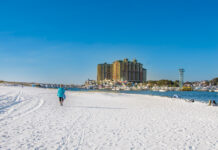
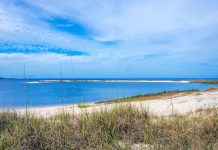
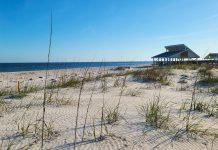
A three-hundred-foot pedestrian tunnel carries visitors under A1A to a stretch of Fort Lauderdale Beach that’s technically part of this park, and it’s a noticeably quieter, more natural strand than the busier promenade a short walk south. Dune vegetation here has been left more intact than at the commercial stretches of beach nearby, and the beach concession rents chairs, umbrellas, and beach wheelchairs on a first-come basis.
Families who’ve made the walk through the park specifically for the beach, plus a handful of regulars who know this is a calmer entry point than parking directly on A1A, make up most of the crowd. It never gets as crowded as Central Beach a mile or two south, even in season.
Walking through that tunnel, cool and shaded, and coming out the other side onto open sand and ocean, is one of the better small transitions on this entire coast. It’s easy to forget you just walked out of a forest.
Bonnet House Museum & Gardens
Adjacent Property · Separate Admission Required
Directly next to the park, Bonnet House was Birch’s wedding gift to his daughter Helen and her husband, muralist Fredric Clay Bartlett, and Birch personally supervised its construction while the newlyweds traveled Europe. It’s a separate nonprofit museum today, with its own admission fee, but the 35 acres of tropical grounds surrounding the historic house are a more manicured, formally maintained counterpart to the wilder gardens inside Birch’s own park next door.
Museum visitors, garden tour groups, and history-minded travelers make up this crowd, a different mix entirely from the hikers and paddlers in the state park itself. The two properties share a family story, but they’re genuinely different experiences.
Understanding that Birch built both, one to give away and one to keep for himself until the end of his life, adds a layer to walking either property that I think most visitors miss if they only see one or the other.
Hugh Taylor Birch State Park Rankings: Expert Scores Across 11 Categories
These scores weigh the park as a whole, trails, the freshwater lagoon, and the quieter stretch of beach across the tunnel, against the developed beaches in the rest of this guide series.
Sand Quality
6/10
The same coarse, shell-flecked Southeast Florida sand as the rest of this coast, but with more intact dune vegetation than the busier commercial stretches nearby.
Hiking & Beach Walking
9/10
The strongest trail system in this entire guide series, from the short Coastal Hammock loop to the full two-mile perimeter walk, plus genuine beach access through the tunnel.
Shelling at Birch’s Beach
5/10
Modest, since this is a quiet natural stretch rather than a dedicated shelling destination, but genuinely undisturbed compared to busier beaches close by.
Water Conditions
7/10
Good ocean swimming through the tunnel, plus a genuinely unique freshwater lagoon for paddling that no other stop in this guide series offers.
Scenery & Natural Beauty
9/10
The last tropical hardwood hammock in Broward County, banyan and strangler fig canopies, and a genuinely wild feel this close to a major city.
Birding & Wildlife
9/10
Over 250 documented bird species, gopher tortoises, eastern indigo snakes, and gray foxes that returned to the area in 2015 after a decade’s absence.
Family Friendliness
8/10
Flat, paved trails, a playground, picnic pavilions, and pedal boats on the lagoon make this a genuinely easy family day, beach and forest both.
Dog Friendliness
7/10
Leashed dogs are welcome throughout the trails, loop road, and picnic areas with no permit or fee required, genuinely more access than most Broward beaches offer, but they’re not permitted on the beach itself.
Solitude & Peace
7/10
Genuinely quiet on the Coastal Hammock Trail and out on Long Lake, even though the loop road and beach tunnel see steady weekend traffic.
Entertainment & Nightlife
3/10
This is a day-use nature park, not a nightlife destination. A small oceanfront café and ranger-guided walks on Fridays and Saturdays are about the extent of it, and that’s by design.
Parking & Beach Access
8/10
A flat entrance fee covers parking, which is considerably simpler and often cheaper than metered street parking at the beaches just across A1A.
Hugh Taylor Birch State Park Sand & Water
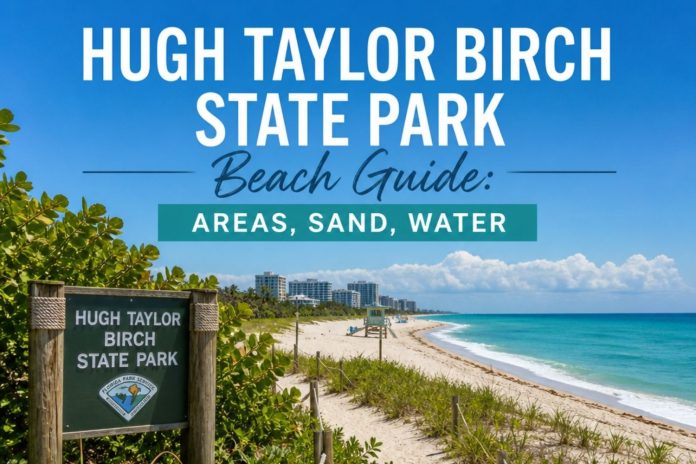
The beach on the other side of the tunnel is flat, fairly narrow, and quieter underfoot than anywhere else in this guide series, with a coarser, golden sand that still packs firm enough at the waterline for an easy walk. It’s not a wide, sprawling stretch built for spreading out a big group, but it’s plenty soft enough on the upper beach for kids to dig in and build something once you add water. A few minutes inland, Long Lake, the park’s freshwater lagoon, gives you a completely different kind of surface to enjoy the water from, a canoe or a pedal boat rather than a towel.
On a calm day the ocean here runs turquoise to blue-green, generally clear and consistent with the rest of Fort Lauderdale’s coast just south. Entry is moderate, not steep, and the designated swimming area past the tunnel is genuinely calm most days, though the same rip current caution applies here as anywhere else on this coast, so check the flags. Long Lake, by contrast, has no waves at all and no ocean caution to speak of, just calm, tannin-tinted fresh water that’s not for swimming but is ideal for a beginner in a canoe.
-
Walkability. Flat and easy at the beach, with a noticeably calmer, less crowded upper stretch than anywhere else in this guide series.
-
Softness & Playability. Good enough for sandcastles on the upper beach, though this is a narrower stretch of sand than the developed beaches nearby, better suited to a quiet visit than a big group day.
-
Barefoot Comfort. Comfortable for a normal visit, with the same coarser grain as the rest of this coast, though the quieter setting makes it a more relaxed walk overall.
-
Swimmability. Good at the designated ocean swimming area past the tunnel, plus a genuinely calm alternative for paddling on Long Lake, where swimming itself isn’t permitted.
Want the full geology, grain composition, and the complete sand and water condition ratings? I broke it all down separately in Sand & Shore: Hugh Taylor Birch State Park.
Dogs & Pet Accessibility at Hugh Taylor Birch State Park
Are Dogs Allowed on the Sand? RESTRICTED.
Leashed dogs are genuinely welcome throughout the park’s trails and loop road, more welcome here than at most beaches in this guide series, but they’re not permitted on the beach past the tunnel.
Where Dogs Are Allowed
- ✓The full loop road and all park trails, including the Coastal Hammock Trail and the Exotic Trail, on a hand-held leash no longer than six feet.
- ✓Picnic areas and the grounds around Long Lake, as long as your dog stays leashed and under control.
Where Dogs Are NOT Allowed
- ✗The designated swimming beach past the pedestrian tunnel.
- ✗Long Lake itself, since swimming isn’t permitted there for anyone, dogs included.
Paws on the Ground Reality
You’ll find this one of the more genuinely dog-friendly spots in this whole guide series, as long as you keep the beach itself off the itinerary. The shaded hammock trails offer real relief from the sun that open sand never does, and the loop road gives you enough distance for a proper walk rather than a quick lap. Ground surface varies from paved road to packed dirt trail to soft sand on the Coastal Hammock Trail, so it’s worth bringing paw protection if your dog is sensitive to rougher ground.
Rangers do enforce the six-foot leash rule and the beach restriction, so don’t plan on sneaking a dog through the tunnel. Bring your own water for your dog since fountains are meant for people, and pick up after your pet everywhere in the park, not just near the main picnic areas.
Crowd Levels and the Overall Feel of Hugh Taylor Birch State Park
The crowd here splits cleanly by activity rather than by season the way beach crowds usually do. Cyclists and joggers dominate the loop road most mornings. Families take over the picnic areas and Long Lake on weekends. The Coastal Hammock Trail stays quiet almost regardless of when you visit.
The seasonal pattern still shapes the experience:
- Winter: the busiest season, cooler weather draws heavy cyclist and jogger traffic on the loop road
- Spring: families and school groups pick up, with ranger-guided walks drawing steady interest
- Summer: hot, humid, and buggier in the hammock, though the beach and lagoon both stay in use
- Fall: my favorite window, thinner crowds and the most pleasant ranger-guided walks of the year
Who Is Hugh Taylor Birch State Park Really For?
✓ Who Will Love This Park
-
Hikers and walkers who want genuine trail variety within walking distance of the beach
-
Birders chasing the more than 250 species documented on the Great Florida Birding Trail here
-
Families who want a calm freshwater lagoon for paddling without dealing with ocean surf
-
Dog owners who want somewhere leashed pets are genuinely welcome on the trails
-
History-minded visitors interested in the direct connection to Bonnet House next door
-
Anyone who wants a quieter, more natural stretch of Fort Lauderdale Beach reached on foot through the tunnel
✗ Consider Another Beach If…
-
You want nightlife or dining right on the sand. Fort Lauderdale Beach across A1A has that in abundance, this park does not
-
You’re traveling with a dog and want beach access. Leashed dogs are welcome on the trails, but not on the beach itself
-
You want overnight camping as an individual traveler. This park only offers primitive youth and group camping
-
You’re chasing a big, wide beach day above all else. The park’s beach access is narrower and more about the walk than the sand itself
-
You’re a serious diver or angler. This park is built around trails and the lagoon, not ocean water sports
-
You’re visiting in peak summer and dislike bugs. The hammock trails get noticeably buggier in warm, wet months
Things to Do at Hugh Taylor Birch State Park
This park packs a genuine range of activities into 180 acres, more than its size or its neighbors’ reputation might suggest.
-
Hiking the Coastal Hammock and Exotic Trails. Short, easy, and genuinely rewarding, from a quarter-mile hammock loop to a full two-mile perimeter walk.
-
Biking the Loop Road. A nearly two-mile paved loop shared with cars but wide enough for a comfortable ride.
-
Canoeing, Kayaking, and Pedal Boating on Long Lake. Rentals available on site for the park’s one-mile freshwater lagoon.
-
Birding. Over 250 species documented, with the park recognized on the Great Florida Birding and Wildlife Trail.
-
Beach Access Through the Tunnel. A three-hundred-foot pedestrian tunnel under A1A leads to a quieter, designated swimming beach.
-
Fishing. Allowed along the Intracoastal seawall and other public access points. Fishing is not permitted in the freshwater lagoon or mangroves.
-
Ranger-Guided Walks. Held most Fridays and Saturdays, covering different aspects of the park’s ecology and history each time.
-
Visiting Bonnet House Museum and Gardens. A separate admission fee applies, but the connection to Birch’s own story makes it a natural pairing.
-
Rollerblading and Segway Tours. Available through the park’s concessionaire alongside standard bike rentals.
-
Picnicking. Multiple pavilions with grills and water access, including one shaded by a fig tree with a crown spread of over 170 feet.
Local Knowledge and Practical Advice
A few things I’ve picked up from walking every trail in this park more than once:
-
Wear closed shoes on the hammock trails. Tree roots and uneven ground make this a different kind of walk than a flat beach promenade.
-
Know the fee structure before you arrive. It’s two dollars for pedestrians and cyclists, four for a single-occupant vehicle, and six for a full vehicle of up to eight people.
-
Bring a six-foot leash if you’re bringing a dog. Leashed pets are welcome on the trails and loop road, but not on the beach past the tunnel.
-
Pack insect repellent in warmer months. The hammock trails get noticeably buggier from late spring through summer.
-
Rent a canoe for Long Lake rather than skipping it. It’s the most distinctive experience in the whole park and easy to overlook if you only came for the beach.
-
Check the ranger walk schedule before you go. Most run Fridays and Saturdays, and they add real context to what you’re seeing on the trails.
-
The Terramar Visitor Center is closed during renovation. Don’t plan your visit around it reopening until you’ve confirmed current status.
-
Ask about the beach wheelchair if you need one. It’s available first-come, first-served at the beach concession.
-
Bring a valid Florida fishing license if you plan to cast a line. It’s required for the Intracoastal seawall access points.
-
Use the tunnel instead of parking on A1A if you only want the beach. It’s calmer, shaded, and part of what makes this stretch of sand feel different.
Where to Stay Near Hugh Taylor Birch State Park
This park itself offers only primitive group camping, so most visitors stay just across A1A or a short drive inland.
North Beach & Sebastian Street Hotels
Smaller boutique properties just south of the park, near Sebastian Street Beach and Bonnet House, put you within walking distance of the tunnel entrance.
Central Fort Lauderdale Beach Resorts
A short drive south, the main Fort Lauderdale Beach strip offers full-service resorts and boutique hotels for visitors who want more amenities than the immediate park area provides.
Group Camping Within the Park
The Elks Youth Camp offers six cabins for organized youth and group events, ages 18 and under, but this isn’t an option for individual travelers or families.
Camping at Markham Park
A drive inland in Sunrise, Markham Park offers full hook-up RV sites and tent camping within Broward County’s park system, the closest genuine individual camping option to this stretch of coast.
Lower-Cost Mainland Options
Hotels west of the Intracoastal, away from direct beachfront, offer meaningfully lower rates for visitors willing to drive a short distance to reach the park and the beach beyond it.
What Makes Hugh Taylor Birch State Park Different from Nearby Beaches
This park doesn’t compete with the beaches around it. It offers something none of them can, a genuine, preserved piece of the coastal ecosystem that used to cover this entire part of Florida.
A few features make it distinct:
The last tropical hammock in Broward County
No other stop in this guide series preserves this specific native ecosystem, and it exists purely because one man’s will required it to stay wild.
A freshwater lagoon minutes from the ocean
Long Lake gives this park a genuinely different water experience than anything else on this coast, calm, sheltered, and entirely fresh water.
A direct, documented family connection to Bonnet House
Very few state parks come with this kind of intact, adjacent historical story, gift, gardener, and estate all traceable to the same man.
A quieter version of Fort Lauderdale Beach, reached on foot
The pedestrian tunnel under A1A gives visitors ocean access without the parking or crowd of the main beach strip.
Hugh Taylor Birch State Park vs. Other Broward Nature Sites
These are the places most often paired with or compared against this park, and the honest read on when you’d choose one over another.
Hugh Taylor Birch vs. Dr. Von D. Mizell-Eula Johnson State Park
Mizell-Johnson, south past Port Everglades, trades this park’s upland tropical hammock for mangrove wetlands and a significant civil rights history. Both are genuine escapes from the developed coast, just built around different ecosystems.
Hugh Taylor Birch vs. Anne Kolb Nature Center
Anne Kolb in Hollywood focuses entirely on mangrove wetlands with an observation tower and paddling trails. This park offers more trail variety and a genuine beach connection that Anne Kolb doesn’t have.
Hugh Taylor Birch vs. Bonnet House Museum and Gardens
Bonnet House is a paid, guided museum experience through manicured historic gardens. This park is a free-roam nature park you can explore at your own pace, sharing the same family history but a completely different visitor experience.
Bottom line: Hugh Taylor Birch State Park is the stop to choose when you want Fort Lauderdale’s coastline without Fort Lauderdale’s crowd, plus a trail system and freshwater lagoon none of the developed beaches nearby can offer. It’s not a nightlife destination, and it was never meant to be one.
Hugh Taylor Birch State Park: Frequently Asked Questions
Is Hugh Taylor Birch State Park worth visiting?
Yes. It’s the last tropical hardwood hammock left in Broward County, with a genuine trail system, a freshwater lagoon, and quiet beach access, all within walking distance of Fort Lauderdale’s busiest strip.
How much does it cost to enter Hugh Taylor Birch State Park?
Two dollars for pedestrians and cyclists, four dollars for a single-occupant vehicle or motorcycle, and six dollars for a vehicle carrying up to eight people. Annual passes are also available.
What are the park hours?
Open daily from 8am until sundown.
Are dogs allowed at Hugh Taylor Birch State Park?
Yes, leashed dogs are welcome throughout the trails and loop road on a hand-held leash no longer than six feet, but they are not permitted on the beach past the pedestrian tunnel.
Can you camp at Hugh Taylor Birch State Park?
Only as part of an organized youth or group event through the Elks Youth Camp. There is no individual or family camping within the park itself.
Is Hugh Taylor Birch State Park the same as Bonnet House?
No. They’re adjacent properties with a shared history, both connected to Hugh Taylor Birch, but Bonnet House is a separate nonprofit museum with its own admission fee, while the state park is a free-roam nature park covered by the park entrance fee.
Can you swim at Hugh Taylor Birch State Park?
Yes, at the designated ocean swimming area reached through the pedestrian tunnel under A1A. Swimming is not permitted in Long Lake, the park’s freshwater lagoon, or the surrounding mangroves.
What wildlife can you see at the park?
Gopher tortoises, eastern indigo snakes, gray foxes, marsh rabbits, opossums, and more than 250 documented bird species, along with butterflies throughout the gardens.
Can you rent canoes or kayaks at the park?
Yes, at Long Lake, the park’s one-mile freshwater lagoon. Canoes, kayaks, pedal boats, and paddleboards are available through the on-site concessionaire.
Is the park good for families?
Yes. Flat paved trails, a playground, picnic pavilions, pedal boats, and gentle beach access make this one of the more genuinely easy family destinations in this guide series.
Patti’s Perspective: My Honest Take on Hugh Taylor Birch State Park
I almost left this park out of this guide series entirely, since it isn’t technically a beach the way everywhere else here is. Walking it convinced me that would have been a mistake. My whole mission has always been about more than sand and shoreline, it’s about paying attention to a place long enough to notice what it’s actually doing, and this park does more of that in 180 acres than most beaches manage across miles of coastline.
What got me, walking the Coastal Hammock Trail for the first time, was how completely the city disappeared. I’d just come from the noise and crowd of Fort Lauderdale Beach a few minutes earlier, and standing under sea grapes that predate most of the development around them, it didn’t feel like the same coastline at all. That’s Birch’s whole legacy sitting quietly in the middle of a city that grew up around his one condition: leave it alone.
The walk out to Long Lake, away from the loop road and the beach traffic entirely, is the moment I’d point anyone toward if they only have an hour here. It’s the kind of quiet that most of Broward’s coastline has built right over, and it exists today because one reclusive old man cared enough about a patch of trees to make sure it would outlast him.
My verdict: 8/10. Not a beach in the traditional sense, but one of the most genuinely worthwhile stops in this entire guide series. Come for the tunnel and the ocean beyond it if that’s what brought you, but don’t leave without walking the hammock and paddling Long Lake. That’s where this park actually earns its reputation.
Want to Live by the Water?The neighborhoods surrounding Hugh Taylor Birch State Park, from North Beach’s boutique condo buildings to the Sunrise Boulevard corridor, offer some of the more desirable, tree-shaded addresses in Fort Lauderdale’s beach area.The market here draws buyers who want proximity to genuine green space as much as beach access, along with retirees and remote workers who value the quieter setting next to a working nature park over the density of Central Beach further south. Pricing tends to run comparable to the rest of Fort Lauderdale’s beachfront market, with the added draw of a state park as a permanent neighbor.If living by the water is something you’re considering, whether full time, part time, or as an investment, it’s worth exploring what’s available in this area.Explore Waterfront Living at LiveByTheWater.com
Real estate referral partner