

Indian Harbour Beach, Indialantic & Melbourne Beach, Florida
This stretch of Brevard County has been part of my life longer than most beaches I cover, since I spent years visiting family and friends who lived here while my kids were still young. What keeps pulling me back is exactly what most visitors overlook: this run of small towns, from Indian Harbour Beach down through Indialantic and into Melbourne Beach’s own string of parks and sanctuaries, is quieter, more varied, and far more textured than a quick pass through would suggest.
This guide covers three connected communities running south from Satellite Beach’s border to the edge of the Archie Carr National Wildlife Refuge: Indian Harbour Beach, Indialantic, and Melbourne Beach, along with the string of county parks and sanctuaries that fill in the miles between them. Sebastian Inlet State Park sits further south still, right at the boundary of the refuge, and I’ve covered that legendary surf break as part of my Archie Carr National Wildlife Refuge guide rather than folding it in here.
In this guide I’ll walk you through each of these communities and their parks, going deep on what the sand and water are actually doing along this stretch, covering exactly where you can bring your dog, scoring it honestly, and telling you exactly who this coast suits. I’ll cover far more named beaches and parks than I have in the past, since this stretch genuinely has more of them than most visitors realize. For more on the wildlife and what turns up in the sand here, I’ve also written a birding guide and a beach finds guide for this stretch. I close with what this coastline has meant to me personally, including a walk at Bonsteel Park I still think about.
The Vibe & Culture of Indian Harbour Beach, Indialantic & Melbourne Beach
Small Towns That Never Tried to Be Cocoa Beach
This stretch of coast runs on a slower, more residential rhythm than anywhere else in Brevard County, and it always has.
Indian Harbour Beach and Indialantic both connect to the mainland by causeway, which keeps them woven into everyday life rather than functioning as separate tourist destinations. Indian Harbour Beach was professionally planned in the 1950s with curving residential streets rather than a commercial grid, and that planning legacy still shows in how quiet and lived-in the town feels. Indialantic carries a bit more energy, a genuine small downtown of shops and restaurants a short walk from the sand, since it was originally settled as a resort community in the early 1900s.
Melbourne Beach, further south, isn’t connected by a causeway at all, and that isolation gives it a noticeably different feel, quieter, slower, with a historic downtown that locals still treat as their own rather than a visitor attraction. South of the town center, a run of county parks and environmental sanctuaries, Spessard Holland, Juan Ponce de Leon Landing, Coconut Point, and Bonsteel Park, carries this coastline right up to the edge of the Archie Carr National Wildlife Refuge, and that southern stretch feels genuinely wilder than anything further north in this guide.
Seasonally, this coast runs quieter than its neighbors to the north, and it holds that quiet even in summer. Fall and spring bring the most comfortable walking weather with the lightest crowds. Winter brings the best manatee viewing on the river side. Sea turtle nesting runs May through October at nearly every park covered in this guide, since this entire stretch sits at the northern edge of some of the most significant nesting habitat in the country.
Indian Harbour Beach, Indialantic & Melbourne Beach Areas: Five Distinct Stretches
Here’s how this coast breaks down, north to south, and the parks and sanctuaries that fill in each stretch.
Indian Harbour Beach
Canova Beach Park & Millennium Beach Park
Indian Harbour Beach sits directly across the Banana River from Merritt Island’s southern tip, and its beach holds a genuine geological curiosity most visitors walk right past. Roughly ten acres of coquina rock outcrops sit exposed along the low-tide line here, rare enough along the East Coast that federal fisheries regulators have classified it as an essential habitat area. Fossilized Atlantic ghost crabs, remnants from roughly 110,000 years ago, have been found preserved in that same rock. Canova Beach Park anchors this stretch with a designated dog area, while Millennium Beach Park, also known as Jacqueline R. Burns Park, offers a second quieter access point a short drive north.
The crowd here stays thin and local, dog owners heading for Canova Beach Park, walkers exploring the rock outcrops at low tide, and residents of the town’s curving, professionally planned streets. It’s one of the more understated beach stops in this entire guide series, easy to miss if you don’t already know it’s there.
I always slow down and look closely at the exposed rock here at low tide. Most people never think to check what’s actually under their feet on a Florida beach, and this is one of the few spots on this coast where that closer look genuinely pays off.
Indialantic & Howard E. Futch Memorial Park
Downtown Beachside · Boardwalk & Pier Park
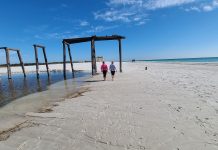
Indialantic is the closest thing this stretch has to a beach town center, a resort community dating back to the early 1900s with a genuine small downtown of shops and restaurants a short walk from the sand. The town’s main beach park includes a boardwalk, sand volleyball courts, and dune crossovers, while a separate pier park up the road offers a 400-foot wooden pier with a covered observation deck for watching the surf, the fishing, or a sunrise. Just north, Howard E. Futch Memorial Park adds another 12 acres of beach access, with large picnic pavilions, a playground, and three dune crossovers of its own.
The crowd here skews toward a genuine mix, surfers, swimmers, sunbathers, runners, and cyclists all sharing the same stretch of sand and the same small commercial strip a block inland. It’s busier than Indian Harbour Beach, but still nowhere near the scale of Cocoa Beach a few towns north.
This is where I’d point a first-time visitor to this stretch who wants a walkable downtown alongside their beach day. It gives you just enough convenience without losing the quieter character that defines this whole coast.
Downtown Melbourne Beach & Spessard Holland Parks
Ocean Avenue · No Causeway, No Crowds
Melbourne Beach stands apart from every other town in this guide because it isn’t connected to the mainland by a causeway at all. That isolation gives it a genuinely different feel, less bustle, more beach, with a long stretch of oceanside homes running south. The small historic downtown along Ocean Avenue still functions as a real town center rather than a beach strip, and Ryckman Park on the river side adds a boat ramp and picnic area for a different kind of afternoon. Just south of downtown, Spessard Holland Park North and South split a stretch of beach between them, with seasonal lifeguards, dune crossovers, and enough shoreline for a genuinely unhurried day, a short walk from the Spessard Holland Golf Course.
The crowd here is thinner than Indialantic’s, longtime residents, a handful of vacation renters in the oceanfront homes, and visitors specifically seeking out the quiet this town is known for. Multiple reviewers have described this stretch as what Florida beaches used to feel like before development caught up with the rest of the coast, and walking it, I understand exactly what they mean.
This has become one of my favorite stops on this entire coast, precisely because of how little it asks of you. No boardwalk, no crowd to navigate, just a long stretch of sand and a small town that’s stayed exactly what it always was.
South Melbourne’s Sanctuaries & Preserves
Juan Ponce de Leon Landing & Coconut Point
South of Spessard Holland, the character of this coast shifts again. Juan Ponce de Leon Landing, a 25.57-acre county park, commemorates the explorer’s disputed 1513 landing with a beachside statue, about 40 parking spaces, and a genuinely wide beach that runs 50 to 75 feet at low tide. Directly across A1A, Coconut Point Sanctuary offers a network of hiking trails through scrub, hammock, and river habitat, ending at a small dock on the Indian River Lagoon where dolphins, manatees, and the occasional alligator are visible from an elevated overlook. Coconut Point Park itself, a 37-acre county park nearby, marks the actual northern boundary of the Archie Carr National Wildlife Refuge.
The crowd here thins out considerably compared to downtown Melbourne Beach, hikers working the Coconut Point trails, history-minded visitors reading the Ponce de Leon marker, and a scattering of locals who’ve found this stretch specifically for its lack of company. On a weekday, it’s genuinely possible to have long sections of this beach entirely to yourself.
I’d treat this stretch as the transition point where this guide’s coastline starts feeling like the beginning of the Archie Carr refuge rather than a beach town’s amenity. The river overlook at Coconut Point in particular is worth the short walk even if you skip the beach entirely.
Bonsteel Park & the Refuge Edge
8455 A1A · The Southernmost Stop
Bonsteel Park closes out this guide at the southernmost edge of Melbourne Beach’s public access, a modest 2.3-acre county park with about 25 parking spaces, restrooms, and a dune walkover leading to unguarded surf. It sits directly next to the Doc Ehrhart Sanctuary and the Barrier Island Center, the primary visitor hub for the Archie Carr National Wildlife Refuge, and the beach here already carries the quieter, more protected feel of that refuge even though you’re still technically in Melbourne Beach.
I’ve personally walked this stretch, and it’s exactly the kind of unassuming park that rewards showing up rather than reading about it. Before a public sea turtle nest excavation with the Sea Turtle Conservancy, I walked the beach here in the early morning and watched a hatchling make its way to the water on its own, a genuinely small, quiet moment that stuck with me longer than most of the bigger attractions on this coast. The shelling isn’t spectacular, but the beach itself is beautiful and peaceful, and the no-see-ums near the dunes are worth knowing about if you’re visiting in the early morning.
This is the park I’d point to if someone asked me where this whole guide’s personality is best summarized in one stop. Small, quiet, a little buggy near the dunes, and genuinely worth the drive south to reach.
Indian Harbour Beach, Indialantic & Melbourne Beach Rankings: Expert Scores Across 11 Categories
These scores weigh the full stretch from Indian Harbour Beach down through Bonsteel Park, which means the modest energy of Indialantic’s downtown gets balanced against the genuine quiet you’ll find toward Melbourne Beach’s sanctuaries.
Sand Quality
7/10
Solid quartz sand throughout, with genuine coquina rock formations at Indian Harbour Beach adding real geological character. Better preserved than the beaches directly affected by Port Canaveral’s jetties further north.
Hiking & Beach Walking
8/10
Long, uninterrupted stretches, especially south of Spessard Holland toward Coconut Point and Bonsteel Park. Genuinely some of the best walking on the Space Coast.
Shelling
6/10
Moderate throughout, genuinely rewarding after a storm near Juan Ponce de Leon Landing and Bonsteel Park, though nobody should plan a trip around the shelling alone.
Water Conditions
7/10
Typical Atlantic surf throughout, calmer and more approachable than the legendary break at Sebastian Inlet further south. Most of this stretch is unguarded outside Spessard Holland’s seasonal towers.
Scenery & Natural Beauty
8/10
Noticeably more residential and less commercially developed than Cocoa Beach, with genuine natural character at Coconut Point Sanctuary and the Indian Harbour Beach rock outcrops.
Birding & Wildlife
8/10
Dolphins, manatees, and alligators visible from Coconut Point’s river overlook, sea turtle nesting at nearly every park in this guide, and the Archie Carr National Wildlife Refuge’s protection beginning right at Bonsteel Park’s doorstep.
Family Friendliness
7/10
Howard E. Futch Memorial Park’s playground and pavilions, Indialantic’s boardwalk, and Spessard Holland’s seasonal lifeguards all suit families well up and down this stretch.
Dog Friendliness
7/10
Canova Beach Park in Indian Harbour Beach is home to Brevard County’s only standing dog-friendly beach, a genuine 700-foot leashed stretch, though the rest of this coast still follows countywide restrictions.
Solitude & Peace
8/10
One of the best solitude scores of any developed stretch in this guide series. Melbourne Beach’s southern parks, especially Bonsteel and Coconut Point, consistently deliver quiet that Cocoa Beach and Cape Canaveral can’t.
Entertainment & Nightlife
5/10
Modest by design. Indialantic offers a genuine small downtown, but none of these towns aim for the nightlife scene found further north.
Parking & Beach Access
8/10
A genuinely dense network of named parks and access points, from Canova and Millennium in the north down through Spessard Holland, Juan Ponce de Leon Landing, Coconut Point, and Bonsteel in the south.
Indian Harbour Beach, Indialantic & Melbourne Beach Sand & Water
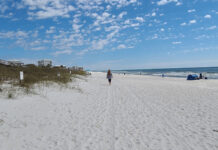
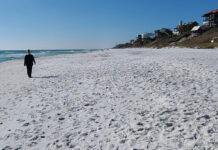
The sand along this stretch runs firm and flat nearly everywhere, comfortable at the waterline for a long walk and soft enough up near the dunes for a sandcastle once you add water. It holds its shape noticeably better than the beaches directly north, since this stretch sits far enough from Port Canaveral’s jetties to avoid their chronic erosion problems. The real curiosity here is the exposed coquina rock at Indian Harbour Beach, worth a slow look at low tide, though it’s the only spot on this stretch where the sand itself isn’t the whole story.
The water runs green-blue on a calm day and stays fairly consistent from Indian Harbour Beach down through Bonsteel Park, calmer and more approachable than the legendary surf break just south at Sebastian Inlet. Entry is gradual most places, good for casual swimming and bodyboarding, and Spessard Holland’s seasonal lifeguards give you a guarded option if that matters. Rip currents are still a real, if modest, consideration here, so check conditions before you swim at an unguarded park.
-
Walkability. Firm and flat nearly everywhere, with the southern stretch toward Coconut Point and Bonsteel offering some of the most peaceful long walking on this whole coast.
-
Softness & Playability. Firm at the waterline, softer up near the dunes. Good for sandcastles once you add water.
-
Barefoot Comfort. Comfortable most of the year at the waterline, though the dry sand near Indialantic heats up by midday in summer.
-
Swimmability. Good at Spessard Holland’s guarded stretches and Indialantic’s main beach. Unguarded further south, so check conditions first.
Want the full geology, grain composition, and the complete sand and water condition ratings? I broke it all down separately in Sand & Shore: Indian Harbour Beach, Indialantic & Melbourne Beach.
Dogs & Pet Accessibility at Indian Harbour Beach, Indialantic & Melbourne Beach
Are Dogs Allowed on the Sand? RESTRICTED.
Canova Beach Park in Indian Harbour Beach is home to Brevard County’s only standing dog-friendly beach. Everywhere else on this stretch, dogs follow the county’s general restrictions.
Where Dogs Are Allowed
- ✓A 700-foot stretch of leashed beach at Canova Beach Park, running from Eau Gallie Boulevard south to the Radisson Suite Oceanfront Hotel property line.
- ✓Canova Beach Park’s picnic area, pavilion, and crossover, leashed, beyond just the designated dog beach stretch.
Where Dogs Are NOT Allowed
- ✗Indialantic’s main beach, boardwalk, and pier park.
- ✗Spessard Holland Park North and South, Juan Ponce de Leon Landing, Coconut Point, and Bonsteel Park.
Paws on the Ground Reality
Canova’s dog beach is genuinely well marked, with signs at both boundaries, and there’s enough space along the 700 feet that dogs rarely feel crowded even on a busy weekend. Leashes are capped at six feet, and rangers do check for visible rabies tags, so bring your dog’s paperwork along with a leash. There’s a drinking fountain at the park itself, though not specifically for pets, so bring a bowl if your dog needs water mid-walk. The sand here is the same firm, comfortable footing as the rest of this stretch, easy on paws whether your dog is walking the dog beach or the regular crossover nearby.
If you’re staying further south near Melbourne Beach or the sanctuaries, it’s worth the drive north to Canova specifically, since nothing closer offers the same open beach access for your dog.
Crowd Levels and the Overall Feel of Indian Harbour Beach, Indialantic & Melbourne Beach
Compared with Cocoa Beach and Cape Canaveral to the north, this entire stretch runs quieter, and it holds that quiet even during peak season. Indialantic gets genuinely busy on weekends, but the town never feels like it’s straining under its own popularity the way a bigger beach town does.
You’ll find a different crowd depending on where you stand. Indian Harbour Beach draws almost entirely locals. Indialantic mixes day-trippers with a modest downtown crowd. Melbourne Beach and its southern sanctuaries draw people specifically seeking out quiet or nature, not a beach party.
The feel here shifts gently by season, more tied to the sea turtle calendar than to events:
- Spring: comfortable weather and light crowds throughout, my personal favorite window here
- Summer: peak family season along Indialantic and Spessard Holland, the warmest water, and the busiest Indialantic gets all year
- Fall: a noticeable drop in crowd size with warm water lingering, especially toward the southern sanctuaries
- Winter: quiet and cool, with the best manatee viewing on the river side at Coconut Point
Who Is This Stretch Really For?
✓ Who Will Love This Stretch
-
Long-distance beach walkers who want consistently firm, comfortable sand across a genuinely wide range of named parks
-
Wildlife watchers drawn to the Indian River Lagoon’s dolphins, manatees, and the Archie Carr refuge’s edge at Bonsteel Park
-
History lovers curious about the Juan Ponce de Leon landing story and Indialantic’s early 1900s resort roots
-
Anyone who wants both a walkable small downtown at Indialantic and a genuine car-free sanctuary experience further south within the same short trip
-
Golfers pairing a beach day with a round at Spessard Holland Golf Course
-
Anyone chasing genuine solitude on a developed stretch of Florida’s Atlantic coast, especially south of Spessard Holland
✗ Consider Another Beach If…
-
You want boardwalk energy, arcades, or nightlife on the scale of Cocoa Beach. This stretch entertains you differently, through small downtowns and nature rather than rides
-
You want abundant, budget beachfront hotel inventory. Vacation rentals and homes dominate here more than traditional hotels
-
You’re chasing a legendary surf break. Head south to Sebastian Inlet State Park for that experience instead
-
You’re a dedicated sheller chasing a high hit rate. Shelling here is decent by this coast’s standards but still modest overall
-
You’re bringing a dog and want open beach access. Only Canova Beach Park offers a designated dog area
-
You’re visiting the southern sanctuaries in early morning without bug spray. No-see-ums near the dunes can be genuinely brutal
Things to Do at Indian Harbour Beach, Indialantic & Melbourne Beach, Florida
Between the beach parks, the sanctuaries, and the small downtowns, this stretch fills a day with more variety than its size suggests. Here’s what actually works.
-
Exploring the Coquina Rock Outcrops. Indian Harbour Beach’s exposed rock formations at low tide, including fossilized ghost crabs, are a genuine geological curiosity most visitors never find.
-
Beach Walking. Long, uninterrupted stretches run from Indialantic south through Spessard Holland and into the southern sanctuaries.
-
Historic Sightseeing. Juan Ponce de Leon Landing marks the explorer’s disputed 1513 landing site with a beachside statue and plaque.
-
Hiking Coconut Point Sanctuary. Trails through scrub, hammock, and river habitat lead to a small dock overlook where dolphins, manatees, and alligators are commonly spotted.
-
Golf. Spessard Holland Golf Course sits a short walk from the beach parks that share its name.
-
Wildlife Watching. Sea turtle nesting runs May through October at nearly every park in this guide, with the richest habitat starting right at Bonsteel Park’s doorstep.
-
Dog Beach Walking. Canova Beach Park in Indian Harbour Beach has a designated dog area, one of the better options anywhere on this stretch of coast.
-
Boating & Fishing. Ryckman Park in downtown Melbourne Beach offers a boat ramp on the Indian River Lagoon side, a calmer alternative to the ocean.
Local Knowledge and Practical Advice
A few things I’ve picked up walking this stretch more times than I can count, going back to when my kids were young:
-
Head south of Spessard Holland if solitude is the goal. Juan Ponce de Leon Landing, Coconut Point, and Bonsteel Park consistently deliver the quietest stretches on this whole guide.
-
Check the coquina rock at Indian Harbour Beach at low tide. High tide covers most of what makes this stop worth the visit.
-
Bring bug spray for early mornings near the dunes at Bonsteel Park and Coconut Point. No-see-ums can be genuinely bad, even for experienced hikers.
-
Park at Juan Ponce de Leon Landing to walk the Coconut Point Sanctuary trail. There’s a marked crossing over A1A connecting the two.
-
Canova Beach Park in Indian Harbour Beach is your best bet with a dog. It’s one of the only designated dog areas anywhere on this stretch of coast.
-
Nesting season runs May through October along this entire stretch. Keep beachfront lighting dim after dark and give any marked nest a wide berth.
-
Fees apply at some southern parks, including Bonsteel. Bring cash or a card for the honor box where posted.
-
Cross the bridge into downtown Melbourne Beach at least once. Most visitors never leave the beachside parks, and they miss the small, genuine downtown along Ocean Avenue.
Where to Stay Near Indian Harbour Beach, Indialantic & Melbourne Beach, Florida
Lodging here leans heavily toward vacation rentals and homes rather than traditional hotels. Here’s how the options break down.
Indialantic Oceanfront
Vacation rentals, beach cottages, and a handful of small hotels cluster within walking distance of Indialantic’s shops and restaurants, putting you steps from both the beach and downtown dining.
Melbourne Beach Vacation Rentals
Oceanfront homes make up most of the lodging here, ideal for anyone specifically seeking out this town’s quieter character for a longer stay.
South Melbourne Beach, Near the Sanctuaries
Quieter rental homes near Spessard Holland and the southern parks suit anyone prioritizing calm and proximity to the Archie Carr refuge over convenience.
Inland Melbourne
For lower rates, the mainland side of town along US-1 and points further inland toward Palm Bay offer a wider range of budget options for visitors willing to drive to the beach rather than stay directly on it.
What Makes This Stretch Different from Nearby Beaches
This stretch stands apart because it packs a genuinely dense network of named parks and sanctuaries into a small footprint, without ever building itself around tourism the way its northern neighbors did.
A few other features make it distinct:
A real geological curiosity at Indian Harbour Beach
The coquina rock outcrops here, complete with 110,000-year-old fossilized ghost crabs, offer something no other beach in this guide series has.
A direct line into the Archie Carr National Wildlife Refuge
Coconut Point Park marks the refuge’s actual northern boundary, and Bonsteel Park sits close enough to feel like an extension of that protected land.
Both a walkable downtown and genuine sanctuary land in one trip
Few stretches of Florida coast let you experience Indialantic’s small-town beach convenience and Coconut Point’s genuine wilderness within the same short drive.
Indian Harbour Beach, Indialantic & Melbourne Beach vs. Other Space Coast Beaches
These are the beaches visitors most often weigh against this stretch, and the honest read on when you’d choose one over the other.
This Stretch vs. Satellite Beach & Patrick Space Force Base
Satellite Beach and the base beaches just north offer a similarly quiet, uncrowded character built around surf culture and undeveloped military land. This stretch leans more toward history, sanctuaries, and small-town downtowns.
This Stretch vs. Cocoa Beach
Cocoa Beach offers more surf shops, more downtown energy, and more amenities. Choose this stretch instead if solitude and residential character matter more to you than convenience.
This Stretch vs. Sebastian Inlet State Park
Sebastian Inlet, just south of Bonsteel Park, offers a legendary surf break and a genuinely different, more intense water experience. See my Archie Carr National Wildlife Refuge guide for the full picture, since Sebastian Inlet sits inside that refuge’s boundary.
Bottom line: Indian Harbour Beach, Indialantic, and Melbourne Beach give you the quietest, most residential stretch of developed coastline on the Space Coast south of Satellite Beach, anchored by a genuinely dense network of parks, history, and sanctuary land. Cocoa Beach and Cape Canaveral give you more energy. Sebastian Inlet gives you legendary surf. This stretch gives you room to breathe and plenty of small discoveries along the way.
Indian Harbour Beach, Indialantic & Melbourne Beach, Florida: Frequently Asked Questions
Is this stretch of Melbourne’s beaches worth visiting?
Yes. The combination of Indian Harbour Beach’s coquina rocks, Indialantic’s walkable downtown, and Melbourne Beach’s sanctuaries and preserves gives this stretch more variety than most visitors realize.
What beaches are covered in this guide?
Indian Harbour Beach, Indialantic, and Melbourne Beach, including Canova Beach Park, Millennium Beach Park, Howard E. Futch Memorial Park, Spessard Holland Park North and South, Juan Ponce de Leon Landing, Coconut Point, and Bonsteel Park. Sebastian Inlet State Park is covered separately as part of my Archie Carr National Wildlife Refuge guide.
Which part of this stretch is best for families?
Indialantic offers the most convenience with its boardwalk, pier park, and walkable downtown. Howard E. Futch Memorial Park’s playground and pavilions are also a strong family choice.
Are dogs allowed on these beaches?
Canova Beach Park in Indian Harbour Beach has a designated dog area, one of the only such spots on this stretch. General beach access for dogs otherwise follows the same restrictions found throughout Brevard County.
What is Coconut Point Sanctuary?
A network of hiking trails through scrub, hammock, and river habitat directly across A1A from Juan Ponce de Leon Landing, ending at a small dock overlook on the Indian River Lagoon where dolphins, manatees, and alligators are commonly spotted.
Is Bonsteel Park worth visiting?
Yes, especially for anyone seeking genuine quiet. It’s a small, unguarded park at the southernmost edge of Melbourne Beach’s public access, sitting right next to the Doc Ehrhart Sanctuary and the start of the Archie Carr National Wildlife Refuge.
Are these beaches crowded?
No, not compared to Cocoa Beach or Cape Canaveral. Indialantic sees the most visitors on weekends, while the southern parks toward Bonsteel stay genuinely quiet nearly year round.
What is the best time of year to visit?
Spring offers the most comfortable weather with light crowds. Summer is peak family season along Indialantic and Spessard Holland. Winter brings the best manatee viewing at Coconut Point.
Did Juan Ponce de Leon actually land at Melbourne Beach?
It’s disputed. The park and its statue commemorate the possibility, but there’s no definitive historical evidence confirming this exact spot as the 1513 landing site.
Does this guide include Sebastian Inlet State Park?
No. Sebastian Inlet sits just south of this stretch, inside the Archie Carr National Wildlife Refuge boundary, and is covered as part of my guide to that refuge, since its surf break and history deserve a fuller telling on their own.
Patti’s Perspective: My Honest Take on Indian Harbour Beach, Indialantic & Melbourne Beach
This stretch of coast is tied to more family memories than almost anywhere else on my list. My sister-in-law and a few close friends lived in the Melbourne area for years, and I made this drive south more times than I can count while my own kids were still young. Some of my earliest memories of teaching them to walk a beach without fear, to respect the water, to notice what washes up in the wrack line, happened on this stretch rather than anywhere more famous.
What’s stayed consistent across every visit, from those early years with young kids to now, is my preference for the quieter spots. I’ve always gravitated toward Melbourne Beach over Indialantic, and toward the southern sanctuaries over even Melbourne Beach’s own downtown. Bonsteel Park is the clearest example of why. I walked that beach early one morning before joining a public sea turtle nest excavation with the Sea Turtle Conservancy, and along the way I watched a single hatchling make its way to the water entirely on its own. It’s not a dramatic park. There’s no view that stops traffic. But that quiet, small moment has stayed with me longer than most of the bigger attractions I’ve covered for this work.
This coast doesn’t need to shout about what it offers. It just quietly keeps offering it, park after park, sanctuary after sanctuary, to anyone willing to drive a little further south to find it.
My verdict: 8/10. The quietest, most genuinely varied stretch of developed coastline on the Space Coast south of Satellite Beach, anchored by more named parks and sanctuaries than most visitors ever realize are here. Bring the family, seek out the empty stretches, and don’t skip Bonsteel Park just because it looks small on a map.
Want to Live by the Water?Indian Harbour Beach, Indialantic, and Melbourne Beach all offer genuine barrier island living, with limited developable land keeping supply naturally constrained and values resilient. Single-family homes here range broadly, with oceanfront and canal properties commanding real premiums given how little new inventory ever comes to market.The market draws retirees, families drawn to strong public schools, and buyers who specifically want proximity to the Archie Carr National Wildlife Refuge’s protected coastline. Melbourne Beach in particular has seen significant appreciation given its no-causeway isolation and limited inventory.If living by the water is something you’re considering, whether full time, part time, or as an investment, it’s worth exploring what’s available in this area.Explore Waterfront Living at LiveByTheWater.com
Real estate referral partner