



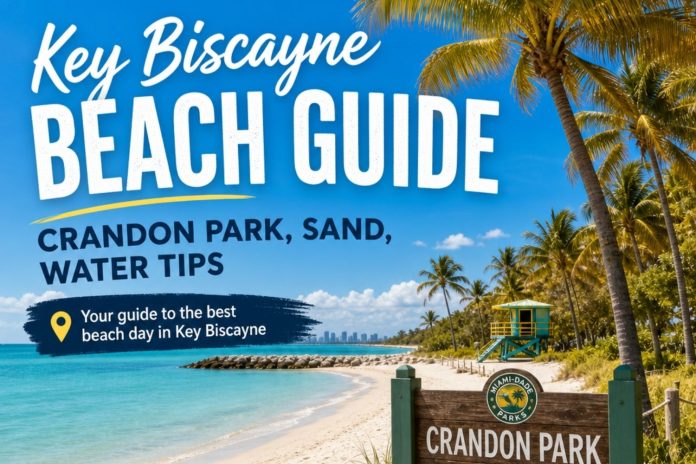
Key Biscayne, Florida: Crandon Park & Bill Baggs Cape Florida State Park
Cross the toll on the Rickenbacker Causeway and the whole tone of Miami changes. No condo canyon, no boardwalk hustle, just a barrier island that still has coconut palm plantation roots showing through the pavement. This is the closest thing to a real escape you will find this close to downtown Miami, and after everything else I have walked on this coast, it might be the one I trust the most.
Key Biscayne is a barrier island south of Miami Beach, reached only by the tolled Rickenbacker Causeway, and it splits into three distinct pieces. Crandon Park occupies the northern half, an 800 acre Miami Dade County park with two miles of family beach, a marina, golf course, and nature center. The southern tip belongs to Bill Baggs Cape Florida State Park, home to the oldest standing structure in Miami Dade County and a beach that has repeatedly ranked among the best in the country. Between them sits the Village of Key Biscayne itself, a quiet, affluent residential community with its own short stretch of public beach.
This guide covers Crandon Park in full and gives you an honest preview of Bill Baggs, since that park earns a complete dedicated guide of its own given how much history and detail it holds. I am going deep on what makes this sand and water so different from what you will find in Miami Beach or Sunny Isles, scoring everything honestly, and telling you exactly who this island is built for. I close with why I trust this island more than almost anywhere else I have covered on this coast.
The Vibe & Culture at Key Biscayne
An Island That Chose Trees Over Towers
Every other beach town I have covered on this stretch of coast eventually replaced its low rise past with high rises. Key Biscayne mostly did not.
The drive itself sets the tone. Cross the Rickenbacker Causeway toll plaza, pass Hobie Island and Virginia Key, where the Miami Seaquarium operated for decades before closing in October 2025, and Crandon Boulevard opens up into an island that still feels like it remembers being a coconut plantation. Commodore William Matheson planted the northern half of the island with coconut palms in the early 1900s, and when his heirs donated the land to Miami Dade County in 1940, the deal came with a condition that it remain public park land permanently. That single decision is the reason Crandon Park looks the way it does today, low, green, and shaded, instead of another wall of condo towers.
The Village of Key Biscayne itself, incorporated separately from the county park land, keeps a genuinely small town feel that residents only half jokingly call being a Key Rat. Golf carts outnumber the sense of urgency you would find anywhere else this close to downtown Miami, kids bike to school, and the tallest buildings cluster near the northern entrance rather than lining every block. Richard Nixon kept his Winter White House here in the late 1960s and early 70s, drawn by the same quiet that still defines the island.
Seasonally, this island runs warm and busy on weekends year round, with winter drawing the heaviest crowds to Crandon’s picnic areas and Bill Baggs filling to capacity on holiday weekends. Weekdays, especially outside of peak winter season, are a completely different experience, quiet enough that I have had long stretches of Crandon’s north beach entirely to myself on a Tuesday morning.
Key Biscayne Beach Areas
Here is how the island actually breaks down, and what genuinely sets each piece apart.
Crandon Park: South Entrance & the Amusement Center
Near Lot 1 · Families, Volleyball & the Historic Carousel
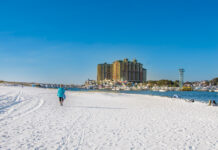
The southern entrance to Crandon Park is where most first time visitors land, and it shows in the crowd. This stretch of the two mile beach sits closest to the Crandon Park Amusement Center, which still holds a restored seaside carousel operating weekends and holidays, an old fashioned outdoor roller rink, and a playground shaped around marine animal sculptures, all built on the footprint of the old Crandon Park Zoo, which relocated to become Zoo Miami in the early 1980s. You can still spot overgrown remnants of the original zoo structures tucked into the landscaping if you know where to look.
This is where families gather, coolers, birthday parties, beach volleyball games, and cabana rentals along the south end for anyone who wants shade and a reserved parking spot for the day. A long offshore sandbar protects this entire stretch from real ocean surf, giving the water a genuinely calm, lagoon like feel that makes it one of the safest swimming beaches for small children I have covered on this coast.
I like arriving here early, before the south lot fills, and walking the paved promenade that separates the beach from the huge shaded picnic groves. It is busy, but it is a different kind of busy than South Beach, families rather than a scene, and it never once feels like a performance.
Crandon Park: North End, Marina & Nature Center
Near Lot 2 · Quiet, Shaded & Genuinely Wild at the Edges
The north entrance feels like a different park entirely. This is where you will find the Marjory Stoneman Douglas Biscayne Nature Center, a solar powered building with hands on exhibits and self guided trails leading through mangroves to a fossilized reef overlook, plus the entrance to Bear Cut Preserve, a designated natural study area that gives you a real sense of what this whole coastline looked like before development. Crandon Marina, on the bay side, handles boats up to 80 feet and runs a public dive boat operation.
The crowd here skews toward serious birders, boaters heading out for the day, and families who know to avoid the busier south lot. Herons, ospreys, and a genuinely wide range of butterflies work the dune and hammock vegetation, and the beach itself stays noticeably less crowded even on a packed weekend.
This is my pick if quiet matters more to you than proximity to the amusement center. The shade here runs deeper, the picnic tables are easier to find on a Saturday, and the nature trails give you something to do beyond the sand that most Miami beaches simply do not offer.
The Village of Key Biscayne: Ocean Park & the Residential Beach
Between Crandon & Bill Baggs · The Locals’ Stretch
Between the two big parks sits a shorter, quieter run of beach that belongs to the Village of Key Biscayne itself rather than the county or the state. Public access exists at Ocean Park, tucked between residential towers along Ocean Drive, though much of this stretch reads as an extension of the neighborhood rather than a destination beach, and you will notice the difference immediately, fewer concessions, fewer crowds, and a lot more residents out for a regular morning swim.
The crowd here is almost entirely local, Key Biscayne residents walking to the water from nearby condos and single family homes rather than visitors who drove over the causeway specifically for the beach. It has a genuinely unhurried, neighborhood feel that neither Crandon nor Bill Baggs quite matches, since both of those are destination parks first.
I would not plan a whole day around this stretch, but if you are staying in the village itself or want a five minute walk to sand without the parking lot logistics of the bigger parks, this is exactly what it is built for.
Bill Baggs Cape Florida State Park: A Preview
Southern Tip · Full Guide Coming Separately
The southern third of Key Biscayne belongs to Bill Baggs Cape Florida State Park, and it deserves more room than I am giving it here, which is exactly why I am covering it in its own dedicated guide soon. What you need to know for now: this park holds the 1825 Cape Florida Lighthouse, the oldest standing structure in Miami Dade County, survivor of an 1836 Seminole attack, a Confederate raid, and Hurricane Andrew in 1992, which flattened the invasive Australian pine forest that had taken over the park and allowed the state to restore the native coastal hammock you will walk through today.
Dr. Beach, the Florida International University professor who publishes an annual national beach ranking, has repeatedly placed this beach in the country’s top ten, praising its calm surf and fine, pale sand protected by an offshore shoal. No Name Harbor, tucked on the bay side, is a genuine local institution, a natural anchorage with a boat in seafood restaurant that feels like a discovery even though everyone who lives here already knows about it.
I am saving the mile by mile detail, the lighthouse tour schedule, and the full sea turtle and shorebird calendar for the dedicated guide. For now, just know that if you only see Crandon Park on this island, you have seen half the story.
Key Biscayne Rankings: Expert Scores Across 11 Categories
These scores weigh Crandon Park and the Village beach primarily, with a preliminary nod to Bill Baggs ahead of its own dedicated guide.
Sand Quality
8/10
Fine and well kept across Crandon Park, with Bill Baggs’ pale, coral influenced sand ranking among the best on this entire coast.
Hiking & Beach Walking
8/10
A long paved promenade through Crandon plus genuine nature trails through Bear Cut Preserve and the Bill Baggs hammock, more variety than a flat beach walk alone.
Shelling
5/10
Modest but noticeably better than the busier, more raked beaches further north on this coast, since this stretch sees less foot traffic overall.
Water Conditions
9/10
A protective offshore sandbar keeps Crandon’s water genuinely lagoon calm, and Bill Baggs sees rarely any real surf. This is some of the safest swimming water on this coast.
Scenery & Natural Beauty
9/10
Coastal hammock, mangroves, dunes, and a real lighthouse instead of a condo skyline. This is the most genuinely natural beach setting I have covered in Miami Dade County.
Birding & Wildlife
9/10
More than 260 recorded bird species at Bill Baggs alone, plus loggerhead nesting, ospreys, herons, and a genuine butterfly population throughout Crandon.
Family Friendliness
9/10
The sandbar protected water, amusement center, and shaded picnic groves make Crandon genuinely one of the best family beaches in Miami Dade County, full stop.
Dog Friendliness
2/10
Dogs are not permitted at Crandon Park or on the Bill Baggs beach. The nearest real dog beach sits back along the causeway at Hobie Island.
Solitude & Peace
6/10
Genuinely crowded on winter weekends, especially at Crandon’s south entrance and Bill Baggs’ lighthouse end, but weekdays and the north end deliver real quiet.
Entertainment & Nightlife
2/10
Essentially none, and that is entirely the point of this island. Head back across the causeway if nightlife is what you are after.
Parking & Beach Access
6/10
Crandon offers over 3,000 spaces, genuinely ample, but the causeway toll plus separate park entrance fees add up, and Bill Baggs closes entirely once it hits capacity.
Key Biscayne Sand & Water
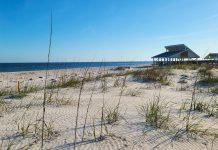
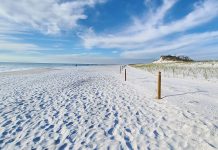
Crandon Park’s beach runs wide and flat for two easy miles, soft enough on the upper sand for a proper sandcastle and firm enough at the waterline for a long, comfortable walk. It stays noticeably less churned and crowded feeling than the busier beaches back toward the city, since Key Biscayne simply does not see the same daily foot traffic. Bill Baggs, a short drive further south, runs even finer and paler, a texture national beach rankings have praised for years.
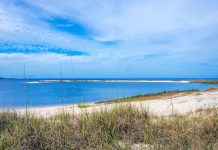
Water here is defined by protection rather than exposure. A long offshore sandbar at Crandon, and a similar shoal at Bill Baggs, break up incoming ocean swell before it reaches shore, which is exactly why the water inside stays so calm, shallow, and safe for small children. Visibility runs good on calm days, entry is gradual almost everywhere, and real rip currents are notably rare on this island compared to more exposed beaches on this coast.
-
Walkability. Two flat, easy miles at Crandon alone, plus a paved promenade for anyone who wants a break from sand underfoot.
-
Softness & Playability. Soft and sandcastle ready on the upper beach, with plenty of open, uncrowded room for games even on a busy day.
-
Barefoot Comfort. Genuinely comfortable nearly year round, helped along by the shade from Crandon’s mature tree canopy near the beach entrances.
-
Swimmability. Excellent. The sandbar protected, shallow water here is some of the safest swimming for small kids anywhere on this coast.
Want the full geology, grain composition, and the complete sand and water condition ratings? I broke it all down separately in Sand & Shore: Key Biscayne.
Dogs & Pet Accessibility at Key Biscayne
Are Dogs Allowed on the Sand? NO.
Neither Crandon Park nor Bill Baggs Cape Florida State Park allows dogs on their beaches, and this island does not currently offer a designated alternative of its own.
Where Dogs Are Allowed
- ✓Nowhere on the sand at Crandon Park or Bill Baggs. Both beaches are dog free.
Where Dogs Are NOT Allowed
- ✗Crandon Park’s entire two mile beach, north end and south end alike.
- ✗Bill Baggs Cape Florida State Park’s beach, trails, and lighthouse grounds.
Paws on the Ground Reality
This is a genuinely dog free island when it comes to the sand, and the rule is enforced consistently at both parks, so don’t plan around a quiet corner looking the other way. If a dog is part of your trip, your best bet is Hobie Island Beach Park, back along the Rickenbacker Causeway before you reach Key Biscayne itself, widely considered the best dog beach in the greater Miami area. Save Key Biscayne for the part of your day when the dog is resting at the hotel or back home.
Crowd Levels and the Overall Feel of Key Biscayne
Compared with Miami Beach or Sunny Isles, Key Biscayne runs calmer nearly across the board, and the crowd reflects the island’s family and nature first identity. Crandon’s south entrance is the busiest single spot on the island, but even at capacity it feels more like a well used community park than a tourist attraction.
The overall feel shifts with the season and the day of the week more than most beaches on this coast:
- Winter: the busiest window, with snowbirds and holiday crowds filling both Crandon and Bill Baggs on weekends
- Spring: comfortable and increasingly busy, with school groups and spring break day trips picking up midweek
- Summer: hot and humid, quieter on weekdays, genuinely packed on weekends when local families make the drive over the causeway
- Fall: my favorite window here, warm water, thin crowds, and the island at its most peaceful outside of hurricane season concerns
Who Is Key Biscayne Really For?
✓ Who Will Love Key Biscayne
-
Families with young kids, given Crandon’s sandbar protected, shallow entry water and genuine amusement center
-
Birders and nature lovers, thanks to Bear Cut Preserve, the nature center, and Bill Baggs’ recorded 260 plus bird species
-
History lovers who want a lighthouse and genuine Florida history alongside their beach day, ahead of the dedicated Bill Baggs guide
-
Boaters and anglers, given Crandon Marina and No Name Harbor at Bill Baggs
-
Anyone who wants a genuine escape from Miami’s density without leaving the county
-
Cyclists, thanks to a flat, dedicated bike path running the length of Crandon Boulevard
✗ Consider Another Beach If…
-
You want nightlife or walkable restaurants right off the sand. Head back to Miami Beach instead
-
You are traveling with a dog and want beach access. Neither Crandon nor Bill Baggs allows dogs on the sand
-
You want free parking and no causeway toll. Budget for both here
-
You are a dedicated surfer chasing real waves. The protective sandbar and shoal that make this beach so safe also mean there is essentially no surf
-
You want to avoid weekend crowds entirely during winter season, when both parks fill fast
Things to Do at Key Biscayne
Between Crandon Park and the preview of Bill Baggs, this island covers a genuinely wide range of activities beyond the beach itself.
-
Crandon Park Amusement Center. A restored seaside carousel operating weekends and holidays, plus an outdoor roller rink and marine themed playground, all built on the footprint of the old Crandon Park Zoo.
-
Nature Trails & Bear Cut Preserve. Self guided and naturalist led trails wind through mangroves to a fossilized reef overlook, with guided tours available through the nature center.
-
Boating & Diving. Crandon Marina accommodates boats up to 80 feet and operates a public dive boat, with a bait and tackle shop and fuel dock on site.
-
Golf & Tennis. Crandon Golf at Key Biscayne is an 18 hole championship course, and the Tennis Center at Crandon Park held the Miami Open for decades before it relocated.
-
Kiteboarding, Kayaking & Paddleboarding. Rentals are available through the north concession at Crandon, with calm, protected water ideal for beginners.
-
Cycling. A flat, dedicated bike path runs the length of Crandon Boulevard from the causeway to Bill Baggs, one of the more scenic rides in Miami Dade County.
-
Birding. Herons, ospreys, and migratory songbirds work the dunes and hammock throughout Crandon, with Bill Baggs recording more than 260 species over the years.
-
Lighthouse Tours. Bill Baggs offers guided tours of the 1825 Cape Florida Lighthouse and keeper’s cottage on select days, covered in full in the dedicated Bill Baggs guide.
Local Knowledge and Practical Advice
A few things I have picked up walking this island more times than I can count:
-
Budget for the causeway toll on top of park entrance fees. The Rickenbacker Causeway toll runs about two dollars each way for vehicles, separate from Crandon’s parking fee and Bill Baggs’ entrance fee.
-
Crandon Park parking runs about seven dollars on weekdays and ten dollars on weekends. With more than 3,000 spaces across two lots, finding a spot is rarely the problem, arriving before the picnic groves fill shaded tables is.
-
Bill Baggs closes when it hits capacity, and it does not reopen for at least two hours. Arrive early on weekends and holidays if that park is on your list.
-
Leave the dog at home, or plan a separate stop at Hobie Island on the way over. Neither Crandon nor Bill Baggs allows dogs on the sand.
-
No flotation devices are allowed in the water at either park. This is enforced countywide, so leave the pool noodles and inflatable rings in the car.
-
The carousel and roller rink only run on weekends and holidays. Plan your amusement center visit accordingly if that is part of your trip.
-
Sea turtle nesting season runs through the summer at both parks. Give any marked nests a wide, respectful distance if you spot one on an early morning walk.
-
No Name Harbor at Bill Baggs is worth the stop even if you only have an hour. The boat in seafood restaurant there is a genuine local institution.
-
Bring shade if you are heading to Crandon’s south lot on a weekend. Shaded picnic tables fill fast, and the north lot generally has better tree cover if you are flexible on entrance.
Where to Stay Near Key Biscayne, Florida
Key Biscayne offers a genuinely small lodging footprint compared with Miami Beach, which is part of the island’s appeal.
Oceanfront Resorts
The Ritz-Carlton Key Biscayne anchors the island’s small collection of full service oceanfront resorts, offering private beach access, spa facilities, and proximity to both Crandon Park and the village center.
Vacation Rentals & Condos
Short term rental condos throughout the Village of Key Biscayne put you within walking distance of Ocean Park and a short bike ride from Crandon, generally at a lower cost than the island’s resort hotels.
Camping
Bill Baggs Cape Florida State Park allows youth camping near No Name Harbor for a nominal fee, a rare beachfront camping option this close to downtown Miami. Full details are covered in the dedicated Bill Baggs guide.
Mainland Alternatives
Coconut Grove and Coral Gables, both a short drive across the causeway, offer a wider range of hotel options at lower price points for visitors willing to day trip to the island rather than sleep on it.
What Makes Key Biscayne Different from Nearby Beaches
Key Biscayne stands apart because it chose preservation over density at nearly every turn this coastline offered the opposite choice.
A few features make it distinct:
A protective sandbar that changes everything
Very few Miami Dade beaches offer the genuinely calm, lagoon like swimming conditions you will find at Crandon Park, a direct result of the offshore sandbar absorbing ocean swell before it reaches shore.
A donation with strings attached
Crandon Park exists in its current low rise, heavily shaded form because the Matheson family’s 1940 land donation required it to remain public park land permanently, a condition that shaped this entire stretch of coast.
Genuine, documented natural history
Between Bear Cut Preserve, the nature center, and Bill Baggs’ 260 plus recorded bird species, this island offers a level of accessible natural history you will not find on the developed beaches further north.
A toll that keeps it that way
The causeway toll, while a minor annoyance, has genuinely helped keep this island from developing the same density as its neighbors, since it is the only land access in or out.
Key Biscayne vs. Other South Florida Beaches
These are the beaches visitors most often weigh against Key Biscayne, and the honest read on when you would choose one over the other.
Key Biscayne vs. Miami Beach
Miami Beach wins decisively on nightlife, architecture, and street level energy. Key Biscayne wins on natural beauty, family safety, and genuine quiet. I cover South Beach, Mid Beach, and North Beach in a separate guide.
Key Biscayne vs. Sunny Isles, Bal Harbour & Haulover
That stretch of coast, which I also cover separately, offers more variety in a smaller footprint, luxury shopping, a dog beach, a clothing optional section, but nothing there matches Crandon’s sandbar protected swimming or Bill Baggs’ documented natural history.
Key Biscayne vs. Fort Lauderdale Beach
Fort Lauderdale Beach offers easier, cheaper access and a wider public promenade, without the toll, the entrance fees, or the natural preservation that defines Key Biscayne.
Bottom line: Key Biscayne rewards visitors who want their Miami beach day to include genuine nature, history, and family safety rather than nightlife or convenience. Budget the toll and the parking fees, and this island delivers an experience nothing else on this coast quite matches.
Key Biscayne, Florida: Frequently Asked Questions
Is Key Biscayne worth visiting?
Yes, especially for families and anyone who wants a genuine break from Miami’s density. Crandon Park’s sandbar protected water and Bill Baggs’ national beach rankings both hold up to the reputation.
Is Key Biscayne crowded?
Crandon’s south entrance and Bill Baggs’ lighthouse end get genuinely busy on winter weekends and holidays. The north end of Crandon and any weekday visit stay noticeably quieter.
How much does it cost to visit?
Budget for the Rickenbacker Causeway toll, roughly two dollars each way, plus Crandon Park’s parking fee of about seven dollars on weekdays and ten on weekends, or Bill Baggs’ entrance fee of about eight dollars per vehicle.
Are dogs allowed on the beach?
No. Dogs are not permitted at Crandon Park or on the Bill Baggs beach. The nearest dog friendly beach access is back along the causeway at Hobie Island.
When are lifeguards on duty?
Crandon Park stations 13 lifeguard towers along its two mile beach. Always confirm current hours before you go, since staffing can shift seasonally.
Is the water safe for kids?
Yes, genuinely so. Crandon’s offshore sandbar creates calm, shallow, lagoon like conditions that make it one of the safer swimming beaches for small children in Miami Dade County.
What is the best time of year to visit?
Fall offers the best balance of warm water and thinner crowds. Winter is the busiest season, since South Florida stays warm while much of the country is cold.
What can you do besides swim?
Plenty. A historic carousel and roller rink, nature trails through Bear Cut Preserve, golf, tennis, boating and diving out of Crandon Marina, cycling, birding, and lighthouse tours at Bill Baggs.
Is Key Biscayne good for families?
Yes, arguably the best family beach option covered in this series so far, thanks to Crandon’s protected swimming water and the amusement center built into the park itself.
Is Key Biscayne better than Miami Beach?
It depends on what you want. Miami Beach wins on nightlife and architecture. Key Biscayne wins on natural beauty, family safety, and genuine quiet. Both are worth visiting for very different reasons.
Patti’s Perspective: My Honest Take on Key Biscayne
Every other beach in this Miami series has some version of the same story behind it, a natural shoreline that got dredged, rebuilt, or replaced with towers until it barely resembled what it started as. Key Biscayne is the one place on this whole stretch of coast where the opposite happened. A family that could have sold their coconut plantation to the highest bidder gave it away instead, on the condition that it stay a public park forever, and eight decades later that single decision is still the reason this island feels the way it does.
I did not expect a golf cart island with a causeway toll to be the place that restored my faith in this whole coastline, but that is honestly what happened. After walking condo canyons and engineered sand and rebuilt beaches for most of this project, arriving at a two mile stretch that still has its original shade trees and an offshore sandbar doing exactly what nature intended it to do felt like exhaling for the first time in weeks.
That is the real lesson this island taught me, and it fits neatly into everything else I believe about midlife and rebuilding. Sometimes the right move is not reinvention. Sometimes it is protecting the good thing you already have before someone convinces you it needs to become something else. Key Biscayne did that with land. I am still working on doing it with the rest of my life.
My verdict: 8/10. The most naturally beautiful, family safe beach experience I have found in Miami Dade County, and it earns that reputation on genuine merit rather than marketing. It is not the place for nightlife, and it does not want to be. Budget the toll, arrive early on weekends, and let this island show you what the rest of this coast looked like before development got involved.
Want to Live by the Water?Key Biscayne offers some of the most protected, family oriented waterfront real estate in Miami Dade County, from beachfront high rises along Crandon Boulevard to single family homes on quiet, tree lined residential streets in the heart of the village.The market here draws families prioritizing schools and safety, second home buyers seeking a quieter alternative to Miami Beach, and boaters drawn to the island’s marina access and calm bay side waters. Pricing sits well above the broader Miami Dade average given the island’s limited inventory and single point of access, and homes here typically stay on the market longer as buyers wait for the right fit rather than the first available listing.If living by the water is something you are considering, whether full time, part time, or as an investment, it is worth exploring what is available in this area.Explore Waterfront Living at LiveByTheWater.com
Real estate referral partner