

Lovers Key State Park, Florida
I went to Lovers Key alone, which is a strange thing to admit about a place with this name. I spent most of the walk thinking about who that name was actually written for, and by the time I reached the north end I’d decided it wasn’t only for couples.
Lovers Key State Park sits on four barrier islands between Fort Myers Beach and Bonita Springs, and it’s a genuinely different kind of beach day than either of its neighbors. This was boat-only land until the 1960s, nearly bulldozed for condos before Florida stepped in, and it still feels like protected ground the moment you cross the first bridge. What you get today is 712 acres split between 2.5 miles of Gulf beach, five miles of hiking and biking trails through maritime hammock, and a mangrove paddling trail that connects straight into Estero Bay.
In this guide I’m walking you through the full park, going deep on what the sand and water are actually doing here compared to Bonita Springs and Sanibel, scoring it honestly across every category that matters, and telling you exactly who this park is built for right now, since a lot has changed here since Hurricane Ian. I’ll cover the beach access points, the Black Island and Eagle trails, and the kayak launch. I close with what actually stuck with me about walking this one alone.
The Vibe & Culture at Lovers Key State Park
A State Park Still Rebuilding, and Better for It in Some Ways
This isn’t a beach town. It’s a protected barrier island system with a beach at the end of it, and that distinction shapes everything about a visit here.
Lovers Key was slated to become condominiums in the 1960s. Bulldozers had already cleared native vegetation before public protest stopped the project, and the state eventually folded Lovers Key, Black Island, Long Key, and Inner Key together into one park in 1996. That history matters, because it explains why this place feels different from the developed strip a few miles south at Bonita Beach Park. There’s no boardwalk here, no restaurant row, and since Hurricane Ian tore through in September 2022, there isn’t even a tram anymore. What’s left is a park that asks a little more of you to reach the sand and gives you real quiet in return.
I want to be direct about where the park stands right now, since so much online information about Lovers Key is out of date. The tram service was discontinued permanently as part of the park’s long-term resilience planning, not just paused for repairs. Beach access runs through two pedestrian and bicycle bridges from the main parking lot instead. The gift shop, bait shop, and food service are currently unavailable, though paddling rentals and beach rentals are running daily. This isn’t a park in disrepair, it’s a park mid-recovery, and the difference matters if you’re planning a day here.
The crowd here skews toward people who came specifically for this park, not people who wandered over from a beach bar. You’ll find birders with real binoculars, kayakers loading boats at the launch, and a fair number of couples who came for the name and stayed for the quiet. Weekday mornings, especially outside the winter snowbird season, can feel like you have the whole place to yourself, which is not something I can say about most Southwest Florida beaches this easy to reach by car.
Lovers Key State Park Areas: Five Distinct Ways to Experience It
Lovers Key isn’t one beach, it’s a small system of beach, trail, and paddling access points, and how you spend your day here depends entirely on which one you pick.
Mid-Beach, via the Wood Bridge
1,000 Feet from Parking Lot #1 · Undeveloped, No Facilities
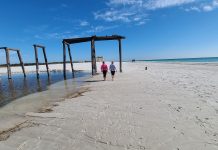
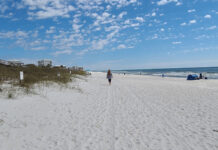
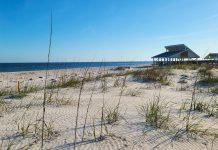
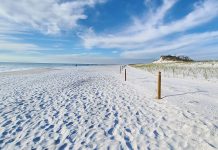
This is the shortest walk to sand from the main lot, a wood pedestrian bridge crossing over mangrove-lined water before opening onto a stretch of beach that’s been intentionally left without amenities. There’s no gazebo here, no restroom, nothing but sand, sea grape, and the open Gulf. The beach itself is wide where renourishment sand has been placed in recent years, and you’ll notice the texture shift as you walk, packed and slightly coarser in the newer fill sections, finer and softer in the stretches that haven’t been touched.
You’ll find a mix of people here, families willing to carry gear a short distance, photographers chasing the open dune line, and walkers who just want the fastest route to open sand. It stays busier than the south end simply because it’s the shorter walk, but busier at Lovers Key still means something different than busier at Bonita Beach Park. I never felt crowded here even on a Saturday in February.
This is where I’d send a first-time visitor, especially anyone short on time or carrying beach gear for kids. It’s the least fussy version of this park, and it still delivers real solitude compared to almost anywhere else on this coast.
South Beach, via the Concrete Bridge
Half Mile from Parking Lot #1 · Near New Pass
The walk to South Beach is longer, close to half a mile from the lot, and it used to be the developed heart of the park before Hurricane Ian took the gazebo, the tram shelter, and the beachfront restaurant with it. What’s there now is a restroom trailer and a genuinely beautiful stretch of beach running down toward New Pass and the Bonita Springs county line. The extra walk filters out a real percentage of visitors, and you’ll feel that the moment you crest the last dune crossing.
The crowd here is thinner and more patient, people who read ahead and knew the walk was coming. I’ve watched shorebirds work this stretch of shoreline with almost no one to interrupt them, and the view south toward New Pass and the Big Hickory Island Preserve I covered in my Bonita Springs guide is genuinely pretty in late afternoon light.
If solitude matters more to you than convenience, this is your stop. I’d pack more water than you think you need, since there’s no food or beverage service anywhere in the park right now, and the walk back feels longer than the walk out.
The Walk North Toward Big Carlos Pass
Beyond Mid-Beach · The Quietest Stretch in the Park
North of the Mid-Beach bridge, the shoreline keeps going, and almost nobody follows it. The dedicated North Beach entrance near Big Carlos Pass has been closed through much of the park’s hurricane recovery, but the beach itself isn’t gated, so walking the shoreline north from Mid-Beach still gets you there on foot. The crowd thins with every step, and by the time you’re within sight of the Big Carlos Pass bridge you’re likely to have the tideline entirely to yourself outside of an occasional angler working the pass.
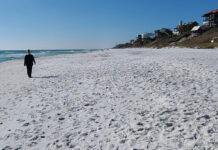
I walked this stretch alone on a weekday morning, and it turned into the best hour I spent in this entire park. No tram noise, no beach chairs lined up in rows, just wind, terns, and the sound of my own footsteps in sand that hadn’t been walked yet that day. If you’ve read anything else I’ve written, you know I don’t say that lightly.
Check the park’s current status before you plan a trip specifically around the gated North Beach entrance itself, since that access point has been under a phased reopening. The walk north along the open shoreline from Mid-Beach, though, is available any day the park is open, and it’s the single best solitude on this list.
Black Island Trail & Eagle Trail
Access via Service Road · Maritime Hammock & a Gator Pond
Black Island isn’t a beach stop, it’s the inland heart of this park, and I’d argue it’s just as worth your time. The island was cut into a puzzle of artificial canals in the 1970s ahead of a planned resort that never got built, and the state has spent decades letting native vegetation reclaim it. Today the Black Island Trail runs 2.5 miles and the Eagle Trail another 1.1, both winding through cabbage palms, gumbo limbo, and sea grape on hard-packed sand and grass, with a freshwater pond partway through where an alligator has made its home for years.
You’ll share this trail with cyclists more than beach walkers, since it draws a genuinely mixed crowd of birders, trail runners, and families biking the loop together. With Parking Lot #2 closed since the storm, you’ll reach the trailhead via the service road rather than the old direct entrance, and signage along the way keeps you on track.
I biked the Black Island loop on a cool December morning and watched an osprey work the canal for a solid ten minutes before it finally dove. That’s the kind of thing that happens out here regularly, and it’s a completely different park experience than the beach itself. I’ve written up the full trail route separately, since it deserves its own closer look.
The Kayak Launch & Estero Bay Paddling Trail
Across from the Main Entrance · Great Calusa Blueway Connection
Directly across from the park’s main gate sits the kayak launch, a straightforward put-in that connects to a 2.5 mile mangrove-protected paddling trail winding through Estero Bay. This is part of the same Great Calusa Blueway network I covered in my Bonita Springs guide, and it’s genuinely one of the better paddling stretches on that whole 190 mile trail. Paddling rentals are running daily here even while other park services remain limited, which tells you something about what this park prioritizes right now.
The people you’ll find at the launch are almost entirely paddlers, not beachgoers, since reaching the actual beach from here means either paddling around to the Gulf side or driving back to the main lot. It’s a quieter, more purposeful crowd, people loading kayaks with genuine intention rather than beach chairs and coolers.
I paddled this stretch on a still morning and had two separate manatee sightings within the first twenty minutes, close enough to hear them surface for air before I saw them. If you’ve never spent time in a mangrove tunnel this dense, it’s worth the rental price on its own, independent of whatever the beach itself is doing that day.
Lovers Key State Park Rankings: Expert Scores Across 11 Categories
These scores reflect the park’s current, post-hurricane condition honestly, not the version of Lovers Key that existed before 2022. Some categories score lower than they would have a few years ago, and that’s the truth of where things stand right now.
Sand Quality
8/10
Pale gold to nearly white, softer than Bonita Beach Park’s shell-heavy sand. Renourished sections feel more packed and coarse underfoot than the untouched stretches, a texture shift you’ll notice as you walk.
Hiking & Beach Walking
9/10
The strongest all-around walking destination on this coast, between 2.5 miles of beach and more than five miles of maritime hammock trail on Black Island.
Shelling at Lovers Key
8/10
Genuinely good, among the best on the Lee County coast by the park’s own account, though the boat-only beach at Big Hickory Island still edges it out for untouched hunting.
Water Conditions
8/10
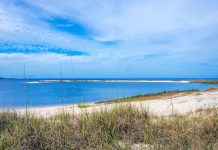
Calm and protected between New Pass and Big Carlos Pass, with turquoise color on clear days that shifts toward tea tones near the pass mouths.
Scenery & Natural Beauty
9/10
712 protected acres across four barrier islands, with almost nothing built on any of them. This is the wildest feeling stretch of easily accessible coast in this part of Florida.
Birding & Wildlife
9/10
Manatees, dolphins, bald eagles, roseate spoonbills, osprey, gopher tortoises, and a resident alligator on Black Island. Very few Florida beach parks pack in this much wildlife this reliably.
Family Friendliness
6/10
Honestly lower than it used to be. Without the tram, reaching the beach with small kids and gear means a real walk, and there’s no food service to fall back on if you run short on supplies.
Dog Friendliness
5/10
Leashed dogs are welcome on the trails and in picnic areas but never on the beach itself. A dedicated dog beach sits just south of the park along Hickory Boulevard if your dog wants sand time too.
Solitude & Peace
8/10
The extra walk from the parking lot genuinely filters the crowd. Walk north from Mid-Beach and you’ll likely have long stretches of shoreline to yourself.
Boating, Paddling & Water Access
9/10
A genuine highlight. The kayak launch and its mangrove paddling trail into Estero Bay are running daily and rank among the best paddling on the Great Calusa Blueway.
Parking & Beach Access
5/10
The single biggest change since Hurricane Ian. No more tram, and both beach bridges require a genuine walk from the lot. Budget more time here than you would at any other beach in this guide.
Lovers Key State Park Sand & Water: Deep-Dive Analysis
Sand Composition & Texture
The first thing you’ll notice about the sand at Lovers Key if you’ve just come from Bonita Beach Park is how much lighter it runs. This is still a mixed quartz and shell composition, the same barrier island system I covered in my Bonita Springs guide, but the shell content here reads finer and less coarse underfoot, closer to a pale gold than Bonita’s tan and shell hash.
What makes this sand worth a closer look is the renourishment history layered into it. Years of storm damage, most recently Hurricane Ian in 2022, have meant repeated sand placement projects to rebuild the beach berm, and you can genuinely feel the difference between the newer fill sections and the untouched stretches as you walk. The fill sand tends to pack firmer and feel slightly coarser, while the older, undisturbed sand toward the passes stays finer and softer. It’s a detail most visitors walk right past, but once you know to look for it, you won’t stop noticing.
-
Sand Color. Pale gold to near white, lighter than Bonita Beach Park a few miles south. The renourished sections near the beach bridges run slightly whiter and more uniform than the older sand further from the access points.
-
Texture. Softer overall than Bonita Springs sand, though you’ll feel a real difference between the packed, coarser fill sand near the bridges and the finer natural sand toward New Pass and Big Carlos Pass.
-
Grain Size. A mixed quartz and shell composition consistent with the rest of this barrier island chain, moderately fine, with occasional coarser patches where storm-driven shell material has settled.
-
Shell Content. Genuinely strong, and the park itself calls this some of the best shelling on the Lee County coast. Look for whelks, olives, augers, and scallops along the tideline, especially after a tide change. Live shelling and sea stars are strictly prohibited here.
-
Walking Comfort. Excellent at the waterline the full length of the beach. The dry upper sand near the bridge crossings can run soft and deep in the newer fill sections, which slows down a stroller or a cooler more than you’d expect.
-
Barefoot Rating. 8/10 most of the year. The waterline stays comfortable and cool nearly everywhere, and this coast doesn’t hold heat the way darker sand does further south.
Water Conditions at Lovers Key State Park
The water here sits in a genuinely protected position between New Pass to the south and Big Carlos Pass to the north, and both passes influence what you’ll find on a given day. On calm mornings, expect a real turquoise out past the sandbar. Closer to either pass, tannin-stained water draining out of the mangrove backwaters mixes in and shifts the color toward a tea or olive tint, the same pattern I described at Bonita Springs, since this is the same estuary system.
-
Water Clarity. Good on calm days, particularly at Mid-Beach and South Beach away from the direct pass mouths. Clarity drops after wind events and takes a few settled days to fully recover.
-
Water Color. Turquoise offshore on a calm day, shifting to a darker tea tone near New Pass and Big Carlos Pass where backwater mixes in. It’s genuinely one of the more photogenic color shifts on this coast.
-
Wave Action. Gentle to calm nearly year round, protected by the barrier island chain and the shallow Gulf shelf offshore. This isn’t a surf beach in any season.
-
Swimming Quality. Good, though there are no lifeguards anywhere in the park, a detail worth taking seriously since you’re swimming entirely at your own risk here.
-
Water Sports. This park’s real strength. The kayak launch and its 2.5 mile mangrove paddling trail into Estero Bay connect directly to the Great Calusa Blueway, with manatee and dolphin sightings genuinely common.
Dogs & Pet Accessibility at Lovers Key State Park
Are Dogs Allowed on the Sand? RESTRICTED.
Leashed dogs are welcome throughout most of Lovers Key State Park, but the beach itself is off limits, no exceptions, on any of the three stretches of Gulf shoreline in this guide.
Where Dogs Are Allowed
- ✓The Black Island Trail and Eagle Trail, on a leash, through the maritime hammock.
- ✓Picnic areas throughout the park, including the Bayside picnic area, on a leash.
Where Dogs Are NOT Allowed
- ✗Mid-Beach, South Beach, and the walk north toward Big Carlos Pass, off limits on the sand itself.
- ✗The kayak launch’s swimming and beach access, though the trail and picnic space nearby are fine on a leash.
Paws on the Ground Reality
The Black Island and Eagle trails are mostly grass and packed soil with pockets of sand and occasional mud, so paws handle it comfortably, and the maritime hammock canopy gives you real shade the beach itself doesn’t have. This is a state park with an actual rule book rather than an honor system, so leash rules are enforced more consistently here than at a county sandbar. There are no water fountains anywhere in the park right now, so bring your own water for your dog as well as yourself.
Keep dogs leashed and at a real distance from the freshwater pond on Black Island, since an alligator has called it home for years. If your dog wants sand and off-leash time too, the Dog Beach at New Pass, just south of the park in Bonita Springs, is your nearest option.
Crowd Levels and the Overall Feel of Lovers Key State Park
Compared with Fort Myers Beach to the north and Bonita Beach Park to the south, Lovers Key runs noticeably quieter, and the loss of the tram since Hurricane Ian has only reinforced that. The crowd here comes for the park specifically, not for a beach town wrapped around it.
The seasonal pattern follows the rest of Southwest Florida, with a few park-specific wrinkles worth knowing:
- Winter and early spring (October through April): the busiest window, with snowbird crowds filling the main lot by mid-morning on nice days
- Summer: hot, with predictable afternoon storms, but also sea turtle nesting season and the lightest weekday crowds of the year
- Fall: my favorite stretch here, warm water and thinning crowds once hurricane season quiets down in October
- Any season, any weekday morning: genuinely light traffic if you arrive before mid-morning, since the longer walk from the lot filters out a lot of casual visitors
Who Is Lovers Key State Park Really For?
✓ Who Will Love Lovers Key
-
Paddlers and kayakers chasing manatees and dolphins through a genuinely good mangrove trail
-
Birders and wildlife watchers, since this park packs in more species reliably than almost anywhere else on this coast
-
Hikers and cyclists who want the Black Island and Eagle trails as much as the beach itself
-
Anyone who wants genuine solitude on a beach that’s still easy to reach by car
-
Couples looking for a quiet, unpolished setting rather than a resort beach
-
Shell hunters willing to walk a little further for genuinely good hunting
✗ Consider Another Beach If…
-
You have small kids and gear and don’t want a real walk from the lot to the sand, since the tram is gone for good
-
You’re counting on food, drinks, or a gift shop on site. None of that is currently running here
-
You want your dog on the beach itself. Leashed dogs are welcome on the trails, never on the sand
-
You want boardwalk energy or nightlife nearby. This is quiet, protected parkland by design
-
You need a lifeguard on duty. There are none anywhere in this park
Things to Do at Lovers Key State Park, Florida
Between the beach, the trails, and the water, this park gives you more genuine variety in one visit than most Southwest Florida beaches manage in three.
-
Beach Walking. String together Mid-Beach and the walk north toward Big Carlos Pass for the quietest stretch in this guide, or head south toward New Pass from South Beach for a longer, equally uncrowded walk.
-
Shelling. Genuinely strong, best after a tide change or a blow. Live shelling and sea stars are prohibited here, so only take what’s clearly empty.
-
Kayaking and Paddling. The park’s signature activity. Rent at the launch across from the main gate and follow the 2.5 mile mangrove trail into Estero Bay, part of the Great Calusa Blueway.
-
Biking and Hiking. The Black Island Trail and Eagle Trail together cover more than five miles of maritime hammock, with a freshwater gator pond and steady osprey and eagle activity along the way.
-
Swimming. Calm, protected water good for swimming, with the honest caveat that there are no lifeguards anywhere in the park.
-
Fishing. Trout, redfish, snook, and tarpon show up seasonally, with the passes on either end of the park drawing steady angler traffic. A Florida saltwater license is required from shore.
-
Wildlife Watching. Manatees and dolphins in the back bay, bald eagles and osprey overhead, roseate spoonbills in the tidal flats, and sea turtle nests on the beach itself from May through October.
-
Sunset Watching. Reliable most of the year, with an open western view from every stretch of beach in this guide. Fewer people fight for a spot here than almost anywhere else on this coast.
Local Knowledge and Practical Advice
A few things I’ve picked up spending time in this park that a first-time visitor genuinely needs to know right now:
-
There is no tram anymore. It was discontinued permanently as part of the park’s long-term resilience plan, not paused. Budget real walking time, especially to South Beach, which is a half mile each way.
-
Bring your own water. There’s no reliable food or beverage service in the park right now, and it gets genuinely hot on that walk back from South Beach in summer.
-
Bring cash for the entrance fee. Payment methods have shifted during the park’s recovery, and cell service inside the park can be unreliable for card or app payments.
-
Wear real shoes for the walk to the beach. The bridge crossings and the soft, deep sand near the renourished sections are harder on bare feet than the walk sounds.
-
Rent a kayak even if the beach is your main plan. The paddling trail is running daily and it’s genuinely the best part of this park right now.
-
Check current status before planning around the North Beach gate. That specific access point has been closed for extended stretches during hurricane recovery. Walking north from the Mid-Beach bridge still gets you to the quiet north end on foot.
-
Keep dogs leashed and off the beach. Trails and picnic areas welcome leashed dogs, but the beach itself is off limits. The Dog Beach at New Pass, just south of the park, is your best bet for sand time with a pet.
-
Sea turtle season runs May through October. Nests are marked and monitored on this beach just like the rest of the Lee County coast, so give any marked area a wide berth.
-
Use the service road for the Black Island and Eagle trails. Parking Lot #2 has been closed since the storm, so follow the posted signage from the main lot rather than looking for the old direct entrance.
-
There is no shade on the beach itself. Bring your own umbrella or canopy, since there are no rental chairs or umbrellas on the sand right now.
Where to Stay Near Lovers Key State Park, Florida
Lovers Key itself is protected parkland, so lodging options sit just outside its borders, on Black Island, in Fort Myers Beach to the north, or in Bonita Springs to the south.
Lovers Key Resort, Black Island
This is the closest lodging to the park, sitting on Black Island directly across from the main entrance on Estero Bay rather than the Gulf itself. The resort was significantly damaged by Hurricane Ian and has since been rebuilt in phases, with the main tower, pool, and on-site restaurant, Flippers on the Bay, now open. It’s a bayfront rather than beachfront property, with a short walk or drive to the actual state park beach.
Fort Myers Beach, North of Big Carlos Pass
Fort Myers Beach is still mid-rebuild in 2026, with beach renourishment complete and restaurants and lodging reopening steadily, though total room inventory remains below pre-storm levels and the Times Square commercial core is still under active reconstruction. Newer properties here tend to be more hurricane-hardened, which is worth factoring in if that matters to you.
Bonita Springs, South of New Pass
The Gulf-front condo corridor along Hickory Boulevard in Bonita Springs sits a short drive south, with rental policies that vary by building. Hyatt Regency Coconut Point Resort & Spa is also within easy reach if you want full resort amenities.
Camping Near Lovers Key
There’s no camping inside the park itself. The closest option is Koreshan State Park in Estero, about 25 minutes inland, with wooded tent and RV sites along the Estero River. The campground has had periods of temporary closure recently, so confirm current status before you book.
Mainland Bonita Springs, Estero & Fort Myers
For lower rates and a wider range of options, the inland corridor along US-41 offers budget to mid-range hotels with an easy 10 to 20 minute drive back to the park.
What Makes Lovers Key State Park Different from Nearby Beaches
Lovers Key stands apart because it’s protected land first and a beach destination second. Most of Southwest Florida’s coast trades on convenience. This park trades on the opposite.
A few features make it distinct:
A state park built from four rescued islands
Lovers Key, Black Island, Long Key, and Inner Key were headed for condo development before the state stepped in. That history gives the whole park a protected, unhurried feel you don’t find at a beach town beach.
A real hurricane recovery you can see and respect
The loss of the tram and on-site services isn’t hidden here, it’s part of the honest story of this park right now, and it genuinely changes who should plan a visit and how.
A mangrove paddling trail built into the beach day
Most Florida beaches treat kayaking as an add-on. Here it’s arguably the main event, with a dedicated launch and trail that connects straight into the Great Calusa Blueway.
Wildlife density most beach towns can’t match
Manatees, dolphins, bald eagles, roseate spoonbills, gopher tortoises, and a resident alligator, all inside one 712 acre park.
Lovers Key State Park vs. Other Southwest Florida Beaches
These are the beaches visitors most often weigh against Lovers Key, and the honest read on when you’d choose one over the other.
Lovers Key State Park vs. Bonita Springs Beaches
Bonita Springs, just south across New Pass, gives you an easier developed park at Bonita Beach Park plus a genuine boat-only island at Big Hickory. Lovers Key trades that convenience for protected land, real trails, and a paddling trail built right into the park. Choose Bonita Springs for easy amenities. Choose Lovers Key for a wilder, quieter day.
Lovers Key State Park vs. Fort Myers Beach
Fort Myers Beach, just north across Big Carlos Pass, still carries more energy, restaurants, and nightlife even mid-rebuild. Lovers Key has none of that by design. Choose Fort Myers Beach for a livelier evening. Choose Lovers Key for a genuinely quiet morning.
Lovers Key State Park vs. Sanibel Island
Sanibel’s reputation for shelling is built on its unusual east-west orientation, and it earns that reputation. Lovers Key’s shelling is genuinely strong in its own right, and you won’t pay a causeway toll or fight Sanibel’s crowds to find it.
Lovers Key State Park vs. Barefoot Beach Preserve
Barefoot Beach, south in Collier County, offers a similar undeveloped feel and a comparable long walk for solitude. Lovers Key adds a genuine paddling trail and a maritime hammock trail system that Barefoot Beach doesn’t have. Both reward the extra effort it takes to reach them.
Bottom line: Lovers Key State Park gives you the most complete outdoor day on this stretch of coast, beach, trail, and paddling trail in one 712 acre park, at the cost of the convenience its neighbors still offer. Come here for the wildlife and the quiet, not for an easy afternoon.
Lovers Key State Park, Florida: Frequently Asked Questions
Is Lovers Key State Park open in 2026?
Yes, the park is open daily from 8am until sundown. Some facilities, including the gift shop, bait shop, and food service, remain closed as part of ongoing Hurricane Ian recovery, while paddling rentals and beach rentals run daily.
Is there still a tram to the beach at Lovers Key?
No. Tram service was permanently discontinued as part of the park’s long-term resilience planning. Beach access is now on foot or bicycle via two bridges from Parking Lot #1.
How far is the walk from parking to the beach?
About 1,000 feet to the Mid-Beach wood bridge, or roughly half a mile to the South Beach concrete bridge. Budget real time either way, especially with kids or gear.
Are dogs allowed at Lovers Key State Park?
Leashed dogs are welcome on the trails and in picnic areas but are not allowed on the beach itself. A dedicated off-leash dog beach sits just south of the park in Bonita Springs.
What is the entrance fee for Lovers Key State Park?
$8 per vehicle with 2 to 8 people, $4 for a single-occupant vehicle or motorcycle, and $2 for pedestrians and bicyclists. Bring cash, since payment methods have shifted during the park’s recovery.
Is Lovers Key good for shelling?
Yes, genuinely good, with the park itself citing it as some of the best shelling on the Lee County coast. Live shelling and sea stars are prohibited, so only take shells that are clearly empty.
Are the Black Island and Eagle trails open?
Yes, both trails are open, though Parking Lot #2 remains closed, so access is via the service road from the main parking area rather than the old direct entrance.
Is there a kayak launch at Lovers Key?
Yes, directly across from the main entrance, with a 2.5 mile mangrove paddling trail into Estero Bay that connects to the Great Calusa Blueway. Rentals are running daily.
When is sea turtle nesting season at Lovers Key?
May 1 through October 31, consistent with the rest of the Lee County coast. Nests are marked and monitored by local volunteers throughout the season.
Is Lovers Key State Park good for families right now?
It can be, but plan for the current reality: no tram, a real walk to the beach, and no on-site food or drink service. Families with small kids or a lot of gear should budget extra time and bring their own supplies.
Patti’s Perspective: My Honest Take on Lovers Key State Park
I went to Lovers Key alone, which felt like a strange thing to do at a place with this name. Every sign, every brochure, every review I’d read talked about it as a couples’ beach, and I walked in half expecting to feel like I was intruding on somebody else’s romance. I did not expect to spend the walk thinking about a completely different kind of love.
I parked at Lot 1, crossed the Mid-Beach bridge, and instead of setting up for the day I just kept walking north. Nobody else did. By the time Big Carlos Pass came into view I hadn’t passed another person in twenty minutes, and I noticed something I don’t always let myself notice: how much I actually love walking alone. Not lonely. Alone. There’s a difference, and this stretch of sand is where I finally felt it clearly. I noticed the shorebirds working the tideline instead of glancing past them. I noticed the light change over the water instead of checking my phone. I noticed how much there actually is to love in a single quiet hour, if nobody’s there asking you to hurry up or slow down.
This park got its name from couples who used to boat out here because it was too remote for anyone else to bother them. I understand why that story stuck. But walking it solo, past a beach entrance that’s still closed for hurricane recovery, past a resort still rebuilding across the bay, I found a version of the name that fits just as well. This is a place to love someone. It’s also a genuinely good place to remember that you’re allowed to love your own company too.
My honest caveat: this park asks more of you right now than it used to. No tram, no food service, a real walk to the sand. Come prepared for that, and it rewards you with a kind of quiet I haven’t found many other places on this coast.
My verdict: 8/10. Not the easiest beach day in this guide, and I’d rather it be honest about that than pretend the tram is still running. What it lacks in convenience it makes up for in wildlife, trails, paddling, and a solitude that’s genuinely rare this close to a paved road. Come for the name if that’s what brought you here. Stay for the quiet, whether you’re walking it with someone or, like I did, on your own.
Want to Live by the Water?Lovers Key itself is protected state parkland, so there’s no real estate for sale inside its borders, but the barrier islands on either side of it offer some of the more distinctive waterfront living in Southwest Florida. Black Island carries a small footprint of bayfront condos directly across from the park entrance, Fort Myers Beach to the north is rebuilding with newer, more hurricane-resilient construction, and Bonita Springs to the south offers the Gulf-front condo corridor along Hickory Boulevard that I covered in my Bonita Springs guide.The market here draws buyers specifically looking for proximity to protected land rather than a boardwalk scene, along with boaters drawn to direct Estero Bay access. Most waterfront property in this stretch sits in FEMA flood zones AE or VE, and post-Ian construction standards have raised both insurance requirements and resale value for newer, elevated builds.If living near this kind of protected coastline is something you’re considering, whether full time, part time, or as an investment, it’s worth exploring what’s available in this area.Explore Waterfront Living at LiveByTheWater.com
Real estate referral partner