



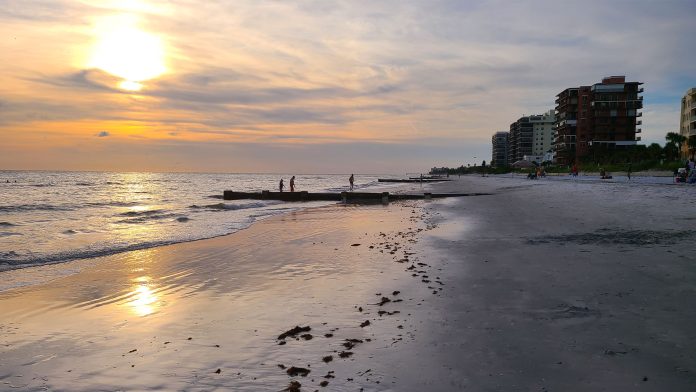
Madeira Beach, Florida
Locals have always called it Mad Beach, and once you have walked it from the working waterfront at the south end to the wide quiet stretch near Archibald Park in the north, you understand why the nickname fits in two directions at once. There is real madness at John’s Pass, and there is real beauty in the calm miles above it.
Madeira Beach sits on Long Key, the barrier island between John’s Pass to the south and Redington Beach to the north, about 30 minutes west of Tampa International Airport. The city runs a little over two miles of Gulf coastline and packs a staggering amount of character into those two miles. The south end is anchored by John’s Pass Village and Boardwalk, Pinellas County’s top tourist attraction and a genuine working fishing village that was transformed into a 1,100-foot waterfront boardwalk over the past four decades. The north end is residential, wide-beached, and quiet in a way that surprises visitors who only ever saw the Village.
The Pass itself has a specific origin story. On September 27, 1848, a major hurricane rearranged the barrier island coastline and cut the waterway that now separates Madeira Beach from Treasure Island. A fisherman and subsistence farmer named John Levique, sailing back from New Orleans with his partner when the storm hit, navigated through the newly formed channel that morning and gave it his name. The boardwalk that carries his legacy was built by Wilson Hubbard starting in 1982, and it has grown into the most visited waterfront destination on the Pinellas coast.
I have been coming to this stretch of Central West Florida since I was a child. My family made the trip every summer for years, and then I brought my own kids here. This coast has a specific hold on me that no other part of Florida does quite the same way. I have now walked the entire Florida coastline for this work, and when I come back to Mad Beach, I see it the way you see a familiar face after a long time apart: the same, and more itself than you remembered.
In this guide I’ll walk you through every distinct stretch of Madeira Beach, go deep on what the sand and water are actually doing, give you honest scores across every category that matters, and tell you directly who this beach is built for. I close with my own read on what makes Mad Beach the kind of place you come back to.
The Vibe and Culture at Madeira Beach
Two Beaches in One: Loud at the Pass, Quiet Past It
The nickname “Mad Beach” fits the south end exactly right. The north end earns a quieter name that nobody has bothered to give it yet.
From John’s Pass looking north, Madeira Beach makes no attempt to be subtle. The 1,100-foot boardwalk runs along the intracoastal side, dolphin cruise boats line up to load passengers by mid-morning, commercial fishing boats offload the day’s catch at Hubbard’s Marina, and the smell of fried grouper and sunscreen drifts across Gulf Boulevard to the beach side. This is one of the most energetic waterfront scenes in Florida, and it earns that reputation honestly. Over a million visitors come through John’s Pass Village every year. The boardwalk and beach across the street function as a single organism in season.
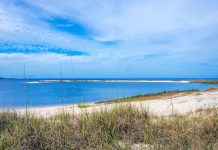
Drive or walk north past 130th Avenue and the whole register changes. The boardwalk energy fades, replaced by residential Gulf-front homes and the kind of beach where the tide rolls in and out without an audience. The sand is the same fine-grained cream-white that runs the full length of the barrier island. The water is the same warm turquoise Gulf. But the crowd is largely gone, and what is left is the version of Mad Beach that locals use for their own morning walks and the version that pulls me back when I want the beach and not the show.
Seasonally, Mad Beach runs in two very different modes:
- Winter (Dec-Mar): snowbird season brings an uptick in visitors to the Village and to the longer-stay condos on Gulf Boulevard; the beach itself is more moderate, and the John’s Pass Seafood Festival in January draws a large but festive crowd for a long weekend
- Spring (Apr-May): one of the best windows; warm water, lighter crowds than summer, and the spring break energy that builds at Clearwater and St. Pete Beach mostly bypasses the mid-island and north beach sections of Mad Beach
- Summer (Jun-Aug): peak season; the John’s Pass area packs out on weekends, parking gets competitive, and the beach from John’s Pass Park through Archibald runs full but not suffocating
- Fall (Sep-Nov): the local’s window; crowds thin noticeably after Labor Day, sea turtle nests are still active through October, the water stays warm, and the Village shifts into a more relaxed gear
One thing every visitor needs to know before getting in the water: there are no lifeguards on duty at any Madeira Beach city beach. The city’s own FAQ site confirms this explicitly and adds a specific warning about undertow near the John’s Pass Bridge on the south beach. Swim with self-awareness, watch the flags, and read the posted signs before wading in on the south end.
Madeira Beach: Five Distinct Stretches, Five Different Experiences
Two miles of barrier island sounds compact until you walk it end to end and realize how dramatically the feel shifts from south to north. Here is how Mad Beach actually breaks down.
John’s Pass Park: The South Beach
South End · Gulf & Village Access · 12956 Gulf Blvd
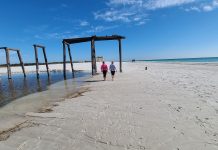
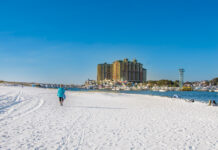
The first thing you notice arriving at John’s Pass Park on the south end of Madeira Beach is that the beach and the Village work as two halves of the same experience. John’s Pass Park sits directly across Gulf Boulevard from John’s Pass Village and Boardwalk, with a wooden walkover, public restrooms, outdoor shower area, a covered picnic area, and chair rentals available on the beach. It is the entry point for visitors who want both: the beach on one side of the street and the boardwalk, restaurants, and water sports launches on the other.
The beach here is wide and the sand is soft, but the energy matches the Village across the street. Families with chairs and umbrellas stake out the upper beach early on summer weekends. Kids run back and forth between the Gulf and the Village. The dolphin tour boats and jet ski rentals departing from Hubbard’s Marina visible just over the bridge give the view a working-waterfront quality that you do not get at any other Pinellas beach. On calm mornings, dolphins actually work the pass itself, and watching them from the beach side while the boats load for dolphin tours on the boardwalk side is one of the small Mad Beach ironies that I appreciate every time.
There is one important note for swimmers on this specific stretch: the City of Madeira Beach’s own FAQ includes an explicit warning about the sign near the John’s Pass Bridge regarding undertow on the south beach. The pass current can create conditions on this end that differ from the mid-island and north beach areas. Read the posted signs when you arrive, swim away from the bridge area, and be aware that stingrays are particularly common near this end of the beach in summer months. The stingray shuffle, dragging your feet through the sand as you enter the water rather than stepping, is standard practice here.
John’s Pass Village and Boardwalk
The Working Waterfront · History and Energy Combined
John’s Pass Village and Boardwalk is technically across Gulf Boulevard from the beach, but no guide to Madeira Beach makes sense without giving it its own full treatment. This is Pinellas County’s top tourist attraction. Over a million people walk the 1,100-foot wooden boardwalk each year. And it earns that traffic because it has never fully shed its working-fishing-village soul.
Hubbard’s Marina, built by Wilson Hubbard in 1982 as the foundation of the Village, still operates commercial and charter fishing trips from the same waterfront. You can book a deep-sea trip, watch the commercial boats come in with their catch, and eat that fish at the Friendly Fisherman next door the same afternoon. Dolphin Quest runs 90-minute cruises through Boca Ciega Bay with a genuine guarantee: if you do not see dolphins, your next cruise is free. That is not marketing language. The pass is productive enough for dolphin sightings that the guarantee holds up. On calm mornings, dolphins work the current at the mouth of the pass, and watching them from the boardwalk railing while eating a grouper sandwich is genuinely one of the better free moments on this coast.
The commercial energy of the Village, with over 100 shops, water sports operators, and restaurants, can feel like a lot on a busy summer Saturday. The way I use it is as a morning ritual before the crowds arrive: walk the boardwalk from the Hubbard’s end to the far pier early, watch the fishing fleet, have a coffee, and cross back to the beach by 9 a.m. Then come back in the evening when the live music starts and the pace slows slightly. Two different boardwalk experiences in the same day, and neither one requires a parking battle.
The Mid-Island Stretch
The Quiet Version · 130th to 148th Ave Access Points
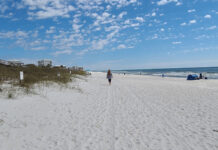
This is the section of Madeira Beach that most first-time visitors miss entirely. The mid-island stretch, running roughly from 130th Avenue through the 140s, is where Madeira Beach stops performing and starts just being itself. The beach here is the same fine white sand as the south end. The Gulf water runs the same warm green-blue in season. But the crowd drops significantly, the residential character of the neighborhood shows through, and the morning walks here are the ones I come back for specifically.
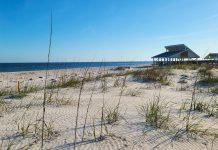
Multiple access points off Gulf Boulevard give you quiet cut-throughs to the waterline, most of them simple marked walkways through modest dune vegetation. No parking lots, mostly street parking that rewards arriving before 9 a.m. but rarely fills to the capacity of the Village end. You will find locals walking their fitness miles here, the occasional surfer on the rare days when a northeast swell gives this flat Gulf coast something to work with, and the kind of bird activity on the wrack line that only shows up when foot traffic is low enough for the birds to settle.
This is the part of Madeira Beach that matches what Patti means when she talks about heading north past the inlet for the beach without the crowd. The John’s Pass energy is real and worth experiencing once or twice per trip, but this mid-island walk is where Mad Beach reveals its actual character as a beach and not just as an entertainment district. Walk north from here toward Archibald and you will have the best stretch of uninterrupted waterline on this barrier island.
Archibald Memorial Beach Park
North End · 15100 Gulf Blvd · The Organized Public Access
Archibald Memorial Beach Park at 15100 Gulf Blvd is the organized park option at the north end of Madeira Beach, and it reads very differently from John’s Pass Park at the south end. Four wooden walkovers give access to the beach from a parking area, the restrooms and outdoor showers are clean, there are two sand beach volleyball courts that get regular use, a covered picnic area, and the Snack Shak serves food and drinks on-site. Parking runs at the same $4/hour ParkMobile rate as the rest of the city, and this lot fills more slowly than the Village end.
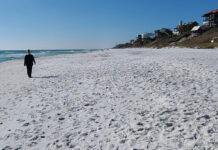
The beach at Archibald is wide and the walk north from here connects seamlessly into the Redington Beach access points, making this the natural starting point for anyone who wants to walk the full connected corridor heading north. The sand here feels less trafficked than the south end, the wrack line shows more consistent shell activity, and the bird life is noticeably more relaxed once the volleyball courts are not in play. On a weekday morning it can feel almost private, with the Gulf out front and the mid-rise condos along Gulf Boulevard keeping a respectful distance.
I have a specific fondness for the early light at this end of the beach. The sunrise hits the wet sand before the dry upper beach catches up, and there is a window between the first light and when the volleyball players arrive where Archibald Memorial feels like the beach before the beach wakes up. If you are a walker or a runner and you are staying anywhere on the north end of Gulf Boulevard, this is your morning access point.
R.O.C. Park and the Boca Ciega Bay Side
Bay Side · Recreation and Outdoor Campus
The Recreation and Outdoor Campus, known locally as R.O.C. Park, sits on the Boca Ciega Bay side of Madeira Beach and offers a completely different experience from anything on the Gulf side. The park has a pirate-themed playground and splash pad, a fishing pier extending into the bay, ball fields, and open green space, all with water views of the Intracoastal. It is the right call for families with young children who need variety, for anyone staying on the bay side who wants to fish without going offshore, and for anyone who wants to see the Boca Ciega Bay ecosystem at eye level.
The fishing pier at R.O.C. Park is one of the better casual fishing spots in Madeira Beach that does not require a charter. Sheepshead, snook, and redfish hold near the pier structure, and the bay offers a completely different set of species than what you are targeting on the Gulf side. Pinellas County’s Boca Ciega Millennium Park, accessible from the mainland side of the barrier island, provides nature trails, additional fishing piers, and bird watching along mangrove forests if you want to extend the bay-side experience.
The bay side also gives you a different angle on the dolphin activity. Bottlenose dolphins work Boca Ciega Bay regularly, and watching them from the R.O.C. Park pier, from the deck of a tiki boat tour out of John’s Pass, or from a kayak launched from any of the bay-side access points gives you a quieter and more intimate encounter than watching from the Gulf beach. The manatees that occasionally move through the pass in calm conditions are more often spotted on the bay side than the Gulf side, often just before or just after a front moves through.
Madeira Beach Rankings: Expert Scores Across 11 Categories
These scores reflect Madeira Beach as a whole, weighted across both the high-energy Village end and the quieter north and mid-island sections.
Sand Quality
7/10
Fine white to cream-white quartz sand on the Long Key barrier island, similar in character to the nearby Pinellas beaches. Soft and powder-textured in the upper beach, firm and flat at the waterline. Post-hurricane nourishment has rebuilt width along the north sections. Not the brilliant white of the Panhandle but genuinely excellent Gulf Coast beach sand.
Hiking & Beach Walking
8/10
2.5 miles of connected waterline, with seamless connections north into the Redington communities. The best walking is from the mid-island stretch through Archibald Park and beyond. The south end near John’s Pass Park is worth doing for the views but runs too busy for a sustained walking pace on peak season weekends.
Shelling
6/10
Moderate and opportunistic. Calico scallops, whelks, auger shells, and the occasional intact sand dollar appear after storms and overnight high tides. The mid-island and north beach sections produce more consistent finds than the heavily trafficked south beach. Best in the early morning within a few hours of the tide peak.
Water Conditions
7/10
Generally calm and warm Gulf water with a gradual entry. The south beach near the pass has an undertow situation and more stingray activity than the mid-island and north sections. Stingray shuffle is standard practice across the full beach in summer. No lifeguards anywhere. Score reflects the added swim caution this stretch requires.
Scenery & Natural Beauty
7/10
Excellent water color, reliable sunsets, and the genuine working-waterfront backdrop of John’s Pass add a visual interest layer that most Florida beaches do not have. The mid-island and Archibald stretches lose the commercial backdrop and run more naturally scenic. Boca Ciega Bay adds a second visual dimension most visitors never see.
Birding & Wildlife
8/10
Dolphin watching at John’s Pass is some of the most reliable on the Pinellas coast. Sea turtles nest May-October, monitored by Sea Turtle Trackers. Pelicans, skimmers, royal terns, and sanderlings work the beach year-round. Manatees pass through the bay. Stingrays are a year-round presence, most visible in summer. The bay side bird life through Boca Ciega adds roseate spoonbills and herons to the list.
Family Friendliness
9/10
Few beaches in Florida cover this range of family activities: calm Gulf swimming, volleyball at Archibald, R.O.C. Park’s pirate playground and splash pad, the Alligator and Wildlife Discovery Center, pirate ship cruises, and John’s Pass for every water sport imaginable. The no-lifeguard reality requires parent attentiveness in the water, and the stingray shuffle should be drilled before kids enter the surf.
Dog Friendliness
2/10
Dogs are not permitted on any City of Madeira Beach city beaches. A dog park is located near City Hall at 300 Municipal Drive, which gives your dog a place to run, but the beach itself is off limits. If beach access for your dog is a priority, plan a different beach day entirely.
Solitude & Peace
5/10
The Village end scores about a 2/10 for solitude. The mid-island and Archibald sections score closer to a 7/10. The overall score reflects the balance. If you want genuinely quiet, start at Archibald or the mid-island access points and walk north into the Redington communities, where the crowd drops fast.
Entertainment & Nightlife
9/10
John’s Pass Village is Pinellas County’s top tourist attraction for a reason. The boardwalk runs 100-plus shops and restaurants, dolphin cruises depart hourly, live music plays most evenings, and the annual John’s Pass Seafood Festival in January draws a massive free crowd. No other beach in this stretch of the Gulf coast matches this concentration of activity.
Parking & Beach Access
5/10
Parking is $4/hour via ParkMobile app only, no kiosks as of September 2025. The John’s Pass Parking Garage (179 Boardwalk Pl W) offers the most capacity. Private lots charge significantly more. Mid-island street parking and Archibald Memorial fill more slowly. Budget parking into your day and plan accordingly.
Madeira Beach Sand & Water
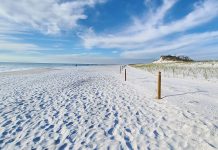
The sand at Madeira Beach is fine and white to warm cream, softer than you’d expect just looking at it, with a little more grit and shell mixed in than the bleached-white sand further up the Panhandle. The beach itself runs wide and flat at John’s Pass Park and Archibald Memorial Beach Park, narrower in spots through the mid-island stretch depending on how recently that section was renourished. The upper dry sand is soft and a little tiring to walk on for long, plenty soft enough for sandcastles once you wet it down, while the packed sand right at the water is firm and easy underfoot, good for walking, jogging, or letting the kids chase the tide in and out without much fuss.
The water follows the same relaxed pattern most of the beach. On a calm day it runs blue-green to turquoise with good visibility, entry is gradual, and the swimming is easy for confident swimmers of any age. The one real exception is right at the John’s Pass Bridge on the south end, where the pass current creates a genuine undertow condition the city posts warning signs about specifically, so swim away from the bridge and read the signs before you wade in there. There are no lifeguards anywhere in Madeira Beach, on any stretch, so keep an eye on your own group the way you would at any unguarded beach.
-
Walkability. Wide and flat with a firm waterline the full 2.5 miles. One of the better long walks on the Pinellas coast, especially once you’re past the John’s Pass crowd.
-
Softness & Playability. Soft and a bit grainy on the upper beach, plenty flat for games and beach chairs, and good for sandcastles once you add water. Firmer and more packed right at the water’s edge.
-
Barefoot Comfort. Genuinely comfortable most of the year, especially at the waterline. The dry upper sand gets hot enough by midday in summer to send you looking for sandals, and it’s worth doing the stingray shuffle as you wade in.
-
Swimmability. Gradual entry, generally calm, no lifeguards anywhere in the city. Watch for the posted undertow warning near the John’s Pass Bridge specifically.
Want the full geology, grain composition, and the complete sand and water condition ratings? I broke it all down separately in Sand & Shore: Madeira Beach.
Dogs & Pet Accessibility
Are Dogs Allowed on the Sand? NO, ANYWHERE.
Dogs are not permitted on any City of Madeira Beach Gulf beach, at any access point, with no exceptions. This is confirmed directly by the city and actively enforced.
Where Dogs Are Allowed
- ✓The walking paths at R.O.C. Park (300 Municipal Dr), leashed, bay side of the island. Not the beach, but a genuinely pleasant walk with water views.
- ✓The dog park located near City Hall within the R.O.C. Park complex, the only off-leash option inside Madeira Beach city limits.
Where Dogs Are NOT Allowed
- ✗John’s Pass Park and every foot of Gulf-side sand at the south end.
- ✗The entire mid-island stretch, 130th through 148th Avenue.
- ✗Archibald Memorial Beach Park and the connector north into Redington.
Paws on the Ground Reality
If a beach day with your dog is the priority for this trip, Madeira Beach itself isn’t going to deliver it. The R.O.C. Park loop and dog park cover exercise and off-leash time, but there’s no legal workaround for the actual sand anywhere in city limits, and the prohibition is enforced rather than a formality. If you specifically need Gulf-side dog access, that’s a different beach further from this guide’s scope.
What R.O.C. Park does well is give you a real walk with your dog and a real water view, just not a Gulf view. The paths are flat and shaded in patches, the dog park gives off-leash time, and it’s a five minute drive from anywhere on Gulf Boulevard.
Crowd Levels and the Overall Feel of Madeira Beach
John’s Pass end of Madeira Beach draws over a million visitors a year, and you can feel that number on any weekend in season. The Village boardwalk side runs continuously busy from mid-morning through the dinner hours. The beach across the street from the Village absorbs a serious crowd on summer weekends, with umbrellas and chairs extending a good 200 feet deep in the popular sections. The mid-island and Archibald sections run noticeably lighter throughout the year, running at about a third to half the crowd density of the Village end even in peak summer.
The crowd mix here spans a wider range than most Pinellas beaches. Families with young children are drawn by the Village activities and the pirate ship. Couples come for the sunset boardwalk walks and the seafood. Fishing enthusiasts come for Hubbard’s Marina. Locals use the north end and mid-island sections for their daily exercise walks. International visitors, particularly from the UK and Canada, show up year-round. The John’s Pass Seafood Festival in January creates a specific concentrated crowd for a long weekend that changes the feel of the Village area significantly.
Seasonal character by period:
- Winter (Dec-Mar): snowbird presence fills the lodging and boosts the Village restaurants; the John’s Pass Seafood Festival in January brings the single biggest crowd event of the year; the beach itself runs moderate
- Spring (Apr-May): the best balance of warm weather and manageable crowds; spring break activity increases at the Village but the beach stays accessible
- Summer (Jun-Aug): peak season; the Village parking fills fast, the beach at the south end runs packed; the north end and mid-island stays workable even in July
- Fall (Sep-Nov): the local’s window; the Village runs at a relaxed pace, the beach gets its best walking conditions, and the sea turtles are still active through October
Who Is Madeira Beach Really For?
✓ Who Will Love Madeira Beach
-
Families who want a full-service beach day: the Village activities, the pirate ship, the splash pad at R.O.C. Park, the volleyball courts at Archibald, and calm Gulf swimming all in one trip
-
Fishing enthusiasts: Hubbard’s Marina runs some of the best charter fishing operations on the Pinellas coast, from half-day nearshore trips to overnight deep-sea excursions
-
Visitors who want the boardwalk scene on one end and a quiet beach walk on the other, within the same two miles
-
Dolphin watchers: John’s Pass is one of the most reliable dolphin viewing spots on the Pinellas coast, both from the boardwalk railing and from the organized cruise boats
-
First-time Florida Gulf Coast visitors who want to see what the coast does at its most complete: working waterfront history, beach, wildlife, nightlife, seafood, and water sports in one destination
-
People returning to a place they loved from childhood; this stretch of Central West Florida coast has a specific hold on visitors who grew up coming here
✗ Consider Another Beach If…
-
You are traveling with a dog. No dogs on any city beach, with no exceptions. The dog park at 300 Municipal Drive near City Hall is the only option for your pup in Madeira Beach itself.
-
You want or need lifeguards. There are none on any Madeira Beach city beach. If lifeguard coverage matters for your group, Clearwater Beach or Indian Rocks Beach to the north have seasonal staffed towers.
-
You want total solitude. Even the mid-island and Archibald sections have more foot traffic than the Redington communities to the north. If genuinely empty beach is the goal, continue north past John’s Pass.
-
You are worried about the parking cost or need to budget carefully. At $4/hour ParkMobile only with no free alternatives at the Village end, a full day at John’s Pass Park can run $20-plus just for parking. Budget this into your day.
-
You have young children who are not confident swimmers and you want the calm Sound-side shallow water option. The Gulf here is manageable but does not have the equivalent of Quietwater Beach at Pensacola. Look north to the calmer Pinellas mid-island beaches for young non-swimmers.
Things to Do at Madeira Beach, Florida
Mad Beach may have the most concentrated activity list of any beach town on the Pinellas coast. Here is what actually fills a full day here.
-
Beach Walking. The full 2.5-mile waterline from John’s Pass Park to the Redington border is one of the better long walks on the Pinellas coast. Walk north from Archibald for the quietest, best-connected stretch. Best in the early morning before the umbrella rentals go up.
-
Dolphin Watching. From the boardwalk railing at John’s Pass you can watch dolphins work the pass current, especially in the morning. Dolphin Quest runs 90-minute bay cruises with a sighting guarantee. The view from the south beach as the boats load is one of the more interesting free wildlife watches on this coast.
-
Fishing Charters. Hubbard’s Marina at John’s Pass runs some of the most established charter fishing operations on the Gulf Coast, from half-day nearshore trips to multi-day offshore excursions. Bring your catch to the Friendly Fisherman next door and they will cook it for you on the spot.
-
Water Sports at John’s Pass. Jet ski rentals through Woody’s Watersports, parasailing through Gator’s Parasail, kayaking, paddleboarding, pirate ship cruises for kids, and sunset yacht tours. The Village boardwalk operators cover every water sport available on this coast, with multiple competing operators keeping rates reasonable.
-
Swimming. Calm, warm Gulf water from May through October, gradual entry, no lifeguards. Do the stingray shuffle before entering the water anywhere along this beach, particularly near the south end. Read the posted signs at John’s Pass Park regarding the undertow near the bridge before swimming that section.
-
Shelling. Best from the mid-island and north sections on an early morning after a storm or overnight high tide. Calico scallops, whelks, and auger shells are the most common finds. The south end gets worked over early by the crowds. The squat-and-slow approach produces better results than a brisk walk at the waterline.
-
Sea Turtle Nesting. Loggerhead turtles nest along the Madeira Beach shoreline May through October, monitored by Sea Turtle Trackers. Nests are staked and taped. Remove all beach equipment before sunset, fill holes, and use red-filtered light only after dark during nesting season.
-
John’s Pass Village Shopping and Dining. Over 100 shops, seafood restaurants including the Friendly Fisherman (a Mad Beach institution since 1978) and Sculley’s, the Mad Beach Craft Brewing Company, and live music most evenings at multiple venues. The boardwalk functions as its own full-day destination independent of the beach.
-
John’s Pass Seafood Festival. Held annually in January, this free three-day celebration features nearly 30 food vendors serving fresh Gulf seafood, over 80 arts and crafts vendors, and live music throughout. It is a 40-plus year Mad Beach tradition and the single biggest event on the Madeira Beach calendar.
-
Sunset Watching. The west-facing Gulf front runs excellent sunsets year-round. The stretch from the mid-island through Archibald gives you the best unobstructed horizon. The John’s Pass boardwalk side also frames the sunset beautifully, with the mast lights of the fishing fleet and the pass water adding depth to the view.
Local Knowledge and Practical Advice
A few things I’ve learned walking Mad Beach across seasons and years, including some that I learned the hard way:
-
Do the stingray shuffle every time, no exceptions. Drag your feet through the sand as you enter the water rather than stepping with weight. Stingrays rest buried in the shallow sand and cannot always be spotted. The city’s own FAQ specifically calls out summer stingray activity. If you get stung, seek medical attention right away. Hot water immersion is the first-aid standard, but get medical help quickly.
-
Read the sign near the John’s Pass Bridge on the south beach before swimming there. The city posts undertow warnings at this specific location. The pass current creates different water conditions near the bridge than anywhere else on this beach. Swim north of the bridge area when on the south beach.
-
No lifeguards anywhere on any Madeira Beach city beach. The city confirms this. You are the adult watching the water, not the county. Read the beach warning flags when they are posted and do not assume someone else will be watching your group.
-
Parking is $4/hour via ParkMobile app only, no kiosks. As of September 2025, all payment is mobile-only. Download the app before you arrive and enter your zone number on arrival, not after you have settled on the beach. The city tickets for non-payment. The John’s Pass Parking Garage at 179 Boardwalk Pl W has the most capacity and a 6’5″ height limit. Disabled parking placard holders and disabled veteran plate holders park free in designated spaces.
-
The early morning at the Village boardwalk is a completely different experience from the afternoon crowd. Walk the boardwalk before 9 a.m. and you will see the fishing fleet preparing for the day, the commercial boats from the night run unloading, and the pelicans working the dock without fifty people photographing them. The same boardwalk at 1 p.m. on a Saturday is a different place entirely.
-
Dogs are not permitted on any city beach. A dog park is near City Hall at 300 Municipal Drive. Plan a different beach day if you are traveling with your dog, as the beach prohibition is actively enforced.
-
The mid-island section between 130th and 148th avenues is the locals’ version of this beach. Street parking requires arriving early, but the walk to the waterline is shorter than the access points suggest, and the crowd is a fraction of the Village end. This is where I go when I want Mad Beach without the madness.
-
During turtle nesting season (May 1 through October 31), remove all equipment before sunset and use red light only after dark. Nests are marked with stakes along all sections of the beach. Disturbing a sea turtle nest is a third-degree felony under Florida’s Marine Turtle Protection Act. Sea Turtle Trackers monitors this beach. Report any disturbance or stranded turtle to FWC at 1-888-404-3922 or text *FWC from your cell.
-
Plan the Seafood Festival trip separately from a regular beach day. The John’s Pass Seafood Festival in January turns the Village end of Madeira Beach into a different event entirely. Parking becomes genuinely challenging. Book lodging early if you are coming specifically for the festival, and budget extra time to navigate the Village area.
-
Check current conditions before visiting in 2026. The 2024 hurricane season affected Madeira Beach significantly, and while tourism is actively rebounding and the beaches are open, some businesses and hotels along Gulf Boulevard are still in various stages of recovery. The city’s website provides current updates at madeirabeachfl.gov.
Where to Stay Near Madeira Beach, Florida
Madeira Beach has a wider range of lodging than the Redington communities to its north, from adults-only Gulf-front resorts to full-service hotels near the Village. Hurricane recovery has affected some properties; confirm current availability before booking.
Gulf-Front Resorts and Hotels
Shoreline Island Resort is an adults-only beachfront property on the Gulf side of Gulf Boulevard with private balconies, 400 feet of beach, a heated pool, and a location close enough to the Village to walk there easily. It is one of the better-positioned properties for visitors who want both the beach and the boardwalk in the same stay. Barefoot Beach Club is a beachfront option with pool access and proximity to John’s Pass. Several additional Gulf-front condo resorts and hotel properties line Gulf Boulevard, varying considerably in their post-hurricane repair status.
The Village Area and Waterfront Properties
Madeira Bay Resort sits near the north end of John’s Pass on the Intracoastal waterway side, with Gulf Boulevard access and the Mad Beach Cantina on-site. Not beachfront, but within easy walking distance of the Village and the beach across the street. Properties directly adjacent to the Village boardwalk are the most convenient for visitors whose priority is the John’s Pass experience, though they run at a premium in season and the Village energy does not turn off at sunset.
Short-Term Vacation Rentals
The short-term rental market in Madeira Beach is active and spans the full range from Gulf-front condos with direct beach access to canal homes with boat docks on the Intracoastal side. Post-hurricane rebuilding has produced a supply of fully renovated properties hitting the short-term market in 2025-2026, some with the advantage of newly installed storm-resistant construction. The John’s Pass area has a concentration of rentals with views of the pass and easy access to the boardwalk. No-minimum-night rentals are available at multiple properties for weekend visits.
Mainland Options for Lower Rates
St. Petersburg, about 12-15 miles east via the Treasure Bay Causeway, offers the full range of urban hotel options for visitors who want lower rates and are willing to drive. Seminole sits just across the Tom Stuart Causeway from the Redington communities to the north of Madeira Beach and provides budget chain hotel options within 15-20 minutes of the beach.
Camping Nearby
Madeira Beach itself does not have camping facilities. Fort De Soto Park, about 25-30 miles to the southeast via St. Pete Beach, offers one of the best-regarded campgrounds in Pinellas County with tent and RV sites, beach access, and excellent birding. Fort De Soto is worth the drive for a camping trip that includes the beach, and the park’s beaches are among the most naturally preserved in the area.
What Makes Madeira Beach Different from Nearby Communities
Every Pinellas barrier island beach has good sand and warm Gulf water. What makes Madeira Beach distinct is the combination of features that do not appear anywhere else on this stretch.
A Working Fishing Village Inside the Tourist Destination
John’s Pass Village is not a re-creation of an old Florida fishing village. Hubbard’s Marina still operates commercial and charter fishing from the same waterfront where the boardwalk was built around it. Commercial boats still come in with their catch. The Friendly Fisherman still offers to cook whatever you bring in from a charter. The working waterfront layer underneath the tourist attraction is genuine, and it gives the Pass an authenticity that manufactured waterfront developments do not have.
History Carved by a Hurricane
John’s Pass was created on a specific date, September 27, 1848, by a specific storm. That is not vague coastal geology; it is a documented event with a named participant. Standing at the pass, looking at the channel that a 19th-century hurricane carved, and knowing exactly why it exists and who first sailed through it gives this stretch of beach a historical specificity that most Florida beach destinations cannot match.
The Dual Personality Is Built In, Not Accidental
Most barrier island beach communities have a single character. Madeira Beach has two, and the geographic separation between them is just over a mile. The Village energy and the mid-island quiet coexist as distinct experiences that visitors can choose between or alternate between in the same day. That range is rare.
Range of Water Sports Not Found Elsewhere on This Barrier Island Chain
Between Hubbard’s Marina’s offshore fishing fleet, the dolphin cruise operators, the jet ski and parasail operators, and the kayak and paddleboard rental options, Madeira Beach has more water-based activity options in a single location than any comparable community between Clearwater Beach and St. Pete Beach.
Madeira Beach vs. Other Pinellas County Beaches
These are the communities visitors most commonly compare to Madeira Beach.
Madeira Beach vs. Treasure Island
Treasure Island is directly south across John’s Pass on the same barrier island chain. The sand quality is comparable, the water is the same Gulf, and Treasure Island has significantly less commercial development and a quieter overall character. If you want the Mad Beach energy, come to Madeira. If you want a wide beach with less activity at the south end, Treasure Island is the answer. The two are an easy drive of five minutes when traffic cooperates.
Madeira Beach vs. Clearwater Beach
Clearwater Beach is the biggest, most developed, and most amenity-rich beach on the Pinellas coast. It has lifeguards, the Pier 60 boardwalk with nightly entertainment, and the full resort hotel corridor. Madeira Beach has John’s Pass Village as its boardwalk and a more authentic working-waterfront character. Choose Clearwater Beach for the resort experience with staffed towers. Choose Madeira Beach for the fishing village history and the pass.
Madeira Beach vs. Redington Beaches
The Redington communities, directly north of Madeira Beach, are what Mad Beach’s mid-island and Archibald sections would be if the whole beach stayed that way: purely residential, no major commercial attraction, quieter by design. If you want the Village and the energy, stay at Madeira. If you want the same sand and water without any of the commercial overlay, drive or walk north to the Redingtons.
Madeira Beach vs. St. Pete Beach
St. Pete Beach, south of Treasure Island, has lifeguards in season, Corey Avenue as a walkable local commercial district, and a longer unbroken stretch of accessible sand. It skews more family-friendly in its infrastructure than Madeira Beach. Choose Madeira Beach if the fishing village history, the charter boat access, and the boardwalk variety are priorities. Choose St. Pete Beach for the calmer overall pace and the staffed swim towers.
Bottom line: Madeira Beach is the right choice when you want more than just the beach. The Pass, the working marina, the history, and the range of water sports make it the most complete single-day destination on this stretch of the Pinellas coast. Every other community on the barrier island chain gives you the same Gulf water with a quieter wrapper.
Madeira Beach, Florida: Frequently Asked Questions
What is Madeira Beach known for?
Madeira Beach is known primarily for John’s Pass Village and Boardwalk, Pinellas County’s top tourist attraction, which sits on the south end of the city at the historic waterway formed by an 1848 hurricane. It is also known for its fine white Gulf beach, the working fishing fleet at Hubbard’s Marina, regular dolphin sightings, and the annual John’s Pass Seafood Festival in January.
Are there lifeguards at Madeira Beach?
No. The City of Madeira Beach has no lifeguards on duty at any of its beaches. You are self-supervising in the water. Read the posted warning signs, particularly near the John’s Pass Bridge on the south beach where the city specifically calls out undertow risk.
Are dogs allowed at Madeira Beach?
Dogs are not permitted on any City of Madeira Beach city beaches. A dog park is located near City Hall at 300 Municipal Drive. If beach access for your dog is a priority, plan a different beach day in Pinellas County where dog-friendly options exist.
How much does parking cost at Madeira Beach?
Parking is $4.00 per hour, effective October 1, 2024, and is payable via ParkMobile app or text-by-plate only. As of September 2025, there are no pay kiosks. Download the ParkMobile app before arriving and start your session on arrival, not after you have settled in. Disabled parking placard holders and disabled veteran plate holders park free in designated spaces.
What is John’s Pass Village and Boardwalk?
John’s Pass Village is a 1,100-foot boardwalk along the intracoastal waterway at the south end of Madeira Beach, built around Hubbard’s Marina starting in 1982. It has over 100 shops, restaurants, dolphin cruise operators, fishing charter services, jet ski and parasail rentals, and the Alligator and Wildlife Discovery Center. John’s Pass itself was formed by an 1848 hurricane and named for John Levique, who made the first passage through it on September 27, 1848.
What is the John’s Pass Seafood Festival?
The John’s Pass Seafood Festival is an annual free three-day outdoor event held in January at John’s Pass Village, featuring nearly 30 food vendors, over 80 arts and crafts vendors, and live music. It has been a Madeira Beach tradition for over 40 years. It is the busiest event on the Madeira Beach calendar and warrants booking lodging well in advance if you are attending specifically for the festival.
What should I know about stingrays at Madeira Beach?
Stingrays are common in shallow Gulf waters at Madeira Beach, particularly in summer. They rest buried in the sandy seafloor and are difficult to spot. The standard precaution is the stingray shuffle: drag your feet along the bottom as you enter the water rather than stepping with weight, which gives rays time to move away. The city’s FAQ specifically highlights stingray activity as a summer beach concern. If stung, seek medical attention promptly.
Is Madeira Beach good for families?
Yes, with a few caveats. The range of family activities is excellent: calm Gulf swimming, volleyball at Archibald Memorial Beach Park, R.O.C. Park’s pirate playground and splash pad, dolphin cruises, the Alligator and Wildlife Discovery Center, and pirate ship cruises. The no-lifeguard policy means parents supervise their children in the water directly. Teach kids the stingray shuffle before they enter the water.
When is sea turtle nesting season at Madeira Beach?
Nesting season runs May 1 through October 31. Loggerheads are the primary species nesting here, monitored by Sea Turtle Trackers. Nests are staked and taped along the beach. Remove all equipment and fill all holes before sunset, and use red-filtered light only on the beach after dark. Report any disturbance or stranded turtle to FWC at 1-888-404-3922.
What is the best part of Madeira Beach to visit?
It depends on what you want. John’s Pass Village and John’s Pass Park at the south end give you the boardwalk, the fishing marina, dolphins, water sports, and restaurants all in one place. The mid-island section (130th to 148th Avenue) gives you the quiet local beach. Archibald Memorial Beach Park at the north end (15100 Gulf Blvd) gives you volleyball courts, The Snack Shak, and the best starting point for a long walk north. I personally go to the mid-island section first and the Village second.
What happened to Madeira Beach in the 2024 hurricanes?
Hurricanes Helene and Milton in fall 2024 caused significant storm surge damage across Madeira Beach, affecting businesses, homes, and the beach profile itself. As of spring 2026, the beaches are open, tourism is rebounding, and many businesses have reopened or rebuilt. Some properties along Gulf Boulevard remain in recovery. Check madeirabeachfl.gov for current conditions before visiting.
Patti’s Perspective: My Honest Take on Madeira Beach
This coast has been in my life longer than any other stretch of Florida shoreline. My family came here every summer when I was a child, and then I came back with my own kids, and then I walked the entire coast for this journey. There is a version of Mad Beach I know from childhood that exists somewhere in the difference between the Gulf I remember and the Gulf I walk now, and I carry both of them every time I come back.
The south beach at John’s Pass still does something to me that I cannot entirely account for. Standing on the beach side looking at the pass, watching the dolphin cruise boats load up and the fishing fleet go out and the pass current carrying all that water between the Gulf and the bay, I always feel like I am watching the engine of this place run. The history of the pass, the specific hurricane, the specific morning, the name that stuck from one fisherman who happened to be sailing by at the right moment. Or the wrong moment. Depending on where you were standing.
What I come back for personally is not the Village, as much as I love what it represents. It is the morning walk north from Archibald into the quiet residential stretch, when the only other people out are the locals who come here every day and the shorebirds who have the whole upper beach to themselves. The sand here holds the night cool until the sun gets high, and the walk in the flat morning light before the umbrellas go up is the version of this coast that I grew up wanting to show people. This is what I hope to wake up to regularly someday from a place I can call mine on this stretch.
Want to Live by the Water?Madeira Beach real estate spans a wide range from Gulf-front condos and canal homes to mid-island residential properties, with median prices around $645,000 as of mid-2025, a market that has softened somewhat from its pandemic-era peak while post-hurricane rebuilding creates a wave of newly renovated inventory. Gulf-front single-family homes and larger condos command significantly higher prices; the short-term rental market remains active given the proximity to John’s Pass Village, making investment properties here more viable than at quieter neighboring communities.The community draws a mix of full-time residents, snowbirds, and investment property buyers. Proximity to John’s Pass, the fishing fleet, and the boardwalk lifestyle makes this one of the more distinctive places to own on the Pinellas coast. Post-hurricane rebuilding has produced a supply of newly constructed or fully renovated properties that bring modern storm resistance standards to classic Gulf Boulevard addresses. Insurance costs remain elevated for all Pinellas coastal properties, which is a real factor in the total cost of ownership here.Explore Waterfront Living at LiveByTheWater.com
Real estate referral partner