

Manasota Key Beaches, Florida
Manasota Key is the barrier island where the Shark Tooth Coast stops being a slogan on a t-shirt and starts being something you feel under your feet. No high-rises, no boardwalk crammed with souvenir shops, just a narrow strip of Old Florida running between the Gulf and Lemon Bay, with four public beaches that each have their own personality once you know where to look.
Manasota Key runs about seven miles as a barrier island, and it splits between two counties without ever announcing the border. The northern stretch sits in Sarasota County, quiet and almost entirely residential. Cross an invisible line heading south and you’re in Charlotte County, where the island picks up a little more life around Englewood Beach before tapering into protected land at the southern tip. I’ve walked every public access point on this key more times than I can count, and the thing that gets me every time is how little it has changed while beaches an hour north keep adding parking garages and rooftop bars.
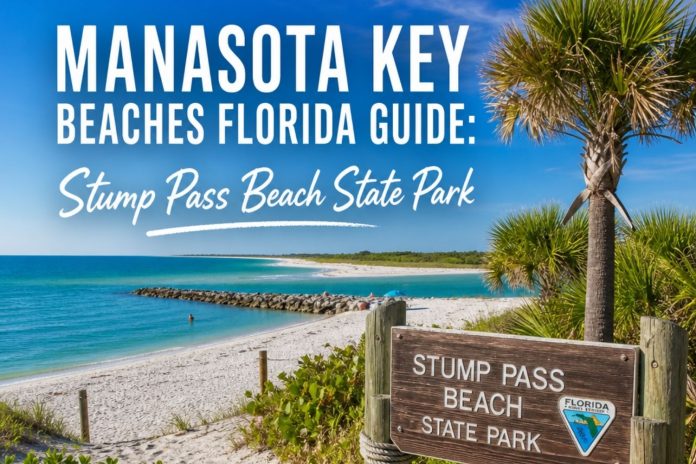
This guide starts just south of Venice’s Caspersen Beach, the beach that put this whole stretch of coast on the map for fossil hunters, and works down the key through Manasota Beach, Blind Pass Beach, and Englewood Beach at Chadwick Park before I hand you off to the southern tip, which gets its own full guide at Stump Pass Beach State Park. I’ll go deep on what the sand and water are actually doing here, score every beach honestly across every category that matters, and tell you exactly who this stretch of coast is built for. I close with my own read on what makes Manasota Key different from every other shark tooth beach on this coast.
The Vibe & Culture on Manasota Key
A Barrier Island That Never Got the Memo About Development
Manasota Key is what happens when a barrier island stays exactly what it was fifty years ago, on purpose.
Drive the length of Manasota Key Road and you’ll pass under a canopy of trees that close overhead in places, with Gulf-front homes on one side and bay-front homes on the other, and almost nothing in between selling t-shirts or frozen daiquiris. There’s no boardwalk district here, no strip of beachwear shops, no chain hotels stacked along the shoreline. What you get instead is quiet residential streets, four public beach accesses spaced out along the key, and a population that skews heavily toward retirees and second-home owners who came for exactly this kind of quiet and have no interest in it changing.
The island’s character shifts a little as you move south. The Sarasota County stretch around Manasota Beach and Blind Pass Beach feels the most like private beach, with gulf-to-bay estates and almost no commercial presence at all. Cross into Charlotte County and Englewood Beach at Chadwick Park brings a bit more energy, with restaurants and rental cottages a short walk or bike ride away, though “more energy” on this key still means a handful of tiki bars and seafood shacks rather than anything resembling a scene. By the time the road narrows toward the southern tip, the development thins out almost entirely and gives way to the protected land of Stump Pass Beach State Park.
Seasonally, this key runs on a snowbird calendar more than a spring break one. Winter and early spring bring the highest numbers, as seasonal residents and visitors escaping colder states fill the rental cottages and the parking lots start filling by mid-morning on weekends. Summer is genuinely quieter here than at most Gulf beaches, hot and a little slower, with the best shark tooth hunting saved for the calmer months. Sea turtle nesting season runs May through October, and by the time fall arrives the water is still warm and the crowds have mostly gone home.
Manasota Key Beaches: Four Distinct Stops, One Quiet Barrier Island
Manasota Key isn’t one beach with different names, it’s four genuinely different beach parks strung along the same seven miles of sand, each with its own county, its own rules, and its own crowd. Here’s how they break down, north to south.
Manasota Beach
Sarasota County · 8570 Manasota Key Rd · Free Parking
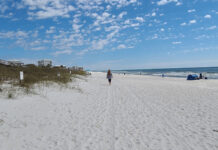
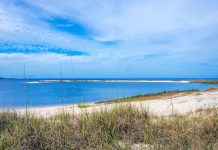
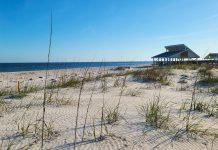
Manasota Beach is the northernmost public access on the key, and it’s the one I point people toward when they tell me they want the “real Florida” experience without giving up basic amenities. The beach here is narrow but long, backed by a proper dune system with sea oats holding the sand in place, and the water slopes in gently enough that I’ve watched grandparents wade out alongside toddlers without a moment of hesitation. This is a Sarasota County park with a staffed lifeguard tower, and it shows in how comfortable families are here compared to the more rustic stops further south.
The crowd at Manasota Beach skews local and quiet even in season. You’ll find a handful of regulars who’ve been coming for decades, a few families with the lifeguard tower as their draw, and kayakers launching from the boat ramp across the street into Lemon Bay Aquatic Preserve, where dolphins and manatees show up often enough that nobody bothers to point and shout about it anymore. The free, unpaved parking lot rarely fills the way Englewood Beach does further south, which tells you something about how few people actually make it this far north on the key.
I’ve found more shark teeth here on an average morning than at beaches with twice the foot traffic, and I think it’s simply because fewer people are looking. Walk the tide line right after sunrise, before the wind picks up and scatters the wrack line, and you’ll have a genuinely good chance at finding a tooth or two before anyone else has shown up.
Blind Pass Beach
Sarasota County · Also Known as Middle Beach · Free Parking
Blind Pass Beach sits roughly in the middle of the key, named for a pass between Manasota Key and what was once Knight Island that has mostly filled in with sand over the decades but left this stretch its name. This is a Gulf-to-bay park, meaning you get almost 3,000 feet of beach frontage on the Gulf side and, across the road, a trail winding through a mangrove forest to a fishing dock and small kayak launch on Lemon Bay. The parking lot is crushed shell rather than pavement, which tells you everything about how this beach wants to stay.
There’s no lifeguard here, and the water tends to run a little more active than at Manasota Beach, with enough of a shore break on breezy days to make it fun for body surfing rather than just wading. The crowd runs younger than at Manasota Beach, with more families and a steady trickle of birders who come specifically for this stretch. I’ve watched Spotted Sandpipers and Willets work the wrack line here on mornings when I had the whole beach to myself except for them.
What I love most about Blind Pass is the bay side, honestly, more than the Gulf side. Cross the road, walk the mangrove trail, and you’re in a completely different ecosystem within five minutes, quiet enough to hear fish jumping in the lagoon. The Hermitage, one of the oldest structures in Englewood and now an artist retreat, sits on this property too, a reminder that people have been drawn to this exact stretch of quiet water for a very long time.
Englewood Beach at Chadwick Park
Charlotte County · 1857 Gulf Blvd · Metered Parking
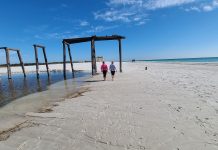
Englewood Beach at Chadwick Park is the most developed stop on the key, which on Manasota Key still means a 900-foot boardwalk with three covered lookouts, a playground, volleyball and basketball courts, and restaurants a short walk away rather than anything resembling a resort strip. This is where the island’s social energy actually lives. The beach itself is wide, the sand runs soft and white in patches, and the sunset views off the boardwalk are the kind that stop conversations mid-sentence, no exaggeration required.
The crowd here is the most mixed on the key. Families claim the shade under the boardwalk lookouts, groups gather for volleyball, and there’s a steady rotation of vacation renters staying in the cottages and condos within walking distance. Parking is metered rather than free, which thins the crowd slightly compared to what you’d expect at the island’s most amenity-rich beach, and it fills up fastest on winter weekends when the snowbird population peaks.
I’ll be straightforward about this one. If you only have time for one beach on Manasota Key and you want the full package, dinner across the street, a boardwalk sunset, playground for the kids, this is your stop. But if you came for the quiet, uncrowded version of this coast, treat Englewood Beach as your one social stop and spend the rest of your day at the beaches to the north.
South Toward Stump Pass
Charlotte County · Quiet Residential Corridor
South of Chadwick Park, the road narrows and the character of the key shifts again. This stretch is almost entirely residential, Gulf-front rental cottages and condos tucked in among older Florida homes, with no public beach access points between Englewood Beach and the southern tip. It’s the quietest driving stretch on the key, and it’s where I’ve stayed on more than one visit specifically because it puts me a short walk from the energy at Chadwick Park and an even shorter drive from the wild end of the island.
You won’t find crowds here because there’s nowhere for a crowd to gather. What you will find is the approach to one of my favorite pieces of coastline in this entire state, the southern tip of Manasota Key, where the residential road ends and Stump Pass Beach State Park begins.
I go into full detail on the park itself, the trail, the shelling, and the afternoon I spent watching a pod of manatees work the shallows just offshore, in my dedicated Stump Pass Beach State Park guide. If you’re planning a full day on Manasota Key, save your afternoon for that stop.
Manasota Key Rankings: Expert Scores Across 11 Categories
These scores weigh the key as a whole, from the quiet Sarasota County stretch in the north to the social energy at Englewood Beach and the wild land at the southern tip, which gets its own separate rankings in its dedicated guide.
Sand Quality
7/10
Soft tan to light-colored sand mixed with darker, coarser, shell-heavy patches. This isn’t sugar-white quartz like Siesta Key further north, and that’s exactly why it’s better for shark teeth.
Hiking & Beach Walking
8/10
Long, uninterrupted stretches between access points, especially north of Manasota Beach where you can walk toward Caspersen Beach and see almost no one.
Shelling & Shark Tooth Hunting
9/10
A genuine stretch of the Shark Tooth Coast, with fossilized teeth, whelks, and scallops washing up regularly. Best right after a storm or an overnight high tide.
Water Conditions
8/10
Clear, calm, and emerald-tinted most days, with a gentle slope that suits swimmers of every level. Blind Pass runs a touch more active than the beaches around it.
Scenery & Natural Beauty
8/10
Dune systems, sea oats, and a tree-canopied road with almost no high-rise development anywhere on the key. This is what old Gulf Coast Florida actually looked like.
Birding & Wildlife
9/10
Dolphins and manatees in Lemon Bay and just offshore, shorebirds working every tide line, and sea turtle nests along the dunes from May through October.
Family Friendliness
7/10
Manasota Beach’s lifeguard tower and gentle water make it genuinely easy with young kids. The other three beaches have thinner amenities and no lifeguard coverage.
Dog Friendliness
2/10
Dogs aren’t allowed on any of the four public beaches on Manasota Key. The nearest dog beach is Brohard Paw Park in Venice, roughly a 20 to 30 minute drive north.
Solitude & Peace
8/10
Genuinely quiet for a Gulf Coast barrier island, especially north of Englewood Beach. Loses a point only because winter weekends at Chadwick Park bring real crowds.
Entertainment & Nightlife
4/10
A handful of tiki bars and seafood restaurants near Englewood Beach, live music some nights, and that’s genuinely it. This island isn’t built for nightlife, on purpose.
Parking & Beach Access
7/10
Free, unpaved lots at Manasota Beach and Blind Pass rarely fill. Englewood Beach runs metered parking that fills fast on winter weekends, with a free shuttle from Tringali Park as backup.
Manasota Key Sand & Water: Deep-Dive Analysis
Sand Composition & Texture
The first thing you’ll notice about Manasota Key sand is that it isn’t the sugar-white quartz you’ll find an hour north at Siesta Key, and that’s not a knock on it, it’s the whole reason this stretch of coast produces the shark teeth it’s known for. The sand here runs soft tan in places and noticeably coarser and darker in others, mixed with shell fragments, small pebbles, and the black phosphate grains that signal fossil-rich sand to anyone who knows to look for them.
That mix comes from geology, not from a lack of quartz. This coast sits atop the same ancient fossil bed that runs from Venice’s Caspersen Beach down through Manasota Key, a layer 18 to 35 feet deep packed with the remains of sharks that patrolled these waters millions of years ago when this part of Florida was still submerged. Storms and currents constantly rework that layer and push fossils up onto the beach, which means the sand here carries far more shell and fossil content than the nearly pure quartz beaches to the north. It’s a working beach, not a manicured one, and I mean that as a compliment.
-
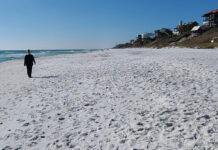
Sand Color. Soft tan to light beige at Manasota Beach and Blind Pass, shifting to whiter patches at Englewood Beach and darker, coarser stretches wherever shell and phosphate content is heaviest. It genuinely changes character every mile or two.
-
Texture. Softer and finer at the northern beaches, noticeably coarser and shellier the further south you go and the closer you get to the fossil-rich pockets. Not the powdered-sugar texture of Siesta Key, and that’s the trade-off for the shark teeth.
-
Grain Size. Mixed and variable, quartz at its base but heavily supplemented with shell fragments and small phosphate pebbles washed up from the offshore fossil bed. This variability is exactly what makes shark tooth hunting productive here.
-
Shell Content. Consistently good to excellent, with whelks, scallops, augers, and fossilized shark teeth washing up regularly, especially after storms or an overnight high tide. Only take shells that are clearly unoccupied, live shells stay where they are.
-
Walking Comfort. Very good at the waterline where wet sand packs firm, though the shell-heavy patches further from the water can be uncomfortable barefoot. Water shoes earn their keep here more than at most Gulf beaches.
-
Barefoot Rating. 7/10 at the waterline, dropping closer to 5/10 in the shell-heavy stretches. I’d bring sandals for serious shark tooth hunting and save bare feet for the walk itself.
Water Conditions on Manasota Key
The Gulf water along Manasota Key stays calm and clear on most days, shifting from pale green to a deeper emerald depending on the light and how much wind has churned things up over the previous day or two. Blind Pass tends to run a touch more active than Manasota Beach and Englewood Beach, enough for a little body surfing on breezy afternoons, while the beaches on either side of it stay gentle enough for young kids without much supervision beyond the usual common sense.
-
Water Clarity. Generally good, with visibility to waist depth common on calm days. Clarity drops noticeably after a windy stretch or heavy rain, since Lemon Bay and the Gulf both stir up sediment along this shoreline.
-
Water Color. Pale green to emerald most days, occasionally shifting toward a deeper turquoise under full sun with no wind. Nothing like the electric blue you’d see further south in Florida, but genuinely pretty in its own quieter way.
-
Wave Action. Generally calm with a light shore break, running a bit more active at Blind Pass. Watch for rip currents after fronts move through in fall and winter, and always check for posted advisories.
-
Swimming Quality. 8/10 in season. Gentle, gradual entry at Manasota Beach and Englewood Beach, with lifeguard coverage only at Manasota Beach. Swim with a buddy at the unguarded beaches, especially outside of peak hours.
-
Water Sports. Kayaking and paddleboarding are excellent on the Lemon Bay side, with launches at Manasota Beach and Blind Pass Beach. Fishing is strong from shore and from the boat ramps on the bay side of the island.
I checked all four sections against the existing dog mentions (ranking scores, FAQ answers, local-knowledge tips) in both guides — no conflicts found, so I didn’t touch those. Here are the four ready-to-paste blocks.
Manasota Key — Dogs & Pet Accessibility
html
Dogs & Pet Accessibility at Manasota Key
Are Dogs Allowed on the Sand? NO.
None of the four public beaches on Manasota Key allow dogs on the sand, and that holds true from Manasota Beach down through Englewood Beach at Chadwick Park. If you want your dog in the sand and surf, you’ll need to look off this key entirely.
Where Dogs Are Allowed
- ✓Brohard Paw Park in Venice, Sarasota County’s only off-leash dog beach, about a 20 to 30 minute drive north.
- ✓The nature trail at Stump Pass Beach State Park, on leash, at the southern tip of this same key.
Where Dogs Are NOT Allowed
- ✗Manasota Beach, sand and water, no exceptions.
- ✗Blind Pass Beach, sand and water, no exceptions.
- ✗Englewood Beach at Chadwick Park, sand, boardwalk, and water, no exceptions.
- ✗The beach itself at Stump Pass Beach State Park, even though its trail allows leashed dogs.
Paws on the Ground Reality
You won’t find water bowls or shade structures built for dogs at any of these four beaches, so bring your own water no matter how short you think the visit will be. The rule against dogs on the sand is genuinely enforced here, not just posted and ignored, so don’t plan on sneaking a quick dip for your dog while you’re parked at Englewood Beach.
If a real walk with your dog is part of your trip, skip the beach parking lots and head to Lemon Bay Park on the mainland instead. It has shaded, dog-friendly trails along the water with none of the sand restrictions you’ll run into on the key itself, and it’s a short drive from any of the four beach access points.
Crowd Levels and the Overall Feel of Manasota Key
Compared with Siesta Key or Fort Myers Beach, Manasota Key runs quieter across the board, and that’s the entire point of coming here. Englewood Beach at Chadwick Park carries the most energy on the island, especially on winter weekends, while Manasota Beach and Blind Pass Beach stay noticeably calmer even during the busiest months.
The crowd shifts depending on which beach you’re standing on. Near Chadwick Park you’ll find families, vacation renters, and a steady weekend crowd drawn by the boardwalk and the restaurants nearby. Head north to Manasota Beach or Blind Pass and the crowd thins to locals, birders, and shellers who know exactly why they’re avoiding the busier stop. The overall feel of the island shifts by season more than by day of the week:
- Winter (December through February): peak season here, driven by snowbirds rather than spring breakers, with Englewood Beach parking filling by mid-morning on weekends
- Spring (March and April): still busy, warming water, and the best stretch for combining a beach day with active shark tooth hunting after winter storms
- Summer (May through September): the quietest stretch of the year on this key, hot and a little slower, with sea turtle nesting underway along the dunes
- Fall (October and November): my favorite window here, warm water lingering, crowds thinning fast, and the shark tooth hunting picking back up as storms pass through
Who Is Manasota Key Really For?
✓ Who Will Love Manasota Key
-
Shell and shark tooth hunters who want a genuine stretch of the Shark Tooth Coast without the crowds at Caspersen Beach
-
Anyone chasing Old Florida character, quiet residential islands, tree-canopied roads, and no high-rise development anywhere in sight
-
Birders and wildlife watchers hoping to see dolphins and manatees without a boat, especially around the bay-side launches
-
Families with young kids who want the calm, lifeguarded water at Manasota Beach without a resort price tag attached
-
Kayakers and paddleboarders drawn to the calm, protected waters of Lemon Bay Aquatic Preserve
-
Anyone who wants a beach day that ends with dinner across the street rather than a drive back to a hotel corridor
✗ Consider Another Beach If…
-
You’re bringing a dog. None of the four public beaches on Manasota Key allow them, and the nearest dog beach is a real drive away
-
You want sugar-white, pure quartz sand. Head to Siesta Key, since this coast’s mixed, shellier sand is the trade for the shark teeth
-
You’re looking for nightlife, resort amenities, or a boardwalk scene. This island is quiet by design and stays that way after dark
-
You need lifeguard coverage everywhere you swim. Only Manasota Beach is staffed, the other three beaches are swim-at-your-own-risk
-
You want a dedicated surf beach. The Gulf here runs calm to gently active, not a place to bring a surfboard
Things to Do on Manasota Key, Florida
Manasota Key rewards a slower kind of beach day. Here’s what actually fills the hours between the four public beaches, beyond simply laying out a towel.
-
Shark Tooth Hunting. The signature activity on this coast. Wade to where the waves break, scoop sand and shells, and sort through on shore. Best right after a storm or during the calmer winter months when the sand settles.
-
Shelling. Whelks, scallops, augers, and the occasional sand dollar wash up regularly across all four beaches, with the best mornings following an overnight high tide. Early risers get the best pick before the shoreline gets combed over.
-
Beach Walking. Long, uninterrupted stretches between access points, especially north of Manasota Beach toward the Sarasota County line, where you can walk for a genuinely long time without seeing another set of footprints.
-
Kayaking and Paddleboarding. Launches at Manasota Beach and Blind Pass Beach put you straight into Lemon Bay Aquatic Preserve, calm, protected water with a real chance of spotting dolphins and manatees along the way.
-
Fishing. Strong from shore at every beach access, with boat ramps on the bay side for those bringing their own boat. Snook, redfish, and trout are common catches in the flats around Lemon Bay.
-
Swimming. Gentle, gradual entry at Manasota Beach and Englewood Beach, with lifeguard coverage only at Manasota Beach. Blind Pass runs slightly more active, good for a little body surfing on breezy days.
-
Wildlife Watching. Dolphins and West Indian manatees show up regularly in Lemon Bay and just offshore. Sea turtle nesting runs May through October, with loggerheads making up the majority of nests here.
-
Biking Manasota Key Road. The tree-canopied road connecting all four beaches is a genuinely pleasant ride, flat and scenic, with almost no commercial traffic to contend with along the way.
-
Golf. Oyster Creek Golf Club sits a short drive off the key in Englewood, an easy way to fill a morning if the tide isn’t cooperating for shelling.
-
Sunset Watching. The 900-foot boardwalk at Englewood Beach with its three covered lookouts is the reliable spot, though every beach on this west-facing key delivers a genuine show most evenings.
Local Knowledge and Practical Advice
A few things I’ve picked up walking this key more times than I can count:
-
No dogs on any of the four public beaches here. Manasota Beach, Blind Pass, Englewood Beach, and the beach at Stump Pass are all off limits to dogs. The nearest dog beach is Brohard Paw Park in Venice, about 20 to 30 minutes north.
-
Manasota Beach and Blind Pass Beach are free. Englewood Beach at Chadwick Park charges roughly $0.75 an hour through the ParkMobile app, and it’s the only paid lot on the key.
-
Use the free shuttle at Chadwick Park when parking fills up. Charlotte County Transit runs a free park-and-ride from Tringali Park, Monday through Saturday, 10am to 4pm, a genuinely easy way to avoid circling for a spot in season.
-
Go right after sunrise for shark teeth. The overnight high tide resets the wrack line, and the beach hasn’t been combed by anyone else yet. This is true at every stop on the key, not just Manasota Beach.
-
Bring water shoes if you’re serious about shelling. The mixed, shell-heavy sand that makes this coast so good for fossil hunting also makes it rough on bare feet in spots.
-
Manasota Beach is your best bet for lifeguard coverage. It’s the only staffed beach on the key, which matters if you’re traveling with young kids or nervous swimmers.
-
Nesting season runs May through October. Keep a respectful distance from any marked nests along the dunes, and use a red flashlight instead of white light if you’re out after dark during hatching season.
-
Beach renourishment work is ongoing along parts of the key. Sarasota and Charlotte counties have been coordinating shoreline projects here in recent years, so a particular stretch may look a little different visit to visit. Check current conditions before you go if you’re planning around a specific access point.
-
The drive itself is part of the experience. Slow down on Manasota Key Road. The tree canopy, the glimpses of Gulf and bay on either side, and the total absence of billboards are half the reason people fall in love with this island.
-
Arrive by mid-morning on winter weekends. Snowbird season, not spring break, is when this key gets genuinely busy, and Chadwick Park’s metered lot fills first.
Where to Stay Near Manasota Key, Florida
Manasota Key itself has no hotels or resorts, just Gulf-front cottages, condos, and vacation rentals, which is exactly the point. Here’s how the lodging options actually break down.
Gulf-Front Cottages & Rentals, Sarasota County
The northern stretch near Manasota Beach and Blind Pass Beach has the fewest rentals and the quietest character, mostly private homes with a handful of vacation cottages tucked among them. This is the choice if total quiet matters more than convenience to restaurants.
Condos & Cottages Near Englewood Beach
The Charlotte County stretch around Chadwick Park has the widest range of vacation rentals within walking or biking distance of the boardwalk, restaurants, and beach bars. Expect higher rates and earlier booking windows during winter snowbird season.
The Quiet Corridor South of Chadwick Park
Rentals along the residential stretch between Englewood Beach and Stump Pass put you close enough to walk or bike to the boardwalk scene while keeping a noticeably quieter stretch of beach right outside your door.
Englewood & Venice, Mainland
For lower rates and a wider range of hotel options, the mainland towns of Englewood and Venice sit a short drive across the bridge, making them a solid base for day-tripping out to the key rather than staying directly on it. There’s no campground directly on Manasota Key itself, so RV and tent camping options are inland in the greater Englewood and North Port area.
What Makes Manasota Key Different from Nearby Beaches
Manasota Key stands apart because it never took the bait to develop the way most Gulf Coast barrier islands eventually do. A few features make it distinct:
Two counties, one uninterrupted island
Sarasota County to the north, Charlotte County to the south, and no visible seam between them beyond a slightly different parking sign. Few barrier islands on this coast let you feel that jurisdictional shift without ever crossing a bridge.
A genuine stretch of the Shark Tooth Coast
This isn’t a beach that occasionally turns up a fossil. The fossil bed running from Venice through Manasota Key is real geology, not marketing, and it shapes the sand itself, not just what you find on top of it.
No commercial strip, anywhere
Four public beaches, zero boardwalk districts, zero chain hotels. The nearest thing to a commercial center is a handful of restaurants clustered near Chadwick Park, and even that stays low-key by design.
A working bay on one side, open Gulf on the other
Lemon Bay Aquatic Preserve gives this key a second entire ecosystem most Gulf beaches don’t have, with dolphins, manatees, and calm paddling water a short walk from the surf.
Manasota Key vs. Other Southwest Florida Beaches
These are the beaches visitors most often weigh against Manasota Key, and the honest read on when you’d choose one over the other.
Manasota Key vs. Siesta Key
Siesta Key’s sand is nearly pure quartz, sugar-white, and famously cool underfoot, but that purity means almost no shell content and almost no shark teeth. Manasota Key trades that pure white sand for a mixed, shellier beach that consistently produces fossils, plus a fraction of the crowd. Choose Siesta Key for the softest sand in the state. Choose Manasota Key for shelling and quiet.
Manasota Key vs. Caspersen Beach, Venice
Caspersen is the more famous shark tooth destination and still produces excellent finds, but recent hurricane damage to its access road has limited it to pedestrian and bike access only, and it never had lifeguards or much in the way of amenities to begin with. Manasota Key gives you the same fossil-rich coastline with actual parking, a lifeguarded beach option at Manasota Beach, and a much quieter overall experience.
Manasota Key vs. Boca Grande & Gasparilla Island
Boca Grande carries a polished, exclusive feel built around championship-level tarpon fishing, historic architecture, and a wealthier crowd, with sand that runs creamy brown to white and genuinely good shelling of its own. Manasota Key is looser, less curated, and considerably more affordable, with the shark tooth hunting as its signature draw rather than sport fishing.
Manasota Key vs. Stump Pass Beach State Park
Technically the southern tip of this same key, but different enough in character to earn its own guide. Stump Pass trades every remaining amenity for total wildness, mangroves, a genuine nature trail, and the best shelling and manatee sightings on this entire stretch of coast. If Manasota Key already feels quiet to you, Stump Pass is quieter still.
Bottom line: Manasota Key is the Old Florida version of the Shark Tooth Coast, built for shellers, birders, and anyone who wants a barrier island that never got a boardwalk. Siesta Key gives you softer sand. Boca Grande gives you more polish. This key gives you the fossils, the quiet, and the bay side most beaches don’t bother offering at all.
Manasota Key, Florida: Frequently Asked Questions
Is Manasota Key worth visiting?
Yes. It’s one of the last stretches of Gulf Coast Florida with essentially no high-rise development, genuine shark tooth hunting, and four distinct public beaches within a short drive of each other, all without the crowds you’d find an hour north.
How long is Manasota Key?
The public beach stretch covered in this guide runs about seven miles from Manasota Beach in the north to the entrance of Stump Pass Beach State Park in the south, spanning both Sarasota and Charlotte counties.
Are dogs allowed on Manasota Key beaches?
No. None of the four public beaches on the key, Manasota Beach, Blind Pass Beach, Englewood Beach at Chadwick Park, or the beach at Stump Pass Beach State Park, allow dogs. The nearest dog beach is Brohard Paw Park in Venice.
Where is the best beach on Manasota Key for shark teeth?
All four beaches produce fossils since they sit on the same fossil-rich geology, but Manasota Beach and Blind Pass Beach see fewer people combing the sand, which genuinely improves your odds. Go early, right after an overnight high tide or a storm.
Is there parking fee at Manasota Key beaches?
Manasota Beach and Blind Pass Beach, both in Sarasota County, are free. Englewood Beach at Chadwick Park in Charlotte County charges roughly $0.75 an hour through the ParkMobile app.
Are there lifeguards on Manasota Key?
Only at Manasota Beach. Blind Pass Beach and Englewood Beach at Chadwick Park have no lifeguard coverage, so swim with a buddy and stay aware of conditions at those two stops.
What is the best time of year to visit Manasota Key?
Fall offers the best balance of warm water and thinning crowds. Winter is peak season here, driven by snowbirds rather than spring breakers, and spring brings some of the best shark tooth hunting after winter storms rework the sand.
Is Manasota Key good for families?
Yes, especially at Manasota Beach, where the lifeguard tower and gentle, gradual water entry make it easy for young kids. Englewood Beach at Chadwick Park adds a playground and boardwalk for a fuller family day.
Can you walk from Manasota Key to Caspersen Beach or Stump Pass?
You can walk long stretches of the beach in both directions, though tides, private property lines, and the sheer distance make a full walk between named beaches a serious undertaking rather than a casual stroll. Driving between access points is the more practical option for most visitors.
Is Manasota Key better than Siesta Key?
It depends on what you’re chasing. Siesta Key wins on pure white quartz sand and national name recognition. Manasota Key wins on shelling, shark tooth hunting, quiet, and an almost complete absence of commercial development.
Patti’s Perspective: My Honest Take on Manasota Key
I’ve walked this key in every season by now, and the thing that keeps pulling me back isn’t any single beach, it’s the drive between them. There’s a stretch of Manasota Key Road just north of Blind Pass where the trees close in overhead and you catch flashes of Gulf on one side and bay on the other, and I still slow down every single time even though I know exactly what’s coming.
What surprised me most the first time I spent real time here was how differently the four beaches read even though they’re separated by only a few miles. Manasota Beach feels like a family beach that happens to have excellent shelling. Blind Pass feels like a birder’s beach that happens to allow swimming. Englewood Beach feels like the one place on the island that remembered it’s also supposed to be fun after dark. None of them try to be the others, and I respect that more every time I visit.
The shark teeth are the real signature here, though, and I don’t think enough people realize how much geology is doing the work. This coast sits on a genuine fossil bed, and every low tide is quietly rearranging what the sand is willing to give up. I’ve knelt in the wrack line at Manasota Beach at sunrise more times than I can count, and I still get a small jolt of satisfaction every time a black triangle catches the light instead of just being another broken shell fragment.
My honest caveat: if you only visit Englewood Beach, you’ll think you’ve seen Manasota Key, and you’ll have missed most of what makes it worth the trip. Drive the full length of the key at least once. Walk the quiet stretch north of Manasota Beach at sunrise. And save real time for the southern tip, because Stump Pass Beach State Park is where this whole island earns its reputation.
My verdict: 7/10. Manasota Key won’t compete with Siesta Key for postcard sand, and it isn’t trying to. What it offers instead is genuine Old Florida quiet, a real stretch of the Shark Tooth Coast, and four beaches with enough distinct personality that you could spend a full week here and never feel like you’re repeating yourself. Come for the shells, stay for the drive.
Want to Live by the Water?Manasota Key and the surrounding Englewood and Venice area offer some of the last uncrowded waterfront real estate on Florida’s Gulf Coast, from Gulf-front cottages and estate lots on the key itself to more affordable condos and single-family homes across the bridge on the mainland.The market here draws retirees, second-home buyers, and remote workers looking for a slower pace than Siesta Key or the beaches around Fort Myers, with zoning on the key itself keeping new construction limited and property values reflecting that scarcity. Mainland Englewood and Venice remain considerably more affordable than beachfront property on the key, making them a common entry point for buyers who want proximity to this coast without the price tag of a Gulf-front lot.If living by the water is something you’re considering, whether full time, part time, or as an investment, it’s worth exploring what’s available in this area.Explore Waterfront Living at LiveByTheWater.com
Real estate referral partner