


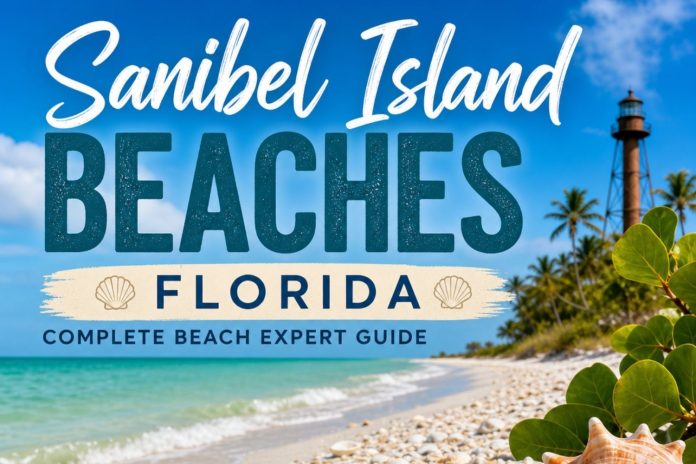
Sanibel Island Beaches, Florida
Sanibel Island has been one of my favorite pieces of Florida for forty years, and I mean that as a working beach expert, not a casual visitor. It is the shelling capital I keep sending people to, the community that still feels like it belongs to the people who live there, and the island that taught me what a barrier island looks like when more than half of it stays wild on purpose.
Sanibel sits at an angle almost no other Florida barrier island shares, running east to west instead of the usual north to south, and that single geographic quirk is the reason this island became famous. It catches shells the way most beaches never do. The city itself covers about 33 square miles, connected to the mainland by the Sanibel Causeway, and more than half of that land is protected conservation, wildlife refuge, or preserve, a ratio you will not find almost anywhere else on Florida’s coast.
In this guide I am covering every public beach on the island, going deep on what makes Sanibel sand and water different from anywhere else I have walked, scoring the island honestly across every category that matters, and telling you exactly who this island is built for. I am also going to be straight with you about where Sanibel stands after three hurricanes in three years, because that honesty is part of what I owe you before you plan a trip here. I close with my own forty years of history with this island, including the parts that have genuinely changed.
The Vibe & Culture at Sanibel Island
A Community That Still Runs the Island It Loves
Sanibel has no traffic lights, only stop signs, and that is not an accident. It is a decision this community keeps making on purpose.
Cross the causeway onto Sanibel and the pace changes immediately. Buildings stay low, nothing rises above the tree line, and a strict growth management plan known locally as the Sanibel Plan has kept development in check for decades. What struck me the first time I visited, and what still strikes me forty years later, is how many of the people running the shops and restaurants along Periwinkle Way are second and third generation islanders. This is not a place built for tourism from the outside in. It is a community that decided to share what it already had.
Hurricane Ian made direct landfall here in September 2022, and I will not soften that. The storm surge reshaped parts of the beach, destroyed the causeway temporarily, and took a genuine toll on homes, businesses, and the historic buildings around the lighthouse. Two more hurricanes, Helene and Milton, added further damage in 2024. But the recovery here has been real. The causeway rebuilt and reopened stronger than before. Lighthouse Beach was renourished with 400,000 tons of trucked-in sand and 32,000 new dune plants. This past winter, the New York Times named Sanibel and Captiva one of its places to visit in 2026, and having watched this island since long before the storm, I understand exactly why.
The J.N. “Ding” Darling National Wildlife Refuge anchors the island’s northern half, and its presence shapes everything about how Sanibel feels compared to a typical beach town. You are never far from mangroves, from an osprey nest, from a sign reminding you that this island’s wildlife came first. Seasonally, winter through spring brings the heaviest crowds and the best shelling weather, summer runs warm and considerably quieter, and hurricane season, June through November, is something every visitor here needs to plan around.
Sanibel Island Beach Areas: Six Distinct Stretches, West to East
Sanibel’s public beaches run the length of the island, and each one has its own personality shaped by how close it sits to the causeway, the refuge, or Blind Pass at the Captiva end. Here is how they break down.
Bowman’s Beach
West End · Sanibel-Captiva Road
Bowman’s Beach is the most secluded of Sanibel’s public beaches, and the walk in tells you that before you even see the sand. You park in a lot set well back from the water, then cross a footbridge and wind through several hundred feet of wooded dune before the Gulf opens up in front of you. That short buffer of trees and dune does more to keep this beach quiet than almost anything else on the island.
Once you are through, the beach itself stretches wide and largely open, with fewer people per foot of sand than anywhere else on Sanibel outside of the far eastern tip. Families with the patience for the walk in, serious shellers working the tideline at low tide, and a fair number of locals who consider this their beach make up most of the crowd here. Leashed dogs are welcome, and I regularly see them working the wrack line right alongside their owners.
I send people here specifically when they tell me they want the quietest version of Sanibel and do not mind the extra effort to get there. The shell piles after a storm are genuinely some of the best on the island, and the short hike through the dunes has a way of filtering out anyone who is not serious about the walk.
Blind Pass Beach
West End · Sanibel Side of the Captiva Bridge
Blind Pass Beach sits right where Sanibel ends and the short bridge to Captiva begins, and like its counterpart on the Captiva side, this stretch is defined by the moving water in the pass itself. The current here runs strong enough that swimming is discouraged, with signs posted to make sure you know it, but that same current makes this one of the better shelling and fishing spots at this end of the island.
You will find anglers working the pass, shellers combing both sides of the bridge, and a steady trickle of people crossing over on foot to see what Captiva looks like without moving their car. The parking lot here is small, under thirty spaces, and there are no restrooms on the Sanibel side, so plan accordingly if you are settling in for a while.
My honest take is that Blind Pass rewards a short, focused visit rather than a full beach day. Come for the shelling at low tide, watch the current move through the pass, and cross the bridge for lunch on Captiva if you want to make a longer outing of it.
Tarpon Bay Beach
Mid-Island · Off Tarpon Bay Road
Tarpon Bay Beach sits roughly at the island’s midpoint, and it has built a reputation as the go-to spot for wind and water sports on Sanibel, thanks to conditions that consistently favor windsurfing and kiteboarding over the flatter water you find elsewhere on the island. The beach itself runs on the higher, firmer side, and shelling here stays reliably good throughout the season.
The crowd skews toward families and water sports enthusiasts, with a genuinely relaxed, all-ages feel. This is also one of Sanibel’s pet-friendly beaches, and I regularly see dogs splashing in the shallows here alongside kids building sandcastles a few feet away. It has amenities without feeling as developed or busy as Lighthouse Beach at the island’s east end.
I like recommending Tarpon Bay to visitors who want a genuine mix of activity, some shelling, some wind sports, a good swim, without committing to the long walk at Bowman’s or the crowd near the lighthouse. It sits in a comfortable middle ground that a lot of first-time visitors do not know to look for.
Gulfside City Park, Known Locally as Algiers Beach
Mid-Island · Casa Ybel Road
Gulfside City Park sits on the curve of the island near a City of Sanibel and federal nature preserve, and most locals still call it Algiers Beach, a name that traces back to a steamboat that once pulled ashore here. Boardwalks lead comfortably from the parking area to the sand, and the beach itself curves gently along this stretch of coastline in a way that makes for excellent shelling.
The crowd here tends to be a comfortable mix of vacation rental guests staying nearby and repeat visitors who have learned this stretch over multiple trips. It is not as secluded as Bowman’s, but it carries a noticeably calmer feel than the beaches nearer the causeway. Leashed dogs are welcome here as well.
This is one of the beaches I point people toward when they want good shelling without the walk required at Bowman’s Beach. The boardwalk access alone makes it a more comfortable stop for anyone hauling chairs, umbrellas, and a cooler.
Lighthouse Beach Park and Fishing Pier
East End · Periwinkle Way
Lighthouse Beach sits at Sanibel’s easternmost tip, anchored by the working 1884 lighthouse that has become the island’s defining landmark, and it is one of the busiest beaches on the island for exactly that reason. The beach here is wide and flat, the water shallow, and on a clear day you can see the Naples skyline in the distance. This is also one of the more photographed spots I cover in this entire body of work, and after everything this island has been through, that lighthouse still standing means something.
Hurricane Ian and the storms that followed damaged the historic structures that once stood near the lighthouse’s base, and those buildings are gone now, but the city responded with a genuine renourishment project, trucking in 400,000 tons of sand and planting 32,000 dune plants to stabilize the shoreline. The fishing pier suffered damage as well and restoration work continues there. What you find today is a beach that looks, at first glance, largely back to normal, even though the history around it has changed.
The crowd here is the most varied on the island, families, anglers working the pier, windsurfers taking advantage of the currents, and photographers waiting for sunrise, since this beach’s position does not favor sunset the way the island’s west end does. I recommend arriving early both for parking and for the light, since sunrise here over the water is genuinely one of my favorite moments on this whole island.
Causeway Islands Park
Approach to the Island · Sanibel Causeway
The Causeway Islands sit on the strip of manmade land carrying the road from the mainland onto Sanibel, and they offer something none of the island’s other beaches do, free parking and the ability to simply pull over and step onto the sand. You can swim, fish, launch a kayak, or windsurf here without paying for a permit or an hourly meter.
This is a genuinely different crowd from the rest of Sanibel’s beaches, day-trippers stopping before they even reach the main island, families with young kids who do not want to fight for parking anywhere else, and boaters using the free launch access. It has a casual, unfussy feel that stands apart from the more curated beaches further out on the island.
I like sending people here who are short on time or budget and still want a legitimate Sanibel beach experience. It will not give you the shelling of Bowman’s or the history of the lighthouse, but it is honest, free, and easy, and sometimes that is exactly what a beach day needs to be.
Sanibel Island Rankings: Expert Scores Across 11 Categories
These scores weigh the island as a whole, from the secluded walk-in beaches at the west end to the historic, busier stretch around the lighthouse at the east end.
Sand Quality
7/10
Shell-based rather than powdery quartz, coarser underfoot than a Panhandle beach, but clean and functional, with softer patches at Lighthouse Beach since the recent renourishment project.
Hiking & Beach Walking
8/10
Long, largely uninterrupted stretches connect several beaches, and the island’s 25-mile bike path network extends the range well beyond just the sand itself.
Shelling at Sanibel
8/10
Still genuinely excellent, especially after a storm, though I will be honest that forty years of watching this island tells me it is more heavily worked now than it used to be. Get here early.
Water Conditions
7/10
Generally calm and shallow, with real current at Blind Pass and near the lighthouse that swimmers should respect.
Scenery & Natural Beauty
8/10
Low-rise, tree-lined, and unmistakably Sanibel, with the working lighthouse giving the east end a landmark that most beach towns simply do not have.
Birding & Wildlife
10/10
More than 245 bird species move through the J.N. “Ding” Darling National Wildlife Refuge alone, and dolphins, manatees, and loggerhead sea turtles round out an island that takes its wildlife seriously.
Family Friendliness
8/10
Tarpon Bay and Gulfside City Park both suit families well, and the island’s bike paths give kids a safe way to explore beyond just the sand.
Dog Friendliness
8/10
Leashed dogs, on a maximum eight-foot leash, are welcome on every public beach on Sanibel, a genuine rarity for a Florida beach town of this caliber.
Solitude & Peace
6/10
Bowman’s Beach and Blind Pass offer real quiet, but Lighthouse Beach and the causeway stretch draw real crowds in season, especially around shelling hours.
Dining & Local Culture
8/10
Periwinkle Way is lined with restaurants run by generational island families, plus the Bailey-Matthews National Shell Museum and the Sanibel Historical Village for a slower kind of afternoon.
Parking & Beach Access
6/10
A consistent five dollars an hour at most public lots, paid through a mobile app since Ian took out the old pay stations, but lots are plentiful compared to Captiva’s tighter squeeze.
Sanibel Island Sand & Water: Deep-Dive Analysis
Sand Composition & Texture
The single biggest thing you will notice about Sanibel sand, especially if you know the sugar-white quartz beaches further north in Florida, is that this is not that kind of beach. Sanibel’s sand is built largely from broken shell, coarser and more textured underfoot than a powdery Panhandle beach, and that texture is a direct result of the exact geology that made this island famous in the first place.
Sanibel’s unusual east-west orientation, nearly unique among Florida’s barrier islands, positions it to catch shells drifting up from the Caribbean and the deeper Gulf the way almost nowhere else does. A gently sloping underwater shelf offshore slows those currents down, and they drop their cargo of whelks, conchs, olives, and tulip shells along the beach. Some of that shell material grinds down into the sand itself over time, which is why Sanibel sand carries more grit and texture than the quartz beaches to the north, and why it varies noticeably from one stretch of the island to another.
-
Sand Color. Warm tan to light beige rather than blinding white, with visible shell fragments giving the surface texture and sparkle in direct sun. Lighthouse Beach runs softer and lighter following its recent renourishment.
-
Texture. Coarser and grittier than a quartz beach, with shell hash mixed through the upper layer. Walking is comfortable everywhere except right at the water’s edge after a storm, when broken shell can get sharp underfoot.
-
Grain Size. Mixed and shell-derived, ranging from fine hash to larger fragments depending on recent storm activity and how close you are to a pass or point where currents concentrate.
-
Shell Content. This is the whole reason people come. Whelks, cockles, olives, tulips, and the occasional prized junonia turn up here, with Bowman’s Beach and the stretch near the lighthouse consistently producing the best material. Only take shells that are clearly unoccupied, no exceptions.
-
Walking Comfort. Excellent at the waterline, where wet sand packs firm, and genuinely superior along the longer stretches near Bowman’s and Gulfside City Park, where foot traffic thins out.
-
Barefoot Rating. 7/10 across most of the island, dropping right after a storm when fresh shell debris covers the upper beach, and rising closer to 8/10 at Lighthouse Beach since the sand renourishment project softened that stretch.
Water Conditions at Sanibel
Sanibel’s Gulf side runs generally calm and shallow, gentle enough for confident swimming most days, but the passes at either end of the island, Blind Pass to the west and the channel near the lighthouse to the east, both carry real current that deserves respect regardless of how calm the rest of the beach looks.
-
Water Clarity. Good on calm days away from the passes, with visibility improving after a stretch of settled weather. Clarity drops noticeably near Blind Pass and the lighthouse channel, where moving water stirs up sediment continuously.
-
Water Color. Green to turquoise on a clear day, shifting toward a duller, more olive tone after wind or rain, consistent with the rest of this stretch of Southwest Florida’s coast.
-
Wave Action. Light and gentle along most of the island, with genuine current at Blind Pass and near the lighthouse pier that swimmers should be cautious around, especially near the currents warning signs posted at both spots.
-
Swimming Quality. Good along most of the island, particularly at Tarpon Bay and Gulfside City Park, though remember there are no lifeguards anywhere on Sanibel. Swim with a buddy and stay aware of conditions.
-
Water Sports. Windsurfing and kiteboarding are strongest at Tarpon Bay Beach, kayaking through the mangroves is excellent through Tarpon Bay Explorers near the refuge, and fishing off the Lighthouse Beach pier draws a steady crowd of anglers, though the pier itself is still under repair.
Dogs & Pet Accessibility at Sanibel Island
Are Dogs Allowed on the Sand? YES.
Leashed dogs are welcome on every public beach on Sanibel, a genuine rarity for a beach town with this island’s reputation. The leash just needs to stay at eight feet or shorter, and you need to clean up after your dog every time.
Where Dogs Are Allowed
- ✓Bowman’s Beach, including the wooded walk in from the parking lot.
- ✓Blind Pass Beach, on the Sanibel side of the Captiva bridge.
- ✓Tarpon Bay Beach, one of the more popular spots on the island for a dog to wade in the shallows.
- ✓Gulfside City Park, known locally as Algiers Beach.
- ✓Lighthouse Beach Park and Fishing Pier at the island’s east end.
- ✓Causeway Islands Park, on your way onto the island, with free parking to match.
Where Dogs Are NOT Allowed
- ✗Off leash, anywhere on the island, even at sunrise when the beach looks empty. The leash law applies at all times, on every beach.
- ✗Inside most shops and restaurants along Periwinkle Way, aside from service animals, so plan on tying up outside if you’re popping in somewhere.
- ✗Within roped-off sea turtle or snowy plover nesting areas, marked with stakes and tape, even though the surrounding beach itself stays open to your leashed dog.
Paws on the Ground Reality
Here’s what to actually expect with your dog underfoot. None of Sanibel’s beach parks have a dedicated water station just for pets, so bring your own bowl and a full bottle, especially in summer when the sand heats up fast. Shade is thinner than it used to be, since the last few hurricanes stripped out a lot of the tree canopy along the beach parks, so don’t count on much natural cover past mid-morning. The sand itself is comfortable for paws most of the year, though right after a storm you’ll find more broken shell mixed through the upper beach, and that can be sharp on tender pads, so check your dog’s feet if you’re walking right after rough weather.
Enforcement is real here too. Rangers and beach patrol do check for leashes, and this community takes its wildlife protections seriously, so it is not a rule anyone quietly ignores. If your dog needs more distance than a beach walk gives you, the Wildlife Drive, Indigo Trail, and Bailey Tract at J.N. “Ding” Darling National Wildlife Refuge all welcome leashed dogs too. Just note the leash there needs to be six feet or shorter, a bit tighter than the eight-foot standard posted at the beach parks.
Crowd Levels and the Overall Feel of Sanibel Island
Compared to Captiva next door, Sanibel runs busier almost everywhere, simply because it has more beaches, more lodging, and a genuine town to support them. But the crowd still varies a lot depending on where you park.
Near the causeway and Lighthouse Beach, expect day-trippers, anglers, and families who want easy access without much of a walk. Head toward Bowman’s Beach at the west end and the crowd shifts to serious shellers and repeat visitors willing to make the walk in from the parking lot. In between, Tarpon Bay and Gulfside City Park draw a comfortable, relaxed mix of both.
The seasonal pattern on Sanibel tracks the rest of Southwest Florida closely:
- Winter and early spring: peak season, snowbirds fill the island’s rentals, and shelling conditions are typically at their best
- Late spring: a genuinely good window, warming water with crowds beginning to thin from the winter peak
- Summer: hot, humid, and noticeably quieter, sea turtle nesting season is in full swing and worth timing a visit around
- Hurricane season, June through November: watch the tropics closely, and know that this island has been through three hurricanes in three years
Who Is Sanibel Island Really For?
✓ Who Will Love Sanibel Island
-
Serious shellers willing to walk, get up early, and work the beach after a storm for the best material
-
Birders and wildlife lovers who want a genuine wildlife refuge, not just a beach with birds passing through
-
Dog owners who want an island where leashed pets are genuinely welcome on every public beach
-
Cyclists who want 25 miles of dedicated bike paths connecting beaches, shops, and the refuge itself
-
Families who want real amenities without the high-rise, boardwalk energy of a bigger beach town
-
Anyone who wants to understand what a barrier island looks like when the community chooses conservation over maximum development
✗ Consider Another Beach If…
-
You want an untouched shelling experience. This shoreline is worked hard by regulars now, and I say that as someone who has watched it happen over forty years
-
You want lifeguards on duty. There are none anywhere on Sanibel’s public beaches
-
You want nightlife or a boardwalk scene. Sanibel closes down early and prefers it that way
-
You want free parking everywhere. Nearly every public beach lot on Sanibel charges by the hour
-
You want a fully rebuilt, pre-storm version of the island’s historic structures. Some, like the buildings once near the lighthouse, are simply gone for good
Things to Do on Sanibel Island, Florida
Sanibel gives you more ways to fill a day than almost any beach town its size, and shelling is only the beginning.
-
Shelling. The signature activity here, known locally as the Sanibel Stoop. Work the tideline at low tide, especially the morning after a storm, and keep an eye out for the rare, prized junonia shell.
-
Wildlife Drive at Ding Darling. Drive, bike, or walk the four-mile Wildlife Drive at the J.N. “Ding” Darling National Wildlife Refuge, open daily except Fridays, for roseate spoonbills, alligators, and some of the best birding in the state. I have written up the trails in more detail in my hiking guide to Ding Darling.
-
Biking. The island’s 25-mile network of shared-use paths connects nearly every beach, shop, and trailhead. Rent a beach cruiser and you genuinely do not need a car for most of a Sanibel day.
-
Kayaking Tarpon Bay. Tarpon Bay Explorers runs guided paddling trips through the mangrove estuary inside the refuge, a strong chance to spot dolphins and manatees at close range.
-
Pier Fishing. The fishing pier at Lighthouse Beach draws a steady crowd of anglers, though repairs from storm damage are still ongoing in places. A valid Florida fishing license is required.
-
Bailey-Matthews National Shell Museum. A dedicated shell museum, genuinely worth the visit for anyone who has spent a morning doing the Sanibel Stoop and wants to know what they actually found.
-
Sanibel Historical Village. A collection of preserved pioneer buildings moved from around the island, open Wednesday through Sunday in season, a quiet counterpoint to a beach day.
-
Wildlife Watching. Dolphins, manatees, and loggerhead sea turtles are all regular sightings, with turtle nesting running from May through October and hatchlings emerging roughly sixty to seventy-five days later.
-
Dining on Periwinkle Way. Doc Ford’s Rum Bar and Grille, founded by author Randy Wayne White, anchors a strip of restaurants largely run by island families across generations.
Local Knowledge and Practical Advice
A few things I have picked up walking this island more times than I can count over the last forty years:
-
Bring the dog, just keep the leash short. Sanibel allows leashed pets, maximum eight feet, on every public beach, a genuine rarity for a beach town this well regarded.
-
Download the mobile parking app before you arrive. Hurricane Ian took out the old pay stations, so parking at Sanibel’s beach lots now runs entirely through a mobile payment system at five dollars an hour.
-
Shell at low tide, ideally at sunrise. The cooler months from December through April are generally the strongest shelling window, and the first hour of light beats the crowds to the best material.
-
No live shelling, anywhere, ever. If a shell still has an occupant, it goes back in the water. This is Florida law, and it is exactly what keeps this island’s reputation intact.
-
Be dark-sky aware during turtle nesting season. From May through October, use a red flashlight instead of white light if you are on the beach after dark, and never approach a marked nest.
-
Pack more sunscreen than you think you need. The storms of the last few years thinned out a lot of the island’s tree canopy, and there is less natural shade on parts of Sanibel than there used to be.
-
Know that recovery is still visible in places. Between Ian in 2022 and Helene and Milton in 2024, this island has absorbed a lot. Most of the natural beauty and the beaches themselves have been back for years, but some businesses and buildings are still finishing repairs.
-
Expect company at the best shelling spots. This is not the undiscovered beach it was decades ago. There are dedicated shellers and shop owners working this shoreline in real volume now, so plan around them rather than against them.
-
Rent a bike for at least one day of your trip. The 25-mile path network is genuinely one of the best ways to see the island, and it saves you from hunting for beach parking more than once a day.
-
Watch the tropics if you are visiting June through November. This island evacuates by causeway only, and after three storms in three years, the local community takes hurricane warnings seriously.
Where to Stay Near Sanibel Island, Florida
Sanibel offers more lodging variety than Captiva, from beachfront resorts to residential rental cottages, with height restrictions keeping everything low-rise across the island.
Gulf-Front Resorts & Inns
Properties along the island’s west and mid sections put you within walking distance of Bowman’s, Tarpon Bay, or Gulfside City Park, with several offering direct beach access and on-site dining.
Periwinkle Way & Village Rentals
Cottages and vacation homes near the island’s commercial core keep you within biking distance of restaurants, the shell museum, and the historic village, without needing a car for most errands.
East End, Near the Lighthouse
Rentals closest to the causeway put you nearest to Lighthouse Beach and the fishing pier, convenient for a shorter stay or a first visit, though this is also the busiest stretch of the island.
Camping
There is no campground directly on Sanibel itself. The nearest option is Cayo Costa State Park, reachable by ferry from Captiva, with primitive tent sites and rustic cabins on an undeveloped barrier island.
Fort Myers & the Mainland
For lower rates, Fort Myers and Cape Coral sit a short drive across the causeway, with a much wider range of budget to mid-range hotel options for visitors who want to day-trip to Sanibel rather than stay directly on the island.
What Makes Sanibel Island Different from Nearby Beaches
Sanibel stands apart from its neighbors on a handful of specific, structural features, not just a general sense of natural beauty.
An east-west orientation almost nowhere else has
Sanibel’s unusual angle relative to the rest of Florida’s coast is the geological reason this island became the shelling capital it is. Most barrier islands run north to south. Sanibel does not, and that single fact shapes nearly everything else about this place.
More than half the island stays wild, on purpose
Conservation land, wildlife refuge, and preserve cover more than half of Sanibel, protected by decades of deliberate local policy rather than accident. Few Florida beach towns of this size and reputation have made that same choice.
A community that runs its own tourism
Generational island families still own and run much of Periwinkle Way, a genuine rarity compared to the corporate resort rows that define so much of Florida’s coast.
A visible, ongoing recovery story
Between Ian in 2022 and Helene and Milton in 2024, Sanibel has absorbed real, repeated damage. What you see today, a rebuilt causeway, a renourished Lighthouse Beach, restaurants steadily reopening, is a genuine and current chapter of the island’s history, not something fully behind it.
Sanibel Island vs. Other Southwest Florida Beaches
These are the beaches I get asked to weigh against Sanibel most often, and the honest read on when you would choose one over the other.
Sanibel Island vs. Captiva Island
Sanibel is bigger, welcomes leashed dogs everywhere, and offers far more public beach access and lodging variety. Captiva is smaller, quieter, and stricter about pets and parking, with a more intimate village feel. I recommend Sanibel if you want flexibility and Captiva if quiet matters more than options.
Sanibel Island vs. Fort Myers Beach
Fort Myers Beach has softer sand, a longer walkable shoreline, and more shells washing up thanks to its position further along the current, plus a commercial core that is actively rebuilding around Times Square. Sanibel trades some of that scale for its wildlife refuge, its community character, and a genuinely wider variety of public beach access points.
Sanibel Island vs. Bonita Beach
Bonita Beach, south toward Naples, runs quieter and more residential, with homes lining the shore rather than resorts. I have personally found strong recent shelling luck at Bonita, honestly better than Sanibel some seasons, since it gets far less traffic from dedicated shellers working the tideline daily.
Sanibel Island vs. Naples
Naples offers a more polished, upscale beach town experience with a walkable downtown and calmer surf, but it does not carry Sanibel’s shelling reputation or its wildlife refuge. Choose Naples for a refined weekend. Choose Sanibel for the shells and the birds.
Bottom line: Sanibel remains the most complete beach experience in this stretch of Southwest Florida, wildlife, shelling, community, and history all in one place. Captiva gives you more quiet. Fort Myers Beach gives you more sand and easier shells. Bonita Beach, in my own recent experience, may actually be giving you better shelling odds these days. But for forty years, Sanibel has been the island I keep coming back to first.
Sanibel Island, Florida: Frequently Asked Questions
Is Sanibel Island worth visiting?
Yes. The combination of shelling, wildlife, and a community that still runs its own tourism makes it one of the most complete beach destinations in Florida, and the recovery from three recent hurricanes has been genuinely impressive to watch.
Are dogs allowed on Sanibel Island beaches?
Yes. Leashed dogs, on a maximum eight-foot leash, are welcome on every public beach on Sanibel. This is different from Captiva Island next door, where dogs are not permitted on public beaches.
Where is the best parking on Sanibel Island?
Most public beach parks charge five dollars an hour through a mobile payment app, since the hurricane took out the old pay stations. Lighthouse Beach has the most parking spaces, while Bowman’s and Blind Pass have smaller lots that fill faster.
Is Sanibel Island still recovering from Hurricane Ian?
Yes, though the recovery has progressed enormously. The beaches, wildlife, and bike paths have been back for years, and the causeway rebuilt stronger than before, but some buildings and businesses are still finishing repairs after Helene and Milton added further damage in 2024.
Is the shelling on Sanibel still as good as its reputation?
It is still genuinely good, especially after a storm, but I will tell you honestly after forty years of walking this island that it is more heavily worked now by dedicated shellers and shop owners than it used to be. Early mornings and post-storm conditions still produce real results.
Are there lifeguards on Sanibel Island beaches?
No. None of Sanibel’s public beaches carry lifeguard coverage, so swim with a buddy and pay attention to posted current warnings, especially near Blind Pass and the lighthouse channel.
What is the rarest shell to find on Sanibel?
The junonia, a shiny, speckled brown and white shell, is the most prized find on the island. It typically sits about a foot beneath the sand, closer to the dune line, and finding one is still enough to get your photo in the local paper.
Can I visit J.N. “Ding” Darling National Wildlife Refuge with kids?
Yes. The Wildlife Drive is open to cars, bikes, and pedestrians every day except Fridays, and the free Visitor and Education Center has hands-on exhibits that work well for children along with a genuinely excellent set of restrooms.
Can I camp on Sanibel Island?
Not directly on the island. The nearest camping is at Cayo Costa State Park, reachable by ferry from Captiva, with primitive tent sites and rustic cabins on an undeveloped barrier island.
How is Sanibel different from Captiva?
Sanibel is bigger, allows leashed dogs everywhere, and has significantly more public beach access and lodging variety. Captiva is smaller, quieter, and stricter, with no dogs allowed on its public beaches and a single small village rather than Sanibel’s wider spread of restaurants and shops.
Patti’s Perspective: My Honest Take on Sanibel Island
Sanibel has been one of my favorite spots for forty years now, and I want to be honest with you about how my relationship with this island has actually changed over that time, rather than just repeating the postcard version everyone already knows.
The shelling here used to be a different experience entirely. I remember walking beaches decades ago and finding piles of shells that felt genuinely untouched. Today, it is not just tourists doing the Sanibel Stoop. There are dedicated shellers, shop owners, and people sifting this shoreline in real volume, and it has left less for the everyday beachcomber than it used to. I will tell you plainly that I have found more shells lately at Bonita Beach and Fort Myers Beach than I have on a typical Sanibel morning. But when I time it right, get out early after a storm and beat the regulars to the tideline, the shelling here can still be genuinely great.
What has not changed, and what keeps me coming back regardless of the shelling, is Sanibel’s beach spots themselves. Every single one of them is worth visiting, for shelling, for walking, for swimming, some easier to park at than others, but none of them a disappointment. And it is the vibe of this island that I love most. So many of the people who live here and run the businesses are generations deep in this community. They are welcoming, and they seem to genuinely love sharing what they have built rather than merely tolerating the visitors who come for it.
Watching Sanibel come back from Ian, then from Helene and Milton, has been its own kind of lesson in what this island actually is underneath the beach. The causeway rebuilt. Lighthouse Beach got its sand back. The community kept showing up. Forty years in, that resilience is as much a part of why I love Sanibel as the shells ever were.
My verdict: 9/10. Sanibel remains one of the most complete beach experiences I cover in this work, wildlife, shelling, community, and history all in one island. It loses a point only because I have watched the shelling get genuinely harder to have to myself over four decades. Come here for everything this island still does better than almost anywhere else on the Gulf, and go into the shelling with realistic expectations rather than the postcard version.
Want to Live by the Water?Sanibel Island real estate is defined by a permanent kind of scarcity, since more than half the island is protected conservation land under the long-standing Sanibel Plan, which has kept supply constrained by policy rather than by market cycles alone.Entry-level homes and condos on Sanibel typically start in the $600,000 to $800,000 range, with Gulf-front properties running from $2 million well past $8 million depending on location and elevation. As of 2026, the market has shifted toward a more balanced, buyers-favorable environment, with inventory up and homes staying on the market a bit longer than during the post-Ian rush, though the island’s structural scarcity keeps prices from softening the way a typical market correction might suggest. The buyer pool here draws retirees, remote workers, and second-home owners who value the conservation character as much as the beach itself.If living by the water is something you’re considering, whether full time, part time, or as an investment, it’s worth exploring what’s available in this area.Explore Waterfront Living at LiveByTheWater.com
Real estate referral partner