


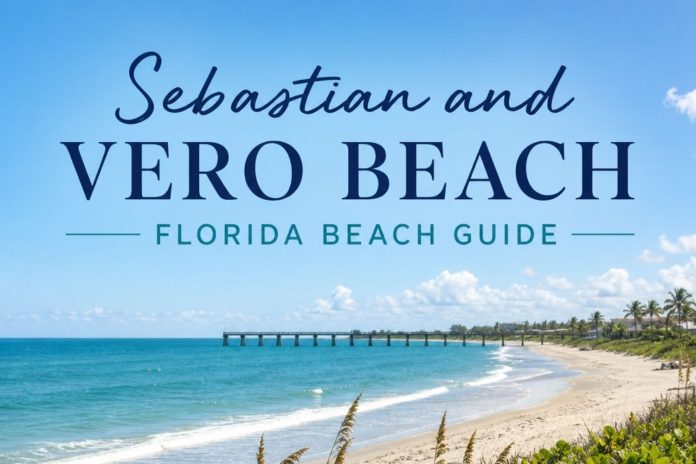
Sebastian & Vero Beach, Florida
Sebastian and Vero Beach call themselves the gateway to the tropics, and after walking this stretch of Indian River County more times than I can count, I think the more honest claim is that this is the gateway to American wildlife conservation itself. The nation’s entire National Wildlife Refuge System traces back to a tiny island right here, and the beaches built up around that history are still some of the most uncrowded family beaches on Florida’s Atlantic coast.
Sebastian is the older of these two towns, founded as a fishing village in the 1880s and still shaped by its close relationship with the St. Sebastian River and the Indian River Lagoon. Vero Beach, a short drive south, grew into a more polished beach town with its own shopping districts, arts scene, and a stretch of barrier island beaches that Indian River County has deliberately kept lower-key than the coastline further south in this series.
In this guide I’m walking you through the beaches and communities of both towns, going deep on what the sand and water are actually doing here, scoring it honestly across every category that matters, and telling you exactly who this stretch is built for. I’ll cover the tiny island that started America’s entire wildlife refuge system, the beaches where real Spanish shipwreck treasure still occasionally washes ashore, where dogs are actually welcome in this county, and the turtle nesting refuge that runs nearly the length of this county. For more on what lives here and what you might find in the sand, I’ve also written up a full hiking guide, a birding guide, and a beach finds guide for this stretch of coast. I close with my own take on why this uncrowded stretch deserves more attention than it usually gets.
The Vibe & Culture at Sebastian & Vero Beach
A County That Chose Conservation Before It Was Fashionable
Long before “sustainable” became a marketing word, Indian River County was already protecting the things that made it worth visiting in the first place.
In 1903, a Sebastian boat builder named Paul Kroegel convinced President Theodore Roosevelt to protect a tiny mangrove island in the Indian River Lagoon from plume hunters who were killing its pelicans for the feather trade. That decision created Pelican Island, America’s first National Wildlife Refuge, and it kicked off the conservation movement that eventually protected land all over the country. Kroegel’s statue still stands in Sebastian’s Riverview Park, and the whole town still leans into that legacy.
Vero Beach carried that same instinct into its city planning. As the town grew through the twentieth century, it deliberately built its layout around parks and preservation rather than following the denser development pattern that took over much of the rest of Florida’s coast. The Brooklyn Dodgers picked Vero Beach for spring training in 1948, and Dodgertown’s Holman Stadium anchored the town’s identity for decades afterward, adding a genuine piece of baseball history to its conservation-minded roots.
The crowd across both towns reflects that unhurried, protected character. Vero Beach’s beaches are consistently described as uncrowded even in season, families settle into Humiston Park’s shopping district beach without much competition for space, and Sebastian draws a quieter, more outdoors-focused crowd centered on the lagoon rather than the ocean itself.
Sebastian & Vero Beach Areas: Six Distinct Stops Across Two Towns
This guide covers both Sebastian’s lagoon-centered heritage and Vero Beach’s string of Atlantic beaches. Here’s how it breaks down.
Humiston Park & the Beachside Shopping District
Ocean Drive · Vero Beach’s Signature Family Beach
Humiston Park has been named one of the top ten beaches for families in the country by Family Vacation Critic, and walking it, you understand why fast. The sand runs soft, compact, and golden-brown, a concrete walkway with benches leads easily to the water, and the whole park sits inside Vero Beach’s boutique-lined Beachside Shopping District, close enough that a beach day and a lunch at Nino’s Café or Citrus require no driving at all.
The crowd here is heavily local and family-driven, kids working through the shaded playground with its swing set and curving slides, parents settling in on the walkway benches, and a lively but manageable weekend crowd that never quite tips into overwhelming. Tide pools along this stretch hold hermit crabs and small fish, turning a simple beach visit into a genuine hands-on nature lesson for younger kids.
I always send first-timers here specifically because it does so much right in a small footprint. You can genuinely spend a whole day without moving the car, and the shopping district right behind the sand gives you options most beaches in this series simply don’t offer.
Jaycee Park
North of the Merrill P. Barber Bridge · The Longest Boardwalk in Vero Beach
Jaycee Park holds the distinction of the longest boardwalk in Vero Beach, along with a buoyed swimming area, a fishing pier, sand volleyball courts, and a casual beach grill restaurant with both indoor and outdoor seating. It’s a genuinely complete park, more than eight acres of oceanfront space built for exactly the kind of long, unhurried beach day that doesn’t require constant entertainment.
The crowd here skews toward families and repeat local visitors who’ve made this their regular spot, plus a few anglers working the fishing pier at the edges of the swim area. It has a wide open feel that Humiston Park’s more compact, shopping-district setting doesn’t quite match.
I like this park specifically for the boardwalk. Walking its full length gives you one of the better perspectives on this stretch of coast, especially early, before the day crowd settles in.
Round Island Park & the Lagoon Side
64-Acre Natural Preserve · Manatees Nearly Guaranteed
Round Island Park gives you the calm-water half of this guide, a 64-acre natural lagoon island preserve with raised boardwalks, trails, docks, and lookout stations winding through mangrove forest. This is where you’re almost guaranteed to see a manatee, and the EcoVentures program offers canoe and pontoon boat rides along with a 145-gallon touch tank at the Discovery Station for a hands-on look at lagoon life.
The crowd here is noticeably different from the ocean-side beaches, kayakers and paddlers launching for the day, families on a nature walk rather than a swim, and a genuinely peaceful pace throughout. It’s a favorite local launch point for exploring the Indian River Lagoon by boat.
I think this park is one of the more underappreciated stops in this entire guide. If you only ever see Vero Beach’s ocean side, you’re missing a completely different, equally worthwhile half of what this area protects.
Wabasso Beach & the Archie Carr National Wildlife Refuge
End of County Road 510 · Real Treasure, Real Turtles
Wabasso Beach sits at the southern edge of the Archie Carr National Wildlife Refuge, a 20.5-mile stretch running between Melbourne Beach and Wabasso Beach that ranks among the most significant sea turtle nesting habitats in the Western Hemisphere, and a critical nesting ground for the endangered green sea turtle specifically. The refuge’s visitor center offers a one-mile dune-to-lagoon nature trail and an accessible ocean-view boardwalk.
This stretch also carries a genuinely remarkable treasure-hunting history. In 2015, 350 gold coins valued at $4.5 million were recovered just six feet off Wabasso Beach’s shore, tied to the same 1715 Spanish treasure fleet disaster that shaped this whole coast’s Treasure Coast name, and salvaging boats still occasionally work visibly close to shore here. The crowd is a genuine mix of surfers, families, and the occasional serious treasure hunter checking the sand after a good storm.
I’ve stood on this beach watching a salvage boat work just offshore, knowing full well it might be looking for the same fleet that wrecked three centuries ago, and there’s something about that image that sums up this whole stretch of coast better than almost anything else I could tell you.
Golden Sands, Treasure Shores & the Quiet Northern Beaches
North Toward Sebastian Inlet · Wide Open, Uncrowded
Golden Sands Beach Park marks the southern boundary of the Archie Carr National Wildlife Refuge, and heading further north toward Sebastian Inlet, Treasure Shores Park adds a pirate-ship-themed playground, genuine sand dunes, and walking trails to the mix. This whole northern stretch stays noticeably quieter than the beaches closer to downtown Vero Beach, with wide open views and far less foot traffic.
The crowd here is thin even in season, locals who specifically prefer the quieter pace and treasure hunters drawn by the same 1715 fleet history that put Wabasso Beach on the map. The Seagrape Trail beach access nearby has its own reputation for turning up silver coins from that same wreck.
I send anyone looking for real solitude on this stretch straight up here. It’s a short drive from downtown Vero Beach, but it feels like a genuinely different, wilder pace of coast.
Sebastian & Pelican Island National Wildlife Refuge
Riverfront Town · The Birthplace of American Wildlife Conservation
Sebastian itself isn’t a beach town in the traditional sense, it’s a riverfront fishing village that happens to sit across the lagoon from one of the most historically significant three acres of land in the entire country. Pelican Island, protected since 1903, cannot be set foot on, but an 18-foot observation tower off A1A gives visitors a clear view of the mangrove island and the 5,400-plus acres of protected refuge surrounding it. The historic, unpaved Jungle Trail, built in the 1920s as the original coastal road for citrus growers, runs past the refuge and the Jones Pier Conservation Area, a restored 1920s pioneer homestead.
The crowd here is genuinely local and outdoors-focused, kayakers launching into the lagoon, birders working the observation tower, and visitors specifically drawn by the conservation history rather than a beach day. Riverview Park’s statue of Paul Kroegel anchors the town’s identity, and walking the riverfront doubles as a real education in the area’s environmental history.
I think Sebastian is one of the most quietly important stops in this entire series, not because of what’s on the beach, but because of what happened here that shaped conservation policy for the entire country. Standing at that observation tower, looking at three acres of mangrove that started something this significant, is a genuinely humbling experience.
Sebastian & Vero Beach Rankings: Expert Scores Across 11 Categories
These scores weigh both towns together, from Vero Beach’s family-friendly Atlantic beaches to Sebastian’s lagoon-centered conservation history, since this guide’s real strength is combining both.
Sand Quality
8/10
Soft, golden-brown sand throughout Vero Beach’s main beaches, consistent enough that Golden Sands Beach Park is named for exactly this quality.
Hiking & Beach Walking
8/10
Jaycee Park’s boardwalk, the Archie Carr refuge’s dune-to-lagoon trail, and the eight-mile Historic Jungle Trail all add genuine walking variety across this guide.
Shelling
7/10
Solid throughout, with an added treasure-hunting dimension at Wabasso Beach and Seagrape Trail, where real historic coins have turned up after storms.
Water Conditions
7/10
Genuinely swimmable throughout, with buoyed swim areas at Jaycee Park and calm lagoon paddling at Round Island Park rounding out the range.
Scenery & Natural Beauty
8/10
Wide, uncrowded beaches on the ocean side and genuinely striking lagoon and mangrove scenery on the Sebastian side make this a visually varied guide.
Birding & Wildlife
10/10
The single highest score possible in this series. This is the birthplace of the entire National Wildlife Refuge System, plus a 20.5-mile turtle refuge and near-guaranteed manatee sightings at Round Island Park.
Family Friendliness
9/10
Humiston Park’s national top-ten family beach ranking and Jaycee Park’s buoyed swim area both make this one of the strongest family stretches in this entire series.
Dog Friendliness
5/10
Vero Beach’s three guarded beaches and most county beach parks prohibit dogs outright, but Indian River Shores allows unleashed dogs by permit during early morning and evening hours, and a dedicated dog park sits inland in Vero Beach.
Solitude & Peace
8/10
Genuinely uncrowded even in season, a distinction Indian River County actively promotes. The northern beaches toward Treasure Shores are especially quiet.
Entertainment & Nightlife
6/10
Vero Beach’s Ocean Drive shopping and dining district gives this stretch real character, though it stays noticeably quieter than the resort strips further south in this series.
Parking & Beach Access
8/10
Ample, mostly free parking across nearly every beach covered in this guide, a genuine plus compared to the more congested beaches further south.
Sebastian & Vero Beach Sand & Water
The sand along Vero Beach’s Atlantic shoreline runs a consistent golden-brown, soft and compact enough that an entire beach park carries the name Golden Sands. The upper beach stays soft for sandcastles, and the packed sand at the waterline gives you a firm, comfortable surface for walking the whole stretch, with Jaycee Park’s long boardwalk offering an especially easy way to cover ground above the sand itself.
The water shifts meaningfully depending on whether you’re on the open Atlantic side or the calmer Indian River Lagoon side around Sebastian and Round Island Park. On the ocean beaches, entry is gradual and the color runs a good turquoise on a calm day, typical swimmable Atlantic conditions. The lagoon side stays consistently calm but a bit more tannin-tinted, better for wildlife watching and paddling than a straightforward swim.
-
Walkability. Excellent at the waterline throughout, with Jaycee Park’s long boardwalk giving you an especially easy, extended walk above the sand.
-
Softness & Playability. Soft and sandcastle-ready at the main Vero Beach parks, consistent enough that Golden Sands Beach Park is named for exactly this quality.
-
Barefoot Comfort. Comfortable and consistent across most of this guide, without significant rock structure at any of the main beaches covered here.
-
Swimmability. Strong at the guarded beaches, including Humiston Park, Jaycee Park, and Wabasso Beach. Several smaller access points have no lifeguard at all.
Want the full geology, grain composition, and the complete sand and water condition ratings? I broke it all down separately in Sand & Shore: Sebastian & Vero Beach.
Dogs & Pet Accessibility at Sebastian & Vero Beach
Are Dogs Allowed on the Sand? RESTRICTED.
Vero Beach’s own guarded beaches prohibit dogs entirely, but the separate town of Indian River Shores allows unleashed dogs by permit during quieter hours, and a real dog park sits inland.
Where Dogs Are Allowed
- ✓Indian River Shores beaches, unleashed by permit, sunrise to 9 a.m. and 5 p.m. to sunset, or leashed at other times within town limits.
- ✓The Vero Beach Dog Park at 3449 Indian River Drive East, off leash in the marked area, dawn to dusk.
Where Dogs Are NOT Allowed
- ✗Vero Beach’s three guarded public beaches, Humiston Park, Jaycee Park, and South Beach Park, no exceptions, by city policy.
- ✗Round Island Park and Seagrape Trail Beach Access, posted no-pets beaches under county rules.
- ✗Tracking Station Beachfront Park, just south of Indian River Shores, also posted no dogs.
Paws on the Ground Reality
Vero Beach made its policy deliberately clear a few years back, city leadership specifically wants the guarded public beaches reserved for swimmers rather than pets, and that rule is consistent and enforced. Indian River Shores, a separate town just north of Vero Beach proper, took the opposite approach and allows unleashed dogs on its beaches during the early morning and evening hours, provided the dog is licensed and permitted through the town. It’s a genuinely different jurisdiction with genuinely different rules, so don’t assume one town’s policy applies in the other.
If you’re staying in Vero Beach itself and want a real off-leash outlet, the Vero Beach Dog Park a short drive inland is the reliable answer, with a marked area between the posted signs and water access on the lagoon side. Bring your own water for a beach walk regardless of which town you’re in, since fountains along these stretches aren’t consistently available for pets.
Crowd Levels and the Overall Feel of Sebastian & Vero Beach
This stretch runs noticeably quieter than the beaches further south in this series, and Indian River County actively promotes that uncrowded quality as part of the area’s identity. Vero Beach’s main beaches draw the steadiest local and family crowd, while Sebastian stays genuinely low-key year-round.
You’ll find a different crowd depending on where you go. Near Humiston Park and Jaycee Park it’s families and shoppers from the Beachside district. At Round Island Park and in Sebastian it’s kayakers, birders, and conservation-minded visitors. At Wabasso Beach and the northern stretches it’s a mix of surfers and treasure hunters.
The overall feel shifts by season more around turtle nesting and snowbird patterns than typical spring break crowds:
- Winter: peak snowbird season, with comfortable weather and manatees more reliably visible at Round Island Park
- Spring: pleasant water and the start of sea turtle nesting season across the Archie Carr refuge
- Summer: peak nesting and hatching activity, with green sea turtles making this one of the most significant nesting stretches in the hemisphere
- Fall: my favorite window here, warm water lingering, nesting season winding down, and even lighter crowds than usual
Who Is Sebastian & Vero Beach Really For?
✓ Who Will Love Sebastian & Vero Beach
-
Families wanting a nationally ranked, genuinely easy beach day at Humiston Park
-
Birders and conservation history buffs curious about the birthplace of the National Wildlife Refuge System
-
Sea turtle enthusiasts wanting one of the most significant nesting refuges in the Western Hemisphere
-
Kayakers and paddlers chasing manatees and calm lagoon water at Round Island Park
-
Treasure hunters and history buffs drawn to the real, ongoing 1715 fleet story at Wabasso Beach
-
Anyone who wants genuinely uncrowded beaches without sacrificing amenities
✗ Consider Another Beach If…
-
You want a lively resort strip with nightlife directly on the sand. This stretch stays deliberately low-key
-
You’re chasing a famous, world-class surf break. Head north to Sebastian Inlet State Park instead
-
You want to set foot on Pelican Island itself. Public access to the island is prohibited to protect nesting birds
-
You’re bringing a dog and expecting beach access in Vero Beach itself. The city’s three guarded beaches and most county beach parks prohibit pets outright
-
You want a beach day exclusively, with no interest in lagoon, wildlife, or conservation history
Things to Do at Sebastian & Vero Beach, Florida
This stretch offers a genuinely wide range of things to do beyond a standard beach day. Here’s what actually fills a visit here.
-
Visiting Pelican Island’s Observation Tower. An 18-foot tower off A1A near Sebastian offers a clear view of the nation’s first National Wildlife Refuge, protected since 1903.
-
Driving or Biking the Historic Jungle Trail. An eight-mile unpaved 1920s road passing the refuge and the restored Jones Pier Conservation Area homestead.
-
Kayaking or Touring Round Island Park. A 64-acre lagoon preserve with near-guaranteed manatee sightings and EcoVentures canoe and pontoon tours.
-
Sea Turtle Watching. The Archie Carr National Wildlife Refuge’s 20.5-mile stretch ranks among the most significant nesting habitats in the Western Hemisphere.
-
Treasure Hunting at Wabasso Beach. Real gold and silver coins from the 1715 Spanish fleet have surfaced here within recent memory, most notably a $4.5 million find in 2015.
-
Shopping and Dining on Ocean Drive. Vero Beach’s Beachside Shopping District sits directly behind Humiston Park, an easy pairing with a beach day.
-
Walking Jaycee Park’s Boardwalk. The longest boardwalk in Vero Beach, with a buoyed swim area and fishing pier alongside it.
-
Exploring Dodgertown’s Legacy. The Brooklyn Dodgers’ 1948 spring training complex and Holman Stadium left a lasting mark on Vero Beach’s identity.
-
Fishing. Jaycee Park’s pier, Wabasso Beach, and the Sebastian riverfront all offer real fishing access across both towns.
Local Knowledge and Practical Advice
A few things I’ve picked up covering this stretch more times than I can count:
-
You cannot set foot on Pelican Island itself. Public access is prohibited to protect nesting birds. View it from the observation tower off A1A instead.
-
Check the sand at Wabasso Beach and Seagrape Trail after a storm. Real 1715 fleet treasure has surfaced here within recent memory, and locals genuinely search for it.
-
Round Island Park is your best bet for manatees. Bring a kayak or book an EcoVenture tour for the best chance at a sighting.
-
Nesting season runs roughly March through October across the Archie Carr refuge. Avoid marked nests and check with the visitor center for guided programs.
-
Parking is genuinely easy across most of this guide. A real advantage compared to the more congested beaches further south in this series.
-
Lifeguard hours vary by beach. Humiston Park, Jaycee Park, and Wabasso Beach all post specific hours, so check before you rely on coverage.
-
Drive the Historic Jungle Trail slowly. It’s unpaved and scenic by design, not a shortcut, so budget real time for it.
-
Vero Beach’s own guarded beaches don’t allow dogs at all. Head to Indian River Shores for a permitted, unleashed beach walk, or the dedicated dog park inland instead.
-
Catch sunrise at Sexton Plaza. It’s a genuine local favorite spot for exactly that, tucked between two restaurants in the Beachside district.
-
Pair a beach day with the Environmental Learning Center. Their boat tours add real context to everything else in this guide.
Where to Stay Near Sebastian & Vero Beach, Florida
This stretch offers a genuine range of lodging, from beachfront resorts to riverfront cottages.
Vero Beach Oceanside
Hotels and vacation rentals near the Beachside Shopping District put you within walking distance of Humiston Park and Ocean Drive’s restaurants.
Disney’s Vero Beach Resort
Located near the Wabasso Causeway, this full-service resort offers a family-friendly base close to Wabasso Beach and the Archie Carr refuge.
Sebastian Riverfront
Cottages and small inns along the Indian River Lagoon in Sebastian put you close to Pelican Island, the Historic Jungle Trail, and the town’s fishing heritage.
Camping
Sebastian Inlet State Park, covered in its own guide in this series, offers full-facility camping a short drive north.
Inland & Budget Options
Inland Vero Beach and Fellsmere offer a wider range of budget to mid-range hotel chains for visitors who’d rather day-trip to the coast than stay directly on it.
What Makes Sebastian & Vero Beach Different from Nearby Beaches
Sebastian and Vero Beach stand apart from the rest of this series because conservation history isn’t a side note here, it’s the actual origin story of the entire American wildlife refuge system.
A few features make it distinct:
The birthplace of the National Wildlife Refuge System
Pelican Island’s 1903 designation started a conservation movement that eventually protected land across the entire country.
A 20.5-mile turtle refuge, not just a nesting beach
The Archie Carr National Wildlife Refuge is one of the most significant green sea turtle nesting sites in the Western Hemisphere.
Real, ongoing shipwreck treasure
Unlike most beaches with old pirate stories, actual gold has surfaced here within the last decade.
A nationally ranked family beach with a shopping district built in
Humiston Park’s combination of beach, playground, and walkable shops is genuinely rare.
Sebastian & Vero Beach vs. Other Nearby Beaches
These are the beaches visitors most often weigh against this stretch, and the honest read on when you’d choose one over the other.
Sebastian & Vero Beach vs. Sebastian Inlet State Park
Sebastian Inlet, covered in its own guide in this series, offers world-class surf and premier fishing with a real entrance fee. This stretch offers more amenities, a nationally ranked family beach, and genuinely significant conservation history.
Sebastian & Vero Beach vs. Fort Pierce & St. Lucie County
Fort Pierce brings grittier, more working-class character and its own shipwreck history. Sebastian and Vero Beach bring a more polished, family-oriented feel with deeper conservation roots.
Sebastian & Vero Beach vs. Jensen Beach & Stuart
Jensen Beach and Stuart offer a countywide leashed-dog policy this stretch doesn’t quite match. Sebastian and Vero Beach counter with the actual birthplace of the refuge system that made places like that possible in the first place.
Sebastian & Vero Beach vs. Melbourne Beach
Melbourne Beach, just north in Brevard County, shares the Archie Carr refuge’s turtle nesting significance. Choose Sebastian and Vero Beach for more developed amenities and the Pelican Island history specifically.
Bottom line: Sebastian and Vero Beach are the version of the Treasure Coast built around conservation as an identity, not an afterthought. Nothing else in this series can claim to be the actual starting point of America’s wildlife refuge system, and that history quietly elevates everything else this stretch offers.
Sebastian & Vero Beach, Florida: Frequently Asked Questions
What is Pelican Island National Wildlife Refuge?
America’s first National Wildlife Refuge, established in 1903 by President Theodore Roosevelt after Sebastian resident Paul Kroegel petitioned to protect its nesting pelicans from plume hunters. It’s considered the birthplace of the entire National Wildlife Refuge System.
Can you visit Pelican Island itself?
No. Public access to the island is prohibited to protect nesting birds. Visitors can view it from an 18-foot observation tower off A1A near Sebastian.
Is there real treasure at Wabasso Beach?
Yes. In 2015, 350 gold coins valued at $4.5 million were recovered just six feet off Wabasso Beach’s shore, tied to the 1715 Spanish treasure fleet disaster. Salvaging boats still occasionally work visibly close to shore.
What is the Archie Carr National Wildlife Refuge?
A 20.5-mile refuge running between Melbourne Beach and Wabasso Beach, named for sea turtle conservationist Dr. Archie Carr, Jr., and considered one of the most significant nesting sites for endangered green sea turtles in North America.
Is Humiston Park good for families?
Yes, genuinely. It’s been named one of the top ten beaches for families in the country by Family Vacation Critic, with a shaded playground, tide pools, and Vero Beach’s walkable shopping district right behind the sand.
Where can you see manatees in Vero Beach?
Round Island Park, a 64-acre lagoon preserve, offers near-guaranteed manatee sightings, along with kayak and pontoon boat tours through the EcoVentures program.
What is the Historic Jungle Trail?
An eight-mile unpaved road built in the 1920s as the original A1A for citrus growers, running past Pelican Island National Wildlife Refuge and the restored Jones Pier Conservation Area homestead.
Are Vero Beach’s beaches crowded?
No, notably. Indian River County actively promotes its beaches as uncrowded, and that reputation holds up even in peak season compared to beaches further south in this series.
What is Dodgertown?
The Brooklyn Dodgers’ spring training complex, established in Vero Beach in 1948. Its Holman Stadium became a defining piece of the town’s identity for decades.
How does Sebastian differ from Vero Beach?
Sebastian is a smaller, riverfront fishing village centered on the Indian River Lagoon and its conservation history. Vero Beach is a more developed beach town with a wider range of Atlantic Ocean beaches, shopping, and amenities.
Patti’s Perspective: My Honest Take on Sebastian & Vero Beach
I think about Sebastian and Vero Beach differently than almost anywhere else in this series, because the story here isn’t really about the sand. It’s about what one stubborn boat builder with a shotgun and a sailboat managed to convince a president to do, and how that single decision is the reason so many of the beaches covered elsewhere in this guide still have any wildlife left to protect at all.
What stays with me most is standing at that observation tower looking out at Pelican Island, three modest acres of mangrove that somehow became the seed for an entire national system of protected land. It’s easy to drive right past it, there’s no grand visitor center, no dramatic overlook, just a quiet island and a bird or two, and that understatement is exactly what makes it land so hard once you understand what actually happened there.
Humiston Park gave me the opposite kind of moment, watching kids work through tide pools full of hermit crabs a few steps from a boutique shopping street, and realizing that this uncomplicated, unhurried version of a family beach day has become genuinely rare the further south you travel in this series. Vero Beach never tried to be flashy. It just kept being exactly this, and I think that consistency is worth more than most visitors realize until they’ve experienced it.
My honest caveat: if you only ever stop at the main beaches, you’ll have a lovely, easy day, but you’ll miss the actual reason this stretch matters. Drive out to Pelican Island’s tower. Walk the Jungle Trail. Understand what happened here in 1903. That’s where Sebastian and Vero Beach earn their place in this entire series.
My verdict: 8/10. The most quietly significant stretch in this entire series, and it earns that ranking on real conservation history, a nationally ranked family beach, and a level of uncrowded calm that’s become genuinely rare on Florida’s coast. It won’t compete on nightlife, and I don’t think it wants to.
Want to Live by the Water?Sebastian and Vero Beach offer some of the most livable, conservation-minded waterfront real estate on the Treasure Coast, from riverfront cottages near Sebastian’s fishing heritage to oceanfront condos and homes along Vero Beach’s uncrowded barrier island.
The market here draws retirees and families specifically seeking a quieter, more preserved version of Florida coastal living, along with boaters and anglers drawn to Sebastian’s easy lagoon access. Vero Beach’s deliberate, park-focused development pattern has kept much of this area feeling noticeably less dense than comparable coastal towns further south in this series.
If living by the water is something you’re considering, whether full time, part time, or as an investment, it’s worth exploring what’s available in this area.
Explore Waterfront Living at LiveByTheWater.com
Real estate referral partner