


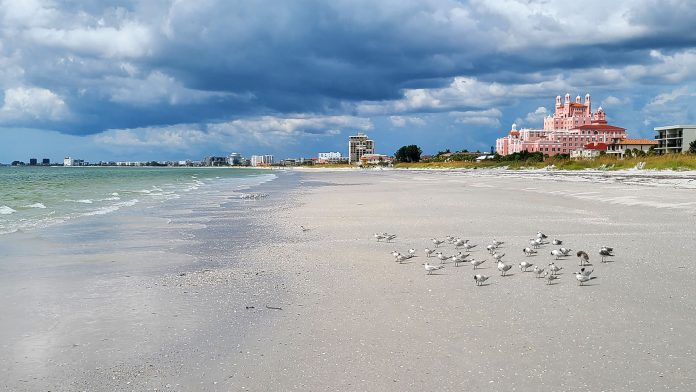
St Pete Beach, Florida
St Pete Beach is where I learned what a Florida beach vacation was supposed to feel like, long before I ever walked one for a living. This stretch of Long Key on the Pinellas County coast is not one beach. It is four, strung along the same barrier island like four different decades of Florida living side by side, and after walking every foot of it more times than I can count, I can tell you exactly where to find each version.
Long Key is the barrier island that carries St Pete Beach, a narrow strip of sand and old Florida bedroom community running roughly seven miles from Blind Pass at the north end down to the southern tip at Pass-a-Grille, with the Gulf of Mexico on one side and Boca Ciega Bay on the other. You reach it by the Corey Causeway from South Pasadena or the Pinellas Bayway from the south, and the island narrows so much by the time you’re near the bottom that you can practically see both bodies of water from the same spot.
In this guide I’m walking you through the island the way it actually breaks down, not as one generic beach but as four distinct stretches with four different personalities. Upham Beach Park at the north end is the open, undeveloped piece nobody talks about enough. The middle of the island is the Gulf Boulevard strip, the resort energy that put St Pete Beach on the map. The Don CeSar marks the turning point where the island starts to slow down. And Pass-a-Grille, at the very southern tip, is the part that feels like nobody told it what year it is. I’ll go deep on the sand and water, score the island honestly across every category that matters, and close with my own history with this particular stretch of coast, since this is the beach my own family has been coming back to for three generations now.
The Vibe & Culture at St Pete Beach
Four Personalities, One Island
Drive the length of Gulf Boulevard from north to south and St Pete Beach changes character almost block by block.
At the north end, Upham Beach Park feels like the island took a breath. No high-rise stands behind it, just dune scrub and a wooden boardwalk, and the crowd there skews local. Head south past 75th Avenue and the island wakes up fast. This is the Gulf Boulevard stretch, the part most visitors picture when they think of St Pete Beach: the big resorts, the beach bars with live music spilling onto the sand, the spring break energy that has defined this stretch of coast for decades and still draws a lively, mostly friendly crowd through the warm months.
Keep heading south and the energy shifts again right around the Don CeSar, the pink Mediterranean hotel that has marked this spot since 1928. It functions almost like a hinge for the whole island. North of it, you’re in resort territory. South of it, the condos thin out, the road narrows, and you cross into Pass-a-Grille, a National Register historic district where pastel cottages have outnumbered hotels for more than a century and the loudest sound most evenings is the bell that rings at sunset.
The seasonal rhythm here tracks pretty closely with the rest of the Tampa Bay beaches. Spring break and Easter week bring the heaviest crowds, concentrated almost entirely around the Gulf Boulevard resorts. Summer is family season, with warm Gulf water in the mid 80s and the TradeWinds water slide running at full capacity. Fall, especially October, is the window I’d point you toward if I had to pick one. The crowds thin out, the water is still swimmable, and stone crab season opens on the 15th. Winter brings the snowbirds and a slower, more retiree-paced version of the island, with Pass-a-Grille at its quietest and most photogenic. In USA Today’s 2026 Readers’ Choice rankings for Florida’s best beaches, Clearwater Beach took second place and Treasure Island came in third, with St Pete Beach landing at seventh, and walking all three back to back, that order tracks with how each one actually feels on the ground.
St Pete Beach Areas: Four Distinct Stretches of Long Key
St Pete Beach is not a single beach so much as a barrier island wearing four different outfits depending on where you stand. Here’s how it actually breaks down, north to south, and what you’ll find at each stop.
Upham Beach Park
North End · 67th to 71st Avenue
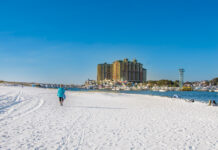
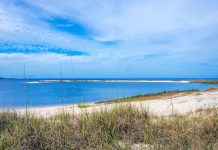
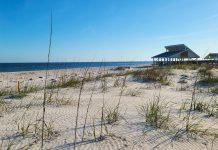
The first thing you’ll notice at Upham is how open it feels compared to everywhere else on the island. This is one of the only stretches of St Pete Beach that isn’t sitting in the shadow of a hotel or condo tower, and that absence changes the whole feel of the place. You park off Gulf Boulevard at 68th Avenue, cross a wooden boardwalk over dunes thick with sea grapes and sea grass, and the beach opens up wide and flat in front of you, with a jetty at the north end marking Blind Pass and Treasure Island just across the water.
Upham draws a mostly local crowd, and you’ll notice it skews younger and more active than the rest of the island. This is the closest thing St Pete Beach has to a surf spot, modest as the breaks are, and on any given weekend you’ll see a handful of longboarders working the small swell near the jetty alongside the usual mix of families, sunbathers, and the occasional game of spikeball. There are no lifeguards here, which is true of every public beach access point on St Pete Beach, so you’re swimming at your own judgment, and I’d treat the water near the jetty with a little extra respect since the currents there can run stronger than they look.
What most visitors never learn about Upham is that the sand under their towel is some of the most fought-for sand on the entire Gulf Coast. This beach has lost ground to erosion faster than almost anywhere else in the state, and the rock groins you’ll notice running out into the water near the Silver Sands and Starlight Towers condos are the result of a multi-decade battle between the county, the condo owners, and the surfers who never wanted them there in the first place. I find the whole story fascinating, and I’ll dig into it more in my hiking writeup, but on the ground it just means you’re standing on a beach that the city has worked harder to keep than almost any other.
The Gulf Boulevard Strip
Mid-Island · Resort Row
This is the St Pete Beach most people are picturing when they book the trip. The beach widens out here and runs for a couple of miles behind a wall of resorts, TradeWinds Island Grand and RumFish Beach, Sirata, the mid-century Bon-Aire, the Beachcomber with Jimmy B’s Beach Bar parked right on the sand. The energy is resort-driven rather than beach-driven, meaning you’ll feel the pull of pools, tiki bars, and water parks as much as the pull of the Gulf itself, and that’s exactly what a huge share of visitors come here for.
The crowd skews toward families with kids, groups celebrating something, and a steady stream of spring breakers in March. TradeWinds alone spans 1,600 feet of shoreline and 40 acres, with nine pools, a high-tide water slide, and kayak rentals right off the beach, and on a busy day the sand in front of these resorts is genuinely packed, towel to towel, in a way that Upham or Pass-a-Grille never gets close to. A few blocks inland, Corey Avenue runs the width of the island from the Gulf side to the bay side, and it’s worth a stop on its own, especially on a Sunday morning when it turns into an open-air market with dozens of vendors, fresh produce, and live music.
I’ll be honest, this isn’t the stretch I walk for quiet mornings. It’s the stretch I go to when I want dinner with a view, a frozen drink in hand, and the feeling that the whole island showed up at once. If you’re traveling with kids who want a water slide and a lazy river more than a quiet sunset, this is your three or four blocks of Gulf Boulevard.
The Don CeSar & the Pink Palace Stretch
South of the Strip · The Don CeSar
You’ll see the Don CeSar before you reach it. The pink Mediterranean hotel sits up on its own rise of dune, visible for miles in either direction, and it has been a navigation point for boaters on this stretch of Gulf for nearly a century. The beach in front of it is wide and well kept, with a noticeably different feel from the Gulf Boulevard strip just to the north, quieter, more upscale, and shaped almost entirely by the presence of one enormous historic building.
The hotel itself was built by Thomas Rowe in 1928 as a tribute to a lost love, and it has lived several lives since: Jazz Age playground for the rich, World War II military hospital, VA regional office, near-demolition in the late 1960s, and a full restoration that earned it a spot on the National Register of Historic Places in 1975. The beach crowd here tends to match the hotel’s own guests, a mix of couples, families on a splurge trip, and locals who walk over just to see it at sunset, since the building itself glows pink against the sky in a way that’s genuinely worth the detour even if you’re not staying there.
What I love about this stretch is how the building changes the way you experience the beach around it. You’re not just walking past condos here, you’re walking past nearly a century of Florida history, and I always slow down when I pass it, no matter how many times I’ve made this walk. If you only have time to photograph one building on this entire coast, make it this one at golden hour.
Pass-a-Grille
Southern Tip · National Register Historic District
Cross south of the Don CeSar and the island changes completely within a few blocks. Pass-a-Grille has been welcoming visitors since 1857, making it the oldest resort town on Florida’s Gulf Coast, and it has somehow held onto that identity through a century of development that swallowed up almost everywhere else nearby. There are no condo towers here. The beach runs wide and open behind a single row of pastel cottages, brick-paved side streets, and a two-block downtown on 8th Avenue that locals half-jokingly call the world’s shortest Main Street.
The crowd here is older, quieter, and noticeably more local than anywhere else on the island. You’ll find couples walking the waterline at golden hour, families who’ve been renting the same cottage for twenty years, and a steady trickle of day visitors who park on the bay side and walk over just for dinner and the sunset. Every evening, weather allowing, someone rings a bell at Paradise Grille right on the beach to mark the sunset, a genuine nightly tradition rather than a tourist gimmick, and I’ve stood for it more times than I can count.
This is the part of St Pete Beach my own family has been coming back to since I was a kid, and it’s the stretch I’d point any first-time visitor toward if they only had one afternoon on this island. Walk the two blocks of 8th Avenue, stop into the Gulf Beaches Historical Museum housed in a 1917 former church, and save the last hour of daylight for the beach itself. Merry Pier, at the edge of the historic district, is also where you’ll catch the shuttle out to Shell Key if you want a shelling trip that actually delivers.
St Pete Beach Rankings: Expert Scores Across 11 Categories
These scores weigh the island as a whole, balancing the resort energy of the Gulf Boulevard strip against the quiet, historic character you’ll find once you cross south of the Don CeSar into Pass-a-Grille.
Sand Quality
8/10
Fine quartz that runs closer to sugar than powder, near-white but slightly warmer in tone than the Panhandle’s purest beaches. Dry sand near the dunes will squeak underfoot if you catch it right.
Hiking & Beach Walking
7/10
A long, flat, walkable shoreline end to end, but the resort towers along the middle stretch break up the wilderness feel you’d get at a place like Fort De Soto.
Shelling at St Pete Beach
6/10
Moderate on the main beach, better near Pass-a-Grille after a high tide. The real shelling happens at Shell Key, reachable only by the shuttle out of Merry Pier.
Water Conditions
8/10
Calm, gradual entry, and warm enough to swim in nearly year round. Color shifts from emerald to turquoise depending on wind direction and the day before’s weather.
Scenery & Natural Beauty
7/10
Genuinely beautiful at the ends of the island, with the Don CeSar adding real architectural drama in the middle. The resort wall along Gulf Boulevard is the one stretch that pulls the score down.
Birding & Wildlife
8/10
Black skimmers nest right on St Pete Beach most seasons, a rare thing for a beach this developed. Add resident dolphin pods, sea turtle nests from May through October, and a bird sanctuary at nearby Shell Key.
Family Friendliness
9/10
Calm water, gradual entry, and resorts built almost entirely around kids, from TradeWinds’ water slide to the shallow lagoons near Upham’s jetty.
Dog Friendliness
3/10
Genuinely restrictive. One small leashed dog beach on the bay side of Pass-a-Grille between 1st and 3rd Avenues, and that’s it for the entire island.
Solitude & Peace
4/10
The Gulf Boulevard strip is rarely quiet in season. Pass-a-Grille and early mornings at Upham are your best shot at real solitude here.
Entertainment & Nightlife
8/10
Beach bars, live music, and resort nightlife concentrated along Gulf Boulevard, plus the Corey Avenue Sunday Market for a slower daytime version of the same energy.
Parking & Beach Access
6/10
Metered everywhere, and it fills fast in season. No free lots like you’ll find at the county parks nearby, though access points are plentiful along the entire island.
St Pete Beach Sand & Water
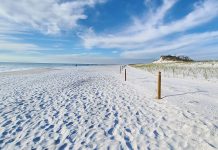
St Pete Beach changes underfoot more than most islands this size. The sand is fine and warm-toned, softer than a lot of Gulf beaches, and it behaves differently depending on where you’re standing. At Pass-a-Grille it’s settled and genuinely soft, the kind that’s nice to sink your toes into. In front of the Gulf Boulevard resorts, that same sand gets looser and more disturbed from sheer daily foot traffic, still soft, just a busier kind of soft. The waterline stays firm and packed the whole seven miles, easy for walking or jogging, and there’s enough give in the upper beach near the water to build a decent sandcastle once you add a little water.
The water follows an easier pattern than the sand does. On a calm day it runs emerald to turquoise with good visibility, entry is gradual, and the surf stays calm and manageable most of the year, warming into the mid 80s by midsummer. Wind or a passing storm will cloud things up for a day or two before it clears back out. The one spot worth extra caution is right around the Blind Pass jetty at the north end near Upham, where currents run stronger than they look.
-
Walkability. Flat and firm at the waterline for the full length of the island. One of the easier long walks in Pinellas County, provided you stick close to the packed sand through the busy resort corridor.
-
Softness & Playability. Soft on the upper beach nearly everywhere, genuinely settled and fine at Pass-a-Grille, looser and more churned in front of the resorts. Good sandcastle material once you add water near the waterline.
-
Barefoot Comfort. Good most of the year. This warmer, tan-toned sand holds a touch more heat at midday in summer than the whiter sand further up the coast, most noticeable through the well-trafficked resort corridor.
-
Swimmability. Gradual entry, generally calm, warm water by midsummer. Give the area right around the Blind Pass jetty at Upham a little extra caution, currents run stronger there than the rest of the island.
Want the full geology, grain composition, and the complete sand and water condition ratings? I broke it all down separately in Sand & Shore: St Pete Beach.
Dogs & Pet Accessibility
Are Dogs Allowed on the Sand? RESTRICTED / MOSTLY NO.
Every Gulf-side public beach on St Pete Beach, at every access point in every zone above, is off limits to dogs, and it’s enforced. This is a busy, resort-driven island first, and the dog access reflects that.
Where Dogs Are Allowed
- ✓The bay side of Pass-a-Grille, between 1st and 3rd Avenues, on a leash no longer than 8 feet. This is the only dog-permitted stretch on the entire island.
- ✓Fort De Soto Park, about 20 minutes south in Tierra Verde, has real off-leash beach access if you’re traveling with a dog and want more than one small strip.
Where Dogs Are NOT Allowed
- ✗Upham Beach Park, the entire Gulf side, no exceptions.
- ✗The Gulf Boulevard strip and the Don CeSar stretch, no dogs on the sand anywhere along this corridor.
- ✗The Gulf side of Pass-a-Grille, including the beach in front of the historic district and the jetty at the point.
Paws on the Ground Reality
The bay side strip at Pass-a-Grille is calm, shallow, and easy on paws, genuinely pleasant for a dog that likes to wade rather than deal with surf. Bring your own fresh water since there’s none at the access point itself, and stick to early morning or evening in summer to keep the sand comfortable underfoot.
If real dog-friendly beach time matters more to your trip than this island’s resort energy, Fort De Soto is the better call, a short drive south with genuine off-leash access, shade, and camping attached. St Pete Beach itself is best treated as a beach you visit without your dog, or one where the walk happens on leash for a few blocks on the bay side and nowhere else.
Crowd Levels and the Overall Feel of St Pete Beach
Compared with the quieter beaches further down Pinellas County, St Pete Beach runs busier and louder, and that’s mostly a function of geography. This is the most developed barrier island in the chain, with the heaviest concentration of resorts, and the crowd reflects that almost everywhere except the far ends.
You’ll find a noticeably different crowd depending on where you stand. Near the Gulf Boulevard resorts, it’s families on vacation, groups celebrating something, and a heavy spring break presence in March. Around the Don CeSar, the crowd skews older and more upscale. Out at Pass-a-Grille, it’s locals, repeat cottage renters, and a quieter, more reflective evening crowd drawn by the sunset bell as much as the beach itself.
The overall feel of the island shifts a lot by season, tied closely to school calendars and weather:
- Spring break: the busiest window of the year, concentrated almost entirely around the Gulf Boulevard resorts
- Summer: peak family season, warm water, and the TradeWinds water slide running at full capacity most days
- Fall: my favorite window on this island, warm water lingering into October with noticeably lighter crowds
- Winter: mild, slower paced, and dominated by snowbirds, with Pass-a-Grille at its quietest and most photogenic
Who Is St Pete Beach Really For?
✓ Who Will Love St Pete Beach
-
Families wanting a full-service resort beach vacation with calm water, kid-built amenities, and dining within walking distance
-
History lovers who want a real piece of old Florida alongside their beach day, between the Don CeSar and the Pass-a-Grille historic district
-
Anyone chasing a genuinely walkable, artsy beach town vibe, since Corey Avenue and 8th Avenue both deliver that without a chain store in sight
-
Sunset chasers who want a nightly ritual to build the evening around, not just a pretty sky
-
Photographers drawn to architecture as much as scenery, given the Don CeSar’s nearly century-old pink silhouette
-
Birders willing to look past the resort crowds, since black skimmers nest right on this developed beach most seasons
✗ Consider Another Beach If…
-
You want genuine solitude on the sand. Head to Fort De Soto Park, since the center of this island stays busy in season
-
You’re traveling with a dog and want real beach access, not one small leashed strip on the bay side of Pass-a-Grille
-
You’re a serious surfer. Upham’s modest break is the most this coast offers, and it’s nothing close to a destination swell
-
You want guaranteed lifeguard coverage. No public stretch of St Pete Beach has it, including Upham
-
You want camping right on the beach. There’s none on St Pete Beach itself, though Fort De Soto is a short drive away
Things to Do at St Pete Beach, Florida
St Pete Beach gives you more ways to fill a day than almost any beach in Pinellas County, between the water itself and the historic district at the southern tip. Here’s what actually fills a day here, beyond a towel and a cooler.
-
Beach Walking. A long, flat shoreline running the length of the island. Quietest and most rewarding early in the morning at Upham or Pass-a-Grille, before the crowds settle in around the resorts.
-
Swimming. Calm, gradual entry water nearly everywhere on the island, with no public lifeguard coverage anywhere, so check conditions for yourself before swimming past waist depth.
-
Surfing. Modest swells near the Upham jetty draw a small but steady group of local longboarders. Don’t expect much, but it’s there if you brought a board.
-
Paddleboarding and Kayaking. Easy rentals through the Gulf Boulevard resorts, with calmer water and better wildlife viewing out toward Pass-a-Grille and the channel near Shell Key.
-
Shelling. Light to moderate on the main beach, better after a high tide near Pass-a-Grille. For a real shelling trip, catch the Shell Key Shuttle from Merry Pier out to the preserve itself.
-
Shell Key Shuttle. A short boat ride from Merry Pier to an undeveloped barrier island with a bird sanctuary, dolphin sightings along the way, and some of the best shelling and snorkeling in the area.
-
Touring the Don CeSar. You don’t have to be a guest to walk the grounds and admire the architecture. Time it for the hour before sunset, when the pink stucco genuinely glows.
-
Wildlife Watching. Dolphin pods are a near-daily sighting in the surrounding waters, manatees show up seasonally once Gulf temperatures warm, and sea turtle nesting runs May through October with loggerheads as the most common species.
-
Shopping & Markets. The Corey Avenue Sunday Market brings dozens of local vendors, produce, and live music to the heart of the island, while 8th Avenue in Pass-a-Grille keeps a two-block strip of galleries and boutiques worth a slow walk.
-
Sunset Watching. A nightly event here, not an occasional one. Pass-a-Grille’s bell ceremony at Paradise Grille is the version I’d build an evening around if you only do it once.
Local Knowledge and Practical Advice
A few things I’ve picked up walking this beach for more years than I’d like to admit:
-
Park on the bay side in Pass-a-Grille, not the Gulf side. The Gulf-side spots fill fast, while the bay side almost always has room within a short walk of the beach.
-
Upham Beach parking runs metered, $4 an hour on weekdays and $4.75 an hour on weekends, with holiday weekends jumping to a flat $25 a day. Parking is free after 8 p.m. every night of the week.
-
There are no lifeguards anywhere on St Pete Beach, including Upham. Check the conditions yourself, watch for rip currents near the Upham jetty, and don’t assume someone is watching the water for you.
-
Dogs are only allowed on the bay side of Pass-a-Grille, between 1st and 3rd Avenues, on a leash no longer than eight feet. Every other beach access point on the island is off limits to dogs, and it’s enforced.
-
Sea turtle nesting season runs May 1 through October 31. Keep lights off the beach at night, remove chairs and tents by sunset, and never approach a marked nest or a turtle crawling toward the water.
-
Black skimmers nest directly on St Pete Beach in some seasons, often in roped-off sections you’ll see marked with small signs. Give those areas real distance and keep an eye on kids and pets nearby, since the colony here has had a rough run in past seasons.
-
Use the free Freebee shuttle or the SunRunner bus rapid transit line instead of moving your car twice in one day. Both connect the length of the island and run all the way to downtown St. Petersburg.
-
The Corey Avenue Sunday Market runs 10 a.m. to 2 p.m. November through May and 9 a.m. to 1 p.m. June through October. Go early for the best produce and the least foot traffic.
-
Book the Shell Key Shuttle out of Merry Pier if shelling is the main reason for your trip. The main beach is only moderate, and the preserve genuinely delivers.
-
Get to Pass-a-Grille at least thirty minutes before sunset if you want a good spot for the bell ceremony at Paradise Grille. It’s a small beach, and word has gotten out.
Where to Stay Near St Pete Beach, Florida
St Pete Beach offers more lodging range than almost any other beach in Pinellas County, from full-service resorts on Gulf Boulevard to quiet cottages in Pass-a-Grille. Here’s how the options break down.
Gulf Boulevard Resorts
The big names sit here, TradeWinds Island Grand and RumFish Beach, Sirata Beach Resort, and the mid-century Beachcomber with Jimmy B’s Beach Bar on site. Several offer private beach chair, umbrella, and watersports rental service directly on the sand, along with multiple pools and on-property dining, which matters if you’d rather not leave the resort grounds for most of your trip.
The Don CeSar
For a splurge stay with genuine history attached, the Don CeSar itself sits right on the beach between the resort strip and Pass-a-Grille, with a private beach, two Gulf-front pools, and a spa that consistently ranks among the area’s best. This is the one stay on the island where the building is as much the destination as the beach.
Pass-a-Grille Inns & Cottages
This is where I’d point you if old Florida charm matters more to your trip than resort amenities. The historic Keystone Hotel, run by the same family since 1945, and a handful of small inns and weekly cottage rentals keep this end of the island free of high-rises entirely.
Camping
There’s no camping directly on St Pete Beach. The nearest option is the campground at Fort De Soto Park, about a twenty minute drive south in Tierra Verde, with over two hundred tent and RV sites tucked into the dunes near the historic fort.
Mainland St. Petersburg
For lower rates without giving up easy beach access, the mainland side of the Corey Causeway in South Pasadena and St. Petersburg proper offers a much wider range of budget to mid-range hotels, with the beach only a short drive away.
What Makes St Pete Beach Different from Nearby Beaches
St Pete Beach stands apart because of how much range it packs into one barrier island. Most Pinellas beaches pick a lane and stay in it. This one runs through four of them in the same afternoon.
A few features make it distinct:
An open-air history lesson built into the beach day
Between the Don CeSar and the Pass-a-Grille historic district, you can walk nearly a century of Florida coastal history without leaving the sand. Very few developed beaches in the state pair real, walkable history this directly with the beach itself.
A nightly sunset ritual that isn’t manufactured
The bell at Paradise Grille in Pass-a-Grille has been marking sunset for visitors and locals alike for years, and it carries a different weight than a generic beach bar sunset toast. It’s the kind of detail that turns a vacation memory into a tradition people plan their evening around.
Wildlife that’s adapted to a developed beach
Black skimmers nesting directly on a beach this built up is unusual, and it says something about how much effort goes into protecting the marked sections you’ll see roped off in season. Most beaches this developed have lost that kind of nesting activity entirely.
A genuinely walkable old town at one end
Pass-a-Grille’s two-block downtown on 8th Avenue has no chain stores and no high-rises, a rarity on a coast where most historic beach towns eventually gave way to condo development.
St Pete Beach vs. Other Pinellas County Beaches
These are the beaches visitors most often weigh against St Pete Beach, and the honest read on when you’d choose one over the other.
St Pete Beach vs. Treasure Island
Just across Blind Pass to the north, Treasure Island has the wider beachfront of the two and a noticeably more laid-back, less commercial feel, with fewer big resorts and a quieter overall atmosphere. Choose St Pete Beach if you want more dining, nightlife, and resort amenities. Choose Treasure Island if you want comparable sand with less energy and less crowd.
St Pete Beach vs. Clearwater Beach
Clearwater Beach is the bigger, busier sibling further up the coast, with Pier 60’s nightly sunset festival drawing a much larger nightly crowd and a more built-up resort corridor overall. It edged out St Pete Beach in the 2026 USA Today rankings, and the difference on the ground is mostly scale, Clearwater simply does everything St Pete Beach does at a larger volume.
St Pete Beach vs. Fort De Soto Park
Fort De Soto, a short drive south in Tierra Verde, is a county park rather than a beach town, with nearly three miles of largely undeveloped beach, seasonal lifeguards, real off-leash dog access, and camping. What it doesn’t have is a town attached, no dining, no lodging, no historic district. Choose Fort De Soto for solitude and dog access. Choose St Pete Beach for everything built around the sand.
St Pete Beach vs. Indian Rocks Beach
Further north up Gulf Boulevard, Indian Rocks Beach is smaller, quieter, and more residential, with a beach bird sanctuary as its main wildlife draw rather than a historic district. It’s a strong pick if you want a low-key, mostly local beach town without St Pete Beach’s resort scale.
Bottom line: St Pete Beach is the most varied stop on this stretch of coast, switching personalities from one end of Long Key to the other within a few miles. Treasure Island and Indian Rocks Beach give you a quieter version of similar sand. Clearwater Beach gives you more scale. Fort De Soto gives you genuine wilderness. Where you land depends on whether you want all four moods in one trip or just one of them done well.
St Pete Beach, Florida: Frequently Asked Questions
Is St Pete Beach worth visiting?
Yes. Few beaches in Florida pack this much range into one island, from the open natural stretch at Upham to the historic charm of Pass-a-Grille, with a genuine architectural landmark in the Don CeSar sitting right in between.
Is St Pete Beach crowded?
The Gulf Boulevard resort strip gets busy in season, especially during spring break and summer weekends. Upham at the north end and Pass-a-Grille at the south end both stay noticeably quieter, even in peak months.
Are there lifeguards at St Pete Beach?
No. There is no public lifeguard coverage anywhere on St Pete Beach, including Upham Beach Park. Swim at your own judgment and check conditions before going past waist depth.
Are dogs allowed on St Pete Beach?
Only at one designated area on the bay side of Pass-a-Grille, between 1st and 3rd Avenues, with a leash required at all times. Every other beach access point on the island is off limits to dogs.
Where is the best parking at St Pete Beach?
Upham Beach Park has a dedicated metered lot, running $4 an hour on weekdays and $4.75 on weekends, free after 8 p.m. In Pass-a-Grille, parking is easier to find on the bay side than the Gulf side.
What is St Pete Beach known for?
The Don CeSar, known locally as the Pink Palace, the historic Pass-a-Grille district, and a wide, sugar-fine beach that has made the island a fixture on Florida’s best beach lists for decades.
Is the water clear at St Pete Beach?
Generally, yes. On calm days the water runs emerald to turquoise with good visibility to waist depth. Clarity drops after wind or storms and tends to recover within a day or two of calm weather.
What is the best time of year to visit St Pete Beach?
October offers the best balance of warm water and thinner crowds. Summer is the peak family season with the warmest water, but also the busiest and most humid stretch of the year.
Is St Pete Beach good for families?
Yes, especially along the Gulf Boulevard resort strip, where calm water and resort amenities like water slides and shallow pools cater directly to families with young kids.
Is St Pete Beach better than Treasure Island?
It depends on what you want. St Pete Beach wins on dining, nightlife, and historic character. Treasure Island wins on a wider beach and a quieter, more laid-back pace. The sand quality is close enough at both that the real choice comes down to atmosphere.
Patti’s Perspective: My Honest Take on St Pete Beach
This stretch of Florida holds more of my own history than almost anywhere I write about. My family came here every year when I was a kid and a teenager, and decades later I brought my own kids to the exact same stretch of Pinellas coast. Treasure Island and St Pete Beach were always the beaches we visited, and walking this island now, on this beach journey, doesn’t feel separate from those years. It feels like the same trip, just longer.
This island feels different depending on which few blocks you’re standing on. North at Upham, it’s just you, the dunes, and whoever else got up early enough. Down at the resorts, it’s the version everyone pictures when they say St Pete Beach, loud, social, and built for exactly the kind of family trip mine used to be. And then you cross south of the Don CeSar and the whole island exhales into Pass-a-Grille, where I genuinely believe the best version of this coast is hiding in plain sight.
I make a point of catching the sunset bell at Paradise Grille every time I’m down this way, and I’d argue it’s done more to define this stretch of coast for me than any single beach I’ve walked here. I’ve written up the Pass-a-Grille walk on its own, since the historic district deserves more than a paragraph inside a bigger guide.
My honest caveat: if you only ever park near the resorts, you’ve seen one version of St Pete Beach, the loudest one, and you’ve missed the parts that made me fall in love with this coast in the first place. Walk north to Upham some morning. Walk south to Pass-a-Grille some evening. That’s where this island actually tells you who it is.
My verdict: 8/10. A genuinely complete Gulf Coast vacation on one barrier island, and it earns the score on range alone, from quiet natural beach to resort energy to old Florida charm within the same few miles. It loses points on solitude and dog access, but for anyone wanting variety, history, and a coast that’s been my family’s for three generations now, this is hard to beat.
Want to Live by the Water?St Pete Beach offers some of the most distinct waterfront living on Florida’s Gulf Coast, broken into the same lifestyle pockets that define the beach itself. Gulf Boulevard delivers walkable, Gulf-front condo living near the resorts. The Boca Ciega Bay side draws boaters with canal homes and private docks. The Corey Avenue district suits anyone who wants restaurants and shops within walking distance. And Pass-a-Grille carries the strongest demand of all, old Florida charm paired with genuine luxury waterfront pricing.As of this year, condos across St Pete Beach carry a median listing price in the low to mid $400,000s, while Pass-a-Grille specifically runs closer to the mid $600,000s given its smaller supply and historic district appeal. Single family homes range far more widely, from the high $300,000s up into eight figures for the most prized waterfront lots. Most of this barrier island sits in mapped flood zones, so an elevation certificate is worth requesting early in any search here.If living by the water is something you’re considering, whether full time, part time, or as an investment, it’s worth exploring what’s available in this area.Explore Waterfront Living at LiveByTheWater.com
Real estate referral partner