


Turtle Beach, Siesta Key, Florida
Turtle Beach is what’s waiting at the south end of Siesta Key once you walk past the famous quartz sand and stop looking for it. The sand here is darker, the shoreline is narrower, and the crowd is mostly people who live here rather than people who flew in for it. That’s exactly why I keep coming back.
Turtle Beach sits at the southern tip of Siesta Key, in Sarasota County, reached by following Midnight Pass Road all the way to its end. The Gulf of Mexico runs along the west side, Little Sarasota Bay and Blind Pass Lagoon sit on the east, and the 14 acre park in between holds a beach, a campground, and a boat launch that make this feel like a genuinely different island than the one a few miles north.
This guide picks up where my Siesta Key guide leaves off, at Point of Rocks, where the sand shifts from bright quartz to something darker and coarser. In this guide I’m walking you through every part of Turtle Beach, going deep on what the sand and water are actually doing here, scoring it honestly, and telling you exactly who this beach is built for. I close with my own take on the quiet half of Siesta Key that most visitors never find.
The Vibe & Culture at Turtle Beach
The Fallback That Becomes the Favorite
Turtle Beach is often where people end up when the main Siesta Key lots are full. It’s rarely where they meant to go, and it’s often where they wish they’d started.
Drive to the end of Midnight Pass Road and the whole feel of the island changes. There’s no village, no boardwalk, no row of high rises facing the Gulf. Instead you get a low key county park with a campground tucked into the trees, a couple of boat ramps on the lagoon side, and a narrow beach that never draws the crowd its northern neighbor does, even during the busiest weeks of the year.
The people who use Turtle Beach regularly are mostly locals: campers who’ve booked a site months out, boaters launching into Blind Pass Lagoon, anglers working the shoreline, and a scattering of families who know this is where you go for shells rather than a photo of white sand. It’s also one of the more reliable sunset spots on the whole island, with an informal, no crowd version of the ritual that plays out further north with more fanfare.
Sea turtle nesting gives the beach its name honestly, with marked nests lining the dunes from May through October. Since Hurricane Milton in 2024, this stretch has also become a genuine piece of local history in motion. The storm reopened Midnight Pass, the inlet that had been closed since 1983, and locals who’d spent decades arguing over whether it should ever reopen can now walk south from this beach and watch Gulf water pouring back into Little Sarasota Bay for the first time in over forty years.
Turtle Beach Areas: Four Sides of the Same Quiet Park
Turtle Beach is small enough to see in an afternoon, but it holds four genuinely different experiences within that 14 acres. Here’s how it breaks down.
The Gulf Beach
2,600 Feet of Shoreline · No Lifeguards
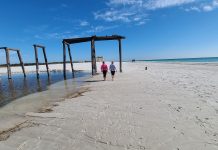
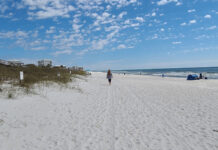
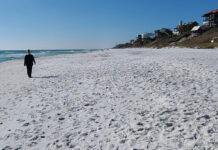
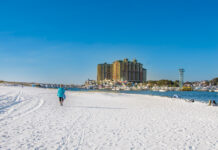
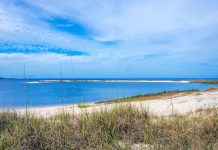
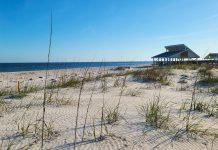
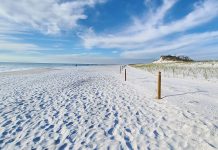
The Gulf side of Turtle Beach is narrow compared to the wide stretch up at the main Siesta Key beach, and the shoreline drops off more steeply, going from ankle deep to thigh deep faster than most visitors expect. The sand itself is the whole story here: darker, coarser, mixed with crushed shell, sinking a little underfoot in a way the quartz sand further north simply doesn’t. It’s a genuinely different beach to stand on, and I mean that as a compliment.
The crowd is thin even on a busy weekend. You’ll see a scattering of families, a few anglers working the surf, and campers from the adjacent campground wandering down for a swim. There are no lifeguards here, and the water gets shallow fast, close to fifty feet out in places, which makes it a forgiving spot for kids to wade even without a guard on duty, though I’d still keep a close eye given the drop off further out.
This is also, hands down, the best shelling beach on Siesta Key. The coarser natural sand and the lack of heavy foot traffic mean shells wash up and stay intact rather than getting ground down or trampled. I’ve walked the wrack line here early in the morning after a windy night and found more good shells in an hour than I did all week up north.
Blind Pass Lagoon & the Boat Launch
Bay Side · Kayak & Paddleboard Access
On the east side of the park, Turtle Beach turns into an entirely different kind of water: calm, shallow, and protected, with two boat ramps feeding into Blind Pass Lagoon and on into Little Sarasota Bay. This is where the real activity on this beach happens, with five different outfitters running kayak and paddleboard rentals and tours right from the launch.
The crowd here skews toward boaters and paddlers rather than beachgoers, people loading coolers into center consoles, families climbing into rented kayaks for a slow morning through the mangroves, and the occasional angler working the grass flats. It’s a genuinely social little corner of the park, busier in its own way than the Gulf beach even though almost none of that activity happens on sand.
I launched a kayak here myself and paddled toward the mangroves along the bay, and the wildlife alone made it worth the trip. Manatees, osprey, and wading birds all showed up within the first hour, and the water stayed calm enough the entire time that I never had to think twice about the conditions.
The Campground & Picnic Grounds
39 RV & Tent Sites · The Island’s Only Beachfront Camping
Tucked against the dunes between the Gulf beach and the lagoon, Turtle Beach Campground is the only beachfront camping on all of Siesta Key, and honestly, on most of this stretch of the Sarasota coast. The sites sit close enough to the water that you can hear the surf from a tent, with shaded picnic areas, grills, a playground, and a volleyball court rounding out the park beyond the campground itself.
The crowd here is almost entirely repeat visitors, campers who’ve been coming back for years and know the good sites, plus a rotating cast of day picnickers using the shaded pavilions for birthday parties and family gatherings. It has a genuinely different energy than a beach day crowd, slower and more settled in.
If you want to actually live on Siesta Key sand for a few nights instead of just visiting it, this is the only way to do that without renting a condo. Reserve well ahead, especially for winter, since word about this place has clearly gotten around.
The Walk South to Midnight Pass
Reopened by Hurricane Milton · Palmer Point Park
Walk about twenty minutes south from the Turtle Beach parking lot and you reach what locals have called Midnight Pass for over a century, even during the four decades it was sealed shut. The pass was intentionally filled in 1983 to protect homes on Siesta Key, and it stayed closed and controversial ever since, a genuine local debate that outlasted most of the people who started it. Hurricane Milton in 2024 settled the argument the way nature usually does, reopening the channel and reconnecting Little Sarasota Bay to the Gulf for the first time since the closure.
The stretch of beach along this walk is genuinely empty most days, part of Palmer Point Park and reachable only on foot from Turtle Beach or by boat. South of the reopened pass, the beach continues onto Casey Key with no development in sight from the sand itself, mansions eventually appearing behind the dunes but staying out of view from the water. Locals call the isolated stretch just past the pass Hidden Beach, and it’s one of the only truly boat access or long walk only beaches left in this part of Sarasota County.
I walked this stretch not long after the pass reopened, and the current pouring through where sand had sat for forty years was something to see, boaters gathered nearby celebrating, and the beach itself completely empty. It’s the kind of thing you only get to witness once in a place like this, and it’s exactly why I keep this walk on my list every time I’m back on Turtle Beach.
Turtle Beach Rankings: Expert Scores Across 11 Categories
These scores reflect what Turtle Beach actually is: a quieter, more natural, more local counterpart to the famous quartz sand a few miles north.
Sand Quality
6/10
Darker and coarser than the quartz further north, genuinely comfortable underfoot but not the powder soft experience Siesta Key is famous for. Scored against typical Florida beach sand rather than its own famous neighbor, this still holds up well.
Hiking & Beach Walking
9/10
The walk south to the reopened Midnight Pass and onto Casey Key is one of the more genuinely rewarding stretches of shoreline in the county, empty and undeveloped nearly the entire way.
Shelling
9/10
The best shelling on Siesta Key by a wide margin. Coquinas, lettered olives, fighting conchs, sand dollars, and the occasional petrified shark’s tooth all turn up regularly, especially after storms.
Water Conditions
6/10
Warm and clear on the Gulf side, but the drop off is steeper than the main beach and there are no lifeguards. The lagoon side is calm, shallow, and genuinely easy water for beginners.
Scenery & Natural Beauty
8/10
Less postcard perfect than the quartz sand up north, more genuinely wild, with tall dunes, mangroves, and the reopened Midnight Pass giving this stretch a natural character the developed parts of the island have lost.
Birding & Wildlife
9/10
Manatees, dolphins, osprey, and wading birds are regular sightings in and around Blind Pass Lagoon, and this is one of the more active loggerhead nesting beaches on the island from May through October.
Family Friendliness
7/10
The playground, picnic areas, and campground make this genuinely family friendly, but the lack of lifeguards and steeper Gulf entry mean closer supervision in the water than the main beach requires.
Dog Friendliness
1/10
Dogs are not permitted on Turtle Beach, same as every other Sarasota County beach outside of Brohard Paw Park in Venice, roughly thirty minutes south.
Solitude & Peace
9/10
The quietest named beach on Siesta Key, and the walk south toward Midnight Pass can deliver genuine solitude even on a weekend. This is Turtle Beach’s whole reason for being.
Entertainment & Nightlife
3/10
There’s a waterfront restaurant or two nearby and a genuinely good sunset, but no village, no boardwalk, and no nightlife scene. That’s entirely the point of coming here.
Parking & Beach Access
9/10
Free, ample, and rarely full, even when the main Siesta Key lots have turned people away. This is genuinely one of the easiest beaches to actually park at on the whole island.
Turtle Beach Sand & Water: Deep-Dive Analysis
Sand Composition & Texture
The first thing you notice walking onto Turtle Beach after time on the quartz sand up north is that this sand actually gives a little underfoot. It’s coarser, mixed heavily with crushed shell material, and it sinks slightly instead of packing flat, a genuinely different sensation than the powder up at the main beach. It’s still comfortable to walk on, just noticeably more textured, and it stays cooler than you’d expect given the darker color, since the shell content behaves differently than pure quartz under direct sun.
Where the quartz sand further north comes from a single, ancient source, Turtle Beach’s sand tells a mixed story: quartz still present, but combined with a much heavier load of broken shell, coral fragments, and organic material that’s been ground down and redeposited by the currents running through nearby Midnight Pass and Blind Pass. That mixed composition is exactly why this beach holds so many more shells than the beaches to its north, and it’s also why the color runs gray rather than white.
-
Sand Color. Gray to tan, a clear visual break from the bright white quartz just a short walk north. It’s not dramatic, dark black sand, more a muted, natural tone that darkens further when wet.
-
Texture. Coarse and gritty compared to the quartz sand up north, with a noticeable shell content underfoot. It’s comfortable for walking but not the barefoot experience Siesta Key markets itself on, and water shoes are a genuine upgrade here.
-
Grain Size. Mixed and irregular, quartz combined with crushed shell and coral fragments rather than the single fine, well sorted grain found up north. That mix is exactly what makes this a shelling beach instead of a sculpting beach.
-
Shell Content. Heavy, easily the highest on Siesta Key. Coquinas, lettered olives, fighting conchs, whelks, and sand dollars turn up regularly, with petrified shark’s teeth showing up after storms. Early morning after a windy night is prime time.
-
Walking Comfort. Solid but not soft. The sand holds firm enough for an easy walk, though the shell content means bare feet notice it, especially near the wrack line where the densest shell deposits collect.
-
Barefoot Rating. 6/10. Comfortable enough for most of the beach, but the shell heavy stretches near the water and the narrower dry sand up top make water shoes a smart call rather than an unnecessary extra.
Water Conditions at Turtle Beach
Turtle Beach shows two genuinely different faces depending on which side of the park you’re standing on. The Gulf side runs warm and clear but drops off more steeply than the main beach, while the lagoon side stays shallow, calm, and protected nearly all the time, sheltered from wind and open Gulf swell almost entirely.
-
Water Clarity. Generally good on the Gulf side on calm days, though it can turn cloudier after wind or storms. The lagoon side stays consistently clear given how sheltered it is from open water.
-
Water Color. A warm blue green on the Gulf side, shifting toward a darker, greener tone in Blind Pass Lagoon, where mangrove tannins and shallower water change the color noticeably from the open Gulf.
-
Wave Action. Light most days on the Gulf side, occasionally picking up with a modest shore break. The lagoon side is essentially flat, protected water, ideal for anyone uneasy with open surf.
-
Swimming Quality. 6/10 on the Gulf side, given the steeper drop off and lack of lifeguards. The shallow, warm lagoon water is genuinely excellent for young kids and hesitant swimmers, closer to 9/10 on its own.
-
Water Sports. Kayaking and paddleboarding are the clear standout here, with two boat ramps and five outfitters at the Blind Pass Lagoon launch. Fishing is strong both in the lagoon and from the Gulf shoreline.
Dogs & Pet Accessibility at Turtle Beach
Are Dogs Allowed on the Sand? NO.
Turtle Beach follows the same countywide rule as the rest of Siesta Key. You can’t bring a dog onto the sand, into the water, or anywhere in the park, and that includes the campground beachfront.
Where Dogs Are Allowed
- ✓Brohard Paw Park in Venice, about thirty minutes south, is the nearest official off leash dog beach in Sarasota County.
Where Dogs Are NOT Allowed
- ✗The Gulf beach itself, including the shell heavy stretches you’d otherwise walk for shelling.
- ✗The Blind Pass Lagoon shoreline and boat launch area.
- ✗The campground beachfront, even if you’re staying there overnight.
- ✗The walk south toward Midnight Pass and Palmer Point Park.
Paws on the Ground Reality
This one gets genuinely enforced here, not just posted and forgotten. Campground staff and rangers see this rule tested often enough that an early morning or off season walk isn’t a safe workaround.
If you’re camping here with a dog, plan your actual walk somewhere else. There’s no fresh water source for pets anywhere in the park, and the coarser, shell heavy sand is tougher on paws than the soft sand up at the main Siesta Key beach, so it’s worth packing paw protection even before you get in the car. Oscar Scherer State Park sits about fifteen minutes north in Osprey and welcomes leashed dogs on its nature trails, a solid trade for the beach walk you won’t get here.
Crowd Levels and the Overall Feel of Turtle Beach
Turtle Beach runs quiet nearly year round, and that consistency is part of its appeal. The crowd that does show up skews heavily local and repeat visitor rather than first time tourist, and even during the island’s busiest stretches, this park rarely feels crowded the way the main Siesta Key beach does.
The seasonal pattern here is muted compared to the north end of the island:
- Winter: the busiest window at the campground specifically, with snowbird campers booking sites well in advance, though the beach itself stays uncrowded
- Spring: pleasant weather and light crowds, a genuinely good window for shelling and the walk to Midnight Pass
- Summer: hot, with the lagoon side drawing more traffic for its calmer, cooler water than the exposed Gulf beach
- Fall: quiet and comfortable, with sea turtle nesting winding down by October and the campground starting to fill back up for the coming winter
Who Is Turtle Beach Really For?
✓ Who Will Love Turtle Beach
-
Shellers and beachcombers chasing the best shelling on Siesta Key, especially early morning after a windy night
-
Campers who want to actually sleep near Siesta Key sand rather than just visit it for the day
-
Kayakers and paddleboarders drawn to the calm, wildlife rich water of Blind Pass Lagoon
-
Anyone who wants genuine solitude on a Gulf beach without leaving Siesta Key entirely
-
Wildlife watchers hoping to see manatees, dolphins, or nesting sea turtles up close
-
Curious travelers who want to walk to the newly reopened Midnight Pass and see a genuine piece of Sarasota history in progress
✗ Consider Another Beach If…
-
You want the famous powder white quartz sand. That’s the main Siesta Key beach and Crescent Beach, both covered in my separate Siesta Key guide
-
You’re bringing young children to swim without close supervision. The Gulf side drops off faster than the main beach and there are no lifeguards
-
You want nightlife or a walkable village. There’s none here, and that’s entirely intentional
-
You’re bringing a dog. Turtle Beach follows the same countywide ban as every other Siesta Key beach
-
You want soft, powdery sand underfoot. This beach is coarser and shellier by design, which is exactly why the shelling is so good here
Things to Do at Turtle Beach, Florida
Turtle Beach trades the polish of the main Siesta Key beach for genuine activity variety across land and water.
-
Shelling. The best on Siesta Key. Walk the wrack line early morning after a windy night for coquinas, lettered olives, fighting conchs, sand dollars, and the occasional petrified shark’s tooth.
-
Kayaking & Paddleboarding. Launch into Blind Pass Lagoon from the boat ramp, with five outfitters on site for rentals and guided tours through the mangroves toward Little Sarasota Bay.
-
The Walk to Midnight Pass. About twenty minutes south along an empty beach to the newly reopened pass, then onto the undeveloped stretch of Casey Key beyond it.
-
Fishing. Strong both in Blind Pass Lagoon and along the Gulf shoreline, with a public boat launch making it easy to reach deeper water.
-
Camping. 39 RV and tent sites right against the dunes, the only beachfront camping on the island. Reserve well ahead for winter.
-
Volleyball & Horseshoes. A sand volleyball court and horseshoe pit sit near the picnic grounds, popular with campers and families spending the full day.
-
Wildlife Watching. Manatees and dolphins are regular sightings in Blind Pass Lagoon, and sea turtle nests line the dunes from May through October.
-
Sunset Watching. An informal, uncrowded ritual here compared to the main beach further north, with open western sightlines and none of the drum circle crowd.
Local Knowledge and Practical Advice
A few things I’ve picked up spending time at this end of the island:
-
Sea turtle nesting runs May through October. If you’re staying at the campground, keep lights off or shielded after dark and never approach a marked nest.
-
No dogs are permitted, same as everywhere else on Siesta Key. Only trained service animals. The nearest official off leash beach is Brohard Paw Park in Venice, about thirty minutes south.
-
Parking is free and rarely full. If the main Siesta Key lot has turned you away, this is genuinely your best backup, not a consolation prize.
-
The free Siesta Breeze trolley reaches Turtle Beach. Useful if you’re staying up near the Village and don’t want to drive the length of the island.
-
There are no lifeguards here. The Gulf side drops off faster than the main beach, so keep a closer eye on kids and weaker swimmers than you would up north.
-
Go early morning after a windy night for the best shelling. That’s when the wrack line is freshest and least picked over.
-
Book campground sites months ahead for winter. This is the only beachfront campground on the island, and word about it has clearly spread.
-
Bring water for the walk to Midnight Pass. There’s no shade and no facilities once you leave the main park, and it’s easy to underestimate how much sun exposure a forty minute round trip adds up to.
-
Midnight Pass reopened after Hurricane Milton in 2024. If you haven’t visited since, the geography here has genuinely changed, and it’s worth seeing firsthand.
Where to Stay Near Turtle Beach, Florida
Lodging near this end of Siesta Key trades high rise density for a quieter, more residential feel, with the campground itself as the standout option.
Camping at Turtle Beach
Turtle Beach Campground offers 39 RV and tent sites right against the dunes, with restrooms, showers, and picnic facilities on site. This is the only beachfront camping on the island, and it’s worth booking well ahead for winter.
Nearby Cottages & Small Resorts
A handful of family run cottage resorts sit within walking distance of the park, several offering complimentary kayaks and bikes, a genuinely different vibe from the high rise condos further north on the island.
Mid Key & Crescent Beach Rentals
Condos and homes between the Village and Turtle Beach put you within a short drive of both this quieter south end and the amenities up north, a solid middle ground if you want to experience both halves of the island.
Downtown Sarasota & the Mainland
For lower rates, downtown Sarasota sits a short drive across either bridge, with a wider range of budget to mid range hotel options for visitors day tripping to this end of the island.
What Makes Turtle Beach Different from Nearby Beaches
Turtle Beach stands apart because it’s built around what the water and wildlife are doing, not around a reputation for perfect sand.
A pass that reopened itself
Very few beaches anywhere can say a hurricane rewrote their geography in real time. Midnight Pass closed in 1983 and reopened in 2024 after Hurricane Milton, and you can walk to see the result firsthand.
The only beachfront campground on Siesta Key
Every other lodging option on the island puts you near the beach. This is the one place that puts you on it, tent flap open to the surf.
Two completely different kinds of water on one small park
The steep, warm Gulf side and the calm, shallow lagoon side sit a few hundred yards apart and behave nothing alike, giving this small park a genuine range most beaches this size can’t match.
Shells over sand as the main event
Where Siesta Key built its reputation on sand quality, Turtle Beach built its reputation on what washes up onto that sand. The coarser composition here is a feature, not a downside.
Turtle Beach vs. Other Sarasota Area Beaches
These are the beaches visitors most often weigh against Turtle Beach, and the honest read on when you’d choose one over the other.
Turtle Beach vs. Siesta Key (Main Beach & Crescent Beach)
Same island, different beach entirely. Siesta Key has the famous quartz sand, lifeguards, and the crowds that come with international fame. Turtle Beach has darker, shellier sand, no lifeguards, and a mostly local crowd. See my separate Siesta Key guide for the full breakdown of the north end of the island.
Turtle Beach vs. Nokomis Beach & North Jetty
Nokomis sits south of Casey Key, on the other side of the reopened Midnight Pass and Venice Inlet system, with its own lighter, shellier sand that’s different again from both Siesta Key and Turtle Beach. If you’re chasing a full picture of how the sand changes down this coast, it’s worth the drive, covered in my separate Nokomis Beach guide.
Turtle Beach vs. Venice Beach
Venice Beach, further south, is known specifically for its dark, mineral rich sand and reliable shark’s tooth hunting. Turtle Beach’s shelling is broader and more general, less specialized than Venice’s fossil hunting reputation, but easier for a casual visitor to have success with.
Bottom line: Turtle Beach is the quiet, local, wildlife rich answer to Siesta Key’s fame. If you came to this island for the postcard sand, stay up north. If you came to actually spend a few unhurried hours on a beach that isn’t performing for anyone, this is where you’ll find it.
Turtle Beach, Siesta Key: Frequently Asked Questions
Is Turtle Beach worth visiting?
Yes, especially if you want a quieter, more local counterpart to the famous main beach further north. It’s also the best shelling beach on Siesta Key and the only spot on the island with beachfront camping.
Why is Turtle Beach sand different from the rest of Siesta Key?
The sand here is a mix of quartz and a much heavier load of crushed shell and coral fragments, reshaped by currents from nearby Midnight Pass and Blind Pass. That’s a genuinely different composition from the near pure quartz found at the main Siesta Key beach and Crescent Beach.
Are there lifeguards at Turtle Beach?
No. Turtle Beach has no lifeguards on the Gulf side, and the shoreline drops off more steeply than the main beach, so closer supervision is a good idea, especially with children.
Can you camp at Turtle Beach?
Yes. Turtle Beach Campground offers 39 RV and tent sites right against the dunes, the only beachfront camping option on Siesta Key. Reserve well ahead for winter season.
Is Turtle Beach good for shelling?
Yes, it’s the best shelling beach on Siesta Key by a wide margin. Coquinas, lettered olives, fighting conchs, sand dollars, and occasional petrified shark’s teeth all turn up, especially early morning after a windy night.
Are dogs allowed at Turtle Beach?
No. Dogs are prohibited on all Siesta Key beaches, including Turtle Beach, with only trained service animals permitted.
What happened to Midnight Pass?
It was intentionally closed in 1983 to protect nearby homes, then reopened naturally when Hurricane Milton struck in 2024. You can now walk south from Turtle Beach and see Gulf water flowing back into Little Sarasota Bay.
Is Turtle Beach crowded?
No, it’s consistently the quietest named beach on Siesta Key, even during peak season, and it’s often used as a backup when the main Siesta Key lots fill up.
Can you kayak at Turtle Beach?
Yes. A public boat launch on Blind Pass Lagoon offers access to calm, protected water, with five outfitters on site renting kayaks and paddleboards and running guided tours through the mangroves.
Patti’s Perspective: My Honest Take on Turtle Beach
I found Turtle Beach the way a lot of people do, walking south from Point of Rocks and noticing the sand under my feet change before I’d decided to go looking for anything different. That’s the thing about this stretch of Siesta Key that most guides don’t tell you. The famous quartz sand has a hard edge to it, geologically speaking, and Turtle Beach is what’s waiting on the other side of that line.
What surprised me most was how much this small park holds. I found more good shells here in one morning than I had all week up north, kayaked into Blind Pass Lagoon and watched an osprey work the shallows, and then walked south along an empty stretch of beach to a channel that didn’t even exist a couple of years ago. Hurricane Milton reopened Midnight Pass in 2024, and standing there watching current pour through a gap that had been sealed sand for forty years is the kind of thing that makes you understand this coastline is still very much alive and changing.
If Siesta Key’s main beach is the version of this island everyone photographs, Turtle Beach is the version locals actually live around. Slower, shellier, and built more around the water than the sand itself.
My verdict: 8/10. Turtle Beach isn’t trying to compete with the quartz sand up north, and that’s exactly why it works. Come here for the shelling, the kayaking, the quiet, and the genuinely rare experience of watching a piece of coastline reshape itself at the reopened Midnight Pass. Skip it only if soft white sand is the whole reason you came to Siesta Key.
Want to Live by the Water?The south end of Siesta Key offers a quieter, more residential slice of barrier island real estate than the high rise stretch near the Village, from cottage style homes near Turtle Beach to condos overlooking Blind Pass Lagoon.The market here draws boaters, retirees, and buyers who want genuine quiet over walkable nightlife, with lagoon front and canal front properties offering direct water access for smaller boats. Prices here tend to run a notch below the busiest stretch of the island, while still delivering the same barrier island lifestyle.If living by the water is something you’re considering, whether full time, part time, or as an investment, it’s worth exploring what’s available in this area.Explore Waterfront Living at LiveByTheWater.com
Real estate referral partner