



Venice Beaches, Florida
I grew up driving across Alligator Alley from Miami to visit friends in the Sarasota area, and the sand down here was the thing I remembered most. Venice is where I found my first shark tooth as a teenager, and it’s where I later stood in the same surf with my own kids, teaching them to read the dark grains in the sand the way someone once taught me.
Venice sits on its own barrier island in southern Sarasota County, separated from the mainland by the Intracoastal Waterway and connected by a handful of bridges that make it feel like its own small world. This isn’t the beach you come to for soft, sugar-white sand you can build a sandcastle in. It’s a working coastline, one that sits directly on top of one of the richest fossil beds in North America, and every walk here doubles as a small excavation.
In this guide I’m walking you through every distinct stretch of Venice’s beaches, going deep on what makes the sand here genuinely different from anywhere else in Florida, scoring it honestly across every category that matters, and telling you exactly who this coastline is built for and who might be happier on the powdery beaches further north. I’ll cover the downtown beach, the fishing pier, Caspersen Beach, the dog beach, and the jetties at the inlet, plus the current access situation you need to know about before you go. I close with my own take on what four decades of finding shark teeth on this coast has taught me.
The Vibe & Culture at Venice’s Beaches
Slow, Fossil Obsessed, and in No Hurry to Impress You
Venice doesn’t try to be the loudest beach town on this coast, and that’s exactly the point.
Cross onto Venice Island and the pace changes almost immediately. This is a retirement and snowbird town first, a beach town second, and you feel that in the unhurried way people walk here, the number of early morning regulars who know each other by name, and the fact that nobody is trying to sell you a jet ski rental every fifty feet. Historic downtown Venice, just a few blocks from the sand, was laid out in the 1920s with Italian Renaissance style architecture that still defines the district today. Wander Venice Avenue and you’ll find independent boutiques, art galleries, and the Venice Theatre, one of the largest community theaters in the country, all within walking distance of the beach.
What actually drives the culture here isn’t sunbathing, it’s fossil hunting. Locals and regulars talk about shark teeth the way surfers talk about swell. You’ll see people at 7am with a sifter and a mesh bag, working the tide line with the same focus a fisherman brings to a good spot. The city leans into it too, with a self-guided sculpture trail of bronze shark statues scattered through downtown and an annual Shark’s Tooth Festival every April at Centennial Park, where fossil vendors, jewelry makers, and serious collectors set up alongside food trucks and live music.
Seasonally, Venice runs on a snowbird calendar more than a spring break one. Winter through early spring is when the island fills up, as part-time residents and northern visitors return and the beach parking lots start topping out by mid-morning. Summer flips that completely. The heat and humidity climb, afternoon storms roll in like clockwork, and the crowds thin out to locals, early risers, and the handful of visitors willing to trade comfort for empty sand and warm water. Fall is my favorite window here, and not just because the crowds have left. Storm season churns up fresh material offshore, and the first calm mornings after a blow are when the best shark teeth show up.
Venice Beach Areas: Six Distinct Stretches of Coastline
Venice’s beaches run roughly nine miles from the Venice Inlet south to the Manasota Key line, and each stretch has its own personality depending on how developed, how wild, or how dog friendly it is. Here’s how it actually breaks down, north to south.
Venice Beach & The Esplanade
Downtown Venice · Free Parking
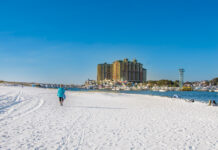
Venice Beach is the city’s front door, sitting at the west end of Venice Avenue with the sail shaped pavilion that’s marked this spot since 1963. The beach here is wide and well kept, and it’s the most polished stretch of sand on the island, with two sand volleyball courts, a concession stand, and a boardwalk that puts you five minutes from downtown restaurants. What you’ll notice right away is that the sand looks lighter and finer here than it does further south, and that’s not an accident. The city has pumped sand onto this stretch over the years to fight erosion, which keeps the beach looking sharp but buries the natural fossil layer underneath it.
The crowd here skews toward families with young kids, day-trippers up from Sarasota, and the downtown lunch crowd stealing an hour on the sand. It’s the most reliably busy beach on the island in season, though it never reaches the density you’d find at Siesta Key. Lifeguards are on duty daily, which makes it the easiest stretch to recommend if you’re traveling with kids or nervous swimmers, and the City of Venice keeps the restrooms and concession area genuinely clean.
I’ll be honest about this one. When I brought my kids here as young children looking for shark teeth, this is the beach where we came up mostly empty handed, and I didn’t understand why until years later when I learned about the renourishment. If shark teeth are the reason you’re coming to Venice, this isn’t your best stop, but if you want a clean, easy, lifeguarded beach to start your trip and get your bearings, this is exactly where to begin.
Venice Fishing Pier & Brohard Beach
Harbor Drive · South of Downtown
A short drive south of downtown, Brohard Beach and the Venice Fishing Pier are where the shark tooth reputation actually starts to earn itself. The pier runs about 740 feet into the Gulf, and the beach around it hasn’t been renourished the way Venice Beach has, so you’ll notice the sand here looking noticeably darker, with tiny black and gray grains scattered through it. Those grains are phosphate, and wherever you see a heavy concentration of them, that’s where the fossils tend to be.
This stretch draws a genuine mix. Anglers work the pier rail for snook, pompano, and the occasional shark, fossil hunters wade at the drop-off just past the breakers with sifters and mesh bags, and families set up on the wide beach between the pier and the parking lot. It’s busier than Caspersen but calmer than downtown, and Papa’s Bait Shop right on the pier rents the long handled “Venice snow shovel” sifters if you didn’t bring your own.
This is close to where I found my very first shark tooth as a teenager, tagging along with friends who lived in the area, and I still can’t walk this stretch without automatically scanning the tide line out of habit. Sharky’s on the Pier and its upstairs sister restaurant Fins are both right here if you want to celebrate a good haul, or drown the disappointment of an empty one, with fresh Gulf seafood and a water view.
Caspersen Beach
South End · Currently Pedestrian and Bicycle Access Only
Caspersen Beach is the beach I actually point people toward if shark teeth are the whole reason for the trip. This is the southernmost, longest, and most undeveloped stretch on Venice Island, running well over a mile of natural, unrenourished shoreline before it opens into marsh and mangrove habitat, with a shaded nature trail winding through coastal hammock behind the dunes. Because this sand has never been trucked in from somewhere else, the fossil layer sits closer to the surface here than almost anywhere else in the area, and the shell content is genuinely heavier too.
Here’s what you need to know before you plan a visit. Harbor Drive, the road that used to lead straight into Caspersen’s parking lot, was badly damaged by the string of 2024 hurricanes, and as of this writing the Sarasota County Parks department has the road closed to vehicles, with restrooms and the playground closed along with it. The beach itself is still open, but only on foot or by bike. The easiest route in is to park for free at South Brohard Park and walk about a mile south along the shoreline, or come in from the Venetian Waterway Trail if you’re already on a bike.
This is the beach from my own family’s history. When I brought my kids here years ago, this is where we consistently found more shark teeth than anywhere else on the island, and more shells too, enough that we’d come back with pockets weighed down and sunburned shoulders to show for it. The walk in is longer now than it used to be, but I still think it’s worth the mile. I’ve written up the full route and where the fossils actually concentrate along the shoreline in my hiking guide to Caspersen Beach.
Brohard Paw Park & South Brohard Beach
Dog Beach · Harbor Drive
Tucked between Brohard Beach and Caspersen, Brohard Paw Park is the only official off leash dog beach in all of Sarasota County, and it shows in how well thought out the whole setup is. A fenced play yard, split into sections for big dogs and small ones, leads through a gate directly onto a designated stretch of Gulf beach where dogs can run and swim under voice control. There are dog showers, waste stations, water fountains for both species, and enough shade to make a midday visit tolerable for everyone involved.
The crowd here is almost entirely regulars, locals who know the rules and show up at the same time most mornings, plus a steady trickle of visitors who planned their whole Venice trip around bringing the dog along. Right next door, South Brohard Beach is the quiet, human-only connector between Paw Park and Caspersen, a stretch most tourists walk straight past on their way to the bigger names, which is exactly why it’s worth stopping at.
I always notice how different the energy feels here compared to the rest of the island. There’s a specific kind of joy in watching a dog experience open water for the first time, and this is the only place on this whole stretch of coast where you’ll see it. South Brohard’s sand carries the same dark, shelly character as Caspersen, so don’t skip it just because it doesn’t have a famous name attached.
North Jetty Beach & Humphris Park
Venice Inlet · Nokomis & South Venice
The Venice Inlet splits into two jetties, and together they give you one of the more dynamic stretches of coastline in the area. North Jetty Beach sits just across the inlet in Nokomis, maintained by Sarasota County, with lifeguards, a boat and kayak launch, concessions, and a long rock jetty that channels gentle, beginner-friendly waves, genuinely one of the better spots on the Gulf side for someone just learning to surf. On the Venice side, Humphris Park anchors the South Jetty, a smaller, more low-key spot known for fishing, sunset watching, and locals who’ve been coming for decades.
You’ll find a real cross section of people here. Surfers waiting on a set, anglers working the rocks, families set up near the North Jetty lifeguard tower, and a steady stream of boat traffic passing through the inlet that draws its own crowd of watchers. Dolphins work this channel constantly, chasing bait through the cut, and it’s one of the more reliable spots on the whole coast to see them up close from shore.
Sunset here is the reason I keep coming back. Watching the boats thread the inlet with the sky changing color behind the jetty rocks is a different kind of Venice moment than digging for teeth further south, quieter and less purposeful, and I think every visit to this island should include at least one evening spent right here doing nothing but watching the water.
Service Club Park
Quiet Alternative · South of Downtown
Service Club Park is the beach I send people to when the Venice Beach lot is full, which happens more often than you’d expect once season is in full swing. It’s smaller and less developed than the downtown beach, but the sand carries more of that natural, shelly character you’ll find further south, since this stretch hasn’t seen the same level of renourishment.
The crowd here is lighter and more local, families who live nearby and know they can skip the downtown parking scramble, plus a handful of shark tooth hunters who’ve figured out this stretch quietly produces finds without the mile-long walk that Caspersen currently requires. It’s an easy beach to underestimate, and that’s exactly why it works.
I like this one for an early morning walk before the day gets busy, coffee in hand, no particular plan beyond seeing what the tide left behind overnight. It doesn’t have the name recognition of the other stops on this list, and honestly, I think that’s part of the appeal.
Venice Beach Rankings: Expert Scores Across 11 Categories
These scores weigh the island as a whole, balancing the polished downtown beach against the rougher, richer sand you’ll find at Caspersen and Brohard, and factoring in the current road closure that limits vehicle access to the best fossil hunting.
Sand Quality
6/10
Coarse, shelly, and streaked with dark phosphate grains rather than powdery and white. This is not a sandcastle beach, and I say that as a compliment, not a criticism. It’s a different kind of sand expertise entirely.
Hiking & Beach Walking
8/10
Long, flat, uncrowded stretches, especially from Caspersen south toward Manasota Key. The current mile-long walk in from South Brohard only adds to the workout.
Shelling at Venice’s Beaches
8/10
Genuinely strong, especially at Caspersen and South Brohard, where the shell beds run heavy and the squats add up fast. Bring a bag, you’ll fill it.
Water Conditions
7/10
Generally calm and swimmable, emerald to olive depending on the weather. Rip currents pick up noticeably at both jetties, so save your swimming for the open beach.
Scenery & Natural Beauty
7/10
Downtown Venice Beach is polished and pretty, but Caspersen’s natural mangrove and hammock backdrop is where the real scenery lives on this island.
Birding & Wildlife
8/10
Dolphins working the inlet, manatees in calmer months, sea turtle nests from May through October, and the Venice Area Audubon Rookery a short drive inland for serious birders.
Family Friendliness
8/10
Lifeguards at Venice Beach and North Jetty, easy parking most of the year, and a fossil hunting activity that genuinely holds a kid’s attention for hours.
Dog Friendliness
6/10
One dedicated off leash dog beach at Brohard Paw Park, and it’s an excellent one, but every other beach on the island is off limits to dogs on the sand.
Solitude & Peace
7/10
Real quiet is easy to find south of the pier, especially since the Caspersen road closure has thinned out the crowd even further. Downtown fills up faster in season.
Entertainment & Nightlife
6/10
Historic downtown Venice has genuine charm, restaurants, and the Venice Theatre, but this is not a boardwalk party scene. Come here for dinner and a sunset, not a late night.
Parking & Beach Access
6/10
Free parking almost everywhere, which is a real advantage over beaches further south, but the ongoing Harbor Drive closure means Caspersen currently requires a walk in rather than a drive up.
Venice Beach Sand & Water: Deep-Dive Analysis
Sand Composition & Texture
The first thing you’ll notice about Venice sand is that it isn’t white. Scattered through the tan and gray sand grains are countless tiny flecks of black and dark brown, some barely visible, some clumped together in a distinct darker band right at the waterline. That’s not dirt and it’s not pollution. It’s phosphate, and wherever it concentrates, fossilized shark teeth tend to be close by.
That dark sand tells a real geological story. Somewhere between five and twenty million years ago, during the Miocene, a shallow, nutrient-rich sea covered this part of Florida. Sediment eroding off the ancient Appalachian Mountains washed south and settled to the sea floor along with the remains of the sharks that patrolled those waters, sharks that shed tens of thousands of teeth over a lifetime. Those layers became the phosphate-rich Peace River Formation, and along this stretch of coast it sits close enough to the surface that storms and everyday wave action keep exposing fresh material. That’s what makes Venice fundamentally different from the pure quartz beaches like Siesta Key just up the coast. This isn’t sand that eroded out of a mountain range and got sorted smooth over millennia. It’s a fossil bed with sand on top of it.
-
Sand Color. Tan to gray, visibly speckled with black and dark brown phosphate grains, heavier in concentration south of the pier and at Caspersen than at downtown Venice Beach, where imported sand has diluted the natural mix.
-
Texture. Coarser and grittier than the powder sand further north, with a noticeable shell and gravel content underfoot. It’s not unpleasant to walk on, but don’t expect the flour-soft feel of Siesta Key.
-
Grain Size. Medium to coarse, mixed quartz and shell fragments with embedded phosphate pebbles, some as small as a grain of pepper and some large enough to spot from standing height once you train your eye.
-
Shell Content. Heavy, especially at Caspersen and South Brohard, where entire bands of the beach are made up almost entirely of broken and whole shells. This is genuinely one of the better shelling stretches on the Gulf coast, and the squats add up fast.
-
Walking Comfort. Good at the firm, packed waterline, less comfortable barefoot on the loose shell beds further up the beach. I’d recommend water shoes if you’re planning to spend real time sifting rather than sunbathing.
-
Barefoot Rating. 6/10 overall, dropping closer to 4/10 on the heaviest shell beds at Caspersen. Wet sand at the waterline is fine barefoot, but bring shoes if you’re wading and digging for any length of time.
Water Conditions at Venice’s Beaches
The Gulf here shifts noticeably with the weather, running a clear emerald green on calm days and turning cloudier and more olive toned after a front or a storm passes through. That churn is actually good news for fossil hunters, since it’s exactly what stirs fresh material out of the offshore fossil bed and pushes it toward shore, but it does mean the water isn’t reliably clear enough for serious snorkeling most of the year.
-
Water Clarity. Decent on calm days with visibility to knee or waist depth, murkier after storms or heavy boat traffic near the inlet. Check conditions before planning anything beyond wading and sifting.
-
Water Color. Emerald green in calm weather, shifting to a darker olive or gray green after wind and storms stir up the bottom sediment near shore.
-
Wave Action. Generally gentle to light along the open beach, with a real step-off drop just past the breakers that’s actually the prime spot for shark tooth hunting. Waves pick up noticeably around both jetties.
-
Swimming Quality. 7/10 in season, with lifeguards on duty at Venice Beach and North Jetty Beach. Warm water through most of the year, gradual entry, and generally manageable conditions away from the inlet.
-
Water Sports. Beginner-friendly surfing at North Jetty, kayaking and paddleboarding on the calmer Intracoastal side via the Venetian Waterway, and strong pier and jetty fishing throughout the year.
Dogs & Pet Accessibility at Venice’s Beaches
Are Dogs Allowed on the Sand? RESTRICTED.
You can bring your dog to Venice, but you’ll want to plan around it rather than assume every beach welcomes them. One stretch of sand is built just for dogs, and everywhere else on the island keeps them off the beach entirely.
Where Dogs Are Allowed
- ✓Brohard Paw Park, a fenced play yard that opens directly onto a designated stretch of Gulf beach where your dog can run off leash under voice control.
Where Dogs Are NOT Allowed
- ✗Venice Beach, the main downtown beach, off limits to dogs on the sand year round.
- ✗Brohard Beach and the Venice Fishing Pier, the main day use stretch just north of Paw Park, no dogs on the sand here either.
- ✗Caspersen Beach and South Brohard Beach, both fully off limits despite the natural, undeveloped feel.
- ✗North Jetty Beach, no dogs permitted on the sand.
- ✗Humphris Park at the South Jetty, leashed dogs are allowed in the parking area only, never on the sand or the jetty walkway itself.
- ✗Service Club Park, no dogs on the sand.
Paws on the Ground Reality
Paw Park is genuinely built for a dog’s whole visit, not just tolerated. You’ll find dog showers, waste bag stations, and drinking fountains for both ends of the leash, plus enough shade near the fenced yard that midday isn’t miserable for anyone involved. One thing worth knowing before you go: this stretch carries the same shelly, coarse sand you’ll find at Caspersen, so check your dog’s paws after a good run, especially if you’ve got an older dog or one with sensitive pads.
The rules here are clearly posted and genuinely followed. You’ll see signage marking exactly where the off leash section ends, and locals who use this beach regularly tend to self enforce it, so don’t expect to slip your dog onto the closed stretches unnoticed. If you’re looking for a longer walk beyond the beach itself, the paved Legacy Trail nearby is dog friendly and gives you miles of shaded, flat walking, and Oscar Scherer State Park up in Osprey permits pets in its campground and recreation areas if you want to turn the day into something longer.
Crowd Levels and the Overall Feel of Venice’s Beaches
Venice runs on a snowbird calendar more than a spring break one, and the crowd shifts accordingly depending on where you are and when you show up. Downtown Venice Beach stays the busiest year round, while Caspersen and South Brohard, especially with the current road closure limiting vehicle access, feel noticeably emptier no matter the season.
- Winter (December through April): the busiest stretch of the year, as snowbirds and part-time residents fill the island and beach lots start topping out by mid-morning
- Spring: warming water, the annual Shark’s Tooth Festival draws crowds downtown in April, and the beaches stay active through the shoulder season
- Summer: hot, humid, and quieter, with afternoon thunderstorms rolling in almost daily and hurricane season keeping some visitors away entirely
- Fall: my favorite window here, with thinner crowds, warm water lingering into November, and storm-churned sand producing some of the best fossil hunting of the year
Who Are Venice’s Beaches Really For?
✓ Who Will Love Venice’s Beaches
-
Fossil hunters and shark tooth chasers of any age, since the odds of finding something here genuinely beat most beaches in the state
-
Beach walkers who want a real workout with a purpose, not a beach to lie flat on all day
-
Shellers who like walking away with a full bag and don’t mind a few extra squats to get there
-
Retirees, snowbirds, and anyone chasing a slower, old Florida pace over a resort-style vacation
-
Birders and wildlife watchers, with dolphins working the inlet daily and the Venice Rookery a short drive inland
-
Dog owners, thanks to a genuinely well-built off leash beach at Brohard Paw Park
✗ Consider Another Beach If…
-
You want soft, powdery sand for lounging or building sandcastles. Head to Siesta Key instead, since Venice’s sand is coarser and shellier by design
-
You need guaranteed drive-up access to every beach right now. Caspersen currently requires a mile-long walk in from South Brohard Park
-
You’re chasing a lively boardwalk or nightlife scene after dark. This is a dinner-and-sunset town, not a late-night one
-
You’re a dedicated surfer looking for real, consistent waves beyond the gentle beginner breaks at the jetties
-
You’re bringing a dog and want beach access anywhere besides Brohard Paw Park. Every other beach on the island keeps dogs off the sand
Things to Do at Venice’s Beaches, Florida
Venice rewards visitors who want to do something on the sand, not just sit on it. Here’s what actually fills a day here beyond laying out a towel.
-
Shark Tooth Hunting. The main event. Wade to the drop-off just past the breakers with a mesh sifter, focus on stretches with heavy dark phosphate grains, and give it real time. Caspersen and the Fishing Pier are the two best starting points.
-
Shelling. Genuinely strong, especially at Caspersen and South Brohard, where entire bands of beach are made of broken and whole shells. Free leg day included with every scoop.
-
Pier and Jetty Fishing. The Venice Fishing Pier and both jetties draw anglers after snook, pompano, redfish, and the occasional small shark, with no separate license needed when fishing from the pier itself.
-
Beginner Surfing. North Jetty Beach offers the most consistent, gentle beginner-friendly waves in the immediate area, best around a rising mid tide.
-
Kayaking and Paddleboarding. Calm water along the Intracoastal side, with a launch at Caspersen and easy access from the Venetian Waterway Trail for anyone bringing their own gear.
-
Wildlife Watching. Dolphins work the Venice Inlet daily, manatees show up in the calmer months, and sea turtle nesting runs May through October, with loggerheads the most common species on this stretch of coast.
-
Birding at the Venice Rookery. A short drive inland, this small Sarasota County park hosts an active wading bird rookery from December through May, with herons, egrets, and the occasional wood stork nesting just feet from the boardwalk.
-
Biking the Legacy Trail. A paved rail trail connects Venice Island north through Oscar Scherer State Park toward Sarasota, an easy way to see the area beyond the sand.
-
Dog Beach Day. Brohard Paw Park gives your dog full run of a fenced play yard and a designated stretch of Gulf beach, the only spot on the island where that’s allowed.
-
Sunset Watching. The jetties at the Venice Inlet are my top pick, with boat traffic and dolphins adding movement to an already reliable Gulf sunset.
Local Knowledge and Practical Advice
A few things I’ve picked up walking this coastline more times than I can count:
-
Caspersen Beach currently requires walking in. Harbor Drive is closed to vehicles after storm damage, so park free at South Brohard Park and walk about a mile south, or come in by bike on the Venetian Waterway Trail.
-
Go early, especially after a storm. The best shark tooth hunting happens at low tide in the first couple of hours after sunrise, before the sand gets worked over by everyone else.
-
Wear closed-toe water shoes if you’re actually hunting. The shell beds at Caspersen and both jetties are sharp enough to make bare feet miserable after twenty minutes of sifting.
-
Rent a sifter before you assume you need to buy one. Papa’s Bait Shop on the Fishing Pier rents the long-handled “Venice snow shovel” sifters for a small fee, which is plenty for a single visit.
-
Downtown Venice Beach is not your best shark tooth spot. The sand there has been renourished to fight erosion, which buries the natural fossil layer. Head south past the pier instead.
-
Dogs are only allowed on the sand at Brohard Paw Park. Every other beach on the island, including Venice Beach and Caspersen, keeps dogs off the sand entirely.
-
Sea turtle nesting season runs May through October. Fill in any holes you dig before you leave, remove all beach equipment by sunset, and give staked nests a wide berth.
-
Rip currents are strongest at the jetties. Save your actual swimming for the open beach and treat the inlet as a fishing, surfing, and sunset spot instead.
-
Time a trip around the Shark’s Tooth Festival if you can. It takes over Centennial Park downtown every April with fossil vendors, live music, and enough serious collectors to make you rethink your own technique.
-
Parking is free almost everywhere on the island. That’s a real advantage over the fee-based lots at Manasota Key and Englewood Beach further south, but lots do fill by mid-morning in winter season.
Where to Stay Near Venice’s Beaches, Florida
Venice offers a genuine range of lodging, from beachfront condos on the island itself to a quiet inland campground within easy driving distance. Here’s how the options break down.
Venice Island Waterfront Condos
Properties along The Esplanade near Venice Beach put you within walking distance of the sand and a short drive or bike ride from downtown. Several beachfront buildings offer direct Gulf views, and some communities include private boat docks and day docks on the Intracoastal side, worth checking if you’re bringing a boat or kayak along.
Historic Downtown Venice
Condos and rentals within a few blocks of Venice Avenue put you in walking distance of the Venice Theatre, local restaurants, and the Italian Renaissance style architecture that defines the district, with the beach itself only a short walk further west.
South Venice, Near Caspersen
Quieter rentals near South Venice and the Harbor Drive corridor put you closest to Caspersen, Brohard, and the dog beach, trading some downtown convenience for easy morning access to the best fossil hunting on the island.
Camping at Oscar Scherer State Park
About fifteen to twenty minutes north in Osprey, Oscar Scherer State Park offers full-facility campsites with water and electric hookups, shaded by pine flatwoods and scrub, with the paved Legacy Trail running straight through the park toward Venice for anyone who wants to bike down to the beach.
Sarasota & North Port, Mainland
For lower rates, the mainland communities of Sarasota to the north and North Port to the east offer a wider range of budget to mid-range hotel options for visitors willing to day-trip to the beach rather than stay directly on the island.
What Makes Venice’s Beaches Different from Nearby Beaches
Venice stands apart because of what’s underneath the sand, not just what’s on top of it. Most Gulf Coast beaches sell you a color and a texture. Venice sells you a geology lesson you can dig up with your own hands.
A few features make it distinct:
Sand you can excavate, not just admire
The phosphate-rich Peace River Formation sitting just offshore means every walk on this beach doubles as a chance to find something millions of years old. Very few Florida beaches can make that claim with a straight face.
An old Florida downtown you can actually walk to
Historic downtown Venice, with its Italian Renaissance architecture and community theater, sits close enough to the beach that you can genuinely spend a morning on the sand and an evening downtown without ever moving your car.
A dog beach built the right way
Brohard Paw Park isn’t an afterthought stretch of sand where dogs happen to be tolerated. It’s a purpose-built facility with a fenced yard, showers, and a dedicated beach, and it’s the only one of its kind in the county.
Two jetties, one working inlet
The Venice Inlet gives you boat traffic, dolphins, beginner surf, and reliable sunsets all in the same small stretch of coastline, a different kind of energy than the flat, open beaches elsewhere on the island.
Venice’s Beaches vs. Other Southwest Florida Beaches
These are the beaches visitors most often weigh against Venice, and the honest read on when you’d choose one over the other.
Venice vs. Siesta Key
Siesta Key, just north in Sarasota, has some of the softest, whitest quartz sand in the world, cool underfoot even at midday and genuinely ideal for sandcastles and lounging. Venice trades that softness for substance. If you want to build a sandcastle, go to Siesta Key. If you want to dig one up, come here.
Venice vs. Manasota Key and Englewood Beach
Just south of Venice, Manasota Key sits on the same fossil formation and produces shark teeth at a similarly high rate, with a quieter, more local feel and less foot traffic working the sand. Englewood Beach there does charge a modest parking fee, unlike almost everywhere in Venice. Choose Manasota Key if solitude matters more to you than convenience.
Venice vs. Casey Key and Nokomis Beach
Just north across the inlet, Casey Key and Nokomis Beach offer a similar mix of shark tooth hunting and quiet, residential island character, with North Jetty Beach serving as the shared meeting point between the two communities. It’s a close cousin rather than a true alternative.
Venice vs. Lido Key
Closer to downtown Sarasota, Lido Key offers a more developed, resort-style beach experience with easy access to St. Armands Circle’s shopping and dining. It’s a better fit if you want nightlife within walking distance of the sand, something Venice deliberately doesn’t offer.
Bottom line: Venice is the geology beach, the one that rewards patience and a good eye over a search for the softest sand. Siesta Key gives you the powder. Manasota Key gives you the same fossils with fewer people. Venice gives you the whole story, the fort, the pace, and the shark teeth, in one walkable island.
Venice’s Beaches, Florida: Frequently Asked Questions
Is Venice Beach worth visiting?
Yes, especially if fossil hunting or a slower, walkable beach town appeals to you. The combination of genuinely productive shark tooth hunting, a historic downtown, and a dedicated dog beach makes this one of the more distinct beach destinations in Southwest Florida.
Is Caspersen Beach currently open?
Yes, but only on foot or by bike. Harbor Drive, the road that led into Caspersen’s parking lot, was damaged by the 2024 hurricane season, and vehicle access, restrooms, and the playground remain closed while repairs are pending. Park free at South Brohard Park and walk about a mile south.
Where is the best place to find shark teeth in Venice?
Caspersen Beach and the stretch around the Venice Fishing Pier are the two most productive spots. Look for sand with a heavy concentration of small black and gray phosphate grains, and focus on the drop-off just past where the waves break.
Are dogs allowed on Venice’s beaches?
Only at Brohard Paw Park, where a fenced play yard leads to a designated off-leash dog beach. Every other public beach on Venice Island, including Venice Beach and Caspersen, keeps dogs off the sand.
When are lifeguards on duty in Venice?
Lifeguards are on duty daily at Venice Beach and at North Jetty Beach. Brohard Beach, Caspersen, and South Brohard do not have lifeguard coverage, so swim with extra caution at those spots.
Why is Venice Beach sand black?
It isn’t actually black, it’s tan to gray sand mixed with small dark phosphate grains eroding from the offshore Peace River Formation, a fossil-rich layer of ancient marine sediment. Those same grains are the tell that fossilized shark teeth are nearby.
What is the best time of year to visit Venice for shark teeth?
Any time of year works, but the days right after a storm, when fresh material has been churned up from offshore, tend to produce the best finds. Early morning at low tide is consistently your best window.
Is Venice Beach parking free?
Yes, parking is free at nearly every beach on Venice Island, including Venice Beach, Brohard Beach, Caspersen, and both jetties. That’s a real advantage over some nearby beaches further south that charge for parking.
Is Venice good for families?
Yes. Venice Beach offers lifeguards, concessions, and calm swimming, while the shark tooth hunting further south gives kids an activity that holds their attention far longer than simply sitting on a towel.
Is Venice better than Siesta Key?
It depends on what you want. Siesta Key wins on soft, powdery sand built for lounging and sandcastles. Venice wins on character, fossil hunting, and a walkable historic downtown. Many visitors to this stretch of Sarasota County end up doing both on the same trip.
Patti’s Perspective: My Honest Take on Venice’s Beaches
Some of my very first memories of Florida’s Gulf coast come from Venice. I grew up making the drive from Miami across Alligator Alley to visit friends who lived in the Sarasota area, and even as a kid, the sand here was what stuck with me most. It didn’t look like the sand back home, and I remember crouching down to figure out why before I understood a thing about phosphate or fossils. I just knew it was different, and I liked that it was different.
Years later, I brought my own kids back to this same coastline, and that’s when I really learned this beach. We spent whole afternoons at Caspersen with our hands in the surf, and I watched the same cycle play out over and over. The thrill of finding one small black tooth, followed by the very real disappointment of twenty minutes with nothing to show for it, followed by the thrill again. I think that’s actually the whole lesson this beach teaches, if you let it. You don’t find something every time you look, and the times you come up empty are what make the times you don’t mean something.
Caspersen is still where I’d send anyone serious about the hunt, road closure and all. We consistently found more shark teeth there than at any other beach on the island, plus enough shells to fill a bucket twice over. I love the soft white sand up at Siesta Key too, genuinely, but Venice offers something that beach never will. This isn’t a beach built for lying still. It’s built for moving, looking, and paying attention, and that’s a version of a beach day I’ve come to value more as I’ve gotten older, not less.
My honest caveat: if you only visit the beach at the end of West Venice Avenue and never make the walk south past the pier, you’ll leave thinking Venice’s sand is nothing special. Walk south. Give yourself an hour with a sifter. Let a kid, yours or someone else’s, hold up the first tooth they find. That’s the Venice I keep coming back to.
My verdict: 8/10. Not the softest sand in Florida, and I’ll never claim otherwise, but one of the most genuinely interesting stretches of coastline in the state. The fossil hunting is real, the walking is real exercise, and the historic downtown gives you somewhere worth going once the sun sets. Come for the shark teeth, and stay for the pace.
Want to Live by the Water?Venice Island and the surrounding Sarasota County coastline offer some of the more walkable waterfront real estate on Florida’s Gulf Coast, from historic downtown condos a few blocks from the sand to Gulf-front buildings right along The Esplanade.The market here draws retirees, snowbirds looking for a part-time home base, and remote workers who want a slower pace without giving up walkability to restaurants, the theater, and the beach itself. Condo pricing on Venice Island tends to run mid-range to upper-range depending on proximity to the Gulf, and the surrounding mainland communities offer a noticeably more affordable entry point for anyone willing to drive a few extra minutes to the sand.If living by the water is something you’re considering, whether full time, part time, or as an investment, it’s worth exploring what’s available in this area.Explore Waterfront Living at LiveByTheWater.com
Real estate referral partner