

Amelia Island State Park Beach, Florida
Amelia Island State Park sits at the exact southern tip of Florida’s northernmost barrier island, and it feels like it knows it. This is a small, deliberately limited park, over 200 acres of beach, salt marsh, and maritime forest, and it’s the only state park in Florida where you’re allowed to bring your own horse and ride it straight onto the sand. Everything else about this park follows that same quiet, slightly wilder logic.
This park sits about eight miles south of historic Fernandina Beach and seven miles north of Little Talbot Island State Park, part of the seven-park Talbot Islands State Parks system that protects this entire stretch of coast between Amelia Island and Jacksonville. Unlike the general beach corridor covered in my main Amelia Island guide, this is a state-managed, capacity-limited park built around wilderness, fishing, and horseback riding rather than resort amenities.
In this guide I’m covering the Atlantic beachfront and its horseback riding tradition, the George Crady Bridge Fishing Pier over Nassau Sound, and the maritime forest trail connecting the two. I’ll go deep on what the sand and water are actually like at the southern tip of this island, and why the currents here deserve real respect, score it honestly across every category that matters, and tell you exactly who this park fits and who should head to the general Amelia Island beaches instead. I close with my honest take on a small bait shop at this park that carries more history than its size would suggest.
The Vibe & Culture at Amelia Island State Park
A Park That Limits Itself on Purpose
Most beaches want more visitors. This one caps itself at 300 people at a time and 600 a day, and once you understand why, the whole park makes more sense.
The state acquired this land in 1969 and opened it as a park in 1979, protecting it specifically because this southern tip of Amelia Island held some of the last unspoiled maritime forest and beach dune left on the island as development spread through Fernandina Beach and the resort corridor further north. Today it’s one of seven parks that together make up the Talbot Islands State Parks, alongside Little Talbot Island, Big Talbot Island, Fort George Island, Yellow Bluff Fort, Pumpkin Hill Creek Preserve, and the George Crady Bridge Fishing Pier that sits within this park’s own boundaries.
That bridge carries its own quiet piece of history. Built to replace a 1940s ferry system connecting Fernandina Beach to Jacksonville, the mile-long span lost its road traffic in 1999 when a newer bridge took over, and it would likely have been demolished if state representative George Crady, an avid fisherman himself, hadn’t fought to preserve it as a dedicated fishing pier instead. A section of the old bridge was later closed after hurricane damage, but what remains still draws anglers who know these waters hold some of the best fishing in Northeast Florida, including the current state record flounder.
The overall feel here is quieter and more self-contained than the general Amelia Island beach corridor to the north. There’s no boardwalk, no resort, no historic downtown within walking distance, just a beach reached partly by sand road, a fishing pier, a short forest trail, and the sound of horses on the sand if you time your visit right. This is the park I send people to when they’ve already done Fernandina Beach and American Beach and want to see the quieter, wilder version of what this island used to be everywhere.
Amelia Island State Park Areas: Beach, Bridge, and Forest
This park’s compact footprint breaks into three genuinely distinct pieces. Here’s how I approach it.
The Atlantic Beachfront & Horseback Riding
4WD Recommended · Bring Your Own Horse, or Book a Tour
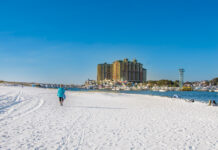
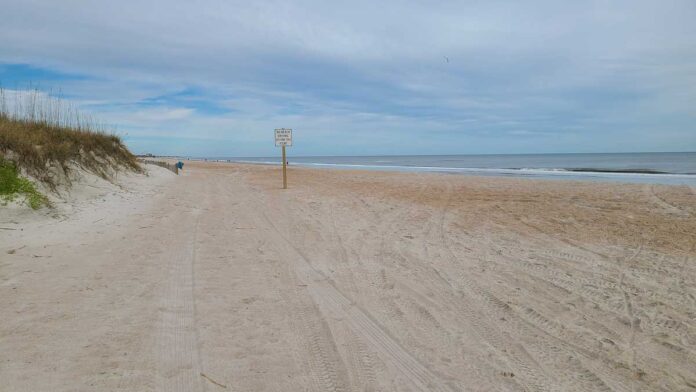
The park’s Atlantic beachfront sits a bit removed from the main pedestrian entrance near the fishing pier, and most visitors reach it by four-wheel-drive vehicle along a sand road through the dunes. Once you clear the stretch near the parking area, which tends to fill with surf anglers, the beach opens into a genuinely wide, unspoiled stretch with views stretching south toward the Talbot Islands, nothing but forest, marsh, and open beach as far as you can see.
What makes this beach genuinely unique in Florida is the horseback riding. This is the only state park in the entire system that allows visitors to bring their own horse and ride it directly on the beach, alongside guided tours through Kelly Seahorse Ranch, which is based in the park’s maritime forest and leads a roughly 45-minute ride combining the woods and the open Atlantic shoreline. Beachcombing here turns up shark teeth and coquina shells regularly, though Fort Clinch further north edges this park out specifically for shark tooth hunting.
The crowd here splits between anglers working the surf, horseback riders and their guides, and a smaller number of beachgoers who’ve made the drive specifically for the space and quiet. My honest take, if you’re bringing your own horse, call the ranger station ahead for current rules and requirements. If you’re not, book Kelly Seahorse Ranch well in advance, since their tours are genuinely popular.
George Crady Bridge Fishing Pier & Nassau Sound
A Mile-Long Pier · Restrooms Located Here
At the park’s pedestrian entrance, the George Crady Bridge Fishing Pier stretches a mile out over Nassau Sound, open to foot traffic and fishing from 8am until sunset. This is genuinely one of the more productive fishing spots in Northeast Florida, and the waters here have produced a state record flounder alongside regular catches of redfish, sea trout, and black drum. A small bait and tackle shop, On the Line Bait and Tackle, sits at the pier’s entrance, and it carries a story worth knowing before you walk past it.
The shop was opened in 2018 by Denise and Spade Williams, who had visited this exact stretch of coast as children during the Jim Crow era, when most Florida beaches were openly hostile to Black visitors. Opening a business at the entrance to this pier, on this island, was a deliberate, personal kind of homecoming, and it sits here now as a quiet echo of the same history that shaped American Beach further north on this same island.
The crowd here is almost entirely anglers, along with pedestrians out for the sunset views over the Amelia River and Black Hammock Island to the west. My honest take, walk the pier even if you don’t fish. The views in both directions, north toward the park’s maritime forest and west over the marsh at sunset, are genuinely worth the walk on their own.
The Maritime Forest, Trail & Critical Wildlife Area
1.2-Mile Amelia Island Trail · Gopher Tortoises & Nesting Shorebirds
Connecting the pier entrance to the beachfront, the 1.2-mile Amelia Island Trail winds through maritime forest and coastal scrub, a good option for biking or a shaded walk between the park’s two main access points. Gopher tortoises are a common sight along this trail, and unlike some other beaches in this guide, this park sees little sea turtle nesting activity, with its ecological significance centered instead on shorebirds.
From March 1 through September 1, long sections of the beach dune here are roped off as a critical wildlife area, protecting nesting Least Terns and Wilson’s Plovers, among more than 100 recorded shorebird species using this stretch of coast. This designation genuinely limits where you can walk during nesting season, and it’s worth checking current closures before you plan a beach walk in these months.
My honest take, this trail rewards patience more than speed. I’ve spotted more gopher tortoises here in a single slow walk than at almost any other beach in this guide, and the nesting closures, while occasionally inconvenient, are exactly why this park still has the healthy shorebird population it does.
Amelia Island State Park Rankings: Expert Scores Across 11 Categories
These scores reflect a small, deliberately limited park built around wildlife protection, fishing, and horseback riding rather than a typical swim-and-sunbathe beach day.
Sand Quality
7/10
Consistent with the rest of Amelia Island’s quartz-based sand, with genuine shark teeth and coquina shells turning up in the dunes.
Hiking & Beach Walking
7/10
A short but genuinely good trail through maritime forest, plus wide-open beach walking once you clear the fishermen near the parking area.
Shelling & Shark Teeth
7/10
Genuinely good, though Fort Clinch further north on the island is the better dedicated destination specifically for shark teeth.
Water Conditions
4/10
Posted signage warns of dangerous currents at the beach entrance, and there’s no lifeguard on duty. This isn’t the beach in this guide I’d recommend for casual swimming.
Scenery & Natural Beauty
9/10
Genuinely unspoiled, with views over both Nassau Sound and the open Atlantic, and a clear sightline south toward the undeveloped Talbot Islands.
Birding & Wildlife
9/10
A critical wildlife area protecting nesting Least Terns and Wilson’s Plovers, over 100 recorded shorebird species, and a healthy resident gopher tortoise population.
Family Friendliness
6/10
Horseback riding is a genuine family highlight, but the dangerous current warnings, lack of beachfront restrooms, and visitor capacity limits all ask more planning than a typical family beach day.
Dog Friendliness
2/10
Dogs are not permitted on the beach here, one of two state parks on the island with this restriction, alongside Fort Clinch.
Solitude & Peace
8/10
Genuinely quiet by design, thanks to the park’s own visitor capacity limits and its distance from the resort corridor further north.
Entertainment & Nightlife
1/10
None, and it isn’t trying to be. This is a fishing, wildlife, and horseback riding park, not a beach town.
Parking & Beach Access
5/10
Capped at 300 visitors at a time and 600 per day, with the Atlantic beachfront itself best reached by four-wheel-drive vehicle rather than a standard parking lot.
Amelia Island State Park Sand & Water
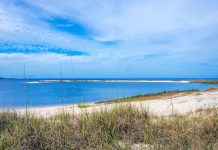
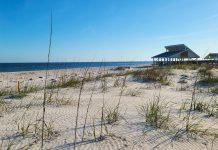
The sand here is firm and comfortable underfoot, the same quartz base found across the rest of the island, and it’s part of why this stretch works so well for horseback riding. It stays wide and flat once you clear the fishermen and vehicles near the main access, opening into a genuinely good stretch for a long, slow walk toward the view of the Talbot Islands to the south. Shark teeth and coquina shells turn up in the dune line if you’re willing to look, and there’s plenty of open beach for a picnic away from the main crowd.
I want to be direct about the water here. Posted signage at the beach entrance warns of dangerous currents, and there’s no lifeguard on duty anywhere in this park. On a calm day the water runs a typical deep Atlantic blue-green, but the park’s position right at Nassau Sound’s tidal exchange genuinely affects how it behaves. Treat this as a beach for walking, riding, and fishing rather than swimming, and take the warnings seriously.
-
Walkability. Excellent once you clear the main access point, opening into wide, comfortable walking toward the Talbot Islands view.
-
Softness & Playability. Firm and comfortable, well-suited to horseback riding, with enough open sand for a picnic away from the crowd near the pier.
-
Barefoot Comfort. Comfortable throughout, with the usual caution around shell-heavy patches near the dune line.
-
Swimmability. Not recommended. Posted dangerous current warnings and no lifeguard make this a beach for walking and riding, not swimming.
Want the full geology, grain composition, and the complete sand and water condition ratings? I broke it all down separately in Sand & Shore: Amelia Island State Park.
Dogs & Pet Accessibility at Amelia Island State Park
Are Dogs Allowed on the Sand? NO.
Dogs aren’t permitted on this park’s beach, one of two state parks on the island with this restriction, alongside Fort Clinch. If a beach walk with your dog is part of your trip, save it for the general island beaches just north.
Where Dogs Are Allowed
- ✓The Amelia Island Trail through the maritime forest, on a leash.
- ✓The George Crady Bridge Fishing Pier, on a leash, if you’re walking rather than fishing.
Where Dogs Are NOT Allowed
- ✗The Atlantic beachfront, no exceptions, matching the rule at Fort Clinch further north.
Paws on the Ground Reality
This rule is consistently enforced, so don’t plan a beach day here around bringing your dog along. The Amelia Island Trail gives your dog a real, shaded outing instead, and it’s genuinely pleasant most of the year. Bring your own water, since there’s nothing to refill from once you’re away from the ranger station.
If a beach walk with your dog matters to your trip, Amelia Island’s general beaches just north, including Main Beach Park and Peters Point, all welcome leashed dogs on the sand.
Crowd Levels and the Overall Feel of Amelia Island State Park
This park’s own capacity limits keep the crowd genuinely manageable at all times, 300 visitors at a time and 600 per day. Anglers cluster at the pier and near the beach parking area, horseback riders and their guides use the maritime forest and open beach, and the crowd thins fast the further you walk from either main access point.
The overall feel shifts with the shorebird nesting calendar as much as the weather:
- Spring: nesting season begins March 1, with sections of the beach dune roping off for Least Terns and Wilson’s Plovers
- Summer: the busiest season for horseback riding tours and fishing, with nesting closures still active through September 1
- Fall: my favorite season here, nesting closures lift and the beach opens fully, with comfortable temperatures for the forest trail
- Winter: quiet and often windswept, with strong fishing conditions at the pier and excellent wildlife viewing throughout the park
Who Is Amelia Island State Park Really For?
✓ Who Will Love Amelia Island State Park
-
Horseback riders, whether bringing their own horse or booking a guided tour, since this is the only Florida state park built around that exact experience
-
Anglers chasing some of the best fishing in Northeast Florida from the George Crady Bridge Fishing Pier
-
Birders and wildlife watchers drawn to a genuine critical shorebird nesting area
-
Anyone who wants a quieter, more protected version of Amelia Island than the resort corridor further north
-
History-minded visitors interested in the George Crady Bridge’s story and On the Line Bait and Tackle’s personal history
-
4WD owners who want genuine beach driving access on a barrier island
✗ Consider Another Beach If…
-
You want calm, casual swimming. Dangerous current warnings and no lifeguard make this a poor fit for that goal
-
You’re traveling with a dog and want beach access together. Dogs aren’t permitted on this beach
-
You don’t have a 4WD vehicle and want easy beachfront parking. Reaching the open Atlantic beach here takes more effort than at Amelia Island’s general public beaches
-
You want restrooms directly on the beach. Facilities here are located at the bridge entrance, not the beachfront itself
-
You’re chasing shark teeth specifically. Fort Clinch State Park further north is the better dedicated destination for that
Things to Do at Amelia Island State Park, Florida
This compact park still packs in a genuine range of activities.
-
Horseback Riding. Bring your own horse or book a guided tour through Kelly Seahorse Ranch, combining the maritime forest and the open Atlantic beach.
-
Fishing. The mile-long George Crady Bridge Fishing Pier over Nassau Sound has produced a state record flounder, alongside redfish, sea trout, and black drum.
-
Hiking & Biking. The 1.2-mile Amelia Island Trail winds through maritime forest between the park’s two main access points.
-
Beach Driving. Four-wheel-drive vehicles can access the Atlantic beachfront directly, during the same hours the park is open.
-
Shelling & Shark Tooth Hunting. Genuinely good along the dune line, though Fort Clinch remains the island’s top dedicated spot for shark teeth specifically.
-
Birding. Over 100 recorded shorebird species use this stretch, with a critical wildlife area protecting nesting Least Terns and Wilson’s Plovers from March through September.
-
Wildlife Watching. Gopher tortoises are a common sight along the forest trail, and dolphins and manatees are regularly spotted in Nassau Sound.
Local Knowledge and Practical Advice
A few things worth knowing before you plan a visit here:
-
Call the ranger station ahead if bringing your own horse. This is the only Florida state park that allows it, and current rules are worth confirming before you arrive.
-
Book Kelly Seahorse Ranch tours well in advance. Guided beach rides through this park are genuinely popular and fill up fast.
-
Respect the dangerous current warnings at the beach entrance. There’s no lifeguard on duty anywhere in this park.
-
Leave your dog at home or in the car for the beach. Dogs aren’t permitted on the sand at Amelia Island State Park.
-
Bring a four-wheel-drive vehicle if you want to reach the open Atlantic beach. The main pedestrian entrance near the pier doesn’t directly access this stretch.
-
Use the restrooms at the bridge entrance before heading to the beach. There are no facilities directly on the beachfront itself.
-
Check current nesting closures between March 1 and September 1. Sections of the beach dune are roped off during this window to protect nesting shorebirds.
-
Stop at On the Line Bait and Tackle at the pier entrance. It’s a small shop with a genuinely meaningful personal history behind it.
-
Remember the park’s visitor capacity limits. It caps at 300 people at a time and 600 per day, closing to new visitors until the count drops.
-
If you want the island’s best shark tooth hunting, head to Fort Clinch instead. This park is genuinely good for shelling, but Fort Clinch edges it out for that specific hobby.
Where to Stay Near Amelia Island State Park, Florida
There’s no camping within this park itself, so here’s where to base yourself nearby.
Fort Clinch State Park, North
Camping is available at Fort Clinch State Park, roughly eight miles north, covered in its own dedicated guide, making it the natural camping pair for a visit to this park.
Fernandina Beach, North
Historic bed and breakfasts and vacation rentals in downtown Fernandina Beach sit a short drive north, with far more dining and lodging variety than this end of the island offers.
Summer Beach Resorts
The Omni Amelia Island Resort and Ritz-Carlton, Amelia Island both sit closer to this park than downtown Fernandina, offering full-service amenities within a shorter drive.
Little Talbot Island State Park, South
For campers heading south instead of north, Little Talbot Island State Park offers another camping option just seven miles from this park’s entrance.
What Makes Amelia Island State Park Different from Nearby Beaches
This park stands apart because it limits itself deliberately, in visitor numbers, in development, and in what it asks you to come here for. Every other beach in this guide wants you to stay all day. This one wants you to fish, ride, and walk, then let the next visitor in.
A few features make it distinct:
Bring-your-own-horse beach access
No other state park in Florida allows this, and it’s a genuinely rare experience that defines this park’s identity more than anything else.
A fishing pier saved by one legislator’s persistence
The George Crady Bridge Fishing Pier survives specifically because a state representative fought to preserve it after the road bridge it once carried was replaced, a small but genuine piece of local political history.
A visitor capacity limit that actually works
Very few Florida beaches cap attendance this directly, and it genuinely keeps this park quieter than its accessibility would otherwise suggest.
A bait shop with a deeper story
On the Line Bait and Tackle’s founders returning to a beach they knew from segregation-era childhood visits adds a layer of meaning to this park that most visitors never learn about.
Amelia Island State Park vs. Other Nearby Parks & Beaches
These are the parks visitors most often weigh against this one, and the honest read on when you’d choose one over the other.
Amelia Island State Park vs. Fort Clinch State Park
Fort Clinch, at the island’s north tip, offers camping, a historic fort, and better shark tooth hunting. This park offers horseback riding and a quieter southern tip experience instead.
Amelia Island State Park vs. Little Talbot Island State Park
Little Talbot, just south, is the better choice for birdwatching and shelling specifically. Choose this park instead for horseback riding and fishing from the George Crady Bridge.
Amelia Island State Park vs. the General Amelia Island Beaches
The general island beaches offer resort amenities, historic Fernandina Beach, and American Beach’s cultural significance. This park trades all of that for genuine wilderness and capacity-limited quiet.
Amelia Island State Park vs. Big Talbot Island State Park
Big Talbot, further south, is known for its driftwood “boneyard” beach rather than horseback riding or fishing, making the two parks complementary rather than redundant on a longer trip.
Bottom line: Amelia Island State Park is the choice for horseback riding, serious fishing, and a deliberately quieter, more protected southern tip of this island. Fort Clinch and Little Talbot each edge it out on specific hobbies. This park’s own reason for being remains the sand under a horse’s hooves and a mile-long pier worth the walk.
Amelia Island State Park, Florida: Frequently Asked Questions
Is there camping at Amelia Island State Park?
No, there are no camping facilities within this park. Fort Clinch State Park, about eight miles north, offers the nearest camping option.
Can you ride your own horse on the beach here?
Yes, this is the only Florida state park that allows visitors to bring their own horse onto the beach. Guided tours through Kelly Seahorse Ranch are also available.
Are dogs allowed at Amelia Island State Park?
No, dogs are not permitted on the beach at this park, one of two state parks on the island with this restriction, alongside Fort Clinch.
Is it safe to swim at Amelia Island State Park?
Swim with real caution. Posted signage at the beach entrance warns of dangerous currents, and there’s no lifeguard on duty.
What is the George Crady Bridge Fishing Pier?
A mile-long former road bridge over Nassau Sound, converted to a dedicated fishing pier in 1999 after a newer bridge took over vehicle traffic. It’s produced a state record flounder and remains one of the best fishing spots in Northeast Florida.
Is there a visitor capacity limit?
Yes, the park caps attendance at 300 people at a time and 600 per day, closing to new visitors when it reaches capacity.
Can you drive on the beach at Amelia Island State Park?
Yes, four-wheel-drive vehicles can access the Atlantic beachfront directly during regular park hours.
Is this park good for shark teeth and shelling?
Yes, genuinely good, though Fort Clinch State Park further north on the island is considered the better dedicated destination specifically for shark teeth.
What’s the difference between this park and Fort Clinch State Park?
This park sits at Amelia Island’s southern tip and centers on horseback riding and fishing. Fort Clinch sits at the northern tip and centers on a historic fort, camping, and shark tooth hunting.
How far is Amelia Island State Park from Jacksonville?
About nine miles, roughly a 20-minute drive via I-95 and A1A.
Patti’s Perspective: My Honest Take on Amelia Island State Park
I came to this park expecting horses and left thinking mostly about a bait shop. That’s not a complaint. You can read more about the full walk, the pier, and the beach access in my full hiking experience at Amelia Island State Park.The horseback riding genuinely lives up to its reputation. Watching a rider move from the shade of the maritime forest out onto open, sunlit beach, with nothing else in sight but sand and water, told me something about why this park has held onto that one specific allowance so tightly while every other Florida state park has let it go.
But On the Line Bait and Tackle is what I keep coming back to. Knowing that Denise and Spade Williams opened that small shop at the entrance to this pier after visiting this same coast as children during segregation, when Black families had so few beaches anywhere in Florida that welcomed them, put the whole park in a different light for me. I’d already learned about American Beach further north on this same island by the time I visited here, and finding another quiet echo of that same history at a bait shop I almost walked past without a second look reminded me how much this island is still teaching me, one small stop at a time.
My honest caveat, don’t come here expecting an easy swim day or quick beach access. Come here for the horses, the fishing, and the quiet, and give yourself time to notice the smaller details, like a bait shop with a story worth stopping for.
Want to Live by the Water?The area near Amelia Island State Park offers a quieter, more protected alternative to the resort-driven real estate further north on the island, with the park itself helping preserve the low-density character of the island’s southern tip.The market here draws buyers who specifically want proximity to protected wilderness and equestrian-friendly beach access, along with anglers drawn to Nassau Sound’s productive waters. Nearby Fernandina Beach and the Summer Beach resort corridor offer more traditional inventory for buyers who want easy access to this same stretch of coast with more amenities close by.If living near this kind of protected, horseback-friendly coastline is something you’re considering, it’s worth exploring what’s available in this area.Explore Waterfront Living at LiveByTheWater.com
Real estate referral partner