





Blowing Rocks Preserve, Florida
Blowing Rocks Preserve is one of my favorite stops on this entire coast, and I don’t say that about many places after covering as many beaches as I have. This is the largest outcropping of Anastasia limestone anywhere on Florida’s Atlantic coast, and when a rough sea meets high tide here, the ocean shoots straight up through the rock like the island itself is breathing.
Despite its Hobe Sound mailing address, this 73-acre preserve actually sits in Martin County on Jupiter Island, just north of Coral Cove Park and a short drive south of the Hobe Sound National Wildlife Refuge. It’s a different property from that federal refuge entirely, owned and carefully stewarded by the Florida Chapter of The Nature Conservancy since 1969, when a group of Jupiter Island residents banded together to buy the land themselves rather than watch it get developed.
In this guide I’m walking you through every distinct piece of this preserve, going deep on what the sand and water are actually doing here, scoring it honestly across every category that matters, and telling you exactly who this preserve is built for. I’ll cover the blowholes themselves, the sea caves that show up at low tide, the hidden calm-water beach almost nobody knows about, why you should leave your dog at home for this one, and the turtle nesting season that turns this stretch genuinely sacred for a few months every year. For more on what lives here and what you might find in the sand, I’ve also written up a full hiking guide, a birding guide, and a beach finds guide for this preserve. I close with my own take on why this small stretch of rock means as much to me as it does.
The Vibe & Culture at Blowing Rocks Preserve
A Beach the Neighbors Bought to Save
Most preserves get protected by an agency with a budget. This one got protected because the people who lived next to it simply refused to let it disappear.
In 1969, a group of Jupiter Island residents pooled their own money to buy 73 acres of intact beach, dune, and reef habitat rather than watch it turn into another stretch of private waterfront. They handed the land to The Nature Conservancy, and the organization still calls it one of its proudest achievements in six decades of protecting Florida’s great places. That origin story shapes everything about how this preserve feels today, genuinely cared for, not just managed.
The rules here reflect that same instinct. No pets, no alcohol, no picnics or grills, no drones, no collecting so much as a single piece of the limestone itself. It can feel strict compared to a county beach, but it’s the reason the rock formations, the dune vegetation, and the nesting sea turtles have survived this close to some of the most valuable real estate in Florida. This is a barrier island sanctuary in the truest sense, and the preserve asks visitors to treat it that way.
The crowd here is a genuine mix, photographers chasing the perfect blowhole shot at high tide, families exploring tide pools at low tide, and a steady trickle of locals who treat a walk through the hammock trails as a weekly ritual. Parking is limited and the preserve closes promptly at 4:30 p.m. every day, so this isn’t a beach that ever gets truly crowded, it simply runs out of room.
Blowing Rocks Preserve Areas: Six Distinct Pieces of One Extraordinary Stretch
This preserve is small, but it packs in more genuine variety than beaches five times its size. Here’s how it breaks down.
The Rock Formation & the Blowholes
The Signature Feature · High Tide, Rough Seas
This is what people drive here for, and it earns every bit of the reputation. The Anastasia limestone shoreline is the largest outcropping of its kind on Florida’s Atlantic coast, ancient reef substrate exposed by wind, wave, and scouring sand as sea levels dropped roughly 125,000 years ago. When a rough sea coincides with high tide, typically in winter, waves crash into the rock and force plumes of saltwater up to 50 feet into the air, over and over, for as long as the conditions hold.
The crowd here times their visit deliberately, checking tide charts and storm forecasts the way surfers check swell reports. On a calm day at low tide, you’ll find a much quieter scene, mostly people exploring the exposed rock formations on foot rather than watching them erupt.
I’ve made the drive out here twice in a single day more than once, specifically because the tide didn’t cooperate the first time. It’s worth that kind of persistence. Nothing else in this entire series looks quite like this rock doing what it does at the right moment.
The Beach Loop Trail & the Sea Caves
Blue Trail · Low Tide Exploring
While high tide brings the blowholes, low tide reveals a completely different side of this same rock, small sea caves and tide pools tucked into the limestone that are submerged the rest of the time. The Beach Loop Trail, marked in blue, threads along this stretch and gives you access to both faces of the formation depending on when you show up.
Families with curious kids gravitate here at low tide specifically, since the tide pools hold small fish, crabs, and other creatures that vanish once the water rises. The sand along this trail runs soft enough that your feet genuinely sink in, which locals half-joke gives you a workout on the walk back.
I try to time at least one visit a year for low tide specifically to explore these caves. Most visitors only ever see this preserve in one state or the other, and understanding both sides changes how you read the whole rock formation.
The Lagoon Trails & the Tropical Hammock
Red Trail · Shaded, Interior Walking
Away from the ocean side, the Lagoon Trails, marked in red, wind through a genuine tropical and oak hammock, a shaded canopy that feels almost cool compared to the open beach a few hundred feet away. Interpretive signage along the way identifies the native plant life, and this stretch is where the preserve’s less obvious character actually lives.
The crowd here is thinner and more deliberate, hikers and birders working through the hammock rather than beachgoers passing through on their way to the rocks. It’s an easy add-on to a visit rather than a standalone destination, but it rounds out the preserve in a way the beach alone doesn’t.
I’d genuinely recommend walking at least one of these interior trails even if the rocks are the only reason you came. The contrast between the exposed, dramatic coastline and this quiet, shaded hammock is part of what makes this preserve feel so complete for its size.
The Hidden West Side Beach on the Intracoastal
Across the Road · Calm, Clear, Family-Friendly
This is the piece of Blowing Rocks most visitors never find. Trails on the west side of the preserve, across South Beach Road from the main ocean-side parking, lead to a quiet stretch of shoreline on the Intracoastal side of Jupiter Island, where the water runs calm and clear instead of crashing against limestone. It’s a genuine secret, even among people who’ve visited the ocean side more than once.
Families with young kids or anyone visiting on a day when the Atlantic side looks too rough gravitate here once they know it exists. The crowd is thin, mostly locals who’ve learned this half of the preserve offers exactly what the ocean side can’t.
I like sending people here specifically when the surf report says the blowholes will be dramatic, since dramatic ocean conditions usually mean the water isn’t swimmable that day. This calm western side gives you a real alternative without leaving the property.
The Hawley Education Center
Near the Main Entrance · Free Exhibits, Guided Walks
The Hawley Education Center anchors the preserve’s visitor experience, home to the “Tides of Life” exhibit, open daily at no charge, along with the preserve’s restrooms. Guided nature walks run on weekend mornings, typically about 40 minutes long, led by staff or volunteers who clearly love this place as much as the people who fought to protect it in the first place.
The crowd here is a mix of first-time visitors getting oriented before heading to the rocks and repeat visitors who specifically come back for the guided walks. It’s a worthwhile stop even for a quick ten minutes, since the exhibit gives real context to everything else you’ll see on the trails.
I always recommend a guided walk if your schedule allows for one. The staff here know things about this preserve, the history, the geology, the wildlife, that you simply won’t pick up walking the trails on your own.
The Sea Turtle Nesting Grounds
Dune Line, Beach Loop Trail · March Through October
This preserve protects nesting habitat for three sea turtle species, loggerhead, green, and leatherback, along the same dune line that runs beside the Beach Loop Trail. It’s part of why the rules here are as strict as they are, and part of why this small stretch of barrier island has stayed intact while so much of the coast around it has not.
Visitors during nesting season will notice marked nests along the upper beach, and the preserve asks everyone to stay on marked trails specifically to protect this activity. It’s a quieter, more understated piece of the preserve than the blowholes, but arguably the more important one.
I think about this dune line every time I walk past a marked nest here. This preserve exists because people decided protecting a few acres of undeveloped island mattered enough to buy it themselves, and watching that decision still paying off in the form of turtle nests fifty-plus years later never gets old for me.
Blowing Rocks Preserve Rankings: Expert Scores Across 11 Categories
These scores weigh the whole preserve, from the dramatic ocean-side rocks to the hidden calm-water beach across the road, since so much of what makes this place special happens away from the blowholes themselves.
Sand Quality
7/10
Soft enough that your feet genuinely sink in, a real workout on the walk back. Honest, undeveloped barrier island sand rather than a groomed beach.
Hiking & Beach Walking
8/10
Roughly 1.7 miles across the Beach Loop and Lagoon Trails combined, genuinely varied terrain for such a small footprint.
Shelling at Blowing Rocks Preserve
2/10
Modest at best. This coastline is famous for rock, not shells, and collecting anything, including the limestone itself, is prohibited anyway.
Water Conditions
6/10
The ocean side runs rough and isn’t built for swimming, especially on the dramatic days you actually want to visit. The hidden west side offers a calm alternative.
Scenery & Natural Beauty
10/10
One of the highest scores in this entire series. Nothing else on this coast looks like this rock at the right tide, and few places anywhere in Florida do.
Birding & Wildlife
9/10
Frigatebirds, terns, and gannets patrol offshore, ospreys nest nearby, and three sea turtle species use this exact dune line to lay their eggs.
Family Friendliness
6/10
Genuinely rewarding for curious kids at low tide, but the soft sand, sharp rock, and rough ocean surf ask more of small children than a typical beach day.
Dog Friendliness
1/10
No pets are allowed anywhere in the preserve, trails or beach, no exceptions. It’s clearly posted and it’s enforced.
Solitude & Peace
6/10
Limited parking naturally caps the crowd, but that same small lot fills fast whenever conditions look good for the blowholes. Weekday mornings are your best bet.
Entertainment & Nightlife
1/10
None, and the preserve closes at 4:30 p.m. sharp every day. This is a nature stop, not an evening destination.
Parking & Beach Access
4/10
Free, but limited on both sides of the road. Arrive early on a weekend or during promising tide conditions, since the lot does fill.
Blowing Rocks Preserve Sand & Water
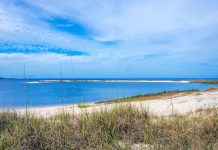
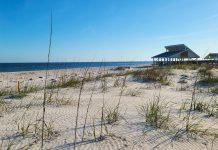
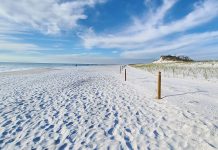
The sand here is soft enough to genuinely notice, your feet sink in more than at a typical packed beach, which locals half-joke gives your calves a workout on the walk back from the rocks. It’s honest, undeveloped barrier island sand rather than a groomed stretch, playable for exploring and tide pooling more than for a flat game of volleyball, and the real texture of a visit here comes from the limestone itself rather than the sand around it.
The water tells two completely different stories depending on which side of the preserve you’re on. The ocean side runs genuinely rough on the days you most want to visit, since dramatic surf is exactly what creates the blowhole effect, and it isn’t a swimming beach in any conventional sense. Cross the road to the west side, though, and the water turns calm and clear along the Intracoastal, a real alternative on a day when the Atlantic side looks like too much.
-
Walkability. Good along the Beach Loop Trail, though soft sand slows you down more than at a packed, groomed beach.
-
Softness & Playability. Soft enough to sink into, better suited to tide pooling and rock exploring than sandcastles or beach games.
-
Barefoot Comfort. Comfortable on the open sand, but wear real shoes near the rocks themselves, which are sharp enough to cut an unprotected foot.
-
Swimmability. Poor on the ocean side, which runs rough by design. Cross to the west side beach for genuinely calm, swimmable water instead.
Want the full geology, grain composition, and the complete sand and water condition ratings? I broke it all down separately in Sand & Shore: Blowing Rocks Preserve.
Dogs & Pet Accessibility at Blowing Rocks Preserve
Are Dogs Allowed on the Sand? NO.
Pets of any kind are prohibited throughout the entire preserve, trails and beach alike, with no exceptions.
Where Dogs Are Allowed
- ✓Nowhere on the property. This preserve does not have a pet-accessible area of any kind.
Where Dogs Are NOT Allowed
- ✗The Beach Loop Trail and the rocks themselves.
- ✗The Lagoon Trails and the tropical hammock.
- ✗The hidden west side beach across South Beach Road.
- ✗The Hawley Education Center and its grounds.
Paws on the Ground Reality
This is the strictest pet policy of any beaches in Florida, and it’s worth knowing before you make the drive with a dog in the car. The signage is clear at every trailhead, and while you’ll occasionally spot a visitor bending the rule, staff and volunteers do enforce it, and the reason isn’t arbitrary. This small stretch of barrier island protects nesting sea turtles, sensitive dune vegetation, and shorebird habitat that a loose or even leashed dog can disturb, which is exactly the kind of disruption the residents who bought this land in 1969 were trying to prevent in the first place.
If a beach day with your dog matters for this same trip, plan it as a separate stop. Jensen Beach and Stuart, covered elsewhere in this beach series, offer Martin County’s countywide leashed-dog beach access a short drive south, and it’s a completely different, much more relaxed set of rules than anything available here.
Crowd Levels and the Overall Feel of Blowing Rocks Preserve
This preserve never gets crowded in the way a county beach does, mostly because it physically can’t. The parking lots are small on both sides of the road, and once they’re full, that’s genuinely it for the day. Weekday mornings and off-peak tide windows are your best bet for a quiet visit.
You’ll find a different crowd depending on the conditions. Rough seas at high tide draw photographers and sightseers specifically for the blowholes. Calm, low-tide mornings draw families and tide pool explorers. The hammock trails draw a smaller, more deliberate crowd of hikers and birders who know that side of the preserve exists.
The overall feel shifts by season more around surf conditions and turtle nesting than typical tourist patterns:
- Winter: the best season for the dramatic blowhole effect, since rough seas are more common, plus comfortable hiking weather
- Spring: pleasant conditions and the start of sea turtle nesting season along the dune line
- Summer: hot and humid, with peak nesting and hatching activity and calmer, less dramatic surf on average
- Fall: nesting season winds down, and storm-driven swell occasionally brings the blowholes back to life
Who Is Blowing Rocks Preserve Really For?
✓ Who Will Love Blowing Rocks Preserve
-
Photographers and sightseers chasing one of the most dramatic natural sights on Florida’s Atlantic coast
-
Anyone curious about a genuine grassroots conservation story, saved by neighbors rather than an agency
-
Hikers wanting real variety, ocean rock, shaded hammock, and a calm hidden beach, in one small footprint
-
Sea turtle enthusiasts visiting between March and October
-
Families willing to time a visit around low tide for genuinely engaging tide pool exploring
-
Birders chasing frigatebirds, ospreys, and migrating warblers in the same short visit
✗ Consider Another Beach If…
-
You’re bringing a dog. There is no pet-accessible area anywhere on this property
-
You want a straightforward swim. The ocean side runs rough by design, and the calm west side is a smaller, secondary stop
-
You need guaranteed parking. The small lots here fill fast, especially when conditions look good for the blowholes
-
You’re visiting after 4:30 p.m. Trails and parking lots close sharply every single day, no exceptions
-
You want a serious shelling beach. This coastline is famous for rock, not shells, and collecting anything here is prohibited anyway
Things to Do at Blowing Rocks Preserve, Florida
This small preserve packs in a genuinely varied day. Here’s what actually fills a visit here.
-
Watching the Blowholes. Time a visit for rough seas at high tide, typically in winter, for the full effect, water shooting up to 50 feet skyward.
-
Exploring the Sea Caves & Tide Pools. Best at low tide, when small caves and pools in the limestone become accessible on foot.
-
Hiking the Beach Loop & Lagoon Trails. Roughly 1.7 miles combined, running through both the ocean-side rocks and the shaded interior hammock.
-
Visiting the Hidden West Side Beach. A calm, clear alternative on the Intracoastal side, reachable via trails across South Beach Road.
-
Birding. Frigatebirds, terns, and gannets patrol offshore, ospreys nest nearby, and migrating warblers winter in the hammock.
-
Sea Turtle Watching. Loggerhead, green, and leatherback turtles all nest along the dune line from roughly March through October.
-
Visiting the Hawley Education Center. Home to the free “Tides of Life” exhibit and the preserve’s restrooms, near the main entrance.
-
Guided Nature Walks. Staff and volunteer-led walks typically run on weekend mornings, roughly 40 minutes long. Check the current schedule before you go.
-
Photography. The rock formations, blowholes, and dramatic light at sunrise make this one of the most photogenic stops in this entire series, though commercial photo and video shoots aren’t permitted.
Local Knowledge and Practical Advice
A few things I’ve picked up visiting this preserve more times than I probably should admit:
-
Check the tide chart and surf forecast before you drive out here. The blowhole effect depends entirely on rough seas meeting high tide, and a calm day simply won’t deliver the show.
-
Bring exact cash for the honor box. The suggested donation is $2 per person, $1 for members, and children 12 and under are free.
-
Arrive well before 4:15 p.m. Last entry is 4:15, and all trails and parking lots close sharply at 4:30, seven days a week.
-
Wear real shoes, not sandals, if you’re getting close to the rocks. The limestone is sharp enough to cut an unprotected foot.
-
Parking is limited on both sides of the road. Arrive early on weekends or whenever surf conditions look promising for the blowholes.
-
Leave the dog at home entirely. No pets are allowed anywhere in the preserve, and it’s enforced.
-
No alcohol, picnics, grills, or drones anywhere on the property. The drone rule comes from the Town of Jupiter Island itself, not just the preserve.
-
Never collect the limestone rock, shells, or any natural material. This is strictly prohibited and directly tied to the preserve’s conservation mission.
-
Stay on marked trails at all times. This protects both fragile dune vegetation and nesting sea turtles during the season.
-
Cross the road to the west side if the ocean looks too rough to enjoy. That hidden Intracoastal beach is calm almost regardless of what the Atlantic side is doing.
Where to Stay Near Blowing Rocks Preserve, Florida
There’s no lodging inside the preserve itself, but the surrounding area offers a real range of options.
Jupiter Island
Jupiter Island itself is one of the most exclusive, low-density barrier islands in Florida, with private estates rather than public lodging options directly nearby.
Hobe Sound & Tequesta
Small inns and vacation rentals in Hobe Sound and Tequesta put you a short drive from the preserve in a genuinely quiet, low-key setting.
Jupiter
A short drive south, Jupiter offers a wider range of hotels and vacation rentals, along with easy access to Coral Cove Park and the Jupiter Inlet Lighthouse.
Camping
Jonathan Dickinson State Park, a short drive inland in Hobe Sound, offers tent and RV camping in a similarly wild, undeveloped setting.
Inland & Budget Options
Stuart and Palm Beach Gardens, both a reasonable drive from the preserve, offer a wider range of budget to mid-range hotel chains for visitors who’d rather day-trip out here.
What Makes Blowing Rocks Preserve Different from Nearby Beaches
Blowing Rocks Preserve stands apart from every other beach in this series because of a single, unrepeated feature, the largest Anastasia limestone outcropping on Florida’s Atlantic coast, doing something dramatic and specific that no amount of development elsewhere on this coast can replicate.
A few features make it distinct:
A conservation story led by neighbors, not an agency
The 1969 purchase by Jupiter Island residents is a genuinely rare grassroots preservation story, and it still shapes how carefully this land is managed today.
A rock formation that performs on cue
Few natural features anywhere let you time a visit around a specific, predictable weather and tide combination for a genuine spectacle.
Two beaches in one preserve, ocean and Intracoastal
The hidden west side beach gives this small property a range most single beaches this size simply don’t have.
The strictest pet policy in this entire series
No pets anywhere, trails or beach, reflects just how seriously this preserve takes its conservation mission.
Blowing Rocks Preserve vs. Other Nearby Beaches
These are the beaches visitors most often weigh against this preserve, and the honest read on when you’d choose one over the other.
Blowing Rocks Preserve vs. Coral Cove Park
Coral Cove Park, immediately south, offers a similar limestone reef with genuinely good snorkeling and a guarded swimming beach. Choose Coral Cove for a swim, Blowing Rocks for the dramatic rock formation and the hiking.
Blowing Rocks Preserve vs. Hobe Sound National Wildlife Refuge
Hobe Sound, a short drive north and a separate federal property, offers more than three miles of undeveloped beach and denser sea turtle nesting. Choose Hobe Sound for sheer beach length and solitude, Blowing Rocks for the geology and the guided nature walks.
Blowing Rocks Preserve vs. the Jupiter Inlet Lighthouse Outstanding Natural Area
The Jupiter Inlet Lighthouse ONA, a short drive south, pairs a working 1860 lighthouse with its own coastal bluff. Choose that stop for the lighthouse climb and the history, Blowing Rocks for the rock formation itself.
Blowing Rocks Preserve vs. MacArthur Beach State Park
MacArthur Beach, further south in Palm Beach County, offers a comparable worm-built reef system with a nature center and kayak rentals. Choose MacArthur Beach for more visitor infrastructure, Blowing Rocks for a smaller, more singular natural spectacle.
Bottom line: Blowing Rocks Preserve isn’t trying to be a complete beach day the way some of the other stops in this series are. It’s offering one of the most specific, dramatic natural sights on this entire coast, protected by people who cared enough to buy the land themselves, and that combination is worth the drive and the limited parking every time.
Blowing Rocks Preserve, Florida: Frequently Asked Questions
Is Blowing Rocks Preserve in Hobe Sound or Jupiter?
Its mailing address is Hobe Sound, but the preserve actually sits on Jupiter Island in Martin County, just north of Coral Cove Park and a short drive south of the Hobe Sound National Wildlife Refuge, which is a separate federal property.
When is the best time to see the blowholes?
Rough seas meeting high tide, most common in winter, give you the dramatic spray effect the preserve is named for. Check a tide chart and surf forecast before you go, since a calm day won’t deliver much of a show.
Is there an entrance fee at Blowing Rocks Preserve?
Admission is technically free, with a suggested donation of $2 per person, $1 for Nature Conservancy members, and children 12 and under free. Payment is by exact cash at an honor box, since it doesn’t make change.
Are dogs allowed at Blowing Rocks Preserve?
No. Pets of any kind are prohibited throughout the entire preserve, trails and beach alike, with no exceptions.
What time does Blowing Rocks Preserve close?
The preserve is open 9 a.m. to 4:30 p.m. daily, with last entry at 4:15 p.m. Trails and parking lots close sharply at 4:30, seven days a week, and the preserve closes entirely on a handful of major holidays.
Can you swim at Blowing Rocks Preserve?
The ocean side runs rough by design and isn’t built for swimming, especially during the dramatic conditions that create the blowhole effect. A calmer, more swimmable beach exists on the Intracoastal side, reachable via trails across South Beach Road.
Who owns Blowing Rocks Preserve?
The Florida Chapter of The Nature Conservancy, following a 1969 purchase by a group of Jupiter Island residents who bought the land themselves specifically to prevent it from being developed.
Is Blowing Rocks Preserve good for families?
It can be, especially at low tide when tide pools and sea caves give curious kids something genuinely engaging to explore. The soft sand, sharp rock, and rough ocean surf ask a bit more of small children than a typical guarded beach.
What sea turtles nest at Blowing Rocks Preserve?
Loggerhead, green, and leatherback sea turtles all nest along the dune line here, roughly March through October, making this a genuinely significant nesting site despite its small size.
How does Blowing Rocks Preserve compare to Coral Cove Park?
Coral Cove Park, immediately to the south, offers a similar limestone reef with a guarded swimming beach and genuinely good snorkeling. Blowing Rocks trades that swimmability for a more dramatic rock formation, longer trails, and a stricter conservation focus.
Patti’s Perspective: My Honest Take on Blowing Rocks Preserve
Of every stop on my Florida Beach journey, this is one of the ones I’d genuinely call a favorite, and I don’t say that lightly after covering as much coastline as I have. There’s something about standing on rock that’s been here since sea levels dropped 125,000 years ago, watching the Atlantic force itself fifty feet into the air through that same stone, that never once has gotten old for me no matter how many times I’ve made the drive out here.
What I think about most here isn’t actually the rocks, though. It’s the fact that this preserve exists at all because a handful of people who lived next door to it decided fifty-plus years ago that some things matter more than another private lot. No agency forced this protection into being. Neighbors did it themselves, with their own money, and I think you can feel that difference the moment you walk onto the property. It doesn’t feel managed from a distance. It feels genuinely loved.
I’ve made the drive out here specifically chasing a good storm forecast more than once, arriving to find the parking lot nearly full of people who had the exact same idea. There’s a real community, camera bags and windbreakers, standing together at the rail waiting for the next big plume, and it’s one of the more unexpectedly social moments I’ve had at any beach in Florida, even though almost nobody’s actually talking to each other. Everyone’s just watching the same thing happen, together, quietly amazed.
My honest caveat: don’t come expecting a normal beach day, and definitely don’t bring your dog. Come specifically for what this place is, a small, fiercely protected stretch of ancient rock doing something almost nowhere else in Florida does, and time it right. That’s when Blowing Rocks Preserve becomes exactly what its name promises.
My verdict: 9/10. One of the most visually extraordinary beach stops in Florida, and a personal favorite of mine on this whole coast. It asks real timing and a bit of planning to see at its best, and it loses a little on convenience and pet access as a result, but nothing else in Florida looks quite like this rock doing what it does at the right tide.
Want to Live by the Water?Jupiter Island, home to Blowing Rocks Preserve, is one of the most exclusive and low-density barrier islands anywhere in Florida, with nearby Hobe Sound and Tequesta offering a more accessible entry point to the same stretch of coast.The market here draws buyers specifically seeking privacy, conservation-minded neighbors, and proximity to genuinely protected land rather than a resort or convenience-driven lifestyle. Jupiter Island itself remains dominated by private estates with very limited turnover, while Hobe Sound and Tequesta on the mainland side offer a considerably wider and more moderate range of waterfront options within easy reach of the preserve.
If living by the water is something you’re considering, whether full time, part time, or as an investment, it’s worth exploring what’s available in this area.
Explore Waterfront Living at LiveByTheWater.com
Real estate referral partner