

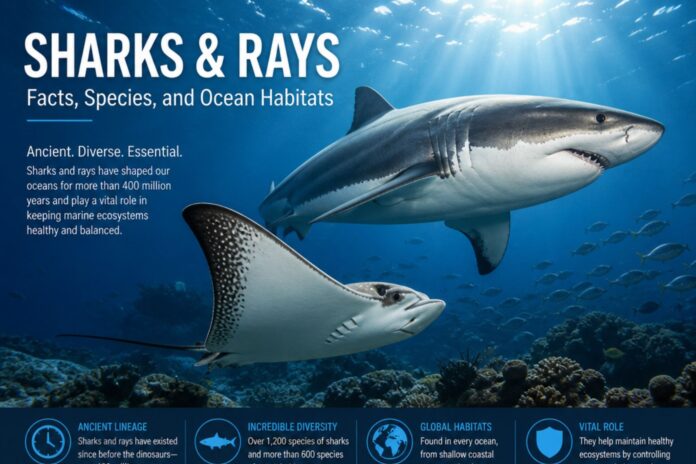
I have seen plenty of sharks in this state, and not from a dive boat with a briefing and a waiver. Growing up boating, skiing, and generally living on the water around the islands off Miami, nurse sharks resting on the bottom near the flats and the occasional hammerhead cutting through open water further out were just part of the scenery. Flying over the Dry Tortugas years later, I remember looking down and realizing the water below was genuinely full of them, more sharks than I could count from that altitude. Florida isn’t just a place with sharks in it. It’s one of the best places on Earth to actually understand them.
Meet Florida’s Sharks
More than thirty shark species swim through Florida’s coastal waters, and the state consistently logs more unprovoked shark encounters than anywhere else in the country, typically accounting for roughly a third to half of all cases the International Shark Attack File records nationwide each year. Before that number alarms you, put it in real context: the total is usually somewhere between fifteen and thirty incidents statewide in a given year, the overwhelming majority minor bites from blacktip or spinner sharks working murky, bait filled surf, mistaking a foot or hand for a fish for a fraction of a second. Hospitalizations are uncommon and fatalities are rare. The most frequently encountered species in Florida waters are the blacktip shark, the bull shark, which tolerates brackish and even fresh water well enough to swim up rivers like the St. Johns, the tiger shark, the lemon shark, the great hammerhead, and the docile, bottom resting nurse shark.
The Shark Bite Capital of the World
Volusia County, and New Smyrna Beach specifically, has earned a nickname that sounds far more dramatic than the reality behind it: the Shark Bite Capital of the World. The title comes from sheer volume of minor incidents rather than severity, a product of warm, shallow, often murky inlet water packed with baitfish and surfers at the same time, conditions that produce frequent, low grade blacktip nips rather than anything resembling the movie version of a shark encounter. It’s a genuinely useful reminder that shark bite statistics and shark danger are not the same conversation.
Florida’s Shark Nurseries
What most beachgoers never realize is that many of Florida’s bays and lagoons aren’t just places sharks pass through, they’re where sharks are actually born and raised. Blacktip, bull, sandbar, and lemon sharks all use shallow, warm, food rich estuaries statewide as nursery grounds, places where newborn pups can grow for their first few vulnerable years relatively safe from larger predators before moving into deeper water as adults. The Indian River Lagoon, Florida Bay, and the mangrove backcountry of the Ten Thousand Islands near Naples all function this way, meaning a huge percentage of the sharks patrolling Florida’s coast as adults spent their earliest months in exactly the kind of calm, grassy, sandy bottomed water most people associate with kayaking and shelling rather than shark biology.
Jupiter: One of the Best Shark Dives in the Country
Palm Beach County’s Jupiter has quietly become one of the premier cage free shark diving destinations in the United States, thanks to its proximity to the warm, nutrient rich Gulf Stream running close to shore. From roughly December through March, Jupiter hosts a genuinely spectacular lemon shark aggregation, with dozens of individuals, some over ten feet long, congregating over open sand to mate before dispersing to mangrove nurseries further south. Tiger sharks pass through in spring, including a few well known, individually recognized regulars that dive operators and researchers have tracked for over a decade. Great hammerheads make appearances too, more skittish and harder to photograph than the lemons, which somehow makes every sighting feel like more of an event. Just offshore, researchers have documented as many as 12,000 individual blacktip sharks migrating along the Palm Beach coast in a single winter, one of the largest shark migrations ever recorded anywhere in the world, visible at times as a genuine dark shifting mass in the water from the beach itself or a low flying plane.
The Keys: Reef Sharks and Nurse Sharks
The coral reef tract running the length of the Florida Keys holds a quieter, gentler shark scene than Jupiter’s open water aggregations. Caribbean reef sharks patrol the reef edge in loose, unhurried groups, and nurse sharks rest by the dozens under ledges and coral overhangs by day, active only after dark. Many dive shops throughout the Keys, from Key Largo down to Key West, run reef trips where a shark sighting is less a planned event and more a near guarantee, since these animals are simply part of the resident reef community here rather than a seasonal visitor.
Region by Region: Where the Sharks Are
Sharks are part of the water off nearly every Florida beach, most of them small, docile, and completely uninterested in you. Here’s the state, region by region, with the species and behavior actually worth knowing about at each stretch of coast.
The Panhandle
Sharks along Perdido Key and the Gulf Islands National Seashore are mostly small, coastal species, blacktips and the occasional bonnethead, a small hammerhead relative, cruising the sandbars just off the beach chasing bait. Panama City’s St. Andrew Bay and Choctawhatchee Bay both see nurse sharks resting on sandy bottom near grass flats, easily mistaken for rocks until they move.
The Nature Coast & Big Bend
This quieter stretch of Gulf coast holds smaller coastal sharks, blacktips and Atlantic sharpnose, working the same clear, spring influenced water that draws manatees and dolphins. Sightings here tend to be brief and incidental rather than a destination experience, more a byproduct of paddling calm, clear water than a planned encounter.
Tampa Bay
Tampa Bay’s broad, shallow flats hold bonnethead sharks and blacktips year round, both regularly seen by anglers and paddlers working the grass beds near Apollo Beach and the barrier islands of St. Petersburg and Clearwater. Bull sharks are also documented moving well up the bay’s connected rivers during warmer months.
Southwest Florida
Behind Lido Key and Siesta Key, nurse sharks and blacktips are common in the seagrass shallows of Sarasota Bay, and Mote Marine Laboratory, based right here in Sarasota, runs the longest running shark abundance survey in the country from these same waters. Further south, Charlotte Harbor and the passes around Boca Grande, Sanibel, and Captiva hold healthy populations of blacktip and bonnethead sharks working the same sandy channels favored by tarpon anglers, and the mangrove backcountry of the Ten Thousand Islands near Naples serves as nursery habitat for several coastal species.
The Space & Treasure Coasts
This is genuinely the marquee shark region of the entire state. Jupiter, in northern Palm Beach County, hosts one of the best cage free shark dives in the country, with a winter lemon shark aggregation, spring tiger sharks, and great hammerheads all passing through waters warmed by the nearby Gulf Stream. Just offshore, researchers have documented as many as 12,000 blacktip sharks migrating along this same stretch of coast in a single winter, one of the largest shark migrations ever recorded. Further north, Volusia County’s New Smyrna Beach carries the nickname Shark Bite Capital of the World, a title earned through sheer frequency of minor blacktip nips in busy, murky surf rather than any unusual danger.
Southeast Florida & the Keys
Miami’s Biscayne Bay and the barrier beaches around Key Biscayne hold nurse sharks and blacktips in the same shallow flats favored by bonefish anglers. Further south, the coral reef tract running the length of the Florida Keys is home to Caribbean reef sharks and nurse sharks resting in ledges and under coral heads by day, and the remote waters around Dry Tortugas National Park hold enough sharks, of enough species, to be genuinely visible from a small plane on a clear day, one of the more striking wildlife sights in the entire state.
A Note on the Sand Underneath
A surprising number of Florida’s sharks spend serious time directly on the sand rather than cruising open water above it. Nurse sharks rest motionless on sandy or rubble bottom by day, and bonnethead sharks, a small, social hammerhead relative common in Florida’s grass flats, use their flattened heads to sweep across sandy bottom hunting stingrays and crustaceans hidden just beneath the surface. The next time you’re wading a shallow, sandy flat anywhere in this state, there’s a real chance something with a dorsal fin is resting or hunting closer to your feet than you’d guess, and a real chance it has absolutely no interest in you at all.
Who’s Researching Florida’s Sharks
Florida is home to some of the most important shark research in the country. The Florida Program for Shark Research, based at the Florida Museum of Natural History at the University of Florida, maintains the International Shark Attack File and has run one of the longest continuous shark tagging programs in the country since the 1950s. Mote Marine Laboratory in Sarasota operates the nation’s only congressionally designated Center for Shark Research, founded in part by Eugenie Clark, the pioneering scientist known worldwide as the Shark Lady, and runs the longest running shark abundance survey in the country. OCEARCH conducts regular tagging expeditions in Florida waters, and its public shark tracker has turned individually named great whites like Contender into some of the most followed wild animals online. Nova Southeastern University’s Guy Harvey Research Institute focuses on migratory pelagic species passing through Florida waters, and Florida Atlantic University’s Elasmobranch Research Laboratory studies coastal sharks in the state’s most complex estuarine systems.
The Rules I Don’t Bend On
Several of Florida’s most iconic species, including the great hammerhead, tiger shark, and lemon shark, are protected from harvest in state waters, meaning it’s illegal to land or kill them regardless of whether you’re fishing recreationally or commercially. Never chum, feed, or attempt to touch a wild shark on your own, and if you’re diving with an operator who does use bait to draw sharks in for viewing, choose one with a documented, responsible protocol rather than one promising a guaranteed close encounter. Report any shark that appears entangled, injured, or in obvious distress to the FWC Wildlife Alert Hotline at 888-404-3922 rather than attempting to handle it yourself.
Questions I Get All the Time
Is it actually dangerous to swim at New Smyrna Beach?
Statistically it’s one of the least dangerous ways to encounter a shark, since the bites recorded there are overwhelmingly minor and rarely require more than basic first aid. The nickname reflects frequency of minor incidents, not severity.
What’s the best time of year to see sharks in Jupiter?
December through March for the lemon shark aggregation, spring for tiger sharks, with blacktips passing through in the largest numbers during the coldest winter months.
Do bull sharks really swim in Florida’s rivers?
Yes, genuinely. Bull sharks tolerate fresh water better than almost any other shark species and have been documented well up the St. Johns River and in other brackish and freshwater systems statewide.
How can I reduce my own risk in the water?
Avoid swimming at dawn, dusk, or in murky water near inlets and river mouths where bait fish congregate, remove shiny jewelry that can resemble fish scales, and avoid swimming alone far from shore.
Are great white sharks really in Florida waters?
Yes, though they’re rare south of Cape Canaveral. OCEARCH has tracked tagged great whites moving along the north Florida coast in winter, with occasional pings recorded as far south as the Keys.
Why do so many Florida bays function as shark nurseries?
Shallow, warm, grass and mangrove lined water offers newborn pups abundant small prey and fewer large predators than open water, giving them a genuinely safer place to grow for their first few years of life.
Do I need a special certification to go shark diving in the Keys or Jupiter?
Jupiter’s cage free dives typically require an open water scuba certification, while several operators statewide offer surface viewing or snorkel based trips that don’t require diving certification at all.
Thoughts & Reflections
I keep coming back to that flight over the Dry Tortugas, looking down at water so full of sharks it genuinely changed how I understood the ocean beneath every boat I’d ever ridden in. I’d spent a whole childhood assuming I knew what was down there because I’d occasionally glimpsed a fin or a shadow. Turns out I’d only ever seen the smallest fraction of it, and the rest had been going about its business completely indifferent to my presence the entire time. That’s a strange kind of humbling, realizing how much life continues on without needing your attention or your permission. I think I needed a plane and some real altitude to finally understand something the water had been trying to teach me my whole life.
