

Archie Carr National Wildlife Refuge Beach, Florida
Archie Carr National Wildlife Refuge is the beach I point to whenever someone asks me why sea turtles matter to Florida’s coastline. This 20.5 mile stretch between Melbourne Beach and Wabasso Beach holds the most important loggerhead nesting habitat anywhere in the Western Hemisphere, and walking it at the right time of year means walking alongside a piece of conservation history that most visitors to this coast never even realize they’re standing on.
This refuge isn’t one beach so much as a patchwork of protected dune habitat woven between existing homes, small county parks, and Sebastian Inlet State Park, stretching from Melbourne Beach in south Brevard County down to Wabasso Beach in north Indian River County. It was established in 1991 and named for Dr. Archie Carr Jr., the University of Florida zoologist whose research and writing turned global attention toward saving sea turtles from extinction. Between 25 and 35 percent of all loggerhead and green sea turtle nests in the entire United States happen somewhere along this 20.5 mile stretch.
In this guide I’ll walk you through the distinct access points along this refuge, going deep on what makes this sand so critical to sea turtle survival, covering why pets stay off the sand here, scoring it honestly, and telling you exactly who this stretch actually suits. I’ll cover the education center, the quieter county parks, and the northern reach into Indian River County that most Space Coast visitors never make it to. For more on the wildlife here, I’ve also written a birding guide and a beach finds guide for this stretch. I close with why this refuge matters so much to the work I do, since protecting places like this is exactly the mission behind every beach I walk.
The Vibe & Culture at Archie Carr National Wildlife Refuge
A Working Conservation Site, Not a Beach Destination
This refuge asks something different of visitors than any other beach in this guide series: come quietly, come informed, and let the wildlife set the terms.
Unlike Canaveral National Seashore further north, this refuge isn’t one continuous stretch of untouched wilderness. It’s a deliberate patchwork, federal, state, and county-owned parcels stitched together with private conservation easements across land that sits right alongside existing homes and small beach towns. The Archie Carr Working Group, a partnership between the U.S. Fish and Wildlife Service, the State of Florida, Brevard and Indian River Counties, and conservation groups like the Sea Turtle Conservancy, has spent decades acquiring at-risk beachfront parcels specifically to keep this nesting habitat intact as coastal development presses in from every side.
That gives this refuge a genuinely different feel from a typical beach visit. Access points are small and scattered, several with nothing more than a parking area and a dune crossover. The one real hub is the Barrier Island Center at Doc Ehrhart Sanctuary, a free education center with a mile-long dune-to-lagoon trail, exhibits on sea turtle biology, and a boardwalk overlook that puts the whole mission of this place into context before you ever set foot on the sand.
The rhythm here follows the sea turtles themselves more than any tourist calendar. Spring brings the first nesting arrivals in March and April. Summer, especially June through August, is peak nesting season, with loggerheads alone producing between 8,000 and 20,000 nests across the refuge in a given year. Fall brings the hatchlings, since nests laid in August can hatch by October, and winter is the quiet season, best for walking without turtles on your mind at all.
Archie Carr National Wildlife Refuge Areas: Five Distinct Access Points
This refuge runs long and narrow, so I’m covering it north to south, from Melbourne Beach down into Indian River County.
Doc Ehrhart Sanctuary & the Barrier Island Center
8385 S. Highway A1A, Melbourne Beach · Free Admission
This 34-acre sanctuary, renamed in 2025 to honor Dr. Llewellyn “Doc” Ehrhart, whose five decades of sea turtle nesting research directly led to this refuge’s creation, is the best place to start any visit here. The Barrier Island Center inside offers interactive exhibits, an auditorium with orientation films, a gift shop, and an accessible ocean-view boardwalk, all free of charge, open Tuesday through Sunday.
Behind the center, a mile-long trail crosses A1A twice, moving through maritime hammock, coastal strand, and mangrove tidal swamp on its way from the dunes to the Indian River Lagoon. The crowd here mixes families on a school trip, serious birders, and visitors who’ve read ahead and specifically want the context before walking the beach itself.
I always tell people to start here rather than just driving to the nearest access point. Understanding why this sand matters before you walk on it changes the entire experience, and the guided sea turtle walks offered here in June and July, run through the Sea Turtle Conservancy, fill up months in advance for good reason.
Coconut Point Park & Juan Ponce de Leon Landing
South Brevard County · Day Use Only
South of the sanctuary, Coconut Point Park offers one of the more complete access points in this guide, part of a 1-mile ocean-to-lagoon hike through some of Brevard County’s most diverse natural land. Juan Ponce de Leon Landing nearby marks the traditional site of the explorer’s 1513 landing, adding a layer of history to what’s primarily a conservation stop.
The crowd here stays thin, hikers working the full ocean-to-lagoon loop, a handful of history-minded visitors reading the landing marker, and locals using the beach access for an ordinary swim or walk. Neither spot pushes hard for attention, which fits this whole refuge’s low-key character.
This is a good stop for anyone who wants a genuine hike alongside their beach time, since the loop trail here gives you both the ocean and the lagoon side of this barrier island in a single walk.
Bonsteel Park & Judith Resnick Memorial Park
South Brevard County · Limited Facilities
These two access points represent the refuge at its most stripped down, parking, a dune crossover, and little else, exactly the kind of quiet, undeveloped beach access this refuge was created to preserve. Judith Resnick Memorial Park honors the Space Shuttle Challenger astronaut, a fitting tribute given how close this stretch of coast sits to the launch complexes further north.
The crowd here is close to nonexistent most days, a few locals, the occasional angler, and visitors who’ve specifically sought out the quietest stretch of this whole refuge. There’s genuinely nothing to do here beyond walk the beach and look for nesting activity in season, and that’s precisely the point.
Sebastian Inlet’s Refuge Boundary
North & South Use Areas · Shared with Sebastian Inlet State Park
The refuge’s boundary runs directly through Sebastian Inlet State Park, with the park’s North Use Area falling within Brevard County’s refuge boundary and the Day Use Area extending into the Indian River County side. This overlap means you get the state park’s fuller amenities, the museums, the surf break, the fishing jetties, alongside the refuge’s core conservation mission in the same stretch of sand.
The crowd here is the busiest in this entire guide, surfers working First Peak, anglers on the jetties, and families in The Cove’s protected swimming area. It’s worth remembering, even amid all that activity, that you’re standing in the middle of the most significant sea turtle nesting habitat in the Western Hemisphere.
I’d treat a Sebastian Inlet stop as your one concession to amenities within this otherwise minimal-facility refuge. Everything else along this stretch asks you to bring your own supplies and expect very little beyond sand and wildlife.
Golden Sands, Treasure Shores & Ambersands
North Indian River County · Toward Wabasso Beach
South of Sebastian Inlet, the refuge continues into Indian River County through Treasure Shores Park, Golden Sands Park, and the more primitive Ambersands Beach Access, closing out the protected stretch as it approaches Wabasso Beach. This is the part of the refuge most Space Coast visitors never reach, since it sits well south of the Brevard County beach towns most people associate with this area.
The crowd here is thin and mostly local to Indian River County, a different population than the Brevard side, drawn by the same quiet, undeveloped character. Treasure Shores in particular offers a genuinely pleasant stretch of beach for anyone willing to make the drive this far south.
This is the stretch I’d point to for anyone who wants to say they’ve walked the entire refuge, not just the more accessible Brevard County half. It’s a genuine commitment to reach, and that’s exactly why it stays so quiet.
Archie Carr National Wildlife Refuge Rankings: Expert Scores Across 11 Categories
These scores reflect a refuge built around conservation first, which shows clearly in categories tied to amenities versus the categories tied to its actual mission.
Sand Quality
7/10
Solid Atlantic quartz, generally well preserved given the protection status, comparable to the better-maintained beaches in South Brevard just north of here.
Hiking & Beach Walking
9/10
Twenty and a half miles of protected coastline, dotted with genuine hiking trails at Doc Ehrhart Sanctuary and Coconut Point Park. Among the best walking in this entire guide series.
Shelling
6/10
Moderate, consistent with the rest of this stretch of coast, better near Sebastian Inlet’s jetties than along the open beach elsewhere in the refuge.
Water Conditions
7/10
Typical Atlantic surf throughout, largely unguarded outside Sebastian Inlet’s seasonal lifeguard coverage. Swim at your own risk at the smaller, limited-facility access points.
Scenery & Natural Beauty
8/10
Genuinely beautiful dune and hammock habitat throughout, though existing homes and development sit closer to the sand here than at a true wilderness beach like Canaveral National Seashore.
Birding & Wildlife
10/10
The most important loggerhead nesting habitat in the Western Hemisphere and the most significant green turtle nesting area in North America. Nothing in this guide series competes on this measure.
Family Friendliness
6/10
The Barrier Island Center is genuinely excellent for families, but most beach access points offer minimal facilities. Sebastian Inlet’s Cove is the exception with real family infrastructure.
Dog Friendliness
3/10
Standard Brevard and Indian River County restrictions apply, with the added sensitivity of nesting habitat making this a place to leave dogs at home regardless.
Solitude & Peace
8/10
Genuinely quiet throughout, especially at the limited-facility access points like Bonsteel Park and the Indian River County stretch near Wabasso Beach.
Entertainment & Nightlife
1/10
None, and that’s the design. This refuge exists specifically to keep artificial light and nighttime activity away from nesting sea turtles.
Parking & Beach Access
5/10
Numerous access points exist, but many offer only a small lot and a dune crossover. Sebastian Inlet State Park is the one stop with full-service parking and amenities.
Archie Carr National Wildlife Refuge Sand & Water
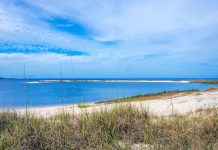
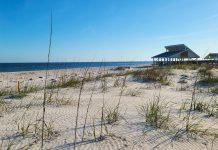
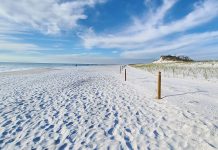
The sand across this refuge runs firm and flat for its full 20.5 miles, easy underfoot at the waterline and a bit softer up near the dunes. What matters here isn’t so much the sand’s texture as its condition, wide, gently sloping, and free of the heavy erosion problems that affect beaches closer to Port Canaveral’s jetties further north. It’s a genuinely comfortable beach for a long walk, though most stretches offer nothing beyond a small lot and a dune crossover, so don’t expect amenities alongside the sand itself.
The water behaves like typical Atlantic surf for nearly the entire refuge, calm and gradual on a good day, with one major exception. At Sebastian Inlet, tidal currents run genuinely strong and the surf turns into one of the East Coast’s most storied breaks. Elsewhere, swimming conditions stay approachable but mostly unguarded, so check conditions before you go in past your knees anywhere outside Sebastian Inlet’s seasonal lifeguard coverage.
-
Walkability. Firm and flat for the refuge’s full 20.5 miles, among the best long walking in this entire guide series.
-
Softness & Playability. Firm at the waterline, softer up near the dunes. Good for sandcastles once you add water, though amenities are minimal beyond the sand itself.
-
Barefoot Comfort. Comfortable throughout, generally better preserved than the more heavily eroded beaches further north on this coast.
-
Swimmability. Good at Sebastian Inlet’s guarded stretches in season. Unguarded and swim-at-your-own-risk nearly everywhere else in the refuge.
Want the full geology, grain composition, and the complete sand and water condition ratings? I broke it all down separately in Sand & Shore: Archie Carr National Wildlife Refuge.
Dogs & Pet Accessibility at Archie Carr National Wildlife Refuge
Are Dogs Allowed on the Sand? NO.
Standard Brevard and Indian River County beach restrictions apply throughout this refuge, and the added sensitivity of nesting habitat makes it a place to leave dogs at home regardless of the specific rule at any given access point.
Where Dogs Are Allowed
- ✓Canova Beach Park in Indian Harbour Beach, a short drive north of this refuge’s boundary, which has Brevard County’s only standing dog-friendly beach.
- ✓The grounds around the Barrier Island Center at Doc Ehrhart Sanctuary, leashed, though not the beach or dune-to-lagoon trail itself.
Where Dogs Are NOT Allowed
- ✗Every ocean-side beach access point along this refuge’s 20.5 miles, including Coconut Point, Bonsteel Park, and Sebastian Inlet’s beaches.
- ✗The Doc Ehrhart Sanctuary’s dune-to-lagoon trail.
Paws on the Ground Reality
There’s genuinely no good workaround here, and I’d rather tell you that directly than send you on a wasted drive with your dog. This refuge exists specifically to protect nesting sea turtles, and that protection extends to keeping pets off the sand at every access point along its length, not just during nesting season but year-round. Most of these access points also have no water source and minimal shade, so even if dogs were allowed, this wouldn’t be an easy stretch for a hot-weather walk.
If you’re traveling with a dog and want beach access nearby, Canova Beach Park in Indian Harbour Beach, a short drive north of this refuge, is genuinely your best option on this part of the coast.
Crowd Levels and the Overall Feel of Archie Carr National Wildlife Refuge
This refuge runs quiet nearly everywhere except Sebastian Inlet, and even during peak nesting season, the crowd stays thin compared to any developed beach town in this guide series.
You’ll find a different crowd depending on where you stand. The Barrier Island Center draws families and school groups. The limited-facility access points draw almost nobody beyond locals and dedicated walkers. Sebastian Inlet draws the busiest, most varied crowd in the entire refuge.
The overall feel here tracks the sea turtle nesting calendar more than any tourist season:
- March and April: the first nesting arrivals of the season, with light crowds throughout
- June and July: peak nesting season and the only window for the guided turtle walks offered through the Barrier Island Center
- August through October: hatchling season, as nests laid in midsummer begin to hatch roughly 60 days later
- Winter: the quietest stretch of the year, with rarely any turtle activity but excellent conditions for an uncrowded walk
Who Is Archie Carr National Wildlife Refuge Really For?
✓ Who Will Love This Refuge
-
Anyone genuinely interested in sea turtle conservation, since this refuge protects the most important nesting habitat in the Western Hemisphere
-
Families willing to plan months ahead for a guided summer turtle walk through the Sea Turtle Conservancy
-
Long-distance walkers who want genuinely quiet, uncrowded sand for miles at a stretch
-
Surfers and anglers drawn to Sebastian Inlet, which sits inside this refuge’s boundary
-
Anyone who wants to understand the conservation story behind Florida’s coastline, not just enjoy the sand itself
-
Birders and wildlife watchers hoping for gopher tortoises, manatees, and brown pelicans alongside the sea turtles
✗ Consider Another Beach If…
-
You need full facilities, restrooms, and lifeguard coverage everywhere you go. Most of this refuge offers minimal amenities by design
-
You want a guaranteed sea turtle sighting on demand. Guided walks are seasonal, limited, and fill up months in advance
-
You’re bringing a dog. Standard county restrictions apply, and the nesting sensitivity here is another reason to leave pets at home
-
You want a true, undeveloped wilderness beach. Existing homes and development sit closer to the sand here than at Canaveral National Seashore
-
You’re looking for nightlife or dining directly on the sand. This refuge has none, and actively works to keep it that way
-
You want a single, easy-to-find beach access point. This refuge is scattered across more than 20 miles and multiple counties
Things to Do at Archie Carr National Wildlife Refuge, Florida
This refuge rewards a different kind of visit than a typical beach day. Here’s what actually fills the time here.
-
Guided Sea Turtle Walks. Offered in June and July through the Sea Turtle Conservancy and Brevard County’s EEL Program, departing from the Barrier Island Center. Reservations open months in advance.
-
Barrier Island Center Exhibits. Free interactive displays, orientation films, and a gift shop covering sea turtle biology and barrier island ecology, open Tuesday through Sunday.
-
Dune-to-Lagoon Hiking. The mile-long trail at Doc Ehrhart Sanctuary and the ocean-to-lagoon loop at Coconut Point Park both cross the full width of the barrier island.
-
Surfing at Sebastian Inlet. First Peak sits directly within this refuge’s boundary, one of the most storied waves on the East Coast.
-
Fishing. Sebastian Inlet’s jetties offer some of the best saltwater fishing on this coast, well within the refuge boundary.
-
Kayaking. A lagoon launch at Doc Ehrhart Sanctuary offers calm-water paddling on the Indian River Lagoon side of the refuge.
-
Wildlife Watching. Gopher tortoises, brown pelicans, manatees, and a wide range of shorebirds inhabit the refuge’s beach, dune, hammock, and mangrove habitats.
-
Beach Walking. The limited-facility access points, Bonsteel Park, Judith Resnick Memorial Park, and the Indian River County stretch near Wabasso Beach, offer some of the quietest walking in this entire guide series.
Local Knowledge and Practical Advice
A few things I’ve picked up walking this refuge more times than I can count:
-
Book a guided turtle walk months ahead, not weeks. The June and July program through the Barrier Island Center has limited spots and fills quickly every year.
-
Never use a flashlight or flash photography on this beach at night. Artificial light disrupts nesting females and can send hatchlings the wrong direction, straight toward the road instead of the ocean.
-
Bring your own water at every access point except Sebastian Inlet. Most stops along this refuge have no running water and minimal facilities.
-
Start at the Barrier Island Center before you explore the beach access points. The context genuinely changes how you see the rest of your visit.
-
Never disturb a marked nest, even out of curiosity. Give every roped-off area a wide, respectful distance and keep pets and unauthorized digging away entirely.
-
Check conditions before swimming at any unguarded access point. Most of this refuge has no lifeguard coverage outside Sebastian Inlet’s seasonal towers.
-
Print a trail map before visiting the more remote access points. Several, like Ambersands, have minimal signage and are easy to drive past without noticing.
-
Pack out everything you bring in. This refuge runs on a thin margin of protection against surrounding development, and every bit of care matters here more than most places.
Where to Stay Near Archie Carr National Wildlife Refuge, Florida
There’s no lodging inside the refuge itself, but the surrounding towns offer real options at both ends.
Melbourne Beach, North End
The closest lodging to the Barrier Island Center and the northern access points, with vacation rentals and a handful of small hotels. See my full Melbourne & South Brevard Beaches guide for details on staying in this town.
Camping at Sebastian Inlet State Park
A full-facility campground sits directly within the refuge’s boundary, one of the more popular camping destinations in the state given the surf and fishing right outside the tent flap.
Wabasso & Vero Beach, South End
For the southern access points near Golden Sands and Treasure Shores, the towns of Wabasso and Vero Beach in Indian River County offer a wider range of lodging than the more remote refuge access points themselves.
Inland Melbourne & Sebastian
For lower rates, the inland corridors near Melbourne and the town of Sebastian offer budget options within a short drive of this entire refuge.
What Makes Archie Carr National Wildlife Refuge Different from Nearby Beaches
This refuge exists for one primary reason, and it shows in every part of the experience: protecting the single most important sea turtle nesting habitat in the Western Hemisphere.
A few other features make it distinct:
A patchwork refuge, not a single wilderness
Unlike a fully undeveloped park, this refuge weaves protected land between existing homes and small towns, a genuinely different conservation model than a place like Canaveral National Seashore.
The nation’s most significant sea turtle land acquisition effort
Decades of partnership between federal, state, county, and private conservation groups have made this refuge the most significant land protection effort for marine turtles in the country.
Named for the scientist who made it happen
Dr. Archie Carr’s research and writing single-handedly shifted global attention toward sea turtle conservation, and this refuge carries his name as a direct result.
Archie Carr National Wildlife Refuge vs. Nearby Protected Areas
These are the places visitors most often weigh against this refuge, and the honest read on when you’d choose one over the other.
Archie Carr National Wildlife Refuge vs. Canaveral National Seashore
Canaveral National Seashore offers true undeveloped wilderness with far fewer nearby homes. This refuge offers a more accessible, patchwork conservation model woven directly into existing beach towns, with an equally serious nesting mission.
Archie Carr National Wildlife Refuge vs. Sebastian Inlet State Park
Sebastian Inlet sits directly within this refuge’s boundary and offers the fuller amenities, surf, and fishing that the rest of the refuge deliberately lacks. Visiting both together gives you the complete picture.
Archie Carr National Wildlife Refuge vs. Melbourne Beach
Melbourne Beach’s developed beach access points sit at this refuge’s northern edge, offering more convenience while still benefiting from the same protected nesting habitat just south of town.
Bottom line: Archie Carr National Wildlife Refuge isn’t a beach vacation destination, and it was never meant to be one. It’s the most important sea turtle nesting habitat in the Western Hemisphere, woven quietly into 20.5 miles of Florida’s central Atlantic coast, and understanding that mission is the real reason to visit.
Archie Carr National Wildlife Refuge, Florida: Frequently Asked Questions
Is Archie Carr National Wildlife Refuge worth visiting?
Yes, especially for anyone interested in sea turtle conservation. This refuge protects the most important loggerhead nesting habitat in the Western Hemisphere, and the free Barrier Island Center offers real educational depth alongside the beach access.
Why is Archie Carr National Wildlife Refuge famous?
It protects 20.5 miles of the most significant loggerhead sea turtle nesting habitat in the world and the most significant green turtle nesting area in North America, accounting for 25 to 35 percent of all such nests in the United States.
How do you see a sea turtle walk at Archie Carr National Wildlife Refuge?
Guided walks run through the Sea Turtle Conservancy and Brevard County’s EEL Program in June and July, departing from the Barrier Island Center. Spaces are limited and fill up months in advance.
Is there a visitor center at Archie Carr National Wildlife Refuge?
Yes, the Barrier Island Center at Doc Ehrhart Sanctuary in Melbourne Beach, open Tuesday through Sunday with free admission, exhibits, a gift shop, and a mile-long dune-to-lagoon trail.
Are dogs allowed at Archie Carr National Wildlife Refuge?
Standard Brevard and Indian River County beach restrictions apply throughout, and the refuge’s nesting sensitivity is an additional reason to leave dogs at home regardless of specific rules at any given access point.
Can you swim safely at Archie Carr National Wildlife Refuge?
Most access points are unguarded, with the exception of Sebastian Inlet’s seasonal lifeguard coverage. Check conditions before swimming anywhere else along this refuge.
Can you camp at Archie Carr National Wildlife Refuge?
Not within the refuge’s minimal-facility access points, but Sebastian Inlet State Park, which sits within the refuge boundary, offers a full-facility campground for tents and RVs.
What is the best time of year to visit?
June and July offer the only window for guided sea turtle walks. Winter offers the quietest, most comfortable walking if turtle nesting isn’t the main draw for your visit.
Is Archie Carr National Wildlife Refuge the same as Canaveral National Seashore?
No. Both protect significant Florida coastline, but Canaveral National Seashore is a National Park Service unit further north with fewer nearby homes, while Archie Carr is a U.S. Fish and Wildlife Service refuge built as a patchwork of protected land within existing beach communities.
Who was Archie Carr?
Dr. Archie Carr Jr. was a University of Florida zoologist whose research and writing, including his book “The Windward Road,” brought international attention to sea turtle conservation and led directly to this refuge’s creation after his death in 1987.
Patti’s Perspective: My Honest Take on Archie Carr National Wildlife Refuge
Part of my mission walking every beach in Florida has always been raising awareness about wildlife and conservation, not just cataloging sand and water conditions. Archie Carr National Wildlife Refuge is the clearest example I’ve found anywhere on this coast of why that mission matters. This isn’t a beach that needs my help getting attention. It’s already the most important sea turtle nesting habitat in the entire Western Hemisphere. What it needs is for people walking it to actually understand what they’re standing on.
What strikes me most walking this refuge is how quietly it does its work. There’s no dramatic entrance, no visitor center rivaling a national park, just small parking areas and dune crossovers scattered across more than twenty miles, doing exactly what they were designed to do without asking for credit. Learning that this entire effort traces back to one scientist’s research and writing, and that decades of partnership between federal, state, county, and private groups have kept building on that foundation ever since, is the kind of thing that deepens how I see every beach I walk after visiting here.
I don’t come to this refuge for a beach day the way I would at Cocoa Beach or New Smyrna. I come here to remember why the sand matters in the first place, and to walk quietly enough that whatever’s nesting nearby never knows I was there.
My verdict: 8/10. Not a beach vacation, and not trying to be one. This refuge protects the single most important sea turtle nesting habitat in the Western Hemisphere, and every mile of quiet, minimally developed sand here exists specifically to keep that mission intact.
Want to Live by the Water?There’s no real estate inside the refuge itself, since protecting this nesting habitat from further development is the entire point of the Archie Carr Working Group’s decades-long acquisition effort. The surrounding towns, though, offer genuine waterfront living within reach of this protected coastline. Melbourne Beach anchors the north end, while Wabasso and Vero Beach offer options to the south in Indian River County.Buyers drawn to this stretch tend to value the same quiet, conservation-minded character that defines the refuge itself, proximity to protected nesting beaches without living inside the protected land. Limited available inventory near the refuge boundary tends to command a real premium given how little new development can happen so close to it.If living by the water is something you’re considering, whether full time, part time, or as an investment, it’s worth exploring what’s available in the towns surrounding this refuge.Explore Waterfront Living at LiveByTheWater.com
Real estate referral partner