

Canaveral National Seashore: Apollo Beach & Playalinda Beach, Florida
Canaveral National Seashore is not a beach you visit for the sand. I want to say that up front, because the sand here is honestly nothing special compared to what I’ve walked at New Smyrna or Ponce Inlet a few miles north. What you come here for is 24 uninterrupted miles of undeveloped Atlantic coastline, the longest stretch left in Florida, and an experience that has stuck with me longer than almost anywhere else I’ve covered.
This national park splits into two districts that don’t connect by road. Apollo Beach sits at the north end, reached from New Smyrna Beach. Playalinda Beach sits at the south end, reached from Titusville through the Merritt Island National Wildlife Refuge, right next door to Kennedy Space Center. Between them runs Klondike Beach, ten miles of true backcountry with no road access at all. It’s more than an hour’s drive between the two entrance stations, even though they sit on the same barrier island.
In this guide I’m walking you through both districts, going deep on what the sand and water are actually like here, covering where pets are and aren’t allowed, scoring this park honestly, and telling you exactly who this place suits and who should stick to a developed beach instead. I’ll cover the shell mounds, the ghost town on the lagoon, the surf fishing, and yes, the reputation this park carries for a certain stretch of unofficial clothing-optional sand. For more on the wildlife and what turns up in the sand here, I’ve also written a birding guide and a beach finds guide for this stretch. I close with why this place has earned a permanent spot in my memory even though the sand itself never made my top list.
The Vibe & Culture at Canaveral National Seashore
Wilderness First, Beach Second
This is a National Park Service unit, not a beach town, and it behaves like one in every way that matters.
There’s no boardwalk here, no restaurant, no gift shop beyond the small one at the Apollo Visitor Center, and no running water past that same building. What you get instead is nearly 58,000 acres of barrier island, lagoon, and coastal hammock, two thirds of it underwater in Mosquito Lagoon, one of the most biologically productive estuaries in North America. The park exists as a wilderness buffer around Kennedy Space Center, which means the culture here is shaped as much by rocket launches and sea turtle science as it is by beach days.
Apollo Beach, the north district, feels like a quiet extension of New Smyrna, reached by a six mile dead-end road lined with numbered parking lots, shell mounds, and a handful of short hiking trails through coastal hammock. Playalinda, the south district, feels more remote and more dramatic, since you’re driving straight through a wildlife refuge to get there and the Kennedy Space Center launch towers are visible from the sand on a clear day. Neither district feels like it’s performing for visitors, and that’s exactly the point.
The seasonal rhythm here follows nesting turtles and rocket schedules more than tourist crowds. Summer brings peak turtle nesting and the only lifeguard coverage the park offers. Rocket launches can close sections of the park on short notice for public safety, so checking the park’s launch schedule before a Playalinda trip is worth the two minutes it takes. Winter brings migratory birds to the lagoon and the emptiest, coolest stretch of beach walking all year.
Canaveral National Seashore Areas: Five Distinct Stretches Across Two Districts
Since Apollo and Playalinda don’t connect by road, I’m covering this park north to south, starting at the New Smyrna entrance and ending at the Titusville side more than an hour away.
Turtle Mound & the Apollo Entrance
Parking Lot 1 · North District
The first thing most visitors do at Apollo Beach isn’t touch the sand at all, it’s climb the boardwalk at Turtle Mound, a Timucuan shell midden rising roughly 35 feet above Mosquito Lagoon, built from an estimated 1.5 million bushels of oyster shell starting around 800 A.D. From the observation deck at the top, you get a sweeping view of the Atlantic on one side and the lagoon on the other, and it’s one of the better free views on this entire coast.
The crowd here is a mix of history-minded visitors climbing the mound, surf anglers working Lot 1’s 89 parking spaces, the busiest lot in the whole park, and paddlers launching kayaks from the picnic area tucked behind the midden. It’s the most trafficked stop in the north district, but trafficked here still means genuinely quiet compared to any developed beach nearby.
I always start here, not just because it’s the first stop, but because standing on top of a thousand-year-old shell pile while looking out at the same ocean the Timucua once fished changes how you experience the rest of the walk south. Bring water, since there’s none past the visitor center.
Apollo Beach’s Numbered Lots & the Surf Fishing Scene
Parking Lots 2 through 5 · North District
South of Turtle Mound, Apollo Beach Road runs about six miles with four more numbered parking areas, each a little quieter than the last. Surf anglers treat this stretch like a religion, out on the sand by 6 a.m. when the gates open, sifting for sand fleas and casting into the shifting sandbars that trap fish on an outgoing tide. Lots 2 and 4 tend to draw solitude seekers, Lot 3 draws the heaviest surf fishing crowd, and Lot 5 is the last stop before the beach turns fully wild.
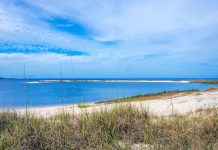
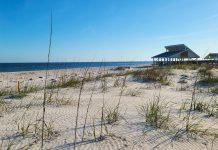
Beyond the anglers, you’ll find hikers headed for the short trails off Eldora Road, families who’ve read ahead and packed everything they need since there are no concessions anywhere in the park, and a noticeably thin crowd overall even in season. This entire stretch runs on hard-packed sand backed by dunes thick with sea oats and saw palmetto, genuinely wild-looking compared to anywhere else I’ve covered on this coast.
Here’s the detail I’d be doing you a disservice to leave out. South of Lot 5, the beach continues into an unofficial, long-standing clothing-optional stretch before it becomes the true Klondike backcountry. Nudity isn’t restricted on this side of the county line the way it is further south in Brevard County, and it’s been an open, unenforced local secret for decades. I mention it because pretending it doesn’t exist would be dishonest, and because it’s exactly the kind of detail a first-time visitor deserves a heads-up about before they wander south of that last parking lot.
Eldora Village & the Lagoon Side
Eldora Loop Road · North District
A short detour off Apollo Beach Road, Eldora Loop Road swings inland to what’s left of Eldora, a citrus community founded in 1882 that grew to about a hundred residents before a hard freeze wiped out the groves that supported it. The Eldora State House, one of only two original buildings still standing, now works as a small museum open Friday through Sunday, and the short hammock trails nearby, Castle Windy and Eldora Hammock, both duck through shaded coastal forest to reach the lagoon shoreline.
The crowd here is almost entirely paddlers and anglers rather than beachgoers. Mosquito Lagoon has a real reputation among serious fly fishers for tailing redfish working the oyster bars and backcountry channels, and you’ll see kayaks and canoes launching from both the Turtle Mound picnic area and the small hand launches along Eldora Road all day.
This is the stretch I point people toward if they want to understand what this park actually protects, not just a beach, but an entire estuary system with its own working history. Standing at the old Eldora wharf pilings, still visible in the shallow water, is a quieter kind of reflective moment than the beach itself usually offers.
Klondike Beach
Backcountry · Permit Required
Between the two developed districts runs Klondike Beach, ten miles of barrier island with no road, no parking lot, and no easy access at all. You reach it either by a long walk south from Apollo Beach’s last lot or north from Playalinda, or by boat into Mosquito Lagoon, and a backcountry permit from the ranger station is required if you plan to hike or camp out here.
Almost nobody makes this walk, which is exactly why the handful of people who do talk about it the way they do. This is the closest thing left in Florida to what this entire coast probably looked like before any of it was developed, dune scrub, shorebirds, and sea turtle tracks with no human footprints to compete with for stretches at a time.
I haven’t walked the full ten miles myself in one push, and I’ll be honest that most visitors shouldn’t attempt it without real preparation, water, sun protection, and a permit in hand. But knowing it’s there, genuinely wild and genuinely walkable, is part of what makes this whole park feel different from every other beach in this guide series.
Playalinda Beach & the Rocket Launch Pads
South District · Titusville Entrance
Playalinda Beach feels different from the moment you turn off the highway, since the drive in runs straight through Merritt Island National Wildlife Refuge, past alligators sunning at the water’s edge and osprey nests on old pilings, before you reach the entrance station. Thirteen numbered parking lots line four miles of beach road here, and on a clear day you can see the launch towers of Kennedy Space Center rising just south of the park boundary.
This is one of the best public viewing spots in Florida for a rocket launch, and the crowd shifts dramatically depending on the calendar. On a normal day it’s surf anglers, families, and a handful of birders. On a launch day, especially a major one, the lots fill early and the whole beach turns into an open-air viewing party, though the park does close sections on short notice for public safety around certain launches.
Like Apollo Beach’s southern end, Playalinda’s far reaches, particularly the boundary near the Klondike wilderness to the north, carry their own long-standing informal clothing-optional reputation, even though public nudity is technically against the law once you’re in Brevard County. Enforcement here has shifted over the years, so I’d treat any specific spot with caution rather than certainty about what’s currently tolerated.
Canaveral National Seashore Rankings: Expert Scores Across 11 Categories
These scores weigh both districts together, since Apollo and Playalinda share the same wilderness character even though they don’t connect by road.
Sand Quality
6/10
Honestly the weakest category in this guide series. Firm, functional quartz mixed with more shell hash than the beaches further north, fine for walking but not a destination for the sand itself.
Hiking & Beach Walking
9/10
The best in this entire guide series for anyone chasing true solitude. Twenty-four miles of undeveloped coastline, including the ten mile Klondike backcountry stretch, unmatched anywhere else on this coast.
Shelling
5/10
Moderate, picking up after storms. Not the draw here, but the total lack of foot traffic on most of this beach means less competition for whatever washes up.
Water Conditions
6/10
Real Atlantic surf with real rip current risk and lifeguards only at Lot 1 on each district, and only from late May through early September. Swim at your own risk everywhere else, and the park says so directly.
Scenery & Natural Beauty
10/10
The longest undeveloped stretch of coastline in Florida, and it shows in every direction. Nothing else in this guide series comes close on pure untouched scenery.
Birding & Wildlife
10/10
Manatees and dolphins in Mosquito Lagoon, over 7,000 sea turtle nests some years, migratory birds by the thousands in winter, and alligators on the drive into Playalinda. The richest wildlife stretch in this whole guide series.
Family Friendliness
6/10
Rewarding for older kids interested in history and wildlife, but there’s no running water, no showers, and no concessions anywhere in the park. Come fully prepared or don’t come at all.
Dog Friendliness
4/10
Dogs aren’t permitted on the ocean beaches, beach crossover boardwalks, Seminole Rest, or Turtle Mound, but they are welcome on the lagoon-side trails and beaches, a real distinction worth planning around.
Solitude & Peace
9/10
About as solitary as a Florida beach gets outside the true backcountry. Even the busiest lots here feel calm compared to any developed beach in this guide series.
Entertainment & Nightlife
1/10
None, on purpose. No boardwalk, no restaurants, no lights after dark. The park closes at sunset and that’s exactly how it should stay.
Parking & Beach Access
6/10
Plenty of numbered lots in both districts, but an entrance fee applies everywhere, the two districts don’t connect by road, and rocket launches can close sections of Playalinda without much notice.
Canaveral National Seashore Sand & Water
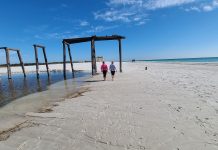
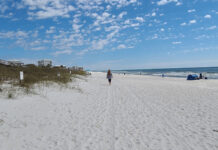
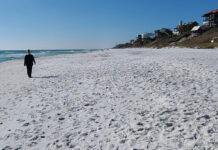
I’ll say it plainly since this whole series is built on being honest about sand: the beach here isn’t the draw. It’s flat and wide enough for a long walk, firm at the waterline and a bit softer and more effortful in the dry upper sand, but the grain itself runs coarser and more mixed with shell than the finer beaches at New Smyrna or Ponce Inlet just north. This isn’t a beach built for sandcastles or games so much as one built for solitude, since almost nobody is out here to share it with you.
The water is unguarded Atlantic surf for nearly this entire 24 mile stretch, and the park is upfront about that. Only two lots, one in each district, have lifeguards, and only from late May through early September. Entry is gradual most places, the color runs a typical green-blue on a calm day, but rip currents are a real and largely unmonitored risk here, so treat every swim as your own responsibility unless you’re at one of those two guarded spots.
-
Walkability. Flat, wide sand runs the park’s full 24 miles, with the Klondike backcountry offering the longest uninterrupted stretch in this whole guide series.
-
Softness & Playability. Firm at the waterline, softer and more effortful in the dry upper sand. Not the best beach for sandcastles, but plenty of room to spread out.
-
Barefoot Comfort. Comfortable at the waterline, though the shell content underfoot runs a bit sharper in places than the finer sand beaches further north.
-
Swimmability. Swim at your own risk outside the two lifeguarded lots, and only in season. This park is honest that it’s not watching the water most of the time.
Want the full geology, grain composition, and the complete sand and water condition ratings? I broke it all down separately in Sand & Shore: Canaveral National Seashore.
Dogs & Pet Accessibility at Canaveral National Seashore
Are Dogs Allowed on the Sand? RESTRICTED.
Dogs aren’t permitted on the ocean beaches anywhere in this park, but they’re welcome on the Mosquito Lagoon side.
Where Dogs Are Allowed
- ✓The lagoon-side trails and beaches along Mosquito Lagoon, leashed.
- ✓The picnic area near Turtle Mound’s parking lot, leashed, though not the shell mound boardwalk itself.
Where Dogs Are NOT Allowed
- ✗The ocean beaches at both Apollo Beach and Playalinda Beach, for the park’s entire 24 mile length.
- ✗All beach crossover boardwalks connecting parking lots to the ocean side.
- ✗Turtle Mound’s boardwalk and Seminole Rest’s historic grounds.
Paws on the Ground Reality
There’s no water source for pets anywhere in this park, not even at the visitor center, so bring plenty for a hot day, especially if you’re walking the lagoon trails. The lagoon-side sand and shell paths run coarser than a developed beach, and there’s little shade along most of them, so plan for an early morning walk in summer rather than a midday one. Rangers do enforce the ocean-beach ban seriously here, since it’s tied directly to sea turtle nesting protection rather than just a general policy, so don’t try to bring a dog onto the sand even for a quick photo.
If you specifically want a beach walk with your dog rather than a lagoon trail, Ormond Beach or Smyrna Dunes Park, both a short drive north, are better choices.
Crowd Levels and the Overall Feel of Canaveral National Seashore
Compared with any developed beach in this guide series, this park runs dramatically quieter, even on its busiest days. The exception is a major rocket launch at Playalinda, when the crowd shifts fast and the lots fill before most people would think to leave home.
You’ll find a different crowd in each district. Apollo Beach draws surf anglers, history-minded hikers, and paddlers heading for Mosquito Lagoon. Playalinda draws the same mix plus a genuine launch-watching crowd on the right day. Klondike Beach in between draws almost nobody, which is exactly its appeal.
The feel here shifts by nesting season and launch schedule more than by the tourist calendar:
- Spring: comfortable hiking weather and the start of nesting season, with light crowds throughout
- Summer: peak nesting season, the only window with lifeguard coverage, and the busiest stretch of the year, especially around major launches
- Fall: my favorite window here, cooler walking weather and a noticeable drop in crowd size
- Winter: migratory birds flood the lagoon, and the beach itself is about as empty as it gets
Who Is Canaveral National Seashore Really For?
✓ Who Will Love This Park
-
Anyone chasing genuine solitude and willing to trade amenities for it, since this is the least developed beach in this entire guide series
-
Wildlife watchers hoping for manatees, dolphins, alligators, and migratory birds all within one park’s boundaries
-
History lovers curious about Timucuan shell mounds and the lost citrus village of Eldora
-
Anyone hoping to time a visit around a Kennedy Space Center rocket launch from one of the best public viewing beaches in the state
-
Serious surf anglers and fly fishers chasing redfish in Mosquito Lagoon
-
Long-distance walkers and backcountry hikers willing to get a permit for Klondike Beach
✗ Consider Another Beach If…
-
You want the best sand quality in Florida. Head to a Gulf beach or even New Smyrna a few miles north instead
-
You need concessions, restrooms with running water, or showers. None of that exists past the Apollo Visitor Center
-
You’re bringing a dog and want beach access. Dogs aren’t permitted on the ocean beaches here at all
-
You want guaranteed lifeguard coverage. It only exists at two lots, and only from late May through early September
-
You’re planning a trip around a specific date without checking the launch schedule first. Sections of Playalinda can close on short notice
-
You want a beach with any nightlife or dining nearby. This park closes at sunset and stays that way
Things to Do at Canaveral National Seashore, Florida
This park fills a day very differently from a developed beach town. Here’s what actually works once you’re inside the gates.
-
Climbing Turtle Mound. A short boardwalk ascent to a sweeping view of the Atlantic and Mosquito Lagoon from atop a thousand-year-old Timucuan shell midden.
-
Surf Fishing. A genuine institution on Apollo Beach, with anglers out at 6 a.m. working the shifting sandbars. Bait is available at a shop in Bethune Beach just before the park entrance.
-
Kayaking & Fly Fishing. Mosquito Lagoon offers some of the best redfish fly fishing in the state, with hand launches at Turtle Mound and along Eldora Road.
-
Eldora State House. A small museum inside one of the last two buildings from a citrus village that thrived here in the 1880s, open Friday through Sunday.
-
Rocket Launch Viewing. Playalinda Beach is one of the best public viewing spots for Kennedy Space Center launches. Check the launch schedule before you go, since some launches close sections of the park.
-
Turtle Watch Tours. Ranger-led night tours run during peak nesting season in June and July, with departures from both districts. Reservations open weeks in advance and fill quickly.
-
Backcountry Hiking. Klondike Beach requires a permit from the ranger station but rewards you with ten miles of genuinely untouched barrier island.
-
Wildlife Watching. Alligators along the drive into Playalinda, manatees and dolphins in Mosquito Lagoon, and migratory birds flooding the wetlands every winter.
Local Knowledge and Practical Advice
A few things I’ve picked up walking this park more times than I can count:
-
Bring everything with you, including water to rinse off. There’s no running water past the Apollo Visitor Center, no showers anywhere, and only chemical toilets at the beach lots.
-
Check the launch schedule before a Playalinda trip. The park can close sections on short notice for certain launches, and it’s a wasted drive if you don’t check first.
-
Leave the dog at home for the ocean beach, but the lagoon side works. Dogs aren’t allowed on the ocean beaches, boardwalks, or Turtle Mound, but they’re welcome on the lagoon-side trails.
-
The entrance fee covers seven consecutive days. Currently around 25 dollars per vehicle, with an annual pass available if you’ll be back more than a couple of times a year.
-
Arrive at gate opening for the best surf fishing and the coolest walking. Both districts open at sunrise, and the sand fleas and fish are most active in that early window.
-
Leave immediately if you see lightning. Florida is the lightning capital of the country, and there’s no shelter anywhere along this beach.
-
Nesting season runs May through October, with loggerheads laying the vast majority of nests. Give any marked nest plenty of distance and keep lighting dim if you’re out after dark.
-
Know before you walk south of the last lot on either district. Both ends of this park carry long-standing informal clothing-optional reputations, legal on the Volusia side and technically not on the Brevard side, so don’t be caught off guard either way.
-
Get the Eldora State House hours right before you drive out there. It’s only open Friday through Sunday, and there’s not much else to see if you arrive on a weekday expecting it to be open.
Where to Stay Near Canaveral National Seashore, Florida
There’s no lodging inside the park itself, and camping is limited to primitive, boat-access-only sites. Here’s how to base a trip around either district.
New Smyrna Beach, Near Apollo Beach
The closest lodging to the north district, with vacation rentals, condos, and small hotels a short drive from the Apollo entrance. See my full New Smyrna Beach guide for the details on staying in this town.
Titusville & Merritt Island, Near Playalinda
Titusville sits a short drive from the Playalinda entrance and offers a wider range of budget hotel options, along with easy access to Kennedy Space Center Visitor Complex for anyone building a launch-watching trip.
Backcountry Camping
Fourteen primitive tent sites sit on select islands within Mosquito Lagoon, accessible only by boat, with no RVs permitted. Reservations run through the Visitor Center, and this is genuinely one of the more unique overnight experiences in this entire guide series.
Inland Volusia & Brevard Counties
For lower rates, the mainland corridor along US-1 on either side of the park offers a wider range of budget options for visitors willing to drive in for the day rather than stay directly nearby.
What Makes Canaveral National Seashore Different from Nearby Beaches
Every other beach in this guide series is, at some level, built for visitors. This one isn’t. It exists first as a wilderness buffer and a sea turtle nesting ground, and the beach experience is secondary to that mission.
A few other features make it distinct:
The longest undeveloped stretch left in Florida
Twenty-four continuous miles with no condos, no boardwalk, and no lights after dark. Nothing else on this coast, or arguably in the state, matches this scale of untouched shoreline.
A working wildlife refuge, not just a beach
Mosquito Lagoon and the surrounding hammocks support one of the most biodiverse estuary systems in North America, with manatees, dolphins, and world-class redfish fishing all part of the same protected system.
A front-row seat to actual rocket launches
Playalinda Beach sits close enough to Kennedy Space Center that a clear-day launch is visible from the sand, something no other beach in this guide series can offer.
Canaveral National Seashore vs. Other Nearby Beaches
These are the beaches visitors most often weigh against this park, and the honest read on when you’d choose one over the other.
Canaveral National Seashore vs. New Smyrna Beach
New Smyrna Beach sits directly north and offers the amenities, surf culture, and dining this park deliberately lacks. Choose New Smyrna for convenience and a livelier beach day. Choose this park for genuine wilderness.
Canaveral National Seashore vs. Merritt Island National Wildlife Refuge
Merritt Island shares a boundary with this park and much of the same wildlife, but it’s built more around wildlife drives and birding than beach access. The two work well as a combined day trip from the Playalinda side.
Canaveral National Seashore vs. Cocoa Beach
Cocoa Beach, south past the Space Center, offers a developed surf town experience with none of this park’s wilderness character, though it shares the same rocket launch backdrop from a different angle.
Bottom line: Canaveral National Seashore isn’t competing with the other beaches in this guide series, and it shouldn’t be judged like one. It’s the wildest, most undeveloped, wildlife-richest stretch of coastline in Florida, and it asks you to come prepared and leave your expectations for amenities at the gate.
Canaveral National Seashore, Florida: Frequently Asked Questions
Is Canaveral National Seashore worth visiting?
Yes, but for different reasons than a typical beach trip. The sand itself isn’t the draw. The wildlife, the shell mounds, the rocket launch views, and the sheer undeveloped scale of the coastline are what make this park worth the trip.
Can you walk between Apollo Beach and Playalinda Beach?
Technically yes, along Klondike Beach’s ten mile backcountry stretch, but it requires a permit from the ranger station and real preparation. There is no road connecting the two districts, and the drive between them takes over an hour.
How much does it cost to enter Canaveral National Seashore?
Around 25 dollars per vehicle, covering up to four people for seven consecutive days. Motorcycles, bicycles, and pedestrians pay a lower per-person rate, and annual passes are available for frequent visitors.
Are dogs allowed at Canaveral National Seashore?
Not on the ocean beaches, beach crossover boardwalks, Seminole Rest, or Turtle Mound. Dogs are welcome on the lagoon-side trails and beaches, so plan your route around that distinction.
Is there a nude beach at Canaveral National Seashore?
Both districts carry long-standing informal clothing-optional reputations at their far ends, south of Lot 5 on Apollo Beach where it’s legal in Volusia County, and near the Klondike boundary on the Playalinda side, where Brevard County law technically prohibits it despite the tradition.
Can you watch a rocket launch from Playalinda Beach?
Yes, it’s one of the best public viewing spots in Florida for Kennedy Space Center launches. Check the park’s launch schedule before visiting, since some launches close sections of the beach for safety.
What is the best time of year to visit Canaveral National Seashore?
Fall and spring offer the most comfortable hiking weather and lighter crowds. Summer brings peak sea turtle nesting and the only lifeguard coverage the park offers, while winter brings migratory birds and the emptiest beaches of the year.
Can you camp at Canaveral National Seashore?
Only at fourteen primitive tent sites on islands within Mosquito Lagoon, accessible by boat only, with no RVs permitted. Reservations go through the park’s Visitor Center.
Are there lifeguards at Canaveral National Seashore?
Only at one lot in each district, and only from late May through early September. Outside that window, and everywhere else in the park, swimming is at your own risk.
Is the sand good at Canaveral National Seashore?
It’s decent but not the draw. The sand runs coarser and more shell-mixed than New Smyrna or Ponce Inlet a short drive north. Come here for the wilderness and the wildlife, not for the sand itself.
Patti’s Perspective: My Honest Take on Canaveral National Seashore
I’ll say what I said at the top of this guide again, because it’s the most honest thing I can tell you. The sand here isn’t top tier. I’ve walked beaches on this same coast with finer, softer sand and better shelling, and I won’t pretend otherwise just because this one comes with a National Park Service sign at the entrance. But this place is an experience in a way that very few beaches I’ve covered actually are, and that distinction matters more here than almost anywhere else on my list.
Climbing Turtle Mound for the first time is one of those moments that stuck with me longer than I expected. Standing on top of a thousand-year-old pile of oyster shells, looking out at the same water the Timucua once fished, does something that no amount of soft sand ever could. And I won’t pretend the wildlife here isn’t part of what keeps pulling me back either, manatees drifting through Mosquito Lagoon, sea turtle tracks crossing the dunes at dawn, and yes, the beach’s long-running reputation for a certain clothing-optional stretch, which is exactly the kind of honest, unglamorous local detail I promised you I’d never leave out of these guides.
I’ve written up a separate account of the Klondike Beach backcountry walk, since that stretch deserves its own telling rather than a few paragraphs buried in a general guide.
My verdict: 8/10. Not a beach vacation, and not trying to be one. This is the wildest, most undeveloped coastline left in Florida, and it rewards anyone willing to trade concessions and soft sand for genuine solitude and some of the richest wildlife watching in this entire guide series.
Want to Live by the Water?There’s no real estate inside Canaveral National Seashore itself, and that’s exactly the point of a protected wilderness. But the gateway towns on either end offer real waterfront living close to this coastline. New Smyrna Beach anchors the north side with oceanfront condos and Intracoastal homes, while Titusville and Merritt Island on the south side offer more affordable waterfront living within easy reach of Kennedy Space Center and the wildlife refuge.Buyers drawn to this stretch tend to be people who want the wilderness in their backyard without living inside a national park, boaters, birders, and anyone who wants Mosquito Lagoon or the Indian River Lagoon a short drive from home.If living by the water is something you’re considering, whether full time, part time, or as an investment, it’s worth exploring what’s available in the towns surrounding this park.Explore Waterfront Living at LiveByTheWater.com
Real estate referral partner