

Bill Baggs Cape Florida State Park, Florida
I told you in my Key Biscayne guide that this park deserved its own space, and I meant it. This is the beach that keeps landing on national top ten lists year after year, and after walking the full seawall, climbing the lighthouse, and eating lunch at a restaurant you can only reach by boat or by foot, I understand exactly why. This is the most complete beach experience I have covered on this entire coast.
Bill Baggs Cape Florida State Park occupies the southern tip of Key Biscayne, a barrier island reached only by the tolled Rickenbacker Causeway. The park takes its name from Bill Baggs, the Miami News editor who spent the 1960s campaigning to keep this land out of the hands of developers who had already poured concrete seawalls and platted streets for a resort community here. He won, the state bought the land in 1966, and the park opened New Year’s Day 1967.
In this guide I am walking you through all seven distinct pieces of this park, from the lighthouse that survived a Seminole attack and a Confederate raid to the mangrove wetlands that only exist today because Hurricane Andrew accidentally cleared the way for their restoration. I go deep on what makes this sand and water genuinely different from anywhere else I have covered in Miami, score everything honestly, and tell you exactly who this park serves best. I close with what a lighthouse that survived being burned to the ground twice taught me about rebuilding.
The Vibe & Culture at Bill Baggs Cape Florida State Park
A Resort Development That Never Happened
Look closely at the layout of this park and you are actually looking at a 1950s condo development that got cancelled halfway through.
In the late 1940s and 50s, developers filled more than 200 acres of wetlands here with dredge spoil, poured two miles of concrete lined shoreline, and platted roads for hotels and houses under a plan called Island Paradise. The project stalled, invasive Australian pine trees took over the cleared land, and the whole southern tip of Key Biscayne sat in limbo for years, technically for sale, functionally abandoned. Bill Baggs saw what was coming and spent years building the political support to buy the land back for the public instead. The roads he saved are now the park’s paved walking and biking paths, and the exact footprint of the cancelled development is the reason this park’s layout looks the way it does today.
Locally, people call this beach El Farito, the little lighthouse, and the crowd reflects a genuinely wide cross section of Miami. Families claim the south beach near the lighthouse early on weekends, boaters anchor at No Name Harbor for lunch, cyclists use the park as a turnaround point on the Rickenbacker Causeway ride, and birders work the nature trail with binoculars regardless of how crowded the sand gets. It is not a quiet park on a winter Saturday, and locals will tell you honestly that the south beach near the lighthouse can get loud with music and large groups. What surprised me is how easily you can find real quiet here anyway, the north beach and the mangrove trail feel like an entirely different park most days.
Seasonally, this park runs busiest in winter and on any holiday weekend, busy enough that it periodically closes to new arrivals once it hits capacity and does not reopen for at least two hours. Weekday mornings, especially outside of winter season, are close to the opposite experience, quiet enough to hear the wind moving through the sea grape trees.
Bill Baggs Cape Florida State Park: Seven Distinct Stretches
This 494 acre park covers more ground than its beach reputation suggests. Here is how it actually breaks down.
The Cape Florida Lighthouse
South End · The Oldest Structure in Miami Dade County
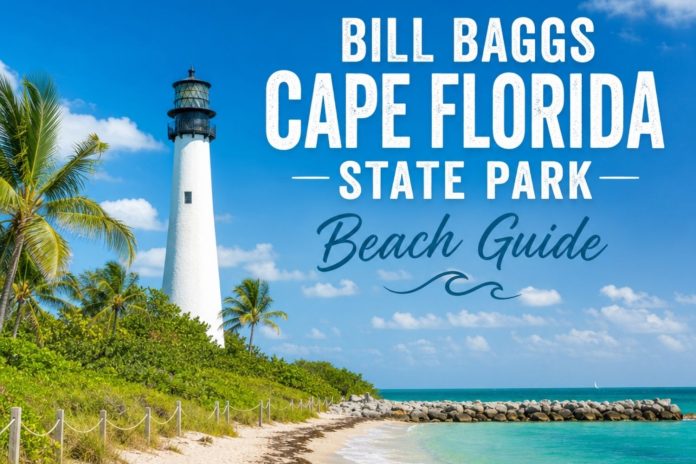
The lighthouse is the reason this park exists, and it is worth building your visit around. Built in 1825 and rebuilt in 1846 after being destroyed, the 95 foot tower has survived a Second Seminole War attack, a Confederate raid in 1861, and Hurricane Andrew’s direct hit in 1992. Free ranger led tours run Thursday through Monday at 10am and 1pm, climbing 109 spiral iron steps to a wraparound balcony with views stretching to Stiltsville, Key Biscayne, and on a clear day, Miami Beach. Children need to be 42 inches tall and able to climb independently, and pets are not permitted inside.
The 1836 attack is the story every ranger tells, and it earns the telling. Assistant keeper John Thompson and an enslaved man named Aaron Carter held off dozens of Seminole warriors from inside the tower for hours before the raiders set the base on fire. The two men retreated to the outside platform at the top, and Thompson, badly wounded and certain he would die anyway, threw a keg of gunpowder down the burning stairwell to try to save himself. Carter did not survive. Thompson did, rescued days later by a Navy crew that heard the explosion twelve miles offshore. The lighthouse stayed dark for a decade afterward before being rebuilt in 1846, this same site later became a documented departure point for enslaved people and Black Seminoles escaping to freedom in the Bahamas, a history the park now honors as part of the National Underground Railroad Network to Freedom.
I climb this lighthouse every time I visit, and it never gets old. Standing on that balcony, knowing what happened there in 1836, changes how you look at the calm water below it.
South Beach & the Lighthouse Cafe
Near the South Lot · The Busiest, Most Social Stretch
The beach directly beneath the lighthouse is the park’s most photographed and most crowded stretch, and it earns both distinctions honestly. The sand here runs fine and pale, the water stays shallow and calm well past the shoreline, and the Lighthouse Cafe sits steps away for anyone who does not want to break for lunch off site. Beach chair and umbrella rentals, along with paddleboard and kayak access through the PADL app, make this the easiest stretch to set up for a full day without hauling your own gear.
This is where families set up early on weekends, and where the crowd runs loudest, coolers, tents, portable speakers, and large groups who treat this beach the way South Beach treats Lummus Park. If you came for a quiet lighthouse photo and got a beach full of music instead, you are not imagining it, several longtime visitors have told me the same thing.
I still love this stretch, loud crowd and all, because the view of the lighthouse from the water is genuinely one of the best beach backdrops in Florida. Just know what you are walking into on a busy day, and head north if the energy is not what you came for.
No Name Harbor & Boater’s Grill
North of the Lighthouse · Boat In Dining & Bay Views
No Name Harbor is a natural anchorage on the bay side of the park, and it has a genuinely different energy than the ocean beach a short walk away, calmer water, a working marina feel, and two of the better casual restaurants I have found attached to any Florida state park. Boater’s Grill serves fresh seafood with outdoor seating right on the harbor, and The Cleat, an open air bar next door, gives you a spot to watch boats come and go while you look across the water toward Stiltsville.
The crowd here mixes park visitors who walked or biked over, boaters who motored in and tied up for lunch, and a steady overnight anchoring crowd who pay a nightly fee to sleep at anchor in the harbor. It feels less like a beach stop and more like a small Caribbean harbor town dropped into Biscayne Bay, which is exactly the comparison I have heard other regulars make.
I always build in time for a meal here, even on a beach only trip. Watching the boat traffic work in and out of the harbor while you eat ceviche is one of the more relaxed things you can do fifteen minutes from downtown Miami.
North Beach & Area A
North Entrance · The Quiet Alternative
Enter the park from the north lot instead of following the crowd toward the lighthouse, and you land on a noticeably quieter stretch of sand. This is Area A, and it includes the park’s newer kayak launch, marked by a V shaped set of safety floats a few hundred feet from the parking lot. Bring a boat dolly if you are hauling your own kayak, since the portage is a real walk.
Families who know the park tend to gravitate here specifically to avoid the lighthouse end’s crowds, and on a weekday you can find long, genuinely empty stretches of this beach even during a busy season. The swimming conditions match the rest of the park, gentle and shallow, but without the soundtrack.
If your goal is simply to swim and relax without navigating a crowd, park here first before assuming you need to fight for space near the lighthouse.
The Nature Trail & Mangrove Wetlands
Interior of the Park · Where Hurricane Andrew Accidentally Helped
A 1.5 mile nature trail loops through the park’s interior, connecting the lighthouse area to the marina through genuine coastal hammock and mangrove wetlands. This habitat exists in its current, healthier form largely because Hurricane Andrew flattened the invasive Australian pine forest that had dominated the park for decades, giving the state the opening to replant native gumbo limbo, sea grape, and strangler fig, along with a multiyear effort that planted 300,000 mangroves along the western shoreline.
The crowd here is almost entirely birders, hikers, and cyclists rather than beachgoers, and it is buggy enough in spots that I always bring repellent. Look for the mangroves’ snorkel roots poking up through the mud, the tree’s own workaround for breathing in waterlogged soil, and keep an eye out for the more than 260 recorded bird species that pass through the park, including piping plovers and peregrine falcons during migration.
I love this trail specifically because it proves a point most visitors never stop to consider, the most natural feeling part of this park is the part a hurricane rebuilt almost by accident.
The Seawall & Stiltsville Views
Western Shoreline · Fishing, Sunsets & the Bay
A walking and biking path runs the full 1.4 mile western shoreline of the park along Biscayne Bay, past a seawall that has doubled as a fishing spot for generations of Miami anglers. Note that the dedicated fishing piers have been closed for repairs since 2023, so check current signage before you plan a trip around them specifically, though shoreline casting along the seawall itself generally remains an option.
Look south from anywhere along this stretch on a clear day and you can make out the handful of remaining stilt houses of Stiltsville, a collection of over water structures dating to the 1930s that once numbered in the dozens and now stands at just a handful, preserved rather than expanded following a National Park Service agreement. Bring binoculars if you want a real look.
Locals will tell you this walk, not the lighthouse, is where the best sunsets in the park happen, with benches positioned specifically to catch the light over the bay toward Stiltsville. I believe them. It is a genuinely different kind of beautiful than the ocean side of the park.
Camping Near No Name Harbor
Group & Youth Sites Only · A Rare Overnight Option
Bill Baggs offers a genuine rarity for this stretch of coast, beachfront camping, though it comes with real restrictions. Sites are limited to organized youth and group camping that meets specific participation requirements, not a first come, first served option for individual travelers, and reservations go through the park directly. Boaters have a separate option, anchoring overnight at No Name Harbor for a nightly fee, restrooms and a bathhouse included.
The people who use this option skew heavily toward scout troops, school groups, and organized youth programs rather than casual campers, and the appeal is obvious once you understand what is on offer, falling asleep within walking distance of a lighthouse and a mile of protected beach, something almost nowhere else in Miami Dade County can offer.
If a group camping trip is part of your plans, this is worth calling ahead about well before your visit, since availability and requirements shift by season.
Bill Baggs Cape Florida State Park Rankings: Expert Scores Across 11 Categories
These scores reflect the full park, from the crowded lighthouse beach to the quiet north end and interior trails.
Sand Quality
9/10
Fine, pale, and coral influenced, consistently praised in national beach rankings. This is some of the best sand texture I have found anywhere in Miami Dade County.
Hiking & Beach Walking
8/10
A 1.5 mile nature trail plus a 1.4 mile bay side seawall walk give you genuine variety beyond the beach itself, though the ocean beach alone is shorter than the county parks further north.
Shelling
5/10
Moderate, similar to Crandon Park next door. Worth a look after a calm morning, but not a dedicated shelling destination.
Water Conditions
9/10
Gentle, shallow, and emerald clear thanks to an offshore shoal that breaks up incoming swell. National rankings have repeatedly called this one of the best swimming beaches in the Southeast.
Scenery & Natural Beauty
10/10
A historic lighthouse, coastal hammock, mangrove wetlands, and Stiltsville across the bay. Nothing else I have covered on this coast combines this much genuine beauty in one park.
Birding & Wildlife
10/10
More than 260 recorded bird species, nesting loggerheads, foraging manatees, and even American crocodiles. This is the strongest wildlife showing anywhere in this series.
Family Friendliness
8/10
The gentle, shallow water is genuinely excellent for kids, though the south beach’s weekend crowd and volume can run louder than some families expect.
Dog Friendliness
1/10
Dogs are not permitted anywhere in the park, including the lighthouse tour and trails. Plan a separate stop if you are traveling with one.
Solitude & Peace
5/10
Genuinely packed on winter weekends, to the point of closing at capacity. The north beach and interior nature trail offer real relief even on a busy day.
Entertainment & Nightlife
3/10
Two relaxed waterfront restaurants and a bay side bar, not a nightlife destination. That is entirely by design here.
Parking & Beach Access
5/10
Reasonably priced entrance fees, but weekend capacity closures are real and the causeway toll stacks on top of everything else.
Bill Baggs Cape Florida State Park Sand & Water
The sand here runs fine and noticeably pale, softer underfoot than most beaches in Miami Dade County, and it has earned real, repeated praise in national beach rankings for exactly that reason. The beach stays wide enough for a comfortable towel spread even on a busy day, soft on the upper sand for sandcastles, and firm and easy for walking right at the waterline, with a paved path system connecting the beach to the lighthouse and nature trail if you want a break from sand entirely.
Water conditions here are calm almost by design. An offshore shoal breaks up incoming swell before it reaches shore, keeping the water shallow, gentle, and clear enough on a good day for casual snorkeling around the rocks near the lighthouse. Entry is gradual the length of the beach, and rip currents are notably rare, part of why this beach is so consistently recommended for families with small children.
-
Walkability. Easy and flat, with a paved path connecting the beach to the lighthouse, No Name Harbor, and the nature trail.
-
Softness & Playability. Fine and soft enough on the upper beach for serious sandcastle building, firmer at the waterline for an easy walk.
-
Barefoot Comfort. Genuinely excellent nearly year round, helped by shaded picnic areas near both beach entrances.
-
Swimmability. Outstanding. Gentle, shallow, shoal protected water makes this one of the safest swimming beaches in the Southeast.
Want the full geology, grain composition, and the complete sand and water condition ratings? I broke it all down separately in Sand & Shore: Bill Baggs Cape Florida State Park.
Dogs & Pet Accessibility at Bill Baggs Cape Florida State Park
Are Dogs Allowed on the Sand? NO.
This park keeps dogs out entirely, not just off the beach, a stricter rule than most Florida state parks.
Where Dogs Are Allowed
- ✓Nowhere inside the park boundary. This is a fully dog free park.
Where Dogs Are NOT Allowed
- ✗The beach itself, both the busy south stretch and the quieter north end.
- ✗The nature trail, the seawall walk, and the grounds around the lighthouse.
- ✗The lighthouse tour itself, where pets are explicitly barred from entering.
Paws on the Ground Reality
The no dogs rule here is consistently enforced at the entrance gate, so don’t plan on sneaking a small dog in in a bag. If your Key Biscayne day includes a dog, Hobie Island Beach Park back along the Rickenbacker Causeway is your realistic option, well regarded as one of the best dog beaches in greater Miami, with shallow water and real off leash room. Plan your Bill Baggs visit for a day the dog can sit this one out.
Crowd Levels and the Overall Feel of Bill Baggs
This park runs busy nearly year round given its national reputation and its proximity to downtown Miami, but the crowd concentrates heavily near the lighthouse and south beach, leaving real room to breathe elsewhere in the park.
The overall feel shifts noticeably by season and by which part of the park you choose:
- Winter: the busiest season, with the park periodically closing at capacity on weekends and holidays
- Spring: comfortable and increasingly busy, with school groups and spring visitors picking up midweek
- Summer: hot and humid, thinner on weekdays, genuinely packed on weekends when local families make the drive over
- Fall: my favorite window, warm water, thinner crowds, and the best chance at real quiet near the lighthouse itself
Who Is Bill Baggs Really For?
✓ Who Will Love This Park
-
History lovers, given the lighthouse’s genuinely dramatic 1836 survival story and its documented Underground Railroad significance
-
Families with small children, thanks to the shallow, gentle, shoal protected swimming water
-
Birders and nature lovers, given 260 plus recorded species and genuine coastal hammock and mangrove habitat
-
Boaters, thanks to No Name Harbor’s anchorage, boat in dining, and easy bay access
-
Cyclists using the Rickenbacker Causeway route, since this park makes a natural, scenic turnaround point
-
Anyone chasing a genuinely nationally ranked beach within twenty minutes of downtown Miami
✗ Consider Another Beach If…
-
You want a quiet lighthouse photo on a winter weekend. The south beach crowd can run large and loud
-
You are traveling with a dog. No dogs are permitted anywhere in this park
-
You want nightlife or late evening options. This park closes at sundown and stays quiet after dark by design
-
You need guaranteed entry without advance planning during peak winter weekends, since the park does close at capacity
-
You are a dedicated surfer chasing real waves. The same shoal that keeps this beach so safe also keeps it essentially flat
Things to Do at Bill Baggs Cape Florida State Park
Between the lighthouse, the harbor, and the trails, this park covers far more ground than a typical beach day.
-
Lighthouse Tours. Free ranger led tours run Thursday through Monday at 10am and 1pm, climbing 109 steps to a wraparound balcony view. Children must be 42 inches tall and able to climb independently.
-
Swimming & Sunbathing. Gentle, shallow water the length of the park, with the south beach near the lighthouse and the quieter north beach both offering excellent access.
-
Boating & Overnight Anchoring. No Name Harbor accepts overnight anchorage for a nightly fee, with restrooms and a bathhouse on site.
-
Kayaking, Canoeing & Paddleboarding. Launches operate from the north beach and No Name Harbor’s sea wall, with paddleboard rentals available through the PADL app.
-
Biking. Rentals, including multi rider quad bikes, are available near the south lot, and the park connects directly to the scenic Rickenbacker Causeway cycling route.
-
Hiking & Nature Trails. A 1.5 mile interior loop and a 1.4 mile western shoreline walk cover coastal hammock, mangrove wetlands, and Stiltsville views.
-
Fishing. Shoreline casting is available along the seawall, though the dedicated fishing piers have been closed for repairs since 2023, so confirm current status before you plan around them.
-
Snorkeling. The rocks around the lighthouse offer the best casual snorkeling in the park on a calm, clear day.
-
Birding & Wildlife Watching. More than 260 recorded species pass through the park, alongside nesting sea turtles, foraging manatees, and butterflies including the statira.
Local Knowledge and Practical Advice
A few things I have picked up walking this park more times than I can count:
-
The park closes at capacity, and it does not reopen for at least two hours. Arrive early on any winter weekend or holiday if this park is your main plan for the day.
-
Budget for the causeway toll on top of the entrance fee. Vehicle entry runs about eight dollars for up to eight people, four dollars for a single occupant vehicle or motorcycle, and two dollars for cyclists and pedestrians, separate from the Rickenbacker Causeway toll.
-
Leave the dog at home entirely. No dogs are permitted anywhere in this park, including the trails and lighthouse grounds.
-
Lighthouse tours run Thursday through Monday only, at 10am and 1pm. The tower itself is closed to entry outside those windows, so plan your visit around the schedule if the lighthouse is your priority.
-
Check current closures before your visit. The fishing piers have been closed since 2023, and select restrooms and pavilions have periodically closed for renovation. The park’s own site posts current status.
-
Park at the north lot if you want quiet. The south beach near the lighthouse draws the largest and loudest crowds, especially on weekends.
-
Bring bug spray for the nature trail. The mangrove wetland sections can get genuinely buggy, especially in warmer months.
-
Save the bay side seawall walk for late afternoon. The sunset view toward Stiltsville from the western shoreline rivals anything on the ocean side of the park.
-
Eat at Boater’s Grill even if you only came for the beach. No Name Harbor’s boat in dining scene is worth the extra half hour on its own merits.
Where to Stay Near Bill Baggs Cape Florida State Park
Lodging directly in Bill Baggs is limited to organized camping, so most overnight stays happen elsewhere on the island or across the causeway.
Village of Key Biscayne
The Ritz-Carlton Key Biscayne and a range of short term rental condos throughout the village put you a short bike ride or drive from the park entrance, walkable to the residential Ocean Park beach as well.
Camping Within the Park
Bill Baggs offers group and youth camping near No Name Harbor, a genuine rarity this close to downtown Miami. Reservations run through the park directly and require meeting specific group participation criteria. Boaters can also anchor overnight in No Name Harbor for a nightly fee.
Mainland Alternatives
Coconut Grove and Coral Gables, both a short drive across the Rickenbacker Causeway, offer a much wider range of hotel options at lower price points for visitors willing to day trip to the park rather than stay on the island.
What Makes Bill Baggs Different from Nearby Beaches
Bill Baggs stands apart because it survived. Most of this coastline got developed. This park got saved, twice, once from a 1950s resort project and once from an invasive forest that a hurricane happened to clear.
A few features make it distinct:
A lighthouse with a genuinely dramatic history
Very few Florida beaches pair a nationally ranked stretch of sand with a lighthouse that survived a documented Seminole attack, a Confederate raid, and Hurricane Andrew, all still standing as the oldest structure in Miami Dade County.
A hurricane that accidentally restored the habitat
The coastal hammock and mangrove wetlands you walk through today exist largely because Hurricane Andrew cleared out decades of invasive Australian pine, giving the state room to replant what belonged here in the first place.
A harbor you can only fully appreciate by boat or on foot
No Name Harbor’s boat in dining scene, complete with overnight anchoring, gives this park a genuine maritime culture that beach towns further north simply do not have.
National recognition that predates social media
Dr. Beach has ranked this beach among the country’s best for close to two decades, a level of sustained, credentialed recognition most Florida beaches cannot claim.
Bill Baggs vs. Other South Florida Beaches
These are the beaches visitors most often weigh against Bill Baggs, and the honest read on when you would choose one over the other.
Bill Baggs vs. Crandon Park
Crandon Park, just north on the same island, offers more amenities for families, an amusement center, a golf course, and a marina, while Bill Baggs wins on history, scenery, and its national beach ranking. I cover Crandon in full in my broader Key Biscayne guide.
Bill Baggs vs. Miami Beach
Miami Beach wins decisively on nightlife and architecture. Bill Baggs wins on natural beauty, water safety, and genuine history. I cover South Beach, Mid Beach, and North Beach in a separate guide.
Bill Baggs vs. Fort Lauderdale Beach
Fort Lauderdale Beach offers easier, cheaper access without the causeway toll or entrance fee, though it does not match Bill Baggs’ natural setting, calm water, or documented history.
Bottom line: Bill Baggs earns its national reputation honestly, on sand quality, water safety, wildlife, and history that nothing else on this coast quite matches. Budget the toll and the entrance fee, arrive early on weekends, and this park delivers exactly what the rankings promise.
Bill Baggs Cape Florida State Park: Frequently Asked Questions
Is Bill Baggs Cape Florida State Park worth visiting?
Yes, without hesitation. This is the most naturally beautiful, historically rich beach I have covered in Miami Dade County, and its national top ten beach rankings hold up to real scrutiny.
Is Bill Baggs crowded?
The south beach near the lighthouse gets genuinely busy on weekends and holidays, busy enough that the park periodically closes at capacity. The north beach and interior nature trail stay noticeably quieter even on packed days.
How much does it cost to visit?
Vehicle entry runs about eight dollars for up to eight people, four dollars for a single occupant vehicle or motorcycle, and two dollars for cyclists and pedestrians, separate from the roughly two dollar Rickenbacker Causeway toll.
Are dogs allowed?
No. Dogs are not permitted anywhere in the park, including the beach, trails, and lighthouse grounds.
When can you tour the lighthouse?
Free ranger led tours run Thursday through Monday at 10am and 1pm, climbing 109 spiral steps to the balcony. Children must be at least 42 inches tall and able to climb independently.
Is the water safe for kids?
Yes, genuinely so. An offshore shoal keeps the water shallow, gentle, and largely free of rip currents, part of why this beach is consistently recommended as one of the safest swimming beaches in the Southeast.
What is the best time of year to visit?
Fall offers the best balance of warm water and thinner crowds. Winter is the busiest season, with the park periodically closing at capacity on weekends.
What can you do besides swim?
A great deal. Lighthouse tours, boat in dining at No Name Harbor, kayaking and paddleboarding, biking, hiking through mangrove wetlands, birding, snorkeling near the lighthouse rocks, and fishing along the seawall.
Is Bill Baggs good for families?
Yes, particularly for the gentle, shallow swimming water. Just know the south beach near the lighthouse can run loud and crowded on weekends, so the quieter north beach may suit some families better.
Is Bill Baggs better than Crandon Park?
It depends on what you want. Crandon offers more built in amenities for a family day, an amusement center, golf, and a marina. Bill Baggs wins on history, scenery, and its national beach ranking. Both sit on the same island and are easy to combine into one trip.
Patti’s Perspective: My Honest Take on Bill Baggs Cape Florida State Park
I keep coming back to the lighthouse. Not the view from the top, though that is genuinely worth the climb, but the fact that it burned nearly to the ground in 1836 and again lost its purpose in 1878 when a stronger light replaced it, and it is still standing here anyway, two hundred years later, watching the same water. A man nearly died at the top of that tower defending a piece of infrastructure that the government itself had built with hollow, corner cut walls. Another man did die there. And the structure kept going regardless, dark for a decade, rebuilt, decommissioned, relit, decommissioned again, relit again for good in 1996.
The detail that stays with me most, though, is the mangrove trail, because it exists in its healthiest form specifically because Hurricane Andrew tore through here in 1992 and destroyed a forest of trees that never belonged on this island in the first place. Nobody planned that restoration. A category five storm did the demolition work, and the state simply chose to plant something true to the place instead of rebuilding what had been there before. I have spent years now writing about beaches that survived by being engineered, rebuilt, or trucked in from somewhere else. This is the first one I have covered that survived by finally being allowed to become what it actually was underneath the invasive cover.
I do not think that is a coincidence for a beach I have come to trust more than almost any other on this coast. Some of the best things that happen to us look like disasters while they are happening. The storm still counts as a loss. But what grows back afterward, if you let it be native instead of forcing it back into what it was pretending to be, can end up more honest than what you had before.
My verdict: 9/10. The best all around beach in this entire Miami series, and the national rankings agree with me. History, water safety, wildlife, and genuine natural beauty all come together here in a way nothing else on this coast quite matches. Climb the lighthouse, eat at Boater’s Grill, and walk the mangrove trail before you leave. This park earns every bit of the reputation it has built over two centuries.
Want to Live by the Water?The Village of Key Biscayne, just north of Bill Baggs Cape Florida State Park, offers some of the most protected, nature adjacent waterfront real estate in Miami Dade County, from beachfront condominiums along Crandon Boulevard to quiet single family streets deeper in the village.Buyers drawn to this stretch of the island tend to prioritize the same things this park protects, natural beauty, water safety, and genuine quiet, over nightlife and density. Pricing here sits well above the broader Miami Dade average given the island’s single point of access and its permanent proximity to protected park land on both ends.If living by the water is something you are considering, whether full time, part time, or as an investment, it is worth exploring what is available in this area.Explore Waterfront Living at LiveByTheWater.com
Real estate referral partner